

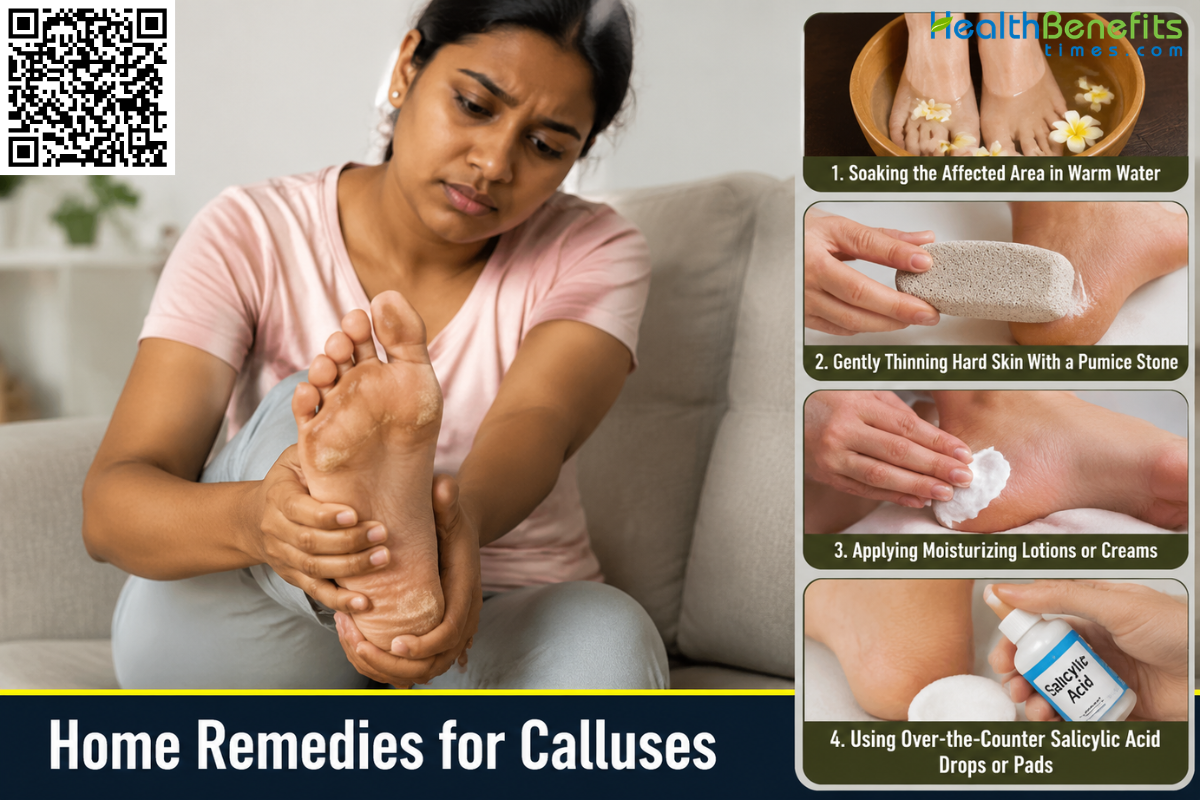
Calluses are a common skin reaction caused by continuous physical stress. Clinically, a callus is a buildup of thick, hardened skin layers that forms to protect deeper tissues from ongoing damage, friction, or high pressure 1. While corns are usually small and appear on the tops or sides of the toes, calluses are generally wider and develop primarily on the weight-bearing soles of the feet or the palms of the hands 2. This skin thickening is a natural, protective biological reaction meant to stop blisters from forming 1. Most calluses are harmless, but severe cases can break down the surrounding tissue. If a callus becomes painful, flakes, bleeds, or if you have diabetes or poor blood flow, you should seek professional medical care to prevent serious infections 1. To prevent calluses from returning, wear well-fitting shoes and use protective gloves during physical activities 1.
Causes of Calluses
- Ill-fitting footwear: Wearing shoes that are too tight, too loose, or feature high heels causes excessive friction and high pressure on specific areas of the foot 1.
- Repetitive manual activities: Frequently using hand tools, gripping athletic equipment, or playing stringed musical instruments creates constant rubbing on the skin of the hands, leading to protective callus formation 1.
- Skipping socks: Wearing closed shoes without socks, or wearing socks that do not fit properly, increases direct friction between the bare skin and the inside lining of the shoe 1.
- Structural foot deformities: Conditions such as bunions, hammertoes, or underlying bone spurs alter the normal weight-bearing alignment of the foot, causing unnatural pressure points where thick skin builds up 2.
- Walking barefoot: Frequent walking or running without protective footwear exposes the soles of the feet to continuous friction against rough surfaces, prompting the skin layers to thicken and harden 2.
Symptoms of Calluses
- Thickened and rough skin: The primary sign of a callus is a distinct, wide patch of thick, tough skin that develops on areas subjected to frequent friction, such as the soles of the feet or palms of the hands 1.
- Hardened, raised bumps: The affected area typically forms a hard, raised mound that often feels less sensitive to light touch than the surrounding healthy skin 1.
- Dry, flaky, or waxy texture: The skin making up the callus frequently becomes very dry, and it may appear flaky, rough, or have a waxy consistency compared to normal tissue 1.
- Pain or tenderness with pressure: While the thickened outer layer consists of dead skin cells and is generally painless, a deep or extensive callus can cause underlying pain and tenderness when you walk, grip an object, or apply direct pressure to the area 1.
Home Remedies for Calluses
1. Soaking the Affected Area in Warm Water
How it may help
Soaking a callus in warm water is a primary treatment that softens the hardened, thickened layers of dead skin. This softening process makes it significantly easier to gently remove the outer layers of the callus, reducing its physical size and relieving the pressure it places on underlying tissues 1.
What research says
Clinical guidelines support warm water soaking as an effective, conservative method for initial callus management. Medical consensus confirms that hydrating the thickened skin layers reduces their stiffness, allowing for safer removal of the dead skin without causing trauma to the healthy tissue underneath 1.
How to use it safely
Submerge your affected hand or foot in warm—not hot—water for five to ten minutes until the skin feels soft. Afterward, gently rub the area with a pumice stone to remove the top layer of dead skin. Never cut the callus with sharp tools 1.
Potential precautions or side effects
If you have diabetes, poor circulation, or nerve damage, consult a doctor before treating calluses, as minor skin injuries can quickly lead to severe, hard-to-heal infections 1.
2. Gently Thinning Hard Skin With a Pumice Stone
How it may help
A pumice stone is a lightweight, porous volcanic rock that acts as a natural exfoliant. Its rough texture gently wears away the thickened, dead skin layers of a callus. Regular use reduces the physical bulk of the callus, relieving pressure and reducing discomfort during walking or daily activities.
What research says
Clinical research recognizes mechanical exfoliation as a standard treatment for callosities. Medical experts state that gently filing thickened skin with a pumice stone safely reduces hyperkeratosis (excess dead skin). This controlled reduction prevents the callus from creating localized pressure points that lead to severe tissue pain 3.
How to use it safely
Soak your affected skin in warm water for five to ten minutes to soften the callus. Wet the pumice stone, then gently rub it over the thick skin in a circular motion. Stop when the skin feels softer; never attempt to remove the entire callus at once.
Potential precautions or side effects
Scrubbing too aggressively can cause bleeding and infection. Individuals with diabetes or poor circulation must avoid using pumice stones to prevent severe foot complications 4.
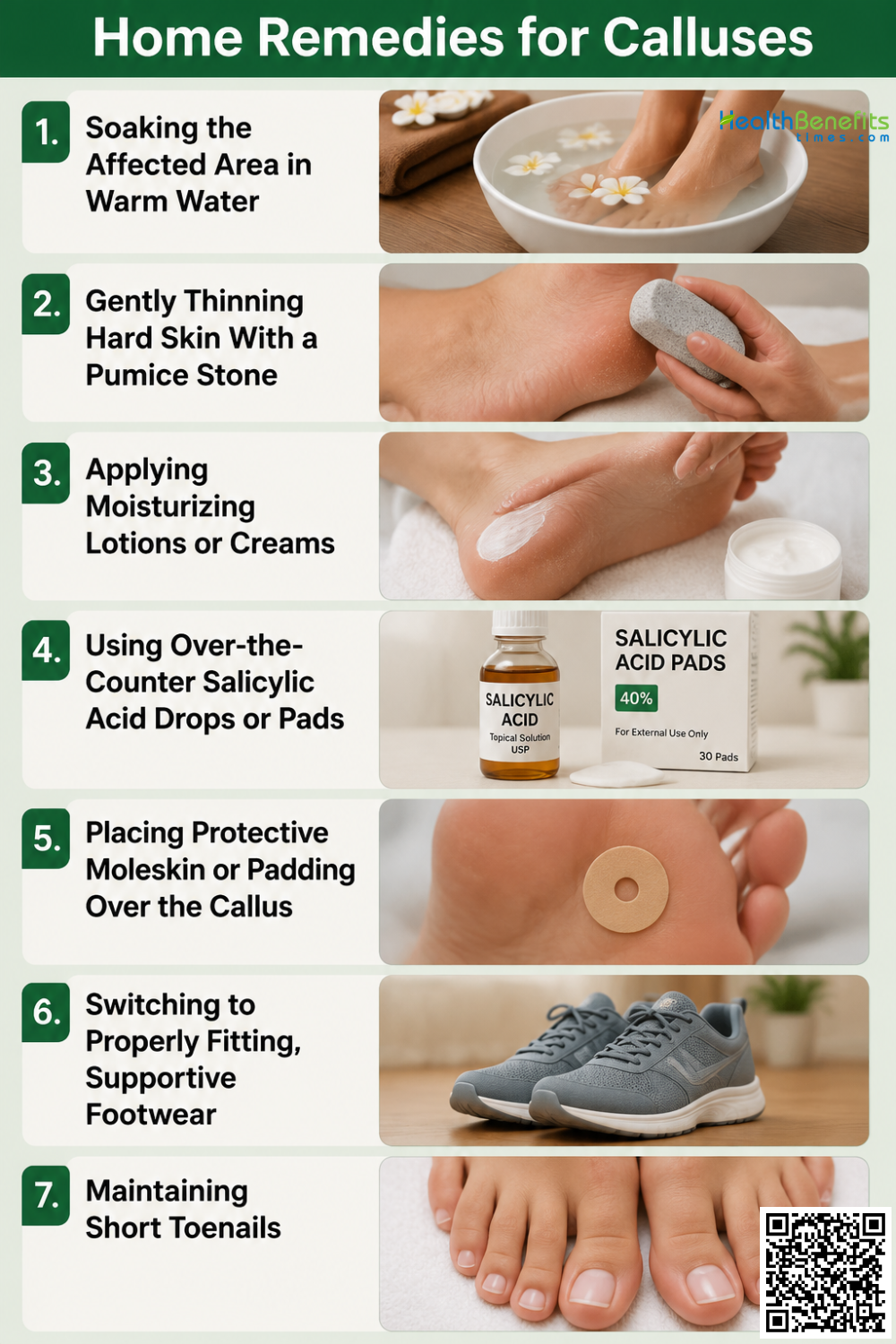
3. Applying Moisturizing Lotions or Creams
How it may help
Moisturizing lotions and creams hydrate the thickened, dry skin of a callus. By trapping moisture within the skin, these products soften the hard outer layers, improve tissue flexibility, and prevent painful cracking. Consistent hydration also makes the thick skin easier to remove through gentle exfoliation.
What research says
Clinical guidelines recommend using moisturizers containing keratolytic ingredients, such as urea or salicylic acid. Research confirms these compounds break down the protein structure holding dead skin cells together, effectively thinning thickened tissue and increasing skin moisture levels to manage calluses 5.
How to use it safely
Wash and dry your skin thoroughly before applying the moisturizer. Rub the cream directly onto the callus once or twice daily. If applying to your feet, avoid putting lotion between your toes, as trapped moisture increases the risk of fungal infections.
Potential precautions or side effects
Creams containing salicylic acid or high-concentration urea may cause mild stinging or irritation. Discontinue use if redness occurs. Individuals with diabetes should consult a doctor before using medicated creams.
4. Using Over-the-Counter Salicylic Acid Drops or Pads
How it may help
Over-the-counter salicylic acid acts as a chemical exfoliant. It works by breaking down keratin, the primary protein structure that binds dead, hardened skin cells together. This process gradually dissolves the thickened layers of a callus, making the hard tissue easier to peel away and reducing painful pressure.
What research says
Clinical evidence establishes salicylic acid as a primary keratolytic therapy for calluses. Medical research demonstrates that topical applications safely dissolve excessive keratin, successfully reducing the physical thickness and associated pain of hyperkeratotic skin lesions without requiring invasive physical removal 3.
How to use it safely
Wash and thoroughly dry the affected area. Apply the salicylic acid drops or medicated pad directly onto the callus, ensuring you avoid the surrounding healthy skin to prevent chemical burns. Follow the specific product instructions regarding how long to leave the treatment on your skin.
Potential precautions or side effects
Salicylic acid may burn healthy skin. If you have diabetes or poor circulation, avoid these products entirely to prevent severe tissue damage and non-healing ulcers 4.
5. Placing Protective Moleskin or Padding Over the Callus
How it may help
Moleskin and non-medicated protective padding act as physical barriers against continuous friction. By absorbing shoe pressure and cushioning bony prominences, these materials eliminate the mechanical stress that causes skin to harden. This provides immediate pain relief while preventing the callus from growing thicker over time.
What research says
Medical guidelines identify offloading—the redistribution of physical pressure—as a primary principle in managing calluses. Clinical evidence confirms that using shock-absorbing materials effectively reduces the mechanical friction and shear forces on the skin, which halts further epidermal thickening and protects underlying tissue from damage 3.
How to use it safely
Clean and dry your skin completely before application. Cut a piece of moleskin slightly larger than the callus. To avoid placing direct pressure on the hard skin, cut a hole in the center of the pad, allowing it to surround the callus instead of covering it.
Potential precautions or side effects
The adhesive backing may cause mild skin irritation or contact dermatitis. If you experience unexpected redness or itching, remove the pad immediately. Replace padding daily to maintain hygiene.
6. Switching to Properly Fitting, Supportive Footwear
How it may help
Calluses form as a protective response to repetitive friction and pressure. Switching to properly fitting, supportive footwear eliminates this underlying mechanical stress. Shoes with a wide toe box and adequate cushioning prevent the skin from rubbing against hard surfaces, allowing existing calluses to heal and preventing new ones from forming.
What research says
Clinical evidence confirms that ill-fitting footwear is the primary cause of hyperkeratosis on the feet. Medical research demonstrates that wearing well-fitted shoes with proper shock absorption effectively redistributes plantar pressure, significantly reducing the mechanical shear forces responsible for callus formation 3.
How to use it safely
Always measure your feet before purchasing new shoes, as foot dimensions change over time. Shop late in the afternoon when your feet naturally swell to ensure a proper fit. Select shoes with low heels, deep toe boxes, and adequate arch support to avoid pinching your skin.
Potential precautions or side effects
Breaking in new shoes too quickly can cause blisters or acute skin irritation. Gradually increase the time you wear new footwear to allow your feet to adjust safely.
7. Maintaining Short Toenails
How it may help
When toenails are allowed to grow too long, they constantly strike the front of a shoe. This forces the toes to push backward or curl, altering the foot’s natural alignment. Trimming the nails prevents this abnormal pressure, stopping the repetitive friction that causes calluses to form on the toes.
What research says
Clinical guidelines emphasize that proper nail care is essential for maintaining healthy foot biomechanics. Medical experts state that excessively long toenails create abnormal shear forces and pressure points inside footwear, directly contributing to hyperkeratotic skin lesions, such as corns and calluses, on adjacent toes and weight-bearing joints 3.
How to use it safely
Use a clean, sharp nail clipper to cut your toenails straight across. Do not round the corners or cut the nails too short, as this causes ingrown toenails. Smooth any sharp edges with an emery board to prevent them from rubbing against adjacent toes or snagging on socks.
Potential precautions or side effects
Cutting toenails too short exposes the sensitive nail bed to infection. If you have diabetes or neuropathy, have a podiatrist trim your nails to prevent accidental skin injuries 4.
Foods to Avoid When You Suffer from Calluses
While diet does not directly cause calluses, limiting specific foods helps manage systemic conditions like obesity and diabetes that significantly increase the risk of severe foot complications.
1. Refined Sugars
High sugar intake spikes blood glucose levels, accelerating nerve damage and poor circulation in diabetic individuals, making calluses prone to severe ulceration 4.
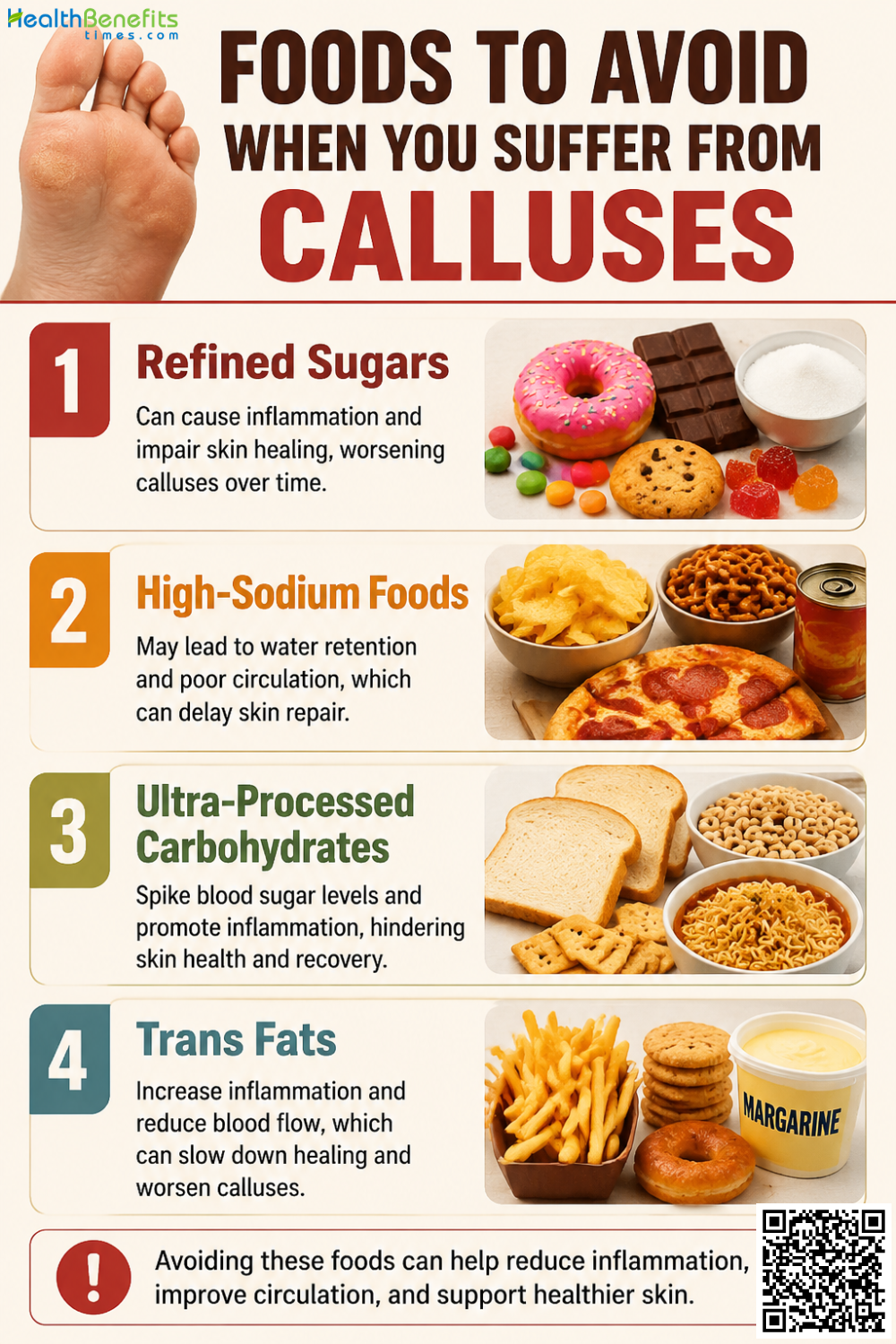
2. High-Sodium Foods
Excessive salt causes fluid retention and swelling in the lower extremities, which increases mechanical pressure and friction against footwear, worsening existing calluses 6.
3. Ultra-Processed Carbohydrates
Foods like white bread contribute to rapid weight gain. Excess body weight multiplies the physical pressure placed on the feet, directly aggravating foot calluses 7.
4. Trans Fats
Artificial trans fats promote arterial inflammation and reduce blood flow to the extremities, severely impairing the skin’s ability to heal damaged tissue beneath thick calluses 8.
When to See a Doctor When You Struggle from Calluses
While most calluses safely resolve with proper home management, certain underlying health conditions and severe symptoms require immediate evaluation by a healthcare professional to prevent dangerous complications.
1. Diabetes Diagnosis
Individuals with diabetes must seek medical callus removal, as nerve damage and reduced blood flow significantly increase the risk of developing non-healing foot ulcers 4.
2. Signs of Infection
Immediate medical attention is necessary if a callus leaks pus, bleeds, or becomes red and warm, indicating a bacterial infection that requires prescription antibiotics 3.
3. Severe Pain
Consult a doctor if callus pain alters your normal walking pattern. Adjusting your gait to avoid pain causes harmful mechanical stress on other joints and tissues 3.
4. Peripheral Artery Disease
Patients with circulatory conditions must rely on podiatrists for foot care, because restricted blood flow prevents minor skin injuries from healing, risking severe tissue damage 9.