


Chagas disease, also known as American trypanosomiasis, is a potentially life-threatening infectious condition caused by the protozoan parasite Trypanosoma cruzi 1. The primary mode of transmission occurs through contact with the feces or urine of infected blood-sucking triatomine insects, commonly referred to as kissing bugs 2. Infection can also occur via blood transfusions, organ transplants, contaminated food, or from a pregnant mother to her child 3.
The disease develops in two stages: an acute phase and a chronic phase. The acute phase typically presents with mild or no symptoms, though some individuals may develop a characteristic eyelid swelling known as Romaña’s sign 4. If left untreated, the infection progresses to a lifelong chronic phase. During this stage, approximately 20 to 30 percent of infected individuals will eventually develop severe cardiac disorders, such as heart failure, and digestive complications like an enlarged colon 4. Early diagnosis is critical, as antiparasitic medications are highly effective at curing the infection when administered promptly 1.
Causes of Chagas Disease
1. Contact with Infected Triatomine Insects
The primary cause of infection is contact with the feces or urine of infected blood-sucking triatomine insects, commonly known as kissing bugs, which typically enter human skin through bites or mucous membranes 3.
2. Blood Transfusion and Organ Transplantation
Infection can be transmitted through receiving blood or blood products from infected donors, as well as through organ transplants originating from donors carrying the parasite 3.
3. Mother-to-Child Transmission
An infected pregnant woman can transmit the parasite to her newborn baby during pregnancy or childbirth, resulting in congenital Chagas disease 1.
4. Consuming Contaminated Food or Drink
Eating food or drinking unpasteurized juices contaminated with the feces or crushed tissues of infected insects can cause oral transmission of the parasite 2.
5. Laboratory or Accidental Exposure
Accidental exposure to the parasite can occur in laboratory settings through needle-stick injuries or direct contact with infected research materials 2.
Symptoms of Chagas Disease
1. Eyelid Swelling (Romaña’s Sign)
A characteristic, often painless swelling of the eyelids on one side of the face occurs when the parasite enters through the conjunctiva of the eye 4.
2. Skin Lesion or Chagoma
A local swelling, firm red bump, or skin sore can form at the exact entry site where the insect waste or parasite penetrated the skin 3.
3. Fever and Fatigue
Individuals experiencing the acute phase frequently report a persistent low-grade fever accompanied by significant tiredness and general body discomfort 3.
4. Swollen Lymph Nodes and Body Aches
Enlarged lymph nodes, muscle aches, and joint pain commonly develop as the immune system responds to the spreading parasite 4.
5. Heart Irregularities and Failure
During the long-term chronic phase, patients often develop severe cardiac complications, including irregular heartbeats, dizziness, fainting spells, and progressive heart failure 1.
6. Enlarged Digestive Organs
Chronic gastrointestinal complications frequently manifest as severe, long-term constipation and difficulty swallowing caused by the enlargement of the colon and esophagus 3.
Natural resource for the treatment of Chagas disease
1. Cinnamon Bark Essential Oil
How it may help
Cinnamon bark essential oil contains powerful active compounds, primarily cinnamaldehyde. This natural substance can directly target and break down the Trypanosoma cruzi parasite responsible for causing Chagas disease. By attacking the parasite’s cellular defenses, the oil helps neutralize the infection before it can spread further in the body.
What research says
Laboratory studies demonstrate that cinnamon bark essential oil effectively kills multiple life stages of the Trypanosoma cruzi parasite 5. Researchers conclude that its primary component, cinnamaldehyde, causes severe damage to the parasite’s cell structure, making it a promising candidate for developing complementary anti-parasitic therapies 5.
How to use it safely
You should never swallow essential oils. For safe use, always dilute cinnamon bark oil heavily in a neutral carrier oil, such as olive or almond oil, before applying it to your skin. You must consult your doctor before adding this oil to your treatment plan.
Potential precautions or side effects
Undiluted cinnamon oil causes severe skin irritation, chemical burns, and allergic reactions. Pregnant women, nursing mothers, and young children must completely avoid using this highly potent essential oil.
2. Clove Essential Oil
How it may help
Clove essential oil contains eugenol, a potent natural compound with strong antiparasitic properties. This active substance targets and destroys the Trypanosoma cruzi parasite responsible for Chagas disease. By directly inhibiting the parasite’s ability to survive and multiply in the bloodstream, the oil helps lower the overall infection burden within the body.
What research says
Clinical and laboratory studies demonstrate that clove essential oil significantly reduces the Trypanosoma cruzi parasite load in infected models 6. Researchers conclude that the oil, particularly when used alongside standard antiparasitic medications, effectively suppresses parasite reproduction in the bloodstream and lowers the rate of active infection during the disease’s early stages 6.
How to use it safely
You must always dilute clove essential oil heavily with a neutral carrier oil, such as coconut or olive oil, before applying it to your skin. You should never swallow essential oils. Always consult your physician before incorporating this oil into your prescribed Chagas disease treatment plan.
Potential precautions or side effects
Undiluted clove oil causes severe skin irritation, chemical burns, and allergic reactions. Pregnant women, nursing mothers, and individuals with bleeding disorders or sensitive skin must strictly avoid using this oil.
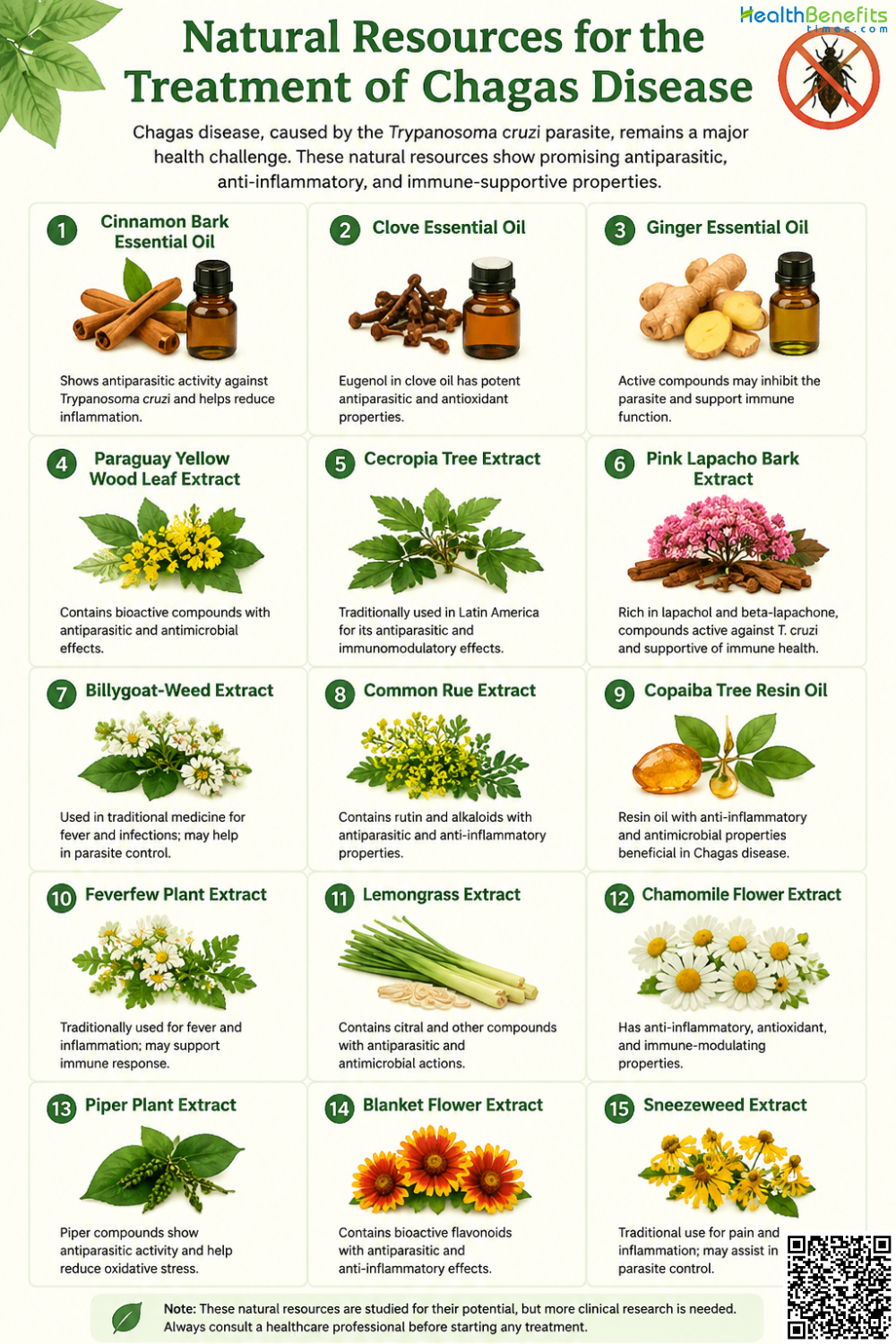
3. Ginger Essential Oil
How it may help
Ginger essential oil contains active natural compounds that demonstrate strong antiparasitic properties against the Trypanosoma cruzi parasite. By directly targeting and disrupting the parasite’s cellular defenses, these natural ingredients help prevent the infection from multiplying and spreading further throughout the bloodstream 6.
What research says
Scientific studies demonstrate that ginger essential oil significantly reduces the Trypanosoma cruzi parasite load during an active infection 6. Researchers conclude that using this oil, particularly in combination with standard antiparasitic medications, effectively suppresses parasite reproduction and improves overall treatment outcomes 6.
How to use it safely
You must always heavily dilute ginger essential oil with a neutral carrier oil, such as coconut or olive oil, before applying it to your skin. You should never swallow essential oils. Always consult your physician before incorporating this oil into your prescribed medical treatment plan.
Potential precautions or side effects
Undiluted ginger essential oil causes severe skin irritation, redness, and allergic reactions. Pregnant women, nursing mothers, and people taking blood-thinning medications must strictly avoid using this highly concentrated oil.
4. Paraguay Yellow Wood Leaf Extract
How it may help
Paraguay yellow wood leaf extract contains powerful natural compounds known as alkaloids. These active substances specifically target and destroy the Trypanosoma cruzi parasite responsible for Chagas disease. By damaging the parasite’s internal structure, the extract helps stop the infection from surviving and spreading within the body.
What research says
Scientific studies demonstrate that the active compounds in Paraguay yellow wood leaf extract effectively kill the Trypanosoma cruzi parasite in laboratory models 7. Researchers conclude that this plant extract significantly reduces the number of parasites in the blood, making it a highly promising resource for developing new treatments 7.
How to use it safely
Because this extract remains under scientific investigation, there are currently no approved dosages for human use. You must never attempt to self-treat Chagas disease with unverified plant extracts. Always consult your doctor for safe, proven, and medically approved antiparasitic treatments.
Potential precautions or side effects
The safety of this extract in humans remains unproven. Consuming unapproved botanical extracts may cause unknown toxic reactions, liver damage, or severe allergic responses. Pregnant women must avoid it.
5. Cecropia Tree Extract
How it may help
Cecropia tree leaf extract contains ursolic acid, a natural compound with direct antiparasitic properties. In laboratory environments, the extract successfully attacks and destroys the Trypanosoma cruzi parasite responsible for Chagas disease, showing initial promise as a targeted treatment 8.
What research says
While test-tube studies demonstrate that Cecropia extract kills the parasite, living animal models reveal serious dangers. Researchers found that infected subjects treated with this extract experienced worse outcomes, including higher parasite levels and decreased survival rates 8. The extract’s anti-inflammatory properties actually suppress the immune system’s ability to fight infection.
How to use it safely
You must strictly avoid using Cecropia tree extract to treat Chagas disease. Although it destroys parasites in laboratory dishes, it actively worsens the infection in living bodies. Always rely on scientifically proven, doctor-prescribed antiparasitic medications to safely manage this serious condition.
Potential precautions or side effects
Consuming Cecropia extract during a Chagas infection severely suppresses your natural immune response. This allows the parasite to multiply rapidly, directly worsening the disease and significantly lowering survival rates.
6. Pink Lapacho Bark Extract
How it may help
Pink lapacho bark extract contains lapachol and beta-lapachone, which are naturally occurring chemical compounds known as naphthoquinones. These highly active substances directly target the Trypanosoma cruzi parasite that causes Chagas disease. By creating severe oxidative stress, they damage the parasite’s internal structures and stop it from multiplying inside the body.
What research says
Laboratory studies demonstrate that beta-lapachone and lapachol effectively kill the Trypanosoma cruzi parasite during multiple stages of its life cycle 9. Researchers conclude that these natural compounds successfully attack the parasite’s cellular energy centers, causing fatal damage and showing significant promise for the development of new antiparasitic treatments 10.
How to use it safely
Because safe and effective human dosages are not yet established, you must never use pink lapacho bark teas or supplements to self-treat Chagas disease. You should always consult your physician for proper medical evaluation and strictly rely on proven, doctor-prescribed antiparasitic medications.
Potential precautions or side effects
High doses of pink lapacho bark extract can cause severe nausea, vomiting, dizziness, and dangerous internal bleeding. Pregnant women, nursing mothers, and individuals taking blood-thinning medications must strictly avoid it.
7. Billygoat-Weed Extract
How it may help
Billygoat-weed extract contains active plant chemicals, including flavonoids and alkaloids, which exhibit strong antiparasitic properties. These natural compounds target the Trypanosoma cruzi parasite, disrupting its cellular structure and significantly decreasing its ability to invade host cells and multiply within the bloodstream.
What research says
Laboratory studies demonstrate that crude extracts from billygoat-weed cause notable toxicity to the parasites responsible for Chagas disease. Researchers conclude that the extract successfully reduces both the survival rate of free-swimming parasites and the reproduction of intracellular forms in biological models.
How to use it safely
You must never attempt to treat Chagas disease using home remedies or raw herbal extracts. Because clinical dosage guidelines for humans do not exist, always consult your physician and rely entirely on approved, standard antiparasitic pharmaceutical medications.
Potential precautions or side effects
Unprocessed billygoat-weed contains pyrrolizidine alkaloids that can cause severe liver damage, toxicity, and adverse interactions with conventional prescription drugs.
8. Common Rue Extract
How it may help
Common rue extract contains active plant chemicals, including specialized flavonoids and coumarins, which display antimicrobial and anti-inflammatory properties 11. These chemical constituents target cellular processes, helping to modulate immune responses and reduce tissue inflammation associated with pathogenic infections.
What research says
Laboratory studies investigating common rue extracts demonstrate various biological activities against select pathogens, but clinical evidence confirming efficacy against the Trypanosoma cruzi parasite remains lacking 12. Authoritative medical organizations conclude that there is insufficient scientific data to support using rue for treating Chagas disease 12.
How to use it safely
You must never use common rue extract or supplements to self-treat Chagas disease. Because safe human dosage guidelines do not exist, always consult your physician and rely entirely on standard, medically proven antiparasitic prescription treatments 12.
Potential precautions or side effects
Rue extract is toxic and can cause severe liver damage, kidney injury, heavy bleeding, and dangerous skin rashes when exposed to sunlight 12. Pregnant women must completely avoid it 12.
9. Copaiba Tree Resin Oil
How it may help
Copaiba tree resin oil contains natural chemical compounds, such as sesquiterpenes and diterpenes, that exhibit anti-inflammatory and antiparasitic properties. These active constituents help target protozoan parasites, reduce tissue inflammation, and modulate immune cell responses during an active infection.
What research says
Laboratory studies demonstrate that copaiba resin oil and its isolated components can directly decrease the survival and reproduction of related parasitic protozoa. Researchers conclude that while the oil modulates immune activity and exhibits antimicrobial actions in test models, it does not provide a standalone cure for systemic parasitic infections.
How to use it safely
You must never swallow crude copaiba resin oil or use it to self-treat Chagas disease. Always consult your physician before considering any botanical product and rely exclusively on standard, medically proven prescription treatments.
Potential precautions or side effects
Unprocessed copaiba oil can cause severe skin irritation, stomach upset, allergic reactions, and potential toxicity to internal organs when ingested improperly.
10. Feverfew Plant Extract
How it may help
Feverfew plant extract contains a potent natural compound called parthenolide. This active chemical directly targets the cellular structure of the Trypanosoma cruzi parasite responsible for Chagas disease. By disrupting the parasite’s internal defenses, the extract helps limit its ability to successfully invade host cells and survive within the bloodstream.
What research says
Laboratory studies demonstrate that parthenolide extracted from feverfew is highly toxic to the Trypanosoma cruzi parasite. Researchers conclude that this compound effectively destroys the parasite during multiple stages of its life cycle and significantly suppresses its reproduction, showing strong potential for future antiparasitic drug development 13.
How to use it safely
You must never rely on feverfew extract to self-treat Chagas disease. Because safe and effective human dosages for this specific infection do not exist, you should always consult your physician and strictly follow proven, doctor-prescribed pharmaceutical treatment plans.
Potential precautions or side effects
Feverfew can cause mouth ulcers, severe stomach upset, and allergic skin reactions. If you are pregnant, nursing, or taking blood-thinning medications, you must completely avoid using this extract.
11. Lemongrass Extract
How it may help
Lemongrass essential oil contains active natural compounds, primarily citral, which demonstrate strong antiparasitic properties 14. These active components target the cellular membrane and internal structures of the Trypanosoma cruzi parasite, helping to neutralize its ability to survive, grow, and multiply within the bloodstream.
What research says
Laboratory studies demonstrate that lemongrass essential oil effectively kills the Trypanosoma cruzi parasite and inhibits its growth at low concentrations 14. Researchers conclude that its primary constituent, citral, exhibits high microbicidal activity against multiple developmental stages of the parasite 14.
How to use it safely
You must always heavily dilute lemongrass essential oil with a neutral carrier oil, such as coconut or olive oil, before applying it to your skin. You should never swallow essential oils. Always consult your physician before incorporating this oil into your treatment plan.
Potential precautions or side effects
Undiluted lemongrass oil causes severe skin irritation, contact dermatitis, and allergic reactions. Pregnant women and nursing mothers must completely avoid using this concentrated oil.
12. Chamomile Flower Extract
How it may help
Chamomile flower extract contains bioactive compounds, including flavonoids and essential oils, which exhibit notable anti-inflammatory and antimicrobial properties. These natural constituents help modulate immune responses and reduce tissue inflammation associated with pathogenic infections, potentially easing cellular stress during systemic illness.
What research says
Laboratory studies demonstrate that chamomile extracts possess broad medicinal properties, including activity against certain microbial pathogens. However, clinical evidence specifically confirming efficacy against the Trypanosoma cruzi parasite remains lacking, and authoritative medical institutions report no proven utility for treating Chagas disease using chamomile.
How to use it safely
You must never use chamomile flower extract or teas to self-treat Chagas disease. Because safe human clinical dosages for treating this parasitic infection do not exist, always consult your physician and rely entirely on standard, medically proven prescription treatments.
Potential precautions or side effects
Chamomile can cause severe allergic reactions, particularly in people sensitive to daisies, ragweed, or members of the Asteraceae family.
13. Piper Plant Extract
How it may help
Piper plant extracts contain active organic compounds, such as specialized amides and essential oils, that demonstrate strong antiparasitic properties. These natural chemical constituents directly target the cellular membrane and vital energy centers of the Trypanosoma cruzi parasite, helping to neutralize its ability to survive and multiply within the human body.
What research says
Laboratory studies demonstrate that extracts and isolated molecules from various Piper species effectively inhibit the growth of Trypanosoma cruzi across multiple developmental stages. Researchers conclude that these active botanical compounds cause significant cellular damage to the parasite, making them promising candidates for future pharmaceutical drug development.
How to use it safely
You must never use raw plant extracts or home remedies to self-treat Chagas disease. Because safe and standardized human clinical dosages do not exist, always consult your physician and rely entirely on approved, standard prescription medications.
Potential precautions or side effects
Unprocessed plant extracts can cause severe tissue irritation, systemic toxicity, and unpredictable interactions with conventional prescription drugs.
14. Blanket Flower Extract
How it may help
Blanket flower extracts contain active plant compounds known as sesquiterpene lactones. These natural chemical constituents exhibit strong biological activity by targeting cellular pathways, which helps disrupt the survival mechanisms of protozoan parasites like the one responsible for Chagas disease 15.
What research says
Laboratory studies demonstrate that chemical compounds isolated from blanket flower species possess significant inhibitory effects against related parasitic protozoa 15. Researchers conclude that while these active constituents display notable bioactivity in test models, clinical evidence confirming safe and effective application for treating Chagas disease remains absent 15.
How to use it safely
You must never use blanket flower extracts or herbal remedies to self-treat Chagas disease. Because approved human clinical dosage guidelines do not exist, always consult your physician and rely entirely on standard, medically proven pharmaceutical prescription treatments.
Potential precautions or side effects
Unprocessed plant extracts can cause severe skin irritation, contact dermatitis, allergic reactions, and potential internal toxicity when ingested without medical supervision.
15. Sneezeweed Extract
How it may help
Sneezeweed extracts contain specialized plant compounds called sesquiterpene lactones, which exhibit potent biological activity. These natural chemical constituents target cellular membranes and vital metabolic processes, helping to disrupt the survival mechanisms of protozoan parasites like the one responsible for Chagas disease 15.
What research says
Laboratory studies demonstrate that chemical compounds isolated from sneezeweed species possess notable inhibitory effects against parasitic protozoa 15. Researchers conclude that while these active constituents display significant bioactivity in experimental models, clinical evidence confirming safe and effective application for treating Chagas disease remains absent 15.
How to use it safely
You must never use sneezeweed extracts or herbal remedies to self-treat Chagas disease. Because approved human clinical dosage guidelines do not exist, always consult your physician and rely entirely on standard, medically proven pharmaceutical prescription treatments.
Potential precautions or side effects
Unprocessed plant extracts can cause severe skin irritation, contact dermatitis, allergic reactions, and potential internal toxicity when ingested without medical supervision.
Foods to Avoid When You Suffer From Chagas Disease
1. Raw Salads and Uncooked Vegetables
Raw produce grown in endemic regions carries a high risk of contamination from infected insect waste, making avoidance essential 16.
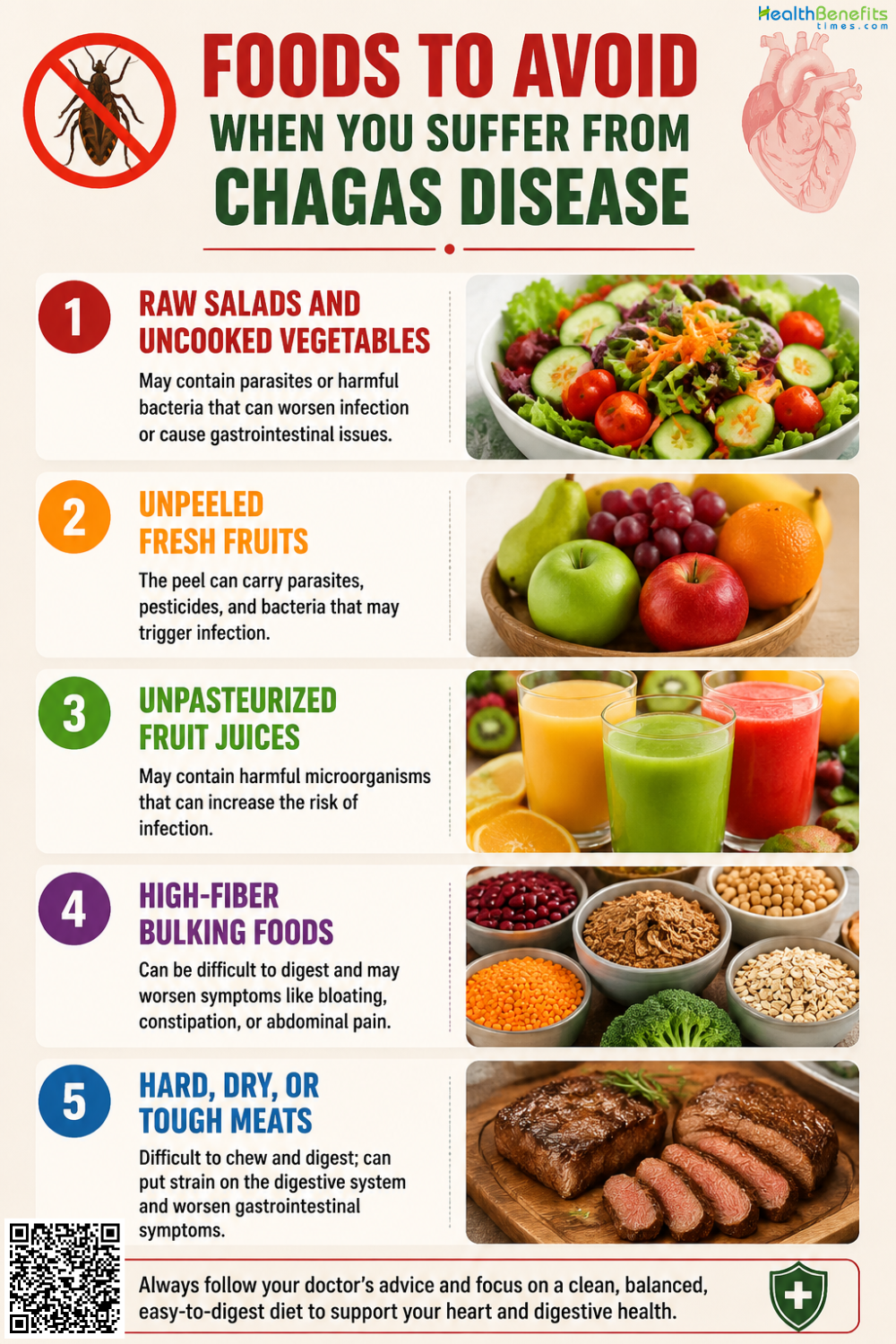
2. Unpeeled Fresh Fruits
Unpeeled fruits can harbor surface parasites or residues from contaminated handling and processing environments, increasing infection risks 16.
3. Unpasteurized Fruit Juices
Freshly pressed juices, particularly sugarcane juice prepared in endemic areas, have historically caused severe oral infection outbreaks 16.
4. High-Fiber Bulking Foods
Patients experiencing chronic digestive complications like an enlarged colon must limit excess dietary fiber to prevent severe bowel obstruction 17.
5. Hard, Dry, or Tough Meats
Fibrous and difficult-to-chew meats strain the digestive tract, posing significant swallowing and motility challenges for individuals with chronic gastrointestinal enlargement 17.
When to See a Doctor When You Struggle from Chagas Disease
1. Travel or Exposure History
You must consult your doctor immediately if you traveled to rural areas in Latin America or stayed in housing with mud walls where kissing bugs live 4.
2. Unexplained Swelling Around the Eye
Seek medical evaluation promptly if you notice sudden, painless swelling on one eyelid, which serves as a classic early sign of infection 4.
3. Persistent Fever and Fatigue
Schedule a doctor’s appointment if you experience ongoing fever, swollen lymph nodes, body aches, or severe fatigue lasting several weeks after potential exposure 3.
4. New Heart Palpitations or Shortness of Breath
You should see a physician right away if you develop irregular heartbeats, dizziness, fainting spells, or chest discomfort during the chronic stage 1.
5. Severe Chronic Constipation or Swallowing Difficulties
Consult a gastroenterologist immediately if you experience long-term digestive complications, severe abdominal bloating, or difficulty swallowing food 3.