

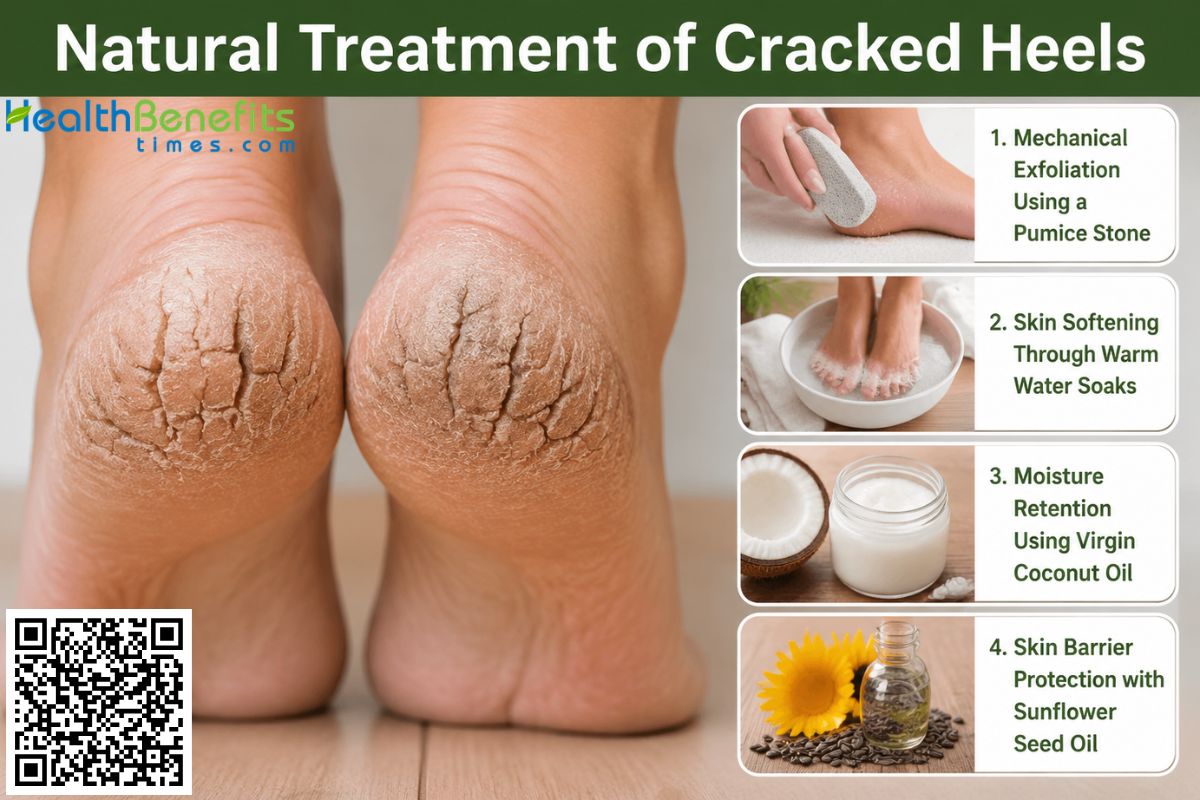
Cracked heels, medically termed heel fissures, are linear cuts or splits that develop in the dry, thickened skin along the outer edge of the heel. This condition begins when the foot’s outer skin layer loses moisture and elasticity, causing it to become rigid and callused. As weight and mechanical pressure are applied during walking or standing, this hardened, inflexible skin cracks instead of stretching 1. While minor fissures may only cause mild discomfort, deep cracks can bleed and expose underlying tissues to bacterial infections. These complications are particularly dangerous for individuals with diabetes, reduced blood circulation, or nerve damage, as untreated heel fissures can rapidly progress into severe, chronic foot ulcers 2. Routine moisturizing and pressure management are practical steps to maintain skin pliability and prevent structural breakdown.
Causes of Cracked Heels
- Severe Skin Dryness (Xerosis): A significant loss of moisture in the outermost layer of the foot is the primary catalyst for heel fissures. When the skin becomes dehydrated, it loses its natural pliability and becomes stiff, making it susceptible to tearing when placed under physical strain.
- Mechanical Stress and Excess Body Weight: Prolonged standing on hard surfaces or carrying excess body weight drastically increases the physical pressure on the heel’s protective fat pad. This downward force causes the pad to expand outward, stretching the dry epidermal tissues until they structurally fail and split.
- Improper Footwear: Walking barefoot or utilizing open-backed shoes, such as sandals, removes essential structural support from the sides of the foot. Without a physical barrier to contain the heel pad, the tissue bulges laterally during walking, significantly elevating the risk of skin ruptures.
- Diabetic Neuropathy: Diabetes frequently induces damage to the autonomic nervous system, which controls sweat and moisture regulation in the lower extremities. This nerve damage leaves patients unable to naturally lubricate their feet, resulting in severe dryness and deep, progressive fissures that can lead to ulceration.
- Peripheral Vascular Disease: Conditions that reduce blood circulation to the legs and feet deprive the dermal tissues of necessary oxygen and nutrients. This circulatory impairment weakens the skin’s defense mechanisms, making the heels highly prone to cracking and drastically slowing down tissue repair.
- Callus Accumulation (Hyperkeratosis): The physical buildup of thickened, dead skin cells around the outer rim of the heel creates rigid plaques of tissue. Because this hardened skin is entirely inflexible, it fractures and breaks open rather than absorbing the mechanical impact of walking.
Symptoms of Cracked Heels
- Thickened, Hardened Skin (Calluses): The initial clinical sign is the accumulation of dry, rigid skin along the heel’s outer rim. This protective tissue thickening often takes on a yellow or brownish appearance and significantly reduces the skin’s natural elasticity.
- Visible Skin Splitting: Noticeable linear cuts or tears develop within the callused areas. These splits can begin as minor surface lines but may progressively widen and deepen into severe structural gaps in the skin’s barrier.
- Pain During Weight-Bearing: Applying physical pressure to the foot, such as when standing or walking, frequently causes sharp pain. This discomfort occurs because the rigid, hardened skin fails to absorb mechanical shock, forcing the underlying sensitive tissues and nerve endings to stretch unnaturally.
- Bleeding and Fluid Seepage: When a heel fissure deepens enough to penetrate the lower, vascularized layers of the skin (the dermis), it ruptures local blood vessels. This results in active bleeding or the weeping of clear fluids directly from the cracks.
- Warmth, Redness, and Swelling (Infection): Deep, open cracks leave the internal foot tissues highly vulnerable to bacterial entry. If a secondary infection develops within the fissure, the heel will exhibit clinical warning signs such as localized heat, spreading redness, significant swelling, and a throbbing sensation.
Natural Treatment of Cracked Heels
1. Mechanical Exfoliation Using a Pumice Stone
How It May Help
Mechanical exfoliation using a pumice stone physically removes the thick, dead skin buildup on the heel. By gently shaving down this hardened layer, it reduces physical pressure on the foot during walking, preventing existing cracks from deepening. This process also helps moisturizing ointments absorb more effectively to promote healing.
What Research Says
Clinical studies indicate that managing thickened plantar skin requires physical debridement. Research confirms that patients with severe heel calluses benefit significantly from warm water soaks followed by gentle mechanical scale removal using a pumice stone, especially when combined with keratolytics to maintain skin elasticity 3.
How to Use It Safely
Soak your feet in warm water for ten minutes to soften the skin. Wet the pumice stone and gently rub it over the cracked area using light, circular motions. Rinse your feet, pat them dry, and apply a thick moisturizer to seal in hydration.
Potential Precautions or Side Effects
Never use pumice stones on bleeding, infected, or severely deep fissures. Individuals with diabetes or neuropathy must avoid them completely to prevent unnoticed injuries and severe infections 4.
2. Skin Softening Through Warm Water Soaks
How It May Help
Soaking feet in warm water directly hydrates the thick, hardened skin on the heels. This process softens tough calluses, making it easier to safely remove dead skin. Additionally, softened skin becomes more permeable, allowing healing ointments to penetrate deeply and repair the damaged barrier more effectively.
What Research Says
Dermatological studies confirm that hydrating the outer skin layer through water immersion significantly improves skin flexibility. Research emphasizes that briefly soaking thickened skin softens its protein structure, enhancing both safe physical removal and the absorption of treatments designed to heal fissures 5.
How to Use It Safely
Fill a basin with warm—never hot—water. Soak your feet for ten to fifteen minutes until the skin feels soft. Gently pat your feet dry with a towel, leaving them slightly damp. Immediately apply a thick, heavy ointment to lock in the moisture.
Potential Precautions or Side Effects
Avoid excessively hot water, which worsens skin dryness. Individuals with diabetes, neuropathy, or open sores must avoid soaking to prevent unrecognized burns and severe bacterial infections 4.
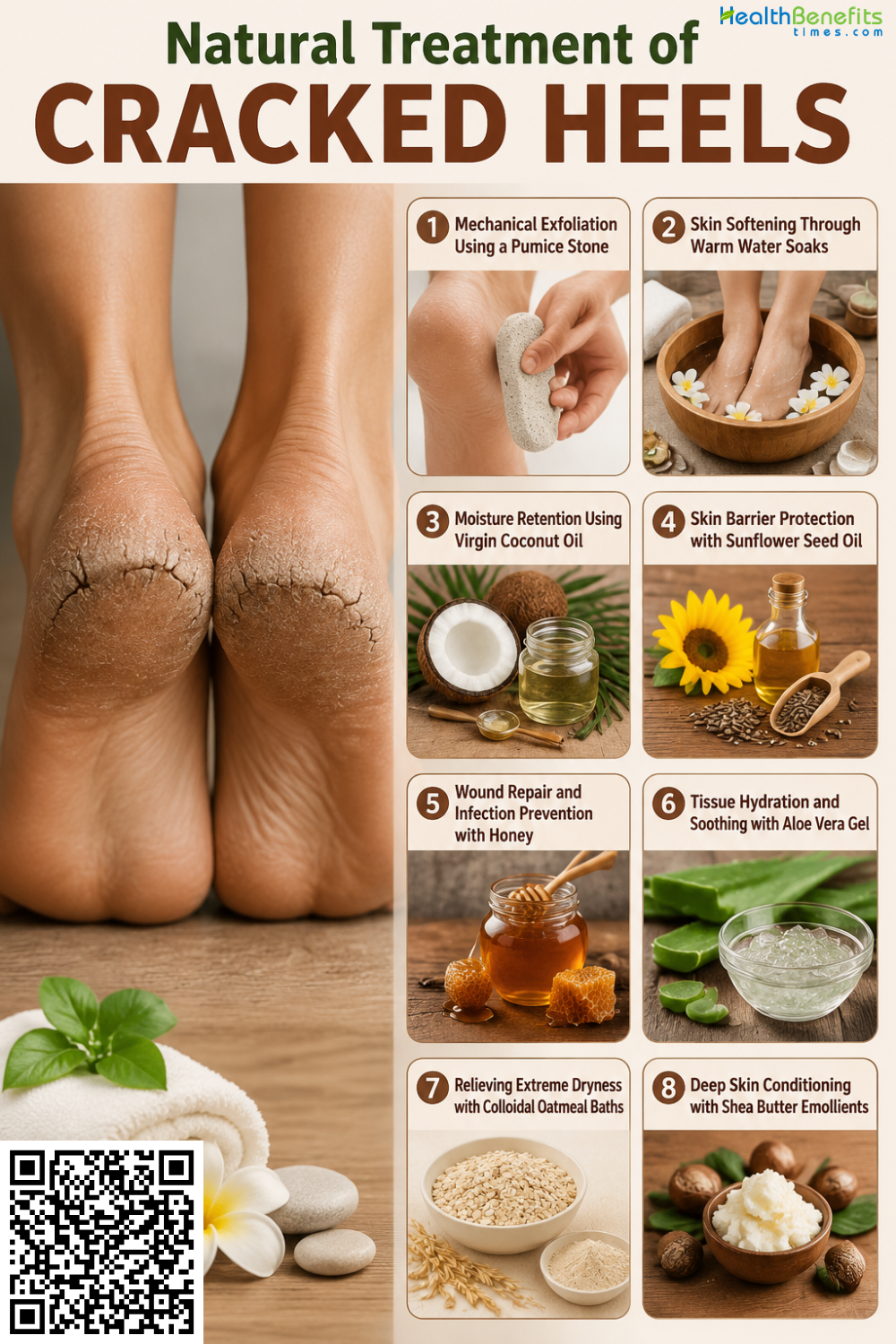
3. Moisture Retention Using Virgin Coconut Oil
How It May Help
Virgin coconut oil functions as an effective natural emollient, filling the microscopic spaces between dry, flaking skin cells on the heel. By creating a thick protective barrier, it prevents further water loss. Its natural antimicrobial properties also help protect deep, open fissures from bacterial and fungal infections.
What Research Says
Clinical research demonstrates that virgin coconut oil significantly improves skin hydration and enhances the natural protective barrier function. Studies confirm its topical application accelerates tissue repair and provides mild antibacterial effects, making it highly effective for treating severely dry, compromised skin 6.
How to Use It Safely
Clean and thoroughly dry your feet before application. Massage a generous layer of virgin coconut oil directly into the cracked heels. For maximum moisture retention, put on clean, breathable cotton socks and leave them on overnight to allow deep absorption.
Potential Precautions or Side Effects
Applying oils creates a severe slipping hazard, so avoid walking barefoot immediately after use. Though uncommon, topical coconut oil can trigger allergic contact dermatitis in sensitive individuals 7.
4. Skin Barrier Protection with Sunflower Seed Oil
How It May Help
Sunflower seed oil acts as an effective natural moisturizer that helps rebuild the skin’s protective outer layer. Rich in essential fatty acids, it seals in moisture and prevents water loss. This keeps the thick skin on the heels hydrated, flexible, and significantly less likely to split under pressure.
What Research Says
Dermatological research confirms that topical application of sunflower seed oil preserves the integrity of the outer skin layer and significantly improves hydration. Studies show that its high linoleic acid content enhances skin barrier repair without causing irritation, making it highly effective for dry, compromised skin 6.
How to Use It Safely
Wash and gently dry your feet completely. Massage a small amount of cold-pressed sunflower seed oil directly into your cracked heels until absorbed. Put on clean, breathable cotton socks and leave them on overnight to deeply hydrate the hardened skin.
Potential Precautions or Side Effects
Oils create a dangerous slipping risk on bare floors. Individuals allergic to the ragweed plant family should avoid sunflower oil to prevent potential allergic skin reactions 8.
5. Wound Repair and Infection Prevention with Honey
How It May Help
Medical-grade honey acts as a natural humectant, drawing moisture into dry, hardened skin while creating a protective physical barrier. Its natural antibacterial properties help prevent severe infections in deep heel fissures, and its active enzymes stimulate tissue regeneration to safely close open cracks faster.
What Research Says
Clinical reviews confirm that honey accelerates wound healing and provides broad-spectrum antimicrobial defense. Research demonstrates its high sugar concentration and enzymatic activity reduce inflammation, clear wound debris, and stimulate the growth of new, healthy skin cells, making it highly effective for treating deep dermal fissures 9.
How to Use It Safely
Wash and dry your feet thoroughly. Apply a thin layer of medical-grade or raw honey directly into the deep cracks on your heels. Cover the area with a sterile gauze pad or wear clean cotton socks overnight to prevent stickiness, then rinse it off completely in the morning.
Potential Precautions or Side Effects
Avoid using honey if you have severe pollen or bee venom allergies, as it may trigger contact dermatitis. Always cover the application site to prevent environmental dirt accumulation 10.
6. Tissue Hydration and Soothing with Aloe Vera Gel
How It May Help
Aloe vera gel deeply hydrates the hardened skin on the heels due to its high water content. It contains natural vitamins and plant compounds that reduce local inflammation, soothe pain from deep fissures, and actively promote the physical repair of damaged skin tissue.
What Research Says
Clinical studies confirm that aloe vera significantly improves skin hydration using mucopolysaccharides, which actively bind moisture into the skin. Research demonstrates it accelerates tissue repair by stimulating collagen production and reducing inflammation, making it effective for healing deep epidermal fissures 11.
How to Use It Safely
Wash and dry your feet thoroughly. Apply a generous layer of pure, unscented aloe vera gel directly to your cracked heels. Massage it gently until absorbed. Wear clean, breathable cotton socks overnight to lock in moisture and prevent the gel from rubbing off.
Potential Precautions or Side Effects
Topical aloe vera may occasionally cause allergic contact dermatitis. Individuals with known allergies to garlic or onions should avoid application to prevent adverse skin reactions 12.
7. Relieving Extreme Dryness with Colloidal Oatmeal Baths
How It May Help
Colloidal oatmeal binds to the skin to create a protective physical barrier that seals in moisture. It contains natural plant compounds that relieve the intense itching and severe dryness associated with cracked heels. By softening the thickened outer layer, it helps prevent deep fissures from worsening.
What Research Says
Clinical research confirms that colloidal oatmeal significantly strengthens the skin barrier and provides anti-inflammatory benefits. Studies demonstrate that its active compounds, particularly avenanthramides, effectively reduce severe dryness, soothe irritation, and restore normal skin pH, making it an effective therapy for compromised skin 13.
How to Use It Safely
Fill a foot basin with warm water and stir in two tablespoons of finely ground colloidal oatmeal until the water turns milky. Soak your feet for ten to fifteen minutes. Gently pat your skin dry and immediately apply a thick moisturizer to lock in the hydration.
Potential Precautions or Side Effects
Oatmeal makes basin surfaces extremely slippery, increasing fall risks. Individuals with known oat sensitivities should avoid this treatment to prevent potential allergic contact dermatitis 14.
8. Deep Skin Conditioning with Shea Butter Emollients
How It May Help
Shea butter acts as a powerful natural emollient that deeply conditions thickened skin. By filling the microscopic gaps between shedding skin cells, it smooths the heel’s surface. It also forms a protective physical barrier that locks in natural moisture, preventing severe dehydration and stopping cracks from deepening.
What Research Says
Clinical reviews indicate that emollients containing shea butter actively repair the skin’s protective barrier. Research confirms that these plant-based lipids effectively fill spaces between dry skin cells and significantly reduce trans-epidermal water loss. This restores essential hydration and increases tissue flexibility, preventing deep dermal fissures 15.
How to Use It Safely
Wash and dry your feet completely. Scoop a small amount of raw shea butter and rub it between your palms to melt it. Massage it directly into your cracked heels. Wear clean, breathable cotton socks overnight to ensure deep absorption and prevent slipping.
Potential Precautions or Side Effects
Because it is highly lubricating, it creates a dangerous slipping hazard on bare floors. Individuals with severe tree nut allergies should perform a patch test to prevent potential allergic reactions.
Foods to Avoid When You Suffer from Cracked Heels
Dietary choices directly impact body hydration, systemic inflammation, and tissue repair. Avoiding certain foods helps maintain skin elasticity and prevents existing fissures from worsening.
1. Refined Sugars
High sugar intake damages skin structure and impairs blood flow, significantly slowing the body’s ability to heal deep open cracks on the heels 16.
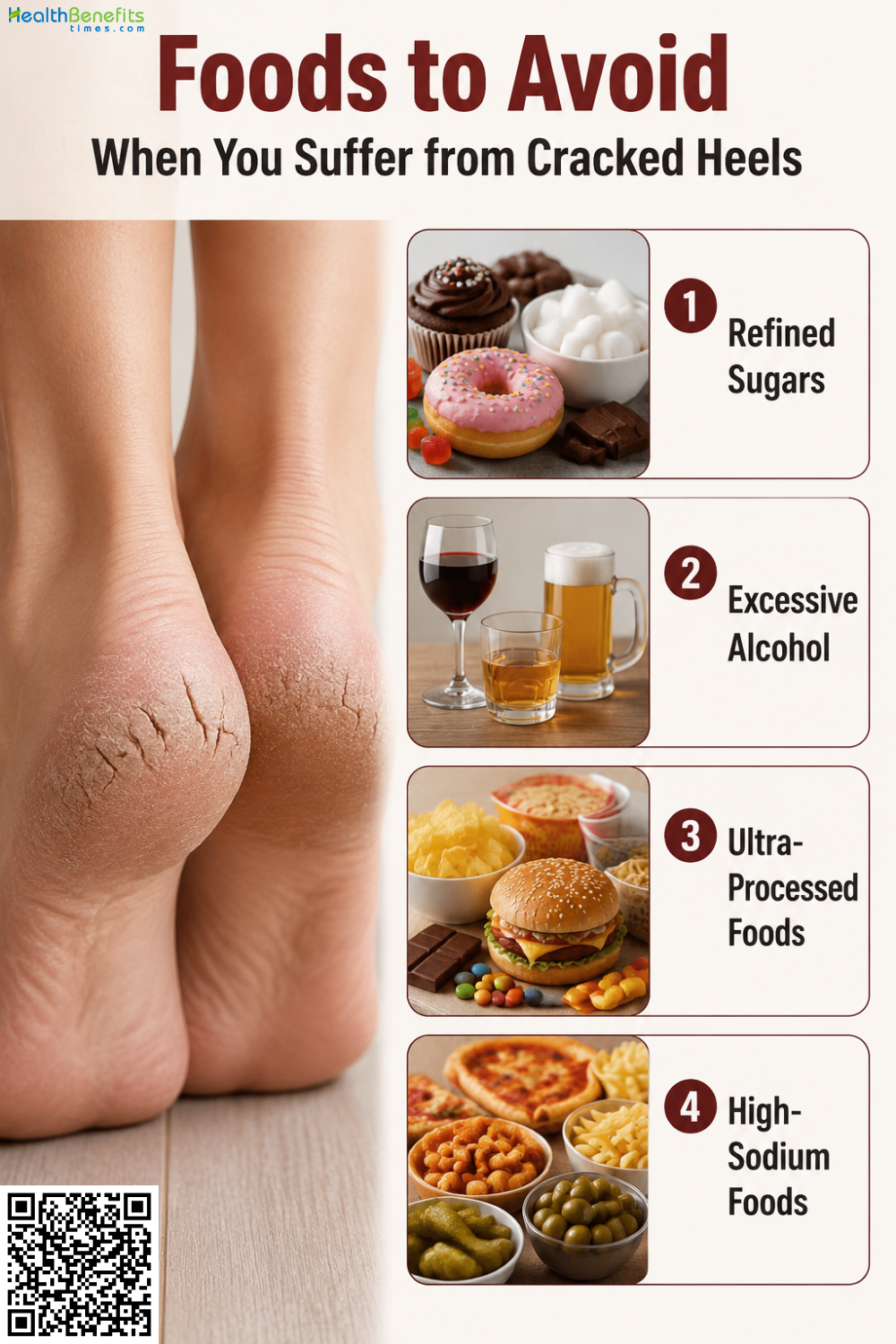
2. Excessive Alcohol
Alcohol acts as a powerful diuretic that forces the body to lose excessive water, worsening the severe skin dryness responsible for splitting heels 17.
3. Ultra-Processed Foods
Heavily modified foods trigger internal inflammation and lack the essential healthy fats required to successfully rebuild the damaged outer skin layer of the foot 18.
4. High-Sodium Foods
Heavy salt consumption disrupts the body’s natural water balance, pulling essential moisture away from skin cells and making thick heel calluses much more prone to cracking 19.
When to See a Doctor When You Suffer from Cracked Heels
While natural treatments and routine exfoliation effectively manage mild cases of cracked heels, severe fissures require professional medical evaluation. Delaying clinical care can lead to deep tissue infections, impaired mobility, and serious structural foot complications. Professional medical intervention becomes necessary when self-care methods fail or when systemic health issues compromise the body’s natural healing abilities.
1. Signs of Infection
Seek immediate care if the cracks leak pus, feel warm, or show spreading redness, as these indicate a bacterial infection requiring prescribed oral or topical antibiotics 20.
2. Pre-existing Diabetes
Individuals with diabetes must consult a doctor for foot cracks, as nerve damage and poor blood flow drastically increase the risk of severe ulcers and potential amputation 4.
3. Bleeding or Severe Pain
Medical treatment is necessary when fissures bleed or cause significant pain during walking, indicating the crack has penetrated into the deeper, vascular layers of the skin 5.
4. Unresponsive to Home Care
Consult a physician if cracks show no improvement after two weeks of consistent care, as this may indicate underlying conditions like psoriasis, fungal infections, or hypothyroidism 21.