

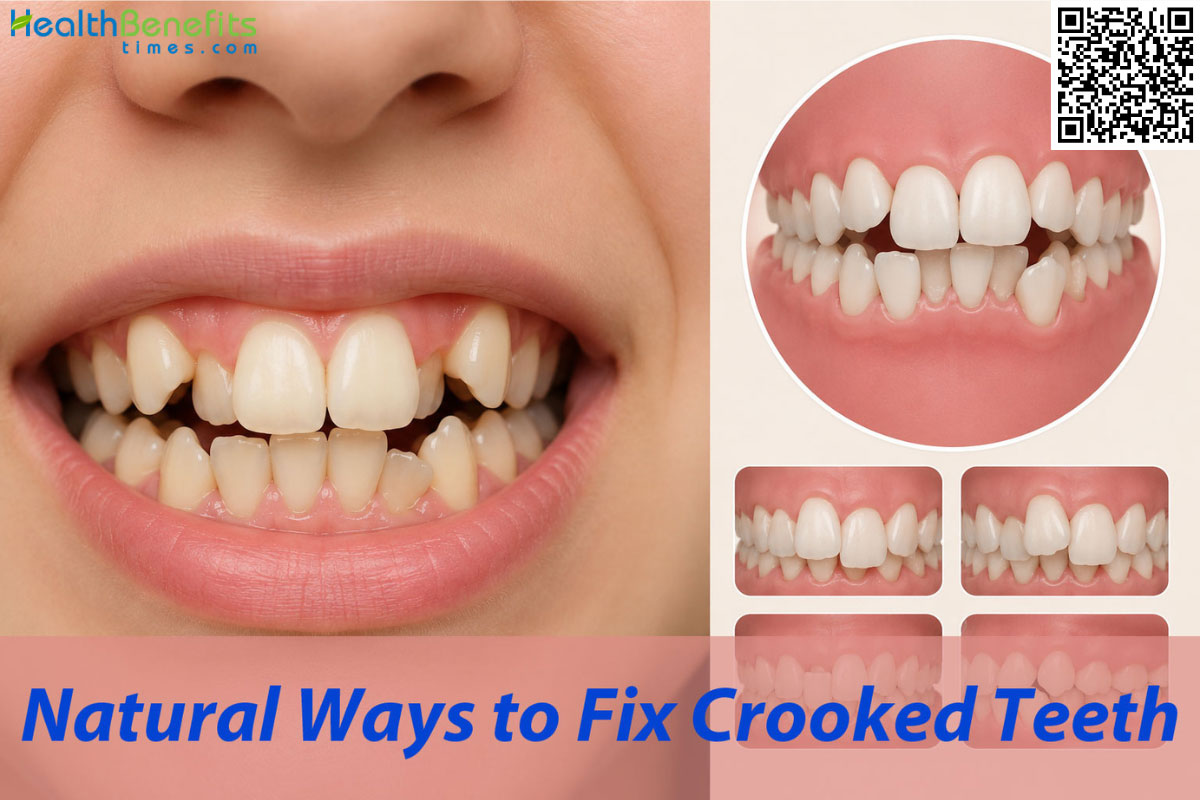
Crooked teeth, medically known as malocclusion, refer to the misalignment of teeth and the improper fitting together of the upper and lower jaws when the mouth is closed 1. This condition occurs when teeth are crowded, spaced too far apart, or when the jaws do not align correctly such as in an overbite or underbite. The causes of malocclusion are typically a combination of genetics, like inheriting a jaw that is too small to accommodate all permanent teeth, and environmental factors 2. Common childhood habits, including prolonged thumb sucking, pacifier use, and chronic mouth breathing, can also alter jaw development and lead to misalignment 3. If left untreated, overlapping teeth create hard-to-reach areas that increase the risk of tooth decay and gum disease, while uneven bite pressure can cause premature enamel wear and jaw pain. Dentists and orthodontists typically correct malocclusion using braces, clear aligners, or, in severe skeletal cases, corrective jaw surgery 4.
Causes of Crooked Teeth
Understanding the origins of dental misalignment requires looking at a complex web of inherited traits, functional habits, and environmental shifts that influence craniofacial growth.
1. Genetic and Epigenetic Inheritance
The foundational blueprint for facial structure is heavily dictated by genetics, which fundamentally control tooth size, jaw dimensions, and eruption timelines. Specific genetic variants, including mutations in the ADAMTS2 gene, are directly responsible for an increased biological susceptibility to severe skeletal Class III malocclusions and a deficient upper jaw 5. Additionally, genes such as MYO1H (myosin 1H) and ACTN3 (alpha-actinin-3) have been pinpointed as major contributors to variations in jaw development and tooth size discrepancies, dictating the angular growth of the skeletal phenotype 6. Epigenetic mechanisms, such as DNA methylation, can also alter how these genes are expressed, further impacting the progression of a misaligned bite 7.
2. Chronic Mouth Breathing
Relying on the oral cavity for respiration rather than the nasal passages drastically alters the resting posture of the entire head and neck. This constant adaptation frequently causes a downward and backward rotation of the mandible, presenting clinically as a Class II malocclusion accompanied by an increased lower facial height and a highly steep occlusal plane 8. Because the mouth remains open, the tongue drops from the palate, removing the crucial internal pressure needed to expand the upper jaw properly 9.
3. Evolutionary Dietary Shifts
The texture of the modern human diet represents a radical departure from the tough, fibrous foods consumed by early ancestors, which required immense masticatory effort. Lacking the necessary mechanical load provided by vigorous chewing, modern human jaws fail to receive the biological signals required to grow to their full genetic potential 10. This chronic underdevelopment results in narrow dental arches that simply do not possess enough physical space to house all the erupting permanent teeth, leading inevitably to severe crowding.
4. Non-Nutritive Sucking Habits
Engaging persistently in habits such as thumb sucking, finger sucking, and prolonged pacifier use applies continuous, unnatural mechanical pressure to the soft anterior structures of the mouth. When these comforting behaviors extend beyond the preschool years, they frequently trigger the development of an anterior open bite and a dramatically increased overjet 11. The prolonged presence of a thumb or pacifier physically blocks the incisors from meeting, altering the morphogenetic function of the oral cavity 12.
5. Hypertrophied Adenoids and Airway Obstruction
When the delicate nasal airway becomes physically obstructed by pathologically enlarged adenoids, a child is biologically forced to breathe through their mouth to survive. This posterior nasopharyngeal obstruction consistently leads to a clockwise rotation of the lower jaw, resulting in a large overjet and narrow palatal arches 13. In similar fashion, hypertrophied tonsils can obstruct the lower upper airway, prompting a child to continuously thrust their mandible forward to breathe, often culminating in an anterior crossbite.
6. Premature Loss of Primary Dentition
Baby teeth serve a critical architectural purpose by acting as natural space maintainers for the adult teeth waiting dormant beneath the gum line. If these primary teeth are lost far too early due to severe decay or physical trauma, the adjacent teeth naturally drift into the newly empty space 14. This drifting effectively blocks the proper eruption pathway of the permanent teeth, forcing them to emerge sideways, rotated, or completely out of alignment in the dental arch.
7. Improper Oral Resting Posture
Failing to keep the teeth in light contact and the tongue fully elevated against the hard palate during idle periods fundamentally alters the delicate pressure system of the face. When the jaw hangs open at rest, the tongue spills outward over the lower teeth, completely depriving the upper jaw of the expansive lateral forces it requires to maintain its width 15.
Symptoms when Crooked Teeth
Identifying the presence of a dental malocclusion extends far beyond recognizing a cosmetically imperfect smile, as the condition generates numerous functional and structural warning signs.
- Visible overlapping, rotation, or irregular spacing of the anterior and posterior teeth.
- Frequent, painful biting of the inner mucosal tissues of the cheeks, lips, or tongue during routine eating and speaking.
- Noticeable difficulty in pulverizing food boluses efficiently, which severely reduces overall masticatory performance and can lead to secondary digestive inefficiencies 16.
- Pronounced speech impediments, such as lisping or slurring, resulting from the tongue’s inability to strike the misaligned incisors correctly during consonant production.
- Development of temporomandibular joint (TMJ) discomfort, often characterized by a unilateral clicking sound, popping, or radiating muscular pain upon opening the mouth 17.
- Chronic inability to comfortably seal the lips together at rest, clinically referred to as lip incompetence.
- Persistent mouth breathing during both waking hours and sleep, which directly correlates with morning xerostomia (dry mouth) and sleep-disordered breathing 18.
- Increased accumulation of dental plaque and calculus due to the physical impossibility of cleaning the tight, overlapping crevices between crowded teeth 19.
- Heightened risk of localized gingival inflammation, periodontal disease, and rampant dental caries originating from uncleaned areas of the misaligned dental arch.
- Asymmetrical facial profiles, presenting either as a significantly retruded lower jaw or a protruding, prominent chin 20.
Crooked Teeth Facts Table
The complexities of dental misalignment are best understood by examining its structural triggers, demographic impact, and associated physiological risks.
| Category | Facts and Details |
| Symptoms |
|
| Causes |
|
| How does it Begin |
|
| Age Group |
|
| You might be at a higher risk for exposure of this disease if you: |
|
| Other facts |
|
Natural Ways to Fix Crooked Teeth
When you seek non-surgical and non-mechanical approaches to address misaligned teeth, your focus must shift completely toward correcting the underlying muscular and functional behaviors of your face and airway. It is highly important to recognize that while these conservative methods can optimize your jaw’s natural growth trajectory, naturally widen dental arches during childhood, and prevent a bad bite from worsening, severe structural anomalies typically still require the intervention of professional orthodontic appliances. However, integrating the following foundational functional practices can profoundly stabilize and improve your overall dental alignment.
1. Practicing Orofacial Myofunctional Therapy (OMT)
Engaging in specialized, targeted exercises for your facial and tongue muscles essentially acts as rehabilitative physical therapy for your mouth. Orofacial myofunctional therapy consists of a highly individualized, repetitive program designed explicitly to retrain your neuromuscular pathways, correct improper resting postures, and permanently eliminate infantile tongue thrusting habits 21. By performing specific exercises like “lip pops” to activate the orbicularis oris muscle, or utilizing lingual palatal suction to strengthen the styloglossus and palatoglossus muscles, you actively build the tongue’s elevation and motility 22. Over time, this consistent, upward muscular pressure naturally supports the lateral expansion of the upper jaw, counteracting the inward, narrowing forces exerted by your cheek muscles. Furthermore, implementing this therapy has been scientifically proven to significantly decrease overjet, aid in closing anterior open bites, and remarkably prevent the relapse of teeth after conventional braces are eventually removed 23.
Note: This is commonly used as a daily regimen of guided facial exercises to train muscle memory and provide remedial benefits for swallowing, speech, and dental stability.
2. Transitioning to Exclusive Nasal Breathing
Your chosen route of respiration plays an absolutely monumental role in the structural development and maintenance of your lower face. By making a conscious, deliberate, and sustained effort to breathe exclusively through your nose, you physically allow your lips to remain perfectly sealed and your tongue to rest broadly against the roof of your mouth. Nasal breathing effectively filters, humidifies, and warms incoming air, while simultaneously triggering the release of nitric oxide in the sinuses, a critical gas that optimizes cellular oxygen uptake 24. Conversely, persistent mouth breathing forces your jaw to hang open, entirely removing the tongue’s internal structural support from the upper teeth and promoting a severely detrimental downward and backward facial growth pattern 9. Ensuring that you breathe deeply through your nasal passages both during active daytime hours and while sleeping maintains a balanced physiological equilibrium of forces between the inner tongue and outer lips, keeping your erupting teeth in a stable, broad arch.
Note: This is commonly applied as a continuous, lifelong lifestyle modification to support holistic craniofacial development and maximize respiratory health.
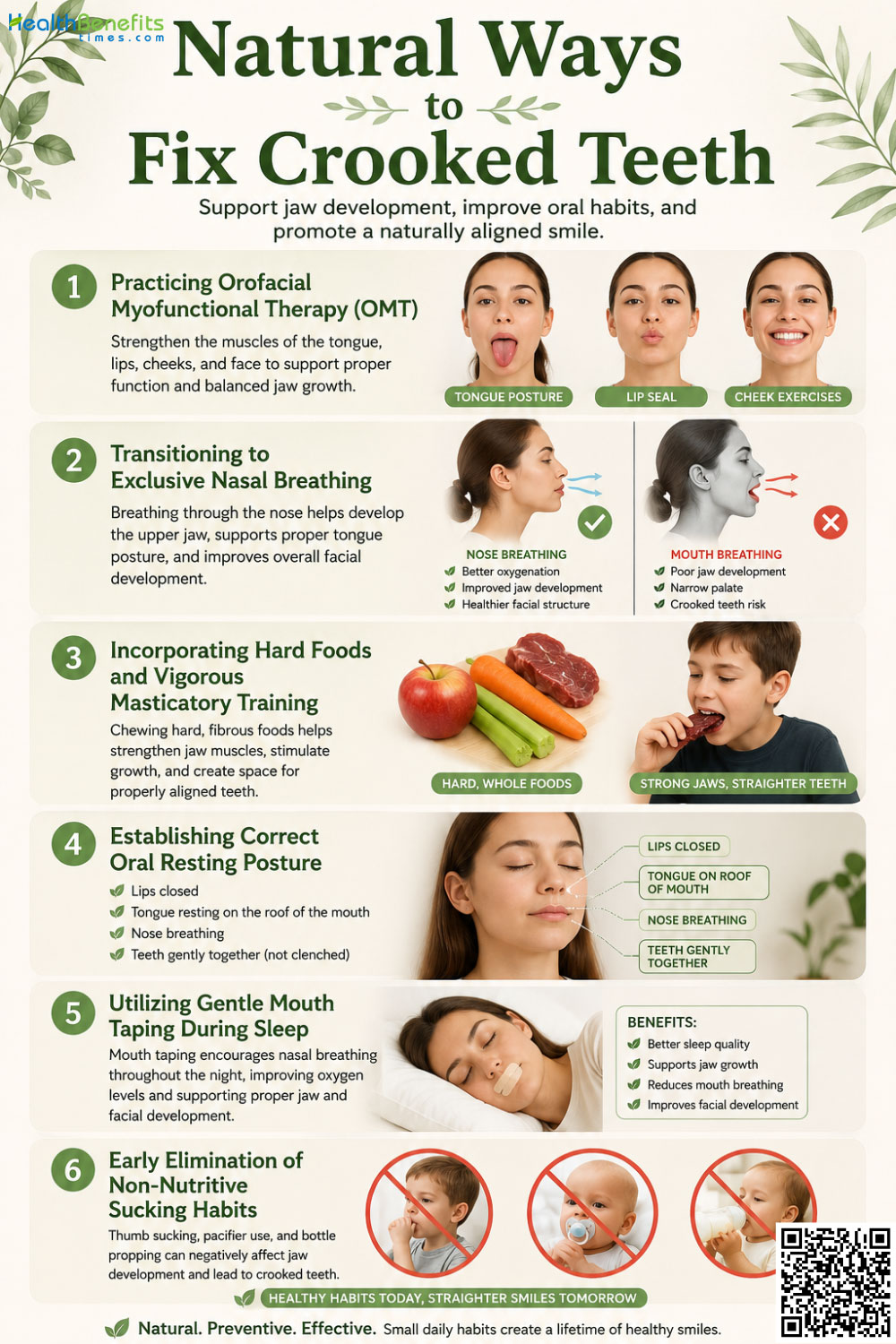
3. Incorporating Hard Foods and Vigorous Masticatory Training
A fascinating evolutionary reality reveals that modern soft diets miserably fail to challenge your jaw muscles adequately, leading directly to underdeveloped facial bones. By consciously reintroducing harder, more fibrous, and resilient foods into your daily meals, you vigorously stimulate the crucial muscles of mastication. The intense mechanical load placed on your teeth and jaws during rigorous, repetitive chewing sends powerful biological signals to your skeletal system, actively reducing sclerostin expression in osteocytes and encouraging the jawbone to expand to its maximum genetic potential 25. Additionally, the regular daily chewing of firm, sugar-free gum has been directly linked to increased functional capacity, greater bite force, and highly coordinated activity of both the masseter and temporalis muscles 26. A physically wider, denser jaw naturally creates ample room for all your teeth to align neatly without suffering from severe crowding or impaction.
Note: This is commonly eaten or practiced daily to naturally stimulate healthy jaw bone growth and immensely strengthen the muscles of mastication.
4. Establishing Correct Oral Resting Posture
The exact location where your tongue sits when you are not actively eating or speaking serves as the invisible, guiding architect of your dental arches. You must diligently practice keeping the entire tip and body of your tongue resting gently but firmly against the hard palate, situated slightly behind the upper front teeth, with the tongue fully suctioned upward. At the very same time, your upper and lower teeth should remain slightly apart or resting gently together without clenching, and your lips must be comfortably sealed without any visible muscular strain. Maintaining this precise anatomical posture acts as a natural, continuous orthodontic retainer that supports the width of the maxilla. While internet trends like “mewing” have wildly popularized this concept, you must focus purely on establishing a healthy, gentle resting posture rather than applying forceful, unregulated pressure, which can easily damage the roots of your teeth 27.
Note: This is commonly applied as a silent mindfulness technique throughout the day to guide jaw growth gently and prevent the inward collapse of your dental arches.
5. Utilizing Gentle Mouth Taping During Sleep
Because you completely lose conscious control of your mouth posture while you are deeply asleep, mild mouth taping has emerged as a highly effective, supportive habit to ensure uninterrupted nighttime nasal breathing. By placing a small, specially designed piece of non-allergenic tape vertically across your lips, you physically encourage your mouth to stay closed throughout the night. This simple barrier prevents the heavy mandible from dropping open and effectively stops the detrimental drying out of the upper airway lining liquid 18. When your lips remain gently secured overnight, your tongue naturally stays elevated against the palate, consistently supporting your dental arch width during your most critical restorative hours. Furthermore, clinical evidence clearly suggests that securing the lips gently with tape can significantly reduce instances of mild sleep-disordered breathing and snoring by strictly enforcing the optimal nasal airway route 28.
Note: This is commonly applied topically right before bed as a physical reminder for your resting body to maintain lip seal and nasal breathing for maximum restorative health benefits.
6. Early Elimination of Non-Nutritive Sucking Habits
If you are currently a parent managing a young child’s dental development, actively breaking persistent habits like thumb sucking and pacifier dependency represents one of the most effective natural ways to prevent crooked teeth from ever forming. These powerful sucking habits forcefully drive the upper front teeth forward and upward, creating a highly visible gap known as an anterior open bite where the upper and lower teeth simply can no longer touch 11. By implementing positive reinforcement, utilizing creative reward systems, or seeking mild behavioral strategies to completely end these habits by the age of three, you allow the child’s facial muscles to normalize quickly. Once the physical, mechanical obstruction of the thumb or pacifier is entirely removed from the equation, the child’s natural, balanced lip pressure can very often guide slightly flared teeth back into a much better position completely spontaneously 29.
Note: This is commonly applied as a proactive behavioral remedy in early childhood to fiercely protect the natural, unhindered eruption path of permanent teeth.
Activities to Avoid When You Have Crooked Teeth
To rigorously protect your smile from sustaining further structural damage and to avoid severely exacerbating any existing misalignments, there are several highly counterproductive activities you must steer clear of completely. While many modern internet trends enthusiastically promise rapid, miraculous fixes, they overwhelmingly deliver devastating, long-lasting harm to the mouth.
1. Practicing Unregulated “Mewing”
You must not fall victim to viral social media trends that carelessly suggest forcefully pressing your tongue against the roof of your mouth to aggressively chisel your jawline. Excessive and highly uneven pressure from this completely unscientific practice easily disrupts natural alignment, violently pushes teeth forward, misaligns the bite, and causes severe, irreversible tooth wear 30.
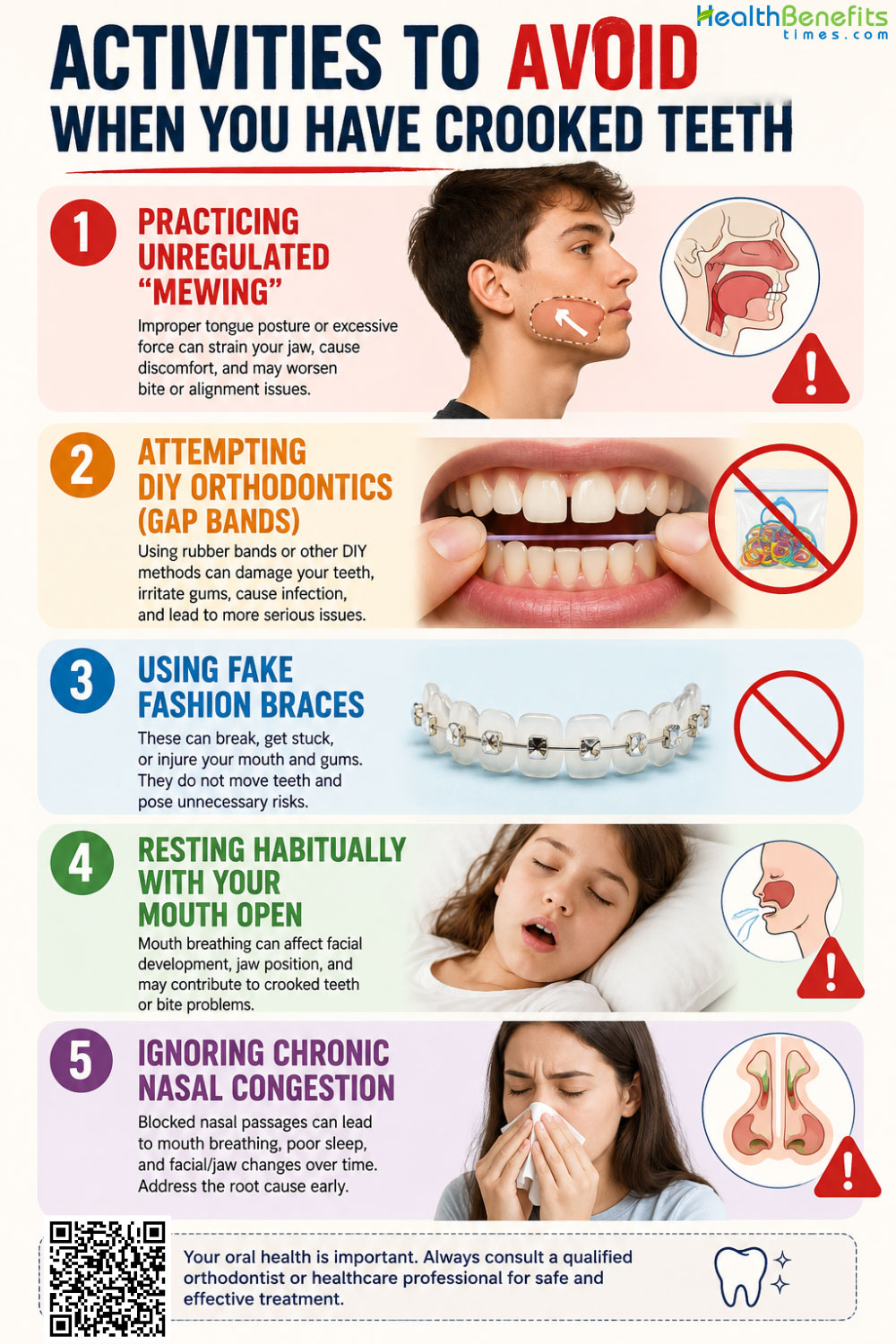
2. Attempting DIY Orthodontics (Gap Bands)
You must absolutely never attempt to use common household items, such as small elastic rubber bands, to try and rapidly pull spaced teeth together at home. These infamous “gap bands” routinely slide dangerously up the tooth root, burying themselves deeply under the gum line, which utterly destroys the supporting alveolar bone and frequently leads to the permanent, traumatic loss of the front teeth entirely 31.
3. Using Fake Fashion Braces
Completely avoid purchasing purely cosmetic or counterfeit braces sold cheaply online. These highly unregulated, poorly constructed materials apply entirely uncontrolled, dangerous mechanical forces to your teeth and can easily introduce highly toxic metals, choking hazards, or severe mucosal infections directly into your mouth 32.
4. Resting Habitually with Your Mouth Open
You must stop allowing your jaw to hang open mindlessly while watching television, reading, or working at a desk. Keeping the teeth apart at rest drastically alters the delicate pressure dynamics of the mouth, causing the tongue muscle to spill out lazily over the lower teeth, which directly contributes to a rapid shrinking and narrowing of the upper jaw 15.
5. Ignoring Chronic Nasal Congestion
Do not quickly dismiss a constantly stuffy nose or perpetual allergies as a minor annoyance. Willfully ignoring severe sinus issues forces you to chronically breathe through your mouth to survive, which relentlessly perpetuates terrible facial posture, drops the tongue, and continuously worsens dental malocclusions and facial elongation over time 33.
Myths and Misconceptions
The vast landscape of modern dental health is frequently clouded by viral misinformation, outdated generational beliefs, and dangerous internet trends. The table below thoroughly clarifies the most prevalent myths regarding crooked teeth and highlights the stark biological reality behind them.
| Myth | Reality |
| Mewing is a medically safe, proven alternative to getting braces. 34 | The popular practice of “mewing” entirely lacks peer-reviewed scientific backing; improperly forcing the tongue can cause irreversible structural damage, severe TMJ pain, and dangerous tooth loosening. |
| Crooked teeth are entirely and exclusively caused by bad genetics. 35 | While genetics undoubtedly play a baseline role, environmental factors like chronic mouth breathing, soft dietary habits, and improper oral resting posture are equally responsible for the modern epidemic of malocclusion. |
| You can quickly and safely close a tooth gap at home with a rubber band. 36 | Using a standard rubber band on teeth is extraordinarily dangerous; the band easily slips completely under the gums, severing the vital periodontal ligament and causing the tooth to fall out completely within weeks. |
| Baby teeth don’t matter at all because they simply fall out anyway. {% https://www.aapd.org/globalassets/media/publications/archives/haskell-13-02.pdf %}. | Primary teeth act as vital, biological space maintainers; losing them prematurely to severe decay or extraction directly causes massive crowding and spatial collapse for the incoming permanent teeth. |
| Thumb sucking is a completely harmless phase that all children outgrow naturally. 12 | If intense thumb sucking persists past age three, it actively and forcefully deforms the hard palate and pulls the front teeth outward, almost always resulting in a severe, skeletal anterior open bite. |
| Chewing very hard food damages your teeth and should be avoided. 37 | Unless a tooth is already severely compromised or decayed, the regular chewing of firm, tough foods is biologically required to build strong, dense jawbones and maintain intricate masticatory muscle coordination. |
The Evolutionary and Biological Mechanics of Jaw Underdevelopment
Tracing the anatomical history of the human craniofacial structure provides profound insights into why dental crowding has become a nearly universal affliction in modern society. From an evolutionary biology standpoint, the root causes of our shrinking jaws can be traced back several hundred thousand years as the massive crania of archaic hominids rapidly evolved into the more delicate structures of modern Homo sapiens 15. However, the most drastic physiological changes have occurred only in the last few centuries, coinciding perfectly with the advent of extreme food processing.
Historically, the human diet consisted of raw, fibrous, and heavily textured foods that demanded hours of intense mastication every single day. This relentless physical labor placed an enormous mechanical load directly on the musculoskeletal tissue of the developing maxillofacial region. Biologically, this intense mechanical stress causes osteocytes the primary cells of mature bone to produce high levels of Insulin-like Growth Factor 1 (IGF-1), which powerfully promotes osteoblastogenesis and bone formation right at the enthesis of the masseter muscle 25. Modern diets, heavily reliant on pureed, soft, and hyper-processed foods, completely deprive the jaw of this essential mechanical signaling. Consequently, modern human jaws fail to reach the expansive dimensions achieved by our ancestors, resulting in a systemic spatial deficiency where large permanent teeth are forced to erupt into an undersized, narrow skeletal arch.
The Intricate Link Between Airway Health and Dental Occlusion
Investigating the relationship between respiratory function and the physical alignment of teeth reveals that the airway acts as the primary dictator of craniofacial posture. The human body prioritizes oxygen intake above all other biological functions; therefore, if the primary nasal airway is compromised, the body will instantly sacrifice structural dental harmony to keep the individual breathing.
When children suffer from conditions like pathological adenoid hypertrophy or massively swollen palatine tonsils, the posterior nasopharyngeal airway becomes completely choked off. To survive, the child must open their mouth to breathe, which instantaneously drops the tongue from the roof of the mouth to the floor. Without the broad, muscular tongue pressing outward against the palate, the inward forces of the buccinator muscles in the cheeks remain entirely unopposed. Over time, this muscular imbalance crushes the upper jaw inward, creating a highly constricted, V-shaped maxillary arch characterized by a high palatal vault and severe dental crossbites 38. Furthermore, oral breathing physically alters the chemical composition of the mouth. Clinical evaluations confirm that oral breathing aggressively increases the surface tension of the upper airway lining liquid, stripping the mucosa of its protective moisture and exacerbating sleep-disordered breathing conditions 18. By fully addressing airway blockages early, practitioners can naturally redirect the jaw’s growth trajectory and prevent the catastrophic cascade of severe malocclusion.
When to see a Doctor
While mastering functional habits and implementing natural preventative measures at home are highly beneficial, severe dental misalignments frequently require the keen, experienced eye and precise mechanical intervention of a medical professional. You should absolutely not hesitate to seek the formal expertise of a licensed orthodontist or pediatric dentist when specific developmental red flags begin to appear.
1. Schedule a Comprehensive Evaluation by Age 7
You should ensure your child visits an orthodontic specialist no later than their seventh birthday, strictly following established clinical guidelines. At this highly specific developmental stage, the mouth features an ideal mix of baby and adult teeth, allowing specialists to spot incredibly subtle developmental issues and guide jaw growth long before problems become severe or require extractions 39.
2. Experience Difficulty, Fatigue, or Pain When Chewing
The act of eating should never be a painful or exhausting experience. If you find that chewing tough foods causes intense muscular discomfort, or you frequently bite your inner cheeks until they bleed, you must have your functional bite alignment professionally evaluated immediately 40.
3. Notice Persistent Speech Impediments
If altered tongue placement, narrow dental arches, or severely misaligned front teeth are actively causing slurring, a noticeable lisp, or profound difficulty pronouncing specific consonants, it is time for you to consult both an orthodontist and a certified myofunctional therapist for a dual-action treatment plan.
4. Suffer from Chronic Jaw Pain or Joint Clicking
If you experience frequent, radiating pain across your lower face, or your jaw joint audibly clicks, pops, or grinds when you open your mouth wide, you should seek an urgent clinical assessment. Specific misalignments, particularly Class II malocclusions, are clinically proven to be frequently associated with increased Temporomandibular Disorder (TMD) severity and destructive nocturnal bruxism 41.
5. Observe the Premature or Delayed Loss of Baby Teeth
If a child’s baby teeth are falling out much earlier due to decay, or significantly later than the normal biological schedule, it deeply disrupts the delicate spatial balance of the developing mouth. You desperately need a doctor to evaluate whether specialized space maintainers or early phase-one interventions are completely necessary to protect the pathway of the erupting adult teeth.
6. Struggle with Unbreakable Sucking Habits
If gentle behavioral modification at home has entirely failed to stop a child’s intense thumb or pacifier sucking by the time they reach preschool, you should see a pediatric dentist right away. The doctor can discuss placing non-punitive, highly effective orthodontic habit appliances, such as a palatal crib or Bluegrass appliance, to help break the physical habit safely and permanently before the adult teeth emerge 42