

Deciding to seek help for addiction is a profound and courageous step. But right behind that decision comes a practical question that can feel overwhelming: what kind of treatment do I actually need? Two terms come up again and again, inpatient rehab and outpatient rehab, and understanding the difference is key to choosing a path that fits your life and gives you the best chance at lasting recovery.
The honest answer is that neither option is universally “better.” They serve different needs, different severities, and different circumstances. What matters is finding the right match for the person. Let’s break down what each approach involves, the strengths and trade-offs of both, and how to think through which one might be right for you or someone you love.
Understanding the Two Paths
At the simplest level, the difference comes down to where you live during treatment.
Inpatient rehab, also called residential treatment, means living at a treatment facility full time, typically for a set number of weeks. You step away from daily life entirely and immerse yourself in a structured, supervised environment focused solely on recovery. Care is available around the clock.
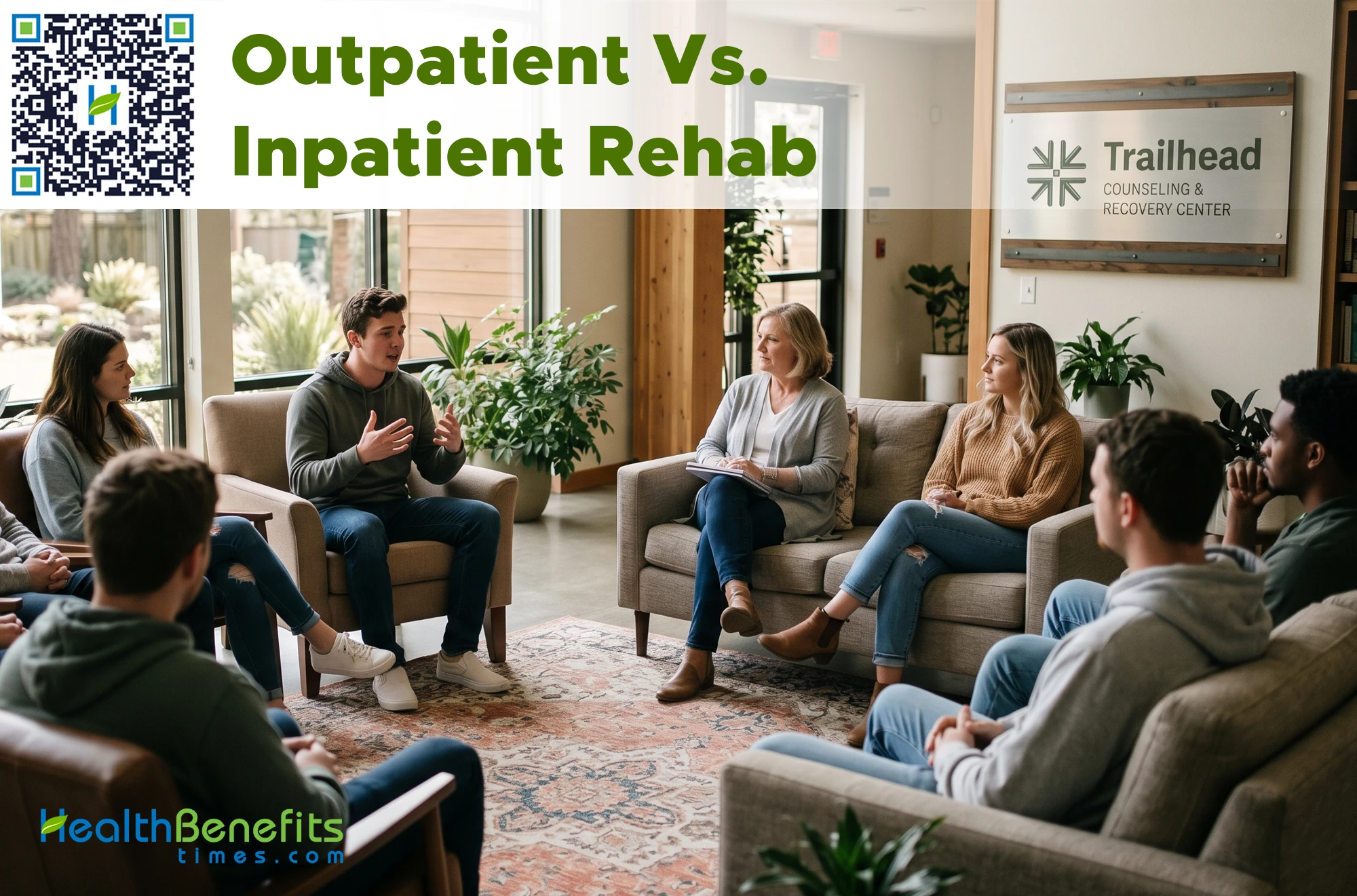
Outpatient rehab means you live at home and travel to treatment sessions on a scheduled basis, then return to your own bed each night. You continue participating in everyday life, work, family, school, while receiving structured care. Outpatient itself spans a range of intensities, from standard weekly counseling to more robust programs like an Intensive Outpatient Program, often shortened to IOP, which involves several sessions per week.
Think of it as a spectrum of support. Inpatient offers the most immersive, controlled setting. Outpatient offers structured help woven into real life. And programs like IOP sit thoughtfully in the middle, delivering serious clinical support without requiring you to leave home.
The Case for Inpatient Rehab
Inpatient treatment has real strengths, particularly for those facing severe or long-standing addiction.
Its biggest advantage is the environment itself. By removing a person from the triggers, stresses, and access points of daily life, residential treatment creates a protected space to focus entirely on healing. The around-the-clock structure and supervision can be genuinely lifesaving in the early, most fragile stages, especially when medical support is needed during withdrawal.
This level of care tends to suit people with severe addictions, those who have relapsed after previous attempts, individuals whose home environment is unstable or actively unsafe for recovery, or anyone whose situation involves serious medical or psychiatric complications that call for constant monitoring.
The trade-offs are significant, though. Inpatient care requires stepping away from work, family, and responsibilities, which isn’t possible for everyone. It generally represents a larger commitment of time and resources, and the transition back to everyday life afterward can itself be a vulnerable period that needs careful planning.
The Case for Outpatient Rehab
Outpatient treatment, and intensive outpatient programs in particular, has become an increasingly respected and effective path for many people, and for good reason.
Its defining strength is that recovery happens within real life rather than apart from it. You build and practice coping skills in the very environment where you’ll use them, with your actual triggers, relationships, and routines in play. That real-world practice can make the lessons of recovery stick in a durable way. You also keep living at home, which means you can continue working, caring for your family, and staying connected to the people and purpose that support your healing.
Outpatient care tends to fit people with mild to moderate addiction, those with a stable and supportive home environment, individuals who have already completed inpatient treatment and need continued structured support, and anyone who cannot step away from essential work or family obligations. An IOP is especially valuable here, because it provides meaningful clinical intensity, often group therapy, individual counseling, and mind-body practices several times a week, while still letting a person sleep in their own home.
The honest trade-off is that outpatient care asks more of the individual’s own commitment and environment. Because you remain exposed to everyday temptations and stresses, it works best when there’s genuine motivation and a reasonably supportive home life to lean on.
How to Think Through the Decision
Rather than asking which program is superior, it helps to ask which one fits the specific situation. A few honest questions guide the way.
Consider the severity and history. A severe, long-standing addiction, or a pattern of relapse, often points toward the immersive support of inpatient care, at least to start. A milder or earlier-stage situation may be well served by outpatient or an IOP.
Consider safety and medical needs. If withdrawal is likely to be medically risky, or if there are serious co-occurring mental health concerns, the round-the-clock supervision of inpatient care matters. Many people begin with medically supervised care and then step down into outpatient programming.
Consider the home environment. A stable, supportive home can be a powerful asset for outpatient recovery. A chaotic or triggering one may make the protected setting of inpatient care more appropriate, at least initially.
Consider life responsibilities. For those who simply cannot pause work, parenting, or school, outpatient care and IOPs make recovery accessible in a way inpatient treatment cannot.
Crucially, this is not a decision anyone should make alone or by guesswork. A qualified treatment provider can assess the full picture, the severity, the health factors, the home situation, and recommend the appropriate level of care. Often the answer isn’t one or the other forever, but a journey through levels of care that changes as a person grows stronger. For those in Montana, for example, Trailhead Counseling & Recovery Center offers outpatient addiction treatment and intensive outpatient programming in Bozeman and Whitefish, with a licensed team that helps people find the right fit for their circumstances. Wherever you are, a professional assessment is the surest way to choose wisely.
Recovery Is Not One-Size-Fits-All
The most important thing to understand is that there is no single right way to recover. Inpatient and outpatient rehab are both legitimate, evidence-informed paths, and the best choice is the one that matches the person’s needs, severity, environment, and life.
For some, that means the immersive reset of residential care. For many others, it means the real-world, build-it-as-you-live-it approach of outpatient treatment or an IOP, which allows healing to happen alongside the responsibilities and relationships that make life worth living. And for a great many people, recovery involves moving through more than one level of care over time.
If you take away one thing, let it be this: the specific program matters far less than taking the step to get help and then committing to the work. Reach out, ask for an honest assessment, and let professionals help you find the path that fits. Recovery is possible, and the right support can make all the difference.
Addiction and recovery are sensitive and deeply personal topics. If you or someone you care about is struggling, please know that help is available, and speaking with a qualified professional or a confidential helpline is a strong and worthwhile first step.