Health Benefits
    Facebook Twitter Instagram
    Friday, December 5
    Facebook Twitter Pinterest
    Health Benefits
    • Home
    • Dental Health
    • Mental Health
    • Weight Loss
    • Health Wiki
    • Nutrition
    • Healthy Recipe
    • BMI Calculator
    Health Benefits
    Home»Herbs and Spices»Facts and benefits of Stinking Goosefoot
    Herbs and Spices

    Facts and benefits of Stinking Goosefoot

    By SylviaJanuary 16, 2018Updated:January 16, 2018No Comments4 Mins Read
    Facebook Twitter Pinterest LinkedIn Tumblr Email

    Facts and benefits of Stinking Goosefoot

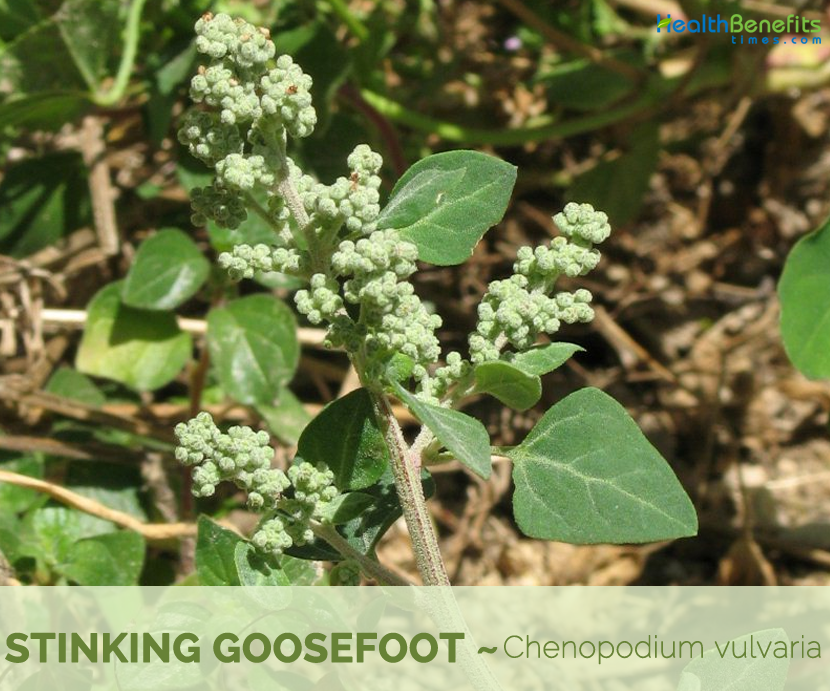
    Stinking goosefoot scientifically known as Chenopodium vulvaria is a foul-smelling plant or weed. The plant is a member of the family Chenopodiaceae, which also contains other similarly unattractive annual plants. Apart from stinking goosefoot it is also known as notchweed, Arroche Puante, Chénopode Fétide, Chénopode Puant, Arrach, Dog’s Arrach, Goat’s Arrach, Goosefoot, Herbe de Bouc, Netchweed, Oraches, Stinking Arrach, Stinking Goosefoot, Stinking Motherwort and Vulvaire. The generic name Chenopodium, from the Greek chên, ‘oca’, and podion, ‘foot’, refers to the fact that there are species of this genus with leaves that resemble the foot of a goose. The plant gives off a nauseating smell of rotten fish, due to the presence of trimethylamine. It is an annual weed of bare soil and is not tolerant of competition. It is largely found where soil has been disturbed and in waste places by the sides of roads and walls.

    Plant Description

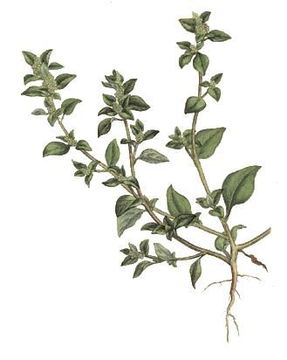
    Stinking goosefoot is a foul smelling annual Herb that grows about 10-60 cm tall. The plant is found growing along hedges, bushes (nutrient riches), caves on lime slopes, salt marshes, pebbly beaches, ruderale sites, mess corners at farms, fallow land, waste heaps, vegetable gardens, along roads and along walls. The plant prefers moderately moist, very nutrient-rich, usually highly fertilized, often calcareous, reprocessed soil (sand, marl and stony places). Stem is erect, much branched, spreading or ascendant and 5-10 cm long.

    Leaves

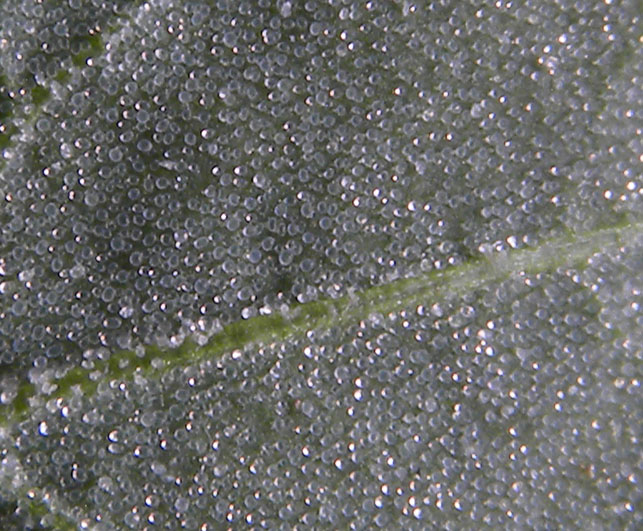
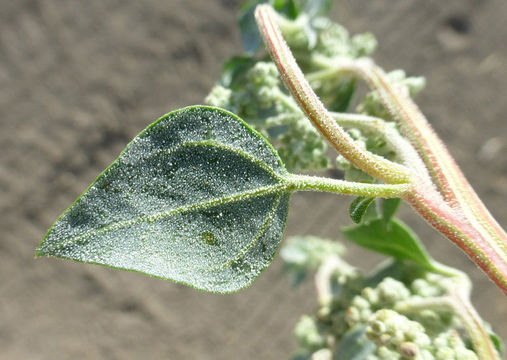
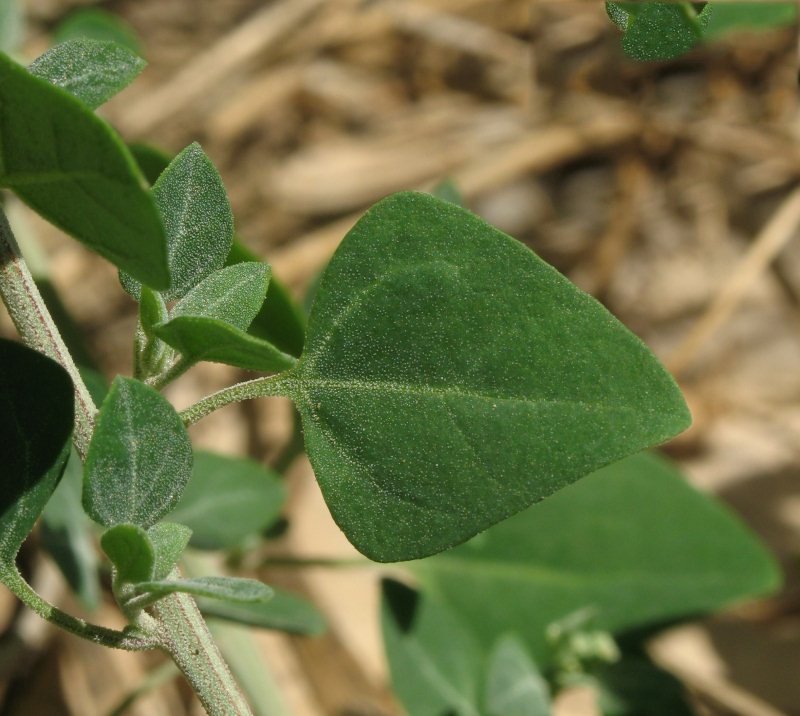
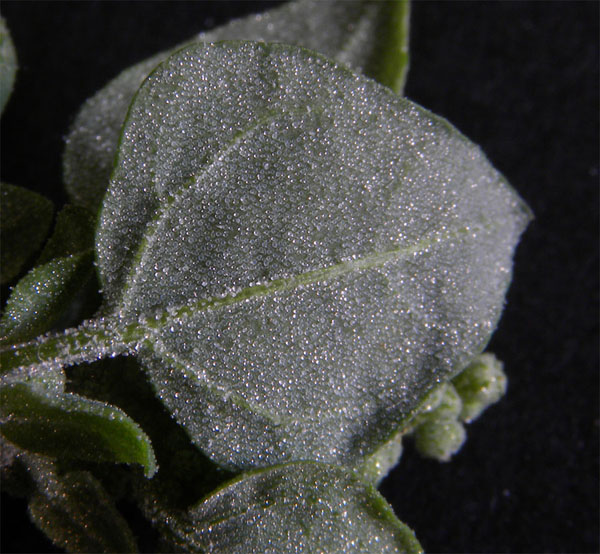
    The stalked leaves are oval, wedge-shaped at the base, about 1/2 inches long. Leaf blade grey-farinose especially beneath, greener above, longer than or equal to petiole, 0.5-3 cm long, broadly trullate or broadly ovate to ovate, margin entire, in large leaves sometimes with a fairly acute angle on each margin at broadest part, base truncate to short attenuate, apex obtuse to acute.

    Flower & Fruit

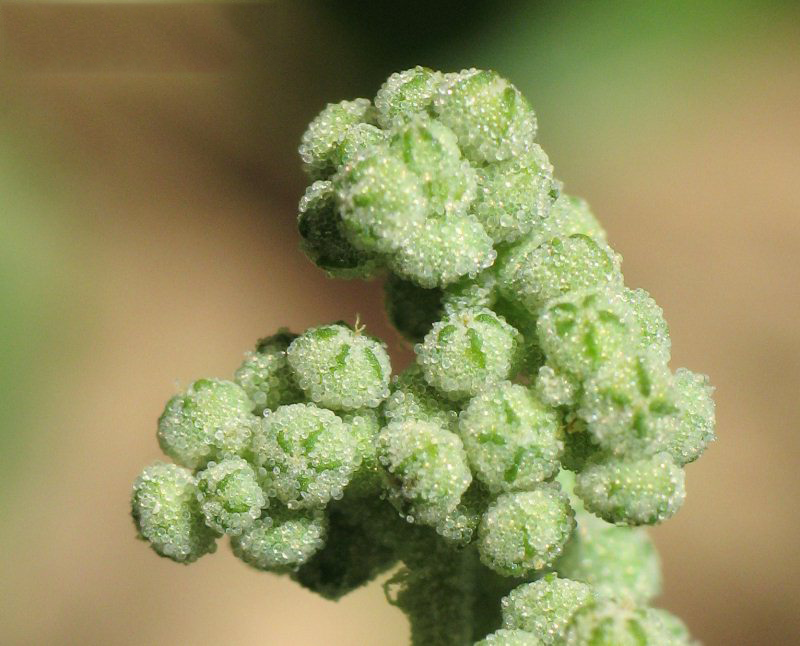
    Its small flowers are grouped in short inflorescences that are axillary and terminal. They have 5 farinaceous tepals that measure 0.5-0.8 mm in length, 5 stamens and a pistil. They usually open between June and October. There are no petals and the flowers are wind-fertilized. Its fruits are membranous, surrounded by the tepals and contain a single seed of dark brown and gleaming, which has a shape reminiscent of a casserole with its lid and measures 1-1.5 mm in diameter.

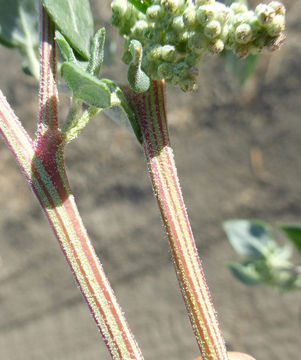
    The whole plant is covered with a white, greasy mealiness, giving it a grey-green appearance which when touched, gives out a very objectionable and enduring odor, like that of stale salt fish, and accounts for its common popular name: Stinking Goosefoot.

    Stinking Goosefoot Image Gallery
    Closer-view-of-Ventral-side-of-leaf Closer-view-of-Ventral-side-of-leaf
    Flower-of-Stinking-Goosefoot-plant Flower-of-Stinking-Goosefoot-plant
    Leaf-and-Stem-of-Stinking-Goosefoot-plant Leaf-and-Stem-of-Stinking-Goosefoot-plant

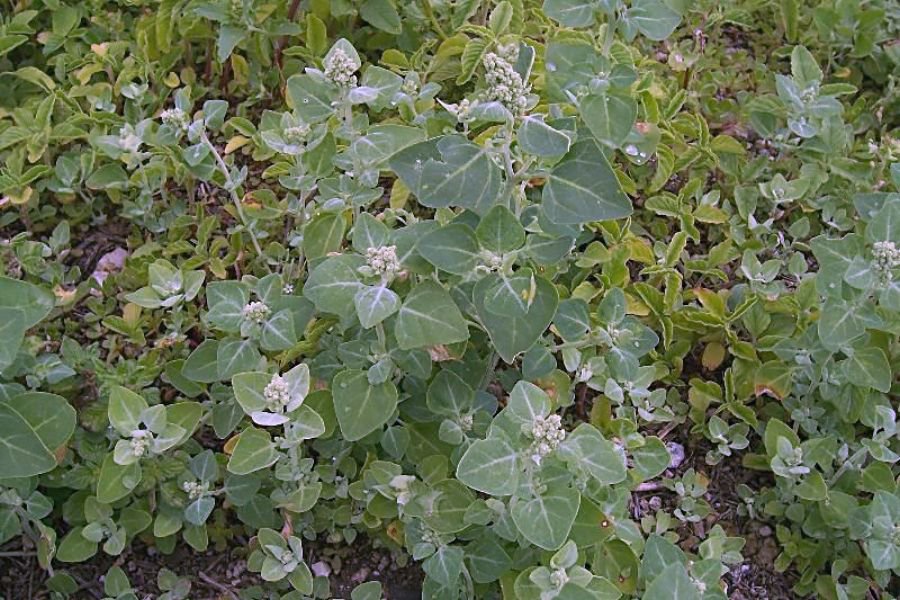
    Leaves-of-Stinking-Goosefoot--plant Leaves-of-Stinking-Goosefoot--plant
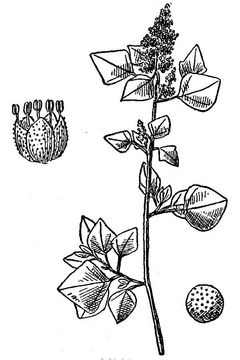
    Sketch-of-Stinking-Goosefoot-plant Sketch-of-Stinking-Goosefoot-plant
    Stem-of-Stinking-Goosefoot-plant Stem-of-Stinking-Goosefoot-plant

    Stinking-Goosefoot-Plant-growing-wild Stinking-Goosefoot-Plant-growing-wild
    Stinking-Goosefoot-Plant-Illustration Stinking-Goosefoot-Plant-Illustration
    Ventral-view-of-Stinking-Goosefoot--Leaf Ventral-view-of-Stinking-Goosefoot--Leaf

    Traditional uses and benefits of Stinking Goosefoot

    • Whole plant is antispasmodic and emenagogue used to expel worms from the bowel.
    • It is also used for the fungal infections and as a cardiac stimulant.
    • It is a form of treatment for acute gout.
    • An infusion of the dried leaves is used in the treatment of hysteria and nervous troubles connected with women’s ailments.
    • In Chinese medicine wormseed oil is used for rheumatism, eczema and bites.

    Culinary Uses

    • Leaves and flower buds are cooked and used like spinach.
    • Raw leaves should only be eaten in small quantities.
    • Seed cooked and ground into a powder, mixed with wheat or other cereals and used in making bread etc.

    Other Facts

    • Seed is small and fiddly; it should be soaked in water overnight and thoroughly rinsed before it is used in order to remove any saponins.
    • Gold/green dyes can be obtained from the whole plant.

    Precautions

    • People with a tendency to rheumatism, arthritis, gout, kidney stones or hyperacidity should take especial caution if including this plant in their diet since it can aggravate their condition.
    • Wild arrach is not recommended in pregnant or breastfeeding women due to a lack of available scientific evidence.

    References:

    https://www.itis.gov/servlet/SingleRpt/SingleRpt?search_topic=TSN&search_value=20637#null

    https://davesgarden.com/guides/pf/go/74004/

    https://npgsweb.ars-grin.gov/gringlobal/taxonomydetail.aspx?id=10196

    https://www.cabi.org/isc/datasheet/113243

    https://www.botanical.com/botanical/mgmh/a/arrac059.html

    http://www.pfaf.org/user/Plant.aspx?LatinName=Chenopodium+vulvaria

    http://www.theplantlist.org/tpl1.1/record/kew-2717921

    https://plants.usda.gov/core/profile?symbol=CHVU

    https://en.wikipedia.org/wiki/Chenopodium_vulvaria

    http://www.floracatalana.net/chenopodium-vulvaria-l-

    78%
    78%
    Awesome

    Comments

    comments

    Herbs and Spices S
    Share. Facebook Twitter Pinterest LinkedIn Tumblr Email
    Previous ArticleFacts and benefits of Miso
    Next Article Faces and benefits of Moth bean

    Related Posts

    Uses of Monkey Pitcher plant

    April 16, 2024

    Traditional uses and benefits of Wild Marigold

    March 21, 2024

    Traditional uses and benefits of Drooping fig

    March 12, 2024

    Comments are closed.


    Stinking Goosefoot Facts

    Stinking Goosefoot Quick Facts
    Name: Stinking Goosefoot
    Scientific Name: Chenopodium vulvaria
    Origin Mountainous regions of Europe, North America and Asia
    Shapes Achenes depressed-ovoid; pericarp adherent, smooth
    Health benefits Used in the treatment of hysteria and nervous troubles connected with women's ailments
    Name Stinking Goosefoot
    Scientific Name Chenopodium vulvaria
    Native Mountainous regions of Europe, North America and Asia
    Common Names Stinking goosefoot, notchweed, Arroche Puante, Chénopode Fétide, Chénopode Puant, Arrach, Dog’s Arrach, Goat’s Arrach, Goosefoot, Herbe de Bouc, Netchweed, Oraches, Stinking Arrach, Stinking Goosefoot, Stinking Motherwort, Vulvaire
    Name in Other Languages Albanian: Minuer, nena e qelbët
    Arabic: Qayhanih (قيحانيه)
    Bulgarian: Strupeĭniche (струпейниче)
    Catalan: Blet pudent, Herba pudent, Pixacà, Vulvària
    Croatian: Smrdljiva loboda
    Czech Republic: Merl¡k smrdutì, merlík smradlavý
    Danish: Stinkende gåsefod
    Denmark: Stinkende gosefod
    Dutch: Stinkende ganzenvoet, stinkganzevoet, stinkmelde
    English: Arrach, Stinking goosefoot, Vulvaria, Dog’s orache, Watson’s goosefoot
    Estonia: Haisev hanemalts
    French: Chénopode fétide, Arroche puante, Chénopode puant, ansérine puante, herbe de bouc, vulvaire
    Finnish: Haisusavikka
    German: Stinkender Gänsefuß, Übelriechender Gänsefuss, Bocksmelde, Stinkkraut
    Greek: Louvoudiá (λουβουδιά)
    Hebrew: Kaf=’avaz mav’ishah, כַּף=אֲוָז מַבְאִישָׁה
    Hungarian: Büdös libaparéj, büdös libatop
    Italian: Atriplice puzzolana, brinaiola, chenopodio fetido, connina, farinello puzzolente
    Latvia: Dvokiancioji balanda, smirdošā balanda
    Lithuania: Silku balanda, balanda smirduolė, dvokiančioji balanda
    Moldavian: спанакпутурос
    Norwegian Bokmål: Sildemelde
    Nynorsk, Norwegian: Sildemelde
    Occitan: Poumbraio
    Polish: Komosa mierzliwa
    Portuguese: Erva-fedegosa, fedegosa, vulvária
    Romanian: Lobodă-puturoasă, spanac puturos
    Russian: марь вонючая, марь зловонная
    Slovak: Mrlík smradľavý
    Slovene: Smrdeča metlika
    Spanish: Cenizo fetido, cenizo hediondo, hediondilla, hierba hedionda, Meaperros, sardinera, vulvaria
    Swedish: Haisusavikka, Stinkmålla
    Turkish: Kokar sirken
    Plant Growth Habit Annual Herb
    Growing Climate Along hedges, bushes (nutrient riches), caves on lime slopes, salt marshes, pebbly beaches, ruderale sites, mess corners at farms, fallow land, waste heaps, vegetable gardens, along roads and along walls
    Soil Moderately moist, very nutrient-rich, usually highly fertilized, often calcareous, reprocessed soil (sand, marl and stony places).
    Plant Size 10-60 cm
    Stem Erect, very branched, spreading or ascendant, (5-10 cm long
    Leaf Leaf blade grey-farinose especially beneath, greener above, longer than or equal to petiole, 0.5-3 cm long, broadly trullate or broadly ovate to ovate
    Flowering Periods Jul to September
    Flower Small, insignificant green flowers are borne in spikes from the axils of the leaves and consist of five sepals, five stamens and a pistil with two styles
    Fruit Shape & Size Achenes depressed-ovoid; pericarp adherent, smooth
    Flavor/Aroma Nauseous odor
    Seed Compressed (1mm in diameter), black-brownish, shiny, acute margined, finely punctated.
    Season Aug to October

    Stinking Goosefoot Scientific Classification

    Scientific Name: Chenopodium vulvaria

    Rank Scientific Name & (Common Name)
    Kingdom Plantae (Plants)
    Subkingdom Tracheobionta (Vascular plants)
    Infrakingdom Streptophyta  (land plants)
    Superdivision Spermatophyta (Seed plants)
    Division Magnoliophyta (Flowering plants)
    Class Magnoliopsida (Dicotyledons)
    Subclass Caryophyllidae
    Order Caryophyllales
    Family Chenopodiaceae (Goosefoot family)
    Genus Chenopodium L. (goosefoot)
    Species Chenopodium vulvaria L. (stinking goosefoot)
    Synonyms
    • Ambrina graveolens Moq.
    • Anserina foetida (Lam.) Montandon
    • Atriplex vulvaria (L.) Garsault
    • Atriplex vulvularia (L.) Crantz
    • Botrydium schraderi Spach
    • Chenopodium effusum M.Martens & Galeotti
    • Chenopodium foetidum Lam.
    • Chenopodium graveolens Lag. & Rodr.
    • Chenopodium olidum Curtis
    • Chenopodium quercifolium Moq.
    • Chenopodium trilobatum Moq.
    • Chenopodium vulvaria var. microphyllum Moq.
    • Chenopodium vulvaria var. rhombicum Murr
    • Chenopodium ×rhombicum (Murr) F.Dvořák
    • Vulvaria vulgaris Bubani
    Categories
    • Beverages (78)
    • Dairy (28)
    • Dental Health (15)
    • Equipment (5)
    • Essential OIls (196)
    • Facts (2,939)
    • Foods (255)
    • Fruits (516)
    • Giveaway (1)
    • Grains and Cereals (36)
    • Health & Beauty (763)
    • Herbs and Spices (1,249)
    • Medicines (9)
    • Mental Health (19)
    • Nutritional value (27)
    • Nuts and seeds (73)
    • Oils (81)
    • Pets (4)
    • Poultry & Seafoods (67)
    • Pulses and Beans (16)
    • Reviews (25)
    • supplement (2)
    • Vegetables (304)
    • Weight Loss (22)

    What is Lupin Bean Flour?

    Science Backed Health Benefits of Durian (Durio zibethinus)

    Science Backed Health Benefits of Feijoa (Pineapple Guava) (Acca sellowiana)

    Science Backed Health Benefits of Gac Fruit (Momordica cochinchinensis)

    Science Backed Health Benefits of Amaranth Leaves (Amaranthus spp)

    Science Backed Health Benefits of Arrowhead (Sagittaria sagittifolia)

    ABOUT
    Home
    About us
    Contact us
    Privacy Policy
    Terms & conditions
    Disclaimer
    Direct Communication
    e-mail: [email protected]
    Gmail: [email protected]
    Whatsapp: +977-9841146511
    Viber: +977-9841146511
    Useful
    Health Wiki
    Nutrition
    Facebook Twitter Pinterest
    © 2025 www.healthbenefitstimes.com All rights reserved.

    Type above and press Enter to search. Press Esc to cancel.

    ×

    Log In

    Forgot Password?

    Not registered yet? Create an Account