| Sweet Chestnuts Quick Facts |
| Name: |
Sweet Chestnuts |
| Scientific Name: |
Castanea sativa |
| Origin |
Native to the Mediterranean in south-eastern Europe to Caucasus in Asia Minor. |
| Colors |
Brown to reddish-brown |
| Shapes |
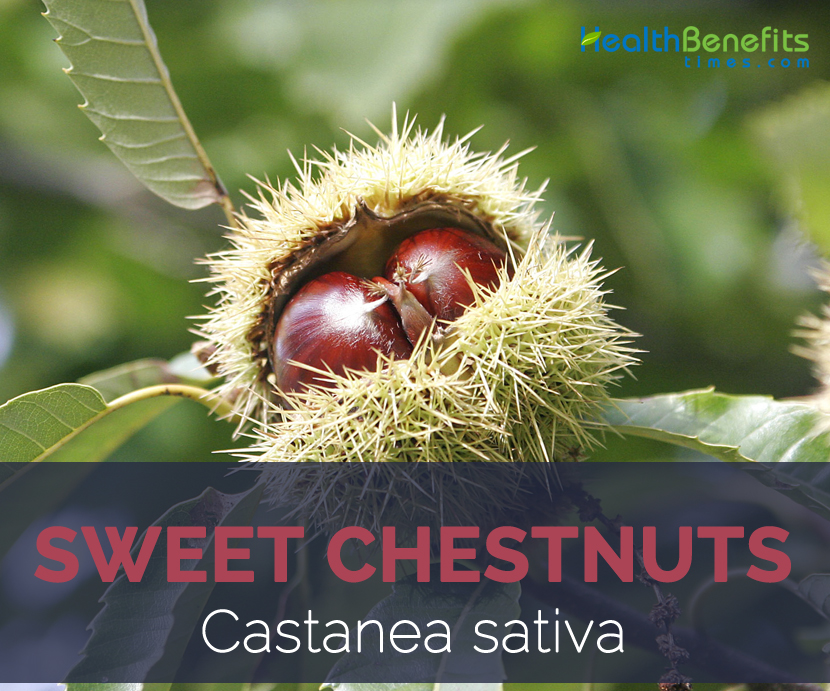
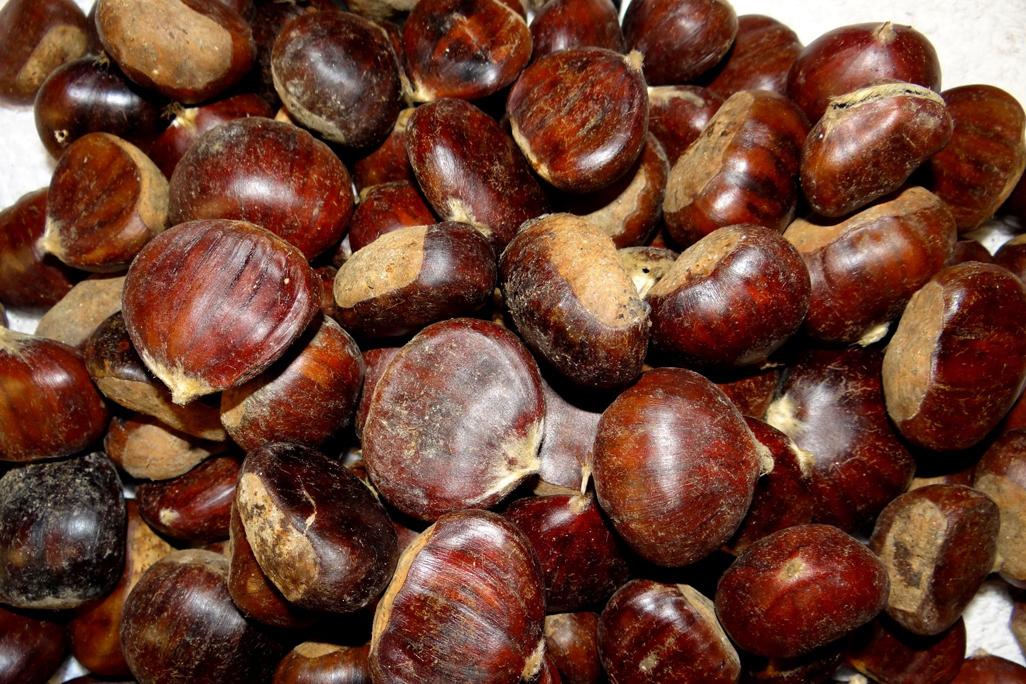
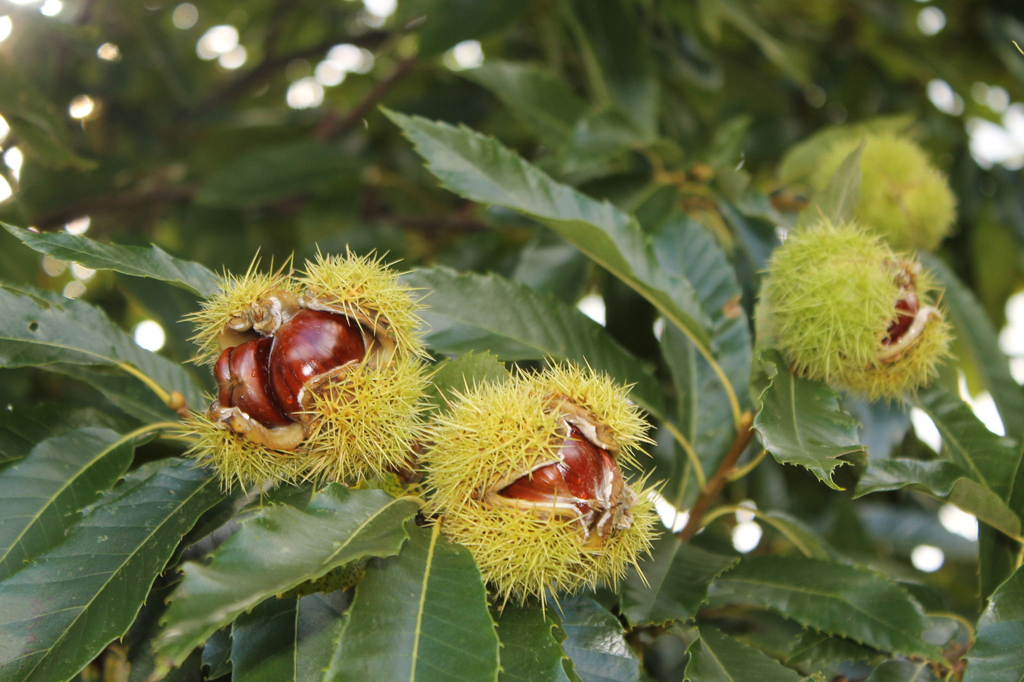
2-3 shiny, roughly triangular nuts with a distinctive tuft on the end |
| Calories |
196 Kcal./cup |
| Major nutrients |
Copper (46.44%)
Vitamin C (44.67%)
Carbohydrate (33.98%)
Vitamin B6 (27.08%)
Manganese (14.61%)
|
| Health benefits |
Heart Health, Dental Care & Bone health, Diabetes Prevention and Management, For Diarrhea, Immune System Health, Maintain Blood Vessel Elasticity, Cognition, Strong Antioxidant, Chronic Illness, For Loose motions, Blood Pressure, Thyroid function, Aids Digestion, Alleviates Stones, Astringent Properties |
| More facts about Sweet Chestnuts |
Castanea sativa usually referred to as the Spanish or Sweet Chestnut is a deciduous broadleaf tree native of Mediterranean in south-eastern Europe to Caucasus in Asia Minor. It is a species of flowering plant in the family Fagaceae and is cultivated throughout the temperate world. Chestnut, Chestnut Tree, Edible Chestnut, European Chestnut, Italian Chestnut, Marron, Portuguese Chestnut, Spanish chestnut and Sweet Chestnut is some of the common names of the sweet chestnuts. Chestnuts are a major food crop in regions where they are grown. The nuts are normally not eaten raw but used baked, boiled, roasted or in confectionery.
Plant
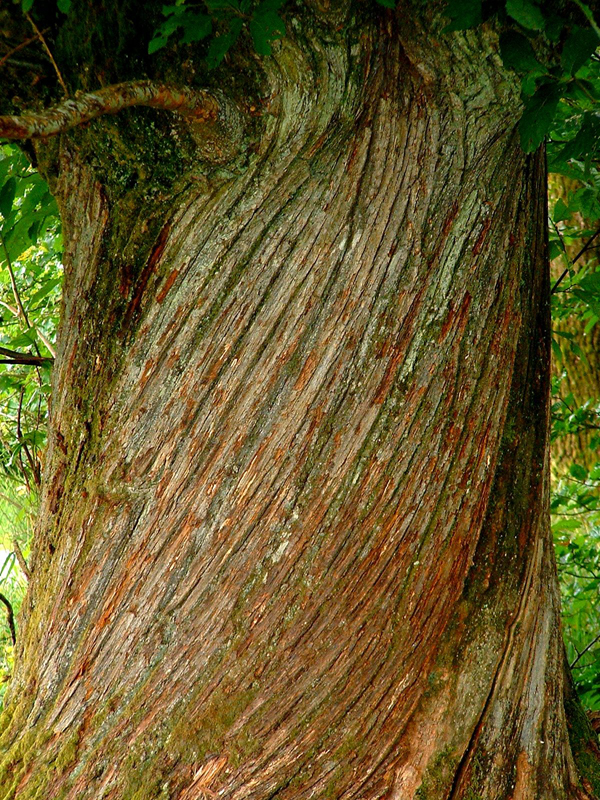
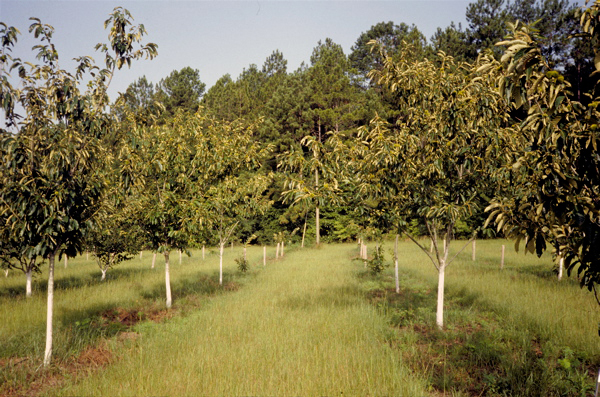
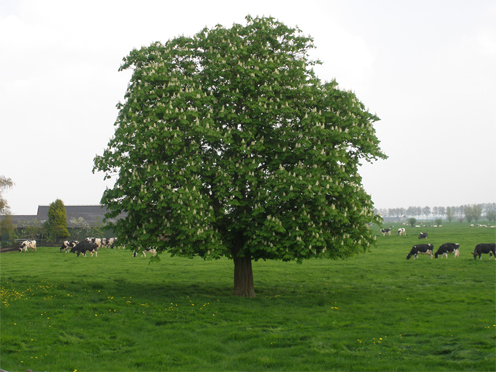
Sweet Chestnut is a medium to large deciduous tree growing to 20–35 m (66–115 ft.) tall making a handsome specimen in any park or garden. It has a spreading crown and trunk diameter reaching 2 m and deeply fissured bark. Branchlets are tomentose. Plant is normally found growing in mild cool climate Mediterranean or sub-temperate climate with good annual rainfall and adequate moisture and thrives in deep well-drained, fertile, sandy or loamy soils. It is highly tolerant of acidic soils, gravelly or stony soils but intolerant of calcareous soils, heavy clays and impermeable soils. The normal lifespan of sweet chestnut plant is about 700 years. It has a deep tap root and barks are normally grey-purple and smooth, which develops vertical fissures with age.
Leaves
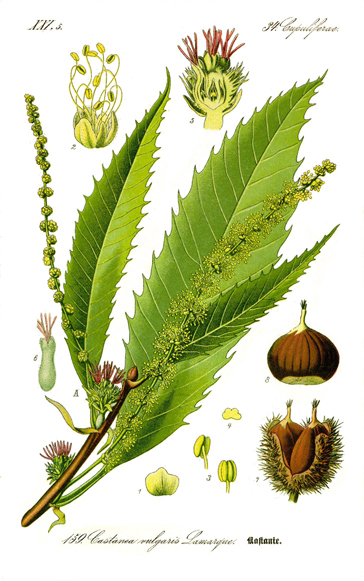
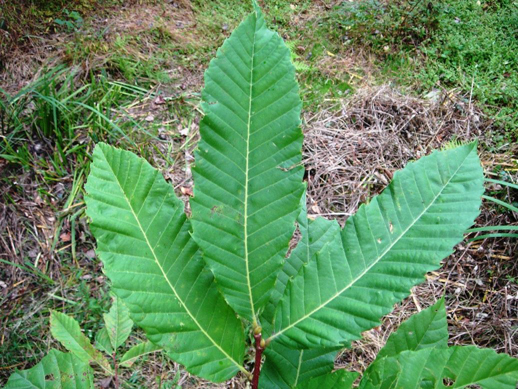
Leaves are normally elliptic to ovate-lanceolate, 14–28 cm long and 5–9 cm wide with 11–14 pairs of nerves more prominent on the under surface. The edge of the leaf is serrated bit like teeth on a saw, acuminate tip, oblique base, coriaceous, glabrous, pale green and puberulous on the under surfaces. The leaves when mature have a dark green color. Young leaves may have hairs on the lower surface.
Flower
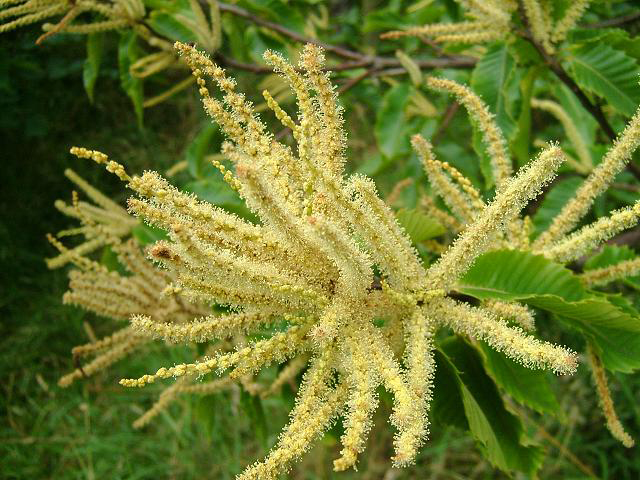
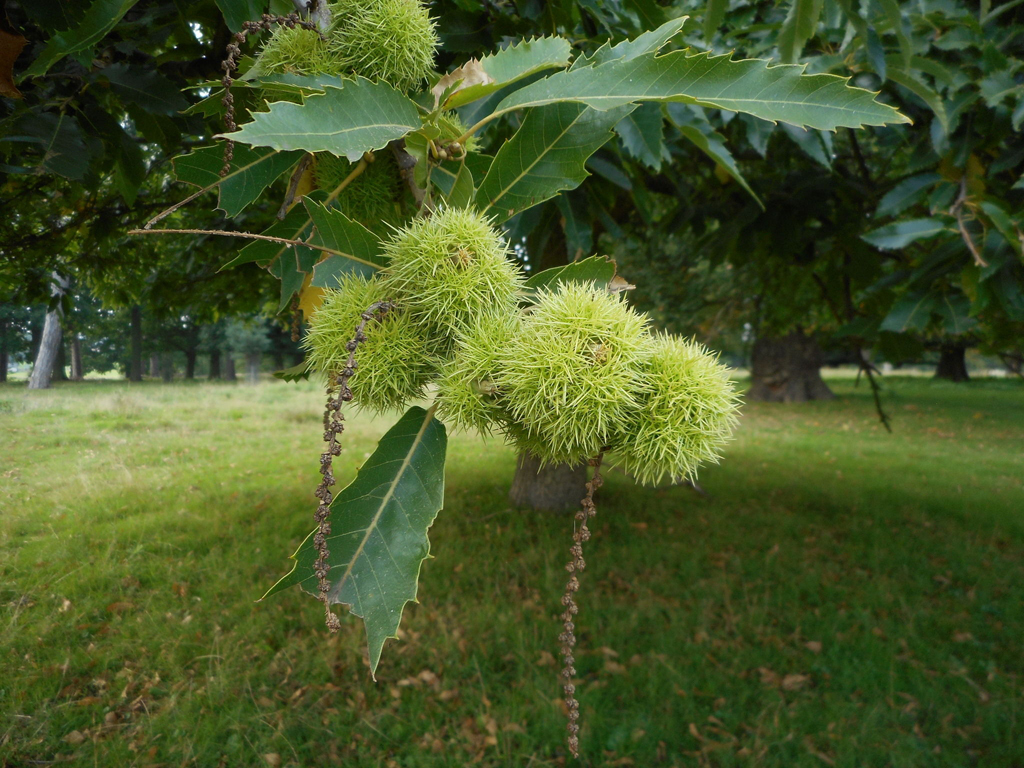
Flowers of both sexes are borne in 10–20 cm (4–8 in) long, upright catkins, the male flowers are in the upper part and female flowers are in the lower part. Male catkins are long and yellow and look a bit like hairy, golden caterpillars. Trees flower relatively late during June/July. Female flowers are green rosettes. Later in the year, a prickly, leathery casing forms containing the nuts.
Fruit
Sweet nut plant bears a fruit of 1.3–2.5 cm in diameter, with each spiny cupule or burr that consists of 1–4 nuts. Nuts are shiny, roughly triangular with a unique tuft on the end. They are normally brown to reddish-brown colored. Inner flesh in creamy white and have distinctive taste which is suitable for several food items. These nuts are a major food crop in regions where they are grown and are normally not eaten raw but used baked, boiled, roasted or in confectionary. Chestnuts have also been used to make flour and for animal feed. Compared to other nuts chestnuts are low in protein and especially low in fat.
History
Sweet chestnut is considered to have originated from Mediterranean in south-eastern Europe to Caucasus in Asia Minor. Wild or naturalized populations occur throughout southern Europe, northern Africa and southwestern Asia. It is cultivated in mild temperate regions in Europe and in the southern hemisphere and some subtropical regions. But nowadays due to its higher nutritional values as well as its unique taste it is grown throughout the world.
Nutritional Value
Apart from their sweet taste, sweet chestnut is a good source of nutrients, vitamins and minerals. Consuming 100 gram of sweet chestnut offers 0.418 mg of Copper, 40.2 mg of Vitamin C, 44.17 g of Carbohydrate, 0.352 mg of Vitamin B6, 0.336 mg of Manganese, 58 µg of Vitamin B9 and 0.144 mg of Vitamin B1. Moreover many Amino acids 0.018 g of Tryptophan, 0.058 g of Threonine, 0.064 g of Isoleucine, 0.096 g of Leucine, 0.096 g of Lysine and 0.038 g of Methionine are also found in 100 gram of Sweet chestnuts.
Health benefits of Sweet Chestnuts
Higher nutritional composition of Chestnuts provides with a wonderful health benefits and keep your body functioning in the best possible manner. It has a proven record of improving your body’s defense system called immunity, thus bringing an overall improvement in your health and well-being.
1. Heart Health
Most of us think fats as a bad thing to be burned off during a diet, but in fact, our body needs a number of other fats to function normally. These good fats, found in high concentrations in chestnuts, help to balance our cholesterol, decrease inflammation all through the body, and lower the risk of atherosclerosis and blood clots building up in the body. This will eventually lower your risk of stroke, heart attack and coronary heart disease to a large degree.(1)
2. Dental Care & Bone health
As we all know that teeth are the strongest bones in the body. Calcium and phosphorus are two important minerals that are totally crucial for bone health as they make up the main composition of bones; however, a healthy dose of Magnesium is necessary for the other two to carry out their function effectively.
Apart from that magnesium present in sweet chestnut forms the hard enamel around your teeth and protects the bones from degeneration and decay.
Thus Calcium, Phosphorus, and Magnesium- all three present in chestnuts are essential for better dental care and bone health.(2), (3), (4)
3. Diabetes Prevention and Management
Most of us are unaware of the significant role that dietary fiber plays in the regulation, prevention and management of diabetes. Foods that are high in dietary fiber, like chestnuts, are considered low glycemic foods, which mean they cause blood sugar to rise more slowly. This helps to prevent the spikes and drops in blood sugars that are dangerous for diabetic patients, and are often precursors to the development of diabetes in those currently unaffected.(5)
4. For Diarrhea
Sweet chestnut and specifically the chestnut tree bark are found to be a very effective remedy for Diarrhea. The water in which you boil the chestnuts along with its shell or bark is rich in Tannins. Tannins, when taken in controlled amounts, can relieve you from Diarrhea.
A standard 3 spoons of crushed bark or equivalent chestnuts with shells in a liter of water boiled for about 20 minutes and consumed in the form of 2-3 cups in a day is considered safe.(6)
5. Immune System Health
Water chestnut consists of high concentration of vitamin C as well as other antioxidant compounds which make them an ideal boost to your immune system. Vitamin C not only encourages the production of white blood cells, but also acts as an antioxidant, seeking out free radicals within the body and neutralizing them before they can cause healthy cells to mutate, or encourage oxidative stress near vital organs. This can help the immune system focus its efforts on pathogens and preventing illness.
6. Maintain Blood Vessel Elasticity
Sweet chestnuts consist of essential fatty acids that are essential for the body and are derived from the dietary sources. Chestnuts are mainly rich in linoleic acid and have Palmitic acid and Oleic acid that are safe for your body.
Apart from that they have a low level of cholesterol and help in bringing down the levels of “Bad Cholesterol” or LDL in the blood vessels.
LDL can create deposits of plaque along the inner lining of blood vessels making them rigid over a period of time. Food items like chestnuts clear this plaque and discourage its formation ensuring elasticity and healthy network of blood vessels.(7)
7. Cognition
Brain function and cognition are improved through the regular consumption of chestnuts. First of all, these nuts are rich in the B family vitamins like folate, riboflavin, thiamine which are directly associated to proper neurological development and function. Moreover, the potassium present in chestnuts can increase blood flow to the brain and inspire good nervous system health, thus increasing concentration, retention and memory.(8)
8. Strong Antioxidant
Sweet Chestnut consists of good amount of Vitamin C, Ellagic acid and Gallic acid which make sweet chestnut a strong and very effective anti-oxidant. As we all know that antioxidants are required by the body to clean the toxins and free radicals.
Free radicals are produced in the body as a result of the natural phenomenon of molecules reacting with active oxygen. An uncontrolled growth of free radicals harms your cells, DNA and is liable for causing cancer. A sweet chestnut with their heavy composition of antioxidant a property cleanses your body and optimizes the immune function of the body.(9), (10), (11)
9. Chronic Illness
Almost all kinds of chronic illnesses are caused by the release of free radicals, the natural byproducts of cellular respiration. These can cause healthy cells to mutate, resulting in cancer, oxidative stress and a number of long-lasting illnesses. Without antioxidants our body would be fighting battles on far more fronts, so increasing your defenses with a handful of chestnuts a day is not a bad idea.(12)
10. For Loose motions
Loose motions or dysentery can be controlled by tannin present in sweet chestnuts. The Same concoction that cures diarrhea may also bring a lot of relief from persistent dysentery.
Since it is a folk remedy it is better not to administer it to children and infant as even a little mistake in amounts may give them a heavy dosage of tannin. It is used for De-worming in India.(13)
11. Blood Pressure
When it comes to lowering blood pressure, few minerals are as essential as potassium. Potassium controls water movement within the body, and also functions as a vasodilator, increasing blood flow and releasing the tension on constricted blood vessels and arteries. This reduction in blood pressure can boost overall cardiovascular health and decrease the risk of heart attacks and strokes.(14)
12. Thyroid function
Thyroid is the largest endocrine gland of our body. It produces two important hormones called Triiodothyronine and Thyroxine.
The thyroid regulates the rate at which our body uses energy, makes proteins and controls our body’s sensitivity to other hormones.
The ellagic acid in sweet chestnuts help support the Thyroid function where one experiences hyperthyroidism or an overactive thyroid function. Ellagic acid suppresses the hormone secretion thus bringing a control over the overactive thyroid gland.(15)
13. Aids Digestion
Sweet chestnuts are actually a good source of fiber content. Fiber helps to absorbs water and makes stools soft along with adding bulk to it. Bulkier and softer stools pass through the gastrointestinal tract easily as well as faster. This prevents constipation and constipation-related anal inflammation and piles.
Usually, the fiber in food will not play its role properly if there is inadequate water in the body. But chestnuts have a high content of water as well which makes it a perfect choice for improving digestion with the right combination of fiber and water together.(16)
14. Alleviates Stones
Oxalate is an Ion which is associated with increased risk of developing kidney stones. Calcium oxalate is mainly responsible for the gall bladder and kidney stones. The levels of oxalate in our body are determined by the food we eat. This is why a low oxalate diet is suggested to control the chances of developing stones. Sweet Chestnuts are a low-oxalate food source. Potassium in chestnuts regulates and controls the release and distribution of calcium in the body. It guarantees the deposition of calcium on bones with a minimum quantity getting into the blood stream thus preventing stone formation.(17), (18)
15. Astringent Properties
Sweet chestnuts have anti-inflammatory properties which make it a wonderful astringent due to a heavy content of tannin in it.
Tannins can alleviate the skin problems and offer relief from swelling and pain caused due to tear in body tissues. Apart from that it helps in faster healing of wounds and soothes. This character of chestnut has been particularly effective in treating hemorrhoids.(19)
Storing Sweet chestnuts
Fresh chestnuts keep for a week at room temperature and will sweeten up if left in a single layer where the air can get at them. They’re at their sweetest after about three days at room temperature, but after this the nuts start to go mealy and the skins get hard.
To keep chestnuts for two or three weeks, leave them in their shells and store them in a paper bag in the refrigerator. To keep them for even longer, freeze them in their shells. The texture worsens, but they taste just fine. Alternatively you can candy them, puree them or store them in syrup, but drying chestnuts at home is difficult as they require a continuous flow of cool air.
Preparing chestnuts
Chestnuts are a lot of work to prepare, but here are a couple of methods that will give you better and faster results. First you need to pick over the nuts, discarding any with weevil holes. Then make a shallow X in the flat side of each nut with a sharp knife, aiming to go through the shell but not to cut into the meat beneath. Now the nuts are ready to cook, and there are four main methods, the easiest being boiling. But first, the secret to peeling them quickly: chestnuts are easier to peel when they are warm and damp. Whichever method you choose, wrap the cooked chestnuts in a damp tea towel to keep them warm while you peel the others. Remove the shell and pellicle (the bitter inner skin), and you’re good to go.
Microwaving
Microwaving chestnuts is surely fast, but it’s really easy to burn the nuts, so be careful. Split the shells as described above, put the chestnuts in a single layer on a microwave-safe plate, and blast them on full power for two minutes (in a 850W oven). If you think they need a bit longer, work your way up 20 seconds at a time.
Roasting
Roasting chestnuts is the traditional way to cook them, and gives the best flavor. Slit the shells as described above, then put the nuts in a pan on the stovetop, under a grill, on a BBQ or (if you really want to be traditional) on a shovel in the embers of a fire. Roast the chestnuts till the shell splits open at the cut or you see steam or hear them hissing. Don’t worry about the shell turning black in places, as you’ll be taking it off anyway.
Baking chestnuts
Oven-baking is a suitable way of doing large batches of nuts. Slit the shells as described above and bake the chestnuts on a tray at 200C till the shells split open at the cut, which should take around half an hour. It’s a good idea to tremble the tray to turn the nuts every ten minutes or so.
How to Eat
- Sweet chestnuts are eaten raw or dried but are mainly eaten roasted, fried or cooked (boiled or steamed).
- Roasting, frying or cooking brings out the delicious, sweet chestnut flavor and floury texture.
- Dried or cooked nuts are used in confectionery, pastries, chocolates, puddings, desserts and cakes.
- They are used for flour, bread making, as a cereal substitute, coffee substitute, a thickener in soups and other cookery uses, as well as for fattening pig stock.
- Italian and Corsican polenta (type of porridge) is made with sweet chestnut flour.
- A local variety of Corsican beer also uses sweet chestnuts.
Other Traditional uses and benefits of Sweet Chestnuts
- Raw seeds were found useful in the treatment of heart disorders during middle ages.
- Leaves were used in folk medicine as a tea in France to treat whooping cough and diarrhea.
- Beside the leaves, the bark is also a good source of tannins.
- They are anti-inflammatory, expectorant, tonic and astringent.
- Astringent activity is beneficial in the treatment of bleeding and diarrhea.
- Leaf infusions are used in respiratory diseases and are a common therapy for whooping cough, fevers and ague.
- Leaves are also used in the treatment of rheumatism, to comfort lower back pains and to relieve stiff muscles and joints.
- A decoction is used as gargle for treating sore throats.
- A hair shampoo can be made from infusing leaves and fruit husks.
- Leaves are used in homeopathy for therapy of depression and fatigue.
Other Facts
- Spanish chestnut is a wonderful huge shade tree for parks, estates and avenues and occasionally planted for erosion control in Mediterranean countries.
- Flowers provide good forage for bees.
- Blackish-brown dye is obtained from the leaves and the bark and also oil which is medicinal.
- Tannin is obtained from the bark and used in tanning.
- Seed meals are used as a source of starch, for fattening stock and also for whitening linen cloth.
- Hair shampoo is made from the leaves and the husks of the fruits.
- Wood is good for carpentry, turnery, furniture, barrels, roof beams, props, and basketry and fence posts. It is also a very good fuel.
Precautions
- Excessive consumption on a persistent basis can lead to spikes of Vitamin B6 which result in health problems in the long term.
- Anaphylaxis is an allergic reaction which causes asthma type of symptoms. People who are allergic to nuts must make sure that Chestnut is suitable for them.
References:
https://en.wikipedia.org/wiki/Castanea_sativa
http://www.woodlandtrust.org.uk/visiting-woods/trees-woods-and-wildlife/british-trees/common-non-native-trees/sweet-chestnut/
http://www.kew.org/science-conservation/plants-fungi/castanea-sativa-sweet-chestnut
http://botanical.com/botanical/mgmh/c/cheswe59.html
http://www.pfaf.org/user/plant.aspx?LatinName=Castanea+sativa
http://www.woodlands.co.uk/blog/tree-identification/sweet-chestnut/
https://www.rhs.org.uk/plants/details?plantid=340
http://www.futuretrees.org/our-work/sweet-chestnut/
http://www.deepdale-trees.co.uk/trees/2012/08-Castanea-sativa.html
http://www.farminmypocket.co.uk/growing/wild-food/sweet-chestnuts
http://www.vincenttimber.co.uk/products/sweetchestnut/Sweet_Chestnut.pdf
https://npgsweb.ars-grin.gov/gringlobal/taxonomydetail.aspx?id=9445
Comments
comments