Health Benefits
    Facebook Twitter Instagram
    Friday, December 5
    Facebook Twitter Pinterest
    Health Benefits
    • Home
    • Dental Health
    • Mental Health
    • Weight Loss
    • Health Wiki
    • Nutrition
    • Healthy Recipe
    • BMI Calculator
    Health Benefits
    Home»Fruits»All about Wild Sugar Apple
    Fruits

    All about Wild Sugar Apple

    By s mOctober 20, 2019Updated:October 20, 2019No Comments3 Mins Read
    Facebook Twitter Pinterest LinkedIn Tumblr Email

    Wild Sugar Apple is a fast growing tree which grows 10 to 40 feet high and grows naturally in warm and damp regions of tropics but does not survive freezing temperatures. The plant is cultivated for edible fruits throughout world’s tropics and subtropics. The species has extensive natural range from Peru and northern Argentina, Brazil and Paraguay and northward to Guyana, Colombia, Venezuela and Southern Mexico, the Lesser Antilles, Trinidad including Martinique, Guadeloupe and Hispaniola and Puerto Rica. It is cultivated round Peru, Iquitos and Rio de Janeiro and Brazil. It is a common fruit in Western Amazonia. This species was introduced into Northern Australia and Southeast Asia.

    History

    Wild Sugar Apple is originated in Northern Brazil along the banks of Amazon. It is found in natural state in Guiana, Peru, Southern Mexico and Northern Argentina. In early 1900s, seeds were sent to Florida and the Philippines. It is grown in most tropical locations which has rapidly become a favorite with tropical fruit aficionados.

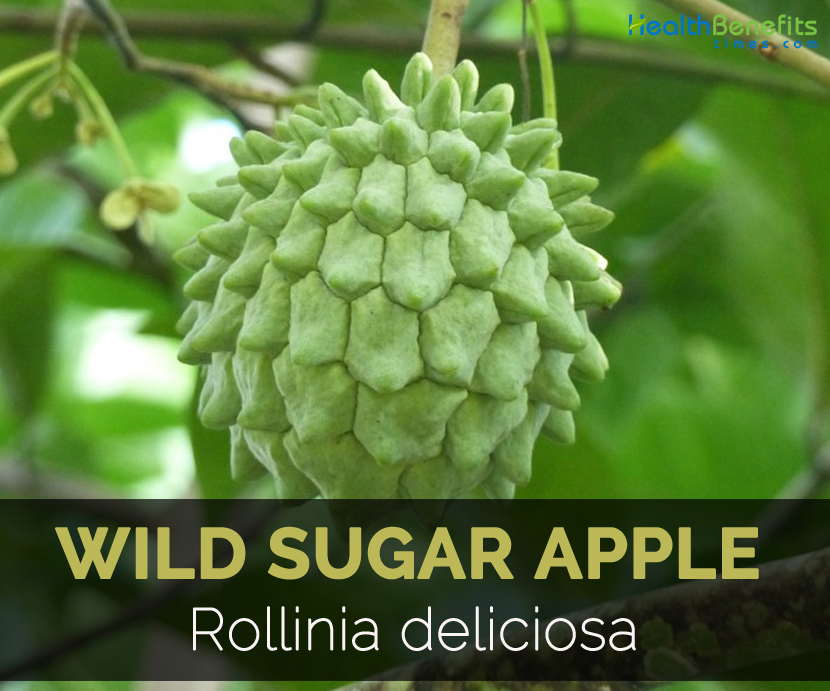
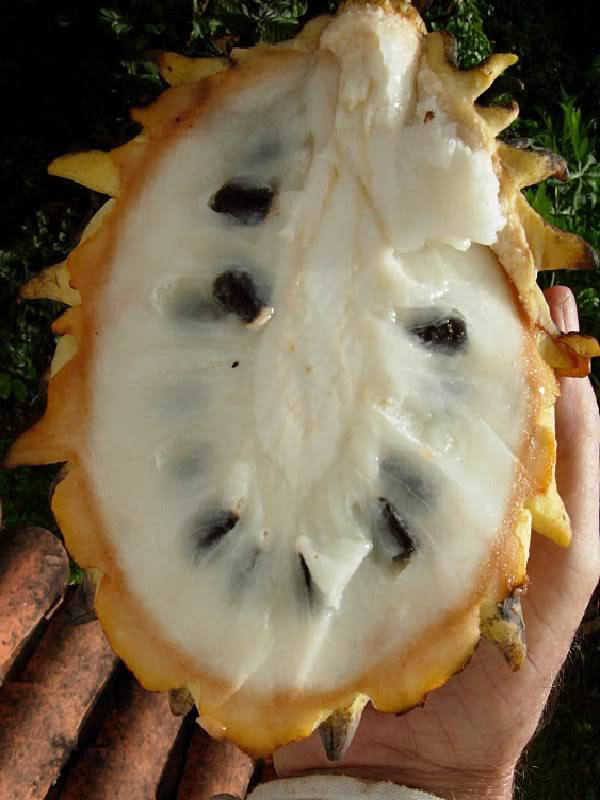
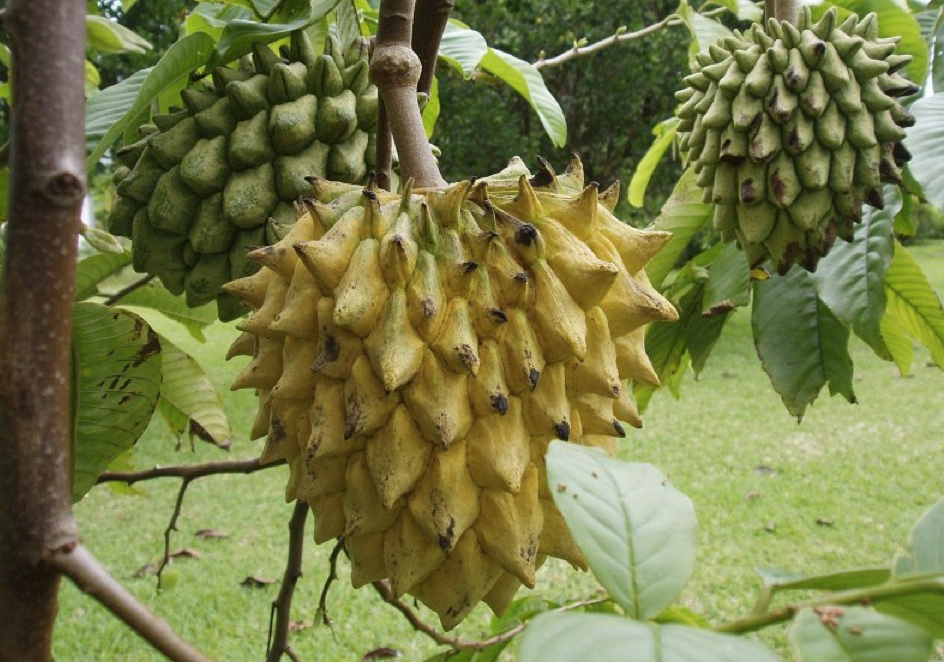
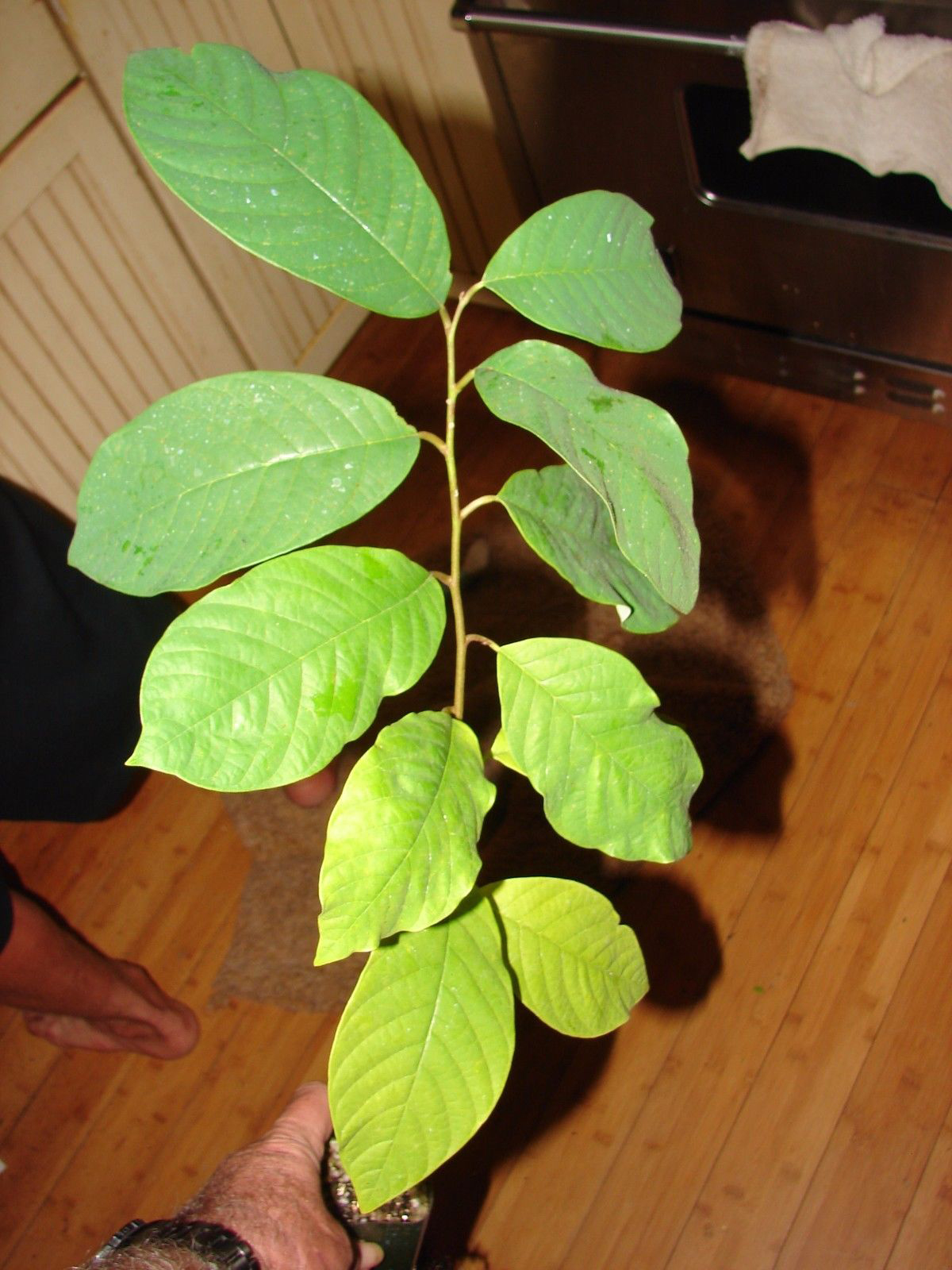
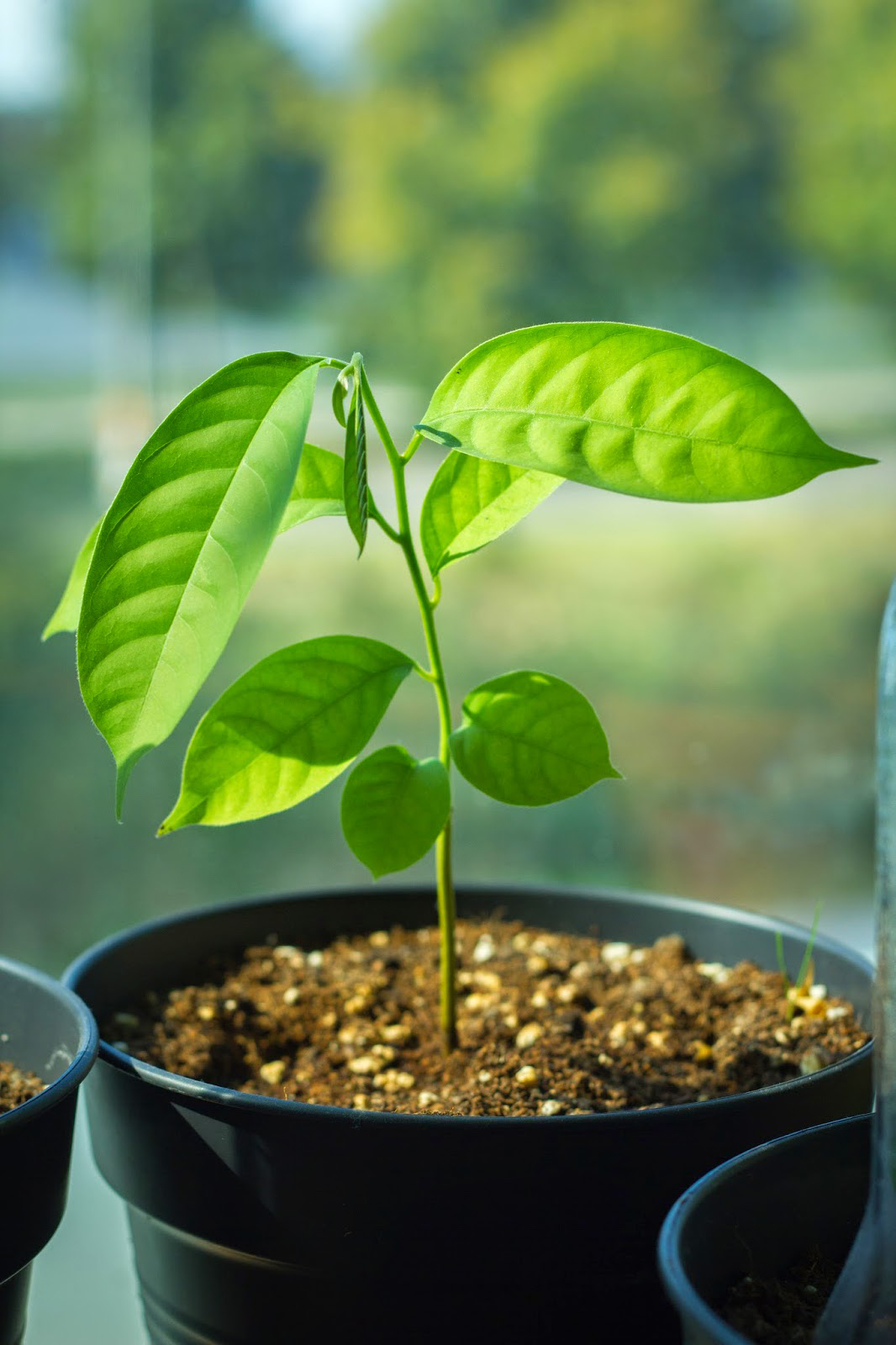
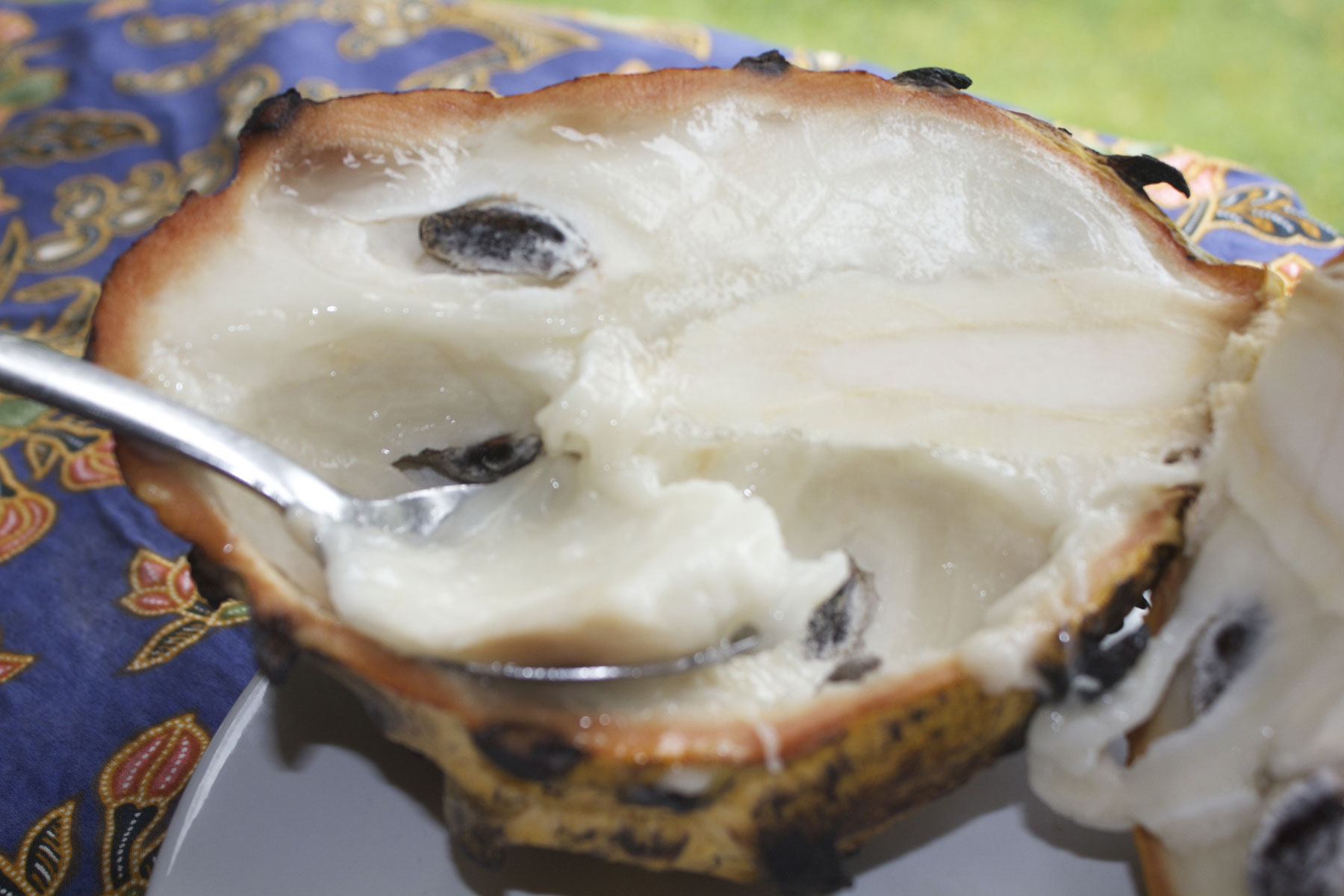
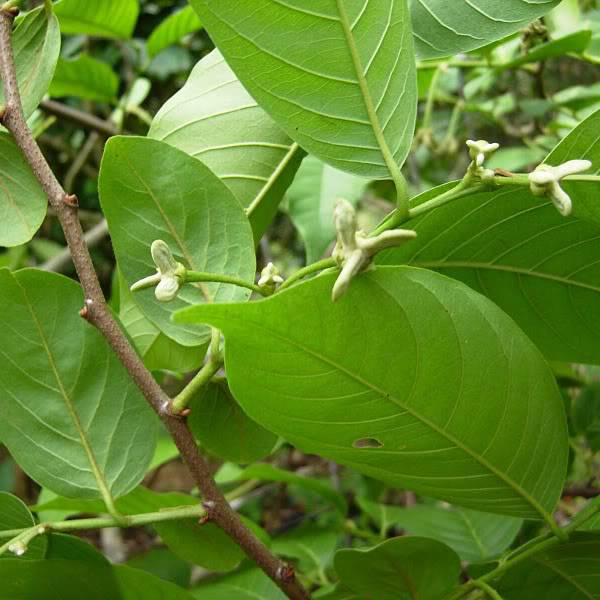
    Half-cut-Wild-Sugar-apple Wild-Sugar-apple Wild-Sugar-apple-leaves Wild-Sugar-apple-plant Wild-Sugar-apple-pulp Wild-Sugar-apple-stem
    [Show thumbnails]
    Plant description

    Wild sugar apple is deciduous, vigorous and small to medium sized tree which grows to the height of 4 to 15 meters with brown pubescent branchlets. Leaves are medium green, alternate, oblong-elliptic or ovate-oblong measuring 10-25 cm long by  4-12 cm wide having pointed apex and obtuse to rounded base  and entire margin somewhat coriaceous and pubescent underside. Flowers form in 1 to 3 clusters at axils of leaves about 2 to 3.5 cm across. Fruits have variable shape, oblong-cylindrica about 5-8 cm by 10-15 cm long or cordate, obovate to oblate about 6.5-12.5 diameter having leathery, tough and rough rind which becomes yellow when ripened. Pulp is white, translucent,, mucilaginous, juicy and subacid to sweet taste. It has an opaque-white core having numerous dark-brown seeds which is elliptic or obovate about 1.6 to 2 cm.

    Leaves

    Leaves are deciduous, alternate and oblong-elliptic or ovate-oblong pointed at apex, rounded at base measuring 10-25 cm long.

    Flowers

    Flowers from 1 to 3 in leaf axils, hermaphroditic, about 3/4-1 3/8 in (23.5 cm) and triangular with three large fleshy outer petals and three rudimentary inner petals.

    Fruits

    Berries are succulent and sweet pulp having seeds having inconsistent shape turning green to yellow when ripe.

    Traditional uses

    • Powdered seeds are used as a remedy for enterocolic disorder.
    • Leaves are used against rheumatism.

    Culinary uses

    • Fruit pulp is used in desserts, processed into refreshing drinks, ice creams and fermented to make wine.
    • In Brazil, fruit is consumed fresh or fermented to make wine.
    • It is used to make juice, ice cream and milkshakes.
    • Consume it fresh or made into raw desserts or smoothies.
    • Use it to make jams, pickles, jellies and chutneys.

    References:

    https://en.wikipedia.org/wiki/Rollinia_deliciosa

    https://hort.purdue.edu/newcrop/morton/biriba.html

    https://www.fruitsinfo.com/Rollinia-Exotic-fruits.php

    78%
    78%
    Awesome

    Comments

    comments

    Fruits W
    Share. Facebook Twitter Pinterest LinkedIn Tumblr Email
    Previous ArticleHealth benefits of Common Ice Plant
    Next Article Even Men Need Healthy Hair and Nails: 5 Benefits of Collagen for Men

    Related Posts

    Traditional uses and benefits of Wild Marigold

    March 21, 2024

    Facts about Saffron Plum

    February 11, 2024

    Health benefits of Assyrian plum

    February 8, 2024

    Comments are closed.


    Wild Sugar Apple Quick Facts
    Name: Wild Sugar Apple
    Scientific Name: Rollinia deliciosa
    Origin Tropical South America
    Colors Green to yellow
    Shapes Oblong-cylindrical (5-8 cm by 10-15 cm long), cordate, obovate to oblate (6.5-12.5 diameter)
    Taste White, mucilaginous, translucent
    Name Wild Sugar Apple
    Scientific Name Rollinia deliciosa
    Native Tropical South America
    Common/English Name Biriba, Rollinia, Biribah, Lancewood, Wild Custard Apple, Wild Cachiman, Wild Sugar Apple
    Name in Other Languages Belize: Anonilla, Wild Custard Apple;
    Brazil: Araticu, Araticum Pitaya, Araticum, Graviola Brave, Biriba De Pernambuco, Fruta Da Condessa, Jaca De Pobre, (Portuguese);
    Colombia: Anón, Anón De Montana, Anón De Enorme, Anón De Silvestre, Anona, Chirimoya, Mulato, Cuero Negro;
    Dominican Republic: Anón, Candón, Anona Candongo, Candóngo Candongo;
    Ecuador: Ananas Panga, Aparina Cara,  Anuna, Cabeza De Negro, Chirimoya, Chirimoya Arisco;
    French: Cachiman Crème, Cachiman Morveux;
    German: Schleimapfel, Unechtes Lunzenholz;
    Guadeloupe: Cachiman Montagne, Cachiman Cochon, Cachiman Morveux;
    Guatemala: Anonilla, Anona, Saramullo Silveste;
    Guyana: Casimo;
    Honduras: Anona, Anono;
    Martinique: Cachiman Montagne, Cachiman Morveux;
    Mexico: Anonilla, Annóna, Anonita, Anona Babosa, Anonita De Monte, Zambo;
    Panama: Toreta;
    Peru: Anón, Anonilla, Anóna, Anuna;
    Puerto Rico: Cachiman, Anon Cimarrón;
    Portuguese: Biribarana;
    Trinidad: Cachiman, Wild Cashima, Slimy Rollinia, Wild Sugar Apple;
    Venezuela: Anón De Monte, Biriba, Anonilla, Condessa, Chirimoya, Rinon, Rinon De Monte
    Plant Growth Habit Small- to medium-sized, deciduous, vigorous tree
    Growing Climate Hot, humid
    Plant Size 4–15 m high
    Leaves Oblong-elliptic or ovate-oblong, 10-25 cm long by 4-12 cm wide
    Flower 2–3.5 cm across
    Fruit shape & size Oblong-cylindrical (5-8 cm by 10-15 cm long), cordate, obovate to oblate (6.5-12.5 diameter)
    Fruit color Green to yellow
    Pulp White, mucilaginous, translucent
    Fruit Taste Subacid to sweet
    Seed Dark-brown, 1.6–2 cm long, elliptic or obovate

    Wild Sugar Apple Scientific Classification

    Scientific Name: Rollinia deliciosa

    Rank Scientific Name & (Common Name)
    Kingdom Plantae (Plants)
    Phylum Tracheophyta
    Class Magnoliopsida
    Order Magnoliales
    Family Annonaceae
    Genus Annona L.
    Synonyms
    • Annona biflora Ruiz & Pav. ex G. Don nom illeg.
    • Annona biflora Sessé & Moc.
    • Annona microcarpa R. & P. ex G. Don nom illeg.
    • Annona mucosa Jacq.
    • Annona obtusiflora Tussac
    • Annona obtusifolia DC.
    • Annona pterocarpa Ruiz & Pavon ex G. Don nom illeg.
    • Annona pteropetala Ruiz & Pav. ex E.A. López nom illeg.
    • Annona pteropetala R. & P. ex R.E. Fries
    • Annona reticulate var. mucosa (Jacq.) Willd.
    • Annona sieberi A. DC.
    • Rollinia curvipetala R. E. Fries
    • Rollinia deliciosa Safford
    • Rollinia jimenezii Saff.
    • Rollinia jimenezii var. nelsonii R.E. Fr.
    • Rollinia mucosa subsp. aequatorialis R.E. Fr.
    • Rollinia mucosa subsp. portoricensis R.E. Fr.
    • Rollinia mucosa var. macropoda R.E. Fr.
    • Rollinia mucosa var. neglecta (R.E. Fr.) R.E. Fr.
    • Rollinia neglecta R.E. Fr.
    • Rollinia obtusiflora Tussac
    • Rollinia orthopetala A. DC.
    • Rollinia orthopetala Correa
    • Rollinia permensis Standl.
    • Rollinia pterocarpa G. Don
    • Rollinia pulchrinervia A.DC
    • Rollinnia sieberi A. DC.
    Categories
    • Beverages (78)
    • Dairy (28)
    • Dental Health (15)
    • Equipment (5)
    • Essential OIls (196)
    • Facts (2,939)
    • Foods (255)
    • Fruits (516)
    • Giveaway (1)
    • Grains and Cereals (36)
    • Health & Beauty (763)
    • Herbs and Spices (1,249)
    • Medicines (9)
    • Mental Health (19)
    • Nutritional value (27)
    • Nuts and seeds (73)
    • Oils (81)
    • Pets (4)
    • Poultry & Seafoods (67)
    • Pulses and Beans (16)
    • Reviews (25)
    • supplement (2)
    • Vegetables (304)
    • Weight Loss (22)

    What is Lupin Bean Flour?

    Science Backed Health Benefits of Durian (Durio zibethinus)

    Science Backed Health Benefits of Feijoa (Pineapple Guava) (Acca sellowiana)

    Science Backed Health Benefits of Gac Fruit (Momordica cochinchinensis)

    Science Backed Health Benefits of Amaranth Leaves (Amaranthus spp)

    Science Backed Health Benefits of Arrowhead (Sagittaria sagittifolia)

    ABOUT
    Home
    About us
    Contact us
    Privacy Policy
    Terms & conditions
    Disclaimer
    Direct Communication
    e-mail: [email protected]
    Gmail: [email protected]
    Whatsapp: +977-9841146511
    Viber: +977-9841146511
    Useful
    Health Wiki
    Nutrition
    Facebook Twitter Pinterest
    © 2025 www.healthbenefitstimes.com All rights reserved.

    Type above and press Enter to search. Press Esc to cancel.

    ×

    Log In

    Forgot Password?

    Not registered yet? Create an Account