

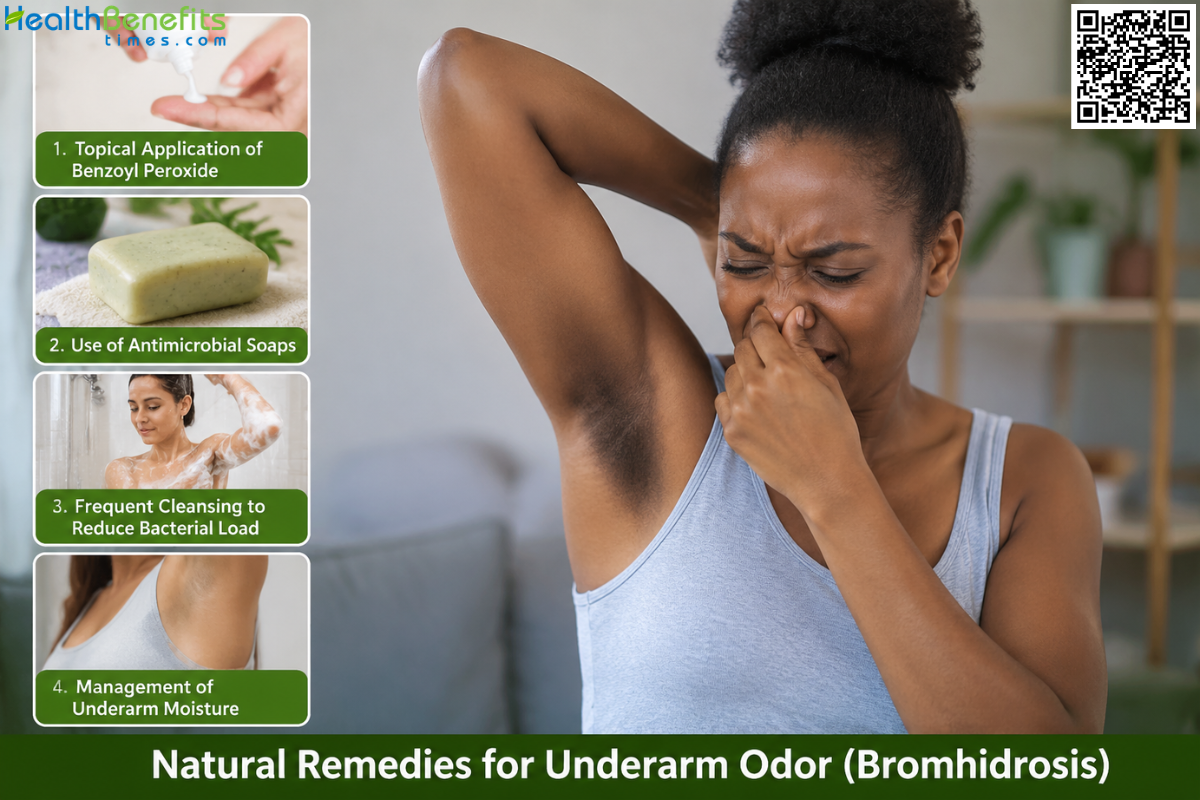
Bromhidrosis is a clinical condition characterized by chronic, unpleasant body odor that significantly exceeds normal physiological perspiration levels. It primarily occurs when apocrine sweat glands located mainly in the underarms, groin, and feet produce secretions that are subsequently broken down by skin-resident bacteria, such as Corynebacterium species. Unlike standard body odor, which is often transient, bromhidrosis is persistent and can negatively impact an individual’s quality of life, often leading to social anxiety or emotional distress. While personal hygiene plays a role, the condition is frequently linked to an overgrowth of specific bacteria or an overactive gland response. Diagnosis and management typically require professional assessment to rule out underlying metabolic or skin disorders. Treatment focuses on reducing bacterial colonization and controlling moisture levels to neutralize odor at the source 1, 2.
Causes of Bromhidrosis
1. Bacterial Breakdown of Sweat
The primary cause of bromhidrosis is the metabolic activity of skin bacteria, particularly Corynebacterium, Staphylococcus, and Micrococcus species. These bacteria colonize the skin and break down odorless proteins and fatty acids found in apocrine sweat into malodorous compounds, such as volatile fatty acids and ammonia.
2. Apocrine Gland Activity
Bromhidrosis is specifically associated with the secretions from apocrine glands, which become active after puberty. These glands produce a thicker, nutrient-rich fluid that provides an ideal environment for bacterial proliferation, unlike eccrine sweat, which is mostly composed of water and salt 2.
3. Hyperhidrosis (Excessive Sweating)
Excessive perspiration creates a consistently moist environment on the skin surface. This humidity promotes the growth of odor-causing bacteria and maceration of the skin, which significantly intensifies the production of foul-smelling volatile substances 3.
4. Dietary and Metabolic Factors
The ingestion of certain foods such as garlic, onions, curry, or alcohol and the use of specific medications can alter the chemical composition of sweat. Additionally, certain rare metabolic disorders can lead to the excretion of distinct odors through the skin pores 2.
5. Poor Hygiene and Environmental Factors
Failure to regularly remove accumulated sweat and dead skin cells allows for a higher concentration of bacteria. Furthermore, wearing tight or synthetic clothing that traps moisture against the skin prevents evaporation, thereby accelerating the bacterial breakdown process.
Symptoms of Underarm Odor (Bromhidrosis)
- Persistent Unpleasant Odor: The hallmark symptom is a distinct, foul, or pungent odor originating from the underarm area that does not subside despite regular washing. This odor is often described as sharp or vinegary and is distinct from the typical scent of sweat 1.
- Odor Resistance to Hygiene Practices: Unlike transient body odor that can be easily removed with basic soap and water, the odor associated with bromhidrosis frequently persists immediately following a shower or the application of standard deodorants.
- Excessive Perspiration: Visible wetness or dampness in the underarm region is a common accompanying symptom. This excessive moisture provides the necessary environment for bacteria to rapidly metabolize skin secretions into malodorous compounds 2.
- Clothing Staining and Odor Retention: The chemical nature of the secreted compounds can lead to the formation of yellowish or brownish stains on the underarms of garments. Furthermore, these fabrics often retain the offensive smell even after thorough laundering, as the odor-causing substances can become embedded in the fibers 1.
- Skin Irritation: In some cases, the combination of constant moisture, bacterial activity, and the breakdown products on the skin surface can lead to secondary signs, including redness, itching, or maceration of the skin in the axillary vault 3.
Natural Remedies for Underarm Odor (Bromhidrosis)
1. Topical Application of Benzoyl Peroxide
How it may help
Benzoyl peroxide is an antimicrobial agent that reduces the number of bacteria on the skin surface. By decreasing the population of odor-causing bacteria, it prevents them from breaking down sweat into foul-smelling compounds, directly targeting the root cause of bromhidrosis.
What research says
Clinical guidelines indicate that topical antimicrobial washes, including benzoyl peroxide, are effective first-line treatments for localized bromhidrosis. Research confirms that reducing bacterial flora in the underarm region successfully neutralizes the metabolic process responsible for unpleasant body odor.
How to use it safely
Apply a low-concentration benzoyl peroxide wash (such as 4% to 5%) to your underarms while showering. Leave it on the skin for one to two minutes to work effectively, then rinse it off completely to minimize potential irritation.
Potential precautions or side effects
Benzoyl peroxide may cause mild skin dryness, redness, or peeling. It also has a strong bleaching effect and can permanently discolor towels and clothing if not thoroughly rinsed.
2. Use of Antimicrobial Soaps
How it may help
Antimicrobial soaps contain active ingredients designed to eliminate or inhibit the growth of bacteria on the skin. By reducing the number of bacteria in the underarm area, these soaps prevent the microbes from breaking down sweat into the volatile compounds that cause the strong smell of bromhidrosis.
What research says
Clinical evidence indicates that reducing local bacterial populations is a primary strategy for managing bromhidrosis. Medical literature supports the daily use of antibacterial cleansers as a standard conservative treatment to significantly decrease underarm odor by targeting the specific resident bacteria.
How to use it safely
Lather the antimicrobial soap specifically on your underarms during your daily shower. Allow the lather to sit on your skin for about a minute before rinsing it off completely. Use it once or twice daily, but avoid scrubbing too harshly to protect your skin barrier.
Potential precautions or side effects
Frequent use can cause skin dryness, irritation, or redness. If your skin becomes overly dry, reduce usage to every other day and consider applying a gentle, fragrance-free moisturizer.
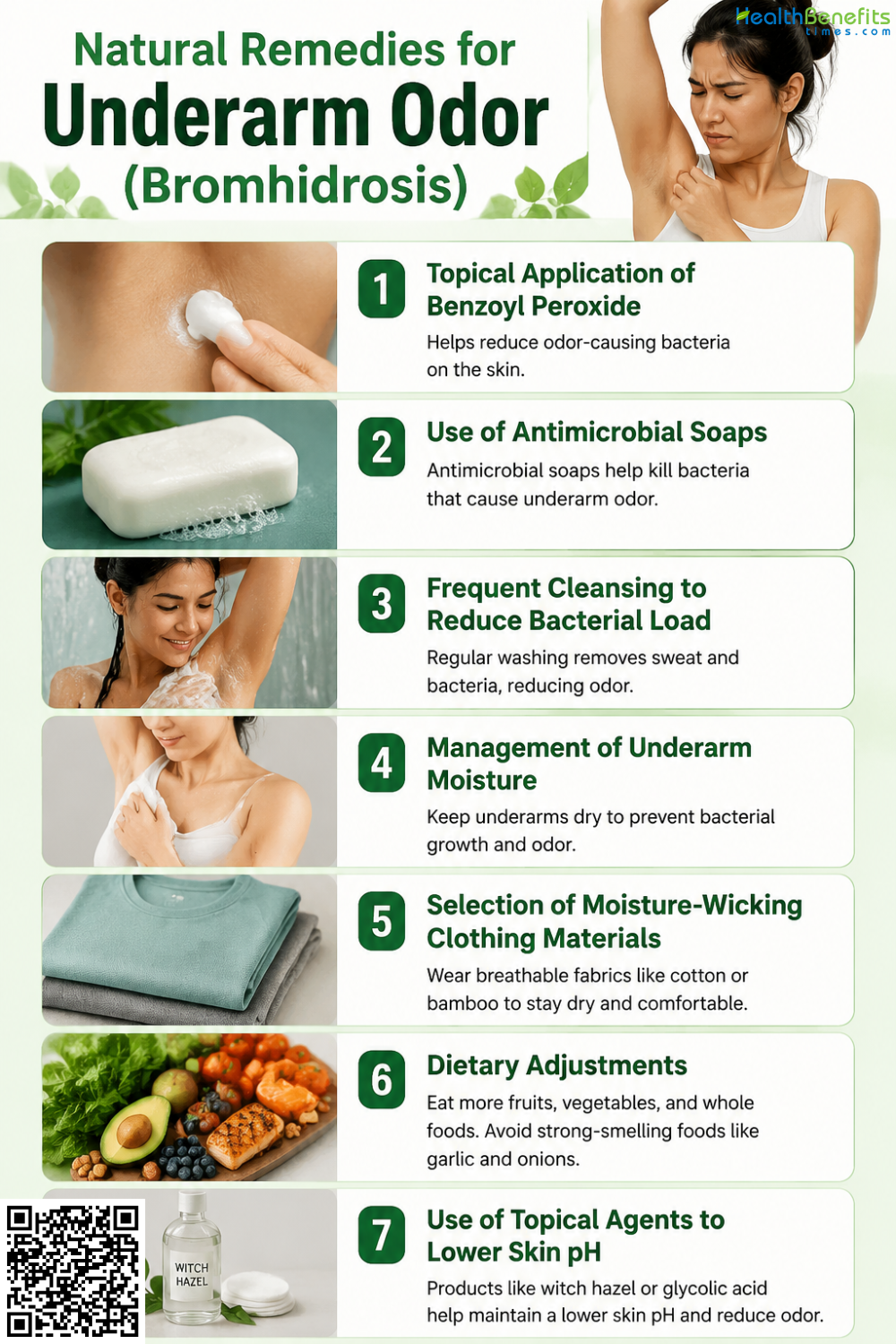
3. Frequent Cleansing to Reduce Bacterial Load
How it may help
Frequent cleansing physically removes accumulated sweat, dead skin cells, and surface bacteria from the underarms. By washing away both the glandular secretions and the microbes that feed on them, this practice directly disrupts the chemical breakdown process that produces the strong, unpleasant scent associated with bromhidrosis.
What research says
Clinical guidelines establish that maintaining strict local hygiene is a fundamental, first-line management strategy for bromhidrosis. Regular washing is clinically proven to reduce bacterial overgrowth and clear the skin of the organic materials required for odor-producing metabolic reactions.
How to use it safely
Wash your underarms at least once daily using warm water and a mild, unscented soap. If you sweat heavily or exercise, cleanse the area again promptly. Always pat your skin completely dry with a clean towel, as lingering moisture encourages bacterial growth.
Potential precautions or side effects
Washing too frequently or scrubbing the underarms too aggressively can strip the skin of natural oils, leading to severe dryness, redness, and a damaged skin barrier.
4. Management of Underarm Moisture
How it may help
Controlling underarm moisture deprives odor-causing bacteria of the damp environment they need to survive and multiply. By keeping the skin dry, the bacterial breakdown of apocrine sweat is significantly slowed down, directly preventing the formation of the strong, foul-smelling compounds characteristic of bromhidrosis.
What research says
Clinical research establishes a direct link between excess moisture and worsened bromhidrosis. Medical guidelines confirm that managing local humidity through drying agents or aluminum-based antiperspirants effectively reduces bacterial colonization and stops the metabolic breakdown of sweat responsible for severe body odor.
How to use it safely
Always dry your underarms completely with a clean towel after showering. Apply over-the-counter antiperspirants or natural drying powders, like cornstarch, directly to dry skin. For maximum effectiveness, apply clinical antiperspirants at night when sweat gland activity is naturally lower.
Potential precautions or side effects
Aluminum-based antiperspirants or drying powders can cause skin irritation, redness, or itching. Overuse may block pores excessively, occasionally leading to painful cysts or inflamed sweat glands.
5. Selection of Moisture-Wicking Clothing Materials
How it may help
Moisture-wicking and highly breathable fabrics pull sweat away from the skin to the outer surface for rapid evaporation. By keeping the underarm environment dry and well-ventilated, these materials prevent the accumulation of moisture, effectively denying skin bacteria the damp conditions required to produce foul-smelling odors.
What research says
Clinical guidelines emphasize that environmental modifications, including clothing choices, are essential conservative treatments for bromhidrosis. Medical research confirms that wearing breathable, moisture-wicking garments significantly reduces local humidity and skin maceration, thereby minimizing the bacterial colonization that leads to excessive body odor 1.
How to use it safely
Choose loose-fitting garments made from breathable natural fibers, such as cotton or linen, or specialized synthetic moisture-wicking athletic wear. Change your clothing promptly after exercising or heavy sweating. Wash your clothes thoroughly after each use to remove trapped sweat and bacteria.
Potential precautions or side effects
Certain synthetic moisture-wicking fabrics can retain odors over time if not laundered properly. Additionally, specific synthetic fibers or fabric treatments may cause allergic contact dermatitis in sensitive individuals.
6. Dietary Adjustments
How it may help
Consuming specific pungent foods and beverages introduces volatile organic compounds into the bloodstream, which are subsequently excreted through the sweat glands. By eliminating or reducing the intake of these items, the chemical composition of sweat normalizes, significantly decreasing the emission of strong, offensive odors from the skin.
What research says
Clinical literature indicates that dietary habits directly influence sweat composition. Medical research confirms that volatile compounds derived from foods like garlic, onions, strong spices, and alcohol are excreted through the skin’s glands, directly exacerbating body odor. Consequently, dietary modification is a recognized clinical strategy for managing bromhidrosis.
How to use it safely
Keep a daily food diary to identify specific dietary triggers that worsen your underarm odor. Gradually reduce your intake of sulfur-rich foods, pungent spices, and alcohol. Ensure you maintain a balanced, nutritious diet by substituting these trigger foods with fresh, odor-neutral fruits and vegetables.
Potential precautions or side effects
Extreme or overly restrictive diets can lead to dangerous nutritional deficiencies. Always consult a healthcare provider or a registered dietitian before making drastic, long-term changes to your eating habits.
7. Use of Topical Agents to Lower Skin pH
How it may help
Healthy skin has a naturally acidic surface, but sweating can temporarily raise this pH, creating an ideal alkaline environment for odor-causing bacteria. Applying mild acidic agents lowers the skin’s pH, which prevents these microbes from surviving, multiplying, and breaking down sweat into foul-smelling chemical compounds.
What research says
Clinical evidence shows that lowering the axillary pH effectively inhibits the overgrowth of Corynebacterium and other odor-producing microbes. Dermatological research confirms that maintaining the skin’s acidic mantle is a scientifically sound approach to neutralizing body odor, making topical acidifiers a valid conservative treatment for bromhidrosis 1.
How to use it safely
Apply a low-concentration, over-the-counter liquid acid, such as a mild glycolic or salicylic acid toner, to clean, dry underarms using a cotton pad. Begin by using it two to three times a week. Do not apply these products immediately after shaving to prevent severe stinging.
Potential precautions or side effects
Topical acids can cause localized skin irritation, burning, redness, and peeling in the delicate underarm area. Discontinue use immediately if you develop a persistent rash or severe discomfort.
Foods to Avoid When You Suffer from Underarm Odor (Bromhidrosis)
1. Garlic and Onions
These vegetables contain high levels of sulfur. When digested, they produce volatile compounds excreted through sweat glands, directly worsening the severity of underarm odor 1.

2. Red Meat
Clinical research indicates that diets heavy in red meat negatively alter sweat composition, resulting in a significantly more intense and unpleasant body odor 4.
3. Cruciferous Vegetables
Broccoli, cabbage, and cauliflower are rich in sulfur. Their digestion releases odorous metabolic byproducts into the bloodstream, which ultimately exit the body through sweat glands.
4. Alcohol
The body metabolizes alcohol into acetic acid and volatile compounds. These strong-smelling byproducts are partially eliminated through skin pores, intensifying existing body odor.
5. Spicy Foods
Spicy ingredients trigger the body’s cooling system, causing excessive sweating. This excess moisture provides skin bacteria with more material to convert into foul-smelling compounds.
When to See a Doctor When You Suffer from Underarm Odor (Bromhidrosis)
1. Sudden Change in Odor
A distinct, rapid shift in body scent can indicate underlying metabolic disorders, infections, or endocrine imbalances requiring professional clinical evaluation 1.
2. Resistance to Basic Treatments
If rigorous daily hygiene and clinical-strength antiperspirants fail to reduce the smell, a physician may need to prescribe targeted antibacterial therapies.
3. Fruity or Ammonia-Like Smells
Odors resembling fruit or bleach are often systemic warning signs of serious conditions like diabetic ketoacidosis or kidney disease, requiring immediate medical testing 2.
4. Skin Rashes or Lesions
The presence of persistent redness, open sores, or painful lumps suggests secondary bacterial or fungal infections that necessitate prescription topical antibiotics 3.
5. Significant Psychological Distress
When the condition causes severe anxiety or social withdrawal, medical intervention provides access to advanced clinical treatments like botulinum toxin injections or surgery.