


Stomach growling is a common bodily function that most people associate with hunger. Clinically known as borborygmi, these rumbling or gurgling sounds are primarily generated by the stomach and intestines as they process meals 1. The noise is the direct result of peristalsis, which is a series of wave-like muscle contractions that continuously push food, fluids, and gas through the digestive tract 1. Although these sounds happen throughout the day, they are much louder and easier to hear when the stomach is empty, as there is no food to muffle the echoing sound. For the vast majority of people, occasional stomach growling is completely harmless and simply indicates a healthy, active digestive system. However, if the rumbling is persistent, excessively loud, or accompanied by other symptoms like pain or bloating, it may point to an underlying gastrointestinal condition that requires medical evaluation 1.
Causes of Stomach Growling
1. Normal Digestion
As the stomach and intestines process a meal, muscle walls rhythmically contract to push food, liquids, and digestive juices through the gastrointestinal tract. This movement, called peristalsis, naturally creates gurgling and rumbling sounds as contents mix and move forward 2.
2. Hunger and an Empty Stomach
When the stomach has been empty for several hours, hormonal signals trigger a pattern of strong muscle contractions called the migrating motor complex. These contractions sweep leftover food and digestive fluids through the tract, producing much louder growling noises because there is no food present to absorb the sound 3.
3. Excess Gas
A buildup of gas in the digestive system can amplify abdominal noises. This gas is either introduced by swallowing air during eating and drinking, or it is produced by normal gut bacteria breaking down undigested carbohydrates in the large intestine 4.
4. Food Intolerances
When the body cannot properly break down certain substances—such as lactose in dairy or fructose in fruit—the undigested food ferments in the gut. This fermentation rapidly produces excess gas and draws extra water into the intestines, leading to increased intestinal contractions and loud rumbling 5.
5. Irritable Bowel Syndrome (IBS)
IBS is a functional disorder that disrupts normal gut motility, causing the muscles in the intestines to contract faster or more forcefully than usual. This abnormal muscle activity frequently results in hyperactive bowel sounds, along with symptoms like cramping, bloating, and changes in bowel habits 6.
6. Bowel Obstruction
If a physical blockage occurs in the intestines, the digestive system will vigorously contract to try and squeeze food, liquid, and gas past the narrowed area. This intense effort creates loud, high-pitched, and hyperactive sounds that signify a serious medical emergency requiring prompt clinical intervention 2.
7. Gastrointestinal Infections
Viral or bacterial infections in the stomach and intestines, commonly known as gastroenteritis, cause severe inflammation in the digestive lining. The body speeds up digestion to expel the infection, which drastically increases intestinal contractions, leading to highly active bowel sounds and diarrhea 7.
Symptoms of Stomach Growling
1. Abdominal Pain and Cramping
While mild growling is a normal physiological function, loud rumbling paired with sharp, cramping, or prolonged abdominal pain often indicates a clinical issue. This combination is a primary indicator of conditions such as a bowel obstruction, severe intestinal infection, or irritable bowel syndrome 2.
2. Excessive Gas and Bloating
The accumulation of intestinal gas frequently causes a sensation of uncomfortable fullness and visible swelling of the abdomen. When this trapped gas moves through the digestive tract, it significantly amplifies bowel noises and produces loud, echoing gurgles 4.
3. Nausea and Vomiting
Hyperactive stomach growling accompanied by persistent nausea or vomiting is a clear sign of gastric distress. This symptom cluster commonly occurs during viral gastroenteritis, bacterial foodborne illnesses, or when a physical blockage prevents food from passing through the digestive tract 7.
4. Diarrhea or Loose Stools
Increased intestinal contractions that generate loud abdominal rumbling often cause food and fluids to move too rapidly through the bowel. This rapid transit prevents proper water absorption, resulting in frequent, watery stools characteristic of gastrointestinal infections and food intolerances 7.
5. Constipation and Silent Bowels
While loud, high-pitched growling can indicate an intestinal blockage, a sudden transition from noisy rumbling to a complete absence of bowel sounds is highly concerning. When paired with severe constipation and the inability to pass gas, it serves as a critical warning sign of a complete intestinal obstruction requiring immediate emergency medical care 2.
6. Unintentional Weight Loss
Chronic, hyperactive bowel sounds that occur alongside unexplained weight loss and daily fatigue suggest an underlying malabsorption disorder. Conditions like celiac disease or inflammatory bowel disease damage the intestinal lining, preventing the body from properly absorbing essential nutrients from digesting food 8.
Natural Ways to Stop Stomach Growling
1. Eating Smaller, More Frequent Meals
How it may help
Eating smaller, more frequent meals prevents the stomach from remaining empty for extended periods, which stops the loud muscle contractions triggered by hunger. It also reduces the amount of food processed at once, preventing the digestive system from becoming overworked and producing excess gas and rumbling sounds.
What research says
Clinical guidelines for managing intestinal gas recommend eating smaller, more frequent meals to improve digestive motility and reduce discomfort 9. Processing large amounts of food at one time increases the risk of indigestion and excess gas production, which amplifies abdominal rumbling 9.
How to use it safely
You should divide your usual daily food intake into four to six smaller portions instead of three large meals. Focus on balanced meals containing lean proteins and easily digestible foods to ensure you do not inadvertently increase your total daily calories.
Potential precautions or side effects
Frequent eating can worsen acid reflux symptoms in some individuals. Avoid high-sugar and high-fat foods during these smaller meals to prevent unwanted weight gain and further digestive upset.
2. Eating Slowly and Chewing Food Thoroughly
How it may help
Eating slowly and chewing food completely breaks down particles before they reach the stomach, making digestion easier and reducing hyperactive muscle contractions. Additionally, eating at a slower pace significantly decreases the amount of air swallowed during a meal, preventing the buildup of noisy intestinal gas.
What research says
Clinical guidance indicates that eating too quickly causes individuals to swallow excess air, a primary contributor to trapped digestive gas and loud abdominal rumbling 10. Health authorities emphasize that chewing food thoroughly and slowing down directly reduces this air intake, easing overall gastrointestinal distress 9.
How to use it safely
You should intentionally pace your meals, taking at least twenty minutes to finish eating. Try setting your fork down between bites and chew each mouthful thoroughly until it becomes a soft paste before swallowing to minimize air ingestion and support smoother digestion.
Potential precautions or side effects
This practice is completely safe with no adverse side effects. However, you may find that you feel full much faster, which can naturally reduce your overall caloric intake.

3. Sitting Down During Meals Instead of Eating on the Run
How it may help
Eating while moving or rushing often causes individuals to take larger bites and breathe more heavily, which increases the amount of air swallowed. Sitting down promotes a relaxed posture that allows the digestive tract to function smoothly, reducing the trapped gas that causes loud stomach rumbling.
What research says
Health guidelines state that eating while on the run leads to rapid eating, which significantly increases swallowed air and subsequent intestinal gas 10. Medical authorities recommend sitting down in a calm environment during meals to minimize this excess air ingestion and prevent noisy bowel sounds 9.
How to use it safely
You should designate a specific time to sit at a table for your meals and snacks. Avoid walking, driving, or doing physical tasks while chewing and swallowing to maintain proper posture and support a steady, calm digestive process.
Potential precautions or side effects
This behavioral adjustment is completely safe and poses no health risks. It simply requires a shift in daily time management to ensure you have time for seated meals.
4. Avoiding Carbonated and Fizzy Beverages
How it may help
Carbonated and fizzy drinks are infused with carbon dioxide gas. When consumed, this gas enters the stomach and intestines directly. Eliminating these beverages reduces the volume of gas moving through the digestive tract, significantly decreasing loud gurgling and rumbling sounds 9.
What research says
Clinical guidelines identify carbonated drinks like soda and sparkling water as major contributors to digestive gas. Medical authorities recommend avoiding fizzy beverages to prevent carbon dioxide buildup in the gastrointestinal tract, which directly causes abdominal distension and hyperactive bowel noises 10.
How to use it safely
You should replace sodas, seltzers, and sparkling waters with plain, still water or decaffeinated teas to stay hydrated. When drinking, sip directly from a glass rather than using a straw, as straws force you to swallow excess air 9.
Potential precautions or side effects
If you abruptly stop drinking caffeinated sodas, you may experience temporary caffeine withdrawal symptoms like headaches. Reduce your intake gradually to avoid these mild side effects 11.
5. Limiting Gas-Producing Beans and Vegetables
How it may help
Beans and cruciferous vegetables contain complex carbohydrates that the stomach cannot easily break down. When these undigested foods reach the large intestine, naturally occurring gut bacteria ferment them, producing excess gas 10. Limiting these foods directly reduces this gas buildup and minimizes loud stomach rumbling.
What research says
Health authorities confirm that foods rich in certain carbohydrates, such as beans, cabbage, and broccoli, are a primary cause of intestinal gas. The large intestine relies on bacteria to break down these foods, a fermentation process that actively generates gas and amplifies abdominal noises 10.
How to use it safely
You should temporarily reduce your intake of common gas-producing foods like Brussels sprouts, beans, and onions to see if symptoms improve. To maintain proper nutrition, replace them with low-gas alternatives such as zucchini, spinach, and cucumbers 9.
Potential precautions or side effects
Completely removing vegetables from your diet lowers your overall fiber intake, which increases the risk of developing constipation 12. Slowly reintroduce fiber-rich foods to help your digestive system adapt.
6. Eliminating Sugar-Free Artificial Sweeteners
How it may help
Sugar alcohols and artificial sweeteners, such as sorbitol and mannitol, are poorly absorbed by the digestive system. When these undigested compounds reach the large intestine, bacteria ferment them, rapidly producing intestinal gas 10. Eliminating these sweeteners directly reduces this fermentation process, effectively decreasing gas buildup and loud stomach growling.
What research says
Clinical evidence identifies sugar alcohols found in sugar-free candies and diet drinks as common triggers for gastrointestinal distress. Medical authorities confirm that the body’s inability to fully break down these artificial sweeteners leads directly to excess intestinal gas, bloating, and hyperactive bowel noises during bacterial fermentation 10.
How to use it safely
You should carefully read food labels to identify and avoid common sugar alcohols like sorbitol, mannitol, and xylitol 9. Replace sugar-free chewing gum and sugarless candies with plain water or naturally sweetened alternatives to prevent unnecessary digestive upset and intestinal rumbling.
Potential precautions or side effects
Switching from artificial sweeteners back to regular sugars increases your daily caloric intake, which can negatively impact weight management and blood sugar control in individuals with diabetes 13.
7. Managing Dairy and Other Known Food Intolerances
How it may help
Food intolerances occur when the digestive system lacks the enzymes needed to break down certain substances, such as lactose in dairy. These undigested foods ferment in the colon, rapidly producing excess gas. Eliminating these specific trigger foods directly prevents this bacterial fermentation, significantly reducing loud abdominal rumbling 14.
What research says
Clinical guidelines confirm that when the body cannot properly absorb dietary sugars like lactose or fructose, gut bacteria ferment these undigested carbohydrates. Medical authorities state this fermentation produces significant amounts of trapped gas, which directly causes hyperactive bowel sounds, uncomfortable bloating, and diarrhea 10.
How to use it safely
You should keep a daily food diary to identify specific ingredients that trigger excessive stomach growling. Once identified, temporarily remove them from your diet. If you are lactose intolerant, choose lactose-free dairy alternatives or take lactase enzyme supplements before eating dairy 15.
Potential precautions or side effects
Completely eliminating dairy reduces your intake of essential calcium and vitamin D. You should consume fortified plant-based alternatives or take dietary supplements to maintain adequate bone health 15.
8. Avoiding Chewing Gum and Hard Candies
How it may help
Continuously chewing gum or sucking on hard candies forces the swallowing of excess air. This air travels into the digestive tract, creating trapped gas. Avoiding these habits directly reduces swallowed air, minimizing the gas buildup that causes loud stomach gurgling 9.
What research says
Clinical guidelines identify swallowed air as a primary source of stomach gas. Medical authorities specifically list chewing gum and sucking hard candies as behaviors that significantly increase air ingestion, which directly contributes to hyperactive bowel sounds and uncomfortable bloating 10.
How to use it safely
You should completely avoid chewing gum and hard candies to reduce the amount of air you swallow. If you need to freshen your breath, choose alternative methods like brushing your teeth or using a daily mouthwash 9.
Potential precautions or side effects
This behavioral change is entirely safe. However, if you rely on chewing gum for chronic dry mouth, consult a healthcare provider for alternative saliva-stimulating treatments 16.
9. Quitting Smoking
How it may help
The repetitive act of inhaling smoke causes individuals to swallow excess air, which then travels into the digestive tract. Quitting smoking directly eliminates this continuous intake of air, significantly reducing the intestinal gas buildup that leads to loud stomach rumbling and uncomfortable abdominal bloating 10.
What research says
Clinical guidelines classify smoking as a primary behavioral habit that causes individuals to swallow excessive amounts of air. Medical authorities confirm that this trapped air moves through the gastrointestinal system, directly producing hyperactive bowel sounds, frequent belching, and excess intestinal gas 10.
How to use it safely
You should consult a healthcare provider to create a structured quitting plan. Utilize evidence-based support methods, such as nicotine replacement patches, gums, or prescribed medications, to safely manage your cravings and comfortably transition away from tobacco products 17.
Potential precautions or side effects
Stopping smoking often triggers temporary nicotine withdrawal symptoms, including irritability, mild anxiety, and an increased appetite. These side effects are normal and typically subside within a few weeks 18.
10. Ensuring Dentures Fit Correctly to Prevent Air Ingestion
How it may help
Loose or improperly fitting dentures cause individuals to swallow excessively to keep the appliance in place, pulling unneeded air into the digestive tract 9. Adjusting dentures to fit securely stops this continuous air ingestion, directly reducing the trapped gas responsible for loud stomach growling and bloating 9.
What research says
Clinical guidelines on gastrointestinal health identify poorly fitting dentures as a common, yet often overlooked, cause of excessive air swallowing 10. Medical authorities confirm that this swallowed air rapidly accumulates in the stomach and intestines, directly producing hyperactive bowel sounds, abdominal discomfort, and increased belching 10.
How to use it safely
You should schedule regular dental checkups to have your dentures evaluated, as your jaw naturally changes shape over time. If your dentures slip while speaking or eating, consult a dentist for a professional relining or replacement to ensure a tight fit 19.
Potential precautions or side effects
Do not attempt to bend or adjust dentures yourself, as this can permanently damage the appliance and cause severe gum irritation or painful oral sores 19.
Foods to Avoid When You suffer from Stomach Growling
1. Beans and Lentils
These contain complex carbohydrates that the stomach cannot easily digest. Gut bacteria ferment these carbohydrates, rapidly producing excess gas and loud intestinal rumbling 10.
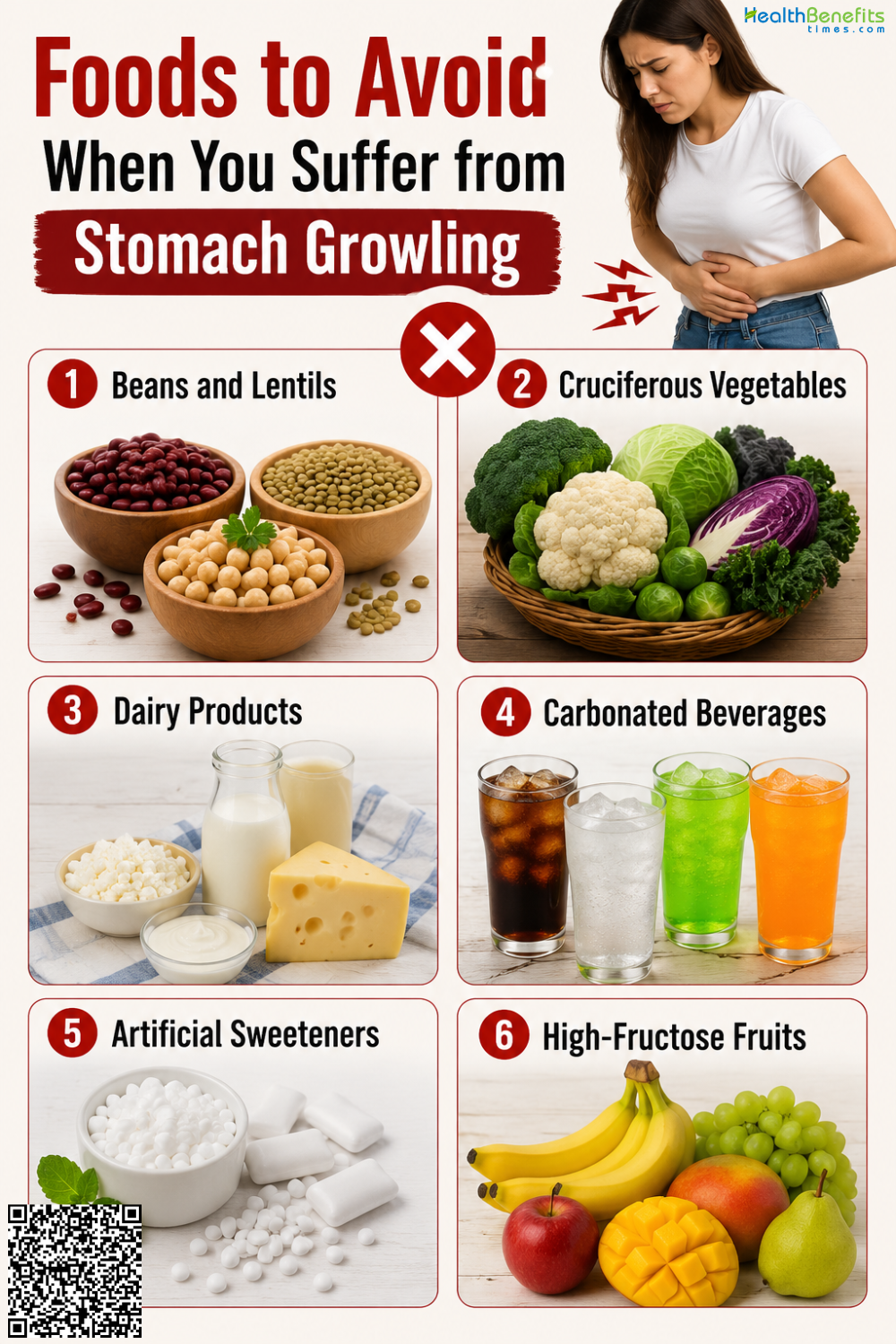
2. Cruciferous Vegetables
Vegetables like broccoli, cabbage, and Brussels sprouts contain complex sugars. When broken down by large intestine bacteria, they generate significant trapped gas, leading to hyperactive bowel sounds 10.
3. Dairy Products
Individuals lacking the lactase enzyme cannot properly absorb lactose found in milk. This undigested sugar ferments in the colon, causing severe gas and audible stomach gurgling 14.
4. Carbonated Beverages
Sodas and sparkling waters introduce high volumes of carbon dioxide gas directly into the digestive system. This trapped air continuously moves through the intestines, amplifying abdominal noises 10.
5. Artificial Sweeteners
Sugar alcohols like sorbitol and mannitol are poorly absorbed by the gastrointestinal tract. Intestinal bacteria ferment these compounds, which actively produces excess gas and triggers noisy bowel contractions 10.
6. High-Fructose Fruits
Fruits such as apples, pears, and watermelon contain high levels of fructose. Incomplete digestion of this natural sugar leads to bacterial fermentation, rapidly increasing intestinal gas and rumbling 10.
When to See a Doctor When You Struggle from Stomach Growling
- Severe Abdominal Pain: Loud rumbling accompanied by sharp or prolonged abdominal pain can indicate a serious clinical issue like a bowel obstruction or severe intestinal infection 2.
- Blood in the Stool: Experiencing bloody or black, tarry stools alongside hyperactive bowel sounds is a critical warning sign of internal gastrointestinal bleeding requiring immediate medical evaluation 2.
- Persistent Nausea and Vomiting: When stomach growling is paired with continuous vomiting that prevents you from keeping fluids down, it suggests a severe gastrointestinal illness or blockage 2.
- Prolonged Diarrhea: Hyperactive bowel sounds occurring with frequent, watery diarrhea lasting longer than two days can cause severe dehydration and requires professional clinical treatment 2.
- Unexplained Weight Loss: Chronic stomach rumbling combined with sudden, unintentional weight loss often indicates an underlying malabsorption disorder, such as celiac disease or inflammatory bowel disease 8.
- Inability to Pass Gas: A transition from loud growling to completely silent bowels, paired with an inability to pass gas or stool, indicates a medical emergency like an intestinal obstruction 2.