

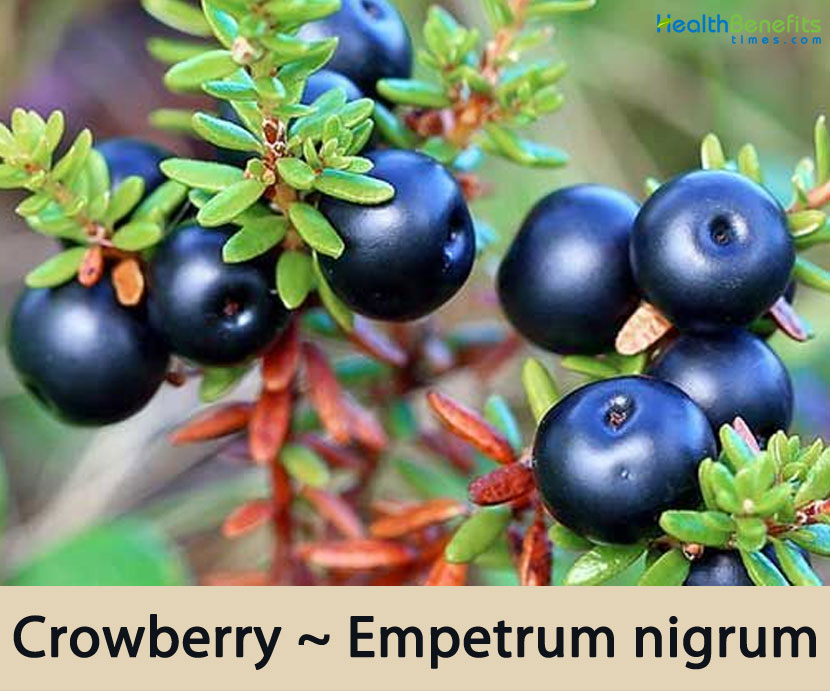
| Crowberry Quick Facts | |
|---|---|
| Name: | Crowberry |
| Scientific Name: | Empetrum nigrum |
| Origin | Northern parts of Europe and Asia as well as Greenland and eastern North America, south to northern Minnesota |
| Colors | Black, dark purple or red berry-like drupe |
| Shapes | Succulent drupes measuring anything between 6 mm and 9 mm across |
| Flesh colors | Reddish-white |
| Taste | Slightly acidic and bitter |
| Health benefits | Combat Fever, Combat Acne, Treat Epileptic Seizures, Treat Kidney Issues, Anti- Aging, Stomach problems, Great Eye Wash, Regulates Menses, Treats Paralysis, Cure Dysentery, Ideal for Weight Loss, Control Blood Sugar, Strengthen Immune System |
| Name | Crowberry |
|---|---|
| Scientific Name | Empetrum nigrum |
| Native | Northern parts of Europe and Asia as well as Greenland and eastern North America, south to northern Minnesota, Michigan, the coast of Maine, the alpine areas of northern New England and New York, and formerly one disjunct on Long Island |
| Common Names | Crowberry, Black crowberry, Monox, Curlew berry, Moss berry, Ahzayahk, Boneruk, Panak, Kukesilmad, Varesemarja, Crakeberry, blackberry, berry-girse, crawberry, crawcrooks, deer’s grass, crow ling, lingberry, monnocs-heather, she-heather, crane |
| Name in Other Languages | Albanian: Empetër Belarusian: Bahnoŭka čornaja (Багноўка чорная) Bulgarian: Cheren empetrum (черен емпетрум) Catalan: Èmpetrum Croatian: Crna mahunica Czech: Sicha černá Danish: Revling, Sortbær, Almindelig Revling Dutch: Kraaihei, gewone kraaiheide English: Black crowberry, Crakeberry, Crowberry, Curlew-berry, Esperanto: Nigra empetro Estonian: Harilik kukemari Finnish: Variksenmarja, Etelänvariksenmarja French: Camarine noire, baie de Corneille, raisin de Corneille, vacinet noir German: Schwarze Krähenbeere, Krähenbeere, gemeine Krähenbeere, gewöhnliche Krähenbeere, schwarze Rauschbeere, zweihäusige Krähenbeere Greek: Empetro melanó (έμπετρο μελανό) Hebrew: אמפטרומיות Hungarian: Varjúbogyó Icelandic: Krækilyng Inuktitut: Paurngait, paurngaqutiti, augujjiaq, kallat Inupiaq: Paunġaq Irish: Lus na feannóige Italian: Moretta palustre, empetro nero, moretta Japanese: Gankōran (ガンコウラン) Kazakh: Swbüldirgen (Субүлдірген) Komi: Pončöd (Пончӧд) Korean: Si ro mi (시로미) Latvian: Melnā vistene Lithuanian: Juodoji varnauogė Malayalam: Empeṭraṁ naigraṁ (എംപെട്രം നൈഗ്രം) Northern Sami: Čáhppesmuorji Norwegian: Kreike-bær, Krykke-bær, Kræke-bær, Kræke-lyng, Krækling, Kråkbär, krekling Persian: سنگروی سیاه Polish: Bażyna czarna Romanian: Vuietoare Russian: Vodyanyka chërnaya (Водяника чёрная), voronika chornaya (вороника чёрная) Serbian: Mahunica (махуница) Slovak: Sucha čierna Swedish: Kråkbär Turkish: Kargaüzümü Ukrainian: Vodyanka chorna (Водянка чорна) Welsh: Creiglusen creiglus |
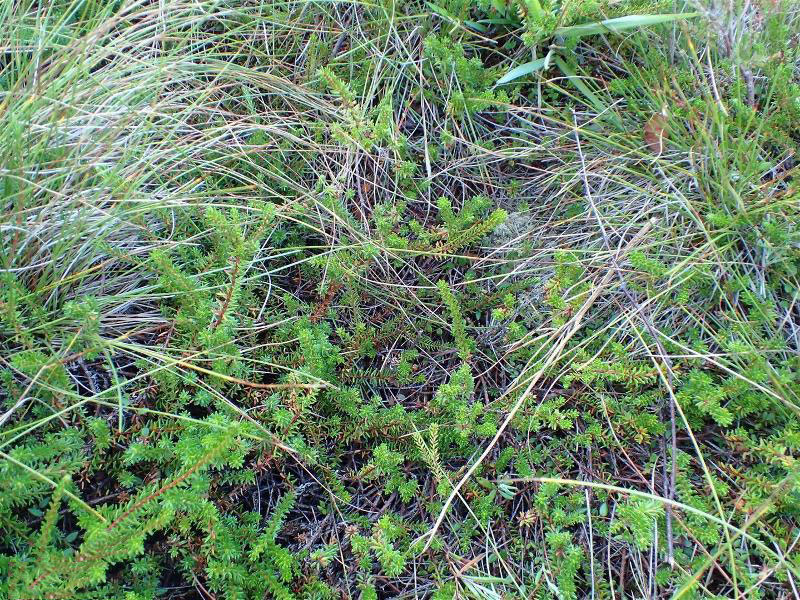
| Plant Growth Habit | Low growing, trailing, mat-forming, evergreen dwarf shrub |
| Growing Climates | Hygrophilous moors, mountain tops, drier parts of blanket bogs, molleres, snowy scrub, muskegs, open tundra, rock fields, conifer forests, coastal bluffs, exposed sea cliffs, meadows, open forests, alpine fellfields and cliffs, forest heaths, rocky outcrops, barren bogs, subalpine parkland, and alpine tundra |
| Soil | Tolerant of a wide range of soil moisture conditions, but is intolerant of prolonged water logging, and on wet sites it is found in better drained areas |
| Plant Size | 0.3 m (1ft) tall and 0.5 m (1ft 8in) wide and often forms dense mats |
| Root | Strong primary root, but as the plants age, a shallow root system with many lateral roots develops |
| Stem | Stems slender, creeping and rooting, green to reddish |
| Branches | Branches green, brown, or reddish, distally glabrous, eglandular or glandular, sparsely white-tomentose |
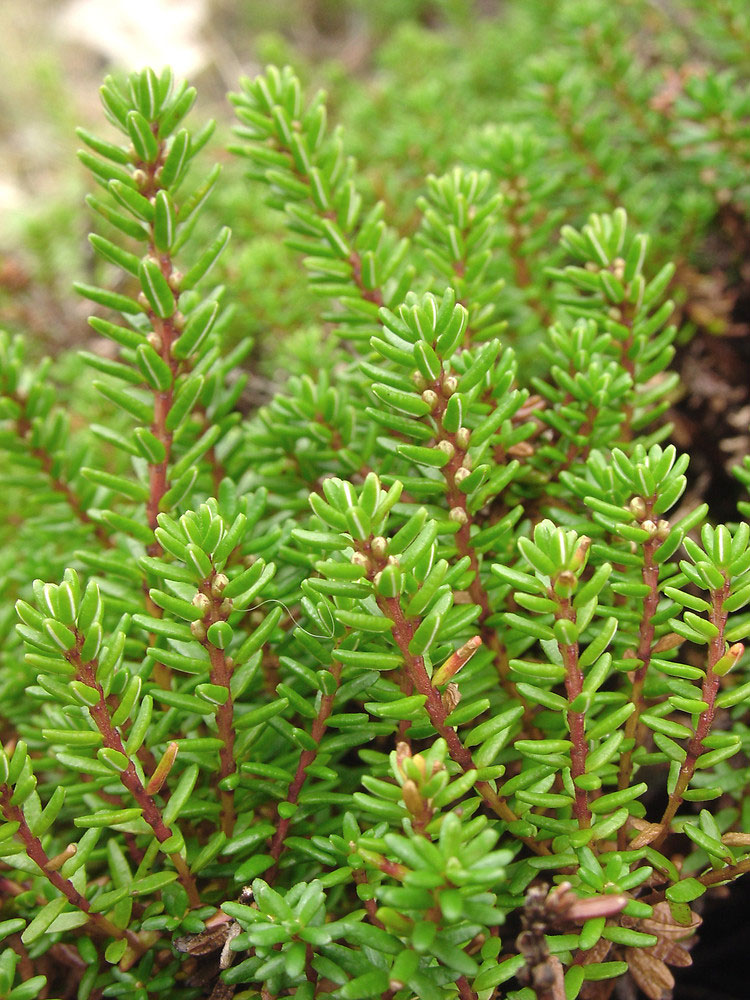
| Leaf | Small and tough (ericoid) and measure anything between 4 mm and 8 mm in length. The blade is linear, needle-like, hollow, and the margin is curled downwards. |
| Flowering season | May to June |
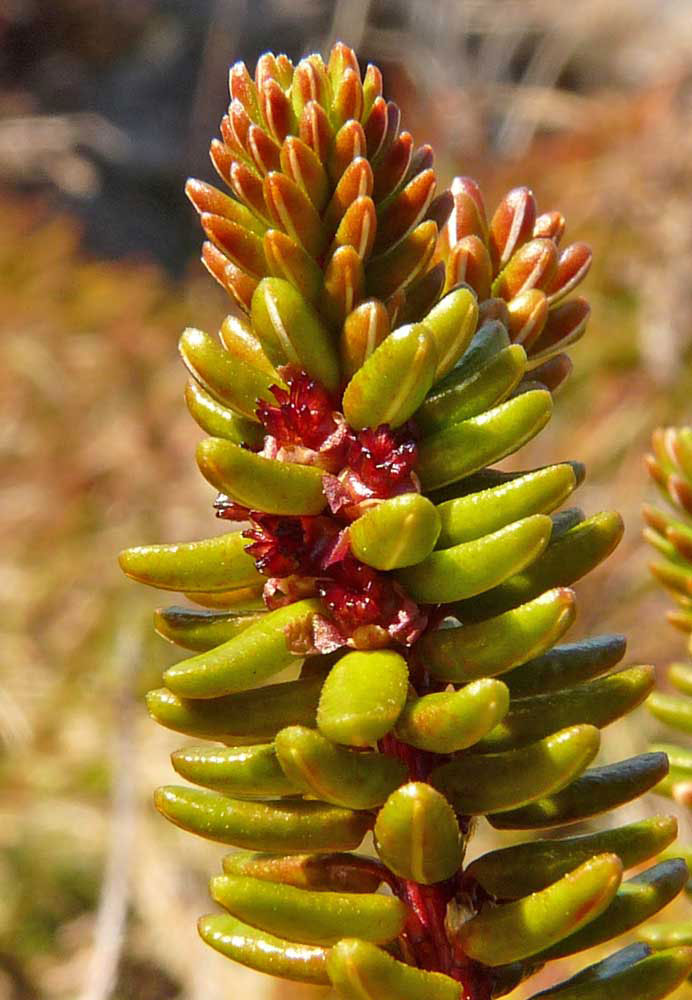
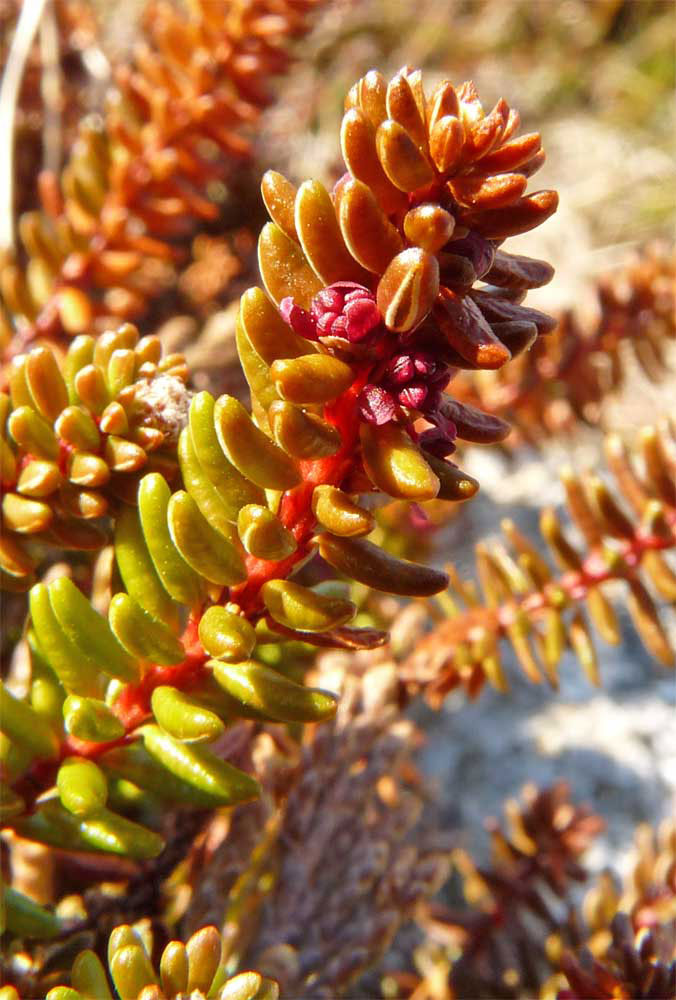
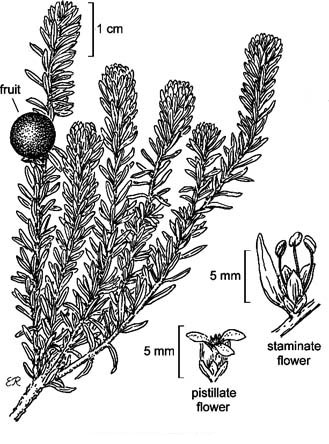
| Flower | Magenta-colored small flowers, which are hardly noticeable, may either be unisexual or bisexual and they do not have any petal |
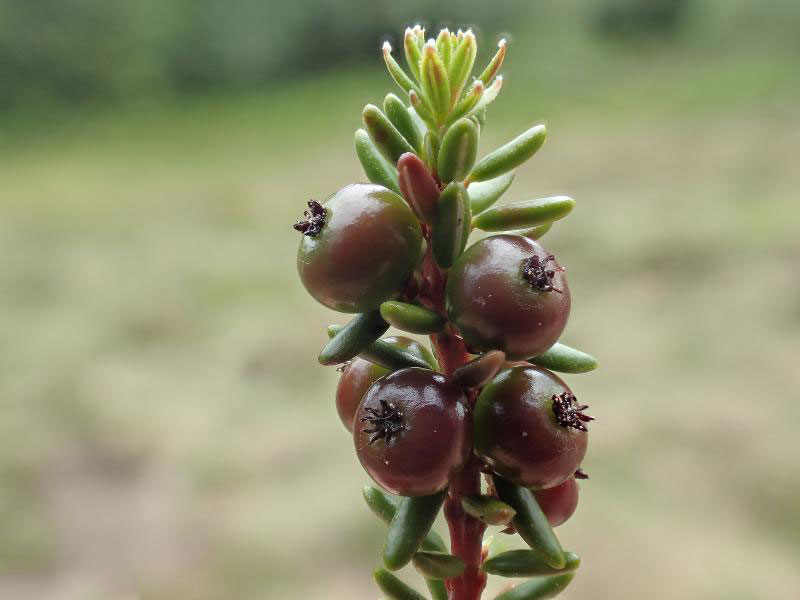
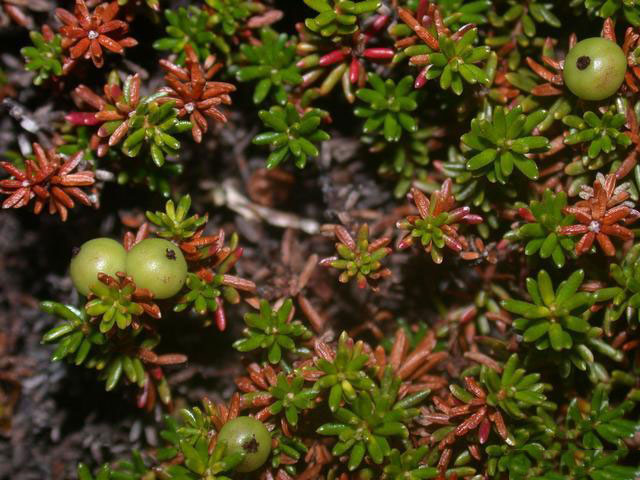
| Fruit Shape & Size | Black succulent drupes measuring anything between 6 mm and 9 mm across and sometimes have a thin white waxy coating |
| Fruit Color | Black or purplish-black but occasionally red |
| Flesh Color | Reddish-white |
| Seed | Seeds light brown, 1.5-3 mm |
| Propagation | By seed, bare root, and cuttings |
| Flavor/Aroma | Light aromatic smell |
| Taste | Slightly acidic and bitter |
| Plant Parts Used | Fruits, stems, leaves, roots, branches |
| Lifespan | Live for over 20 years in the wild |
| Season | September |
| Health Benefits |
|
Plant Description
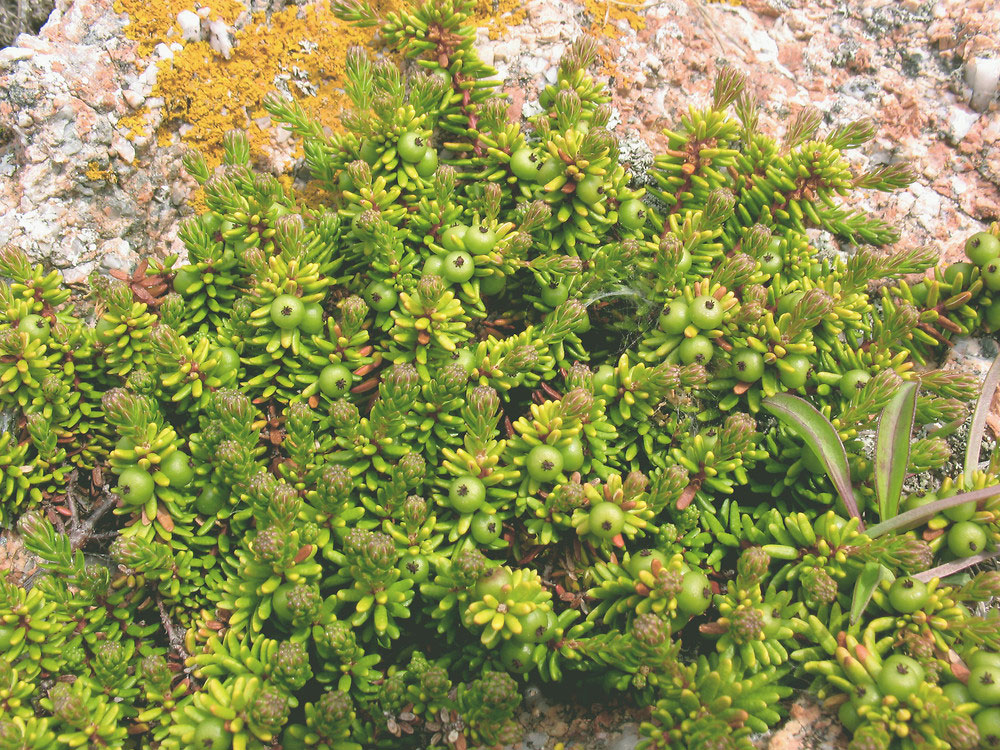
Crowberry is a low growing, trailing, mat-forming, evergreen dwarf shrub that normally grows about 0.3 m (1ft) tall and 0.5 m (1ft 8in) wide and often forms dense mats. The branches are up to 40 centimeters in length. The plant is found growing in hygrophilous moors, mountain tops, drier parts of blanket bogs, molleres, snowy scrub, muskegs, open tundra, rock fields, conifer forests, coastal bluffs, exposed sea cliffs, meadows, open forests, alpine fell fields and cliffs, forest heaths, rocky outcrops, barren bogs, subalpine parkland and alpine tundra. Black crowberry is a calcifuge plant; which means that it avoids alkaline soils. They are easily grown in lime-free sandy peats and rocky soils, alluvial deposits and glacial till. They are most commonly found in stagnant surfaces and mineral soils which are rich in nutrients and poor in nitrogen content. The soil texture should be between medium to fine.
The plant has strong primary root, but as the plants age, a shallow root system with many lateral roots develops. Stems are slender, creeping and rooting and are green to reddish colored. The twigs and branchlets especially when young are minutely stipitate-glandular and are not densely white-tomentose or white-villose. Crowberries are acidic in taste, and have some form of bitterness; they`ve also got a light aromatic smell. Crowberries are packed with lots of water, antioxidants, manganese, fiber, copper, vitamins C and K, with loads of other nutrients. The antioxidants in crowberries are rich in oxygen radical absorbance capacity (ORAC), as typical of super foods.
Leaves
Black crowberry produces deep green leaves whose shape may either be elliptic or linear. The leaves are small and tough (ericoid) and measure anything between 4 mm and 8 mm in length. The blade is linear, needle-like, hollow, and the margin is curled downwards. The lower surface has a pale, hairy stripe. On their under surface the leaves have adjusted in such a manner that they help to diminish evaporation of water through transpiration when the climatic conditions are harsh. Another notable characteristic of the leaves of this herb is that they come with revolute edges that make them appear as tubes or needles. Four leaves of Crowberry are arranged like a whorl down the length of strong stems that are prostrate. Crowberry leaves are covered with glands that produce toxic substances. When they fall to the ground and start to decompose, leaves release toxins into the soil that prevents growth of other, competing plant species.
Flower
The flowers of crowberry plants appear during the period between May and June. Magenta-colored small flowers, which are hardly noticeable, may either be unisexual or bisexual and they do not have any petal. The purple to purplish hued flowers appear in the leaf axils. The male flowers come with three stamens that lengthen externally and they have three sepals and three petals and in several instances the petals are absent. Bees, moths, butterflies and flies pollinate the flowers of Empetrum nigrum.
Fruits
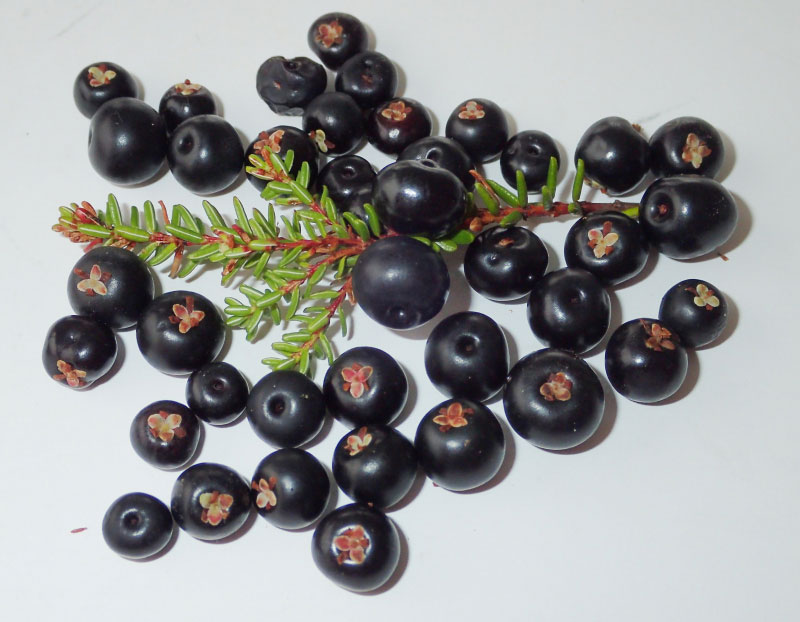
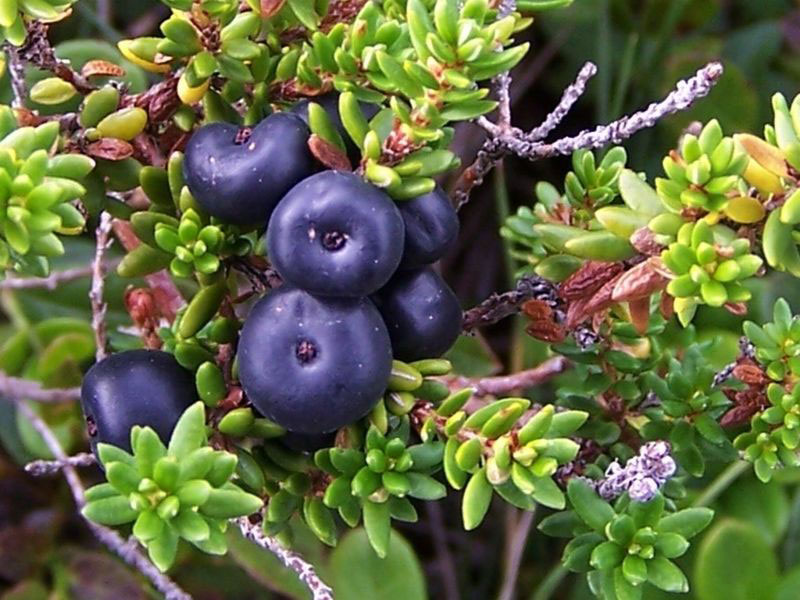
Fertile flowers are followed by black succulent drupes measuring anything between 6 mm and 9 mm across. Each fruit of black crowberry encloses about 6 to 9 nutlets that bear resemblance to seeds. The seeds of this plant start maturing during September. Although the fruits are edible, they do not have any taste – in other words, they are bland.
 Crowberry
 Crowberry-Fruits-on-the-plant
 Crowberry-Plant
 Female-flower-of-Crowberry
 Crowberry-wine
 Crowberry-Plant-growing-wild
 Leaves-of-Crowberry
 Maturing-fruit-of-Crowberry
 Male-flower-of-Crowberry
 Sketch-of-Crowberry
 Immature-fruits-of-Crowberry
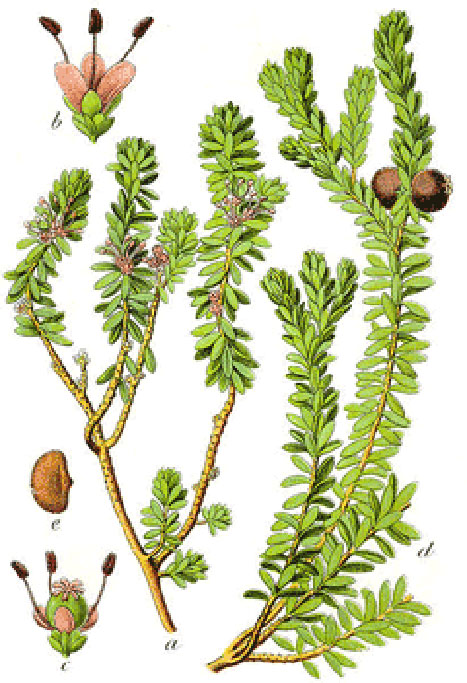 Plant-illustration-of-Crowberry
Health benefits of Crowberries
Crowberries health benefits includes treating dysentery, helping with kidney issues, curing acne, slowing down aging process, regulating menses, treating stomach issues and caring for the eyes. Other benefits includes controlling fever, treating epileptic seizures, treating paralysis, supporting weight loss, used as a food dye, controlling blood sugar and strengthening immune system. Listed below are some of the popular health benefits of Crowberries
1. Combat Fever
People have long used crowberries to treat fever, mostly in children. Crowberry leaves and branches are super effective in treating colds and fever.
2. Combat Acne
Crowberries, like other berries, are rich in vitamin C. This gives them the ability to cure acne without leaving blemishes and wrinkles on the skin. You can mix crowberries with chick flour to make a face mask and apply it to treat acne and some other skin conditions.
3. Treat Epileptic Seizures
In Russia and some other parts of the world, crowberries are mostly in use as a folk medicine for the treatment of epilepsy, anthrax and other nervous disorders that are caused by an imbalance in the firing of neurons in the brain. Russian medicine discussed above is known as Empetrin, and it consists of large amounts of crowberries to treat epilepsy.
4. Treat Kidney Issues
Regular consumption of crowberries helps relieve the health condition of people with kidney stones and some other kidney issues. It usually takes a month of consistent consumption of crowberries to feel better. You should consume them on daily basis in a period of one month because it can help you to remove the kidney stones. It is safe to consult your doctor before consuming crowberries to treat kidney diseases.
5. Anti- Aging
Free radicals in the human body increase in quantity as people grow older. Antioxidant-rich fruits like crowberries help eliminate free radicals and give the skin a youthful look. Regular consumption of crowberries will beautify your skin and take off wrinkles and age spots.
6. Stomach problems
Crowberries are useful in many ways for the natural treatment of stomach problems. You should soak or boil them in water to consume. You should consume two to three soaked crowberries with a tablespoon of honey. You should use this home remedy continuously for a month every morning to get a relief from the constipation.
7. Great Eye Wash
Eye problems like conjunctivitis and others can be cured by soaking the roots of crowberry plant in water and washing the eyes with it.
8. Regulates Menses
Crowberry leaves are considered to be strong uterine tonic as they regulate menses and also provide relief from excessive menstrual bleeding. It is considered to be the first line home remedy for such issues.
9. Treats Paralysis
Due to its remarkable properties, nutritional values, and high water content, crowberry is known for providing a soothing and calming sensation to the nerves. This enables the body to develop more strength to treat paralysis and other nervous disorders of the kind on its own.
10. Cure Dysentery
Dysentery, an infection of the intestines manifested by severe diarrhea, can be treated by boiling some crowberries along with its stems in water. Consuming this solution can be very helpful in stopping the loose motions in diarrhea and for keeping the body hydrated.
11. Ideal for Weight Loss
If you are targeting to reduce weight at a faster pace, crowberries are ideal for you. They are enriched with antioxidants which help in strengthening the functioning of the digestive system and improving metabolic rate, ultimately leading to faster weight loss. They also wash the harmful toxins out of the body because of heavy dietary fiber content in them. Thus including this fruit in your daily diet regimen can be ideal for the overall health of the body.
Because of their high water content, they also have a strong diuretic effect inside the body which washes off the excess water stored by the body, thereby causing a decrease in weight.
12. Used as Food Dye
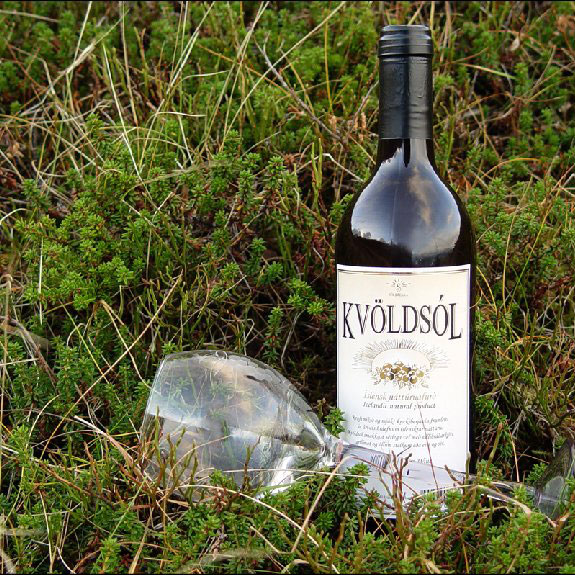
Boiled crowberries serve the purpose of excellent food dye, and they are a vital part of numerous delicious food recipes. Some of the delicious uses of raw crowberries include juicing them or using them to make wine, jellies, or other sweets. Akutaq is a kind of Eskimo’s ice cream and crowberries are eaten along with it.
13. Control Blood Sugar
Crowberry juice is very effective in controlling high blood sugar levels. When consumed on a daily basis, it proves to be highly effective not only in maintaining ideal blood sugar but also in prevention of the diseases that are caused by high blood sugar or diabetes.
14. Strengthen Immune System
Vitamin C strengthens, vitalizes and provides the necessary vigor to the immune system, making it stronger to fight with the harmful toxins inside the body. Crowberry is enriched with vitamin C, and thus it is a very useful little fruit to provide the immune system with necessary vitality and strength to fight the harmful foreign particles inside the body.
Traditional uses and benefits of Crowberries
- The leafy branches have been used, especially for children with a fever, as a diuretic.
- It has also been used to treat kidney problems.
- Decoction or infusion of the stems, or the cooked berries, has been used in the treatment of diarrhea.
- Decoction of the leaves and stems, mixed with Hudson Bay tea and young spruce tree tips, has been used in the treatment of colds.
- Decoction of the roots has been used as eyewash to remove a growth.
- Crowberries are widely used in folk medicine for treating epilepsy, paralysis, nervous disorders and anthrax.
- Heavy bleeding during menses can be stopped and relief when the leaf of Crowberry is used.
- Fruit can help with menses regulation and in most cultures it is used as a tonic for uterine needs too.
- When Crowberry leaves are boiled and added to the fruit, the solution can help stop loose motions and brings hydration to the body too.
- Paste of Crowberry is used as a face mask with fuller’s earth, chick pea flour or gram flour too. This paste would help bring back the glow, remove dead cells, and enhance the skin quality too.
- Crowberry can help you do away with stomach issues, such as harsh bowel movements and ulcers too.
- The fruit is known to calm the nerves, treat CNS disorders and also paralysis to a large extent as well.
- Boiling crowberry fruit stems, and leaves in water can make for a natural dysentery remedy.
- Crowberries can help prevent other gastrointestinal disorders like diarrhea and constipation.
- Applying crowberries or crowberries mixed with chick flour directly to the skin can reduce the appearance of acne.
- Boiled crowberry root has been used as an eye wash to treat conjunctivitis.
- Crowberries can alleviate such health ailments as kidney stones, fever, dysentery, constipation, acne, and conjunctivitis.
- Crowberry has long been used in traditional herbal medicine to control inflammatory diseases, such as cystitis, urethritis, and nephritis in East Asia.
- The leafy branches of black crowberry have been traditionally used for treating fever, especially in children.
- These branches along with their leaves have also been used to treat problems related to the kidneys.
- Decoction prepared using the roots of black crowberry have been used in the form of eyewash to get rid of unwanted growth.
- Leaves and stems are either soaked in hot water or boiled and the resultant liquid is strained and taken orally to treat these conditions.
- Fruits are known to be effective in putting off development of scurvy.
- Kobuk River Eskimos use crowberry juice in sore eyes to relieve snow blindness.
- Decoctions of the roots and bark have also been used for sore eyes and cataracts.
Culinary Uses
- Fruit can be consumed raw or cooked.
- Watery flavor is mainly used for making drinks, pies, preserves etc.
- Tender twigs are used to prepare an herbal tea.
- Berries have been used as raw material for juice, jelly, wine and sweets.
- Crowberries are eaten in akutaq, Eskimo’s ice cream.
- Crowberry is used for smoking fish in some northern cultures.
- Crowberries are suitable raw ingredient for e.g. jams, jellies, marmelade, baked goods, berry soups, porridges and milkshakes.
- Berries have been consumed with dried and salted fish, sour milk, reindeer milk, and roe.
Tips for Buying and Storing Crowberries
Without the right information on how to select and store crowberries, you may consume them regularly but lose some of their essential nutrients. Let`s see some simple crowberry tips.
- Buy crowberries that are firm, black, plump, and uniform in size.
- Wash crowberries gently and thoroughly.
- You may store crowberries in a refrigerator for 10-15 days.
- Always store crowberry leaves in an airtight container.
- Ensure you use fresh crowberries at all times to achieve the best results.
- You should boil crowberries before eating them.
How to Make Crowberry Juice
- Pour eight cups of crowberries in a cup of water; crush the berries with a potato masher, then boil the mixture for 10 minutes.
- Strain cooked berries through a jelly bag or cheesecloth and a colander, and let the juice drip into a large bowl. Try not to squeeze the jelly bag or cheesecloth so you can get some clear juice.
How to Make Crowberry Syrup
- Combine berry juice, lemon juice, and sugar in a saucepan, the use a candy thermometer to heat the combination to 160 ⁰F.
- Serve immediately with waffles, pancakes, or ice cream.
- You may also store in a jar with a tight-fitting lid. It can last up to six months if you keep it in a refrigerator.
Other Facts
- Purple dye is obtained from the fruit.
- It can be used for groundcover in exposed locations.
- Plants should be spaced about 25 cm apart each way.
- It can be used to make a natural food dye.
- Fractions from berry processing such as seeds and peels are suitable for cosmetic applications.
- Crowberry sheds its leaves every 2-4 years.
- Back in the day, people used crowberry in making brooms and pan scrubbers.
- The sprigs can also be used in the form of fuel.
- Branches with the leaves attached were used to clean gun barrels.
- Leaves are covered with glands that produce toxic substances.
Precautions
- Person should avoid consuming these berries if he or she is allergic to the various minerals or vitamin components that are present in these fruits.
- Overconsumption may lead to constipation.
- Some Haida people say that they cause hemorrhaging if too many are eaten.
References:
https://www.itis.gov/servlet/SingleRpt/SingleRpt?search_topic=TSN&search_value=23743#null
https://npgsweb.ars-grin.gov/gringlobal/taxon/taxonomydetail?id=15127
https://pfaf.org/user/plant.aspx?latinname=Empetrum+nigrum
http://www.floracatalana.net/empetrum-nigrum-l
https://en.wikipedia.org/wiki/Empetrum_nigrum
https://www.fs.fed.us/database/feis/plants/shrub/empnig/all.html
https://guides.nynhp.org/black-crowberry/
https://gd.eppo.int/taxon/EMPHI
http://www.theplantlist.org/tpl1.1/record/kew-2788473
https://plants.usda.gov/core/profile?symbol=EMNIN