

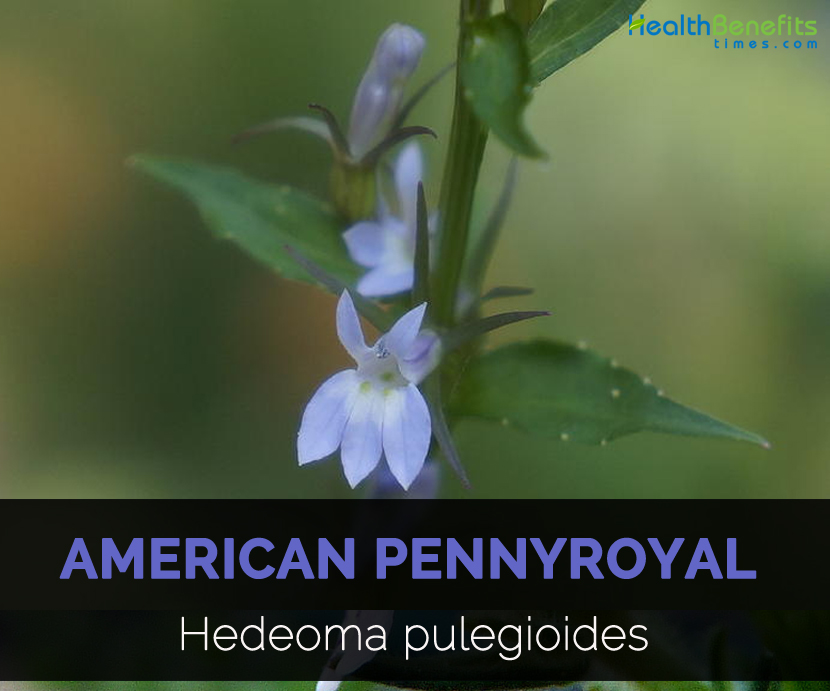
 Our Pennyroyal (Hedeoma) should not be confused with the European Pennyroyal (Mentha pulegioides). Squaw mint is an indigenous annual plant with a fibrous, yellowish root, and an erect, branching stem, from 6–12 in. high. The leaves are ½ in. or more long, opposite, obscurely serrate, hairy beneath and on short petioles. The flowers are small and light blue, appearing from June to September. They thrive particularly in limestone country, in barren woods and dry fields. Is common to nearly all parts of the United States. The mint-like fragrance is felt in the air for some distance. The taste is aromatic, pungent. It is said to be very obnoxious to fleas.
Description
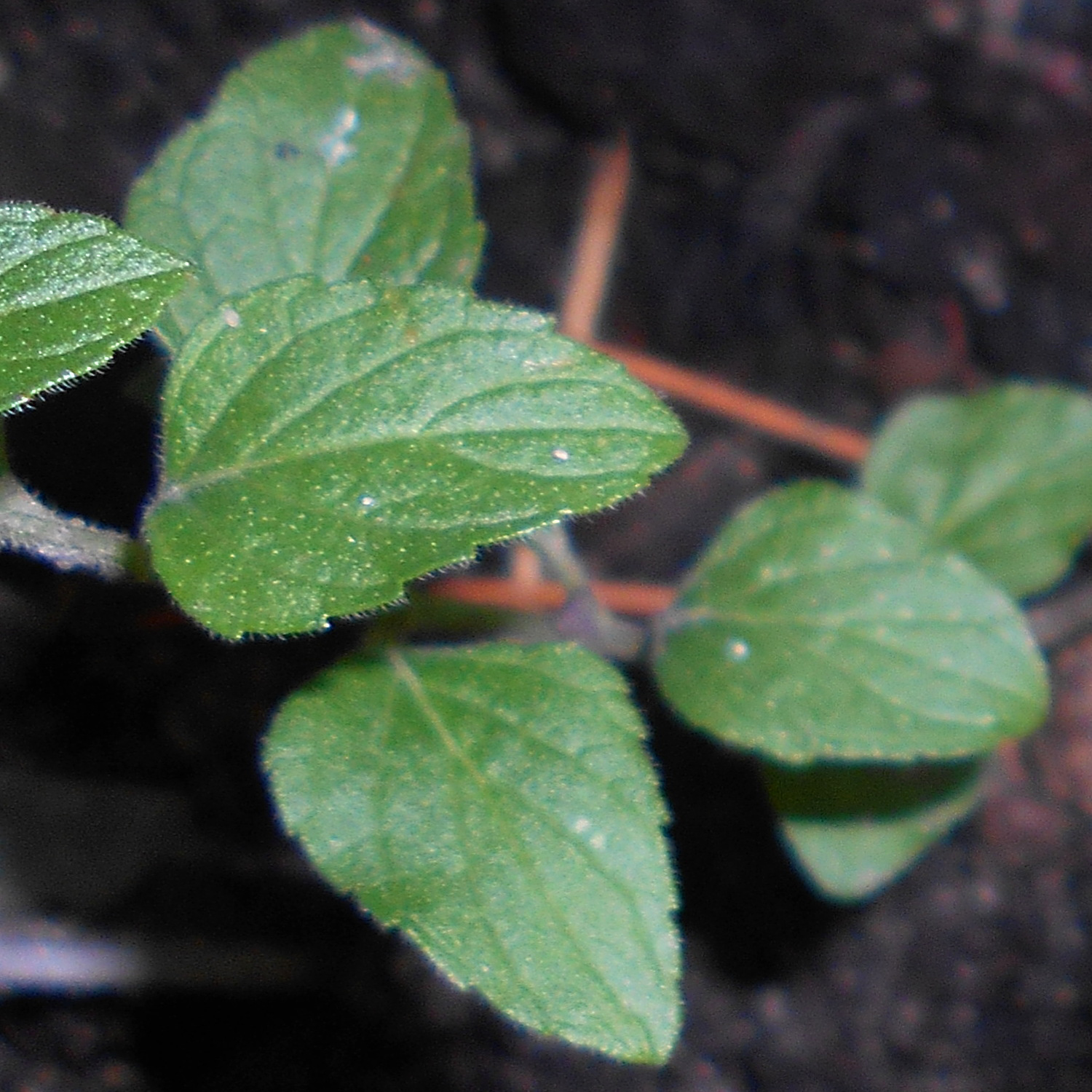
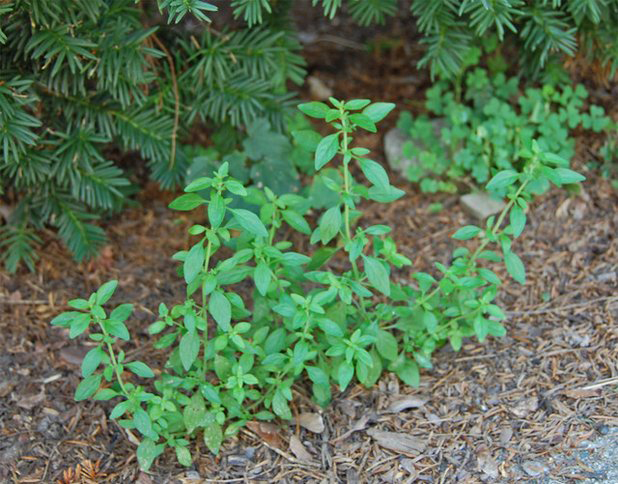
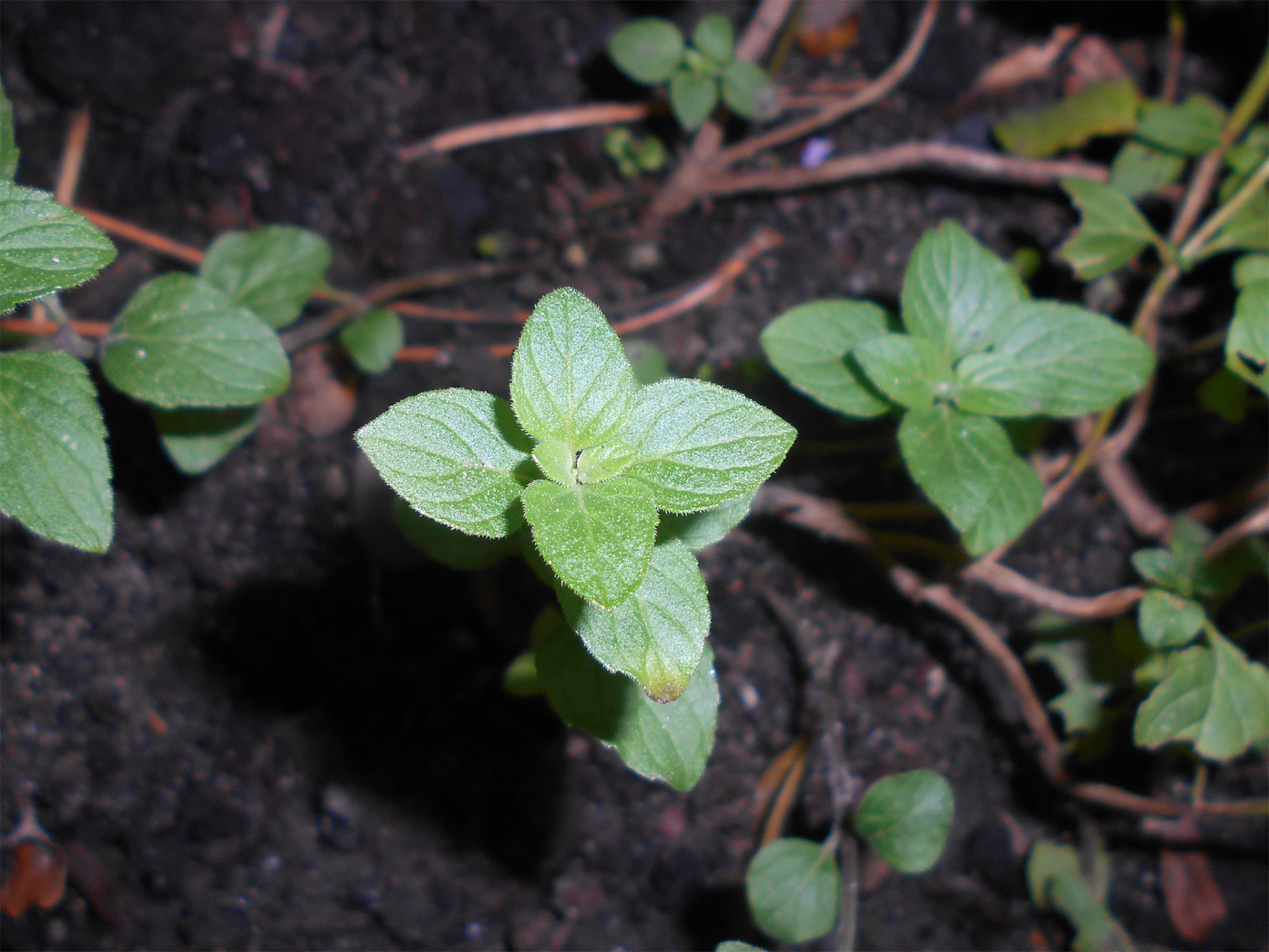
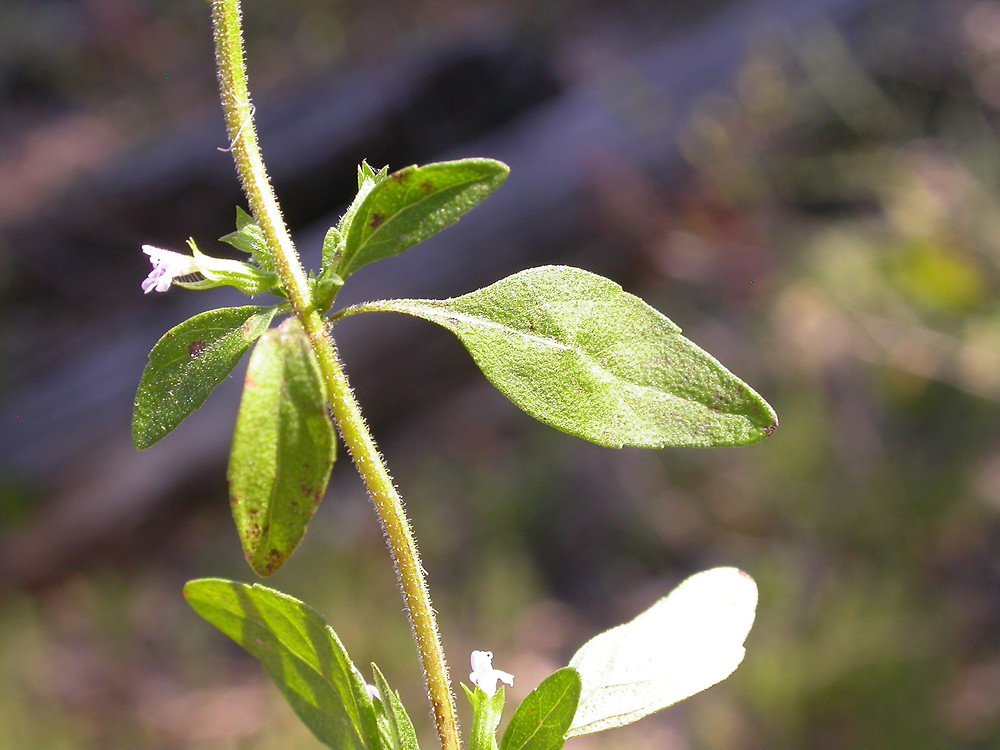
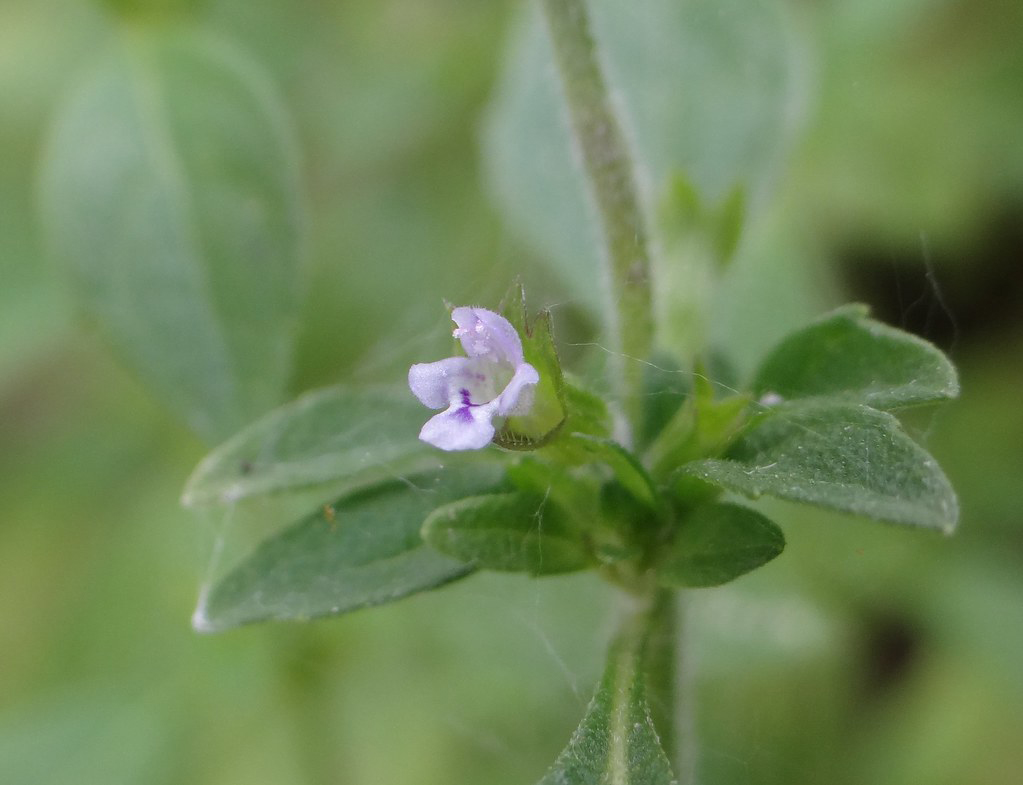
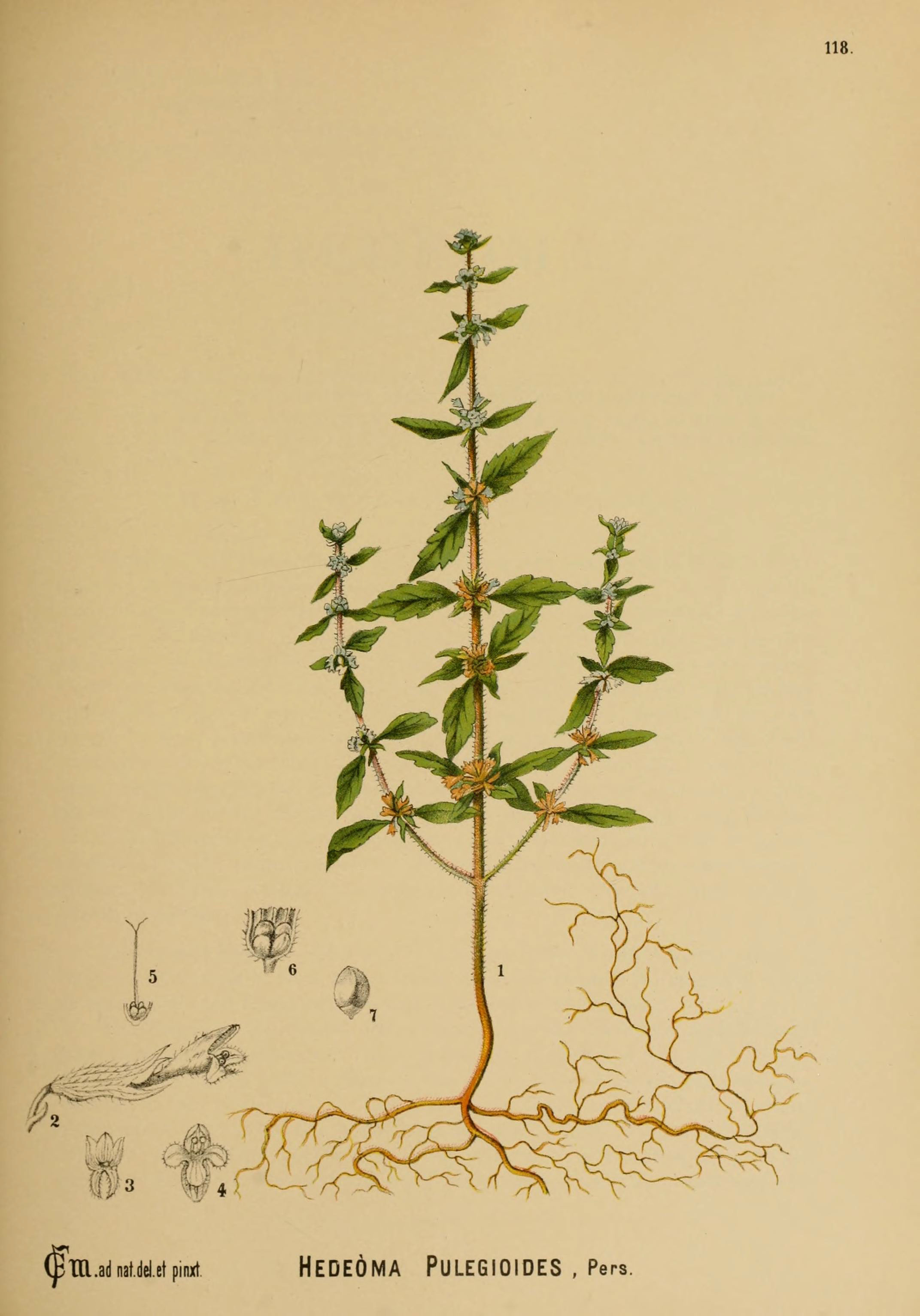
American pennyroyal is an aromatic, annual and soft hairy plant with erect, branching and square stems that grows from 6 to 16 inches high and bears small, thin, opposite and ovate leaves which are toothed. Axillary clusters of small, tubular, purplish or lavender flowers. Calyx is two lipped with 3 short and 2 longer teeth. The flower blooms from June to October. The plant possess a pleasant and aromatic odor.
Facts About American pennyroyal
| Name | American pennyroyal |
|---|---|
| Scientific Name | Hedeoma pulegioides |
| Native | Eastern North America, from Nova Scotia and southern Ontario west to Minnesota and South Dakota, and south to northern Georgia and Arkansas. |
| Common/English Name | Squaw Mint, Thickweed, Stinking Balm, Hedeoma, American Pennyroyal, American false pennyroyal, American Pennyroyal, Hedeoma, Mock pennyroyal, Squaw balm, Mosquito plant, Squawmint, Tikweed |
| Name in Other Languages | English: American false pennyroyal, American pennyroyal, Pudding-grass; Swedish: Amerikansk poleja, Vallmynta; French: Hédéoma faux-pouliot |
| Plant Growth Habit | Low-growing, strongly aromatic herbaceous annual plant |
| Plant Size | 15–30 cm tall |
| Stem | Slender erect much-branched, somewhat hairy and square |
| Leaf | Small, thin, and rather narrow |
| Medicinal part | The herb, oil |
| Flowering Season | Mid to late summer |
| Flower | Pale blue, monoecious |
| Taste | Pungent |
Flowers
Calyces are zygomorphic and pouched along one side at the base, cylindric about 3.5-5 mm long. Tube is strongly 13 nerved, 2 lipped and lobes are shorter than to about as long as the tube. The upper lip is deeply three lobed and spreading upward. Lower lip is deeply two lobed and straight to slightly arched upward. Corollas zygomorphic, nearly white to pale bluish purple about 5-6 mm long. The lower lip has lighter or darker spots or mottling toward the base. An outer surface is moderately short hairy and tube is narrowly funnel form, relatively shallowly two lipped. An upper lip is unlobed and shallowly notched. Lower lip is slightly concave and three lobed. Stamens are not exserted, anthers are small, white or pinkish tinged. Ovary is deeply lobed and style appears nearly basal from deep apical notch.
Fruits
Fruits are dry schizocarps and separates into four nutlets about 0.7 to 0.9 mm long, dark brown or black, obovoid to nearly spherical, glabrous, smooth or finely pebbled and somewhat shiny.
Uses
The warm infusion, used freely, will promote perspiration. It has long been used by women to promote menstruation. Hot footbaths are taken several days before due date and two cups of Pennyroyal tea, especially before going to bed, for scanty or suppressed flow. Also for nervousness and hysteria, cramps, intestinal pains of colic and griping, colds, and as a sweating and cooling drink in fevers. The infusion may be freely taken several times a day. The tincture of the oil of Pennyroyal is often employed in whooping cough and spasms, to be taken in doses of 2–10 drops.
Dose
1 teaspoonful of the herb to 1 cupful of boiling water. Of the tincture, ½-1 fl. dram.
Externally
Equal parts of the oil and Linseed oil make a valuable application for burns. Pennyroyal is also used as a hot fomentation in rheumatic affections, applied externally.
Homoeopathic Clinical
Tincture of the whole fresh plant—Amenorrhoea, Dysmenorrhoea, Leucorrhoea.
Culinary uses
- Brew the leaves into tea to promote digestion.
- Leaves are also used to flavor culinary dishes.
- Food industry uses essential oil extracted from the plant to flavor ice cream, beverages and baked goods.
Medicinal uses
- It is used for treating colds, digestive disorders, painful menstruation, whooping cough and aid childbirth.
- Use it for treating colds as it promotes perspiration.
- It is used by Native Americans to treat various ailments such as headache, stomach distress, fevers, watery eyes and itching.
- Apply the crushed leaves to the skin to repel mosquitoes and other insects.
- It is used to promote menstrual flow.
Precautions
- Tea with brewer’s yeast induces abortion.
- Use the pure essential oil with caution as it is toxic and its ingestion could be lethal or its skin contact causes dermatitis.
References:
https://www.itis.gov/servlet/SingleRpt/SingleRpt?search_topic=TSN&search_value=32520#null
http://missouriplants.com/Blueopp/Hedeoma_pulegioides_page.html