Health Benefits
    Facebook Twitter Instagram
    Friday, December 5
    Facebook Twitter Pinterest
    Health Benefits
    • Home
    • Dental Health
    • Mental Health
    • Weight Loss
    • Health Wiki
    • Nutrition
    • Healthy Recipe
    • BMI Calculator
    Health Benefits
    Home»Herbs and Spices»Health benefits of Broom
    Herbs and Spices

    Health benefits of Broom

    By SylviaSeptember 1, 2017Updated:September 14, 2017No Comments8 Mins Read
    Facebook Twitter Pinterest LinkedIn Tumblr Email

    Health benefits of Broom

    Broom scientifically known as Cytisus scoparius is a multi-stemmed, deciduous/evergreen shrub that grows 6 to 12 feet (2-4 m) tall.  Apart from broom it is also known as Scotch Broom, Broomtops, Common Broom, European Broom, Irish Broom, Genista, Besom, Scoparium, Irish Tops, Basam, Bizzom, Browme, Brum and Breeam.  The plant is native to central and southern Europe from the British Isles east to southern Scandinavia, south to Iberia, and east to Belarus and Romania. It is a species in the pea family Fabaceae. The plant was introduced as an ornamental shrub and for erosion control use.  In medieval Europe, the typical housewife used the twigs and branches of the scotch broom as domestic tool for sweeping the floors. A common belief in the middle Ages was that the scotch broom could repel witches; however, using the scotch broom while it was in full bloom was believed to invite bad luck on the house.

    Plant Description

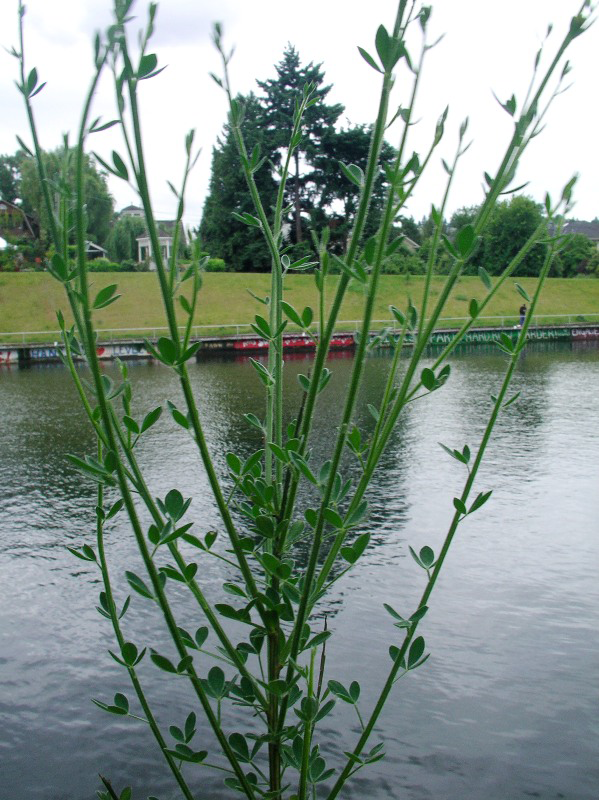
    Broom is a multi-stemmed, deciduous/evergreen, erect and bushy shrub that grows about 6 to 12 feet (2-4 m) tall. They are found growing in disturbed areas, open forests, roadsides, grasslands, pastures, cultivated fields, wasteland, dry meadows, dry riverbeds and other waterways, sandy pastures and often near the coast. It prefers moderately fertile, dry to medium, well-drained soils. It can also tolerates poor rocky soils (good bank cover), but avoid wet soils. It has taproot that may exceed 2 feet in length with large, shallow lateral roots. Stem is hairy when young and glabrous as they mature. Branches are numerous long, straight, slender bright green branches, tough and very flexible, smooth and prominently angled.

    Roots

    The broom plants form deep, branched taproots with fine roots associated with nitrogen fixation. New shoots can grow from the crown when plants are cut above the crown.

    Leaves

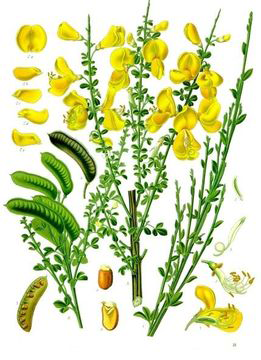
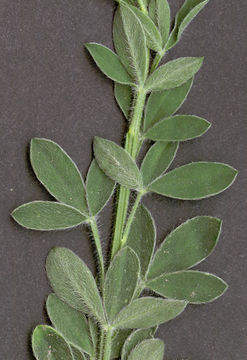
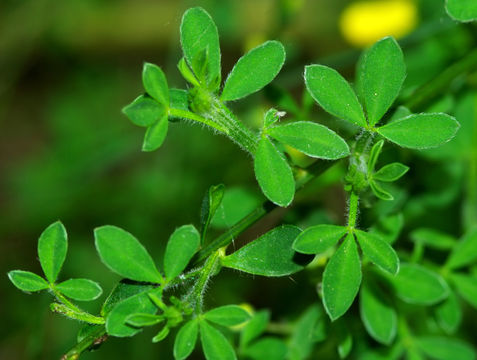
    Leaves of broom are alternate and compound consisting of three oblong leaflets.  Very few leaves are present on stems. New twigs may only have one leaflet. Leaflets are small approximately 0.3 to 0.7 inch (5-20 mm) long and 1.5 to 8 mm wide.  The leaflets are dark green and fleshy and serrated along their margin.  The underside of the leaflets is covered by flattened, short hairs while the upper surface is smooth.

    Flowers

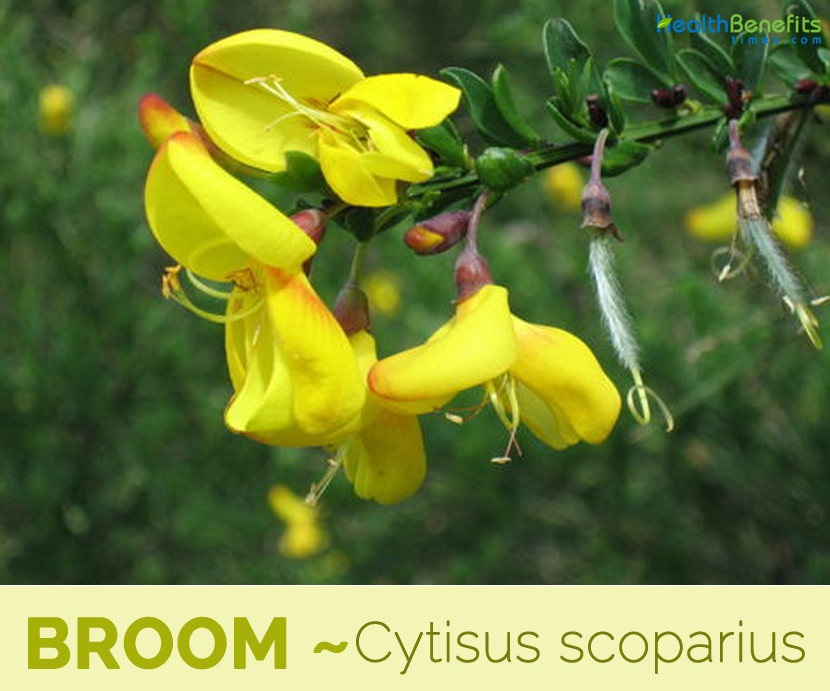
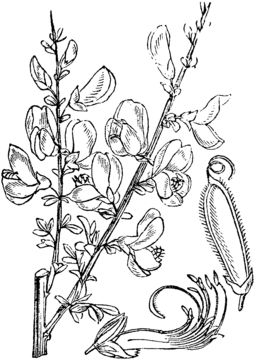
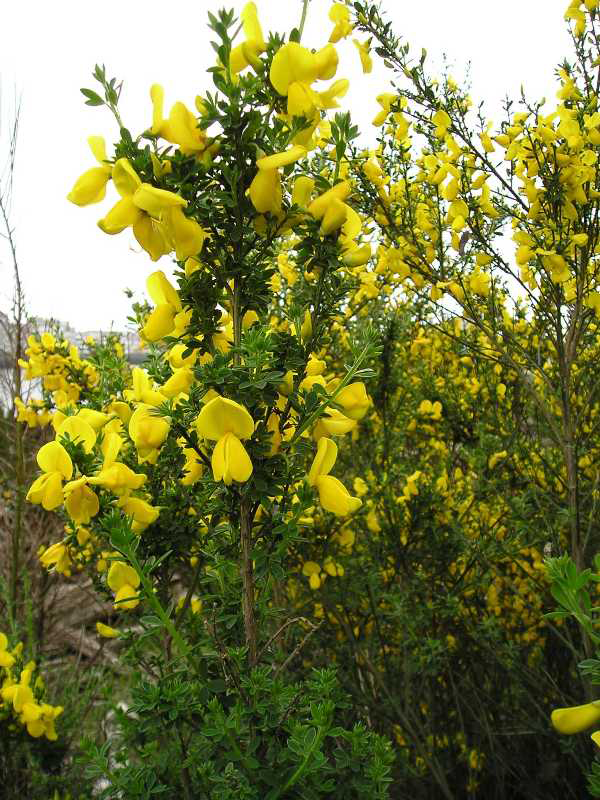
    Flowers are pea-like; upper and lower curved petal has wing petals on each side. Scotch broom flowers are yellow to partially to complete red in color. They are small, only 1-2.5 cm. The stamens are fused.  Plants flower from May to June.

    Fruits

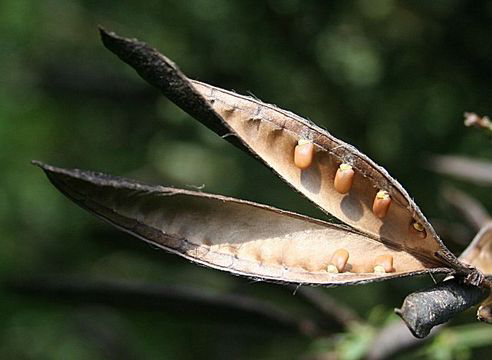
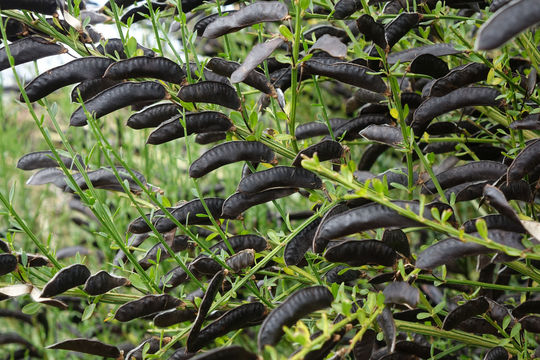
    Fruits develop as seed pods that mature in June-July. Seed pods are 2.5-7 cm long and 8-13 mm wide, smooth with long silky hairs. Pods are initially green which turn dark brown to black when mature. Seeds are small, 3-4 mm diameter long and shiny, brown to black in color with a whitish appendage which attracts ants and some birds.  Nearly 3-12 seeds are found within each pod.

    History

    Scotch broom originates from Europe. It was brought to North America as an ornamental garden plant in the 1800s. It also had other uses, including: a coffee alternative, medicinal uses, and a source of yellow dye. Since then it has managed to escape from many gardens and is a common invader on both the Pacific and Atlantic coasts. In PEI there have been a few sightings of scotch broom along roadsides and in ditches. However, most are contained in gardens.

    Varieties

    There are two subspecies, which differ mainly in growth habit:

    1. Cytisus scoparius subsp. scoparius (Common Broom)

    An erect shrub, growing to 2-3 meters (rarely 4 m) tall; shoots thinly hairy at first, soon becoming glabrous. This is the common form, occurring through most of the species range.

    2. Cytisus scoparius subsp. maritimus (Rouy) Heywood (Prostrate Broom)

    Prostrate, ground-hugging shrub, not exceeding half a meter in height; shoots densely silky-hairy. It is restricted to the Atlantic coasts of southern Ireland, west Wales, southwestern England, and northwestern France.

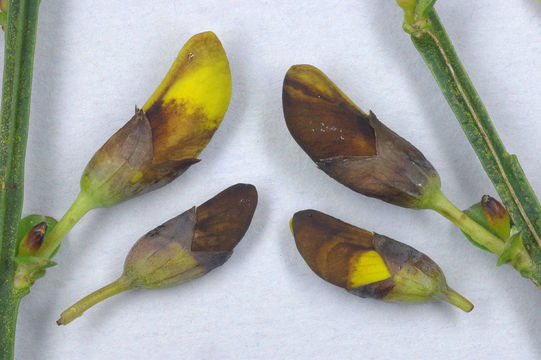
    Broom-Plant Broom-Plant-Illustration Broom-plant-sketch Buds-of-Broom-Plant Dried-Fruit-of-Broom-Plant Flowering-Broom-plant Leafy-shoot-of-Broom-Plant Leaves-of-Broom-Plant Matured-fruit-of-broom-plant
    [Show thumbnails]

    Traditional uses and benefits of broom

    • Blossoms were used for making an ointment to cure the gout.
    • Henry VIII used to drink water made from the flowers against the surfeit.
    • Dodoens recommended a decoction of the tops in dropsy and for ‘stoppages of the liver.’
    • Culpepper considered the decoction of Broom to be good not only for dropsy, but also for black jaundice, ague, gout, sciatica and various pains of the hips and joints.
    • Tablespoonful of powdered seeds in a glass of peppermint water was taken daily for liver complaints and ague.
    • Compound decoction of Broom is recommended in herbal medicine as of much benefit in bladder and kidney affections, as well as in chronic dropsy.
    • Broom is a bitter narcotic herb that reduces the respiration and regulates heart action.
    • It acts upon the electrical conductivity of the heart, slowing and regulating the transmission of the impulses.
    • Young herbaceous tips of flowering shoots are cardio-tonic, cathartic, diuretic, emetic and vasoconstrictor.
    • Plant is used internally in the treatment of heart complaints, and is especially used in conjunction with Convallaria majalis.
    • Plant is also strongly diuretic, stimulating urine production and thus countering fluid retention.
    • Broom causes the muscles of the uterus to contract; it has been used to prevent blood loss after childbirth.
    • It is used as remedy for treating an irregular and fast heart beat rate.
    • The herb slows down and controls the transmission of the nerve impulses in cardiac muscles.
    • The broom helps stimulate the production of urine and counters fluid retention in the body.
    • Together with lily of the valley, the broom herb is employed internally for treating problems related to the heart.
    • Broom is applied to the skin for sore muscles, pockets of infection (abscesses), and swelling.
    • Broom is also used in hair rinses to lighten and brighten hair.

    Dosing

    Adults (18 years and older)

    It is not clear what dose(s) of scotch broom are safe or effective for any medical condition, and use should only be under medical supervision. Storage of the flower or herb should be in a cool, dry location.

    A juice has been made by pressing the bruised, fresh tops and adding one-third volume alcohol, allowing it to sit for seven days, followed by filtration, and taken daily as needed. An infusion has been made by adding 1 ounce of dried tops to a pint of boiling water (or 1 teaspoon in 200 milliliters boiling water) and taken as a cup-full once or twice daily as needed.

    As a tea, 1-2 grams (1 level teaspoon) of herb can be steeped in 150-200 milliters of boiling water, then strained after 5-10 minutes and taken as a cup-full, up to three times daily as needed. As a decoction, 1-2 grams of herb have been used in preparations. As a liquid extract, a 1:1 preparation in 25% ethanol (v/v) has been prepared and taken as 1-2 milliliters as needed. As a tincture, a 1:5 preparation in 45% ethanol (v/v) has been taken at a dose of 0.5-2 milliliters daily. The herb may also be available as an aqueous-ethanol preparation (1:1:5) or as an aqueous essential oil extract.

    Children (younger than 18 years)

    Avoid due to potentially life-threatening toxicity.

    Culinary uses

    • Tender plant tops have been used to flavor beer.
    • Leaves and aged flowers have been smoked to produce euphoria.
    • Roasted Seeds are served as a substitute for coffee.
    • The flower buds are pickled and used as a substitute for capers.
    • Flower buds of this plant may be included in salads.

    Other Facts

    • It is often used as an outdoor ornamental to hold steep, barren banks in place.
    • Moldy, dried blossoms are pulverized, rolled in cigarette paper and smoked like marijuana.
    • Tannin exists in considerable amount in the bark, which has been used in former times for tanning leather.
    • Green tops were a good winter food for sheep, preventing rot and dropsy in them.
    • An excellent fiber is obtained from the bark; it is used in the manufacture of paper, cloth and nets.
    • Yellow and a brown dye are obtained from the bark.
    • Yellow dye is obtained from the flowering stem.
    • Green dye is obtained from the leaves and young tops.
    • Branches are used to make baskets, brushes, brooms and besoms.
    • They are also sometimes used for thatching roofs and as substitutes for reeds in making fences or screens.
    • An essential oil from the flowers is used in perfumery.
    • Broom can produce up to 10.000 seed per season.
    • Broom can be used to prevent erosion of the soil.
    • Leaves or young tops yield a green dye.

    Precaution

    • Avoid use during pregnancy and breast feeding.
    • Excess use may cause Nausea and Diarrhea.
    • Use this herb with caution since large doses are likely to upset the stomach.
    • This herb should not be prescribed for patients with high blood pressure, kidney disorders, spleen disorders as well as liver disorders.
    • Seeds of Scotch broom are toxic for humans and livestock.

    References:

    https://plants.usda.gov/core/profile?symbol=cysc4

    https://www.itis.gov/servlet/SingleRpt/SingleRpt?search_topic=TSN&search_value=501966#null

    http://davesgarden.com/guides/pf/go/31424/

    http://www.hear.org/pier/species/cytisus_scoparius.htm

    http://www.missouribotanicalgarden.org/PlantFinder/PlantFinderDetails.aspx?taxonid=280453&isprofile=0&

    https://www.drugs.com/npp/broom.html

    http://www.botanical.com/botanical/mgmh/b/broom-70.html

    https://npgsweb.ars-grin.gov/gringlobal/taxonomydetail.aspx?id=13019

    http://www.pfaf.org/user/plant.aspx?latinname=Cytisus+scoparius

    http://mtweed.org/weeds/scotch-broom/

    https://en.wikipedia.org/wiki/Cytisus_scoparius

    http://www.cabi.org/isc/datasheet/17610

    http://peiinvasives.ca/wp-content/uploads/2011/12/Scotch-Broom.pdf

    70%
    70%
    Awesome

    Comments

    comments

    B Herbs and Spices
    Share. Facebook Twitter Pinterest LinkedIn Tumblr Email
    Previous ArticleHealth benefits of Boldo
    Next Article Health benefits of Great Burnet

    Related Posts

    Uses of Monkey Pitcher plant

    April 16, 2024

    Traditional uses and benefits of Wild Marigold

    March 21, 2024

    Traditional uses and benefits of Drooping fig

    March 12, 2024

    Comments are closed.


    Broom facts

    Broom Quick Facts
    Name: Broom
    Scientific Name: Cytisus scoparius
    Origin Central and southern Europe
    Colors Green turning to nearly black when mature
    Shapes Oblong pods are 2.5-7 cm long and 8-13 mm wide, dehiscent, strongly compressed,
    Taste Sweet
    Name Broom
    Scientific Name Cytisus scoparius
    Native Central and southern Europe
    Common Names Scotch Broom, Broomtops, Common Broom, European Broom, Irish Broom, Genista, Broom, Besom, Scoparium, Irish Tops, Basam, Bizzom, Browme, Brum, Breeam
    Name in Other Languages Afrikaans: Skotse brem
    Australia: English broom; Scottish broom
    Catalan: Gódua
    Chinese: Jīn qiǎo er (金雀儿), jin que hua (金雀花), jin que er shu
    Danish: Almindelig Gyvel
    Denmark: Gyvel
    Dominican Republic: Citiso; gandulillo
    Dutch: Brem, Gewone brem
    English: Broom, Broomtops, Common Broom, English broom, European broom, Irish broom, Scotch broom, scotchbroom, Scots Broom, Scottish broom
    Finnish: Jänönvihma
    French: Genêt à balai, Juniesse, Genêt à balais, Genêt à balais commun
    German: Besenginster, Gemeiner besenginster, besenginaterkraut
    Irish: Giolcach sléibhe
    Italian: Ginestra, Ginestra dei carbonai, ginestra scopareccia, amaracciole , emero scornabecco,  
    Netherlands: Bezemstruik; brem
    Norwegian: Gyvel
    Portuguese: Giesta, giesteira das vassouras
    Romanian: Drob, mature
    Russian: Ракитник венечный, zharkovetz metelchatyi
    Scottish Gaelic: Bealaidh
    South Africa: Skotse brem
    Spanish: Retama negra, escoba negra; retama de escobas, retama
    Swedish: Har-ris, Harris, gyvel
    Welsh: Banadl cyffredin
    Plant Growth Habit Long-lived, erect, bushy shrub
    Growing Climate Invades disturbed areas, open forests, roadsides, grasslands, pastures, cultivated fields, wasteland, dry meadows, dry riverbeds and other waterways, sandy pastures and often near the coast
    Soil Moderately fertile, dry to medium, well-drained soils. Tolerates poor rocky soils (good bank cover). Avoid wet soils.
    Plant Size 6 to 12 feet (2-4 m) tall
    Root Taproot that may exceed 2 feet in length with large, shallow lateral roots
    Stem Hairy when young and glabrous as they mature
    Branch Numerous long, straight, slender bright green branches, tough and very flexible, smooth and prominently angled
    Leaf Alternate, 5-15 mm long, hairy when young the lower ones shortly stalked, with three small, oblong leaflets, the upper ones, near the tips of the branches, sessile and small, often reduced to a single leaflet.
    Leaflets Approximately 0.3 to 0.7 inch (5-20 mm) long and 1.5 to 8 mm wide, oval shaped, darker green on the top of the leaf and paler and hairy on the underside of the leaf.
    Flowering Periods May to June
    Flower Flowers are pedicellate, solitary or in pairs, and borne in the axils on 1-year-old stems. The calyx is glabrous, ca 6 mm long, two-lipped, upper lip with two teeth, lower lip with three teeth, all teeth usually much shorter than the lips. The corolla is golden yellow, 15-25 mm long.
    Fruit Shape & Size Oblong pods are 2.5-7 cm long and 8-13 mm wide, dehiscent, strongly compressed, with brown or white hairs on the margin, otherwise glabrous
    Fruit Color Green turning to nearly black when mature
    Taste Sweet
    Seed 3-4 mm diameter
    Plant Parts Used Flower, seed
    Varieties
    • Cytisus scoparius subsp. scoparius (Common Broom).
    • Cytisus scoparius subsp. maritimus (Rouy) Heywood (Prostrate Broom)

    Broom Scientific Classification

    Scientific Name: Cytisus scoparius

    Rank Scientific Name & (Common Name)
    Kingdom Plantae (Plants)
    Subkingdom Tracheobionta (Vascular plants)
    Infrakingdom Streptophyta  (land plants)
    Superdivision Spermatophyta (Seed plants)
    Division Magnoliophyta (Flowering plants)
    Class Magnoliopsida (Dicotyledons)
    Subclass Rosidae
    Order Fabales
    Family Fabaceae ⁄ Leguminosae (Pea family)
    Genus Cytisus Desf. (broom)
    Species Cytisus scoparius (L.) Link (Scotch broom)
    Synonyms
    • Cytiscus scoparius (L.) Link
    • Cytisogenista scoparia (L.) Rothm.
    • Cytisus scoparius f. sulphureus (Goldring) Rehder
    • Cytisus scoparius subsp. andreanus (Puiss.) Dippel
    • Cytisus scoparius var. andreanus (Puiss.) Dippel
    • Cytisus scoparius var. prostratus (C. Bailey) F. Hanb.
    • Cytisus scoparius var. prostratus (C. Bailey) F. Hanb. ex A. K. Jacks.
    • Cytisus scoparius var. scoparius
    • Cytisus scoparius var. sulphureus Goldring
    • Genista andreana Puiss.
    • Genista scoparia (L.) Lam.
    • Sarothamnus andreanus (Puiss.) Bergmans
    • Sarothamnus bourgaei Boiss.
    • Sarothamnus oxyphyllus Boiss.
    • Sarothamnus scoparius (L.) W.D.J.Koch
    • Sarothamnus scoparius subsp. reverchonii (Degen & Hervier) O.Bolòs, Vigo, Masalles & Ninot
    • Sarothamnus scoparius subsp. reverchonii Degen & Hervier
    • Sarothamnus scoparius var. prostratus C. Bailey
    • Sarothamnus vulgaris Wimm.
    • Spartium scoparium L.
    Categories
    • Beverages (78)
    • Dairy (28)
    • Dental Health (15)
    • Equipment (5)
    • Essential OIls (196)
    • Facts (2,939)
    • Foods (255)
    • Fruits (516)
    • Giveaway (1)
    • Grains and Cereals (36)
    • Health & Beauty (763)
    • Herbs and Spices (1,249)
    • Medicines (9)
    • Mental Health (19)
    • Nutritional value (27)
    • Nuts and seeds (73)
    • Oils (81)
    • Pets (4)
    • Poultry & Seafoods (67)
    • Pulses and Beans (16)
    • Reviews (25)
    • supplement (2)
    • Vegetables (304)
    • Weight Loss (22)

    What is Lupin Bean Flour?

    Science Backed Health Benefits of Durian (Durio zibethinus)

    Science Backed Health Benefits of Feijoa (Pineapple Guava) (Acca sellowiana)

    Science Backed Health Benefits of Gac Fruit (Momordica cochinchinensis)

    Science Backed Health Benefits of Amaranth Leaves (Amaranthus spp)

    Science Backed Health Benefits of Arrowhead (Sagittaria sagittifolia)

    ABOUT
    Home
    About us
    Contact us
    Privacy Policy
    Terms & conditions
    Disclaimer
    Direct Communication
    e-mail: [email protected]
    Gmail: [email protected]
    Whatsapp: +977-9841146511
    Viber: +977-9841146511
    Useful
    Health Wiki
    Nutrition
    Facebook Twitter Pinterest
    © 2025 www.healthbenefitstimes.com All rights reserved.

    Type above and press Enter to search. Press Esc to cancel.

    ×

    Log In

    Forgot Password?

    Not registered yet? Create an Account