

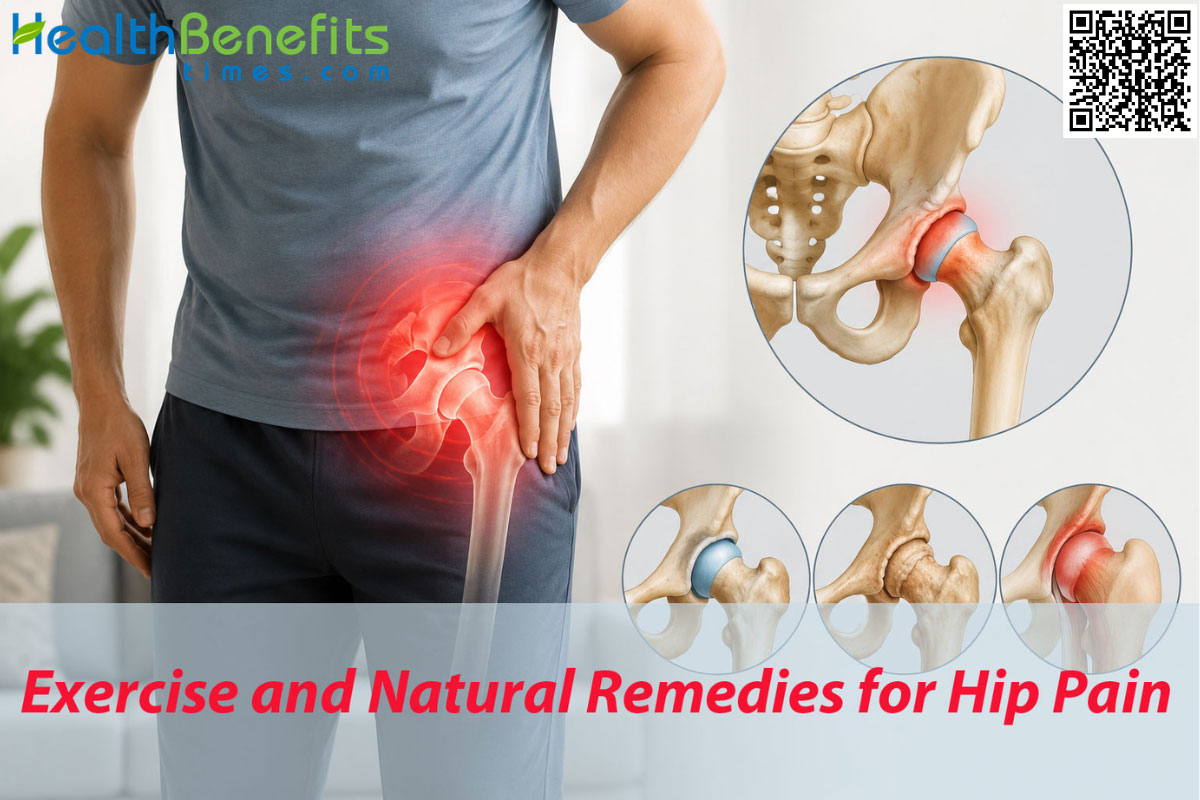
Every day, millions of people wake up and notice an uncomfortable ache or sharp twinge in their pelvic region. Hip pain is essentially any physical discomfort, tightness, or soreness that happens in or right around the main hip joint, which is the large ball-and-socket connection keeping your legs attached to your torso. Figuring out exactly where this soreness comes from can be a bit tricky because the surrounding network of nerves, muscles, and ligaments is so tightly packed together; sometimes, an ache in the lower back or belly area can actually make your hip feel like it is hurting 1. Looking at the numbers, this is an incredibly common issue around the world, with statistics showing that the overall lifetime risk for developing painful hip osteoarthritis is about 24.2 percent 2. Interestingly, women tend to be affected a bit more often, being roughly ten percent more likely than men to develop these joint symptoms during their lives. Taking this kind of discomfort seriously is incredibly important for your overall health, as studies show that people under the age of sixty-five who have chronic hip pain without obvious bone damage actually face a higher risk of premature mortality 3.
Causes of Hip Pain
Understanding the root cause of your joint distress is the very first step toward feeling better and moving freely again. The human body is complex, and there are several different reasons why this area might start to hurt.
1. Osteoarthritis
Aging brings natural wear and tear to our bodies, and the protective cartilage cushioning the ends of your bones can slowly wear away over the years. When this smooth cushion disappears, the rough surfaces of the bones begin to rub directly against one another during movement, creating significant friction, stiffness, and pain that usually worsens after you turn 45 years old 4.
2. Rheumatoid Arthritis
Sometimes the body’s own immune system gets confused and mistakenly attacks the healthy, delicate lining of the joints. This systemic autoimmune condition creates persistent swelling, warmth, and a deep ache that often feels the absolute worst first thing in the morning when you roll out of bed.
3. Bursitis
Nestled near your joints are tiny, fluid-filled sacs called bursae, which act like slippery little cushions to stop your muscles and tendons from scraping against the hard bone. If you overwork the area through repetitive motions, these little sacs become angry and inflamed, creating a sharp, burning pain that often spreads down the outside of your upper thigh.
4. Sprains, Strains, and Tendonitis
Pushing yourself too hard during a new workout routine, lifting something too heavy, or doing the same repetitive motion over and over can overstretch your muscle fibers. This leads to tiny micro-tears in the tendons and muscles surrounding the joint, resulting in a tender, bruised feeling that flares up immediately after physical activity.
5. Hip Fractures
Sudden accidents, like slipping on a wet floor or taking a hard tumble down the stairs, can put too much sudden force on the bones of the pelvis or femur. This causes a structural break that results in immediate, blinding pain and a complete inability to stand or put any weight on that leg.
6. Septic Arthritis
In rare but serious cases, nasty bacteria can travel through your bloodstream and sneak directly into the joint fluid. This creates a dangerous, fast-moving infection that makes the whole area swell up rapidly, feel hot to the touch, and often brings along a high fever and body chills.
7. Pediatric and Childhood Conditions
Growing bodies have their own unique set of challenges, and children can develop hip pain for entirely different reasons than adults. Kids might experience a temporary viral swelling called transient synovitis, a blood flow issue to the bone called Perthes disease, or a condition where the thigh bone’s growth plate slips out of place, known as slipped capital femoral epiphysis 5.
Symptoms of Hip Pain
Listening closely to the signals your body is sending can help pinpoint exactly what is going wrong inside. People dealing with issues in this area usually notice one or a combination of the following uncomfortable signs:
1. Severe, Sharp Pain
A sudden, intense agony that happens right after a fall or bump, making it completely impossible to walk, stand, or put any body weight on the affected leg without wanting to collapse.
2. Morning Stiffness
A deeply rooted, rusty feeling in the joint that makes it incredibly hard to get moving when you first wake up, though it often loosens up a little bit after you take a warm shower and walk around for half an hour.
3. Radiating Discomfort
A dull, continuous ache that doesn’t just stay in the hip, but seemingly travels down the front of your groin, wrapping around the outside of your thigh, or even settling deep into your buttocks 6.
4. A Protective Limp
Without even realizing it, you might start changing the way you walk, adopting a noticeable hobble or uneven stride because your brain is automatically trying to keep weight off the hurting side.
5. Tenderness When Resting
Finding a comfortable sleeping position becomes a nightly struggle, as lying directly on the affected side sends a sharp, squeezing pain radiating through your outer leg.
6. Visible Swelling and Heat
The skin sitting right over the joint might look a bit puffy, change color to a bruised or reddish tint, and feel noticeably warmer to the touch compared to the rest of your body.
Hip Pain Facts Table
Gathering all the essential pieces of information into one place can make understanding this condition much easier. Here is a helpful breakdown of the most important facts surrounding hip-related discomfort.
| Category | Facts |
| Symptoms |
|
| Causes |
|
| Types of Hip Pain |
|
| How does spread |
|
| Age Group |
|
| You might be at a higher risk for exposure of this disease if you: |
|
| How doctors diagnose |
|
| Other facts |
|
Exercise and Natural Remedies for Hip Pain
Taking an active, hands-on role in your own recovery is one of the most empowering things you can do for your body. When you carefully combine gentle, targeted physical movements with the healing power of natural plant-based remedies, you create a powerful defense against joint stiffness and chronic inflammation.
Part 1: Physical Exercises
Moving your body safely is the best way to keep your joints lubricated and your muscles strong. Before you begin these routines, make sure you have a comfortable, clear space on the floor, keep a glass of water nearby, and remember to only stretch until you feel a gentle pull never push into sharp, sudden pain.
1. The Gentle Leg Raise
You might find it surprisingly simple to start building up the muscles that support your backside and core. To do this, simply lie flat on your stomach, resting your head comfortably to one side on a soft mat. Tighten up your stomach muscles as if you are bracing for a tickle, squeeze your buttock muscles, and slowly lift one of your straight legs just an inch or two off the floor. Keep your hip bones pressed flat against the ground, hold your leg hovering in the air for about five to ten seconds, and then gently lower it. Repeat this slow, controlled motion about three times on each leg 8.
Note: Commonly used as an easy, low-impact exercise to safely strengthen the large glute muscles, which act as the main shock absorbers for your pelvis while you walk.
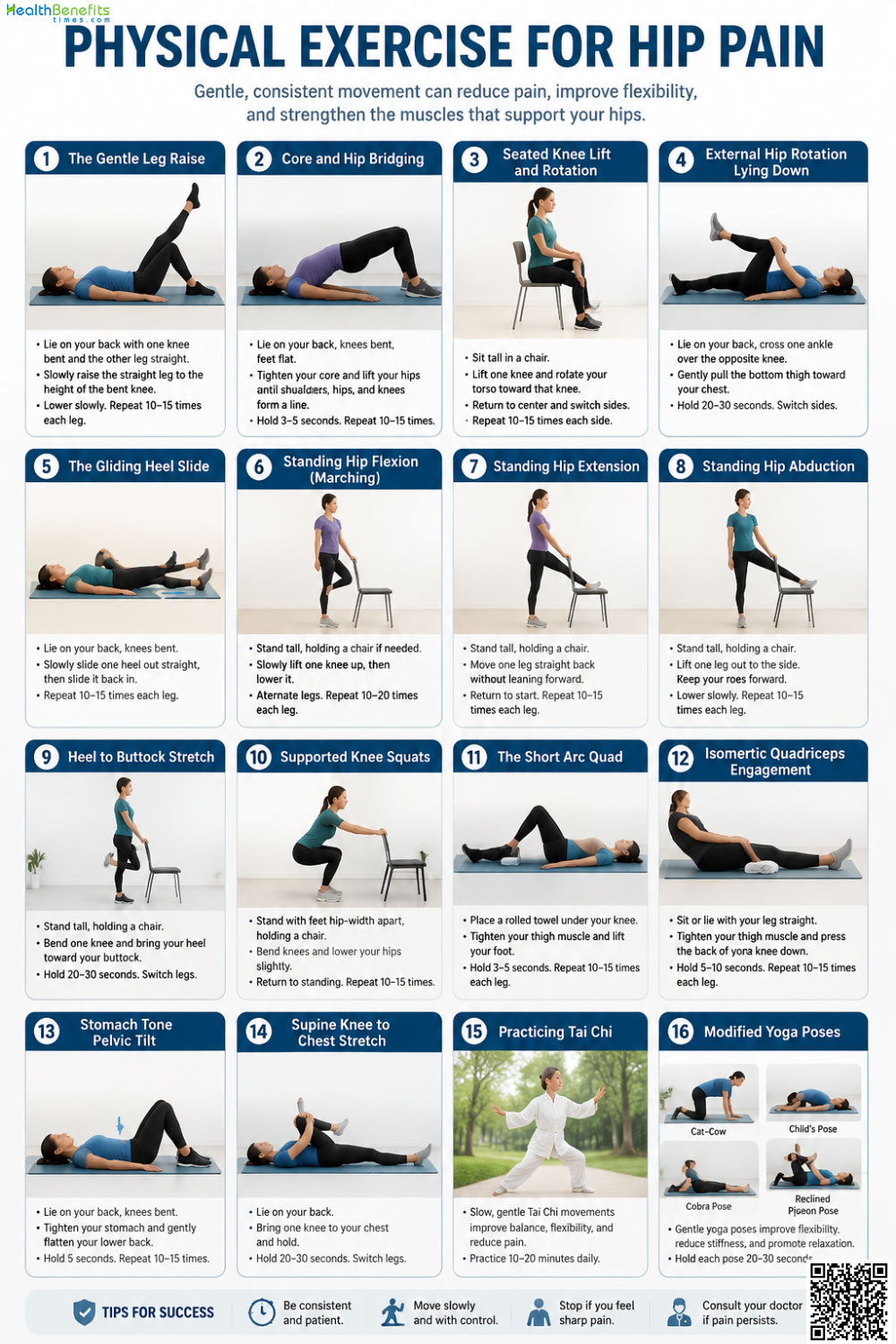
2. Core and Hip Bridging
Lifting your body against gravity is a wonderful way to wake up a tired, achy lower back. Start by lying flat on your back, bend both of your knees comfortably, and place your feet flat on the floor about shoulder-width apart. Slowly press your weight down into your heels and lift your pelvis and lower back straight up off the floor toward the ceiling, creating a sloping “bridge” shape with your body. Hold yourself steady at the top for about five seconds, taking a deep breath, and then slowly melt back down to the floor one vertebra at a time.
Note: Commonly applied to fix poor posture from sitting too much, helping to balance out the tight muscles on the front of your body by engaging the back.
3. Seated Knee Lift and Rotation
Creating a wider range of motion helps prevent that rusty, locked-up feeling. Sit upright in a comfortable chair or on the edge of your bed, bend your knees, and place your feet close together. Use your hands to gently press both of your knees outward and downward toward the floor, opening your legs like a butterfly stretching its wings. Stop pressing as soon as you feel a comfortable, warm stretch along the inside of your groin. Hold this open position for about ten seconds, relax, and repeat it five to ten times.
Note: Commonly used as a safe daily stretching routine to loosen up tight adductor muscles on the inside of the thighs, preventing awkward, rigid walking patterns.
4. External Hip Rotation Lying Down
Letting gravity do the hard work can be incredibly relaxing when you are feeling sore. Lie completely flat on your back with your knees bent and your feet resting flat on the bed, spaced roughly hip-width apart. Slowly let just one knee fall outward toward the mattress, moving only as far as it naturally wants to go, while making sure your lower back stays glued to the bed. Pause for a moment, then gently bring the knee back up to the starting position to complete the movement.
Note: Commonly applied as a soothing, pre-bedtime motion to gently swirl the natural lubricating fluids around inside the joint capsule without putting any heavy body weight on it.
5. The Gliding Heel Slide
Keeping your legs moving smoothly helps remind your joints how they are supposed to hinge. Lie comfortably on your back with both legs out straight. Slowly bend one leg by dragging your heel along the surface of the floor or bed, pulling it up toward your backside as far as you comfortably can. Once your knee is pointed at the ceiling, slowly slide the heel back down until your leg is completely straight again.
Note: Commonly used by physical therapists as the very first step in early rehabilitation to safely re-introduce movement to a highly sensitive or newly injured joint.
6. Standing Hip Flexion (Marching)
Mimicking the mechanics of a brisk walk keeps your functional mobility intact. Stand up tall next to a sturdy table, kitchen counter, or heavy chair, and hold on to it lightly for balance. Begin to slowly march in place, lifting one knee up toward your chest, placing it back down, and then lifting the other. Keep your torso tall and proud, and try not to lift your knee any higher than your waistline to avoid pinching anything in the front of your socket.
Note: Commonly applied to keep the front hip flexor muscles active and pliable, ensuring you don’t lose the ability to safely climb up flights of stairs.
7. Standing Hip Extension
Counteracting the forward-leaning slump of modern life requires moving your legs backward. Stand straight while holding onto a solid work surface for support. Keeping your knee perfectly straight, slowly pull one entire leg backward behind you. Give your buttock muscle a firm squeeze at the back of the movement. Make sure you don’t lean your chest forward to cheat the movement. Hold the leg back there for about five seconds before returning to a normal standing posture.
Note: Commonly used to gently stretch out the thick ligaments in the front of the pelvis while simultaneously building up the powerful walking muscles in your backside.
8. Standing Hip Abduction
Moving sideways is just as important as moving forward when it comes to keeping your balance. Stand tall, rest one hand on the back of a chair, and ensure your spine is perfectly straight. Slowly lift one leg directly out to the side, away from your body, keeping your toes pointed straight ahead. Hold your foot out in the air for five seconds, then slowly resist gravity as you lower it back down to meet the other foot. Do this about five times on each side.
Note: Commonly applied to specifically target the gluteus medius muscle, which is the crucial side-hip muscle that stops you from falling over when you stand on one leg.
9. Heel to Buttock Stretch
Relieving tightness in the front of the leg often magically relieves tightness in the hip. While standing and holding onto something secure, bend one knee backward and try to pull your heel up toward your bottom. You can reach back and gently grab your ankle if you are flexible enough. Make sure both of your knees stay close together and the kneecap of the bent leg is pointing straight down at the floor, not flared out to the side.
Note: Commonly used to deeply stretch the large quadriceps muscles, taking the mechanical pulling pressure off the front of your pelvic bones.
10. Supported Knee Squats
Teaching your joints to work together in harmony builds incredible functional strength. Hold onto the back of a sturdy chair or a heavy table. Slowly bend your knees and lower your hips down, exactly as if you were about to sit down in an invisible chair behind you. Check to make sure your knees aren’t sticking out further than your big toes. Go down only to a comfortable depth never past a 90-degree right angle and then push firmly through your heels to stand back up.
Note: Commonly applied to build total lower-body endurance, making everyday tasks like getting on and off the toilet or in and out of a car completely painless.
11. The Short Arc Quad
Giving your knee a little extra support can help you isolate the right muscles without pain. Roll up a fluffy bath towel into a tight cylinder and place it flat on the floor underneath your knee while you lie on your back. Keep the back of your thigh resting heavily on the towel, and simply straighten your knee to lift your foot up into the air. Hold your foot hovering there for five seconds before slowly lowering it back down.
Note: Commonly used as a highly gentle way to strengthen the lower thigh muscles, which indirectly stabilizes the way your femur bone fits into your hip socket.
12. Isometric Quadriceps Engagement
Sometimes, simply flexing a muscle without moving the joint at all is the best option on a really bad pain day. Sit comfortably on the floor with your legs straight out in front of you. Pull your toes backward toward your face, and actively push the back of your knee down hard into the floor. You should feel all the muscles on the top of your thigh instantly tighten up. Hold this firm contraction for five seconds, then completely relax.
Note: Commonly applied during acute, painful flare-ups to keep your muscles from shrinking away and getting weak when actual movement hurts too much.
13. Stomach Tone Pelvic Tilt
Fixing the alignment of your lower spine naturally creates more breathing room for your hip joints. Lie on your back with your knees bent comfortably. Place your hands under the curve of your lower back. Now, actively pull your belly button downward toward the mattress, squishing your hands and flattening your spine completely against the floor. Hold this tight, core-bracing position for twenty solid seconds while breathing normally.
Note: Commonly used to safely correct an exaggerated inward curve of the lower back, relieving hidden nerve pressure that often shoots down into the legs.
14. Supine Knee to Chest Stretch
Giving yourself a big hug can help relieve deep, hidden tension in your backside. Lie completely flat on your back. Bend one knee and use both of your hands to pull it up tightly against your chest, while keeping your other leg perfectly straight and pressed into the floor. Pull just until you feel a deep, satisfying stretch in your glutes, hold it for about ten seconds, and let it go.
Note: Commonly used to quickly loosen up deep external rotating muscles that tend to spasm and lock the pelvis into uncomfortable, stiff positions.
15. Practicing Tai Chi
Exploring ancient forms of movement can bring profound modern relief. This traditional practice involves performing very slow, deliberate, flowing motions while deeply focusing on your breathing and balance. International clinical guidelines heavily recommend this activity because the slow weight-shifting is incredibly gentle on worn-out cartilage 9.
Note: Commonly applied as a mind-body therapy to improve dynamic standing balance, significantly reducing the harsh physical impact on aching joints.
16. Modified Yoga Poses
Connecting your breath to your body helps melt away both physical and mental stress. Engaging in basic yoga stretches can greatly improve your overall flexibility. However, you should be slightly cautious; always modify or skip poses that require you to force your legs extremely far apart into deep splits, as this can pinch sensitive tissues.
Note: Commonly used to elongate tight fascial tissues throughout the whole body, bringing a sense of calm that helps lower your brain’s perception of chronic pain.
Part 2: Natural and Botanical Remedies
Mother Nature provides a wonderful pharmacy of plants and herbs that can help calm down irritated tissues without the heavy side effects often associated with synthetic chemical pills. When you use these remedies correctly, they can become a brilliant addition to your daily routine.
1. Golden Turmeric (Curcumin)
Adding a splash of bright orange color to your life can bring serious anti-inflammatory benefits. Curcumin is the active, magical ingredient hidden inside the turmeric root. In various clinical studies, taking a specially formulated supplement of about 1000 to 1500 milligrams of curcumin every day has been shown to effectively reduce swelling and improve pain scores in people suffering from joint degeneration 10.
Note: Commonly consumed as an easy-to-swallow daily capsule, or blended up into warm, spiced teas to naturally block the specific enzymes in your body that trigger joint swelling.
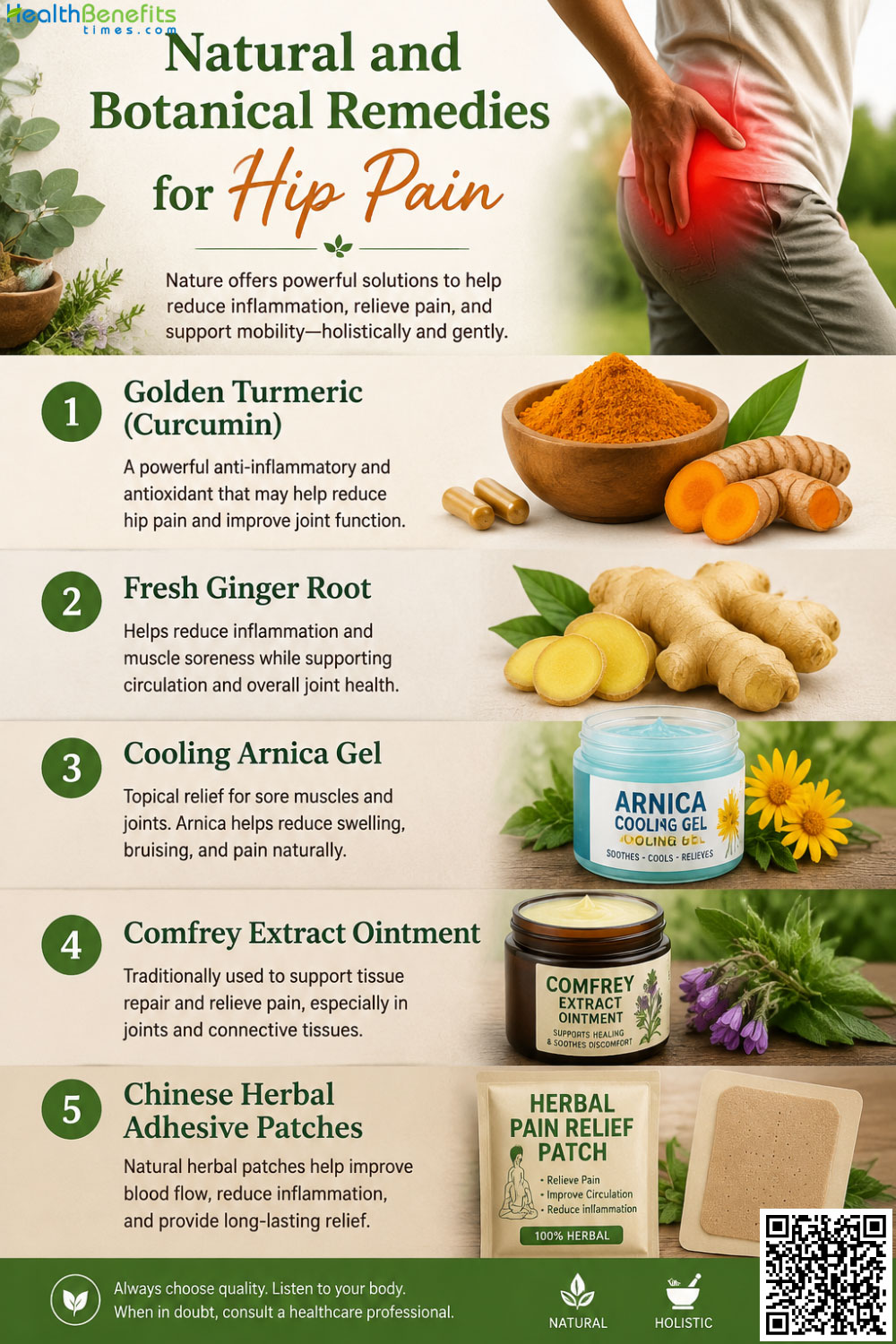
2. Fresh Ginger Root
Zesting up your diet with this spicy, aromatic root offers more than just great flavor. Ginger contains special natural chemicals, like zingerone, which actively tell the synovial fluid inside your joints to calm down and stop swelling. Research has demonstrated that taking highly concentrated ginger extracts can sometimes improve daily function and relieve pain just as effectively as some common prescription arthritis medicines 11.
Note: Commonly eaten as a freshly grated spice in meals, steeped in hot water for a soothing tea, or taken as a potent powder to continuously fight off deep muscle and joint aches.
3. Cooling Arnica Gel
Applying a little flower power directly to your skin can provide quick, localized comfort. Derived from the bright yellow Arnica montana mountain flower, this special gel is packed with natural compounds that speed up the healing of bruises and minor tissue damage. Clinical reviews show that rubbing this gel over an aching hip can ease symptoms just as well as standard, pharmacy-bought chemical pain gels 12.
Note: Commonly applied directly onto the skin over the sore area, creating a soothing sensation that provides fast, temporary relief from superficial tenderness and aching.
4. Comfrey Extract Ointment
Tapping into traditional herbal wisdom reveals the soothing power of the comfrey root. This plant is naturally rich in a substance called allantoin, which is famous for encouraging cell repair and reducing localized swelling. Studies have shown that when people rub comfrey extract gel on their painful arthritic joints, they experience a much better reduction in pain compared to using a plain, inactive lotion.
Note: Commonly applied topically as a thick, rich cream to gently coax irritated ligaments and tendons into healing faster after a long, active day.
5. Chinese Herbal Adhesive Patches
Sticking on a traditional remedy allows for a steady, all-day flow of relief. These special sticky patches are infused with unique blends of ancient Chinese herbs designed to stimulate local blood flow and chase away the cold, stiff feelings in your muscles. Evidence suggests that wearing these patches over a sore hip can result in slight but noticeable improvements in your ability to move around smoothly.
Note: Commonly applied like a large bandage directly over the hip bone, allowing the medicinal herbs to slowly sink through your skin to loosen up stiff tissues over several hours.
Foods and Activities to Avoid When You Suffer from Hip Pain
Protecting your body is not just about what you do, but also about what you actively choose to avoid. You can significantly lower your daily pain levels by steering clear of certain lifestyle habits that are secretly adding fuel to the inflammatory fire.
Foods to Avoid:
1. Fried and Heavily Processed Foods
Reaching for that bag of greasy potato chips or ordering deep-fried fast food introduces unhealthy trans fats and complex chemical preservatives into your system, which have been proven to directly worsen joint inflammation 13.
2. Sugary Snacks and Sweet Drinks
Gulping down sodas or indulging in too many sugary cookies causes your blood sugar to spike rapidly. This sudden sugar rush prompts your immune system to release inflammatory signals that make your sore joints throb even harder.
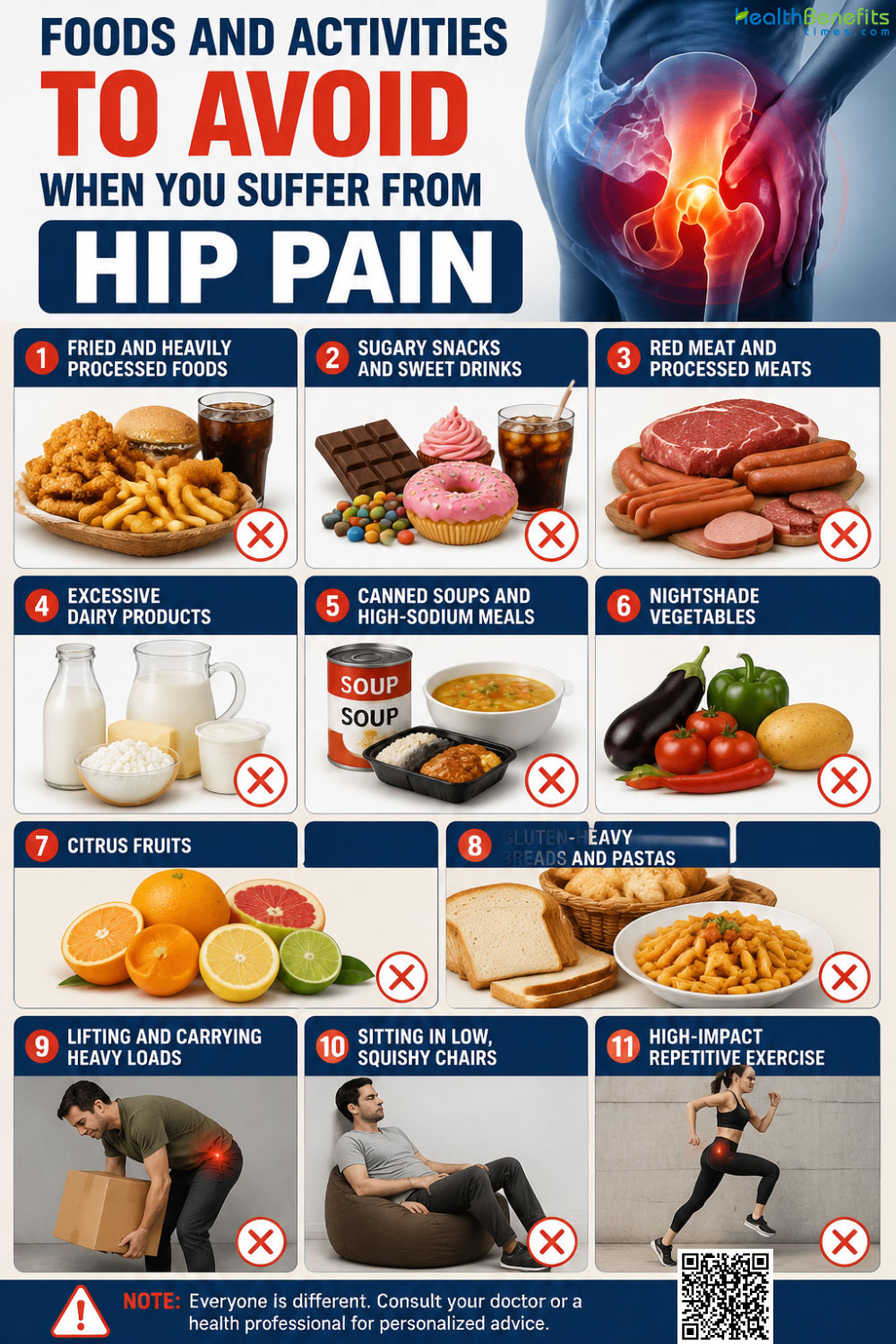
3. Red Meat and Processed Meats
Eating thick steaks, hot dogs, and bacon too often loads your body up with saturated fats and high levels of purines, both of which can easily trigger severe joint tenderness and general body stiffness.
4. Excessive Dairy Products
For some people, the specific proteins found in cow’s milk, heavy cheeses, and butter can irritate the tissues around the joints; try cutting them out for a few weeks to see if your stiffness miraculously improves.
5. Canned Soups and High-Sodium Meals
Scooping up foods that are loaded with hidden salt causes your body’s cells to hold onto excess water, leading to higher blood pressure and increased, uncomfortable fluid pressure inside your already swollen joints 14.
6. Nightshade Vegetables
You might be uniquely sensitive to a natural chemical found in tomatoes, eggplants, bell peppers, and white potatoes; many people report that their deep aches fade away when they stop eating this specific plant family 15.
7. Citrus Fruits
Although generally healthy and full of vitamin C, fruits like lemons, oranges, and grapefruits can surprisingly cause a mild allergic-style flare-up in the joints of certain highly sensitive individuals.
8. Gluten-Heavy Breads and Pastas
If you have an undiagnosed sensitivity to the gluten proteins found in wheat, barley, and rye, eating that large bowl of pasta might be the hidden reason your pelvis feels stiff and inflamed the next morning.
Activities to Avoid:
1. Lifting and Carrying Heavy Loads
You should never try to prove your strength by carrying massive boxes or heavy grocery bags on one side of your body, as this violently compresses your cartilage and throws your pelvic balance completely out of whack.
2. Sitting in Low, Squishy Chairs
Sinking down into a deep, overly soft sofa forces your knees higher than your waist, severely pinching the front of your hip joint and making the simple act of standing back up feel like torture.
3. High-Impact Repetitive Exercise
Pounding the pavement by running on hard concrete without highly cushioned, shock-absorbing shoes sends harsh, damaging vibrations straight up your leg bones directly into your fragile hip socket.
Myths and Misconceptions
Hearing conflicting advice from friends, family, and the internet can leave you feeling confused and paralyzed. Let’s clear the air by busting some of the most common fairy tales about joint pain with cold, hard facts.
| Myth | Reality |
| Experiencing hip pain is just a completely normal, unavoidable part of getting older.
16. |
While age is a factor, joint discomfort strikes people of all ages including young athletes and children due to sports injuries, overuse, or childhood development issues |
| If my hip hurts badly, it definitely means I will have to get a major replacement surgery. | Surgery is rarely the first or only answer; the vast majority of people find incredible relief through non-surgical routes like physical therapy, gentle movement, and natural anti-inflammatories. |
| If it hurts to walk, my bones must be physically wearing away and crumbling.
17. |
The amount of pain you feel does not always match what an X-ray shows; sometimes a perfectly healthy-looking joint hurts terribly because the surrounding muscles are tight or sensitive. |
| Hearing a loud clicking or popping sound means I am damaging my cartilage.
18. |
Hearing a snap or pop when you move your leg is usually just a tight tendon harmlessly snapping back and forth over a bone, and doesn’t automatically mean your joint is ruined. |
| Stretching the sore area as hard as I can is all I need to do to fix the problem. | Flexibility is only half the battle; if you just stretch without building up the strength of the surrounding muscles, your joint will remain unstable and the pain will likely return. |
| If I just rest completely and wait it out, the pain will eventually disappear on its own. | Ignoring the problem and staying in bed usually makes things worse by causing your muscles to shrink and weaken; taking an active approach to safely move the joint is almost always the better path to recovery. |
Special Considerations
Navigating joint discomfort requires recognizing that the human body acts very differently depending on your age and what else might be going on inside your system.
1. Children
Worrying about a limping child is natural, as kids face totally different bone issues than adults do. Young toddlers between the ages of two and ten might wake up suddenly refusing to walk due to transient synovitis, which is a harmless, temporary fluid buildup in the joint often caused by a recent viral cold 19. Slightly older children might experience Legg-Calvé-Perthes disease, a more serious condition where the top of the thigh bone temporarily loses its blood supply. Meanwhile, fast-growing teenagers experiencing sudden groin pain must be checked for a slipped growth plate, which requires immediate medical rest to fix correctly.
2. Pregnancy
Growing a new life brings massive, rapid changes to a woman’s physical structure. During pregnancy, the body releases a special hormone called relaxin, which purposely makes the pelvic ligaments loose and stretchy to prepare for childbirth. Because of this extreme looseness, up to one in five pregnant women will suffer from pelvic girdle pain or sharp hip aches as their center of gravity drastically shifts forward 20. Using supportive maternity belts and doing specific pre-habilitation exercises can dramatically help stabilize this wobbly, painful region 21.
3. Chronic Conditions
Living with long-term metabolic or autoimmune diseases changes the rules of the game. For individuals battling systemic illnesses like rheumatoid arthritis or lupus, the body’s baseline level of inflammation is already set incredibly high. In these situations, managing joint pain requires a very delicate touch; pushing too hard with physical exercise can trigger a massive whole-body flare-up, making careful dietary choices and gentle, restorative movements the safest path forward.
4. Elderly
Reaching the golden years sadly increases the brittleness of our bones due to conditions like osteoporosis. For older adults, simple hip pain is not just an annoying inconvenience; it is a major warning sign. Failing to treat osteoarthritis in the elderly leads to a severe loss of mobility, which causes the heart and lungs to weaken from inactivity. More critically, an aching, unstable joint dramatically increases the risk of taking a devastating fall, making safe, guided pain management a literal life-saving necessity in this age group.
Precaution before Use of Natural Remedies When You Have Hip Pain
Before you run to the herbal supplement aisle and start swallowing handfuls of botanical extracts, you must understand that “natural” does not always mean “harmless.” You need to be incredibly careful and check with a professional if any of the following apply to you.
1. You are taking prescription blood thinners
Both highly concentrated turmeric and strong ginger act as natural blood thinners that stop your platelets from clumping together 22. If you mix these herbs with prescription drugs like warfarin or rivaroxaban, your blood can become dangerously thin, putting you at immediate risk for severe, unstoppable bleeding 23.
2. You struggle with low blood sugar (Hypoglycemia)
Drinking liters of ginger tea or taking ginger pills can naturally lower your blood glucose levels. If you are already taking insulin or other diabetes medications, adding ginger to the mix can cause your blood sugar to crash to dangerously low, dizzying levels 24.
3. You have a history of painful gallstones
The spicy compounds in ginger and turmeric actively tell your body to pump out more bile acid to aid in digestion. If your gallbladder is already full of stones, this sudden squeeze of extra bile can trigger a blindingly painful gallbladder attack.
4. You have a highly sensitive stomach or acid reflux
Swallowing large capsules of raw herbal extracts, especially on an completely empty stomach, can severely irritate your delicate stomach lining, leading to horrible heartburn, nausea, and burning indigestion.
5. You are undergoing scheduled surgeries or dental work
Because these natural anti-inflammatories alter how your blood clots, you absolutely must stop taking all herbal pain remedies at least two full weeks before any planned surgical procedures to ensure you don’t hemorrhage on the operating table.
When to See a Doctor
Knowing exactly when to stop trying to fix things yourself and ask for professional medical help can save your joint from permanent, irreversible damage. You should immediately pick up the phone or head to the urgent care clinic if you experience any of these major red flags.
1. You experience sudden, agonizing pain after a physical trauma
If you slip on the ice, fall off a ladder, or take a hard hit and your hip instantly screams in pain, do not try to “walk it off,” as you have very likely fractured the bone {% https://www.nhs.uk/symptoms/hip-pain/ %}.
2. You absolutely cannot put any weight on your leg
If trying to stand up makes your leg buckle underneath you, or you find yourself completely unable to swing your leg forward to take a single normal step, you need immediate professional imaging.
3. Your joint looks infected
If the skin over your hip suddenly puffs up like a balloon, turns a hot, angry shade of red, and feels like it is radiating heat like a radiator, you might have a fast-spreading bacterial infection inside the joint capsule.
4. You feel generally sick and feverish
Joint pain that is accompanied by a sudden high temperature, cold shivers, or feeling like you have a terrible case of the flu is a massive warning sign of septic arthritis that requires emergency antibiotics.
5. Your home remedies just are not working
If you have been faithfully resting, using ice packs, doing gentle stretches, and modifying your diet for two full weeks, and the pain is still getting worse or waking you up at night, it is time to let a doctor look deeper into the problem.