

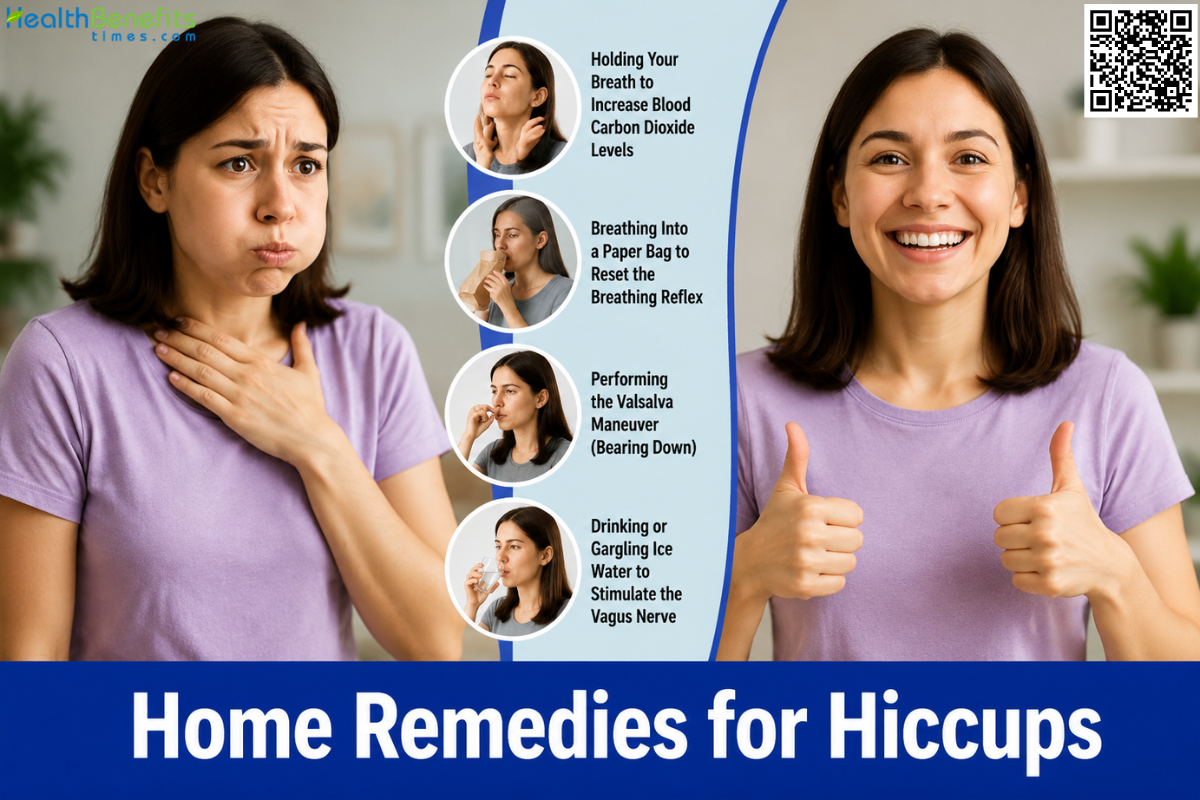
Hiccups are sudden, involuntary spasms of the diaphragm—the large muscle below the lungs that controls breathing—along with the muscles between the ribs. These initial spasms are immediately followed by an abrupt closure of the vocal cords, which abruptly traps rushing air and creates the characteristic “hic” sound 1. Medically known as singultus, this reflexive process is driven by a complex nerve pathway linking the brain, the stomach, and the chest 2. While brief episodes are generally harmless and often triggered by eating too quickly or stomach stretching, episodes lasting longer than 48 hours are clinically classified as persistent, and those lasting over a month are considered intractable. These prolonged cases can severely interfere with sleeping and eating, frequently indicating an underlying medical issue involving nerve irritation, metabolic imbalances, or a digestive disorder.
Causes of Hiccups
Short-Term Triggers (Lasting less than 48 hours)
- Stomach Expansion: Eating unusually large meals, eating too quickly, or accidentally swallowing excessive air can stretch the stomach and trigger the diaphragm to spasm.
- Food and Beverages: Consuming carbonated drinks, drinking excessive alcohol, or eating very spicy foods can irritate the upper digestive tract.
- Temperature Shifts: Sudden changes in stomach temperature, such as consuming a hot beverage followed immediately by an ice-cold drink, can stimulate the reflex.
- Emotional States: Sudden emotional shifts, including high anxiety, stress, or intense excitement, can alter regular breathing patterns and induce a hiccup episode.
Long-Term Triggers (Lasting longer than 48 hours)
- Nerve Irritation: Irritation to the vagus or phrenic nerves, which directly control the diaphragm, is a primary cause of prolonged cases and can result from a severe sore throat, a neck cyst, or persistent acid reflux.
- Brain and Nervous System Disorders: Conditions that damage the central nervous system can disrupt the body’s natural reflex control pathways, commonly occurring as a result of a stroke, multiple sclerosis, or brain tumors.
- Metabolic Imbalances: Disruptions in blood chemistry caused by severe kidney disease, abnormally low blood sodium, or complications from poorly controlled diabetes can continuously trigger diaphragm spasms.
- Prescription Medications: Certain medical treatments are known to trigger intractable hiccups, particularly strong steroids, anesthesia drugs, chemotherapy agents, and specific tranquilizers.
Symptoms of Hiccups
Primary Physical Signs
- Characteristic Sound: The most recognizable symptom is a sharp “hic” noise, which happens when the vocal cords abruptly snap shut immediately following a respiratory muscle spasm.
- Involuntary Muscle Jerks: Individuals experience sudden, uncontrollable rhythmic spasms or tightening in the lower chest and upper abdomen.
- Preceding Tightness: A brief sensation of pressure, fluttering, or mild tightening in the chest, throat, or stomach frequently occurs a split second before the spasm and sound are produced.
Secondary Symptoms (Associated with Prolonged Episodes)
- Sleep Disruption: When hiccups last for days or weeks, the continuous spasms prevent normal resting patterns, leading to severe insomnia and physical exhaustion.
- Eating and Swallowing Difficulties: Persistent spasms interrupt normal chewing and swallowing mechanics, which can cause gagging, reduced food intake, unintended weight loss, and malnutrition.
- Speech Interference: The unpredictable, sharp intakes of air and sudden vocal cord closures make it highly difficult to speak clearly or hold a normal conversation.
- Worsening Heartburn: The repeated abnormal pulling motion of the diaphragm can force stomach contents and acid upward into the esophagus, causing or worsening chest discomfort and acid reflux.
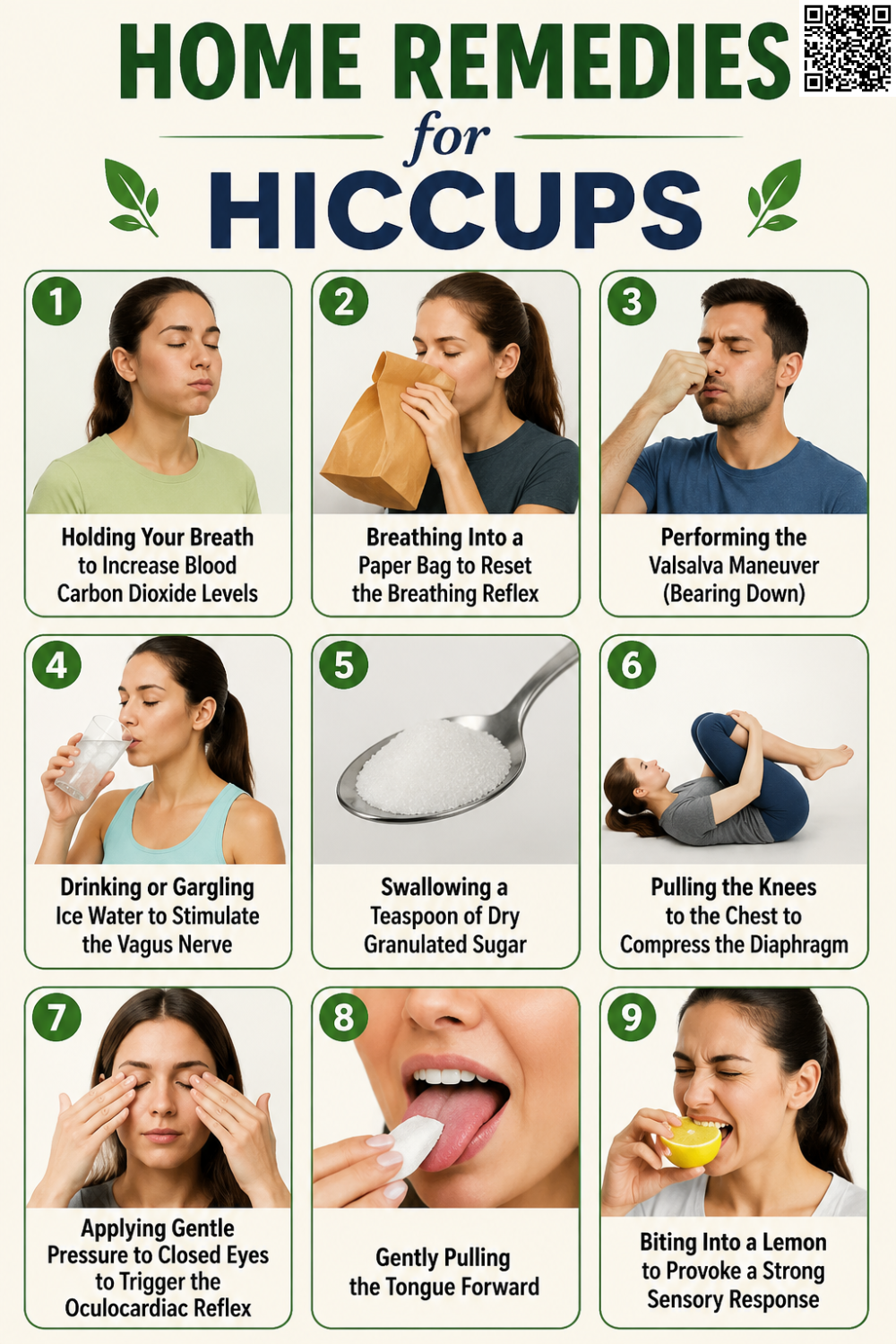 Home Remedies for Hiccups
1. Holding Your Breath to Increase Blood Carbon Dioxide Levels
How it may help
Holding breath stops carbon dioxide from leaving the lungs, which raises carbon dioxide levels in the bloodstream. This physiological change helps relax the diaphragm and suppresses the involuntary nerve signals that cause hiccup spasms.
What research says
Medical research confirms that elevating carbon dioxide in the blood successfully disrupts the reflex arc causing hiccups. Clinical studies conclude that carbon dioxide retention must reach a specific elevated threshold to completely stop the nerve mechanisms responsible for these sudden spasms 3.
How to use it safely
To safely try this, take a deep breath and hold it for 10 to 20 seconds while sitting down to prevent falls. Exhale slowly and resume normal breathing. You can repeat this maneuver a few times, but wait at least one minute between attempts.
Potential precautions or side effects
Do not use this method if you have asthma, lung disorders, or heart conditions. Holding your breath for too long can cause dizziness, lightheadedness, or fainting.
2. Breathing Into a Paper Bag to Reset the Breathing Reflex
How it may help
Breathing into a paper bag forces the rebreathing of exhaled air, which increases carbon dioxide levels in the bloodstream. This physiological shift distracts the nervous system, forcing it to focus on stabilizing breathing rhythms rather than the involuntary diaphragm spasms that cause hiccups.
What research says
Clinical evidence confirms that elevating carbon dioxide levels in the blood effectively interrupts the reflex arc responsible for hiccups. Research concludes that controlled hypercapnia, or increased carbon dioxide, reliably suppresses diaphragmatic spasms and serves as a verified physical maneuver for halting acute hiccup episodes.
How to use it safely
Place a small paper bag loosely over your nose and mouth. Take slow, regular breaths into the bag for no longer than 15 to 30 seconds. Sit down while attempting this technique to prevent falls. Never use a plastic bag.
Potential precautions or side effects
Avoid this method if you have asthma, chronic lung disease, or heart conditions. Breathing into a bag for too long can cause dizziness, oxygen deprivation, and fainting.
3. Performing the Valsalva Maneuver (Bearing Down)
How it may help
The Valsalva maneuver increases pressure inside the chest and throat, which directly stimulates the vagus nerve. Because the vagus nerve regulates the diaphragm, this targeted stimulation disrupts the nerve signals causing involuntary spasms, effectively resetting the hiccup reflex cycle.
What research says
Medical literature identifies vagus nerve stimulation as a first-line physical intervention for acute hiccups. Research concludes that the Valsalva maneuver effectively interrupts the neural reflex arc responsible for hiccups by temporarily increasing intrathoracic pressure, which successfully halts diaphragmatic spasms.
How to use it safely
To perform this maneuver safely, sit down to prevent falls. Pinch your nose, close your mouth, and forcefully exhale as if you are bearing down during a bowel movement. Hold this outward pressure for 10 to 15 seconds, then breathe normally.
Potential precautions or side effects
Avoid this technique if you have heart disease, high blood pressure, or glaucoma. The sudden bodily pressure changes can cause dizziness, a rapid drop in blood pressure, or fainting.
4. Drinking or Gargling Ice Water to Stimulate the Vagus Nerve
How it may help
Consuming or gargling icy water creates a sudden temperature drop in the back of the throat. This cold shock directly stimulates the vagus nerve, which regulates diaphragm movements. By overriding the nerve’s current signals, this targeted sensory distraction interrupts the involuntary reflex arc that causes hiccups.
What research says
Clinical guidelines endorse vagus nerve stimulation as a primary physical maneuver for halting benign hiccups. Research indicates that sudden cold stimuli applied to the pharynx effectively reset vagal tone, successfully terminating the spasmodic respiratory reflexes without needing medication.
How to use it safely
Slowly sip a glass of ice-cold water without pausing, or gently gargle the cold water for 10 to 15 seconds before spitting it out. Ensure there are no solid ice cubes in the liquid to prevent any risk of choking while swallowing.
Potential precautions or side effects
Avoid this method if you have swallowing difficulties or severe dental sensitivity. Gargling incorrectly can cause choking, and drinking ice water too rapidly may trigger a temporary headache.
5. Swallowing a Teaspoon of Dry Granulated Sugar
How it may help
Swallowing dry sugar grains creates mild physical irritation in the back of the throat. This coarse sensation strongly stimulates the glossopharyngeal and vagus nerves. By forcing these nerves to respond to the grainy texture, the action overrides and resets the abnormal nerve signals causing hiccup spasms.
What research says
Clinical evaluations identify swallowing granulated sugar as a verified physical intervention for halting hiccups. Medical researchers conclude that the granular texture intensely stimulates the vagus nerve endings in the throat, which effectively interrupts the reflex arc and stops diaphragmatic spasms in a majority of patients 4.
How to use it safely
Place one teaspoon of dry, granulated white sugar on the back of your tongue. Hold it there for a few seconds to let it slightly dissolve, then swallow it entirely without drinking water immediately. You may take a small sip of water afterward if needed.
Potential precautions or side effects
Avoid this remedy if you have diabetes, swallowing difficulties, or poor blood sugar control. Swallowing dry sugar poses a minor choking risk, especially for young children or older adults.
6. Pulling the Knees to the Chest to Compress the Diaphragm
How it may help
Bringing the knees to the chest applies direct physical pressure to the diaphragm. This mechanical compression physically restricts the muscle’s movement, which interrupts the sudden, involuntary contractions causing the spasms. It helps stabilize normal breathing rhythms and calm the surrounding nerves.
What research says
Clinical guidelines classify physical maneuvers that compress the diaphragm as standard initial interventions for acute hiccups. Medical literature indicates that directly altering the diaphragm’s resting position through chest compression effectively disrupts the hiccup reflex arc, allowing the muscle to return to normal function.
How to use it safely
Sit comfortably on a bed or chair. Slowly pull both knees up to your chest and wrap your arms around them. Hug your knees tightly and lean forward slightly. Hold this position for one to two minutes while maintaining a normal breathing pattern.
Potential precautions or side effects
Avoid this method if you are pregnant, have a hernia, or are recovering from abdominal surgery. Excessive compression can worsen existing stomach pain or trigger acid reflux.
7. Applying Gentle Pressure to Closed Eyes to Trigger the Oculocardiac Reflex
How it may help
Applying light pressure to the eyeballs triggers the oculocardiac reflex, a neural pathway involving the trigeminal and vagus nerves. This specific physical stimulation sends signals through the vagus nerve to the brainstem, which effectively overrides and interrupts the involuntary reflex arc responsible for diaphragm spasms.
What research says
Clinical guidelines recognize the oculocardiac reflex as a valid physical maneuver to stimulate vagal tone and manage acute hiccups. Medical literature confirms that this gentle pressure effectively halts the spasmodic respiratory cycle by disrupting the neural signals traveling along the vagus nerve without requiring medications.
How to use it safely
Close your eyes completely and relax. Place the pads of your index fingers over your eyelids. Apply very gentle, steady pressure for a few seconds. Do not push forcefully or massage the eyes. Release the pressure and breathe normally.
Potential precautions or side effects
Do not use this method if you have glaucoma, eye injuries, or recent eye surgery. It can trigger a sudden drop in heart rate, potentially causing dizziness or fainting.
8. Gently Pulling the Tongue Forward
How it may help
Gently pulling the tongue forward physically stimulates the vagus and glossopharyngeal nerves located in the back of the throat. Because these nerves regulate the diaphragm, this sensory distraction forcefully interrupts the abnormal neural signals, effectively stopping the involuntary spasms.
What research says
Clinical guidelines document tongue traction as an established physical maneuver for acute hiccup management. Medical experts conclude that this targeted stretch effectively increases vagal nerve tone, successfully overriding the neural reflex arc and terminating diaphragmatic spasms without requiring pharmacological treatment.
How to use it safely
First, wash your hands thoroughly. Grasp the tip of your tongue using clean fingers or a sterile piece of gauze. Gently pull the tongue directly forward until you feel a mild stretch. Hold for a few seconds, then release. Do not use excessive force.
Potential precautions or side effects
Avoid pulling forcefully, as this can injure the tissue beneath the tongue or cause soreness. Do not use this method if you have oral sores or bleeding gums.
9. Biting Into a Lemon to Provoke a Strong Sensory Response
How it may help
Biting into a lemon delivers an intense, sour flavor that forcefully stimulates the glossopharyngeal and vagus nerves in the mouth and throat. This overwhelming sensory input distracts the nervous system, which overrides the abnormal neural signals and interrupts the reflex arc responsible for diaphragm spasms.
What research says
Clinical reviews categorize consuming a strong sour stimulus as an effective physical maneuver for managing acute hiccups. Medical literature concludes that intensely activating sensory receptors in the mouth successfully resets vagal nerve tone, terminating the spasmodic respiratory cycle without the need for medications.
How to use it safely
Wash a fresh lemon and cut it into small wedges. Gently bite down on one wedge and swallow the sour juice. To protect your dental enamel from the harsh acid, thoroughly rinse your mouth with plain water immediately after using this remedy.
Potential precautions or side effects
Avoid this method if you have mouth sores or acid reflux. Lemon acid damages tooth enamel, so limit frequent use and do not brush your teeth immediately afterward.
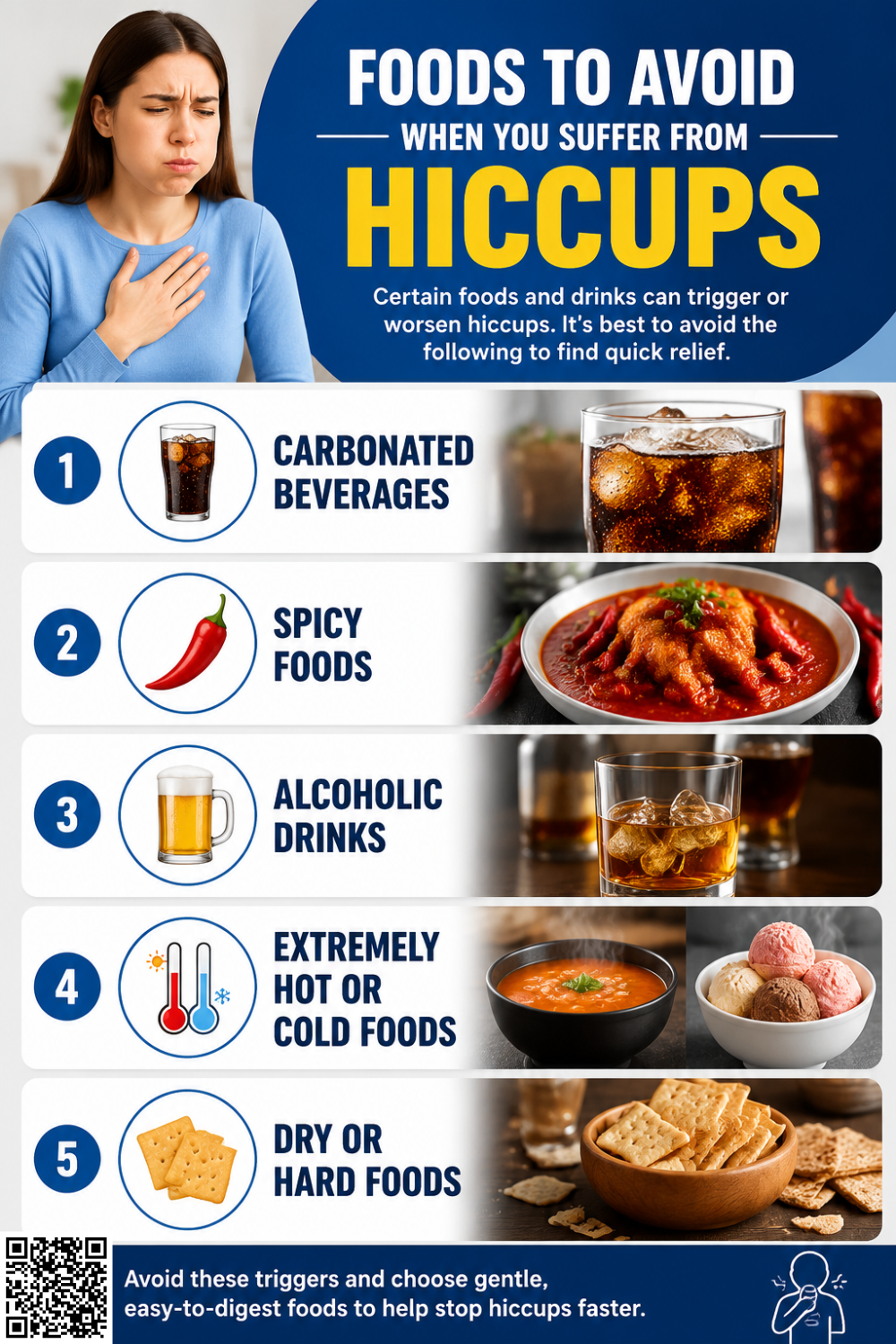 Foods to Avoid When You Suffer from Hiccups
1. Carbonated Beverages
Carbonated drinks release gas that expands the stomach. This sudden gastric distension presses against the diaphragm, which actively worsens involuntary muscle spasms.
2. Spicy Foods
Spices contain chemical compounds that irritate the esophageal lining. This irritation directly stimulates the vagus and phrenic nerves, prolonging the abnormal reflex arc causing hiccups.
3. Alcoholic Drinks
Alcohol inflames the stomach lining and esophagus. Medical evaluations classify alcohol consumption as a primary chemical trigger that disrupts the neural pathways controlling the diaphragm.
4. Extremely Hot or Cold Foods
Consuming foods with extreme temperatures causes sudden thermal shocks in the esophagus. These abrupt sensory changes aggravate the vagus nerve and restart diaphragmatic contractions.
5. Dry or Hard Foods
Swallowing large, dry items like thick bread stretches the esophagus. This physical distension stimulates nerve endings in the throat and stomach, actively triggering the hiccup reflex.
When To See a Doctor When You Suffer from Hiccups
1. Duration Exceeding 48 Hours
Hiccups lasting longer than 48 hours are classified as persistent. This duration indicates a potential underlying medical condition requiring clinical evaluation and targeted treatment.
2. Interference with Eating or Sleeping
Spasms that disrupt sleep patterns or prevent eating can cause severe exhaustion, malnutrition, and dehydration, necessitating immediate medical intervention to restore normal bodily function.
3. Accompanying Neurological Symptoms
Hiccups paired with sudden numbness, weakness, vision changes, or balance loss may indicate central nervous system lesions or a stroke, requiring emergency neurological assessment.
4. Severe Abdominal Pain or Vomiting
Experiencing intense stomach pain or vomiting blood alongside hiccups suggests severe gastrointestinal disorders, such as peptic ulcers or internal bleeding, which demand urgent medical care.
5. Chest Pain or Breathing Difficulties
Hiccups occurring with chest pressure or sudden shortness of breath can be atypical signs of cardiovascular events, including heart attacks, requiring prompt emergency evaluation.