

Sickle cell anemia is a lifelong, inherited blood disorder that alters the shape of red blood cells. Normally, these cells are round and flexible, moving effortlessly to carry oxygen throughout the body. However, in individuals with this condition, abnormal hemoglobin causes red blood cells to become hard, sticky, and shaped like a “C” or a farm sickle 1. Because these misshapen cells are rigid, they frequently get trapped inside small blood vessels, restricting the flow of blood and oxygen to tissues 2. This blockage triggers sudden, severe episodes of pain—known as pain crises—and can lead to long-term complications, including progressive organ damage and strokes 3. Furthermore, sickle cells die much faster than healthy ones, creating a constant shortage of red blood cells that leaves patients chronically fatigued 4.
4 Types of Sickle Cell Anemia
1. Hemoglobin SS (HbSS)
This type, commonly referred to as severe sickle cell anemia, is caused by inheriting two sickle cell genes (“S”)—one from each parent. Because the body produces only abnormal sickle hemoglobin, this genetic combination is generally the most severe form of the disorder 5.
2. Hemoglobin SC (HbSC)
This condition occurs when an individual inherits one sickle cell gene (“S”) from one parent and a different abnormal gene called hemoglobin “C” from the other. This genetic pairing usually results in a milder form of the disease with fewer severe complications 6.
3 Hemoglobin S Beta-Zero (HbS β0) Thalassemia
This severe type is caused by inheriting one sickle cell gene (“S”) alongside one gene for beta-zero thalassemia. The thalassemia gene entirely stops the production of normal hemoglobin, making the resulting symptoms and physical complications very similar in severity to HbSS 7.
4. Hemoglobin S Beta-Plus (HbS β+) Thalassemia
This form develops when a person inherits one sickle cell gene (“S”) combined with a gene for beta-plus thalassemia. Because the beta-plus gene still allows the body to produce a small amount of normal, healthy hemoglobin, this type is typically milder and causes less internal damage over time 8.
Causes of Sickle Cell Anemia
1. Genetic Mutation
The primary cause of the disorder is a specific mutation in the HBB gene, which provides the body with instructions for making hemoglobin. This underlying genetic flaw forces the body to produce defective hemoglobin proteins, which subsequently distort healthy, round red blood cells into a rigid, sickle-like shape.
2. Inherited Genetic Pairing
Sickle cell anemia is strictly a hereditary condition passed down through families, meaning it cannot be caught from another person or developed through lifestyle factors. A child must inherit two copies of the mutated sickle cell gene—exactly one from the mother and one from the father—to be born with the active disease.
3. Carrier Status (Sickle Cell Trait)
When an individual inherits one mutated sickle cell gene and one normal hemoglobin gene, they do not develop the disease itself but become a carrier of the sickle cell trait. If two individuals with the sickle cell trait have a child together, there is a 25 percent chance during each pregnancy that the child will inherit both mutated genes and be born with sickle cell anemia.
Symptoms of Sickle Cell Anemia
1. Episodes of Severe Pain
Often referred to as pain crises, these sudden attacks occur when rigid, sticky sickle cells block blood flow through tiny blood vessels in the chest, abdomen, joints, or bones. The pain can range from mild to excruciating and may last anywhere from a few hours to several weeks, frequently requiring hospitalization 9.
2. Chronic Fatigue and Weakness
Healthy red blood cells typically live for about 120 days, but fragile sickle cells break apart and die within 10 to 20 days. This rapid and continuous destruction creates a permanent shortage of red blood cells—a condition known as anemia—which deprives the body of oxygen and causes severe, chronic fatigue.
3. Swelling of Hands and Feet
Often one of the first visible symptoms in infants, this painful swelling—clinically termed dactylitis—happens when sickle cells become trapped in the small blood vessels of the extremities, entirely cutting off normal blood circulation to the tissue.
4. Frequent and Severe Infections
As abnormal sickle cells repeatedly block blood flow, they progressively damage the spleen, an organ that plays a critical role in filtering bacteria and fighting disease. This early organ damage leaves individuals highly vulnerable to severe, potentially life-threatening bacterial infections, such as pneumonia.
5. Vision Problems
The microscopic blood vessels that supply oxygen-rich blood to the eyes can easily become plugged by sickle cells. Over time, this chronic lack of blood flow damages the retina—the delicate tissue at the back of the eye responsible for processing visual images—which can lead to blurred vision, spotting, or permanent blindness 10.
6. Delayed Growth and Puberty
The human body requires a steady, abundant supply of oxygen and nutrients carried by healthy red blood cells to develop at a normal rate. Because children with this disorder have a chronic shortage of red blood cells, they often experience a noticeable delay in physical growth and the normal onset of puberty.
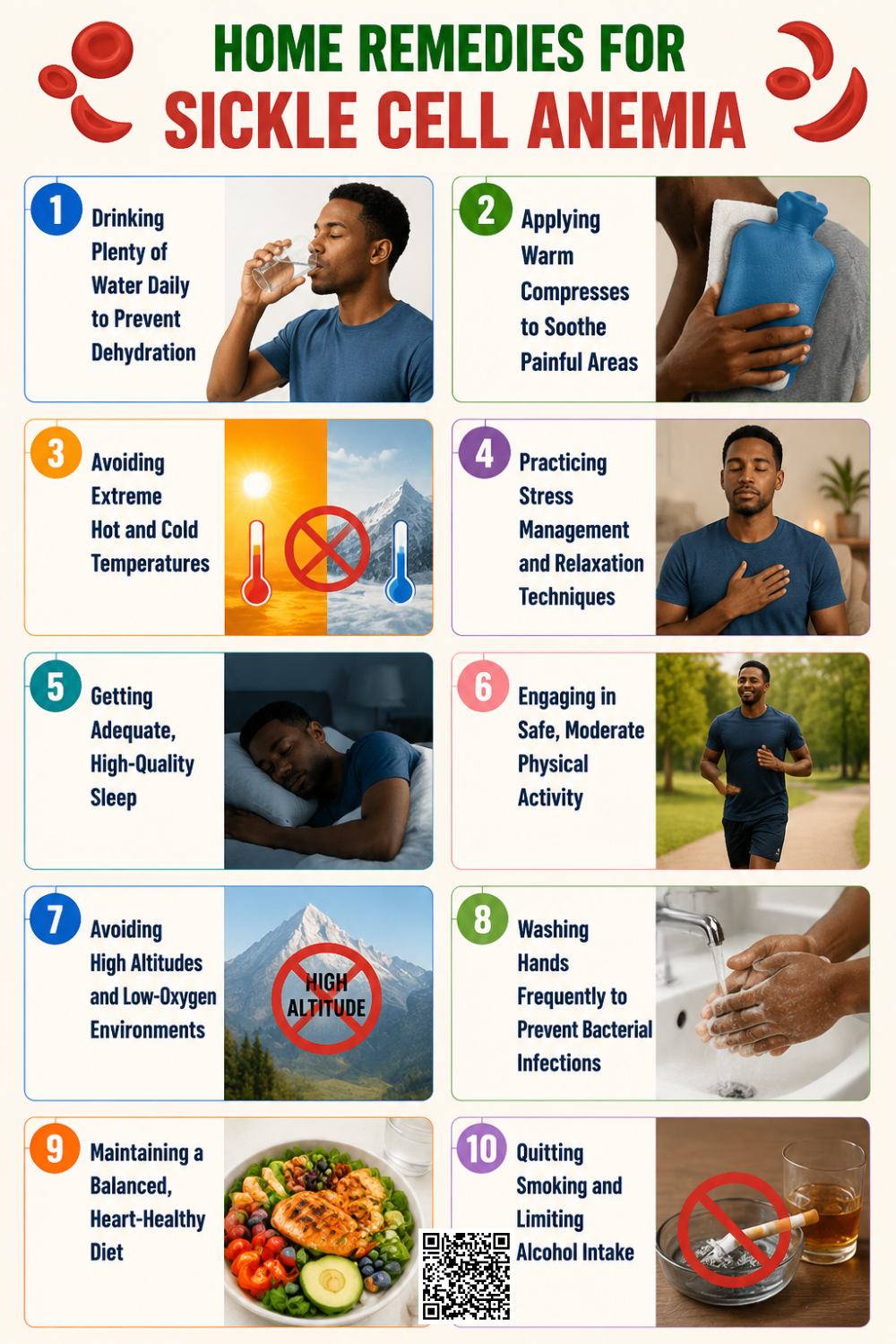 Home Remedies for Sickle Cell Anemia
1. Drinking Plenty of Water Daily to Prevent Dehydration
How it may help
Dehydration causes the blood to become thicker and flow more slowly. In individuals with sickle cell anemia, this sluggish blood flow significantly increases the risk that rigid, abnormal red blood cells will clump together and block small blood vessels. Maintaining proper hydration keeps the blood diluted, which helps prevent painful blockages and severe pain crises 11.
What research says
Clinical guidelines conclude that dehydration is a primary trigger for severe pain crises. Health authorities emphasize that maintaining a high daily fluid intake effectively prevents the clumping of abnormal cells, thereby reducing the frequency of severe pain episodes, organ damage, and emergency hospital visits 12.
How to use it safely
You should aim to drink at least eight to ten glasses of water every day. Carry a water bottle with you constantly, and proactively increase your fluid intake during hot weather, physical activity, or when recovering from a fever to ensure your body stays adequately hydrated.
Potential precautions or side effects
If you have advanced kidney damage or heart conditions related to the disorder, consult your doctor before drastically increasing fluids, as excessive fluid intake can strain these damaged organs.
2. Applying Warm Compresses to Soothe Painful Areas
How it may help
Applying warmth to painful areas helps by expanding the blood vessels. This widening allows the stiff, misshapen sickle cells that are stuck in the veins to move more freely, restoring normal blood flow and effectively relieving joint and muscle pain during mild crises.
What research says
Medical guidelines recommend heat application because it promotes vasodilation, which opens blood vessels to improve circulation. Clinical experts note that targeted heat therapy safely reduces the intensity of localized pain episodes without the need for additional pain medications, while strongly warning against cold therapy.
How to use it safely
You should place a warm towel, heating pad, or hot water bottle on the painful area for 15 to 20 minutes. Always wrap the heat source in a protective cloth before touching your skin to prevent accidental burns, and remove it if it feels too hot.
Potential precautions or side effects
Never apply ice packs or cold compresses. Cold temperatures shrink blood vessels, which will worsen the blockage of sickle cells and intensely aggravate the pain crisis.
3. Avoiding Extreme Hot and Cold Temperatures
How it may help
Extreme cold shrinks blood vessels, which forces rigid sickle cells to get stuck and blocks normal blood circulation. Conversely, extreme heat causes heavy sweating that quickly leads to severe dehydration, making the blood dangerously thick. Avoiding both temperature extremes prevents these major triggers of painful vaso-occlusive crises.
What research says
Clinical guidelines emphasize that sudden environmental temperature changes directly trigger red blood cell sickling and vascular blockages. Medical authorities consistently instruct patients to avoid rapid transitions between heat and cold, as temperature stress is a well-documented catalyst for acute pain episodes and emergency hospital admissions.
How to use it safely
You should always dress in warm, removable layers during cold weather and completely avoid swimming in unheated water. During summer, stay indoors with air conditioning when temperatures peak, and immediately move to a cool area if you begin sweating heavily.
Potential precautions or side effects
When dressing warmly in winter, avoid wearing excessively heavy layers. Overdressing causes heavy sweating, which directly leads to dangerous dehydration and can trigger a severe pain crisis.
4. Practicing Stress Management and Relaxation Techniques
How it may help
Emotional and physical stress causes blood vessels to constrict, which traps rigid sickle cells and triggers painful blockages. Practicing relaxation techniques helps lower stress levels and keeps blood vessels relaxed. This reduces the frequency of complications and shifts your mental focus away from chronic pain.
What research says
Clinical studies indicate that stress is a primary trigger for severe pain crises. Research demonstrates that non-pharmacologic interventions, including deep breathing, cognitive behavioral therapy, and meditation, effectively reduce pain intensity, decrease reliance on opioid medications, and lower emergency healthcare visits for individuals with mild to moderate pain 13.
How to use it safely
You should incorporate daily deep breathing exercises, meditation, or gentle yoga into your routine to proactively manage stress. Work with a counselor to develop coping strategies, and always take time to rest when facing emotionally exhausting situations to prevent a pain crisis.
Potential precautions or side effects
Relaxation methods cannot stop an active, severe pain crisis. Do not replace prescribed medications with these techniques, and seek emergency hospital care if the pain becomes uncontrollable 14.
5. Getting Adequate, High-Quality Sleep
How it may help
Quality sleep allows your body to properly rest and repair tissues. If you experience poor sleep or breathing interruptions during the night, your blood oxygen levels can drop. This lack of oxygen directly forces red blood cells into a rigid sickle shape, which can trigger painful blockages and severe crises 15.
What research says
Clinical studies show that sleep disturbances are highly common in individuals with this disorder and strongly linked to increased pain. Health authorities emphasize that getting at least seven hours of uninterrupted sleep nightly helps lower blood pressure, reduces stress on the heart, and manages chronic pain severity 16 17.
How to use it safely
You should aim to get at least seven hours of restful sleep every night. Create a consistent routine by going to bed and waking up at the same times daily. Keep your bedroom dark and quiet, and turn off electronic screens well before bedtime.
Potential precautions or side effects
If you snore loudly or stop breathing momentarily during sleep, inform your doctor immediately. You may need a medical sleep study to evaluate and treat a serious breathing disorder 18.
6. Engaging in Safe, Moderate Physical Activity
How it may help
Engaging in regular, moderate exercise improves cardiovascular health and can decrease chronic musculoskeletal pain. Mild physical activity keeps blood flowing efficiently and reduces the thickness of the blood, which helps prevent abnormal red blood cells from clumping together and causing dangerous vascular blockages 19.
What research says
Clinical studies indicate that while vigorous exercise is dangerous, supervised, moderate physical activity decreases inflammation and improves overall physical function in patients. Researchers recommend staying at or below a moderate intensity to safely gain health benefits without triggering severe vaso-occlusive crises 20 21.
How to use it safely
You should stick to mild activities like brisk walking. Always set a slow pace, take frequent rest breaks, and drink plenty of water before, during, and after your workout. Most importantly, immediately stop exercising at the very first sign of fatigue or muscle discomfort 22.
Potential precautions or side effects
Strictly avoid high-intensity workouts and competitive sports. Intense physical exertion rapidly consumes oxygen, which directly triggers severe pain crises, blood vessel blockages, and potential organ damage.
7. Avoiding High Altitudes and Low-Oxygen Environments
How it may help
Breathing in environments with thin air reduces the amount of oxygen that reaches your bloodstream. In individuals with this condition, a drop in blood oxygen directly forces abnormal hemoglobin to solidify, causing red blood cells to rapidly stiffen and sickle. Avoiding these low-oxygen settings prevents this sudden sickling process and averts painful vascular blockages 23.
What research says
Clinical guidelines demonstrate that exposure to high altitudes or unpressurized aircraft significantly reduces blood oxygen saturation. Medical researchers conclude that this environmental stress frequently triggers severe vaso-occlusive pain crises and severely increases the risk of splenic infarction, making it a primary medical trigger to avoid 24.
How to use it safely
You should avoid traveling to mountain ranges or areas higher than 3,600 feet above sea level. When flying, strictly ensure that the aircraft is a pressurized commercial plane. If you must travel to a higher elevation, transition slowly over several days and increase your daily water intake.
Potential precautions or side effects
If you experience sudden left-sided abdominal pain, chest pain, or nausea at a high altitude, seek emergency medical care immediately, as this indicates a potentially life-threatening splenic tissue blockage.
8. Washing Hands Frequently to Prevent Bacterial Infections
How it may help
Sickle cell anemia causes early damage to the spleen, an organ critical for filtering bacteria from the bloodstream. Because this damage severely weakens the immune system, simple bacteria can quickly cause life-threatening illnesses. Frequent hand washing physically removes these germs before they enter the body, preventing dangerous infections 25.
What research says
Clinical experts confirm that patients face a significantly higher risk of severe bacterial infections, such as pneumonia, due to early splenic dysfunction. Medical authorities emphasize that rigorous hand hygiene is one of the most proven and effective defenses to reduce infection rates and prevent subsequent, severe disease complications 26.
How to use it safely
You should wash your hands thoroughly with soap and clean water many times throughout the day. Always wash your hands before preparing food or eating, and immediately after using the bathroom, sneezing, or touching shared surfaces. Use an alcohol-based hand sanitizer gel if soap and water are unavailable.
Potential precautions or side effects
Hand washing is entirely safe, but it is only effective if your environment is protected. Ensure that your caregivers, family members, and any visitors also wash their hands strictly to prevent passing germs to you.
9. Maintaining a Balanced, Heart-Healthy Diet
How it may help
Because sickle cell anemia creates a chronic shortage of red blood cells, the heart must work much harder to pump oxygen throughout the body. Eating a heart-healthy diet provides essential nutrients that support red blood cell production while reducing unnecessary strain on the cardiovascular system.
What research says
Clinical guidelines emphasize that proper nutrition is vital for managing chronic anemia. Medical authorities strongly recommend a diet rich in fruits, vegetables, and whole grains, and often advise consuming foods high in folate—a B vitamin that the body strictly requires to continuously produce new red blood cells.
How to use it safely
You should focus on eating a variety of colorful vegetables, fresh fruits, whole grains, and lean proteins daily. To protect your heart, strictly limit your intake of salt, added sugars, and unhealthy saturated fats found in fried or highly processed foods.
Potential precautions or side effects
Always consult your doctor before taking dietary supplements, especially iron pills. Taking unprescribed iron can lead to dangerous organ damage caused by a toxic buildup of iron.
10. Quitting Smoking and Limiting Alcohol Intake
How it may help
Alcohol causes rapid fluid loss, leading to dehydration that thickens the blood and promotes cell clumping. Smoking damages lung tissue and restricts oxygen from entering the bloodstream. Quitting these habits keeps blood oxygenated and hydrated, preventing rigid sickle cells from forming and blocking blood vessels.
What research says
Medical authorities strongly warn that smoking significantly increases the risk of acute chest syndrome, a severe and potentially fatal lung complication in patients. Furthermore, clinical guidelines identify alcohol consumption as a direct trigger for severe vaso-occlusive pain crises due to its profound dehydrating effects.
How to use it safely
You should completely stop smoking tobacco and actively avoid secondhand smoke. It is safest to eliminate alcohol entirely from your diet. If you choose to drink, limit yourself to very small amounts and consume extra water to counter the dehydrating effects.
Potential precautions or side effects
Quitting smoking suddenly can cause physical and emotional stress. You should work with your doctor to safely use nicotine replacement therapies or support programs to manage withdrawal symptoms.
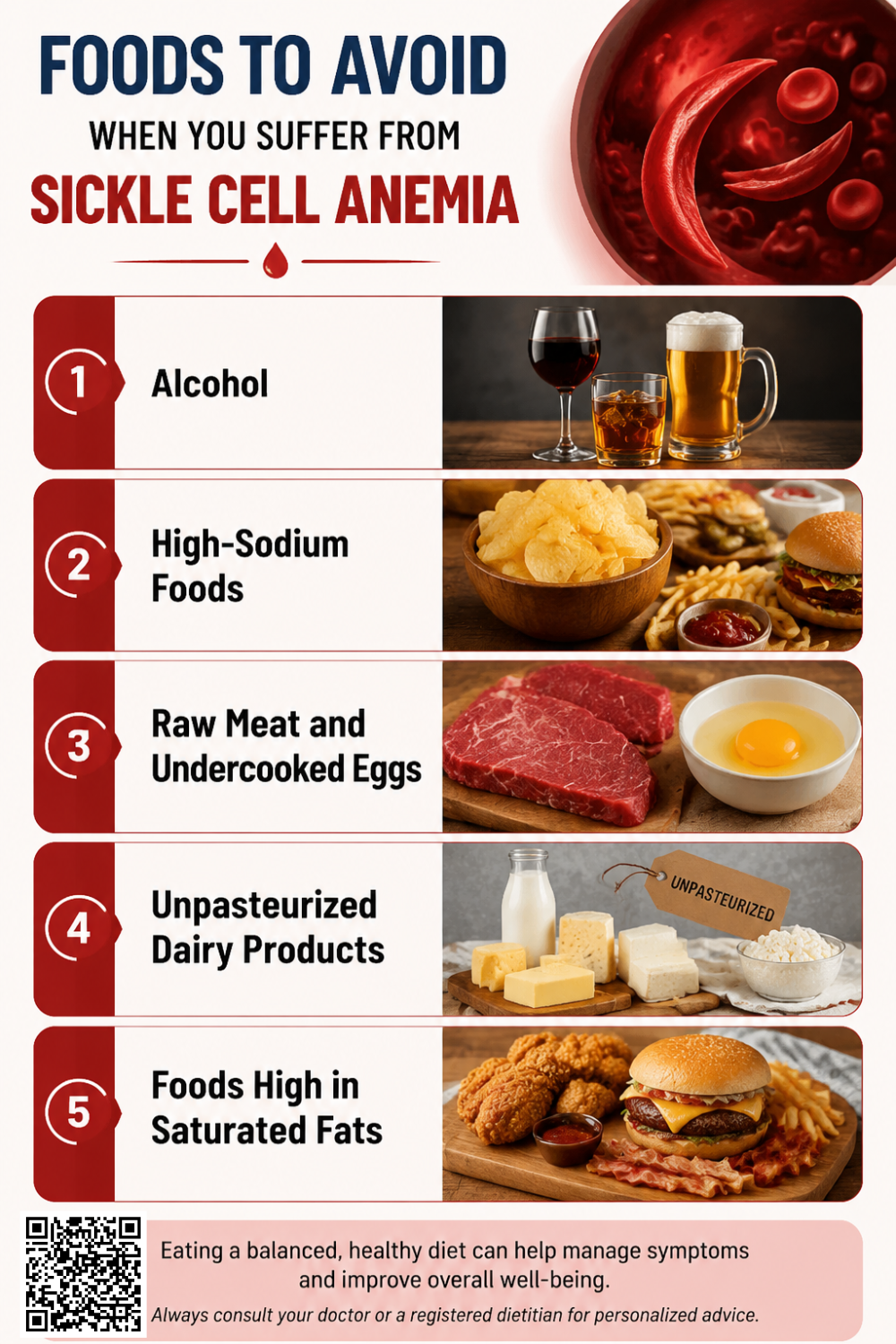 Foods to Avoid When You suffer from Sickle Cell Anemia
1. Alcohol
Alcohol causes rapid fluid loss, leading to severe dehydration. Dehydration thickens the blood, forcing abnormal red blood cells to clump and triggering painful vascular blockages.
2. High-Sodium Foods
Excessive salt intake increases blood pressure and strains the cardiovascular system. Because the heart already works much harder due to chronic anemia, limiting sodium protects heart function.
3. Raw Meat and Undercooked Eggs
A damaged spleen severely weakens the immune system. Consuming raw or undercooked foods drastically increases the risk of contracting life-threatening bacterial infections, such as salmonella.
4. Unpasteurized Dairy Products
Raw milk and unpasteurized cheeses frequently harbor dangerous bacteria. Because patients have compromised immune defenses, consuming these products can easily lead to severe, systemic foodborne illnesses.
5. Foods High in Saturated Fats
Fatty meats and full-fat dairy harm overall cardiovascular health. Medical authorities recommend strictly limiting saturated fats to reduce the excessive strain that anemia places on the heart.
When To see Doctor when you suffer from Sickle Cell Anemia
1. High Fever
Seek immediate emergency care if your temperature reaches 101.3°F (38.5°C) or higher. Because the spleen is damaged, a fever indicates a potentially life-threatening bacterial infection.
2. Unmanageable Pain
Go to the hospital if sudden, severe pain in your chest, abdomen, or joints does not improve with home remedies and prescribed oral pain medications.
3. Difficulty Breathing
Any shortness of breath or sharp chest pain requires emergency attention. These are primary symptoms of acute chest syndrome, a severe and potentially fatal lung complication.
4. Stroke Symptoms
Immediately call for emergency help if you experience sudden weakness on one side of your body, slurred speech, or facial drooping, as these indicate a stroke.
5. Severe Abdominal Swelling
Seek urgent medical care for sudden, severe swelling and pain in the abdomen. This signals splenic sequestration, a life-threatening emergency where blood becomes trapped in the spleen.
6. Prolonged Erection
Men experiencing a painful, unwanted erection lasting longer than four hours must seek immediate hospital care to drain trapped blood and prevent permanent tissue damage.