

A dry throat is a common symptom characterized by a parched, scratchy, or rough sensation in the back of the mouth and airway. This discomfort primarily occurs when the salivary glands fail to produce enough moisture to keep the mucosal tissues adequately lubricated. Clinical research indicates that this lack of hydration frequently results from environmental triggers, such as breathing cold or arid air, sleeping with an open mouth, and systemic bodily dehydration 1. Additionally, medical evidence demonstrates that a dry throat often serves as an early indicator of underlying conditions, including viral upper respiratory infections, seasonal allergies, or the adverse side effects of common medications like antihistamines 2. While usually a temporary symptom, persistent throat dryness can impair normal swallowing and speaking functions, making adequate fluid intake essential to restore healthy tissue lubrication 3.
Causes of Dry throat from AC
1. Moisture Depletion
Air conditioning units actively cool environments by extracting both heat and moisture from indoor air. This significantly lowers ambient humidity, accelerating the natural evaporation of protective saliva and mucus in the respiratory tract and causing direct mucosal dehydration. 4
2. Circulation of Airborne Irritants
AC systems operating with unmaintained or dirty filters continuously recirculate indoor pollutants, including dust mites, mold spores, and pet dander. Inhaling these concentrated airborne allergens triggers an inflammatory response in the pharynx lining, leading to severe tissue irritation and secondary dryness. 5
3. Cold-Induced Vasoconstriction
Continuous exposure to artificially chilled air causes the blood vessels within the throat and nasal passages to physically narrow. This restricted local blood flow impairs the mucous glands’ normal ability to secrete adequate lubricating fluids, leaving the throat lining parched and scratchy. 6
4. Secondary Mouth Breathing
Breathing cold, dry conditioned air frequently induces reactive nasal congestion, as nasal tissues naturally swell to warm and humidify the incoming draft. This nasal blockage forces unconscious mouth breathing, which rapidly strips remaining moisture directly from the back of the throat. 1
Symptoms of Dry throat from AC
1. Scratchy or Raw Sensation
As conditioned air depletes the protective moisture layer in the pharynx, sensitive underlying nerve endings become directly exposed. This lack of lubrication results in a persistent, scratchy, or burning feeling in the back of the throat that worsens upon waking. 7
2. Painful Swallowing
Dehydrated throat tissues lose their natural, slippery coating, significantly increasing physical friction within the airway. Consequently, the mechanical act of swallowing saliva, food, or liquids becomes noticeably uncomfortable, strained, or mildly painful. 3
3. Hoarseness and Voice Changes
When cool, unhumidified air strips moisture directly from the vocal cords, the tissues become stiff and mildly inflamed. This dehydration prevents the vocal folds from vibrating smoothly, causing the voice to sound raspy, weakened, or noticeably strained. 8
4. Persistent Dry Cough
An unlubricated, irritated respiratory tract automatically triggers the body’s natural defense reflex to clear the airway. This manifests as a continuous, non-productive cough that feels like a tickle in the throat but produces no actual phlegm or mucus. 9
5. Thickened, Sticky Saliva
Because air conditioners actively remove ambient humidity, the body’s saliva and mucosal secretions rapidly lose their normal water content. The remaining fluids become abnormally thick, stringy, and difficult to naturally clear from the oral cavity and upper airway. 1
Home Remedies for Dry throat from AC
1. Utilizing Indoor Humidifiers
How it may help
Air conditioners actively strip moisture from indoor environments, leading to parched respiratory tissues. Running a humidifier directly replenishes this lost water vapor in the air. Breathing this moisturized air consistently hydrates the mucosal lining of the throat, reducing the scratchy friction and irritation caused by severe dryness. 4
What research says
Clinical evidence indicates that maintaining indoor relative humidity between 30 and 50 percent prevents the dehydration of upper airway tissues. Research confirms that optimal environmental moisture preserves the throat’s natural protective mucous layer, significantly reducing respiratory discomfort and tissue inflammation associated with cold, dry air exposure. 4
How to use it safely
To safely moisturize your air, you should fill your humidifier only with distilled or demineralized water. Clean the tank daily with a mild disinfectant to prevent mold growth, and closely monitor your room’s moisture levels to ensure humidity stays strictly below 50 percent. 10
Potential precautions or side effects
You must avoid using uncleaned humidifiers, as they rapidly disperse harmful bacteria and mold spores, potentially triggering severe allergic reactions, acute asthma attacks, or serious lung infections. 11
2. Increasing Fluid Intake
How it may help
Air conditioning continuously evaporates environmental moisture, dehydrating the respiratory tract. Increasing overall fluid intake directly replenishes the body’s water reserves. This adequate hydration ensures the salivary glands produce sufficient saliva to continuously coat, lubricate, and soothe the parched mucosal lining of the throat. 3
What research says
Clinical studies confirm that optimal hydration is essential for maintaining normal salivary flow rates. Research concludes that adequate water consumption significantly prevents the thickening of respiratory secretions, thereby reducing tissue friction and alleviating the symptoms of throat dryness caused by low-humidity indoor environments. 12
How to use it safely
To safely rehydrate your throat, you should consistently sip plain, room-temperature water throughout the day rather than drinking large volumes at once. Monitor your hydration by checking your urine color; it should remain a pale yellow to indicate healthy fluid balance. 13
Potential precautions or side effects
Excessive water intake can cause a dangerous electrolyte imbalance called hyponatremia. Consult a physician regarding safe fluid limits if you have severe kidney disease or congestive heart failure. 14

3. Gargling with Warm Saline Solutions
How it may help
Gargling with a warm saline solution physically draws moisture to the surface of dehydrated pharyngeal tissues through osmosis. This hydrating action directly lubricates the parched throat lining caused by cold, conditioned air. Furthermore, it mechanically washes away accumulated airborne allergens and dust circulated by air conditioning units. 7
What research says
Clinical guidelines endorse saline gargles as an effective non-pharmacological intervention for pharyngeal discomfort. Research concludes that salt solutions rapidly reduce mucosal swelling and draw out localized tissue edema. This physiological response provides significant, immediate relief from the scratchy friction and severe tissue irritation directly associated with upper airway dehydration. 15
How to use it safely
To safely soothe throat dryness, you must dissolve one-half teaspoon of table salt into eight ounces of warm water. Gargle the fluid at the back of your throat for thirty seconds, then spit it out entirely. You may repeat this process multiple times daily for continued tissue lubrication. 16
Potential precautions or side effects
You must not swallow the saline mixture, as ingesting excess salt actively worsens systemic dehydration. Avoid giving this remedy to young children who cannot safely perform the gargling motion. 7
4. Consuming Pure Honey to Coat and Lubricate the Throat Lining
How it may help
Pure honey functions as a natural demulcent, meaning it physically coats and soothes dehydrated mucosal tissues. This thick, protective layer directly seals in moisture and reduces painful friction in the pharynx caused by continuous exposure to dry, air-conditioned environments, effectively relieving scratchy throat irritation. 17
What research says
Clinical reviews confirm that honey effectively coats the oropharynx, providing significant relief from upper respiratory tissue irritation. Researchers conclude that its high viscosity and barrier-forming properties rapidly soothe parched throat linings, making it a highly recommended, scientifically validated treatment for safely alleviating severe mucosal dryness. {% https://bmjopen.bmj.com/content/10/8/e037361 %
How to use it safely
To safely lubricate your throat, you can slowly swallow one to two teaspoons of pure honey. Alternatively, you may dissolve the honey into a warm, caffeine-free beverage, sipping the mixture slowly to maximize the continuous coating effect on your parched airway tissues. 16
Potential precautions or side effects
You must never give honey to infants under one year old due to the severe risk of infant botulism. Diabetics must monitor their intake to avoid rapid blood sugar spikes. 18
5. Using Non-Medicated Lozenges
How it may help
Sucking on non-medicated lozenges directly stimulates the salivary glands to continuously produce moisture. This natural increase in saliva effectively coats the pharyngeal tissues, providing immediate lubrication. By replacing the moisture stripped away by dry air conditioning, this simple mechanical action rapidly alleviates the scratchy friction associated with a parched throat. 3
What research says
Clinical guidelines support the use of mechanical gustatory stimulants, such as lozenges, to manage mucosal dryness. Research concludes that the continuous physical act of sucking significantly increases the natural salivary flow rate. This physiological response directly relieves oral and pharyngeal tissue dehydration, offering sustained symptomatic relief from environmental dryness. 19
How to use it safely
To safely stimulate saliva production, you should slowly dissolve one lozenge in your mouth as needed throughout the day. Always select sugar-free varieties, preferably containing xylitol, to prevent dental decay. You must not chew or swallow the lozenge whole to avoid choking hazards. 3
Potential precautions or side effects
Hard lozenges pose a severe choking hazard for young children. Additionally, consuming excessive amounts of sugar-free lozenges containing sorbitol or xylitol can trigger mild gastrointestinal distress, including diarrhea. 7
6. Sipping Warm, Caffeine-Free Beverages
How it may help
Consuming heated fluids directly rehydrates the parched respiratory lining that has been stripped of moisture by cold air conditioning. The gentle heat actively stimulates natural salivary gland production, providing immediate, soothing tissue lubrication. Choosing strictly caffeine-free options ensures the body retains this essential fluid, preventing diuretic effects that worsen dryness. 20
What research says
Clinical trials demonstrate that warm beverages rapidly decrease airway mucosal irritation and provide immediate, sustained relief from pharyngeal discomfort. Medical guidelines consistently emphasize avoiding caffeinated drinks for mucosal management. Caffeine functions as a mild diuretic that actively depletes systemic fluid levels, directly exacerbating existing oral and upper respiratory tissue dehydration. 21
How to use it safely
To safely rehydrate your irritated throat, you should continuously sip warm, non-caffeinated liquids such as herbal chamomile tea, clear bone broth, or plain warm water. Always test the beverage’s temperature on your lip to ensure it is comfortably warm, rather than dangerously hot, before swallowing. 22
Potential precautions or side effects
You must strictly avoid consuming excessively hot liquids, as scalding beverages will quickly cause severe thermal burns to your already sensitive and dehydrated pharyngeal mucosal tissues. 7
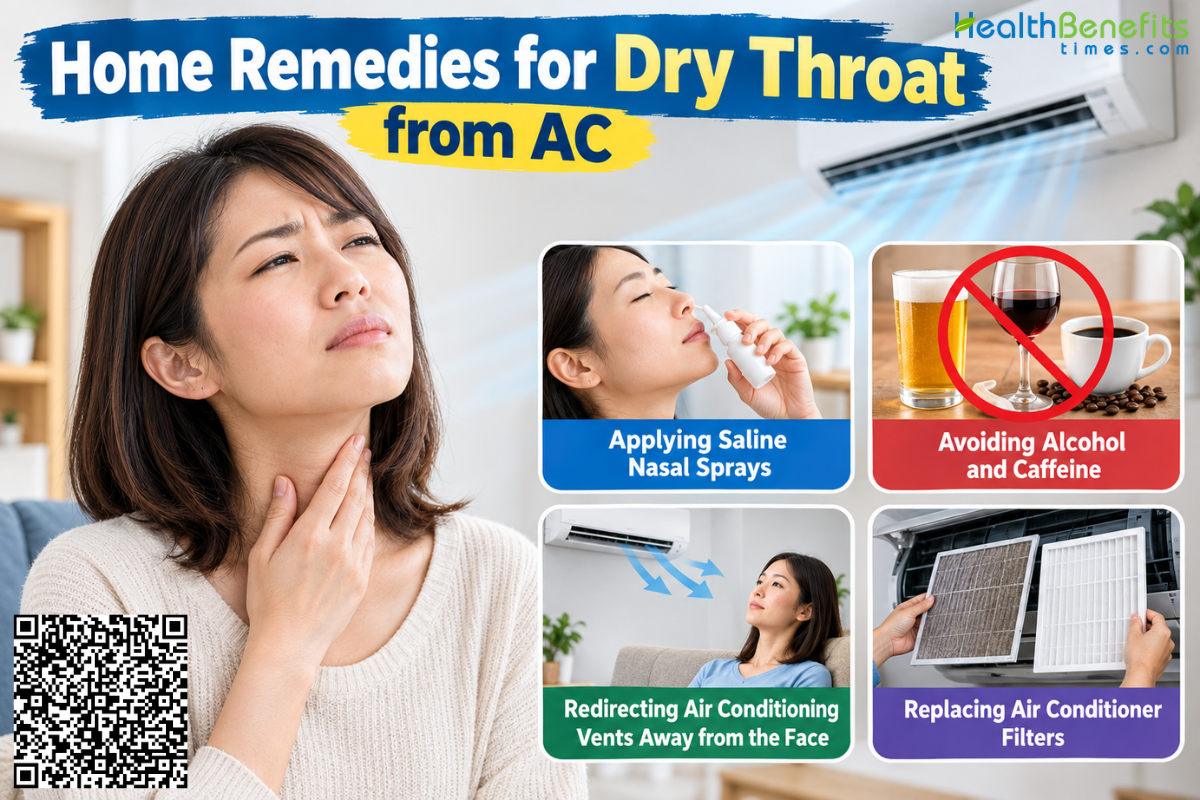
7. Applying Saline Nasal Sprays
How it may help
Applying a saline nasal spray directly moisturizes parched nasal passages dehydrated by air conditioning. By relieving nasal dryness and reducing mild congestion, it effectively prevents reactive mouth breathing. This natural restoration of nasal airflow stops cold, dry air from bypassing the nasal cavity and directly dehydrating the throat tissues. 23
What research says
Clinical evaluations confirm that isotonic saline administration significantly improves nasal mucosal hydration and rapidly restores normal mucociliary clearance. Research concludes that maintaining clear nasal patency actively reduces compensatory mouth breathing, which indirectly prevents severe pharyngeal dehydration and minimizes throat irritation caused by prolonged exposure to low-humidity environments. 24
How to use it safely
To safely moisturize your nasal passages, gently insert the applicator into one nostril and spray once or twice while inhaling slightly. You must use only commercially prepared, sterile isotonic saline. Never share your spray bottle with others to strictly prevent transmitting viral respiratory infections. 25
Potential precautions or side effects
Sterile saline sprays are overwhelmingly safe, though minor nasal stinging may briefly occur. You must carefully wipe the applicator nozzle after every single use to prevent dangerous bacterial contamination. 26
8. Avoiding Alcohol and Caffeine
How it may help
Both alcohol and caffeine act as diuretics, which actively increase bodily fluid loss through frequent urination. Avoiding these substances prevents systemic dehydration and ensures the body retains enough water to produce sufficient saliva. This natural moisture continuously lubricates the throat, effectively countering the severe drying effects of air conditioning. 27
What research says
Clinical research confirms that consuming alcoholic or highly caffeinated beverages significantly decreases salivary gland output. Medical guidelines identify both substances as primary dietary triggers for oral and pharyngeal dehydration. Consequently, strictly avoiding them effectively preserves mucosal hydration and prevents the severe throat irritation commonly triggered by low-humidity indoor environments. 1
How to use it safely
To safely eliminate these dehydrating agents, you should gradually reduce your daily caffeine intake to prevent withdrawal headaches. Replace coffee, energy drinks, and alcohol with hydrating alternatives like plain water or caffeine-free herbal teas to actively restore your throat’s natural moisture levels. 28
Potential precautions or side effects
Abruptly stopping caffeine can trigger temporary withdrawal symptoms, including severe headaches and intense fatigue. You should reduce your intake slowly over several days to minimize these adverse physical reactions. 29
9. Redirecting Air Conditioning Vents Away from the Face
How it may help
Direct airflow from an air conditioning unit physically accelerates the evaporation of essential moisture from the upper respiratory tract. Redirecting these vents away from the face immediately halts this continuous mechanical stripping of saliva and mucus. This environmental adjustment actively preserves the delicate mucosal barrier, effectively preventing the throat tissues from becoming severely parched and painfully irritated. 4
What research says
Clinical evaluations of indoor environmental quality confirm that high-velocity airflow directed at the human face significantly increases mucosal evaporation rates. Research concludes that minimizing direct drafts rapidly reduces local tissue dehydration. This simple physical modification effectively decreases upper respiratory tissue irritation and naturally preserves the protective, lubricating mucous layers within the pharyngeal cavity during continuous cooling. 5
How to use it safely
To safely optimize indoor airflow, you should manually adjust your air conditioner louvers to point toward the ceiling or an unoccupied wall. Move your bed or desk out of the direct draft to ensure cold air circulates effectively without blowing directly onto your face during prolonged exposure. 30
Potential precautions or side effects
You must ensure redirected vents remain unobstructed. Blocking airflow entirely can restrict proper room ventilation or cause the internal air conditioning coils to physically freeze and ultimately malfunction. 31
10. Replacing Air Conditioner Filters
How it may help
Dirty air conditioning filters continuously circulate trapped indoor pollutants, including dust mites and mold spores. Inhaling these concentrated airborne allergens triggers a severe inflammatory response in the upper respiratory tract. Replacing clogged filters actively removes these irritants from your environment, significantly reducing pharyngeal tissue inflammation and preventing secondary throat dryness. 5
What research says
Clinical evaluations of indoor air quality confirm that poorly maintained filtration systems significantly exacerbate upper respiratory mucosal irritation. Research concludes that regularly replacing high-efficiency particulate filters drastically reduces circulating indoor allergens. This mechanical maintenance effectively decreases airway inflammation and rapidly alleviates the secondary throat dryness associated with contaminated indoor environments. 32
How to use it safely
To safely maintain indoor air quality, you must turn off your cooling system before opening the filter compartment. Replace standard pleated filters every one to three months. Always ensure the new filter perfectly matches the manufacturer’s recommended size specifications to prevent unfiltered air bypass. 31
Potential precautions or side effects
You should wear a protective face mask while removing old filters to avoid directly inhaling concentrated dust and mold. Wash your hands thoroughly immediately after handling dirty filtration units. 33
Foods to Avoid When You suffer from Dry throat from AC.
1. Highly Caffeinated Beverages
Coffee and energy drinks act as systemic diuretics, accelerating fluid loss. This active dehydration prevents adequate saliva production, severely worsening throat dryness caused by air conditioning. 27

2. Alcoholic Drinks
Alcohol functions as a potent diuretic that actively depletes cellular hydration. This rapid fluid loss directly dries out pharyngeal tissues, exacerbating the irritation caused by cold, conditioned indoor air. 3
3. Excessively Salty Foods
High-sodium snacks draw essential moisture directly out of oral and pharyngeal tissues through osmosis. This rapid cellular fluid loss severely intensifies the scratchy sensation of an already dehydrated throat. 34
4. Spicy or Hot Foods
Capsaicin in spicy foods directly stimulates chemical pain receptors in the pharynx. Consuming these actively burns and inflames the unprotected, unlubricated mucosal tissues of a dry respiratory airway. 35
5. Acidic Citrus Fruits
Highly acidic foods like lemons and tomatoes create a harsh chemical environment. This acid physically irritates the raw, unlubricated throat lining, causing a painful burning sensation during normal swallowing. 7
When to see Doctor when you struggle from Dry throat from AC.
1. Persistent Symptoms
If a dry throat lasts longer than two weeks despite proper hydration and avoiding air conditioning, you must seek medical evaluation to rule out underlying chronic conditions. 7
2. Severe Swallowing Difficulty
Seek immediate medical care if throat pain completely prevents you from swallowing liquids, as this frequently indicates dangerous structural swelling or a severe bacterial infection requiring antibiotics. 36
3. Unexplained High Fever
A dry, scratchy throat accompanied by a sudden, sustained high fever strongly indicates an active systemic infection rather than simple environmental dehydration, requiring professional medical diagnosis. 7
4. Breathing Difficulties
You must visit an emergency department immediately if throat dryness occurs alongside wheezing or acute breathing difficulty, signaling a potentially life-threatening airway obstruction or severe allergic reaction. 37
5. Presence of Blood
Consult a physician promptly if you cough up blood or notice blood-tinged saliva, as this frequently signals severe mucosal damage, chronic pulmonary infections, or serious respiratory tract malignancies. 38