


Postnasal drip occurs when the glands in the nose and sinuses produce excessive mucus that gathers and drains down the back of the throat. In a healthy respiratory system, typical daily mucus production goes completely unnoticed as it naturally clears away. However, underlying triggers such as viral infections, allergic rhinitis, and environmental irritants can cause these secretions to become unusually thick and abundant 1. Clinically classified under upper airway cough syndrome, this constant pooling of fluid in the pharynx irritates local tissues and leads to persistent symptoms like chronic coughing, hoarseness, and a frequent urge to clear the throat 2. Because it impacts the upper aero-digestive tract, prolonged nasal drainage can significantly diminish quality of life and closely mimic the chronic symptoms of acid reflux or asthma 3. Resolving this discomfort requires identifying and targeting the specific root cause driving the initial mucosal inflammation.
Causes of Postnasal Drip
- Allergies (Allergic Rhinitis): Exposure to everyday allergens such as dust mites, pollen, and pet dander triggers an immune response in the nasal passages, resulting in the rapid production of excessive, watery mucus 4.
- Viral and Bacterial Infections: Common respiratory illnesses, including the common cold, influenza, and sinus infections, inflame the nasal lining, which significantly increases mucus volume and thickens its consistency 2.
- Environmental Irritants: Breathing in airborne pollutants, tobacco smoke, harsh chemical fumes, or strong odors irritates the delicate tissues of the nose, prompting the glands to secrete extra mucus as a protective defense mechanism 5.
- Acid Reflux: Conditions such as gastroesophageal reflux disease (GERD) and laryngopharyngeal reflux allow stomach acid to travel upward into the throat. This acid inflames local tissues and stimulates the body to produce excess mucus to coat and protect the throat 6.
- Anatomical Abnormalities: Structural issues inside the nose, such as a deviated septum (a crooked nasal cartilage) or the growth of noncancerous nasal polyps, physically block normal drainage pathways. This causes mucus to pool and continuously drip backward 7.
- Hormonal Fluctuations and Medications: Significant changes in hormone levels during pregnancy, as well as the side effects of certain oral contraceptives or blood pressure medications, can expand nasal blood vessels and increase overall mucus gland activity 5.
- Weather and Temperature Changes: Sudden exposure to cold air or spending time in highly dry indoor environments dehydrates the nasal membranes. In response, the body overproduces mucus to restore and maintain necessary moisture levels 4.
Symptoms of Postnasal Drip
- Chronic Cough: A persistent cough that frequently worsens at night or while lying flat, as accumulated mucus travels down the back of the throat and triggers the body’s natural cough reflex 2.
- Frequent Throat Clearing: A constant, uncomfortable feeling of thick fluid gathering at the back of the throat, which creates a recurring, voluntary urge to clear the airway and swallow 2.
- Sore or Scratchy Throat: The continuous drainage of secretions physically irritates and inflames the sensitive tissues lining the throat, leading to a chronically painful, dry, or burning sensation 8.
- Hoarseness and Voice Changes: As excess mucus directly coats the vocal cords or causes surrounding tissue swelling, the voice can become noticeably raspy, strained, or muffled during speech 9.
- Feeling a Lump in the Throat (Globus Sensation): The pooling of mucus and resulting local inflammation can create a distinct physical sensation that a lump or foreign object is permanently stuck in the throat, even when nothing is actually there 10.
- Nausea and Stomach Upset: Continuously swallowing large volumes of thick or infected mucus can disrupt the normal stomach environment, occasionally resulting in nausea, mild abdominal discomfort, or a decreased appetite 5.
- Bad Breath (Halitosis): Mucus that stagnates in the back of the throat provides an ideal environment for natural mouth bacteria to multiply rapidly, releasing foul-smelling compounds that cause persistent bad breath 11.
Natural Remedies for Postnasal Drip
1. Nasal Saline Rinses and Saltwater Washes
How it may help
Nasal saline rinses physically flush out trapped allergens, airborne irritants, and excess mucus from the nasal cavity. By thinning thick secretions and moisturizing dry nasal tissues, saltwater washes prevent mucus from building up and draining down the back of the throat, directly reducing the primary discomfort associated with postnasal drip 4.
What research says
Clinical studies demonstrate that regular nasal saline irrigation significantly improves sinus symptoms and overall quality of life for individuals with chronic rhinosinusitis and allergic rhinitis. Research confirms that saltwater washes effectively clear nasal congestion and reduce the reliance on pharmaceutical medications to manage ongoing postnasal drainage 12.
How to use it safely
You must strictly use distilled, sterile, or previously boiled and cooled water to prepare your saline solution. Mix the safe water with a medical-grade saline packet in a clean device. Gently flush each nostril while leaning forward over a sink 13.
Potential precautions or side effects
Never use unsterilized tap water, as it can introduce life-threatening parasitic brain infections. You may experience temporary ear fullness or mild nasal stinging during the rinse 14.
2. Air Humidification and Moisture Therapy
How it may help
Breathing excessively dry indoor air dehydrates delicate nasal passages, causing the respiratory system to produce thick, sticky mucus that gathers in the throat. Adding moisture back into the air through regular humidification prevents this tissue dehydration and significantly thins nasal secretions. Thinner mucus flows normally, easing the severe throat irritation common in postnasal drip 4.
What research says
Clinical research demonstrates that maintaining adequate indoor humidity levels directly improves mucociliary clearance, which is the body’s natural system for sweeping mucus out of the nasal cavity. Studies conclude that consistent humidification effectively thins airway secretions, thereby relieving upper respiratory congestion and the chronic cough associated with postnasal drainage 15.
How to use it safely
You should operate a cool-mist humidifier in your bedroom to maintain consistent moisture while sleeping. You must fill the water tank exclusively with distilled water and thoroughly clean the device every three days to prevent the dangerous indoor growth of harmful bacteria and mold 16.
Potential precautions or side effects
You must strictly keep indoor humidity below fifty percent. Excessive environmental moisture rapidly promotes mold and dust mite reproduction, which can trigger severe allergic reactions and significantly worsen nasal congestion 4.
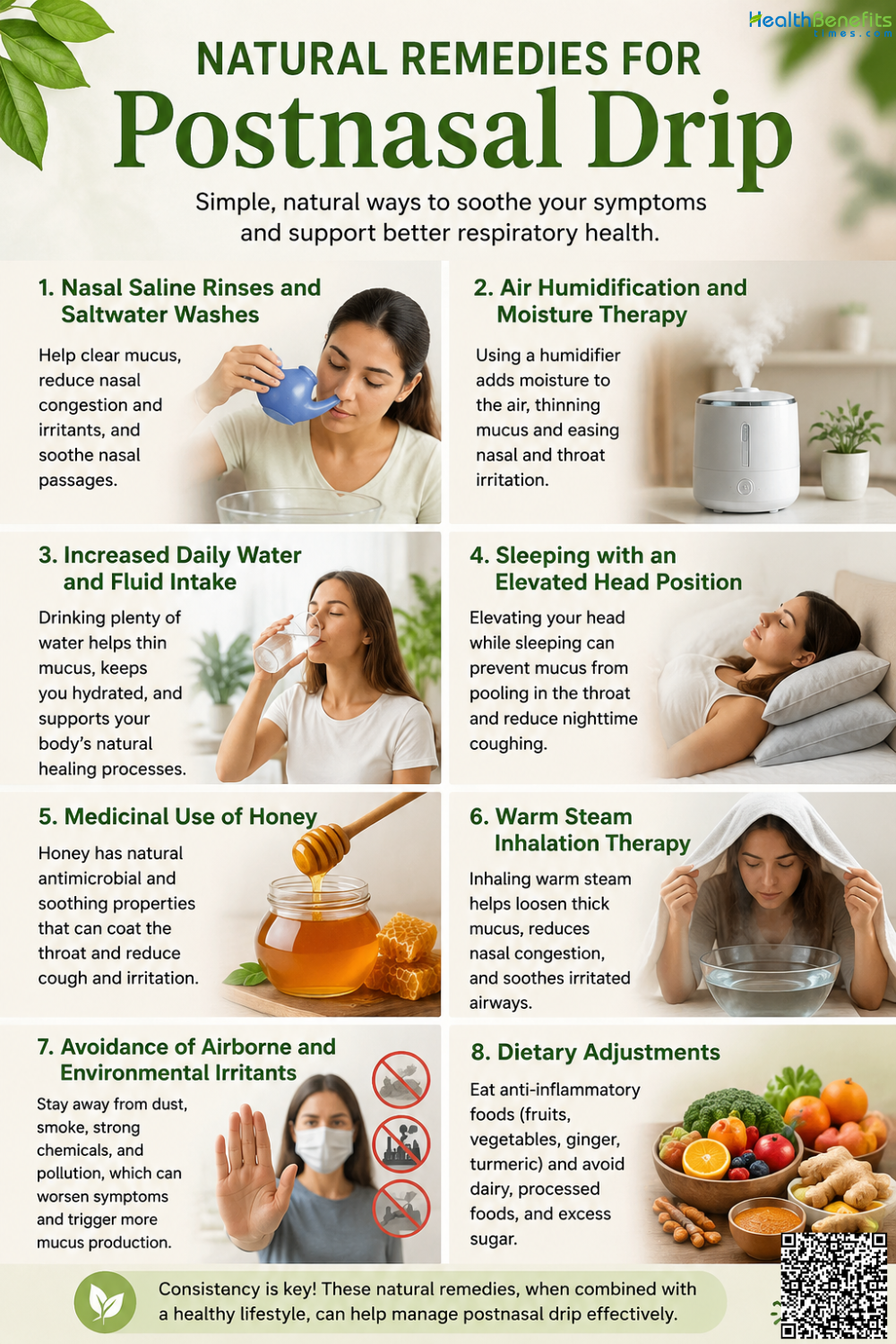
3. Increased Daily Water and Fluid Intake
How it may help
Drinking adequate amounts of water systemically hydrates the body and directly affects the respiratory tract. Optimal hydration thins thick nasal secretions, preventing sticky mucus from pooling in the throat. This continuous flow allows the body to easily clear nasal drainage, significantly reducing chronic throat irritation and the constant urge to cough 2.
What research says
Clinical guidelines emphasize that maintaining systemic hydration serves as a fundamental non-pharmacological intervention for upper respiratory conditions. Research concludes that drinking sufficient fluids directly decreases mucus viscosity and enhances mucociliary clearance, which improves the respiratory system’s natural ability to constantly sweep away trapped irritants and excess nasal fluids 4.
How to use it safely
You should continuously drink plain water throughout the day to maintain baseline hydration. You can also safely consume warm, non-caffeinated fluids like herbal teas or clear broths, which provide the added benefit of physically soothing inflamed throat tissues while effectively thinning heavy nasal secretions 8.
Potential precautions or side effects
You must avoid excessive caffeine and alcohol, as these beverages severely dehydrate nasal tissues. Patients with specific severe heart or kidney conditions must limit daily fluid intake per their doctor’s guidance 17.
4. Sleeping with an Elevated Head Position
How it may help
Lying flat allows sticky nasal secretions to pool heavily in the back of the throat, triggering severe nighttime coughing. Sleeping with an elevated head utilizes gravity to continuously drain excess mucus downward. This positional adjustment also prevents stomach acid from traveling into the throat, stopping the underlying airway inflammation that frequently causes persistent postnasal drip 6.
What research says
Clinical studies verify that elevating the head of the bed significantly decreases nocturnal airway irritation and chronic cough severity. Research concludes that utilizing gravity through specific positional sleep therapy effectively enhances upper respiratory clearance and serves as a fundamental lifestyle intervention for managing mucus drainage linked to nighttime acid reflux 18.
How to use it safely
You should elevate the entire head of your bed by six to eight inches using sturdy bed risers under the frame. Alternatively, you can comfortably use a firm, medical-grade foam wedge pillow that gradually slopes upward to safely support your entire upper torso during sleep 6.
Potential precautions or side effects
You must strictly avoid simply stacking multiple standard pillows to elevate your head. This unnatural angle sharply bends your neck, strains muscles, and can severely restrict normal overnight breathing 6.
5. Medicinal Use of Honey
How it may help
Medicinal honey physically coats the inflamed throat lining, creating a protective barrier that relieves the severe irritation caused by continuous mucus drainage. Its natural anti-inflammatory properties soothe damaged tissues, while its thick, viscous consistency effectively calms the persistent urge to cough commonly triggered by postnasal drip 19.
What research says
Clinical trials demonstrate that consuming honey significantly reduces both cough frequency and overall severity associated with upper respiratory conditions. Research concludes that a single nighttime dose of honey frequently outperforms standard over-the-counter cough suppressants, providing measurable relief from acute throat irritation and naturally improving sleep quality 20.
How to use it safely
You can safely consume one to two teaspoons of plain honey directly to quickly soothe a scratchy throat. Alternatively, you may dissolve the honey into caffeine-free herbal tea or warm water to help thin heavy mucus secretions while delivering localized pain relief to the airway 21.
Potential precautions or side effects
You must never give honey to children under one year old due to the fatal risk of infant botulism. Diabetics should closely monitor their blood sugar when using this remedy 22.
6. Warm Steam Inhalation Therapy
How it may help
Warm steam introduces direct moisture into the nasal cavity, physically loosening and thinning thick, stubborn mucus. This vital process allows trapped secretions to drain effectively through the front of the nose. By restoring natural mucus flow, steam therapy significantly reduces the total volume of heavy fluid that continuously pools in the back of the throat 2.
What research says
Clinical reviews indicate that heated, humidified air safely improves airway patency and temporarily relieves upper respiratory congestion. Research confirms that regular steam therapy effectively enhances mucociliary clearance. This mechanism actively assists the respiratory system in naturally expelling the thickened nasal secretions directly associated with acute sinus infections and chronic postnasal drainage 15.
How to use it safely
You should carefully pour hot, steaming water into a large, heat-safe bowl and drape a clean towel over your head to trap the rising moisture. Lean forward comfortably and breathe deeply through your nose for ten to fifteen minutes to properly hydrate irritated nasal tissues 21.
Potential precautions or side effects
You must maintain a safe distance from the steaming water to prevent severe facial burns. Keep hot water bowls completely away from young children to avoid accidental scalding injuries 23.
7. Avoidance of Airborne and Environmental Irritants
How it may help
Exposure to tobacco smoke, strong chemical odors, and airborne pollutants directly inflames the nasal membranes. The respiratory system reacts to these harsh irritants by overproducing thick mucus as a defense mechanism. Removing these environmental triggers stops this reactive mucus production, directly reducing the fluid that continuously drains into the throat 5.
What research says
Clinical studies establish a direct link between environmental air quality and chronic upper airway inflammation. Research confirms that minimizing exposure to specific airborne irritants, such as secondhand smoke and particulate matter, significantly decreases nasal mucosal swelling and reduces the chronic mucus hypersecretion responsible for persistent postnasal drip 24.
How to use it safely
You should maintain a clean indoor environment by utilizing high-efficiency particulate air (HEPA) purifiers to physically filter out invisible airborne triggers. You must actively avoid smoking and strictly limit the use of strongly scented household cleaning products or synthetic air fresheners 25.
Potential precautions or side effects
You must frequently change your air purifier filters to prevent trapped dust from recirculating. Overusing harsh chemical-based cleaning sprays to eliminate dust can ironically trigger further severe respiratory irritation 4.
8. Dietary Adjustments
How it may help
Dietary adjustments primarily target silent acid reflux, a major underlying cause of postnasal drip. By avoiding trigger foods, the stomach produces less acid and the esophageal sphincter remains securely closed. This prevents stomach acid from traveling upward to inflame the throat, stopping the reactive mucus production that causes continuous dripping 6.
What research says
Clinical guidelines confirm that dietary modification is a primary, effective treatment for laryngopharyngeal reflux. Research concludes that eliminating acidic, spicy, and high-fat foods significantly reduces upper airway inflammation. These targeted dietary changes actively decrease the chronic throat irritation and excessive mucus secretion associated with reflux-induced postnasal drip 18.
How to use it safely
You should eliminate common reflux triggers from your daily diet, including caffeine, alcohol, chocolate, spicy meals, and citrus fruits. Additionally, you must eat smaller portions and stop consuming food at least three hours before going to bed to ensure proper digestion 26.
Potential precautions or side effects
You must ensure restrictive diets maintain balanced nutrition. Long-term food limitations without professional medical guidance can potentially lead to unintended weight loss or dangerous vitamin deficiencies 6.
Foods to Avoid When You Suffer from Postnasal Drip
1. Caffeinated Beverages
Caffeine acts as a diuretic, dehydrating tissues and thickening nasal secretions. This makes sticky mucus much harder for the respiratory system to clear naturally 4.

2. Alcoholic Drinks
Alcohol severely dehydrates the body and inflames nasal membranes. It also relaxes the esophageal sphincter, triggering acid reflux that directly causes reactive mucus drainage 6.
3. Spicy Foods
Spices directly stimulate nasal glands to rapidly produce excess watery mucus. They also trigger silent acid reflux, which continuously irritates the sensitive throat lining 18.
4. Fried and High-Fat Foods
Greasy meals slow digestion significantly. This delayed stomach emptying heavily promotes gastric acid reflux, which travels upward to cause severe throat inflammation and postnasal drip 26.
5. Acidic Fruits and Tomatoes
Citrus and tomato-based products physically irritate an already inflamed throat. They also strongly promote laryngopharyngeal reflux, which increases the body’s defensive mucus production 6.
6. Chocolate
Chocolate contains methylxanthines and fat, which powerfully relax the esophageal sphincter. This allows stomach acid to escape upward, immediately triggering reactive nasal drainage 26.
When to See a Doctor When You Struggle from Postnasal Drip
- Prolonged Symptoms: If your symptoms last longer than ten days without improvement, seek medical evaluation. This duration strongly indicates a potential bacterial sinus infection requiring prescription antibiotics 27.
- Blood-Tinged or Foul-Smelling Mucus: Consult a doctor if your nasal drainage becomes foul-smelling or contains blood. These specific changes frequently signal a severe bacterial infection or an underlying structural nasal abnormality 2.
- High Fever: Seek immediate care if your drainage is accompanied by a persistent high fever. An elevated body temperature suggests a severe bacterial infection requiring targeted pharmaceutical intervention 27.
- Breathing Difficulties: See a physician if you experience shortness of breath or wheezing. Postnasal mucus entering the lower airways can trigger asthma exacerbations or dangerous secondary respiratory infections 2.
- Severe Facial Pain: Contact a doctor if you develop severe pain or visible swelling around your eyes and forehead. This symptom indicates acute sinusitis, which risks serious local anatomical complications 28.