


An earache is a common medical symptom characterized by mild to severe discomfort in or around the ear. Clinically defined as otalgia, this condition is medically categorized into two distinct types based on the origin of the pain 1. Primary otalgia originates directly from internal or external ear structures, most frequently resulting from acute middle ear infections, fluid buildup, or eustachian tube dysfunction. Secondary, or referred, otalgia occurs when pain originates in another part of the body but radiates to the ear, accounting for nearly half of all cases 2. Because the ear shares an intricate sensory nerve network with the head and neck, conditions such as dental infections, sinus pressure, and temporomandibular joint (TMJ) disorders frequently trigger referred ear pain. Determining whether the discomfort is primary or secondary is essential for identifying the root cause and establishing an effective clinical treatment plan.
Causes of Earaches
1. Middle Ear Infections (Acute Otitis Media)
Bacterial or viral infections can cause fluid and pus to accumulate in the space behind the eardrum, leading to inflammation, pressure, and significant pain.
2. Outer Ear Infections (Otitis Externa)
Often referred to as swimmer’s ear, this infection develops when moisture becomes trapped in the ear canal, creating an environment that promotes bacterial or fungal overgrowth.
3. Earwax Blockage (Cerumen Impaction)
An accumulation of hardened earwax can physically press against the delicate eardrum or block the ear canal, causing a feeling of fullness and aching discomfort 3.
4. Air Pressure Changes (Barotrauma)
Rapid shifts in environmental air pressure, commonly experienced during air travel or scuba diving, can unnaturally stretch the eardrum and cause sharp pain 4.
5. Jaw Joint Disorders (Temporomandibular Joint Syndrome)
Because the jaw hinge sits directly next to the ear canal, inflammation or tension from teeth grinding can radiate nerve pain directly into the ear 5.
6. Dental Issues
Advanced tooth decay, infected gums, or impacted wisdom teeth can trigger referred nerve pain that the brain misinterprets as originating inside the ear.
7. Throat Infections
The throat and ears share interconnected sensory nerve pathways, meaning conditions like tonsillitis, pharyngitis, or vocal cord irritation commonly result in secondary ear pain, especially when swallowing.
Symptoms of Earaches
1. Localized Pain
Ear discomfort can manifest as a persistent dull ache, a sharp throbbing sensation, or burning pain that frequently intensifies when chewing, swallowing, or lying flat.
2. Muffled Hearing
An accumulation of fluid or pus in the middle ear space physically restricts the normal vibration of the eardrum, resulting in temporary hearing reduction or a muffled sound quality 6.
3. Fluid Drainage (Otorrhea)
The spontaneous discharge of clear, yellow, pus-like, or bloody fluid from the ear canal typically indicates an active outer ear infection or a ruptured eardrum 7.
4. Aural Pressure or Fullness
Inflammation or blockages within the eustachian tube can prevent proper air pressure regulation, causing a distinct, uncomfortable sensation of congestion deep inside the ear 8.
5. Systemic Infection Indicators
If the earache stems from an underlying bacterial or viral infection, individuals may simultaneously develop a fever, headaches, and swollen, tender lymph nodes in the neck or around the jaw 9.
6. Pediatric Behavioral Signs
Young children and infants experiencing ear pain often exhibit non-verbal distress signals, such as repeatedly pulling or rubbing the affected ear, unusual irritability, excessive crying, and disrupted sleep patterns.
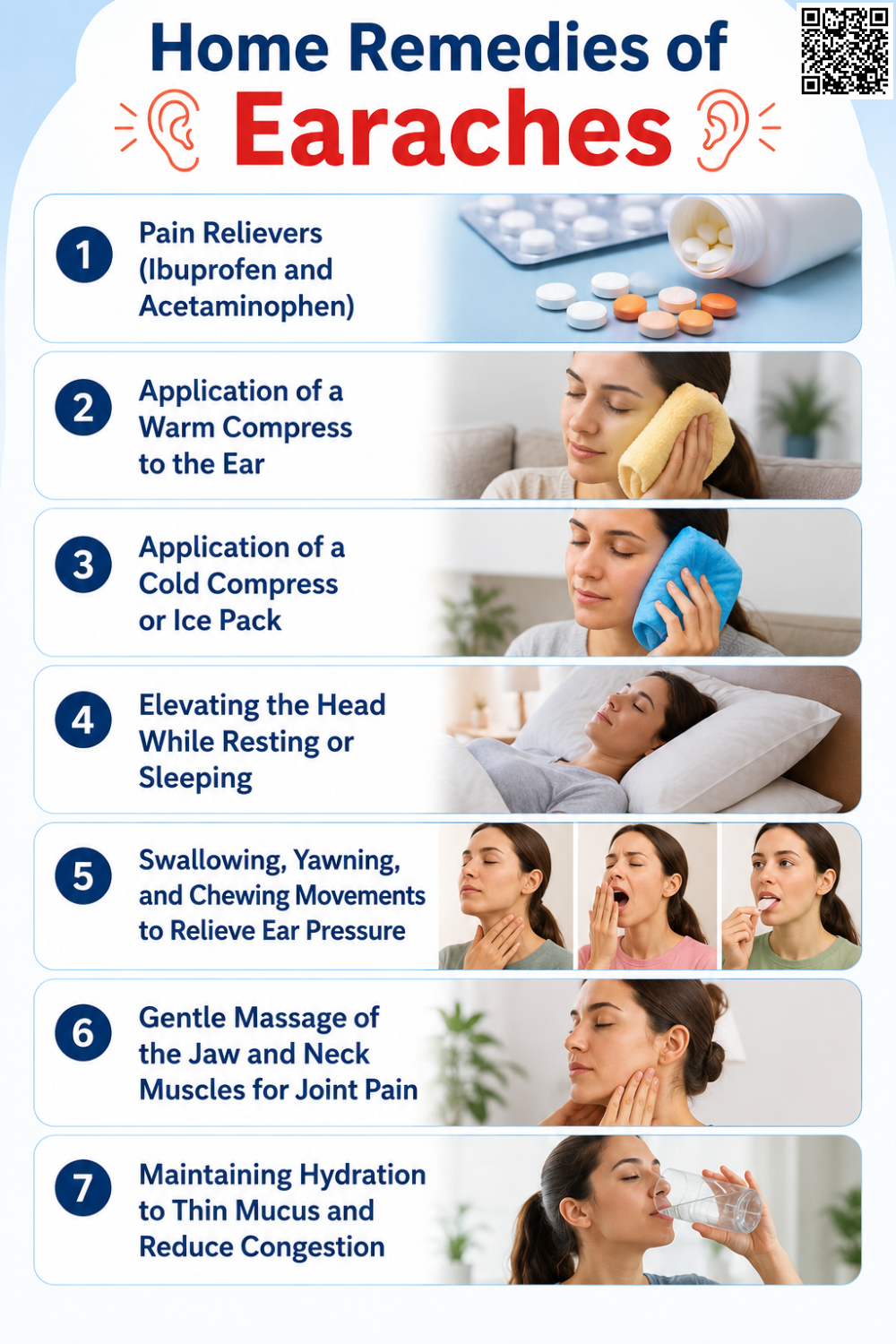 Home Remedies of Earaches
1. Pain Relievers (Ibuprofen and Acetaminophen)
How it may help
Over-the-counter pain relievers effectively manage earache discomfort by blocking the body from producing pain-signaling chemicals. Ibuprofen actively reduces localized swelling and inflammation in the ear tissues 10, while acetaminophen alters how the brain perceives pain signals to provide temporary relief from throbbing sensations 11.
What research says
Clinical guidelines confirm that oral pain relievers are the recommended first-line treatment for managing acute ear discomfort. Studies demonstrate that both ibuprofen and acetaminophen significantly reduce earache intensity within the first 48 hours, though they do not cure the underlying bacterial or viral infections.
How to use it safely
Read the package instructions carefully to determine the correct dose based on your age and weight. You can alternate between ibuprofen and acetaminophen if pain persists, but never exceed the daily limits. Always use a proper measuring syringe when giving liquid doses to children 12.
Potential precautions or side effects
Ibuprofen may cause stomach irritation and is unsafe for kidney disease. Overusing acetaminophen causes liver damage. Never give aspirin to children to prevent rare neurological complications 13.
2. Application of a Warm Compress to the Ear
How it may help
Applying gentle heat to the outer ear increases local blood circulation and relaxes surrounding muscle tension. This soothing thermal effect reduces the sharp, throbbing pain of an earache and eases jaw muscle tightness that frequently radiates referred discomfort directly into the ear canal 14.
What research says
Clinical guidelines support superficial heat application as a safe, non-drug intervention for localized pain relief. Heat therapy actively stimulates temperature sensory receptors in the skin, which subsequently blocks underlying pain signals from reaching the brain and temporarily diminishes the perceived severity of the earache 15.
How to use it safely
Soak a clean washcloth in comfortably warm water and wring out the excess moisture. Hold the warm cloth gently against your affected ear for 15 to 20 minutes. You can repeat this process several times throughout the day whenever you require temporary pain relief.
Potential precautions or side effects
Avoid using excessively hot water or applying electric heating pads directly to the skin to prevent burns. Never apply heat to sleeping individuals or infants unable to communicate thermal discomfort 16.
3. Application of a Cold Compress or Ice Pack
How it may help
Applying a cold compress reduces local blood flow to the ear and surrounding tissues. This cooling effect actively numbs the sensory nerve endings responsible for transmitting pain signals and decreases inflammation, offering fast relief from sharp, throbbing ear discomfort.
What research says
Clinical evidence indicates that localized cooling, or cryotherapy, induces vasoconstriction, which narrows blood vessels to reduce tissue swelling. Studies confirm that this reduced nerve conduction speed effectively blunts pain perception, making cold application a proven, non-drug method for acute pain management.
How to use it safely
Wrap an ice pack or a sealed bag of frozen vegetables in a thin, dry cloth before use. Hold the wrapped compress against your affected ear for no longer than 15 to 20 minutes. Remove it immediately if your skin feels entirely numb.
Potential precautions or side effects
Never apply ice directly to bare skin, as this can cause permanent tissue damage or frostbite. Avoid prolonged cold exposure, which may restrict blood flow excessively.
4. Elevating the Head While Resting or Sleeping
How it may help
Elevating the head utilizes gravity to encourage fluid drainage from the middle ear and eustachian tubes. By preventing fluid accumulation, this upright position actively reduces the internal pressure buildup behind the eardrum that causes severe, throbbing pain when lying flat.
What research says
Clinical evidence demonstrates that horizontal resting positions increase blood flow and vascular pressure in the head, exacerbating middle ear congestion. Elevating the head decreases this vascular congestion and promotes anatomical drainage, which experts confirm significantly reduces the severity of nighttime earaches.
How to use it safely
Prop your head up with an extra firm pillow while sleeping to maintain a semi-upright angle. For optimal comfort, sleep resting on your unaffected side to ensure you do not place additional physical pressure directly against the sore ear.
Potential precautions or side effects
Do not use excessively high pillows, which can strain neck muscles. Never place extra pillows in cribs for infants or toddlers due to severe sleep-related suffocation risks 17.
5. Swallowing, Yawning, and Chewing Movements to Relieve Ear Pressure
How it may help
Swallowing, yawning, and chewing deliberately activate the muscles surrounding the eustachian tube, the small passage connecting the middle ear to the throat. This mechanical action forces the tube to open, allowing trapped air to escape and equalizing internal ear pressure, which directly relieves fullness and pain.
What research says
Clinical anatomy studies confirm that the tensor veli palatini muscle controls the opening of the eustachian tube. Research demonstrates that active jaw and throat movements successfully contract this muscle, correcting negative middle ear pressure and mitigating barotrauma symptoms caused by altitude changes or mild congestion.
How to use it safely
Chew sugar-free gum, swallow small sips of water, or simulate a wide yawn when you feel pressure building. These actions safely stretch the jaw muscles to manually equalize internal ear pressure during air travel or mild congestion.
Potential precautions or side effects
Avoid aggressive chewing if you have a temporomandibular joint (TMJ) disorder, as excessive jaw movement can trigger severe referred pain and worsen overall ear discomfort.
6. Gentle Massage of the Jaw and Neck Muscles for Joint Pain
How it may help
Gentle massage targets tight muscles around the jaw hinge and neck that often contribute to referred ear pain. By manually relaxing these tissues, the massage reduces the physical tension that pulls on the ear canal, effectively interrupting the nerve signals that cause sensations of aching or fullness deep within the ear.
What research says
Clinical studies establish that tension in the temporomandibular joint (TMJ) and surrounding facial muscles is a leading cause of secondary otalgia. Evidence shows that therapeutic soft tissue manipulation decreases muscle stiffness and improves functional movement, which significantly alleviates pain that radiates into the ear from these joint structures 18.
How to use it safely
Using your fingertips, apply light, circular pressure to the area directly in front of your ear and down along your jawline. Move slowly down toward the neck. Perform these gentle strokes for several minutes once or twice daily to relieve accumulated muscular strain.
Potential precautions or side effects
Do not use deep or painful pressure, which may increase inflammation. Discontinue use immediately if massage triggers sharp, shooting, or radiating pain in the face or jaw.
7. Maintaining Hydration to Thin Mucus and Reduce Congestion
How it may help
Adequate fluid intake helps thin mucus buildup in the nose, throat, and eustachian tubes. By preventing thick, sticky secretions from clogging these narrow passages, proper hydration restores normal air pressure regulation in the middle ear and reduces the congestion-related pressure that causes aching discomfort.
What research says
Clinical guidance emphasizes that hydration is essential for maintaining optimal mucosal health. Studies confirm that thin, mobile mucus is more easily drained through the eustachian tubes. Conversely, dehydration increases the viscosity of respiratory secretions, which can obstruct these pathways and promote the retention of fluid in the middle ear 19.
How to use it safely
Consume fluids like water, clear broth, or herbal tea throughout the day to remain consistently hydrated. Monitor your urine color; a pale yellow indicates adequate intake. Focus on regular, small sips rather than large volumes to maintain stable fluid levels without causing gastrointestinal discomfort 20.
Potential precautions or side effects
Avoid excessive caffeine, which may act as a mild diuretic and increase fluid loss. Individuals with kidney or heart conditions must consult a doctor regarding appropriate daily fluid intake.
 Foods to Avoid When You Suffer from Earaches
1. Hard and Crunchy Foods
Foods such as nuts, chips, and raw vegetables require vigorous chewing, which can intensify inflammation and exacerbate referred nerve pain within the sensitive ear canal structures.
2. High-Sodium Foods
Excessive salt intake can lead to fluid retention throughout the body, potentially increasing pressure in the middle ear and worsening the sensation of congestion or fullness.
3. Sugary Snacks and Beverages
Diets high in refined sugar may promote systemic inflammation, which can prolong the duration of infections and delay the natural healing process of sensitive ear tissues.
4. Caffeinated Drinks
Coffee and certain teas act as mild diuretics, which can cause dehydration and increase the thickness of respiratory mucus, thereby making it harder to clear ear congestion.
5. Highly Acidic Foods
While rare, some individuals report that highly acidic foods or beverages irritate the throat, potentially triggering secondary nerve irritation that radiates discomfort directly to the ear.
When To See a Doctor When You Suffer from Earaches
1. Persistent or Worsening Pain
Seek professional medical evaluation if ear discomfort continues beyond 48 hours or if the pain intensity increases despite using over-the-counter pain management strategies.
2. Visible Fluid or Blood Discharge
Any spontaneous drainage of pus, clear fluid, or blood from the ear canal suggests a ruptured eardrum or an active infection requiring immediate clinical intervention.
3. Significant Hearing Loss
Consult a healthcare provider if you experience a sudden, noticeable reduction in hearing or if sounds become severely muffled, as this may indicate dangerous middle ear obstruction.
4. High Fever and Systemic Symptoms
If an earache is accompanied by a high fever, severe headache, stiff neck, or noticeable swelling behind the ear, immediate medical attention is necessary to rule out complications.
5. Presence of Foreign Objects
If you suspect an object is stuck inside the ear canal, do not attempt to remove it; see a professional to prevent permanent damage to the eardrum.