

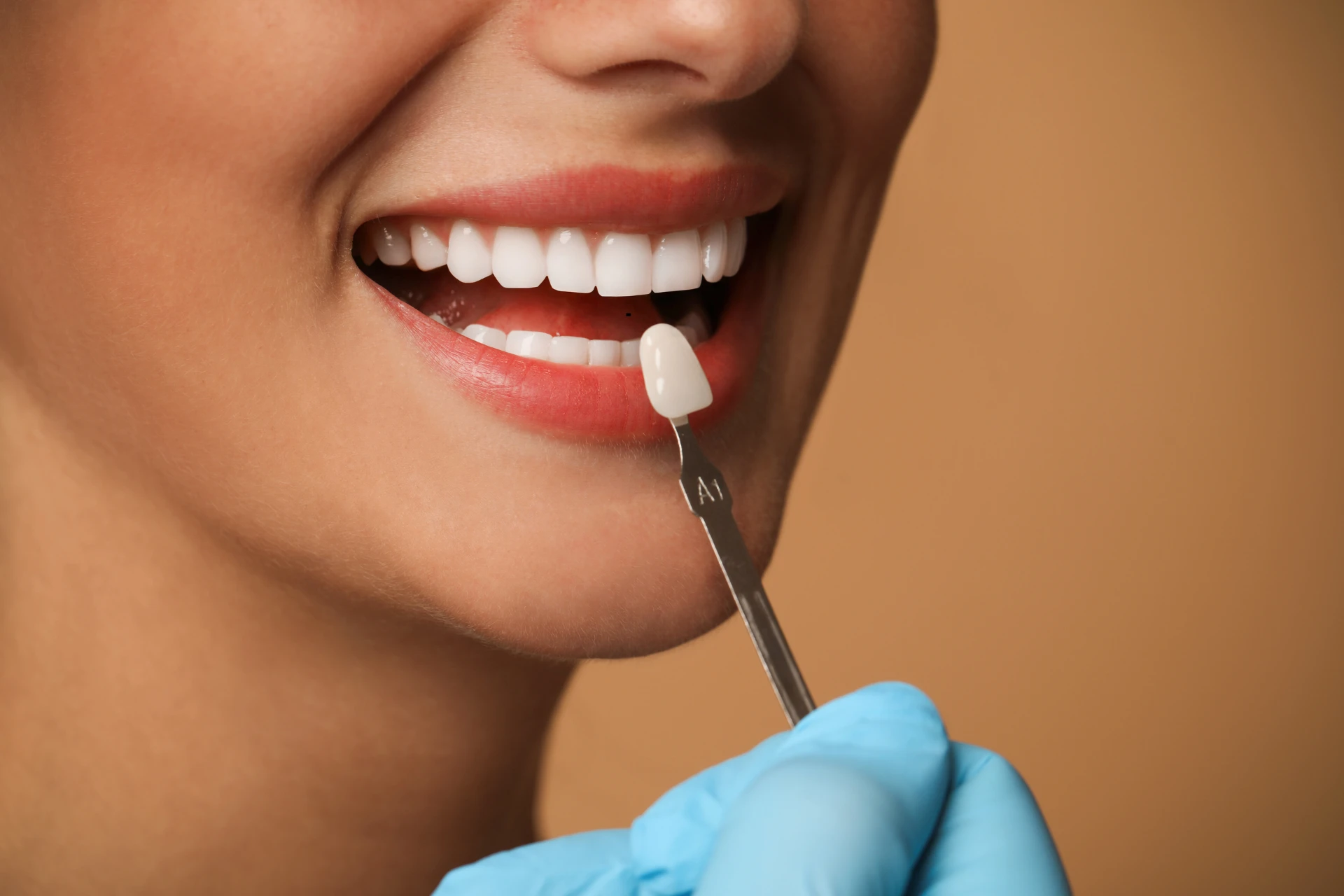
“How long will these actually last?” is one of the first questions most patients ask before committing to veneers and it’s also one of the most poorly answered questions online. Marketing pages love round numbers like “veneers last 10-15 years,” but the honest answer is more specific than that, and it depends on choices most patients don’t realize they’re making until after the treatment is done and way after the treatment is completed, that is in the following years of usage
Here’s what actually determines how long veneers last, based on what we see in practice with patients across Mumbai.
Porcelain vs. Composite: Material choice that dictates Lifespan
The material matters more than almost anything else.
Porcelain veneers typically last 15-20 years, and well-maintained cases can go longer. Porcelain is stain-resistant, holds its shade well over time, and is strong enough to handle normal biting and chewing forces without much wear. It does not change its structure as it is processed at very high temperatures of close to 1500 celsius.
Whereas Composite veneers generally last 4-5 years, before they start showing signs of wear, discoloration and chipping. They’re more affordable and can often be placed in a single visit, but the material is softer than porcelain – it’s more prone to staining, chipping, and gradual wear, which means it typically needs touch-ups or replacement sooner.
What May Shorten Veneer Lifespan
Beyond material choice, a handful of everyday habits make the biggest difference between a veneer that lasts for 20 years and one that needs replacing at year 10.
Grinding and clenching (bruxism): This is, by far, the most common reason veneers fail early. Many patients don’t even know they grind their teeth – it often happens during sleep – until a veneer chips or a dentist spots the wear pattern during a checkup. If bruxism is present, a night guard isn’t optional; it’s essentially insurance for your investment. The nightguard is compulsorily fabricated and delivered post the veneer cementation.
Biting on hard objects: Ice, pen caps, fingernails, opening packaging with your teeth, or other extremely hard objects – none of these were part of the plan when the veneer was designed, and porcelain, while strong under normal chewing forces, isn’t designed to withstand this kind of point pressure.
Gum health: Veneers rely on healthy gum tissue and a stable tooth structure underneath. Untreated gum disease like bleeding and chronically inflammed gums can affect the margin where the veneer meets the natural tooth, which over time can lead to open margins at the edges leading to food micro-seepage and the veneer coming loose.
Diet and staining habits: Porcelain resists staining far better than composite. Porcelain veneers will only surface stain under circumstances of extreme and heavy pan, black coffee usage which can be removed with a polishing session . Whereas composite veneers get immediately stained with frequent tea, coffee, red wine, or tobacco use as the stain is within the material itself; re-layering is done which is time consuming and may incur a cost.
Skipping regular dental checkups: Veneers don’t eliminate the need for routine dental visits – if anything, they make them more important, since small issues (a hairline chip, early gum recession, early decay at the margin) are far easier and cheaper to address early than after they’ve progressed.
Signs Your Veneers May Need Attention
A veneer nearing the end of its lifespan – or one that’s been compromised by one of the factors above – usually shows a few warning signs before it fails completely:
- A visible chip or crack, even a small one
- A noticeable change in color compared to surrounding teeth
- Sensitivity to hot or cold that wasn’t present before
- A feeling of looseness or movement when biting
- Gum recession exposing the edge of the veneer
None of these mean immediate emergency treatment is needed, but they’re worth getting checked rather than waiting for the problem to worsen – early intervention is almost always simpler and less costly than a full replacement.
How to Actually Extend the Life of Your Veneers
The good news is that most of what determines veneer longevity is within a patient’s control:
- Wear a night guard if you grind your teeth — this single habit prevents more veneer failures than anything else on this list.
- Avoid using your teeth as tools — no opening packets, cracking nuts, or biting nails with veneered teeth.
- Maintain good oral hygiene — healthy gums protect the veneer margins.
- Keep up with regular dental checkups — every 6 months is standard, so small issues get caught early.
- Be mindful of staining habits — this matters more for composite than porcelain, but applies to both.
The Bottom Line
Porcelain veneers, properly cared for, are a genuinely long-term investment; composite veneers are a reasonable shorter-term option for the right patient. What matters most is knowing relevant information about the longevity of veneers in your case and having this conversation honestly before treatment, rather than discovering the trade-offs only after the veneers are already in.
About the Author
Dr. Viraj Kakade is a Prosthodontist, Implantologist, Cosmetic Dentist, and healthcare entrepreneur based in Mumbai, with over 15 years of experience in aesthetic dentistry, implant dentistry, and complex restorative care.
He is the Founder & CEO of Thealer Med, a multi-brand healthcare company focused on building contemporary healthcare brands across specialty care. He has also served as Chief Aesthetic Dentist for Femina Miss India and Band Baaja Bride, and was among the younger dentists to be featured in Vogue for his work in aesthetic dentistry.
His clinical practice encompasses implant dentistry, full-arch rehabilitation, complex bone grafting, cosmetic dentistry, prosthodontics, and smile design. His approach is centred on precision, thoughtful treatment planning, and achieving natural, harmonious results.
Through his clinical work and healthcare ventures, Dr. Kakade continues to explore the intersection of clinical excellence, aesthetics, technology, and the evolution of modern healthcare.