

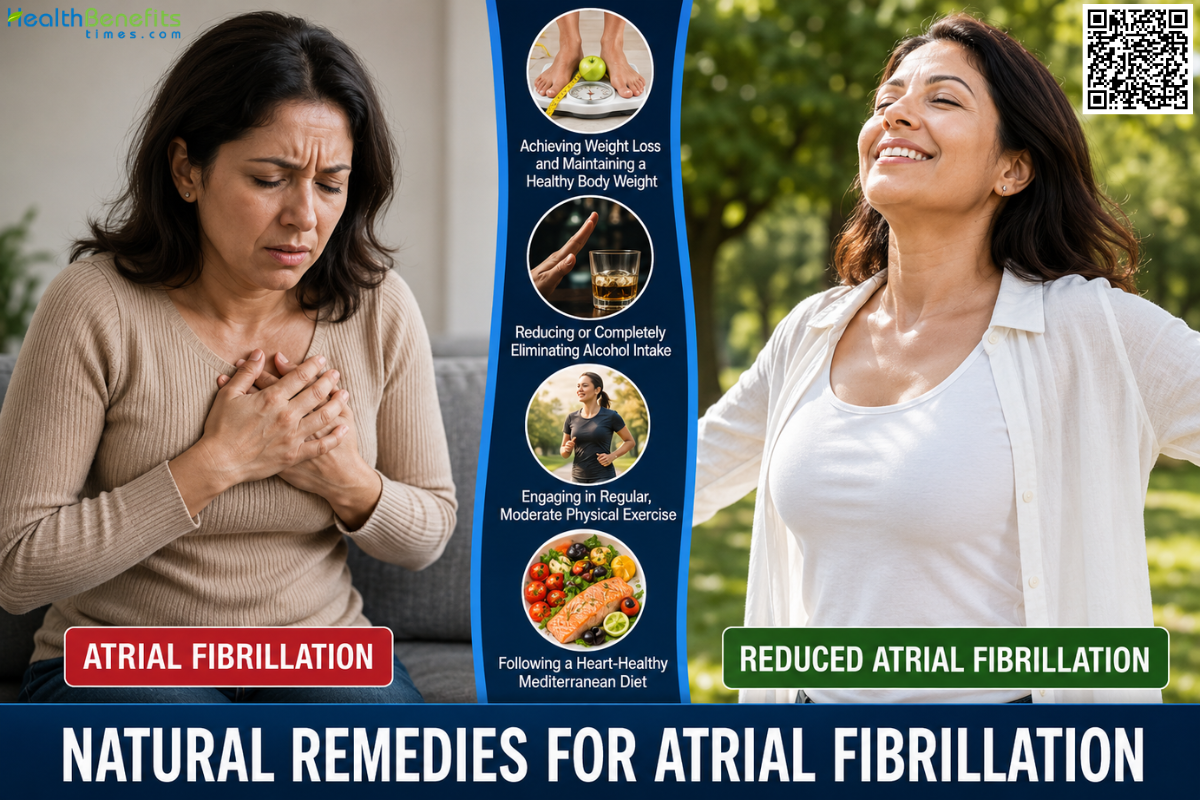
Atrial fibrillation (AFib) is the most common type of treated heart arrhythmia, a condition where the heart beats irregularly and often unusually fast. Normally, the heart contracts and relaxes to a steady rhythm, but in AFib, the upper chambers (the atria) quiver and beat completely out of coordination with the lower pumping chambers (the ventricles) 1. This chaotic rhythm prevents the heart from emptying blood efficiently, causing blood to pool and potentially form dangerous clots. If a clot escapes the heart and travels to the brain, it blocks crucial blood flow; clinical registries conclude that AFib increases a person’s risk of stroke by up to five times 2. Because untreated AFib forces the cardiovascular system to work significantly harder, it also serves as a primary driver for progressive heart failure 3. Proper medical management, utilizing blood thinners and rhythm control, remains vital for preventing these severe outcomes.
Causes of Atrial Fibrillation
1. High Blood Pressure (Hypertension)
Chronically elevated blood pressure forces the heart muscle to work significantly harder, leading to structural stretching and damage to the heart’s electrical pathways, making it the most common driver of atrial fibrillation 4.
2. Coronary Heart Disease
Blocked or narrowed arteries reduce the oxygen supply to the heart tissue, and damage from a prior heart attack can leave scar tissue that interferes with normal electrical signals.
3. Heart Valve Disease
Structural defects, such as valves that leak or fail to open fully, increase pressure inside the heart, causing the upper chambers to enlarge and develop erratic electrical impulses.
4. Overactive Thyroid (Hyperthyroidism)
When the thyroid gland produces too much hormone, it dramatically accelerates the body’s metabolism and continuously overstimulates the heart muscle, directly triggering rapid and uncoordinated heartbeats 5.
5. Sleep Apnea
This sleep disorder causes breathing to repeatedly stop and start during the night, which severely drops blood oxygen levels and creates extreme stress on the cardiovascular system, greatly increasing the likelihood of arrhythmias.
6. Advanced Age
The natural aging process causes the heart muscle and its built-in electrical system to undergo gradual scarring and structural changes, meaning individuals over the age of 65 face a steadily increasing risk of developing the condition.
7. Obesity
Carrying excessive body weight forces the heart to pump a larger volume of blood, leading to chronic inflammation and physical enlargement of the heart chambers that disrupts normal electrical timing.
8. Heavy Alcohol Consumption
Binge drinking and chronic alcohol abuse can directly irritate the heart muscle cells, interfering with proper electrical conduction and frequently sparking sudden episodes of atrial fibrillation.
Symptoms of Atrial Fibrillation
1. Heart Palpitations
The most distinct symptom involves a sensation that the heart is racing, fluttering, pounding, or skipping beats, caused directly by the rapid and chaotic electrical signals in the upper chambers 6.
2. Extreme Fatigue
Because the uncoordinated rhythm prevents the heart from pumping blood effectively, the body’s tissues receive less oxygenated blood, resulting in severe exhaustion even during routine daily activities.
3. Shortness of Breath
The heart’s reduced pumping efficiency can cause fluid pressure to back up into the lungs, making it difficult to breathe comfortably, particularly during mild physical exertion or when lying flat.
4. Dizziness and Lightheadedness
The irregular heartbeat frequently causes sudden drops in blood pressure and inadequate blood circulation to the brain, leaving individuals feeling unsteady, dizzy, or on the verge of fainting.
5. Chest Pain or Pressure
A very rapid heart rate increases the heart muscle’s demand for oxygen while simultaneously reducing its own blood supply, triggering chest discomfort or pain that requires urgent medical evaluation.
6. Decreased Exercise Tolerance
A general decline in overall cardiac output deprives skeletal muscles of necessary oxygen, causing an individual to feel unusually weak and unable to sustain their normal level of physical activity.
7. Absence of Symptoms (Asymptomatic)
A significant number of individuals experience no physical signs of the condition, meaning the irregular rhythm is often only detected during a routine medical examination or following a severe complication like a stroke.
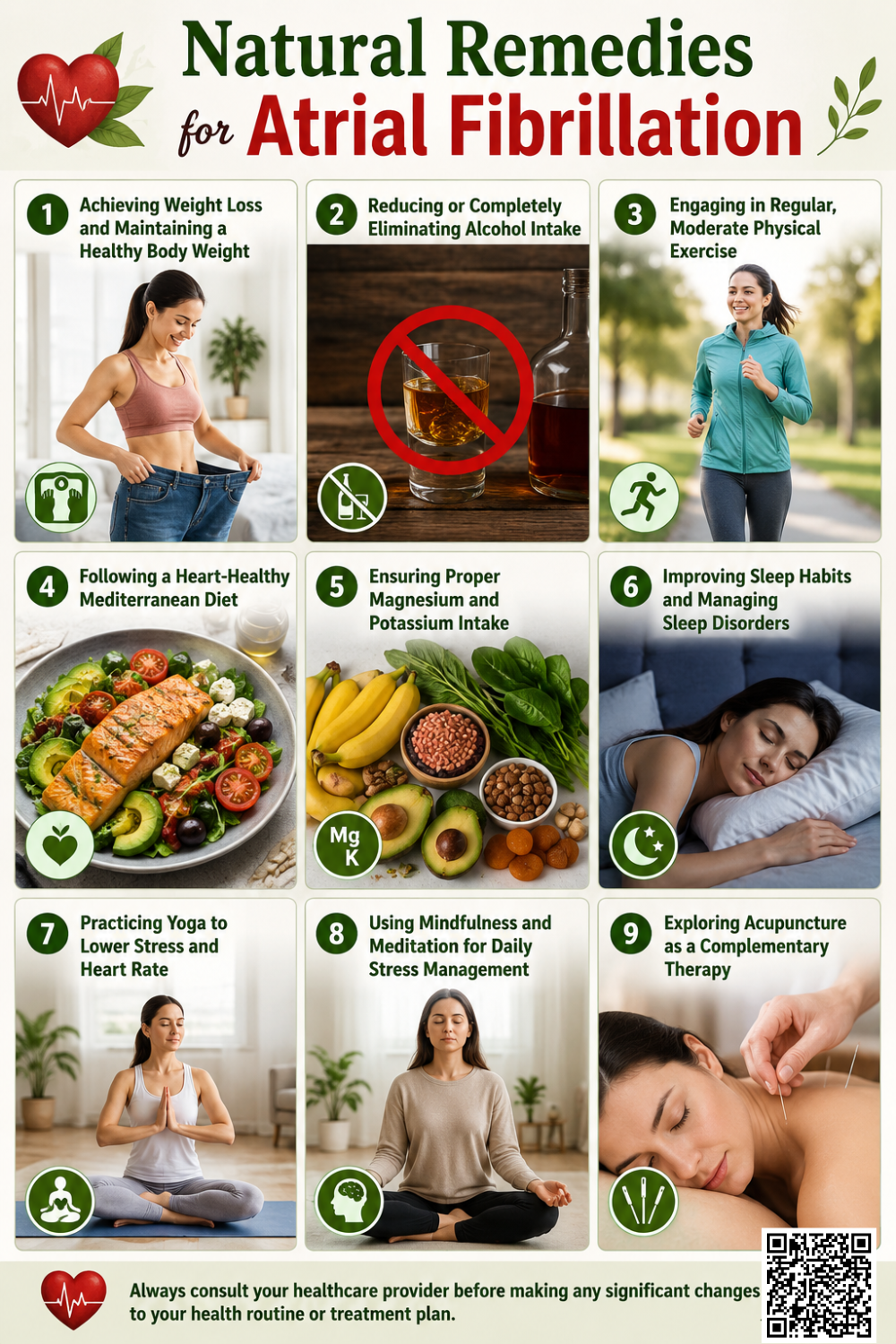 Natural Remedies for Atrial Fibrillation
1. Achieving Weight Loss and Maintaining a Healthy Body Weight
How it may help
Excess weight increases physical strain on the heart, leading to enlarged chambers and inflammation that disrupt the heart’s electrical system. Losing weight reduces this stress, lowering inflammation and blood pressure, which helps the heart maintain a steady, normal rhythm and decreases the frequency of atrial fibrillation episodes 7.
What research says
Clinical research concludes that significant, sustained weight loss directly reduces the burden of atrial fibrillation. Patients who lose at least 10% of their body weight experience far fewer arrhythmia episodes and are much more likely to maintain a normal heart rhythm compared to those who do not lose weight.
How to use it safely
Achieve weight loss through gradual, sustainable lifestyle changes rather than extreme diets. Work directly with your healthcare provider or a registered dietitian to create a tailored plan combining portion control, nutrient-dense foods, and safe physical activity that accommodates your heart condition 8.
Potential precautions or side effects
Avoid over-the-counter weight loss supplements, as many contain dangerous stimulants that can trigger rapid heart rates and severely worsen atrial fibrillation episodes 9.
2. Reducing or Completely Eliminating Alcohol Intake
How it may help
Alcohol directly irritates heart muscle cells and disrupts the nervous system signals that regulate heart rate. Eliminating alcohol prevents this cellular toxicity and stabilizes the heart’s electrical pathways, making sudden, chaotic rhythm changes and rapid heartbeats much less likely to occur 10.
What research says
Clinical studies demonstrate that stopping alcohol consumption significantly lowers the burden of atrial fibrillation. Research concludes that patients who completely abstain from alcohol experience a substantially lower rate of arrhythmia recurrence and require fewer medical interventions compared to those who continue drinking.
How to use it safely
Stop drinking alcohol completely for the best cardiovascular results. If you currently drink heavily, work closely with your healthcare provider to develop a safe, structured plan to reduce your consumption, ensuring they can monitor your heart health throughout the process 11.
Potential precautions or side effects
If you consume alcohol heavily and frequently, sudden cessation can trigger severe and potentially life-threatening withdrawal symptoms. Always seek professional medical supervision for safe detoxification 12.
3. Engaging in Regular, Moderate Physical Exercise
How it may help
Moderate exercise strengthens the heart muscle, lowers resting blood pressure, and improves cardiovascular efficiency. By reducing structural strain on the heart chambers and combating systemic inflammation, regular physical activity helps stabilize the heart’s electrical pathways, making irregular rhythms like atrial fibrillation less likely to occur 13.
What research says
Clinical research concludes that engaging in regular, moderate-intensity exercise significantly reduces the incidence of atrial fibrillation and decreases episode frequency in diagnosed patients. Conversely, studies indicate that long-term, extreme endurance training can actually increase the risk of developing this specific cardiac arrhythmia 14.
How to use it safely
Always consult your cardiologist before starting a new fitness routine to establish a safe target heart rate. Aim for 150 minutes of moderate-intensity activity, such as brisk walking, per week, and ensure you warm up properly before exercising to prevent sudden cardiac stress 15.
Potential precautions or side effects
Stop exercising immediately and seek emergency medical attention if you experience sudden chest pain, severe shortness of breath, or extreme dizziness, as these signify dangerous cardiovascular stress 16.
4. Following a Heart-Healthy Mediterranean Diet
How it may help
The Mediterranean diet focuses on plant-based foods, healthy fats, and lean proteins, which naturally lower systemic inflammation and oxidative stress. By reducing these damaging factors, the diet protects the heart’s structural integrity and stabilizes its electrical system, making chaotic rhythms like atrial fibrillation less likely to develop 17.
What research says
Clinical research concludes that strict adherence to a Mediterranean diet supplemented with extra-virgin olive oil significantly lowers the risk of developing atrial fibrillation. Studies demonstrate that this dietary pattern prevents adverse structural changes in the heart chambers and reduces overall cardiovascular disease risk, which directly drives irregular heart rhythms 18.
How to use it safely
Transition your daily meals to focus primarily on fresh vegetables, whole grains, and healthy fats like extra-virgin olive oil. Consume fish or poultry a few times weekly, and strictly limit red meat, highly processed foods, and added sugars to maximize cardiovascular benefits 19.
Potential precautions or side effects
If taking blood thinners like warfarin, consult your doctor before drastically increasing your leafy green vegetable intake, as sudden changes in Vitamin K levels can disrupt medication effectiveness 20.
5. Ensuring Proper Magnesium and Potassium Intake
How it may help
Magnesium and potassium are essential electrolytes that directly control the electrical signals within heart muscle cells. Adequate levels stabilize cellular membranes and regulate the heartbeat, preventing the chaotic and rapid electrical impulses that trigger atrial fibrillation episodes 21.
What research says
Clinical research concludes that deficiencies in serum magnesium and potassium significantly increase the risk of developing atrial fibrillation. Studies demonstrate that restoring these electrolytes to optimal levels reduces the frequency of arrhythmias and improves the overall success rate of medical rhythm-control therapies 22.
How to use it safely
Prioritize obtaining these vital minerals naturally through a diet rich in leafy greens, avocados, nuts, and seeds. Before taking any electrolyte supplements, you must consult your healthcare provider to undergo a blood test to determine your exact dosage needs 23.
Potential precautions or side effects
Excessive potassium or magnesium supplementation without strict medical supervision can trigger life-threatening cardiac arrhythmias, particularly in individuals who have underlying kidney disease 24.
6. Improving Sleep Habits and Managing Sleep Disorders
How it may help
Untreated sleep disorders, particularly sleep apnea, cause repeated drops in blood oxygen and severe stress on the cardiovascular system. Improving sleep quality reduces physical strain on the heart and calms the nervous system, which prevents the structural changes that frequently trigger atrial fibrillation 25.
What research says
Clinical research concludes that severe sleep apnea directly increases the risk of developing atrial fibrillation. Studies demonstrate that patients who successfully treat breathing interruptions using continuous positive airway pressure (CPAP) therapy experience significantly fewer arrhythmia episodes than those who leave the condition untreated.
How to use it safely
Establish a consistent nightly schedule and keep your bedroom cool and dark. If you snore loudly or wake up gasping, ask your doctor for a clinical sleep study to safely diagnose and manage potential sleep apnea 26.
Potential precautions or side effects
Do not use over-the-counter sleep aids to manage chronic insomnia without a doctor’s approval, as these medications can negatively interact with prescribed blood thinners and heart rhythm drugs 27.
7. Practicing Yoga to Lower Stress and Heart Rate
How it may help
Yoga combines gentle physical postures with deep, controlled breathing to activate the body’s relaxation response. This practice directly lowers blood pressure, reduces stress hormones, and slows the resting heart rate, creating a calmer internal environment that makes irregular electrical heart impulses less likely to occur 28.
What research says
Clinical research concludes that practicing yoga significantly decreases the frequency of atrial fibrillation episodes. Studies demonstrate that patients who engage in regular, supervised yoga sessions experience fewer symptomatic arrhythmias, lower resting heart rates, and a substantial improvement in their overall cardiovascular quality of life 29.
How to use it safely
Start with restorative or beginner-level classes led by a certified instructor who understands cardiovascular conditions. Always inform your instructor about your heart rhythm condition before starting, and focus entirely on gentle stretching and deep breathing rather than physically demanding or inverted poses.
Potential precautions or side effects
Strictly avoid heated practices, such as Bikram yoga, because excessive sweating causes rapid dehydration and cardiovascular stress, which directly triggers irregular heart rhythms and severe dizziness.
8. Using Mindfulness and Meditation for Daily Stress Management
How it may help
Chronic mental stress triggers the release of adrenaline, which forces the heart to beat faster and increases electrical instability. Mindfulness and meditation calm the nervous system by lowering these stress hormones, which helps maintain a steady heart rhythm and reduces the physical triggers that provoke atrial fibrillation 30.
What research says
Clinical research concludes that targeted mindfulness programs significantly reduce the psychological distress associated with atrial fibrillation. Studies demonstrate that patients who practice daily meditation report fewer irregular heartbeat episodes, experience lower resting heart rates, and show a measurable improvement in their overall cardiovascular quality of life 31.
How to use it safely
Dedicate ten to fifteen minutes each day to sit quietly and focus on deep, rhythmic breathing. You can use guided meditation recordings or structured mindfulness classes to build a consistent routine that safely manages daily stress alongside your prescribed medical treatments.
Potential precautions or side effects
Meditation is extremely safe, but it must never replace prescribed heart medications, blood thinners, or rhythm-control procedures required to effectively manage your atrial fibrillation.
9. Exploring Acupuncture as a Complementary Therapy
How it may help
Acupuncture involves inserting very thin needles into specific body points to stimulate the nervous system. For atrial fibrillation, targeting specific points increases vagal tone and calms the autonomic nervous system, which helps stabilize the heart’s electrical impulses and prevents the erratic signals that trigger arrhythmias 32.
What research says
Clinical research concludes that targeted acupuncture significantly reduces the recurrence rate of atrial fibrillation, particularly after patients undergo electrical cardioversion. Studies demonstrate that individuals receiving active acupuncture experience fewer symptomatic episodes, better maintenance of normal sinus rhythm, and positive structural improvements in the heart compared to those receiving sham treatments 33.
How to use it safely
Seek treatment exclusively from a licensed, board-certified acupuncturist with clinical experience treating cardiovascular patients. Always integrate acupuncture purely as a complementary therapy alongside your prescribed medical treatments, ensuring your cardiologist is fully informed of your regimen 34.
Potential precautions or side effects
If you take prescribed blood thinners (anticoagulants) for atrial fibrillation, you face a slightly increased risk of minor bleeding or bruising at the needle insertion sites 35.
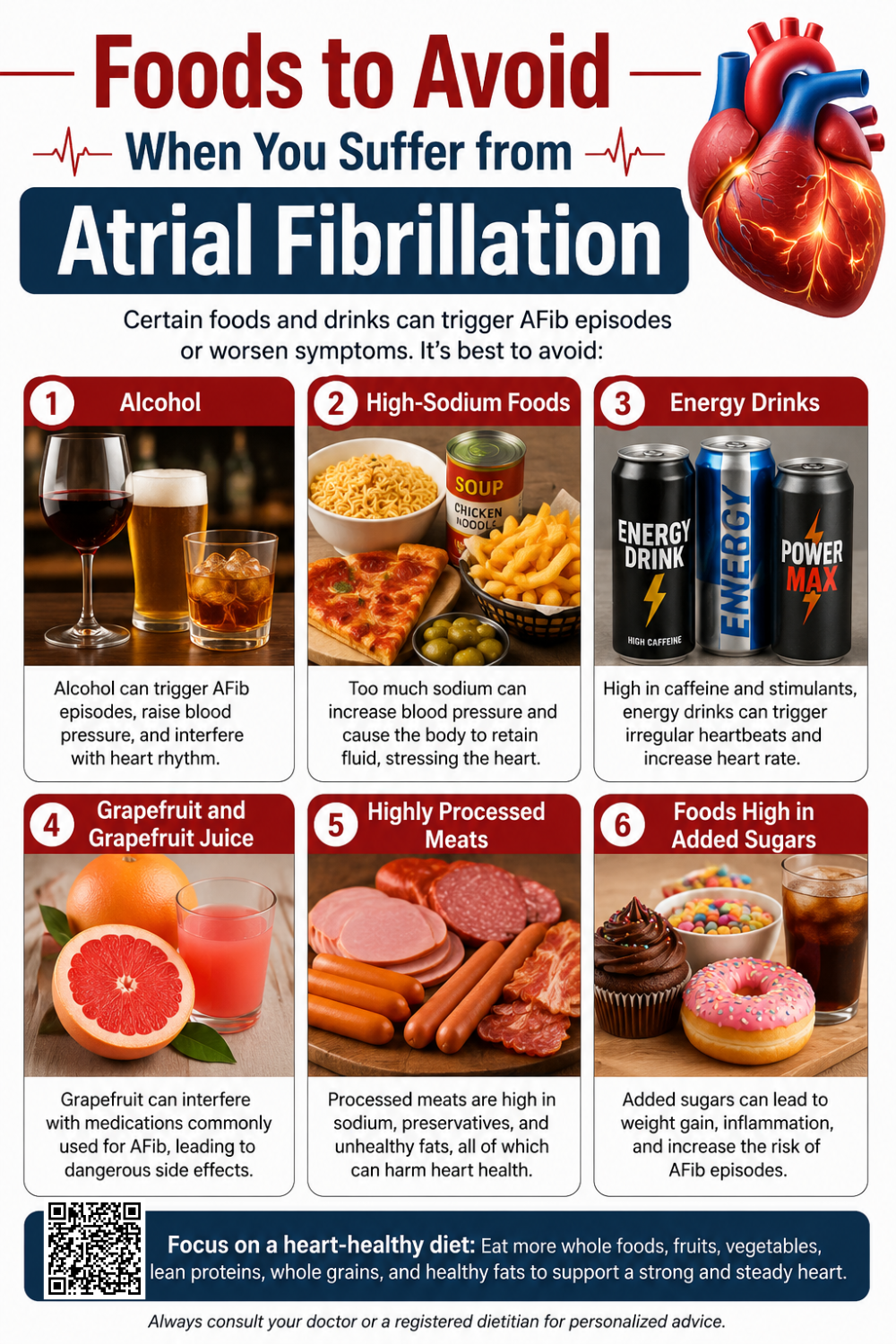 Foods to Avoid When You suffer from Atrial Fibrillation
1. Alcohol
Alcohol directly damages heart muscle cells and disrupts electrical signals, frequently triggering sudden atrial fibrillation episodes and increasing the risk of serious complications.
2. High-Sodium Foods
Excessive salt intake drastically increases blood pressure, forcing the heart to work harder and directly promoting the structural heart damage that drives atrial fibrillation 36.
3. Energy Drinks
While moderate coffee remains generally safe, heavily caffeinated energy drinks contain concentrated stimulants that rapidly accelerate heart rate and directly provoke chaotic electrical arrhythmias 37.
4. Grapefruit and Grapefruit Juice
Grapefruit actively blocks enzymes that process common atrial fibrillation medications, causing dangerous drug levels to accumulate in the bloodstream and risking severe clinical toxicity 38.
5. Highly Processed Meats
Products like bacon and deli meats contain excessive sodium and preservatives that drive chronic systemic inflammation, significantly elevating the long-term risk of developing dangerous heart rhythms 39.
6. Foods High in Added Sugars
Consuming excessive artificial sugars accelerates weight gain and metabolic disorders, which act as primary physical triggers that steadily increase the daily burden of atrial fibrillation 40.
When To see Doctor when you suffer from Atrial Fibrillation
1. Severe Chest Pain or Pressure
Seek emergency care immediately if you experience crushing chest pain, as this indicates the rapid heart rate is actively depriving your heart muscle of essential oxygen.
2. Sudden Signs of a Stroke
Call emergency services immediately if you notice facial drooping, arm weakness, or slurred speech, because atrial fibrillation drastically increases the risk of clots traveling directly to the brain 41.
3. Extreme Dizziness or Fainting
Consult your doctor urgently if you faint or feel severely lightheaded, which signifies the chaotic heart rhythm is failing to pump adequate blood pressure to your brain.
4. Severe Shortness of Breath
Seek prompt medical evaluation if you struggle to breathe while resting, as this indicates the inefficient heartbeat is causing dangerous fluid pressure to back up into your lungs.
5. Uncontrollable Bleeding
Contact your healthcare provider immediately if you experience excessive or unexplained bleeding, which represents a severe medical emergency caused by prescription blood thinners required to manage atrial fibrillation 42.
6. Prolonged Heart Palpitations
Schedule a clinical evaluation if your heart races or flutters continuously for hours, as prolonged arrhythmia episodes increase structural strain and often require prompt medical rhythm-control interventions 43.