

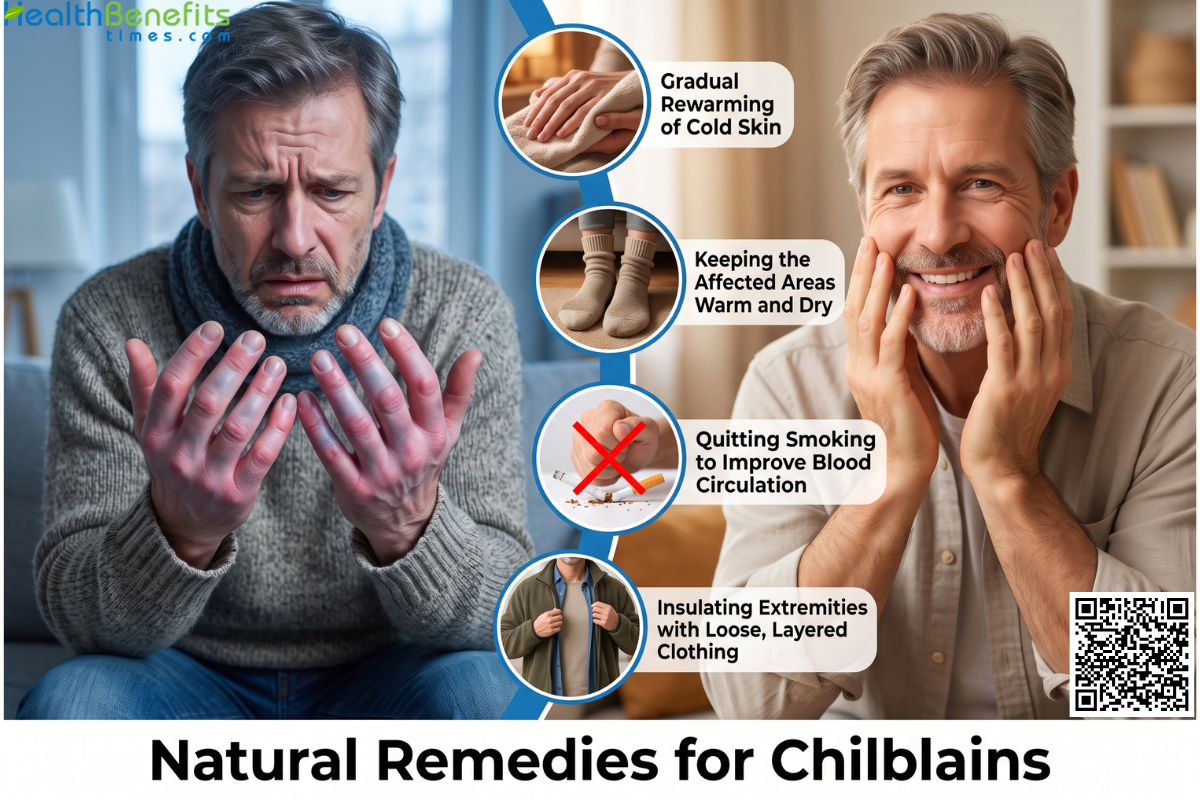
Chilblains, also known medically as pernio, is a painful inflammatory skin condition characterized by swollen, discolored patches, itching, and occasional blistering, primarily affecting the extremities such as the toes and fingers. This condition develops as an abnormal vascular response to prolonged exposure to cold and damp, but not freezing, temperatures 1. Clinical evaluations indicate that when chilled skin is rewarmed too rapidly, the small blood vessels beneath the surface expand faster than the surrounding larger vessels can manage, leading to fluid leakage and localized tissue inflammation 2. The resulting lesions typically manifest within a few hours of cold exposure and cause significant burning or tenderness. Despite the discomfort, it is generally an acute condition that resolves independently within two to three weeks, provided the affected skin is protected from further cold stress and maintained in a gently warm and dry environment 3.
Causes of Chilblains
1. Exposure to Cold and Rapid Rewarming
The primary trigger is prolonged exposure to cold, damp environments followed by heating the affected area too quickly. Applying sudden, direct heat to chilled skin forces the small blood vessels to expand faster than the larger vessels can handle, causing fluid to leak into the nearby tissues and create painful inflammation.
2. Poor Blood Circulation
Individuals with naturally slow or compromised blood flow are highly susceptible to developing this condition. When circulation is inadequate, the body struggles to properly regulate temperature in the extremities, making it difficult for the blood vessels to adapt to sudden temperature shifts.
3. Smoking and Nicotine Use
Using tobacco or nicotine products significantly increases the risk of developing chilblains. Nicotine acts as a potent vasoconstrictor, meaning it forces the blood vessels to narrow, which severely restricts warm blood flow to the fingers and toes during cold exposure.
4. Underlying Autoimmune Conditions
In certain instances, chilblains are a secondary symptom caused by an existing medical issue, particularly connective tissue disorders. Systemic lupus erythematosus is frequently associated with a specific variation known as chilblain lupus, which directly affects the health and function of the vascular system 4.
5. Low Body Weight
Having a significantly lower-than-average body weight or body mass index (BMI) reduces the body’s natural thermal insulation. A lack of adequate body fat leaves the skin and underlying blood vessels more vulnerable to cold-induced damage.
Symptoms of Chilblains
1. Intense Itching and Burning Sensations
The most common initial symptom is a severe itching or burning feeling in the affected extremities, such as the toes, fingers, ears, or nose. This discomfort typically intensifies when the chilled skin is exposed to a warm environment.
2. Noticeable Skin Discoloration
As the blood vessels become inflamed, the surface of the skin changes color. The lesions usually begin as bright red patches and frequently transition to a dark blue or purple hue due to poor oxygen circulation within the localized tissue.
3. Localized Swelling and Nodules
The restricted blood flow and subsequent fluid leakage cause the affected areas to develop distinct, swollen bumps. These raised nodules make the skin feel tight and are highly tender and painful to the touch.
4. Blistering and Skin Breakdown
In more severe clinical cases, the sustained inflammation causes the skin’s surface to break down. This can result in the formation of fluid-filled blisters (bullae) or open sores (ulcerations), which significantly increases the risk of secondary bacterial infections.
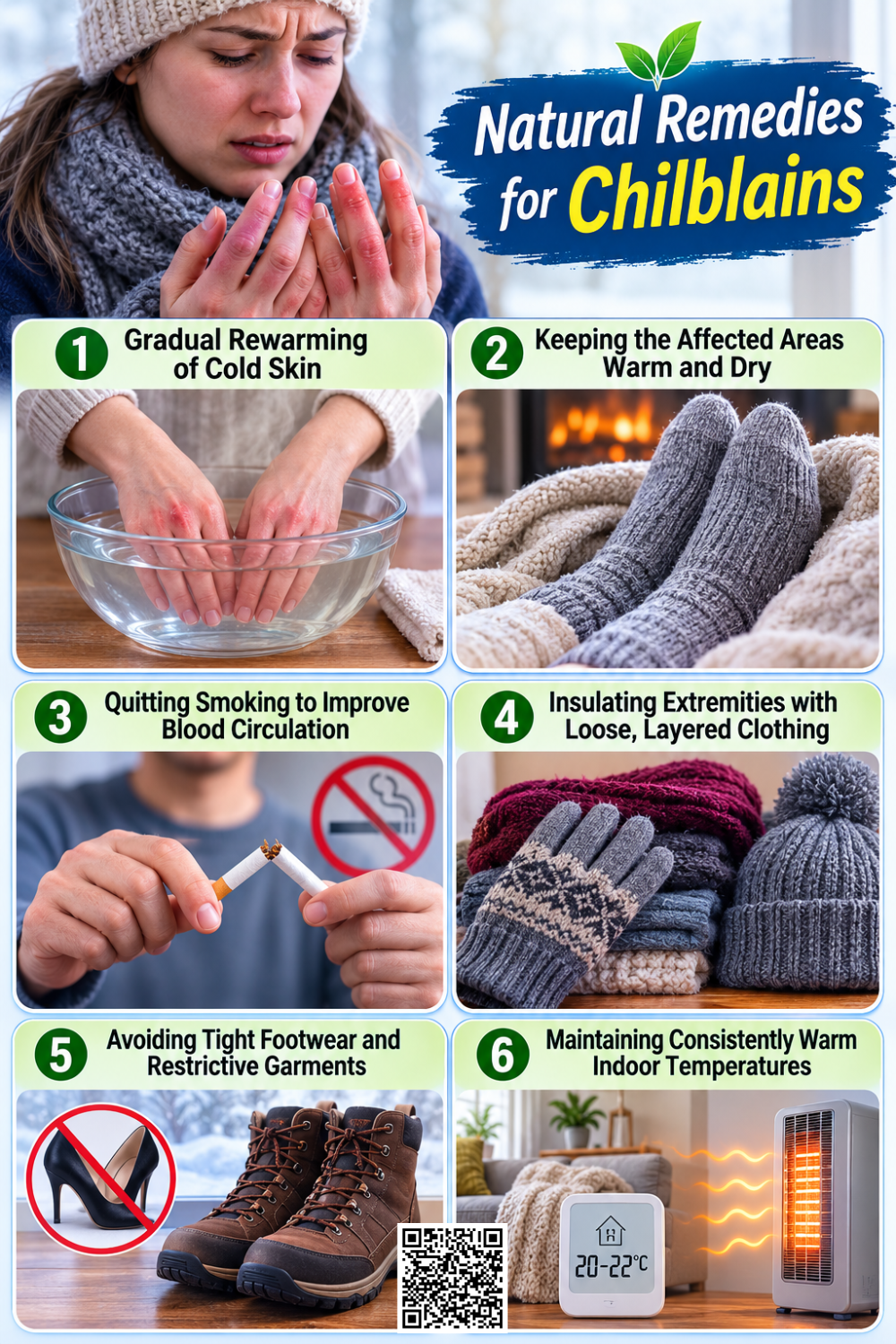 Natural Remedies for Chilblains
1. Gradual Rewarming of Cold Skin
How it may help
Gradual rewarming prevents the sudden expansion of blood vessels that triggers chilblains. When cold skin warms too quickly, small blood vessels leak fluid into surrounding tissues, causing swelling and pain. Slowly raising the skin’s temperature allows the vascular system to adapt smoothly, reducing localized inflammation and preventing lesion formation.
What research says
Clinical evidence confirms that avoiding rapid temperature changes is a primary conservative treatment for pernio (chilblains). Studies indicate that gradual rewarming restores normal microvascular circulation without provoking the intense inflammatory response and tissue fluid buildup that is typically associated with direct heat application.
How to use it safely
To safely warm your skin, move to a moderately warm room and put on loose, dry layers, such as wool socks or gloves. Let your body temperature rise naturally. Do not rub, scratch, or massage the affected areas, as friction can cause further tissue damage.
Potential precautions or side effects
Never expose cold extremities to direct heat sources like heating pads, radiators, fireplaces, or hot water. Rapid heating worsens chilblain symptoms and severely increases the risk of thermal burns.
2. Keeping the Affected Areas Warm and Dry
How it may help
Maintaining a warm, dry environment prevents the rapid loss of body heat that occurs when moisture evaporates from the skin. This stability helps sustain steady blood flow to the extremities, preventing the abnormal blood vessel spasms and tissue inflammation responsible for painful chilblain flare-ups.
What research says
Clinical protocols identify environmental modification as the primary treatment for chilblains. Medical literature confirms that because moisture significantly accelerates heat loss, protecting the skin from damp conditions effectively reduces the severity and duration of vascular inflammation without the need for pharmacological interventions.
How to use it safely
Promptly remove wet socks, shoes, or gloves after being outdoors. Keep your hands and feet well-insulated using layers of breathable, moisture-wicking fabrics like wool or fleece. Ensure your living and working spaces are consistently heated to a comfortable temperature.
Potential precautions or side effects
Avoid overdressing to the point of sweating, as trapped moisture reintroduces dampness. Always ensure footwear is completely dry before use to prevent further vascular stress and potential fungal infections.
3. Quitting Smoking to Improve Blood Circulation
How it may help
Tobacco use introduces nicotine into the body, which causes the small blood vessels to narrow, reducing the flow of warm blood to the fingers and toes 5. Quitting smoking stops this narrowing, allowing blood vessels to stay open and keep the skin warm, which prevents the painful swelling and fluid leakage that triggers chilblains.
What research says
Medical research shows that nicotine damages the inner walls of blood vessels and lowers chemical levels that help them widen during temperature changes 6. Studies conclude that quitting smoking successfully restores normal blood flow to the hands and feet, significantly reducing the sudden tissue spasms and painful skin reactions linked to cold weather 7.
How to use it safely
To quit smoking safely, talk to your doctor to create a personalized plan. You can use tools like counseling alongside medical aids, such as nicotine patches or non-nicotine pills, to handle withdrawal symptoms while your body slowly rebuilds healthy blood flow and protects your skin from cold damage.
Potential precautions or side effects
Stopping tobacco suddenly can cause temporary withdrawal symptoms like irritability, anxiety, and weight gain. Furthermore, using nicotine-replacement aids can still cause minor blood vessel narrowing until you stop using them completely.
4. Insulating Extremities with Loose, Layered Clothing
How it may help
Wearing multiple layers of loose clothing traps body heat, creating a protective barrier against cold environments. This insulation prevents the rapid temperature drops that trigger abnormal blood vessel reactions. Furthermore, avoiding tight garments ensures healthy blood flow reaches the fingers and toes, reducing the risk of tissue inflammation.
What research says
Clinical guidelines state that insulating the extremities is a highly effective preventative measure against cold-induced vascular lesions. Experts emphasize that loose, layered clothing successfully maintains peripheral temperatures, preventing the localized blood vessel constriction and fluid leakage that characterize chilblain development.
How to use it safely
Protect your hands and feet using multiple thin layers of breathable materials, such as cotton or fleece. Ensure socks, gloves, and footwear fit loosely to avoid restricting circulation. Always keep your core body adequately warm, as this naturally encourages healthy blood flow to your extremities.
Potential precautions or side effects
Avoid excessive layering that causes sweating, as trapped moisture drastically accelerates body heat loss. Never wear tightly fitted garments or narrow shoes, which compress blood vessels and worsen symptoms.
5. Avoiding Tight Footwear and Restrictive Garments
How it may help
Tight shoes and restrictive clothing compress the skin and pinch the underlying blood vessels, physically blocking warm blood from reaching the toes and fingers. By removing this pressure, natural circulation is restored, keeping the extremities warm and preventing the abnormal vessel spasms that cause painful chilblain swelling.
What research says
Clinical guidelines emphasize that unobstructed blood flow is essential for preventing cold-induced tissue damage. Medical evaluations confirm that wearing tight footwear significantly increases the risk of developing chilblains, as mechanical compression forces peripheral blood vessels to narrow, drastically lowering the skin temperature in the feet and hands.
How to use it safely
Choose well-fitted, comfortable shoes with a wide toe box that allows your toes to move freely. Wear seamless, breathable socks that do not squeeze your calves or ankles. Ensure belts, wristbands, and sleeves are loose enough to promote steady, healthy circulation throughout your body.
Potential precautions or side effects
Ensure your shoes are not too loose, as friction can cause blisters or open sores, increasing the risk of bacterial skin infections in cold-damaged tissues.
6. Maintaining Consistently Warm Indoor Temperatures
How it may help
Keeping indoor environments at a consistently warm temperature prevents the body from losing core heat. This thermal stability stops the blood vessels in the extremities from repeatedly constricting and expanding, which directly prevents the painful tissue swelling and fluid leakage associated with chilblains.
What research says
Clinical guidelines identify environmental temperature control as a fundamental preventive measure against cold-induced vascular lesions. Medical literature confirms that maintaining a warm ambient room temperature supports healthy peripheral blood flow, significantly reducing the frequency of inflammatory skin responses in susceptible individuals without requiring medication.
How to use it safely
Set your home or workplace thermostat to a comfortable, steady temperature, especially during colder seasons. Ensure your living spaces remain free from cold drafts. If you feel chilled, gently warm the entire room rather than exposing your skin to intense, localized heat sources.
Potential precautions or side effects
Avoid overheating indoor spaces to the point of sweating. Moisture on the skin rapidly accelerates heat loss, inadvertently triggering abnormal blood vessel spasms and worsening cold sensitivity.
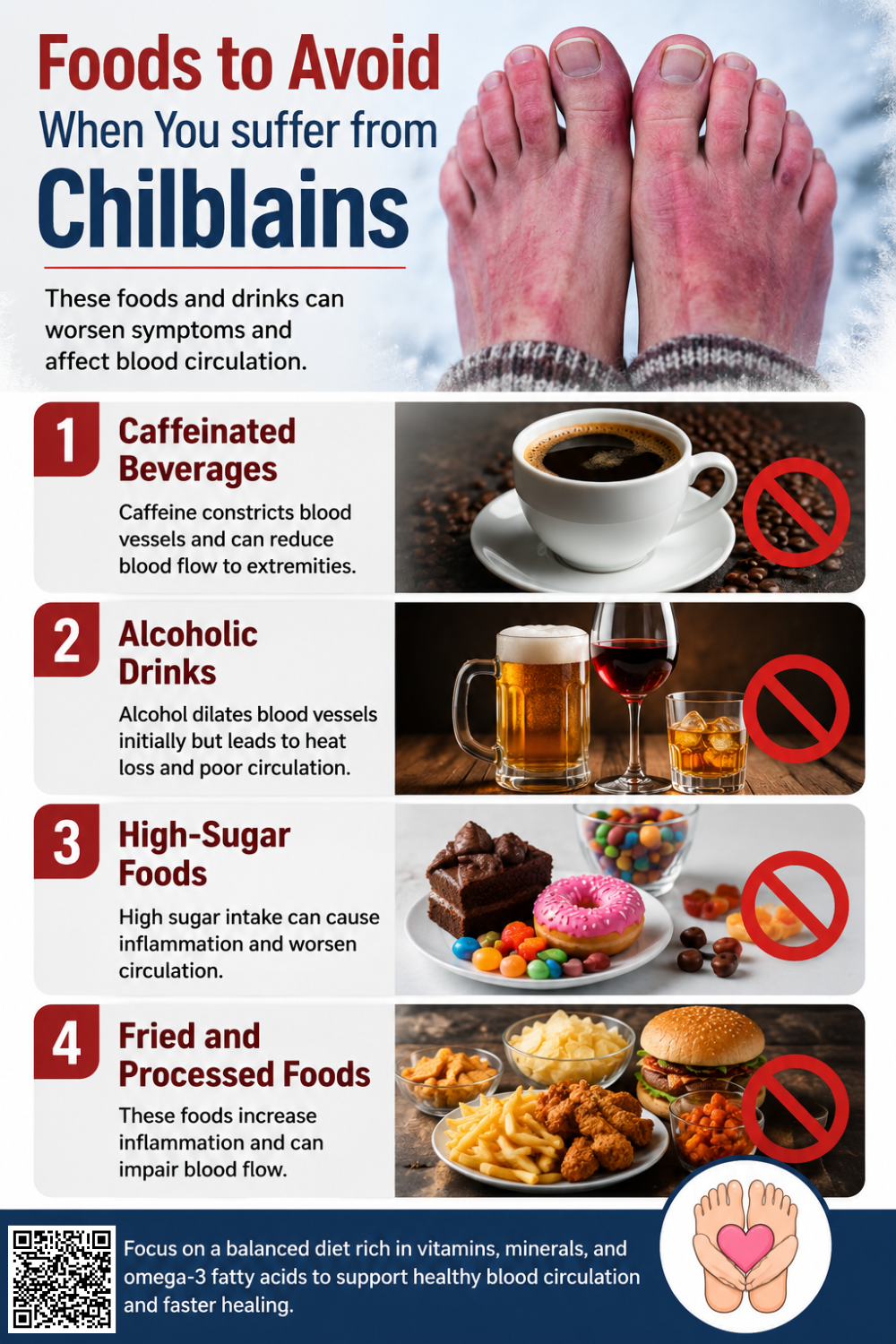 Foods to Avoid When You suffer from Chilblains
1. Caffeinated Beverages
Caffeine is a potent vasoconstrictor that narrows small blood vessels. This restricts the essential flow of warm blood to extremities, directly aggravating cold-induced vascular injuries like chilblains 8.
2. Alcoholic Drinks
Alcohol expands blood vessels, which rapidly accelerates peripheral heat loss in cold environments. This sudden heat depletion leaves the skin highly susceptible to severe tissue inflammation.
3. High-Sugar Foods
Consuming excessive refined sugars triggers widespread systemic inflammation. This increased inflammatory response can severely exacerbate the painful swelling, burning sensations, and skin lesions associated with chilblains 9.
4. Fried and Processed Foods
Fried items are highly inflammatory foods that negatively impact vascular health. This systemic inflammation hinders small blood vessels from healing and adapting properly during sudden temperature fluctuations.
When To see Doctor when you suffer from Chilblains
1. Symptoms Persist Beyond Three Weeks
Seek medical evaluation if skin lesions fail to improve within two to three weeks, as chronic symptoms may indicate an underlying autoimmune or vascular disorder.
2. Severe and Unmanageable Pain
Consult a doctor if the burning sensation or tenderness becomes overwhelmingly painful, requiring prescription medications to safely control the intense localized inflammation.
3. Signs of Bacterial Infection
Immediate clinical care is necessary if the affected skin develops pus, increased redness, or feels hot, as antibiotic treatment is strictly required for secondary infections.
4. Formation of Ulcers or Blisters
Medical intervention is required if the skin breaks down into fluid-filled blisters or open sores to prevent severe tissue damage and chronic wound complications.
5. Pre-existing Diabetes or Circulation Issues
Individuals with diabetes or known blood flow issues must consult a healthcare provider immediately, as impaired circulation drastically increases the risk of severe skin damage and delayed healing.