

Down syndrome is a lifelong genetic condition that affects a person’s physical and cognitive development. It occurs when a baby is born with a full or partial extra copy of chromosome 21, which permanently alters how the brain and body grow 1. Individuals with this condition typically experience mild to moderate intellectual disability, developmental delays, and distinct physical traits, such as low muscle tone and a flattened facial profile 2. Because this extra genetic material impacts multiple organ systems, it also increases the risk of specific medical complications, including congenital heart defects, autoimmune disorders, and early-onset Alzheimer’s disease. While these complex health challenges require ongoing, coordinated medical care, early childhood intervention programs, specialized education, and targeted therapies significantly improve an individual’s independence and overall quality of life 3.
Causes of Down syndrome
1. Trisomy 21 (Complete Nondisjunction)
This is the most common cause, accounting for approximately 95% of all cases. It happens when an error occurs during the formation of the egg or sperm cell, causing it to keep an extra, separate copy of chromosome 21 4. As a result of this division failure, every single cell in the baby’s body develops with three copies of this chromosome instead of the usual two.
2. Translocation Down syndrome
This genetic variation causes roughly 3% to 4% of Down syndrome cases. In this situation, the total number of chromosomes in the body’s cells remains at 46, but an extra full or partial piece of chromosome 21 breaks off and attaches itself to an entirely different chromosome, most often chromosome 14. This attached extra genetic material alters development and causes the typical traits of the condition.
3. Mosaic Down syndrome
This is the rarest cause, making up only 1% to 2% of cases. It occurs due to a random error in cell division shortly after the egg is fertilized rather than during the initial formation of the egg or sperm. Because of this delayed error, the baby is born with a mixture of cells: some cells have the standard 46 chromosomes, while others have 47 chromosomes containing the extra copy of chromosome 21.
Symptoms of Down syndrome
1. Distinct Physical Features
Individuals typically display recognizable physical traits, though the exact presentation varies from person to person. Common characteristics include a flattened facial profile, an upward slant to the eyes, a noticeably short neck, and unusually small ears, hands, and feet. Infants frequently exhibit low muscle tone at birth and have joints that are excessively flexible or loose. Other physical markers often include a single deep crease straight across the palm of the hand, tiny white spots on the colored part of the eye, and a shorter overall adult height.
2. Cognitive and Developmental Delays
The extra genetic material alters how the brain develops, resulting in mild to moderate intellectual disabilities for most individuals with the condition. Children commonly experience delays in reaching standard physical milestones, such as sitting, crawling, and walking, and typically take longer to develop comprehensive speech and language skills. Furthermore, individuals often demonstrate shorter attention spans, slower learning rates, and specific challenges with working memory and impulse control.
3. Associated Medical Conditions
Symptoms also present internally through a highly increased risk of specific functional and structural health issues. Approximately half of all infants with this syndrome are born with congenital heart defects that disrupt normal blood flow and often require early surgical repair. Additionally, individuals frequently suffer from persistent hearing loss, vision problems such as cataracts or poor eye coordination, severe obstructive sleep apnea, and an underactive thyroid gland that affects their metabolism.
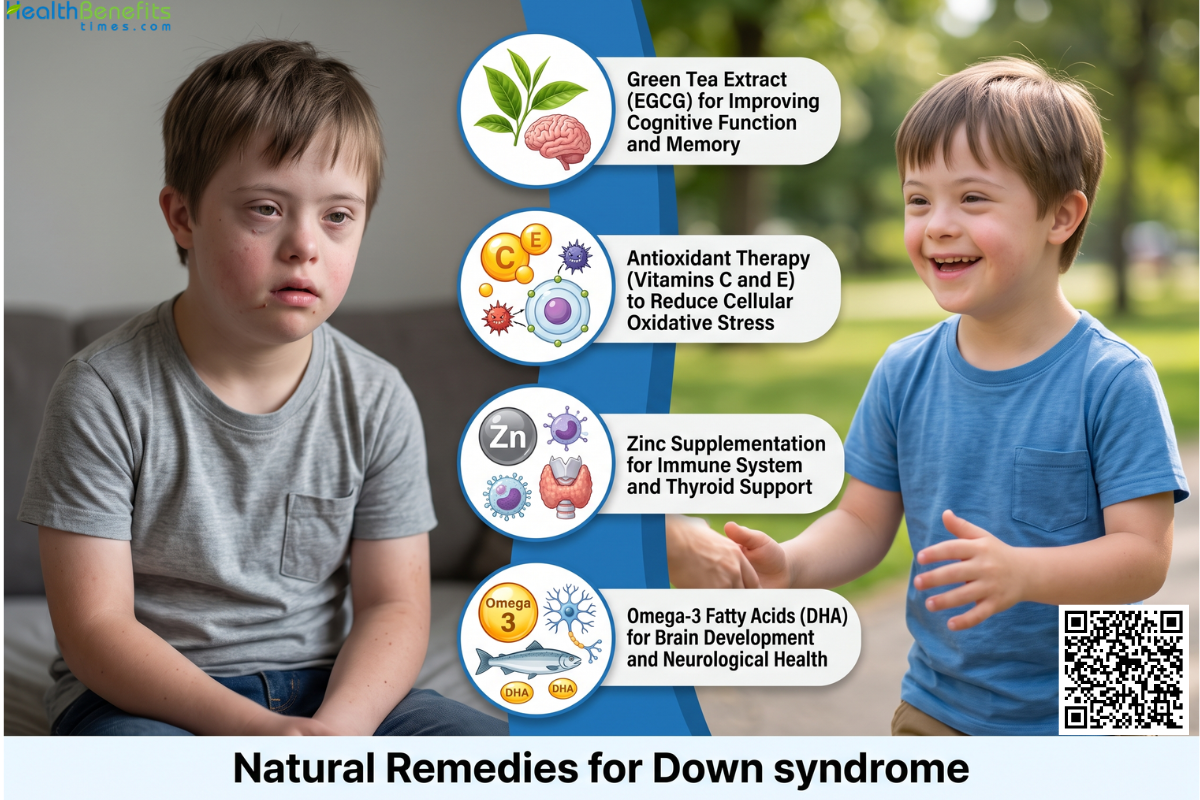
 Natural Remedies for Down syndrome
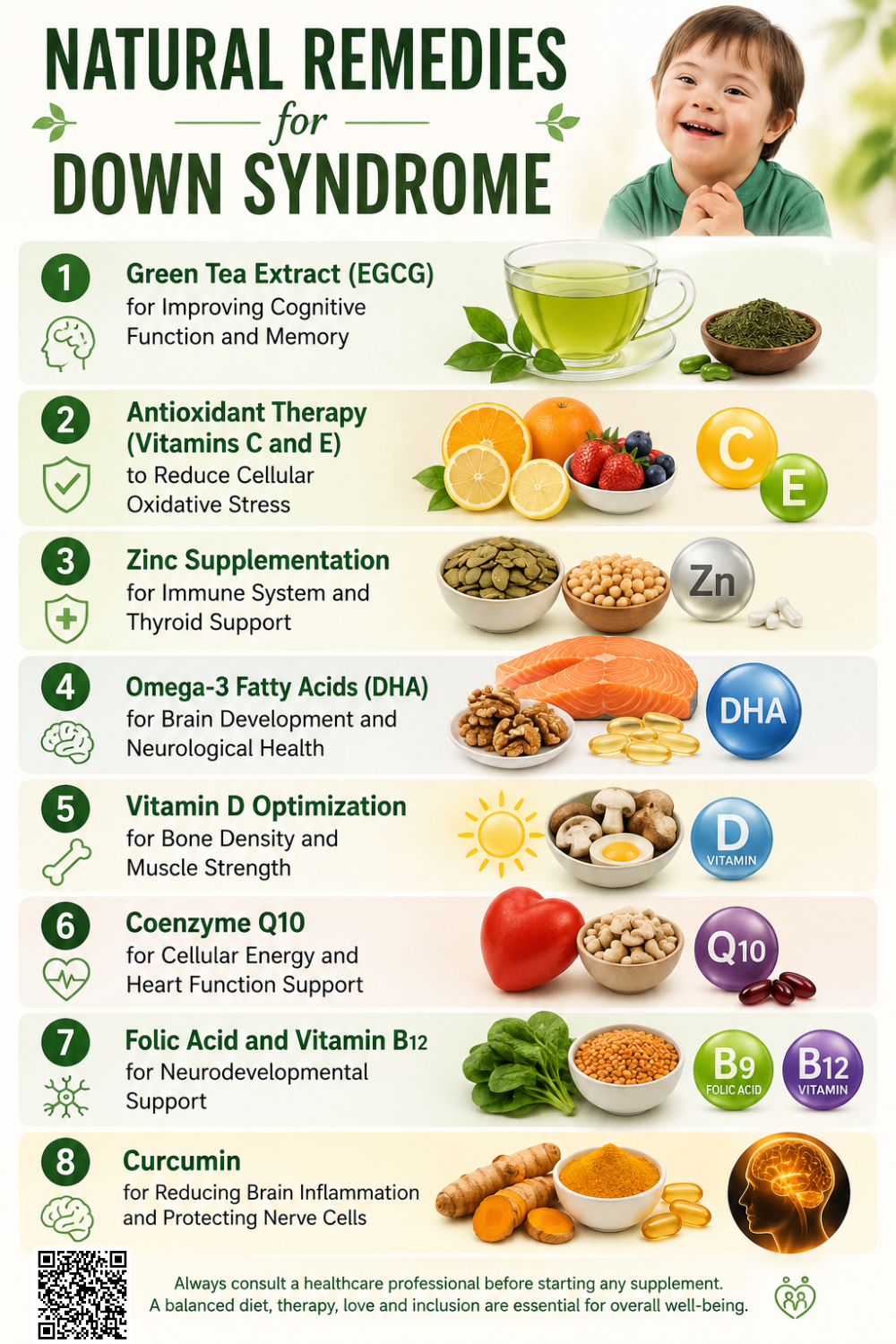
1. Green Tea Extract (EGCG) for Improving Cognitive Function and Memory
How it may help
Epigallocatechin gallate (EGCG) is an active compound found in green tea. It is believed to inhibit DYRK1A, a specific brain enzyme overproduced in individuals with Down syndrome due to the extra chromosome 21 5. Blocking this excess enzyme activity may protect nerve cells and support better overall brain function 6.
What research says
Clinical evidence on EGCG is mixed. A trial in young adults found that combining EGCG with cognitive training slightly improved visual recognition memory and adaptive behavior 7. However, a more recent randomized trial in children showed that EGCG did not significantly improve cognitive or functional performance compared to a placebo 8.
How to use it safely
Before using EGCG, you must consult your healthcare provider. Because supplement quality varies, ask your doctor to recommend a reputable brand to ensure purity. Always strictly follow the prescribed dosage, as higher amounts do not improve outcomes and can be dangerous 9.
Potential precautions or side effects
EGCG supplements can cause severe liver toxicity at high doses. It may also negatively affect bone structure or interact with existing medications, making routine medical monitoring essential 10.
2. Antioxidant Therapy (Vitamins C and E) to Reduce Cellular Oxidative Stress
How it may help
Individuals with Down syndrome overexpress a specific gene that causes high levels of cellular oxidative stress and mitochondrial dysfunction 11. Antioxidant therapies, particularly combining vitamins C and E, aim to neutralize these harmful free radicals, protect nerve cells from damage, and potentially support overall brain health and cognitive function 12.
What research says
Clinical studies reveal mixed outcomes. Trials show that combining vitamins C and E effectively reduces systemic oxidative stress biomarkers in children with Down syndrome. However, long-term antioxidant supplementation in older adults failed to improve cognitive functioning or prevent the cognitive decline associated with dementia 13.
How to use it safely
You should always consult a healthcare provider before starting any antioxidant therapy. While vitamins C and E are generally safe, a doctor must determine the appropriate daily dosage based on your specific metabolic needs to ensure the supplements do not interfere with normal cellular processes 14.
Potential precautions or side effects
Excessive vitamin E can increase bleeding risks, particularly when combined with blood thinners 15. Taking high doses of vitamin C may cause stomach upset, diarrhea, or kidney stones 16.
3. Zinc Supplementation for Immune System and Thyroid Support
How it may help
Many individuals with Down syndrome naturally have low zinc levels, which can impair immune responses and thyroid function 17. Zinc is essential for activating specific immune cells to fight off infections and is required for the body to properly synthesize and regulate vital thyroid hormones 18.
What research says
Clinical studies show that dietary zinc supplementation in children with Down syndrome successfully normalizes thyroid-stimulating hormone (TSH) levels and improves overall thyroid function 19. Furthermore, research indicates that restoring zinc levels activates key immune cells, which significantly decreases the incidence of recurrent respiratory and skin infections 20.
How to use it safely
You should consult a healthcare provider for a blood test to confirm a zinc deficiency before starting supplementation 21. If required, your doctor will prescribe a specific dosage of zinc sulfate to safely correct the deficiency without disrupting other essential trace minerals 22.
Potential precautions or side effects
Taking excessive amounts of zinc can cause nausea, stomach cramps, and severely deplete the body’s copper levels, which may lead to entirely new neurological and immune problems 23.
4. Omega-3 Fatty Acids (DHA) for Brain Development and Neurological Health
How it may help
Omega-3 fatty acids, specifically docosahexaenoic acid (DHA), are vital structural components of brain cell membranes. In individuals with Down syndrome, chronic cellular oxidative stress severely impairs neurogenesis 24. DHA therapies attempt to counteract this damage by reducing neuroinflammation, protecting nerve cells, and supporting structural neurological development 25.
What research says
While DHA supplementation safely increases necessary fatty acid levels in cell membranes, its impact on intelligence remains limited. Extensive clinical trials demonstrate that adding DHA to the diet does not yield significant positive outcomes for global IQ or major cognitive functioning in young children with the condition.
How to use it safely
You must consult a healthcare provider before initiating an omega-3 regimen. A doctor will determine the appropriate dose of high-quality fish or algal oil based on your specific metabolic needs to ensure safety and prevent adverse medical interactions 26.
Potential precautions or side effects
Omega-3 supplements typically cause mild gastrointestinal issues, such as indigestion or diarrhea. At high doses, they can extend bleeding times and interfere with prescribed anticoagulant medications.
5. Vitamin D Optimization for Bone Density and Muscle Strength
How it may help
Individuals with Down syndrome frequently experience severe vitamin D deficiency, which worsens their natural muscular hypotonia (low muscle tone) and compromises healthy bone development 27. Optimizing this vital hormone enhances calcium absorption to build stronger bone density and supports the specific cellular pathways required to maintain healthy, coordinated muscle function 28.
What research says
Clinical evidence indicates that correcting vitamin D deficiency in this population lowers the elevated risks of early-onset osteoporosis and sarcopenia (progressive muscle loss). While targeted supplementation successfully normalizes serum levels, combining these optimized levels with structured physical activity produces the most significant improvements in physical performance and bone mass 29.
How to use it safely
You must undergo a clinical blood test to measure your serum 25-hydroxyvitamin D levels before starting supplementation. A doctor should prescribe the precise dosage of vitamin D3 based on your specific test results to safely correct the deficiency without overloading your metabolic system 30.
Potential precautions or side effects
Taking unmonitored, excessive doses of vitamin D causes hypercalcemia (dangerously high blood calcium), which can permanently damage kidney function, trigger severe cardiac arrhythmias, and cause neurological confusion 31.
6. Coenzyme Q10 for Cellular Energy and Heart Function Support
How it may help
Individuals with Down syndrome experience elevated cellular oxidative stress that impairs mitochondrial function, which supplies energy to cells 32. Coenzyme Q10 (CoQ10) is a natural antioxidant and energy regulator. Supplementation aims to neutralize harmful free radicals, restore metabolic balance, and protect energy-demanding organs from cellular damage 33.
What research says
Clinical trials demonstrate that CoQ10 supplementation successfully corrects the specific oxidative imbalances found in the blood of children with Down syndrome 34. However, extensive long-term treatment ultimately fails to significantly reduce whole-body DNA oxidation or provide substantial protective effects against cognitive decline and cellular aging 35.
How to use it safely
You must consult a healthcare provider before initiating CoQ10 supplementation. A doctor will evaluate your specific metabolic profile to prescribe a precise, weight-based dosage—often administered in split daily doses—to safely increase necessary plasma concentrations without disrupting normal bodily functions 36.
Potential precautions or side effects
CoQ10 is generally well-tolerated but may cause mild insomnia, nausea, or dizziness. It can also dangerously interact with certain prescribed medications, particularly blood thinners and insulin 37.
7. Folic Acid and Vitamin B12 for Neurodevelopmental Support
How it may help
Down syndrome involves the overproduction of specific enzymes that disrupt normal folate metabolism and the body’s one-carbon cycle 38. Folic acid and vitamin B12 supplementation aims to correct these biochemical imbalances, support essential cellular DNA processes, and protect nerve cells to potentially enhance neurodevelopment and cognitive function 39.
What research says
Extensive clinical trials demonstrate no significant benefits for global cognitive function. Systematic reviews show that giving folic acid and vitamin B12 to individuals with Down syndrome fails to significantly improve intelligence, language development, or psychomotor skills 40. Any supplementation should primarily address clinical nutrient deficiencies rather than act as a cognitive enhancement therapy 41.
How to use it safely
You must consult a healthcare provider for routine blood tests to confirm a specific folate or vitamin B12 deficiency before supplementing 42. If necessary, a doctor may prescribe folinic acid instead of standard folic acid, as it is biologically active and easier for the body to absorb.
Potential precautions or side effects
Taking unmonitored high doses of folic acid can dangerously mask an underlying vitamin B12 deficiency, which may lead to irreversible neurological damage if not diagnosed and treated promptly 43.
8. Curcumin for Reducing Brain Inflammation and Protecting Nerve Cells
How it may help
Curcumin is a natural compound with potent anti-inflammatory and antioxidant properties 44. In individuals with Down syndrome, it may help by crossing the blood-brain barrier to reduce severe neuroinflammation and neutralize oxidative stress 45. Furthermore, it binds to amyloid-beta proteins, preventing the toxic buildup that damages nerve cells and contributes to cognitive decline.
What research says
Studies on animal models of Down syndrome demonstrate that curcumin enhances brain cell growth, improves memory, and reduces cognitive deficits 46. Despite these promising laboratory results, human clinical trials remain limited. Current research concludes there is insufficient evidence to prove curcumin effectively prevents or reverses dementia and cognitive decline in human patients.
How to use it safely
You must consult a healthcare provider before using curcumin supplements. Because the body poorly absorbs natural curcumin, a doctor can recommend specific bioavailable formulations. Always follow the recommended dosage, as extremely high amounts do not offer additional cognitive benefits and may disrupt metabolic processes 47.
Potential precautions or side effects
While generally safe, curcumin can cause mild nausea, headache, or diarrhea. It also increases bleeding risks and may dangerously interact with prescribed anticoagulant medications 48.
 Foods to Avoid When You suffer from Down syndrome
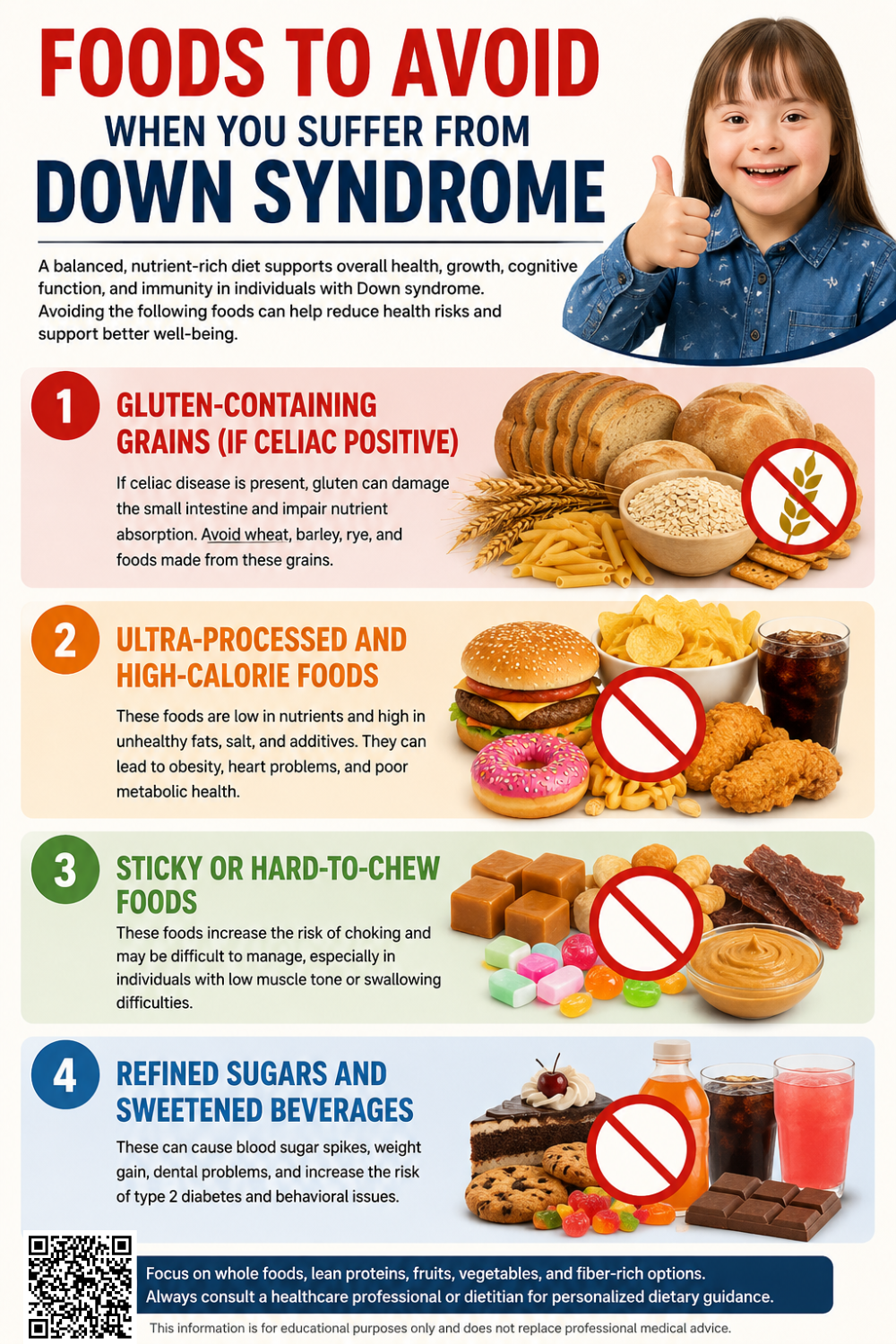
1. Gluten-Containing Grains (If Celiac Positive)
Individuals with Down syndrome face an increased risk of celiac disease. If diagnosed, they must strictly avoid wheat, barley, and rye to prevent severe intestinal damage 49.
2. Ultra-Processed and High-Calorie Foods
A naturally lower resting metabolic rate significantly increases obesity risks. Limit calorie-dense, ultra-processed foods to prevent severe metabolic disorders and excessive cardiovascular weight gain 50.
3. Sticky or Hard-to-Chew Foods
Because low oral muscle tone and swallowing difficulties (dysphagia) are common, avoid sticky candies, tough meats, and hard foods to drastically reduce choking and aspiration risks 51.
4. Refined Sugars and Sweetened Beverages
Since this population experiences elevated rates of insulin resistance, you should strictly limit sugary drinks and refined carbohydrates to safely maintain healthy blood glucose levels 52.
When To see Doctor when you suffer from Down syndrome
1. Routine Preventative Health Screenings
You must schedule annual medical evaluations to systematically monitor for highly common secondary complications, including routine blood panels for thyroid dysfunction and specialized auditory and vision tests 53.
2. Symptoms of Spinal Instability
Immediately consult a doctor if the individual develops neck pain, bowel incontinence, or sudden limb weakness, which indicate life-threatening atlantoaxial instability in the upper spine.
3. Signs of Obstructive Sleep Apnea
Seek immediate clinical evaluation if you observe chronic mouth breathing, excessively loud snoring, or visible pauses in breathing during sleep, as this condition severely impacts cardiovascular health.
4. Sudden Cognitive or Behavioral Decline
Schedule a neurological assessment if an adult exhibits rapid memory loss, sudden confusion, or new behavioral issues, indicating the potential onset of early-onset Alzheimer’s disease.
5. Persistent Gastrointestinal Distress
You should see a doctor for chronic constipation, frequent vomiting, or poor weight gain, as these strongly suggest celiac disease or underlying structural abnormalities in the digestive tract.