


Paresthesia is the clinical term for an abnormal physical sensation often described as burning, prickling, tingling, or crawling on the skin. While it most frequently affects the hands, arms, legs, or feet, it can occur anywhere on the body 1. Transient paresthesia, commonly known as a body part “falling asleep,” occurs when sustained physical pressure compresses a peripheral nerve, and it resolves quickly once the pressure is removed 2. Conversely, chronic paresthesia persists without an obvious external trigger and typically indicates underlying neurological damage. Clinical evidence confirms that persistent tingling or numbness frequently serves as a primary symptom of systemic nerve disorders, including diabetic neuropathy, multiple sclerosis, or entrapment conditions such as carpal tunnel syndrome 1. Therefore, while temporary instances are entirely harmless, chronic nerve sensations require comprehensive medical evaluation to identify the root physiological dysfunction.
Causes of Paresthesia
1. Temporary Nerve Compression
Sustained physical pressure on a peripheral nerve, such as sitting with crossed legs or sleeping on a folded arm, temporarily disrupts normal nerve signaling. This creates a harmless, short-term tingling sensation that quickly completely resolves once the physical pressure is removed and normal blood flow resumes 2.
2. Diabetic Neuropathy
Chronically elevated blood sugar levels progressively damage the structural integrity of peripheral nerves over several years. This widespread metabolic nerve damage frequently causes persistent, chronic burning, tingling, and numbness, which typically begins in the toes and feet before progressing upward 3.
3. Nerve Entrapment Syndromes
When swollen ligaments, tissues, or bones physically pinch and trap a nerve, it causes chronic localized paresthesia. Carpal tunnel syndrome is a primary example, occurring when the median nerve becomes continuously compressed within the wrist, leading to persistent numbness in the fingers and hands 4.
4. Central Nervous System Disorders
Diseases that directly attack the brain and spinal cord, such as multiple sclerosis (MS) or a stroke, severely disrupt the body’s primary electrical signaling pathways. Chronic tingling or numbness is frequently one of the earliest clinical indicators that the central nervous system has sustained structural tissue damage 5.
5. Nutritional Deficiencies
A severe lack of essential nutrients, specifically Vitamin B12, directly degrades the myelin sheath, which is the protective coating surrounding nerves. This specific nutritional deficiency routinely causes chronic, symmetrical tingling and prickling sensations that affect both sides of the body equally 6.
6. Infections
Certain viral and bacterial infections specifically target nerve tissues, causing severe inflammation and altered sensations. Shingles, caused by the reactivation of the chickenpox virus, directly attacks nerve roots and routinely produces localized burning, tingling, and extreme skin sensitivity before a visible rash appears 7.
Symptoms of Paresthesia
1. Tingling and Prickling (Pins and Needles)
The most widely recognized clinical symptom is a prickly, stinging sensation, frequently described as feeling like small needles actively poking the skin. This abnormal tactile response occurs when compressed or functionally damaged nerves spontaneously misfire and send erratic electrical signals to the brain 1.
2. Numbness and Reduced Sensation
Affected body parts often experience a partial or complete loss of physical feeling. This localized numbness significantly reduces the skin’s ability to accurately detect physical touch, pressure, or temperature, which frequently impairs normal limb coordination and walking balance 2.
3. Unexplained Burning and Aching
Patients routinely report continuous, uncomfortable warmth or a deep, throbbing burn within the affected extremities. This spontaneous neurological pain occurs independently, meaning the patient feels active burning without any external heat source or actual physical tissue damage being present 1.
4. Skin Crawling (Formication)
A specific sensory distortion where it physically feels as though small insects are continuously moving directly on top of or just beneath the surface of the skin. This persistent, irritating neurological false signal frequently triggers an intense, uncontrollable urge to scratch the affected area 2.
5. Altered Temperature Perception
Functionally damaged sensory nerves frequently misinterpret or incorrectly transmit thermal signals to the brain. This specific pathway dysfunction causes individuals to suddenly feel intense, localized patches of severe heat or freezing cold on their skin despite resting in a completely stable, temperature-controlled environment 2.
Natural Remedies for Paresthesia (Pins and Needles)
1. Change Body Position to Relieve Temporary Nerve Compression
How it may help
Changing body position directly removes physical pressure from compressed peripheral nerves. This mechanical release restores essential blood flow to oxygen-deprived nerve tissues and normalizes disrupted electrical signaling pathways. By removing the physical blockage, this action quickly stops the spontaneous nerve misfiring that creates harmless, temporary tingling and prickling sensations 1.
What research says
Clinical neurology confirms that transient paresthesia frequently results from temporary localized nerve ischemia caused by sustained abnormal postures. Medical literature demonstrates that removing external physical compression rapidly restores normal vascular circulation and nerve conduction velocity. This resolves tingling sensations completely without producing any permanent structural nerve tissue damage 2.
How to use it safely
When you experience sudden limb numbness, you should calmly shift your posture to uncross legs or unbend compressed joints. You must gently flex the affected limb to encourage blood circulation, allowing the trapped nerve to recover naturally without forcing abrupt, potentially damaging physical movements 2.
Potential precautions or side effects
Standing abruptly while a leg remains fully numb frequently causes dangerous falls or severe joint sprains. You must avoid bearing total weight on the affected limb until normal sensation returns 1.
2. Manage Blood Sugar Levels
How it may help
Maintaining normal blood glucose levels stops progressive metabolic damage to peripheral nerves and their supporting blood vessels. By preventing excess sugar from weakening these delicate structures, systemic glucose management halts further nerve deterioration and effectively reduces chronic tingling and numbness in the extremities 8.
What research says
Clinical studies demonstrate that strict glycemic control remains highly effective for preventing diabetic peripheral neuropathy. Extensive medical research concludes that consistently maintaining target hemoglobin A1c levels significantly delays sensory nerve degeneration and actively prevents the onset of chronic paresthesia symptoms in diabetic patients 9.
How to use it safely
You should closely monitor your daily blood sugar levels using clinical glucose meters. You must consume a balanced diet low in processed sugars and work directly with your healthcare provider to safely implement any necessary dietary modifications or medical treatments to stabilize your glucose 10.
Potential precautions or side effects
Drastically lowering blood sugar without medical supervision causes dangerous hypoglycemia. You must avoid sudden dietary extremes, as severely low glucose rapidly triggers dizziness, acute confusion, or life-threatening seizures 11.
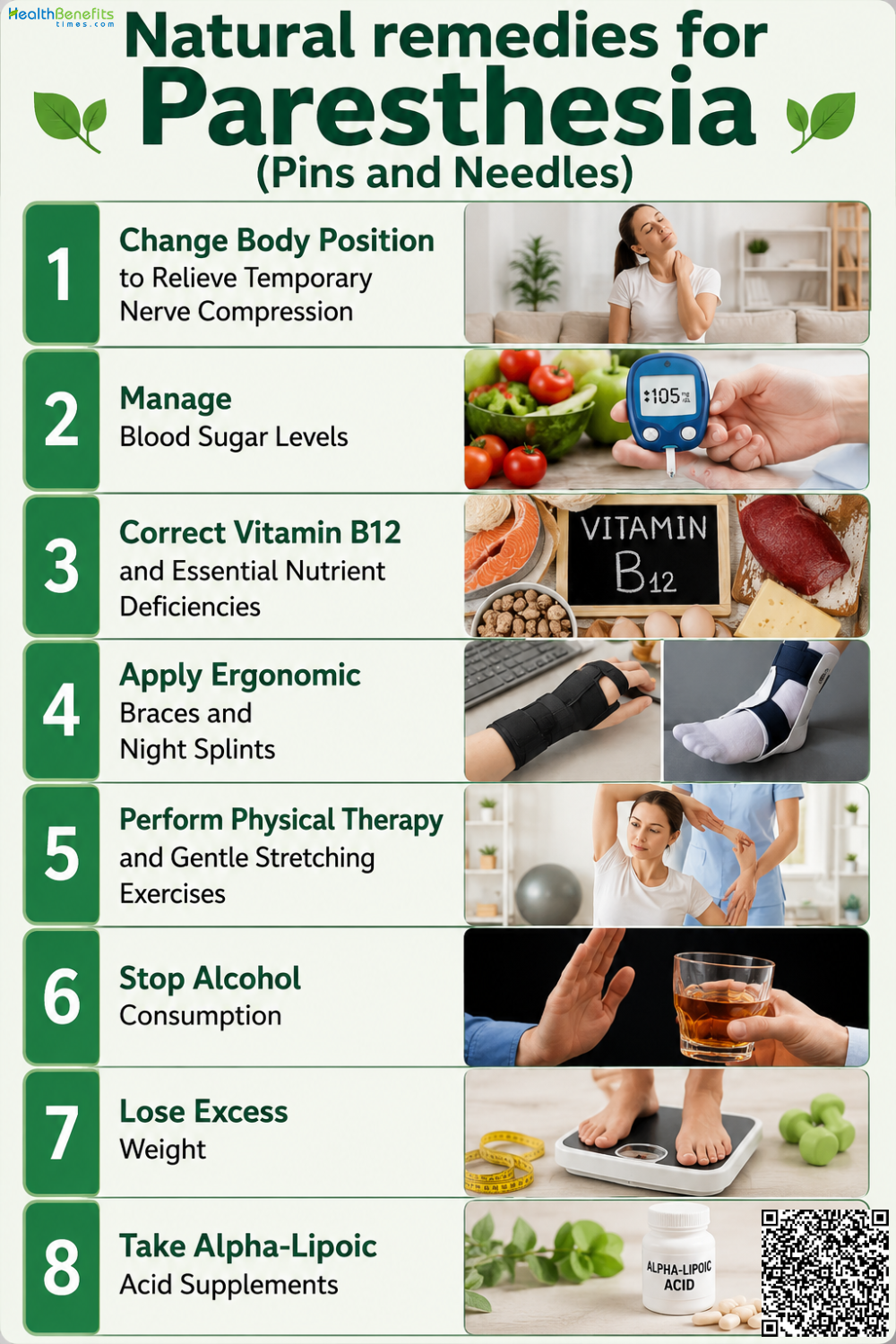
3. Correct Vitamin B12 and Essential Nutrient Deficiencies
How it may help
Restoring Vitamin B12 levels repairs the myelin sheath, which is the essential protective coating surrounding peripheral nerves. This structural cellular repair normalizes disrupted electrical nerve signaling. Fixing this deficiency directly stops the symmetrical tingling and numbness frequently experienced in the hands and feet 6.
What research says
Clinical neurology confirms that prolonged Vitamin B12 deficiency causes progressive demyelination of the nervous system. Medical research demonstrates that prompt clinical supplementation completely halts neurological deterioration and successfully reverses paresthesia symptoms if administered before permanent structural nerve damage occurs 12.
How to use it safely
You must obtain a clinical blood test to officially diagnose a nutrient deficiency before starting treatment. You should strictly follow your doctor’s prescribed dosages for oral vitamins or clinical injections, and increase your dietary intake of fortified cereals, meats, or dairy 13.
Potential precautions or side effects
Taking excessive megadoses of certain vitamins, particularly Vitamin B6, paradoxically causes severe nerve damage. You must strictly avoid unregulated, high-dose nerve supplements without direct medical supervision 14.
4. Apply Ergonomic Braces and Night Splints
How it may help
Wearing ergonomic braces or night splints holds the affected joint, such as the wrist, in a neutral, straight position. This prevents the joint from bending during sleep, directly reducing physical pressure on trapped nerves. Relieving this localized compression stops the continuous nerve irritation that causes chronic tingling and numbness 4.
What research says
Clinical studies establish that maintaining a neutral joint angle with splints significantly decreases internal tissue pressure around compressed nerves. Medical guidelines confirm that conservative treatment using nocturnal splinting effectively reduces paresthesia symptoms and improves limb function in patients suffering from mild to moderate nerve entrapment syndromes 15.
How to use it safely
You should wear the splint primarily at night to prevent unconscious joint bending while sleeping. You must ensure the brace fits snugly but remains loose enough to maintain normal blood circulation. Wash the brace fabric regularly to prevent minor skin irritation 15.
Potential precautions or side effects
Wearing a splint too tightly restricts vascular blood flow, immediately worsening numbness. You should avoid wearing rigid braces continuously during the day, as this causes joint stiffness and muscle weakness 4.
5. Perform Physical Therapy and Gentle Stretching Exercises
How it may help
Targeted physical therapy and gentle stretching exercises actively improve blood circulation and relieve structural pressure on compressed nerves. Specific movements, known as nerve gliding, help trapped nerves slide smoothly through surrounding tissues. This mechanical mobilization directly reduces localized inflammation and alleviates chronic tingling and numbness 4.
What research says
Clinical evidence confirms that specific rehabilitative exercises effectively decrease nerve compression symptoms. Medical research demonstrates that physical therapy interventions, particularly guided nerve and tendon mobilization techniques, significantly improve sensory function and reduce the severity of paresthesia in patients suffering from localized peripheral nerve entrapment 15.
How to use it safely
You should always perform stretches gently and stop immediately if you experience sharp pain. You must consult a licensed physical therapist to learn the correct nerve gliding techniques for your specific condition, ensuring you do not overextend and further irritate the compromised nerve 2.
Potential precautions or side effects
Performing stretching exercises too aggressively rapidly worsens nerve irritation and increases numbness. You must avoid forceful, bouncing movements that can permanently damage delicate peripheral nerve fibers 1.
6. Stop Alcohol Consumption
How it may help
Chronic alcohol use acts as a direct toxin to peripheral nerves and severely blocks the body’s ability to absorb essential vitamins. Stopping alcohol consumption immediately halts this ongoing chemical nerve damage. Abstinence allows the damaged nerve tissues to begin repairing themselves, which directly reduces the persistent burning, tingling, and numbness in the extremities 16.
What research says
Clinical studies confirm that excessive alcohol intake causes a specific condition known as alcoholic neuropathy. Medical research demonstrates that this chronic toxicity directly degrades nerve fibers. Evidence firmly establishes that complete alcohol abstinence is the most effective clinical intervention to stop progressive neurological deterioration and significantly improve paresthesia symptoms 17.
How to use it safely
You should completely eliminate all alcoholic beverages from your daily diet. Because quitting suddenly can be difficult or dangerous, you must work closely with a healthcare provider or a medically supervised rehabilitation program to safely manage the physical transition and successfully maintain total sobriety 18.
Potential precautions or side effects
Abruptly stopping heavy alcohol use frequently triggers severe withdrawal symptoms, including dangerous seizures. You must always undergo clinical medical detoxification to safely manage these life-threatening risks 19.
7. Lose Excess Weight
How it may help
Carrying excess body mass places severe mechanical pressure on peripheral nerves and major joints. Losing this extra weight directly removes structural compression from vulnerable nerve pathways. This physical decompression restores normal blood flow and stops the continuous structural irritation that causes chronic localized numbness and tingling 20.
What research says
Clinical studies establish clinical obesity as a primary risk factor for specific nerve entrapment syndromes and metabolic nerve degeneration. Medical research demonstrates that substantial weight reduction significantly decreases internal tissue pressure and systemic inflammation, successfully restoring nerve conduction velocity and halting progressive paresthesia symptoms 21.
How to use it safely
You should aim for gradual, sustainable weight loss by adopting a balanced diet and participating in low-impact cardiovascular exercises like swimming. You must work with a medical professional to design a personalized weight management program that avoids placing excess physical strain on already compromised nerves 22.
Potential precautions or side effects
You must strictly avoid extreme crash diets. Severe, unmonitored calorie restriction frequently causes essential vitamin deficiencies that will directly worsen peripheral nerve damage and aggressively increase painful tingling sensations 23.
8. Take Alpha-Lipoic Acid Supplements
How it may help
Alpha-lipoic acid is a powerful antioxidant that actively protects nerve cells from severe oxidative damage. By neutralizing harmful molecules and improving blood flow to the affected extremities, this supplement directly reduces the persistent cellular irritation that causes chronic tingling, burning, and numbness in the hands and feet 24.
What research says
Clinical trials demonstrate that alpha-lipoic acid effectively reduces neuropathic symptoms, particularly in patients with diabetic nerve damage. Medical research concludes that daily supplementation significantly decreases pain, tingling, and numbness by structurally repairing damaged nerve fibers and restoring normal electrical nerve signaling over several weeks 24.
How to use it safely
You should consult a healthcare provider before taking alpha-lipoic acid, especially if you have diabetes. You must follow standard clinical dosages, typically around 600 milligrams daily, and take the capsule on an empty stomach to ensure maximum internal absorption and optimal nerve tissue repair 24.
Potential precautions or side effects
Alpha-lipoic acid frequently lowers blood sugar levels, which can rapidly cause dangerous hypoglycemia when combined with prescribed diabetes medications. You must strictly monitor your daily glucose while taking this supplement 24.
Foods to Avoid When You Suffer from Paresthesia
1. Alcoholic Beverages
Alcohol is highly toxic to peripheral nerves and severely depletes essential vitamins, directly causing progressive nerve damage and worsening persistent tingling and numbness 16.
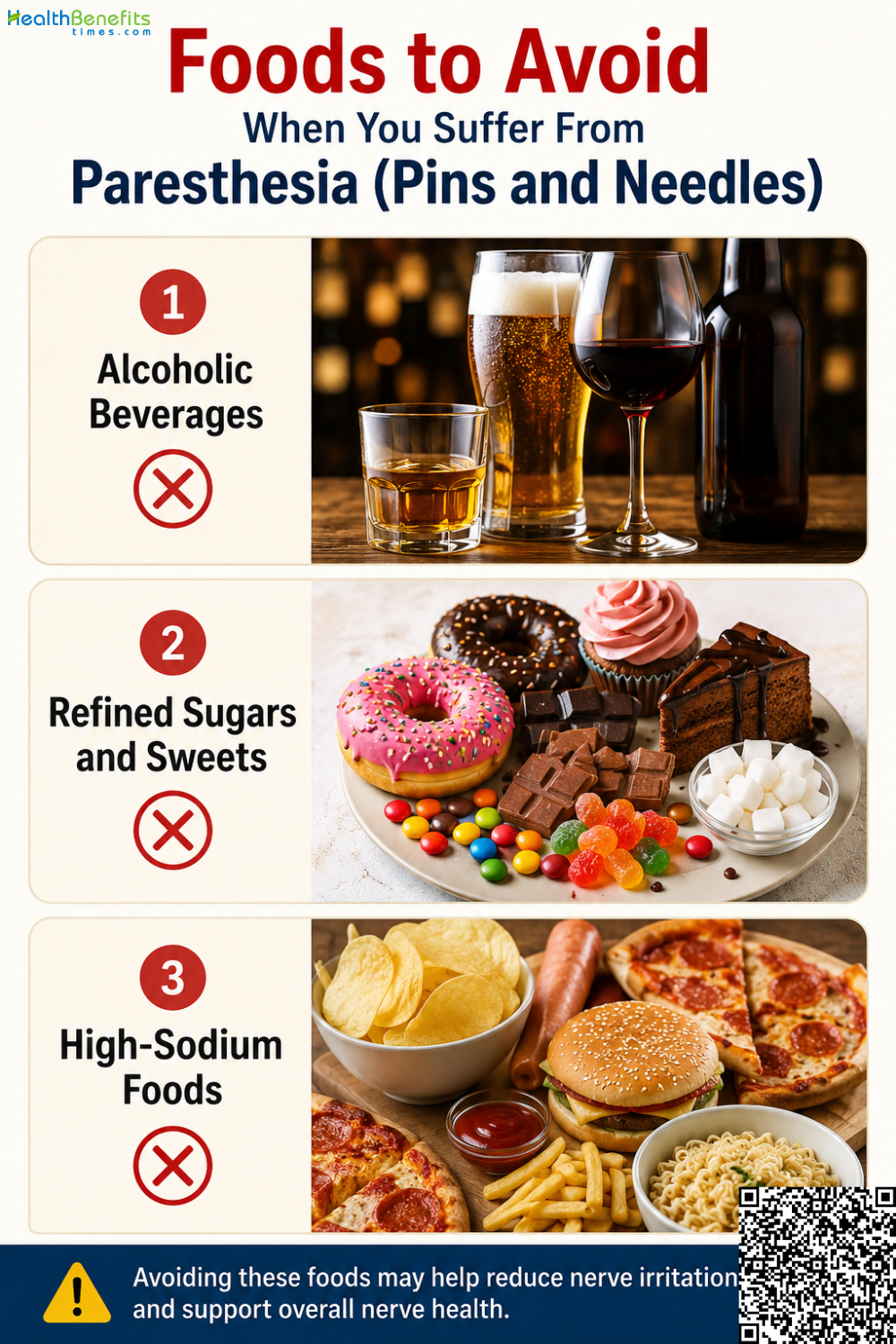
2. Refined Sugars and Sweets
Consuming excessive sugar chronically elevates blood glucose. This metabolic spike severely damages peripheral nerve fibers, actively triggering or accelerating painful diabetic neuropathy symptoms 8.
3. High-Sodium Foods
Excessive salt intake causes severe cellular fluid retention. This internal tissue swelling physically compresses vulnerable peripheral nerves, directly worsening entrapment conditions and increasing numbness 4.
When to See a Doctor When You Struggle from Paresthesia
1. Sudden Onset or Weakness
Seek immediate emergency care if numbness appears suddenly, especially on one side, accompanied by severe weakness or slurred speech, as this strongly indicates a life-threatening stroke 25.
2. Loss of Bladder Control
Consult a physician immediately if tingling is accompanied by a sudden loss of bowel or bladder control, which signals severe spinal cord compression requiring urgent clinical intervention 26.
3. Spreading Sensations
Schedule a medical evaluation if the abnormal prickling sensation gradually worsens, spreads across the body, or persistently affects both limbs symmetrically without any apparent physical trigger 16.
4. Persistent Chronic Symptoms
See a doctor if chronic tingling persists for weeks without resolving, as this frequently serves as a primary clinical indicator of undiagnosed systemic diseases like diabetes 1.