


Rickets is a childhood bone disorder that causes a child’s bones to become unusually soft, weak, and susceptible to bending or breaking. The condition is primarily driven by a severe and prolonged deficiency in vitamin D, a vital nutrient that allows the body to effectively absorb calcium and phosphorus from food 1. Without adequate levels of these essential minerals, growing bones cannot harden properly, often resulting in visible skeletal deformities such as bowed legs, an abnormally curved spine, and thickened wrists or ankles 2. Although routine food fortification has made the disease uncommon in many developed areas, it remains a serious risk for children with restricted diets, underlying nutrient absorption issues, or insufficient exposure to natural sunlight 3. Standard medical treatment focuses on correcting the deficiency through targeted vitamin D and calcium supplements to restore normal bone development and prevent permanent structural damage.
Causes of Rickets
- Inadequate Dietary Vitamin D: A primary cause of the condition is a diet lacking sufficient vitamin D, which is required for the body to absorb calcium, frequently affecting children who do not consume fortified dairy products, egg yolks, or fatty fish 4.
- Lack of Sunlight Exposure: Because the human body produces vitamin D naturally when the skin absorbs ultraviolet rays, children who spend the majority of their time indoors, live in low-sunlight climates, or wear extensive sun-blocking clothing face a high risk of deficiency 2.
- Poor Nutrient Absorption: Underlying chronic digestive or kidney illnesses, including celiac disease, cystic fibrosis, and inflammatory bowel disease, can physically hinder the intestinal tract from properly absorbing essential vitamins and minerals from digested food 1.
- Maternal Deficiency and Feeding Practices: Infants born to mothers who experienced severe vitamin D shortages during pregnancy are vulnerable to bone softening, and exclusively breastfed infants carry a high risk if they do not receive routine daily vitamin D supplements 3.
- Genetic Disorders: In rare cases, a child may inherit a genetic mutation that causes the kidneys to mistakenly flush vital phosphorus out of the body through urine, resulting in a hereditary structural bone issue known as hypophosphatemic rickets 5.
Symptoms of Rickets
- Skeletal Deformities: Visible structural changes frequently develop as the bones soften, leading to noticeably bowed legs, abnormally prominent knee joints, thickened wrists and ankles, or a protruding breastbone 2.
- Bone Pain and Tenderness: Children with this condition often suffer from persistent, dull aching or physical tenderness in the spine, pelvis, and legs, which may cause them to refuse walking or walk with a waddling gait 6.
- Delayed Growth and Motor Development: The disruption in normal bone hardening severely restricts physical growth, resulting in unusually short stature and delayed achievement of basic physical milestones, such as standing or walking 2.
- Muscle Weakness: A chronic shortage of calcium directly impairs proper muscle contraction, causing noticeable physical weakness, decreased muscle tone, and overall fatigue during routine daily activities 2.
- Dental Abnormalities: The lack of essential hardening minerals severely compromises oral development, frequently causing a significant delay in teeth emerging, weak outer tooth enamel, and an increased susceptibility to severe cavities 6.
Natural Remedies for Rickets
1. Controlled Daily Sunlight Exposure
How it may help
Ultraviolet B rays from sunlight trigger natural vitamin D production within the skin, which the body requires to absorb calcium and phosphorus efficiently for proper bone mineralization and strength 7.
What research says
Clinical observations demonstrate that limited, regular ultraviolet exposure effectively stimulates endogenous vitamin D synthesis, preventing the development of nutritional rickets in growing pediatric populations 8.
How to use it safely
Expose your face, hands, and arms to the sun for short periods, typically 10 to 15 minutes near midday, a few times per week. Avoid peak burning intensity hours, and never expose infants under six months to direct sunlight 7.
Potential precautions or side effects
Excessive ultraviolet radiation significantly increases the long-term risk of skin cancer and painful sunburns 7.
2. Vitamin D-Rich Dietary Foods
How it may help
Vitamin D enables the body to absorb calcium and phosphorus from foods, which is essential for building strong, healthy bones and preventing the bone-softening condition known as rickets. Dietary sources include fortified milk, cereals, egg yolks, and fatty fish like salmon.
What research says
Clinical studies confirm that maintaining adequate vitamin D intake through fortified foods and targeted supplementation effectively prevents and treats nutritional rickets in growing children, successfully restoring normal bone mineralization processes 9.
How to use it safely
Incorporate age-appropriate, vitamin D-rich foods and fortified products into your child’s daily meals. Ensure infants receive recommended daily supplement drops if they are exclusively breastfed, and consult a pediatrician to confirm proper dosage requirements for your child 10.
Potential precautions or side effects
Excessive high-dose supplementation can cause dangerous calcium buildup in the blood. Always follow recommended daily limits to avoid potential toxicity 11.

3. Calcium-Rich Foods and Dairy Sources
How it may help
Calcium serves as a core structural building block for the skeleton, working alongside vitamin D to harden bone tissue. Consuming adequate dairy products and calcium-rich foods supplies the essential minerals required to reverse bone softening and support proper skeletal growth 12.
What research says
Clinical trials confirm that adequate elemental calcium intake, combined with vitamin D management, successfully accelerates bone healing and corrects structural mineral deficiencies in children affected by nutritional rickets 13.
How to use it safely
Include age-appropriate dairy options, such as milk, yogurt, and cheese, or calcium-fortified plant alternatives in daily meals. Consult a pediatrician or clinical dietitian to determine precise daily mineral targets tailored to your child’s developmental stage 14.
Potential precautions or side effects
Excessive calcium intake from high-dose supplements can cause constipation, kidney stones, and impaired absorption of other vital minerals. Always prioritize natural dietary sources 14.
4. Phosphorus-Rich Foods
How it may help
Phosphorus works in combination with calcium and vitamin D to form the hard mineral crystals that give bones their strength and structural integrity. Consuming adequate phosphorus-rich foods helps maintain normal blood mineral levels, preventing the bone-softening and skeletal deformities characteristic of specific types of rickets 15.
What research says
Clinical guidelines note that while dietary phosphorus deficiency is rare because the mineral is widely available in foods, targeted phosphate management combined with active vitamin D is essential for treating specific forms of hereditary and metabolic rickets 16.
How to use it safely
Incorporate natural dietary sources of phosphorus, such as lean meats, poultry, fish, eggs, dairy products, and nuts, into balanced daily meals 17. If utilizing prescription oral phosphate supplements for diagnosed medical conditions, strictly follow a pediatrician’s or pediatric endocrinologist’s precise dosing schedule 16.
Potential precautions or side effects
Excessive phosphorus intake or improper supplement use can cause severe gastrointestinal distress, disrupt calcium balance, and lead to secondary hyperparathyroidism or calcium deposits in soft tissues 16.
5. Cod Liver Oil
How it may help
Cod liver oil provides concentrated amounts of natural vitamin D and vitamin A, supplying the essential nutrients required for the body to absorb calcium and phosphorus effectively, thereby supporting normal bone mineralization and reversing skeletal softening 18.
What research says
Historical and clinical data confirm that regular administration of cod liver oil successfully prevents and cures nutritional rickets by restoring systemic mineral balance and promoting skeletal healing in growing children 19.
How to use it safely
Administer cod liver oil strictly according to product label guidelines or a pediatrician’s specific prescription. Measure liquid doses carefully using a calibrated oral syringe to ensure accurate amounts for infants and young children 19.
Potential precautions or side effects
Excessive intake can lead to vitamin A and D toxicity, causing dangerous hypercalcemia, nausea, and potential organ damage 18.
Foods to Avoid When You Suffer From Rickets
1. Unprocessed whole grains containing high phytates
Whole grains contain phytic acid compounds that bind tightly to calcium in the digestive tract, actively blocking its absorption and worsening skeletal mineralization defects 20.
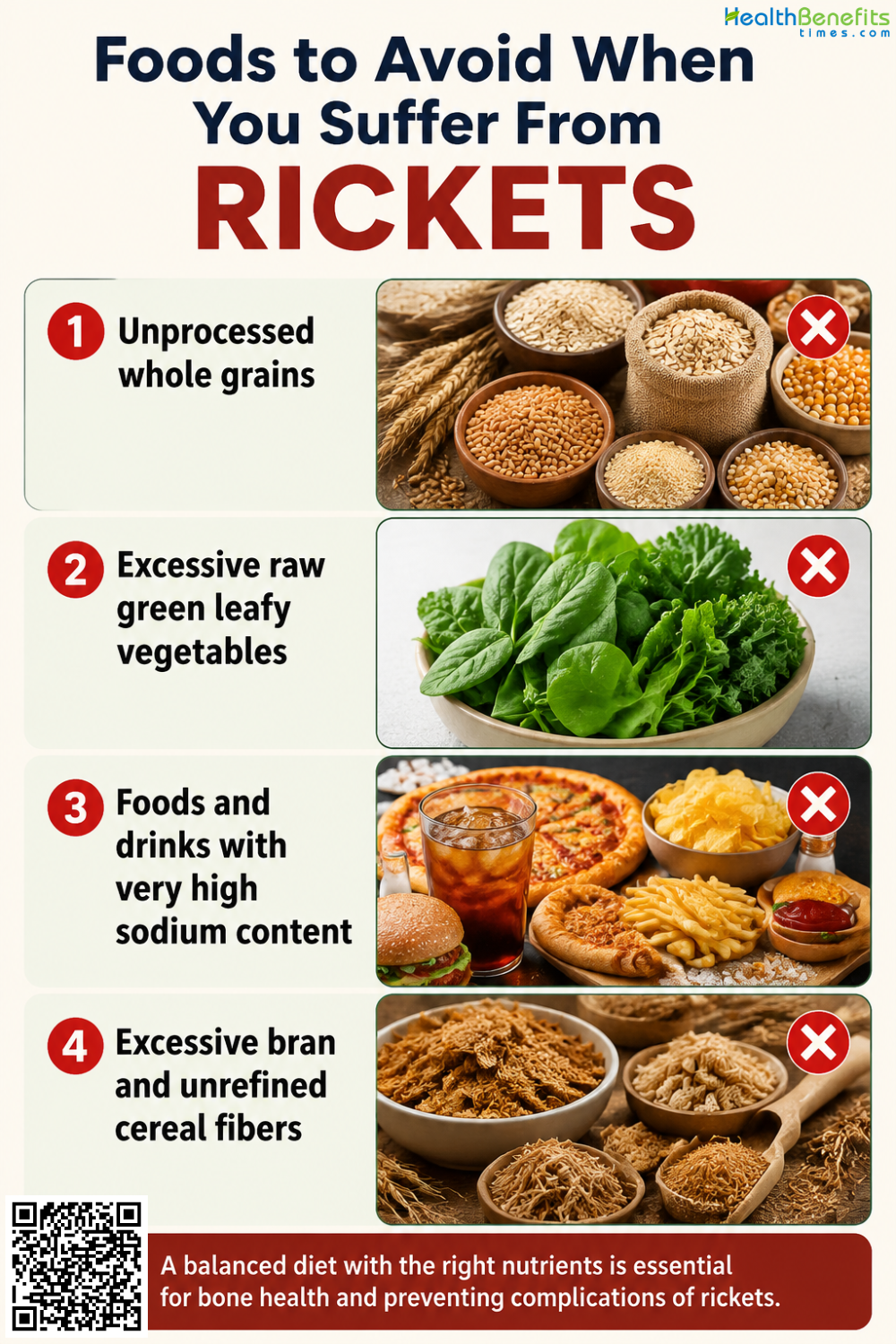
2. Excessive raw green leafy vegetables high in oxalates
Certain greens contain natural oxalates that chemically bond with dietary calcium, creating insoluble salts that prevent proper mineral uptake by the body 20.
3. Foods and drinks with very high sodium content
Excessive dietary sodium increases the urinary excretion of calcium, depleting the body’s overall mineral reserves needed for bone repair 20.
4. Excessive bran and unrefined cereal fibers
High-fiber diets rich in anti-nutrients can hinder the intestinal absorption of vital bone-building minerals like calcium and phosphorus 21.
When to See a Doctor When You Struggle From Rickets
1. Persistent bone pain or tenderness
Consult a pediatrician if your child complains of ongoing aches in the legs, pelvis, or spine, or shows unusual reluctance to walk.
2. Noticeable skeletal deformities
Seek immediate medical evaluation if you observe physical signs such as severely bowed legs, thick wrists and ankles, or abnormal skull softening.
3. Unexplained muscle weakness and delays
Schedule an appointment if a child displays poor muscle tone, frequent cramps, or delayed motor milestones like late crawling and walking.
4. Signs of acute calcium drops
Seek urgent medical care if an infant or child experiences severe muscle spasms, twitching, or sudden seizures linked to very low blood calcium.