


A sore tongue (medically referred to as glossitis for inflammation, glossalgia for pain, or glossodynia for a burning sensation) is a condition where the tongue feels painfully tender, swollen, or irritated. Rather than being a standalone disease, it is typically a symptom of an underlying issue. Common, everyday triggers include minor physical trauma such as accidentally biting your tongue or burning it on hot food as well as mouth ulcers (canker sores) and dry mouth. It can also be caused by fungal or viral infections, like oral thrush. In many cases, a sore tongue signals a nutritional deficiency, particularly low levels of iron, zinc, folate, or vitamin B-12. Food sensitivities and acid reflux can also inflame the tongue’s delicate tissues. While most minor cases heal naturally within a week, persistent pain should be evaluated by a medical professional. 1, 2.
Causes of Sore Tongue
Identifying the true origin of mucosal discomfort is an essential first step toward finding long-term relief and healing. Various environmental, systemic, and lifestyle elements are known to trigger this painful inflammatory cascade.
- Nutritional Deficiencies: Lacking crucial dietary vitamins and essential minerals most notably Vitamin B12, iron, folic acid, and zinc frequently provokes structural changes and severe soreness in oral tissues 3.
- Fungal and Bacterial Infections: Microorganisms such as Candida albicans, which causes oral thrush, or specific bacterial strains can rapidly inflame the delicate mucous membranes of the mouth and tongue surface 4.
- Burning Mouth Syndrome (BMS): Idiopathic pain disorders like BMS cause severe scalding sensations across a completely normal-appearing oral mucosa, often linked to nervous system changes or post-menopausal hormonal fluctuations 5.
- Physical Trauma or Mechanical Irritation: Accidentally biting the soft tissue, consuming excessively hot foods, or enduring chronic friction from jagged teeth and ill-fitting dental dentures easily damages the vulnerable surface.
- Medical Treatments and Therapies: Undergoing systemic chemotherapy or head and neck radiotherapy heavily damages rapidly dividing oral cells, frequently leading to a deeply painful complication known as oral mucositis 6.
- Gastrointestinal Disorders: Underlying digestive imbalances, including Helicobacter pylori infections or chronic acid reflux, occasionally manifest in the mouth as geographic or fissured tongue presentations.
- Allergies and Chemical Sensitivities: Unfavorable reactions to synthetic ingredients in toothpaste, strong mouthwashes, breath fresheners, or specific food dyes often provoke a sudden, localized immune response that results in swelling.
Symptoms of Sore Tongue
Noticing the physical transformations and uncomfortable sensations in the oral cavity helps distinguish standard inflammation from more complex health issues. Individuals dealing with this condition commonly report a blend of the following clinical signs:
- Persistent dull pain, sharp tenderness, or an intense scalding sensation localized on the tip, sides, or dorsal surface of the tongue 7.
- Visible inflammation and swelling that may make the muscular organ feel unusually large, heavy, or cumbersome inside the mouth.
- A widespread loss of the tiny, textured projections on the surface, resulting in a starkly smooth, glossy, and highly sensitive appearance.
- Noticeable pigment changes, ranging from an unhealthy pale pink to a deep, beefy, or bright erythematous red.
- Irregular, map-like depapillated patches that migrate slowly over days or weeks, frequently associated with geographic tongue 8.
- Significant difficulty performing routine oral functions smoothly, including chewing solid foods, swallowing liquids, or enunciating words clearly.
- An altered or drastically diminished sense of taste, medically known as dysgeusia, where familiar foods may seem unusually bitter, strongly metallic, or entirely flavorless 9.
Sore Tongue Facts
Presenting the foundational information clearly helps differentiate standard inflammatory symptoms from unique clinical markers and risk factors.
| Fact Category | Details |
| Symptoms |
|
| Causes |
|
| Types of Sore Tongue |
|
| How does spread |
|
| Age Group 11 |
|
| You might be at a higher risk for exposure of this disease if you: |
|
| How doctors diagnose |
|
| Other facts |
|
Natural Remedies for Sore Tongue
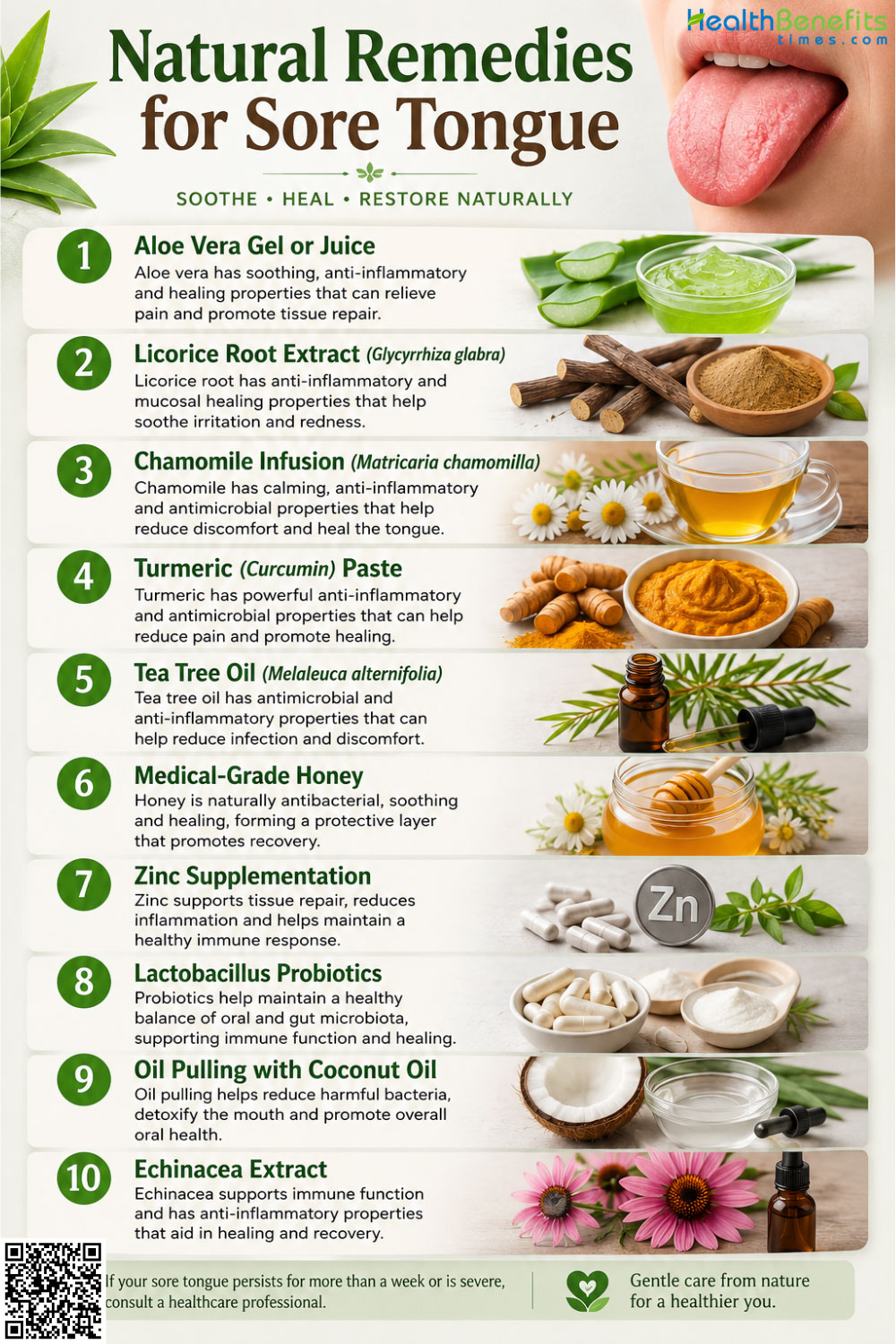
Addressing the discomfort holistically involves utilizing botanical and household ingredients widely recognized for their soothing, anti-inflammatory, and antimicrobial properties. You can easily integrate several evidence-based treatments into your daily routine to support tissue regeneration.
1. Aloe Vera Gel or Juice
Harnessing the immunomodulating and antioxidant properties of the Aloe vera plant provides exceptional relief for oral mucosal irritation. The clear gel extracted directly from the inside of the leaves contains an array of vitamins, minerals, and complex glycoproteins that actively promote rapid tissue regeneration and reduce painful inflammation. When introduced to the sensitive oral environment, it effectively coats the exposed nerve endings, immediately easing the burning sensation while fostering a protective, moisture-rich healing barrier over the atrophic patches 12.
Note: You can safely apply pure, food-grade Aloe vera gel directly to the sore areas of your tongue with a clean swab, or swish 1 to 2 tablespoons of Aloe vera juice in your mouth for a few minutes before spitting it out.
2. Licorice Root Extract (Glycyrrhiza glabra)
Turning to licorice root offers a powerful, scientifically recognized method for diminishing oral ulcers and localized tongue inflammation. The primary active compound, glycyrrhizin, functions similarly to natural adrenal steroids, delivering a robust and highly targeted anti-inflammatory effect 13. It effectively reduces the physical size of inflamed zones, drastically accelerates healing times to a window of merely four to eight days, and actively suppresses secondary bacterial invaders that can complicate tongue soreness.
Note: You can utilize this remedy by using a daily mouthwash containing a 1% to 5% licorice extract, or by applying a licorice-based bioadhesive paste directly onto the localized sore spots twice daily.
3. Chamomile Infusion (Matricaria chamomilla)
Brewing chamomile flowers yields a gentle yet highly effective botanical liquid for daily oral care. This mild herb boasts natural analgesic (pain-relieving) and anti-inflammatory characteristics that profoundly calm aggressive burning sensations 14. Because it is incredibly soothing and entirely non-toxic, chamomile is well-tolerated by highly sensitive, depapillated tongue surfaces, helping to relieve mucosal distress without any harsh, stinging side effects.
Note: You should steep a strong cup of pure chamomile tea, allow it to cool completely to room temperature, and use it as a soothing mouth rinse for three minutes, at least three times a day.
4. Turmeric (Curcumin) Paste
Reaching for turmeric introduces curcumin directly into the oral cavity, an active biological ingredient renowned for successfully combating diverse oral cavity diseases and severe stomatitis. Curcumin reliably lowers intense cellular inflammation, severely limits the proliferation of harmful microbes, and significantly decreases mucosal redness and erythema intensity 15. Its unique ability to elevate epidermal growth factors ensures that damaged tongue tissues rebuild quickly, restoring the papillae to a healthy state.
Note: You can mix a pinch of pure turmeric powder with a few drops of clean water or coconut oil to form a smooth paste, apply it gently to the sore area for five minutes, and then rinse your mouth thoroughly with water.
5. Tea Tree Oil (Melaleuca alternifolia)
Diluting tea tree oil provides access to terpinen-4-ol, a potent organic compound that exhibits formidable antifungal and antibacterial activity. When a sore tongue is explicitly caused by an overgrowth of yeast, such as in cases of oral thrush or candidiasis, this essential oil works to disrupt the cell membranes of the fungal pathogens 16. While highly effective at reducing microbial loads when carefully utilized, its high potency requires absolute caution to avoid chemical irritation.
Note: You must heavily dilute one single drop of high-quality tea tree oil into a full cup of warm water, swish the solution carefully around your mouth for thirty seconds without swallowing, and spit it out completely.
6. Medical-Grade Honey
Applying raw, unpasteurized, or medical-grade honey serves as an outstanding, biologically active intervention for oral mucositis and generalized tongue pain. Honey instantly creates a thick, viscous protective barrier that physically shields raw nerve endings from air and acidic saliva 17. Furthermore, its unique osmotic pressure naturally draws vital moisture into the wound and releases low, continuous levels of hydrogen peroxide, which gently disinfects the tissue and noticeably reduces overall healing durations.
Note: You should dab a small amount of raw honey directly onto the painful patch of your tongue using a clean cotton swab, allowing it to slowly dissolve and coat the area multiple times a day.
7. Zinc Supplementation
Correcting an underlying mineral imbalance is frequently required to resolve chronic, shifting oral lesions like geographic tongue. Zinc is an essential trace element directly responsible for epithelial tissue reconstruction and the proper formation of taste buds 18. By gently restoring depleted zinc levels in the saliva and bloodstream, the filiform papillae are encouraged to regenerate, thereby reversing the smooth, highly sensitive bald spots on the muscle.
Note: You can take an over-the-counter chelated zinc lozenge or daily supplement, ensuring you consume it alongside a meal to prevent an upset stomach, as guided by standard nutritional advice.
8. Lactobacillus Probiotics
Addressing the gut-mouth axis introduces a novel way to treat stubborn oral mucous membrane diseases that do not respond to topical numbing agents. Strains of Lactobacillus inhibit the overgrowth of Helicobacter pylori and other harmful gastrointestinal bacteria that frequently correlate with geographic and fissured tongue symptoms 19. By acting as a balancing adjuvant, these friendly bacteria suppress inflammatory cytokines and help restore the natural microscopic flora both in the stomach and on the tongue coating.
Note: You can easily consume plain, unsweetened yogurt rich in live active Lactobacillus cultures daily, making sure to hold the yogurt in your mouth briefly before swallowing to expose the tongue tissue.
9. Oil Pulling with Coconut Oil
Engaging in the ancient Ayurvedic practice of oil pulling helps draw out harmful bacteria and soothe mucosal inflammation simultaneously. Coconut oil is particularly beneficial for this method because it contains high concentrations of lauric acid, a medium-chain fatty acid with proven antimicrobial and anti-inflammatory properties 20. The continuous mechanical action of swishing the oil alters the oral microflora, safely reducing the bacterial load that often exacerbates an already tender, inflamed tongue.
Note: You should place one tablespoon of edible, cold-pressed coconut oil in your mouth, swish it gently around your teeth and tongue for 10 to 15 minutes, spit it safely into a trash bin, and then brush your teeth normally.
10. Echinacea Extract
Relying on herbal medicines that actively moderate the immune system can offer significant relief for recurrent minor aphthous ulcers and focal tongue sores. Echinacea effectively acts as an immunoregulator that steadily decreases the intensity of oral pain and prevents the frequent recurrence of mucosal lesions 21. Continuous use over a multi-week period has been shown to support the complete improvement of the epithelial layers by moderating local inflammatory responses.
Note: You can take Echinacea in the form of a prepared herbal tablet or utilize a diluted tincture as a daily oral rinse to bathe the affected tissues directly.
Is there any exercise or physical activities for Sore Tongue
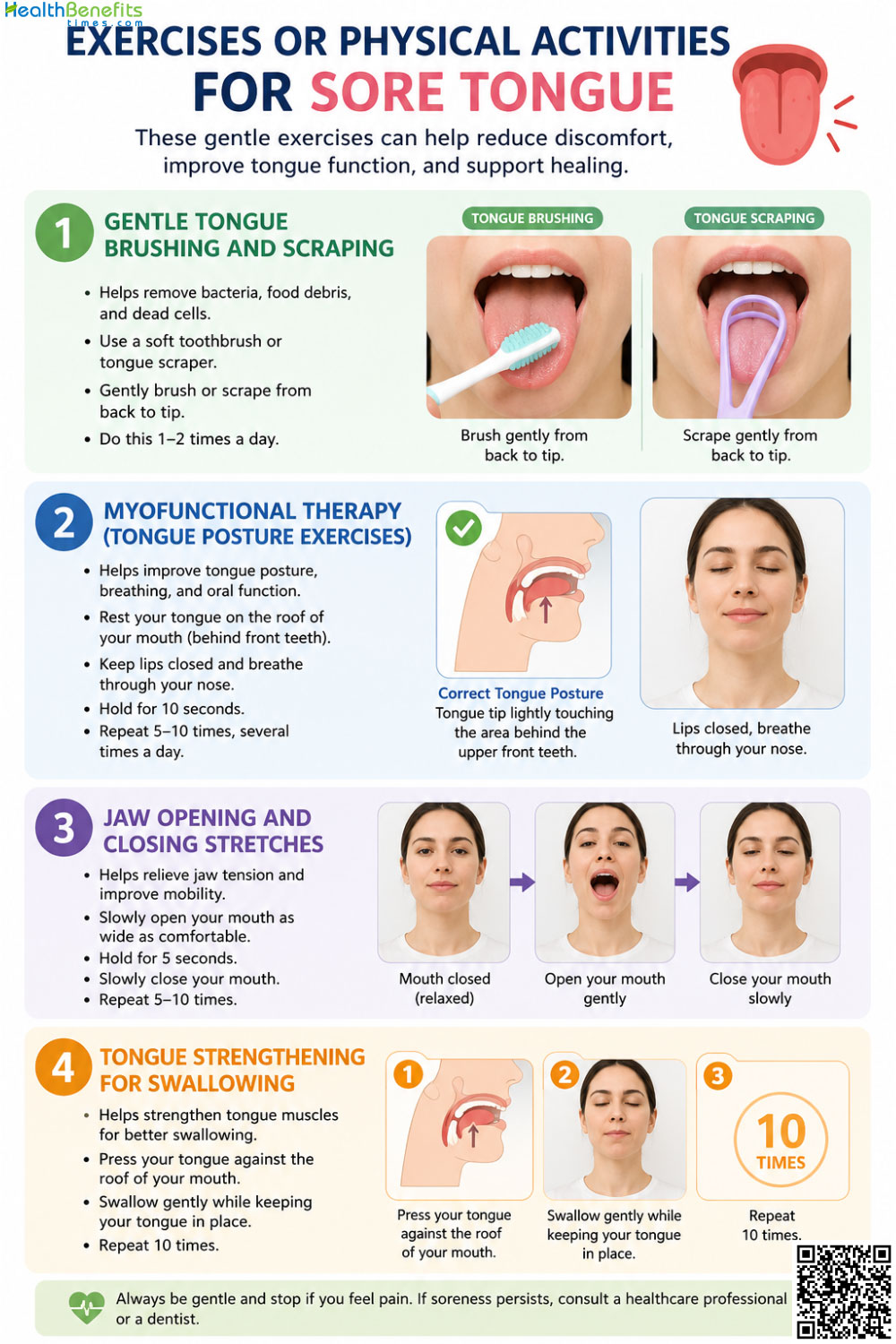
Restoring comfort and functionality to the oral cavity is not limited solely to topical treatments; specific physical movements and hygiene practices can also heavily support tissue recovery and improve functional mobility. You can incorporate these straightforward routines to ease mechanical stress.
1. Gentle Tongue Brushing and Scraping
Maintaining a highly clean surface is paramount when the tongue is inflamed, as debris and bacterial buildup can substantially delay healing. While aggressive scraping is undeniably harmful to recovering tissue, a very gentle mechanical cleansing removes the thick coating of dead cells, trapped food particles, and stagnating microorganisms 22. This light physical activity safely stimulates local blood flow, promoting tissue repair and enhancing impaired taste perception over time.
Note: You should use an extra soft-bristled toothbrush or a smooth-edged tongue scraper, starting from the back of the tongue and pulling forward with extremely light, forgiving pressure just once a day.
2. Myofunctional Therapy (Tongue Posture Exercises)
Correcting how the muscular tongue naturally rests inside the closed mouth prevents chronic friction against sharp teeth or dental hardware. Myofunctional exercises specifically train the tongue to rest gently against the roof of the mouth (the hard palate) rather than thrusting aggressively forward against the lower jaw 23. This optimal physiological positioning greatly reduces mechanical strain and prevents the sides of the tongue from becoming scalloped, bruised, or chronically sore.
Note: You can practice this by deliberately placing the entire flat surface of your tongue against the roof of your mouth, closing your lips completely, and holding this quiet resting posture while breathing through your nose for several minutes.
3. Jaw Opening and Closing Stretches
Releasing muscular tension in the temporomandibular joint (TMJ) and surrounding facial structures indirectly relieves physical stress on the base of the tongue. People experiencing burning mouth syndrome or generalized oral pain often clench their jaws instinctively as a reaction to discomfort 24. Performing controlled, rhythmic jaw exercises increases local circulation, reduces muscular stiffness, and promotes a relaxed oral environment conducive to cellular healing.
Note: You should sit upright in a chair, slowly open your mouth as wide as is comfortably possible without feeling sharp pain, hold the stretch for five seconds, and then slowly close it, repeating this sequence ten times daily.
4. Tongue Strengthening for Swallowing
Fortifying the intrinsic muscles of the tongue improves propulsion strength and squeezing pressure, which often become compromised during severe bouts of oral inflammation. Strengthening exercises of the swallowing muscles provide better formation and control of food boluses, greatly reducing the painful friction generated when trying to swallow coarse foods over an atrophic tongue surface 25.
Note: You can press the tip of your tongue firmly against the back of your upper front teeth, swallow while keeping your lips tightly sealed, and consciously feel the muscle contract, repeating this simple movement throughout the day.
Foods and Activities to Avoid
Protecting your vulnerable oral tissues requires a conscious, daily effort to eliminate harsh environmental and dietary irritants. You must be vigilant about what enters your mouth during the healing phase.
Foods to Avoid When You Suffer from a Sore Tongue
- Acidic Fruits and Juices: Citrus fruits like lemons, oranges, grapefruit, and raw tomatoes have high acidity that instantly triggers stinging, burning, and further tissue breakdown 26.
- Spicy Ingredients: Chili peppers, hot sauces, and heavy curries contain potent capsaicin, which aggressively irritates bare nerve endings on a depapillated tongue.
- Salty Snacks: Highly concentrated sodium found in chips, pretzels, and heavily processed meats will rapidly draw moisture from the tissues, severely increasing discomfort.
- Rough and Crunchy Textures: Dry toast, hard crusts, and crisp crackers act exactly like rough sandpaper on a smooth, vulnerable tongue surface.
- Extreme Temperatures: Very hot soups, boiling teas, or extremely cold ice lollies can shock the inflamed mucosa and worsen cellular damage.
Activities to Avoid When You Suffer from a Sore Tongue
- Tobacco Consumption: Smoking cigarettes or chewing tobacco introduces thousands of harsh chemical toxins that restrict blood flow and severely delay natural wound healing.
- Drinking Alcohol: Spirits and alcohol-based beverages dehydrate the oral cavity instantly, stripping away protective saliva and chemically burning open sores 27.
- Aggressive Oral Care: Brushing the teeth or tongue with hard, stiff bristles, or using commercial mouthwashes containing alcohol and harsh detergents, actively destroys fragile recovering cells.
- Constant Tongue Checking: Frequently rubbing the tongue against the teeth to physically “check” the sore spot causes repeated mechanical friction and needlessly prolongs the inflammation.
Myths and Misconceptions
Dispelling common medical misunderstandings helps individuals make better, safer choices for their long-term oral health.
| Myth | Reality |
| A sore tongue means you definitely have a contagious infection. | Most cases, such as geographic tongue, vitamin deficiencies, or physical trauma, are entirely non-contagious. Only specific viral (e.g., herpes) or fungal infections can be spread. |
| Strong, alcohol-based mouthwash will effectively “kill the pain.” | Alcohol acts as a severe astringent and cellular irritant. It will severely dry out the delicate oral mucosa, cause intense burning, and actively delay the natural healing process. |
| Geographic tongue is a dangerous early sign of oral cancer. | Geographic tongue is a completely benign, harmless inflammatory condition. It poses zero risk of transforming into a malignancy, despite its highly unusual and changing appearance. |
| You should immediately stop brushing your teeth if your tongue hurts. | Neglecting daily oral hygiene allows plaque and bacteria to flourish dangerously, which can cause secondary infections. Instead, switch to a softer brush and a milder, unflavored toothpaste. |
| Applying an aspirin tablet directly to the tongue will numb it. | Placing raw aspirin directly on the tongue causes a severe chemical burn, heavily damaging the soft tissue and significantly worsening the pain and ulceration. |
Special Considerations
Certain demographic populations require highly tailored medical approaches due to unique physiological sensitivities and inherent risk factors.
1. Children
Pediatric patients are highly susceptible to oral thrush (fungal infections) and traumatic injuries from accidentally biting their tongues while learning to chew. When evaluating remedies for youngsters, caregivers must ensure they do not accidentally swallow essential oils or large amounts of baking soda. Pediatric interventions should focus entirely on mild, forgiving solutions like cooled chamomile tea and pediatric-safe honey, noting strictly that honey must never be given to infants under one year old due to the severe risk of infant botulism.
2. Pregnancy
Expectant mothers frequently experience massive hormonal fluctuations that lead directly to temporary glossitis or burning mouth symptoms. While natural remedies are generally considered safe, pregnant women should always consult their obstetrician before using potent herbal extracts, as systemic absorption of certain organic compounds might not be medically recommended. Expectant mothers should focus heavily on nutrient-dense foods to prevent pregnancy-related anemia, a highly common systemic cause of tongue soreness.
3. Chronic Condition
Individuals living with diabetes, autoimmune disorders (like Sjögren’s syndrome), or those currently undergoing systemic chemotherapy face a much higher risk of developing severe, persistent oral mucositis 28. In these vulnerable populations, natural remedies should serve strictly as complementary care rather than primary treatment. Strict glycemic control and vigilant medical supervision are absolutely required to prevent opportunistic, treatment-resistant fungal infections from taking hold in the damaged mouth.
4. Elderly
Older adults frequently struggle with chronic dry mouth (xerostomia) induced by multiple daily prescription medications, poorly fitting dentures, and naturally reduced nutrient absorption 29. The physiological thinning of the oral mucosa associated with natural aging makes the tongue highly vulnerable to tearing. Remedies in this demographic should prioritize heavy moisturization, such as frequent sips of water, Aloe vera applications, and non-abrasive soft diets, alongside regular dental check-ups to adjust loose prosthetics.
Precaution Before Use of Natural Remedies
Before you apply any holistic treatment to a sensitive oral lesion, it is absolutely critical to observe specific safety guidelines to avoid accidental medical complications.
- Confirm Your Allergies: Always perform a very small patch test on your skin or the tip of your tongue before using botanicals like chamomile or tea tree oil, as sudden allergic reactions can cause rapid, dangerous airway swelling.
- Ensure Proper Dilution: Never apply highly concentrated essential oils directly to the mucous membranes under any circumstances; they must be appropriately diluted in a gentle carrier oil or water to prevent severe chemical burns.
- Monitor for Interactions: Be aware that certain potent herbal remedies, such as licorice root, can interact negatively with systemic medications like blood pressure drugs if inadvertently swallowed in large quantities over several days.
- Evaluate Sodium Bicarbonate Carefully: While baking soda is widely used for canker sores, indiscriminate use can cause a sudden pH spike that may delay proper pharmacological treatment if your mucositis is severe 30.
- Check the Diagnosis First: Ensure that your sore tongue is not a hidden symptom of a deeper systemic issue, such as severe pernicious anemia or a thyroid disorder, which definitively requires specific medical intervention rather than just topical symptom relief.
- Limit the Duration of Use: If a natural home remedy does not provide noticeable, measurable relief within a few days, discontinue its use immediately to ensure it is not secretly aggravating the delicate tissues.
When to See Doctor
While conservative home care successfully resolves most minor oral irritations, certain clinical warning signs demand immediate professional medical evaluation. You should contact a healthcare provider if you experience:
- Symptoms of glossitis or extreme tongue soreness that persist entirely without improvement for longer than 10 to 14 days 7.
- Swelling of the tongue tissue that becomes severe enough to obstruct your airway or make breathing noticeably difficult.
- Complete inability to chew, swallow liquids, or speak normally, leading directly to unintended weight loss or systemic dehydration.
- The sudden appearance of firm, painless lumps, deep non-healing ulcers, or hard white patches (leukoplakia) that cannot be scraped away easily.
- Accompanying systemic symptoms such as a high-grade fever, a rash spreading across the body, or swollen, tender lymph nodes in the neck and jaw region.