


Vertigo is a specific type of dizziness characterized by a persistent, false sensation of spinning or movement, either of the individual themselves or their surroundings. Unlike lightheadedness, vertigo typically involves a sensory mismatch between the visual, somatosensory, and vestibular systems, often stemming from dysfunction within the inner ear or the vestibular pathways of the brain 1. This condition frequently manifests as a result of mechanical disruptions, such as the displacement of otoconia within the semicircular canals, or neurological conditions affecting the vestibular nerve 2. While often transient, the experience can significantly impair balance and spatial orientation, frequently accompanied by nausea or involuntary eye movements. Accurately identifying the underlying pathology—whether peripheral, such as benign paroxysmal positional vertigo (BPPV), or central—is essential for determining appropriate clinical management and restoring stability 3.
Causes of Vertigo
1. Benign Paroxysmal Positional Vertigo (BPPV)
This is the most common cause of vertigo, occurring when tiny calcium carbonate crystals, known as otoconia, become dislodged from their normal position within the inner ear and migrate into the semicircular canals. These displaced particles interfere with the canal’s ability to sense head movement accurately, resulting in brief episodes of spinning when the head position changes.
2. Meniere’s Disease
This disorder involves an abnormal buildup of fluid within the inner ear. The increased pressure disrupts both balance and hearing, typically resulting in prolonged episodes of severe vertigo, fluctuating hearing loss, and a persistent ringing sensation in the affected ear 4.
3. Vestibular Neuritis and Labyrinthitis
These conditions typically arise from viral infections that cause inflammation of the nerves responsible for balance. While vestibular neuritis affects only the vestibular nerve, causing sudden and intense vertigo without hearing loss, labyrinthitis includes inflammation of the cochlea, which often results in accompanying hearing impairment or ringing in the ears 5.
4. Vestibular Migraine
Individuals with a history of migraines may experience vertigo episodes, either concurrently with a headache or in isolation. This form of vertigo is believed to stem from abnormal electrical signaling within the brain’s pathways that process balance and sensory input.
5. Central Nervous System Disorders
Less frequently, vertigo may be triggered by damage to the brainstem or cerebellum, such as from a stroke, tumor, or multiple sclerosis. Unlike inner ear issues, these causes are often associated with additional neurological symptoms, such as difficulty speaking, double vision, or loss of coordination.
Symptoms of Vertigo
1. Sensation of Spinning
The primary symptom is a subjective feeling that either the body or the surrounding environment is moving, spinning, or tilting. This sensation often intensifies with sudden changes in head position or movement.
2. Balance Difficulties and Postural Instability
Individuals frequently experience a significant loss of equilibrium, which can lead to unsteadiness while standing or walking. This instability increases the risk of falls and complicates the performance of daily physical tasks.
3. Nausea and Vomiting
Because the vestibular system is closely linked to the brain’s vomiting center, severe or prolonged vertigo often triggers acute nausea, motion sickness, and active vomiting.
4. Involuntary Eye Movements (Nystagmus)
This clinical sign involves rapid, rhythmic, and involuntary movements of the eyes. These movements occur because the brain is attempting to compensate for the false signals of motion coming from the inner ear.
5. Auditory Changes
Depending on the underlying cause, some people may experience symptoms such as a ringing or buzzing sound in the ear (tinnitus), a feeling of pressure or “fullness” inside the ear, or a temporary decrease in hearing acuity.
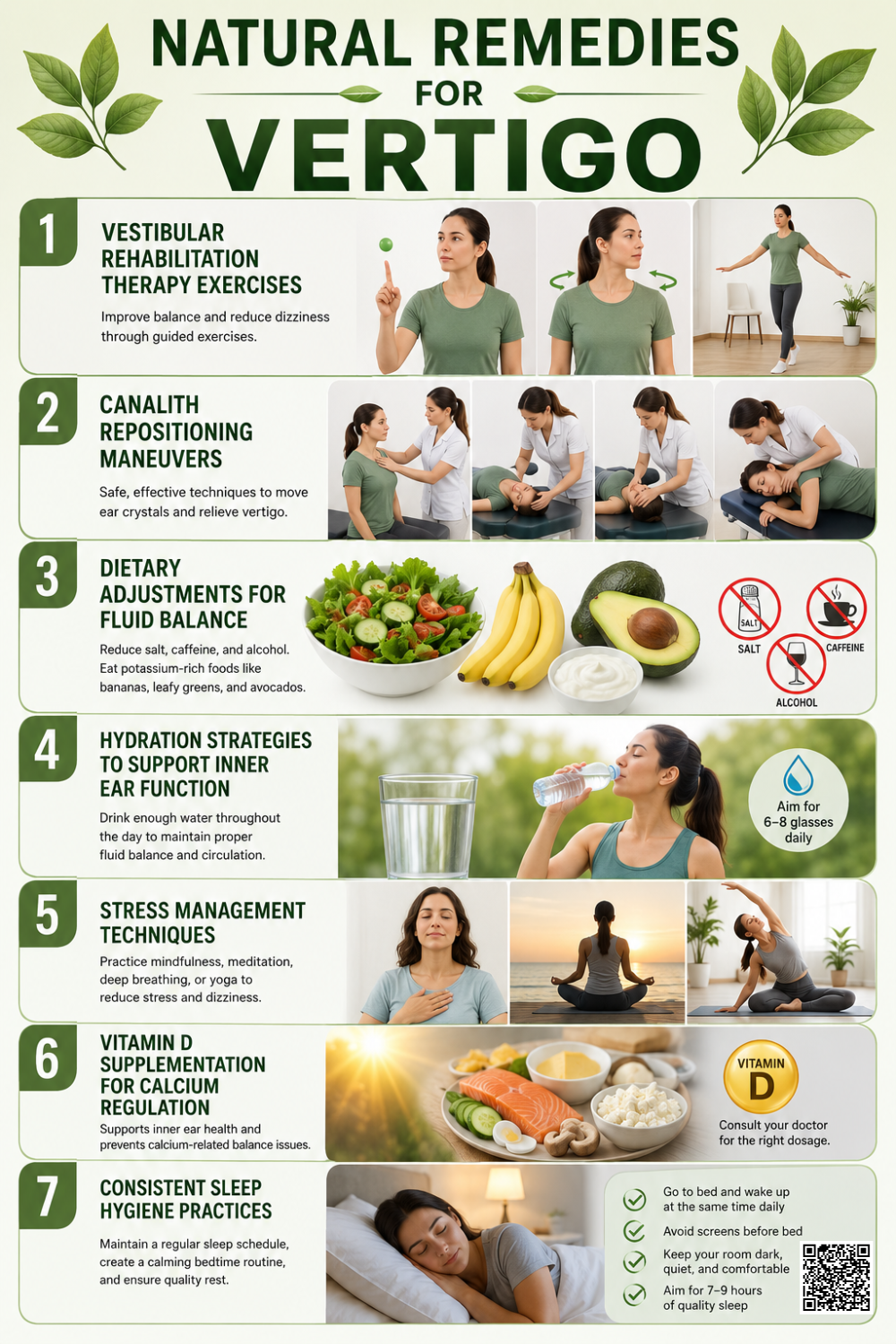 Natural Remedies of Vertigo
1. Vestibular Rehabilitation Therapy Exercises
How it may help
Vestibular Rehabilitation Therapy (VRT) utilizes targeted head, body, and eye movements to help the brain compensate for inner ear dysfunction. By systematically challenging the balance system, VRT promotes central nervous system adaptation, effectively reducing dizziness, improving gaze stability, and enhancing postural control for individuals experiencing chronic vestibular deficits.
What research says
Clinical evidence consistently demonstrates that VRT improves patient-reported outcomes and reduces fall risks. Studies indicate that structured, habituation-based exercises facilitate faster recovery and long-term functional improvement compared to standard care, particularly in patients with peripheral vestibular disorders 6.
How to use it safely
Perform these exercises under the direct guidance of a trained physical therapist who can tailor a program to your specific vestibular deficit. Begin slowly in a controlled, safe environment to ensure stability and gradually increase movement intensity as balance improves.
Potential precautions or side effects
Brief increases in dizziness may occur during initial sessions as the brain adapts. Stop immediately and consult your therapist if you experience severe pain or persistent neurological symptoms 7.
2. Canalith Repositioning Maneuvers
How it may help
Canalith repositioning maneuvers, such as the Epley maneuver, use specific head and body movements to guide dislodged inner ear crystals out of the semicircular canals. By relocating these particles into a part of the ear where they no longer trigger false signals, these movements provide rapid, effective relief for individuals suffering from positional vertigo.
What research says
Clinical research confirms that these maneuvers are the primary, highly effective treatment for benign paroxysmal positional vertigo (BPPV). Studies demonstrate a high rate of symptom resolution after one or a few sessions, with significant improvements in patient stability and quality of life compared to untreated cases or those receiving only medication 8.
How to use it safely
Have a qualified healthcare professional perform the initial maneuver to ensure correct head positioning and safety. If your doctor clears you to perform them at home, move slowly through each position, pausing until any dizziness subsides before transitioning to the next step, ensuring you have support to prevent falling 9.
Potential precautions or side effects
Temporary nausea, lightheadedness, or brief surges of dizziness may occur during the procedure. Seek immediate care if you develop neck pain, numbness, or fainting.
3. Dietary Adjustments for Fluid Balance
How it may help
Reducing sodium intake helps manage inner ear fluid pressure, a primary factor in conditions like Meniere’s disease. By limiting salt, you can help stabilize the inner ear environment, which may reduce the frequency and intensity of vertigo episodes and accompanying auditory symptoms caused by excess fluid retention within the labyrinth.
What research says
Clinical guidelines emphasize that consistent, low-sodium dietary patterns are a cornerstone of managing chronic vestibular disorders. Research indicates that restricting daily sodium consumption can significantly stabilize hearing and reduce the occurrence of pressure-related vertigo attacks, proving essential for long-term symptom management and preventing further inner ear damage in predisposed individuals 10.
How to use it safely
Adopt a low-sodium diet by focusing on whole, unprocessed foods and avoiding high-sodium additives. Read food labels carefully to monitor daily salt intake and consult a healthcare provider or registered dietitian to establish a safe, balanced nutritional plan tailored to your specific health requirements 11.
Potential precautions or side effects
Consult your doctor before significantly restricting sodium, especially if you manage high blood pressure or other chronic conditions that require careful electrolyte balance.
4. Hydration Strategies to Support Inner Ear Function
How it may help
Adequate hydration is critical for maintaining optimal fluid balance within the inner ear’s vestibular system. Proper fluid levels support the normal movement of endolymph, the fluid that signals head position to the brain, potentially reducing the sensory conflicts that cause vertigo and related dizziness in susceptible individuals 12.
What research says
Clinical evidence indicates that dehydration can exacerbate symptoms of vestibular disorders by altering blood volume and inner ear fluid viscosity. Maintaining balanced hydration status is recommended to support general neurological function and mitigate the secondary effects of imbalance, particularly in patients recovering from acute vestibular insults or those prone to lightheadedness 13.
How to use it safely
Aim to drink fluids consistently throughout the day rather than consuming large amounts at once. Prioritize water over beverages containing caffeine or high sugar, as these may fluctuate blood pressure or influence fluid retention. Discuss your specific fluid needs with a physician based on your overall health and activity level 14.
Potential precautions or side effects
Individuals with heart, kidney, or liver conditions must consult a doctor regarding fluid intake limits to avoid dangerous fluid overload or electrolyte imbalances.
5. Stress Management Techniques
How it may help
Chronic stress triggers the body’s nervous system, often worsening the frequency and severity of vertigo. By reducing physiological stress responses, these techniques lower internal tension and help prevent the overstimulation of the vestibular system. Managing stress promotes stability, helping the brain effectively process sensory signals rather than overreacting to balance input inconsistencies 15.
What research says
Clinical research demonstrates that psychological distress and anxiety are frequent comorbidities of vestibular disorders. Studies indicate that interventions such as cognitive-behavioral techniques and relaxation training significantly improve clinical outcomes. These strategies help decouple the cycle of dizziness and anxiety, leading to a measurable reduction in vertigo-related symptoms and increased patient confidence in daily activities.
How to use it safely
Incorporate evidence-based practices like controlled breathing or progressive muscle relaxation into your daily routine. If anxiety remains high, seek guidance from a qualified mental health professional to learn specialized coping methods. Start with short, consistent sessions in a calm, seated position to ensure comfort and prevent dizziness during practice 16.
Potential precautions or side effects
Avoid hyperventilating during relaxation exercises, as rapid breathing can sometimes trigger lightheadedness. Seek medical advice if stress-related symptoms interfere with daily functioning or physical health.
6. Vitamin D Supplementation for Calcium Regulation
How it may help
Vitamin D is essential for calcium metabolism, which directly influences the formation and stability of otoconia within the inner ear. Maintaining adequate vitamin D levels helps ensure these crystals remain properly anchored, potentially preventing the mechanical disruptions that cause episodes of positional vertigo and assisting in the structural health of the inner ear environment 17.
What research says
Research indicates a significant correlation between vitamin D deficiency and a higher frequency of recurrent vertigo episodes, particularly in patients with benign paroxysmal positional vertigo (BPPV). Clinical findings suggest that correcting low levels through supplementation can reduce the risk of recurring attacks, supporting a more stable vestibular system in individuals identified as deficient by blood testing 18.
How to use it safely
Consult your primary care physician to measure your serum vitamin D levels before starting supplementation. Follow your doctor’s specific dosage recommendations, as needs vary based on individual deficiency status. Do not exceed the recommended daily intake to avoid potential toxicity, and prioritize professional guidance for personalized clinical management 19.
Potential precautions or side effects
Excessive intake may cause high calcium levels, leading to kidney issues or digestive distress. Always monitor for adverse effects and strictly adhere to physician-prescribed dosage limits.
7. Consistent Sleep Hygiene Practices
How it may help
Adequate, high-quality sleep is fundamental for central nervous system restoration and vestibular processing. Establishing regular sleep patterns allows the brain to recover from sensory fatigue and reduces the irritability of vestibular pathways. Consistent rest helps manage the systemic exhaustion that can often lower a person’s threshold for experiencing vertigo-related symptoms and balance instability 20.
What research says
Clinical evidence highlights a strong bidirectional relationship between sleep disorders and vestibular symptoms. Research indicates that sleep deprivation worsens postural control and increases susceptibility to dizziness. Improving sleep duration and consistency has been shown to enhance vestibular compensation, leading to reduced symptom severity and improved overall functional outcomes for individuals managing chronic balance concerns.
How to use it safely
Maintain a consistent bedtime and wake-up schedule, even on weekends, to stabilize your circadian rhythm. Create a quiet, dark environment and avoid electronic screens for at least an hour before sleep. If you have chronic trouble sleeping, consult a healthcare provider to rule out underlying conditions like sleep apnea 21.
Potential precautions or side effects
Avoid using over-the-counter sleep aids or alcohol to induce sleep, as these may cause morning grogginess or interact negatively with medications used for vertigo.
 Foods to Avoid When You suffer from Vertigo
1. High-Sodium Foods
Excessive salt intake promotes fluid retention, which can increase inner ear pressure. Avoid processed meats, canned soups, and salty snacks to maintain stable fluid balance.
2. Caffeinated Beverages
Caffeine can stimulate the nervous system and potentially worsen tinnitus or vestibular sensitivity. Limiting coffee, tea, and energy drinks may help reduce the frequency of dizziness episodes.
3. Alcoholic Drinks
Alcohol alters the composition of inner ear fluids and affects the central nervous system’s ability to process balance signals, which can trigger or intensify vertigo attacks 22.
4. High-Sugar Foods and Drinks
Rapid spikes and drops in blood sugar levels can negatively impact vestibular function. Reducing intake of refined sugars and sweets helps prevent metabolic fluctuations that affect balance.
5. Foods Containing Tyramine
For individuals with vestibular migraines, tyramine-rich foods—such as aged cheeses, cured meats, and fermented items—may act as triggers for neurological episodes and should be monitored.
When To See a Doctor for Vertigo
1. Sudden, Severe Headache
An abrupt, intense headache occurring with vertigo requires immediate assessment to rule out potential vascular issues or neurological events within the brain.
2. Neurological Weakness or Numbness
Any sudden loss of strength, tingling, or numbness in the arms, legs, or face accompanying dizziness necessitates urgent clinical evaluation for central nervous system dysfunction.
3. Difficulty Speaking or Swallowing
Sudden slurred speech, confusion, or trouble swallowing while dizzy are critical warning signs that require emergency medical attention to exclude stroke or brainstem impairment.
4. Visual Disturbances
If you experience double vision, loss of vision, or an inability to focus clearly during a vertigo episode, seek professional help to address potential central vestibular pathway damage.
5. Loss of Coordination or Gait Instability
An inability to walk or maintain balance that results in significant falls requires a physician to evaluate for central or cerebellar involvement.
6. Persistent or Worsening Symptoms
Vertigo that does not resolve, becomes progressively more severe, or is accompanied by new, unexplained symptoms should be managed by a clinician for accurate diagnosis.