
Tyrosine symbolizes as Tyr or Y, is one of 20 amino acids used by cells to incorporate proteins. It is a non-essential amino acid having polar side group. The term tyrosine is derived from Greek word tyros which means cheese and was discovered by German chemist Justus von Liebig in 1846 in the protein casein from cheese. When it is referred as side chain or functional group, it is called tyrosyl. Generally, it is classified as hydrophobic amino acid as it is major hydrophilic than phenylalanine.
L-tyrosine is found in diet involved for producing catecholamines such as adrenaline and dopamine. It is an amino acid which is metabolized itself for production of these neurotransmitters. Supplements of L-tyrosine provide more building blocks for catecholamines to be created and provide indirect benefits to them. Tyrosine is a precursor of imperative chemical compounds as norepinephrine (noradrenaline), epinephrine (adrenaline), dopamine, thyroid hormone and melanin. L-isomer of tyrosine is the only form in humans which is involved in protein synthesis. It is regarded as non-essential amino acid as it have to be obtained in form of diet but could be synthesized by the body from other compounds through chemical reactions.
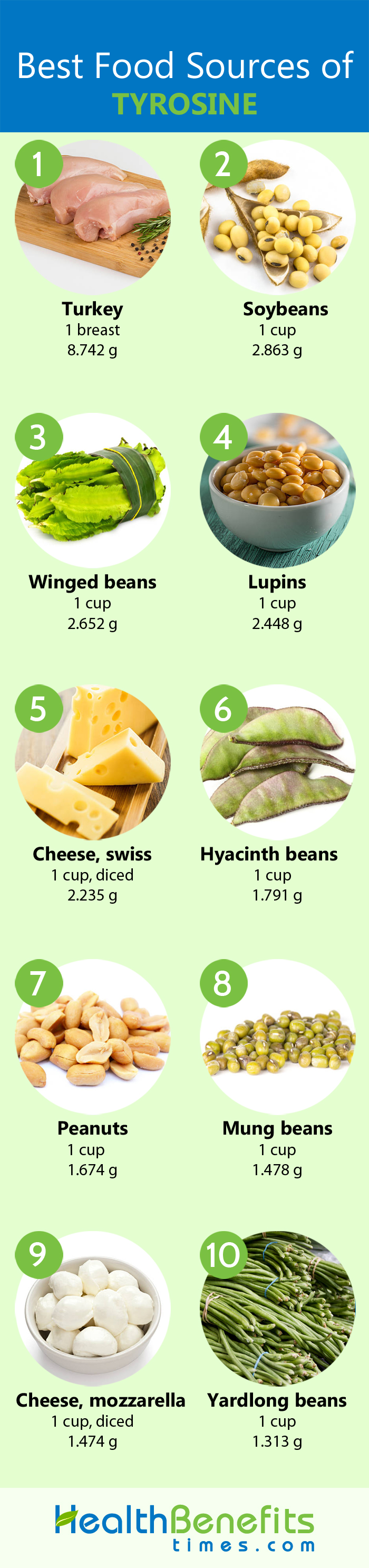
Dietary sources of Tyrosine
| Food name | Weight (g) | Tyrosine (g) |
| Turkey | 863 | 8 |
| Spirulina | 112 | 2 |
| Soybeans | 186 | 2 |
| Winged beans | 182 | 2 |
| Lupins | 180 | 2 |
| Swiss cheese | 132 | 2 |
| Fontina cheese | 132 | 2 |
| Parmesan cheese | 100 | 1 |
| Hyacinth beans | 210 | 1 |
| Mungo beans | 207 | 1 |
| Peanuts | 146 | 1 |
| Tuna | 146 | 1 |
| Yardlong beans | 167 | 1 |
| Kielbasa | 370 | 1 |
| Duck | 140 | 1 |
| Tilefish | 150 | 1 |
| Kidney beans | 184 | 1 |
| Rockfish | 149 | 1 |
| Butternuts | 120 | 1 |
| Haddock fish | 150 | 1 |
Health Benefits of Tyrosine
Here are some health benefits of tyrosine:
- Lowers stress
Lowers stress is fundamental to overall health and it could lower chronic inflammation and disease throughout the body. It shows that tyrosine supplement helps to lower stress hormone levels and more energy than those deficient in amino acid.
- Improve memory
Study shows that tyrosine affects level of neurotransmitters and ability of toxins which damage nerves. It lowers the chances of neurodegenerative disease such as Parkinson’s is reduced. It ensures proper production of neurotransmitter maintaining neural pathways open and functioning that protects memory.
- Cognitive activity
Ingesting tyrosine helps to promote cognitive function during acute stressors such as cold, sleep deprivation and high altitude. It promotes creative thinking and speed of switching between two tasks.
- Thyroid health
Tyrosine is a precursor to thyroxine which is a crucial hormone. People with hypothyroidism stimulate normal production of hormone which mitigates side effects of this condition.
- Blood pressure
Tyrosine is helpful for lowering diastolic pressure in acute stress situations.
- Muscle function
Body is able to effective with different organ systems which allows function on daily basis. It is required for constant communication of nervous system and muscles in the body. This amino acid helps to maximize muscle function and is beneficial for athletes and those who want rapid results.
- Attention Deficit Disorders
Research shows that adequate amount of amino acid in brain helps to focus as well as concentrate that control worst symptoms of ADD. It is a vital part in production of epinephrine and dopamine, the two hormones that line with ADD patients.
- Treat depression
Tyrosine has a crucial role in neurotransmitter production which means it has measurable impact on mood and depression symptoms. It stimulates production or release of dopamine which is one of the good hormones that assist to eliminate psychological torment of depression. It has sedative effect which is helpful for people with insomnia to achieve better sleep and aid regulation of Circadian rhythms.
- Treat phenylketonuria
Phenylketonuria is a birth defect which promotes phenylalanine levels in people. It results low tyrosine levels and affects essential functions related with it. Physicians recommend supplementation of tyrosine for preventing levels from becoming too low.
Tyrosine side effects
Excessive use of tyrosine causes some side effects in the body such as hyperthyroidism and grave’s disease. People with Grave’s disease or elevated thyroid levels, supplementation of tyrosine worsen the condition. Pregnant women should avoid it because effect of this compound is unpredictable.
References:
https://en.wikipedia.org/wiki/Tyrosine
https://examine.com/supplements/l-tyrosine/
http://www.newworldencyclopedia.org/entry/Tyrosine