

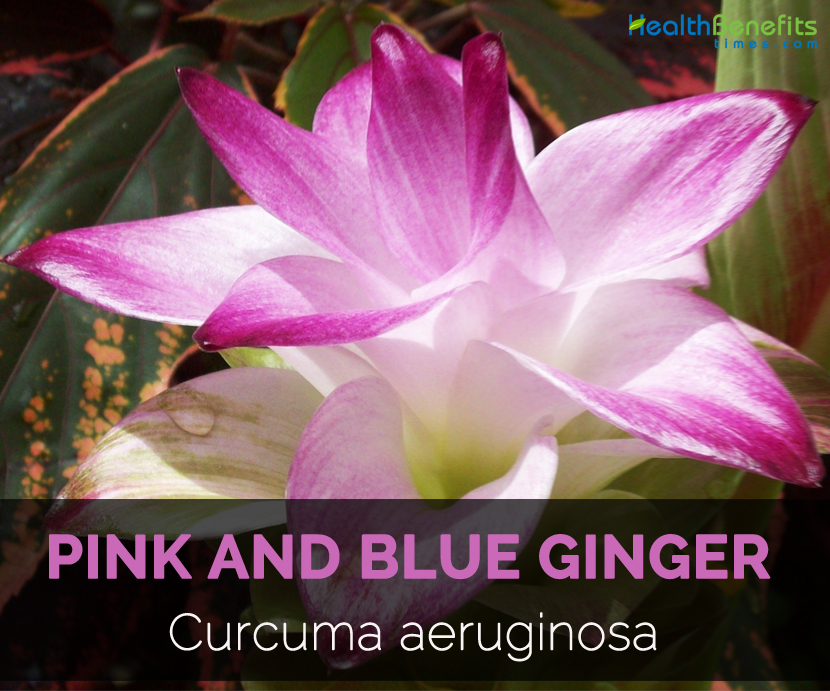
 Pink and blue ginger belongs to genus Curcuma and a member of ginger family Zingiberaceae. This genus comprises of 100 accepted species including turmeric. It is endemic to southeast Asia including Indian subcontinent, Southern China, Bangladesh, New Guinea, Thailand, Myanmar, Malaysia, Vietnam, Cambodia and Indonesia. It is found on riverbanks, grassy places, margins of forests and teak forests at elevations of 400 to 750 meters.
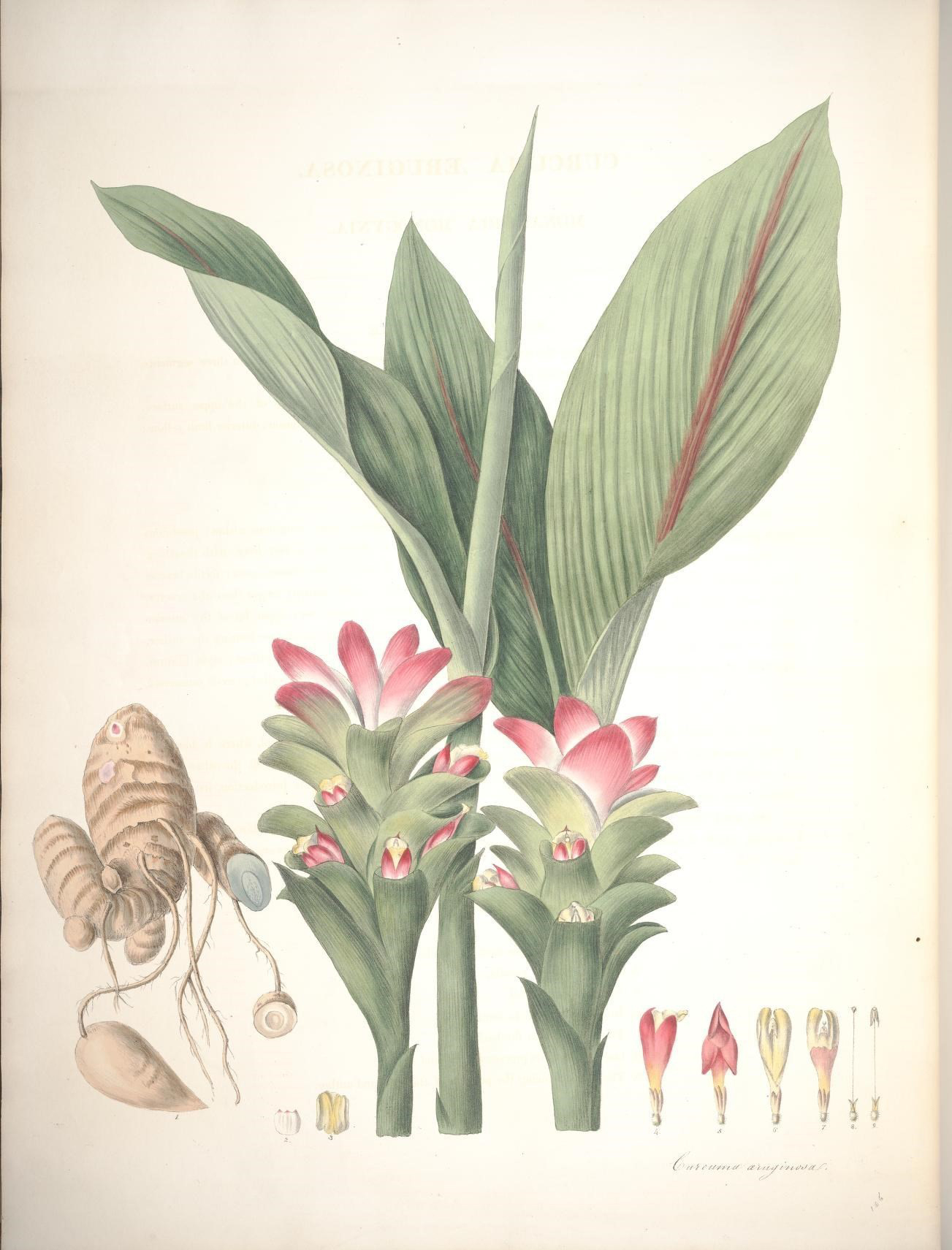
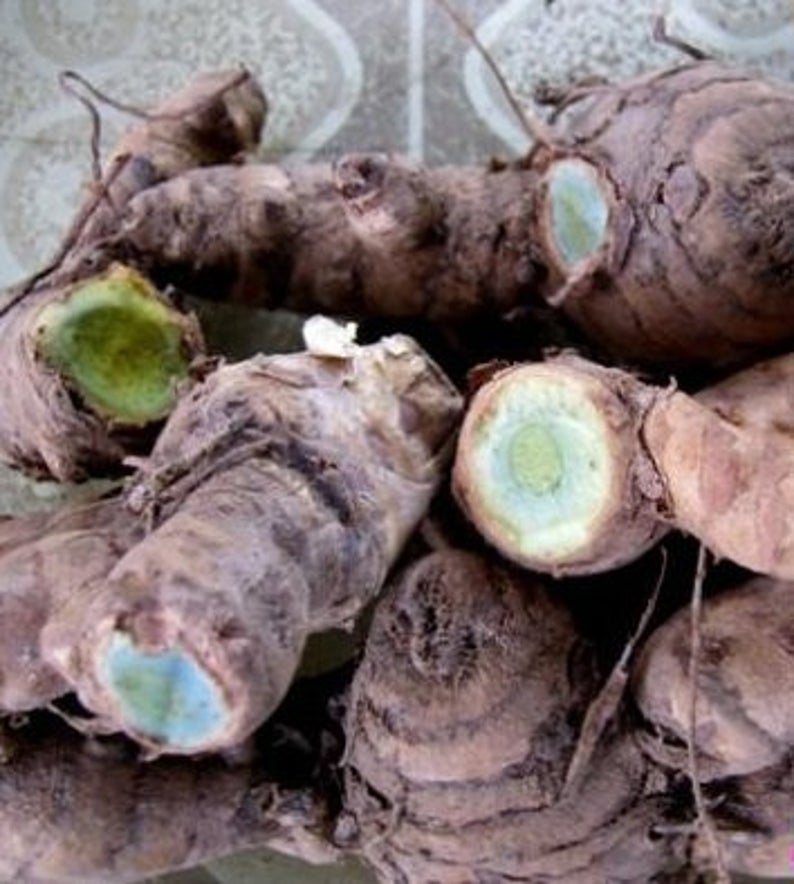
The turmeric have rhizomes with pink tips and grayish-blue or blue centers. This perennial plant has unbranched leafy stems upto 200 cm tall from large underground rhizome. Leaves are distichous, oblong-lanceolate having purple or reddish-brown on the patch of sides of distal half of mid rib on upper side which fades with maturity. It prospers in a warm and humid environment in open or partial shade. It is found in various soil types but usually prefers loose, well-drained and well-textured fertile soils.
Pink and blue ginger has 27 different compounds, 75% of which are monoterpenoids and sesquiterpenoids. Flavonoids, terpenoids, sesquiterpenes and phenylpropanoids demonstrate anticancer and antitumor activities. Pink and blue ginger displays similar medicinal properties like black turmeric though they belong to different species in the genus Curcuma. Both are medicinally used for preventing growth of cancer cells. The herb is helpful for bronchitis, asthma, pneumonia and provides relief from toothaches, stomach disorders and osteoarthritis. It also heals peptic ulcers, treat dysentery and also used as a tonic for tuberculosis.
Plant description
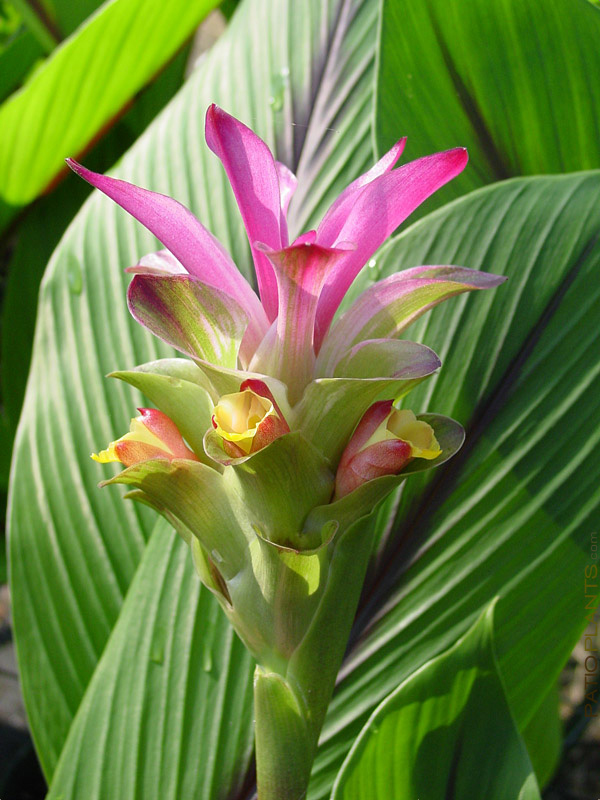
Curcuma aeruginosa is an erect and tillering herb having 16 cm long and 3 cm thick rhizomes. The outside of rhizome is shiny, grey, tips pink and inside is bluish or blue-green with white cortex. Stem is green and terminal on ovoid primary rhizome. Leaf sheaths are 50 cm long. The leaf blades are elliptical to oblong-lanceolate about 30–80 cm × 9–20 cm and green with wide purplish-brown suffusion on each side of midrib on distal half. An inflorescence is terminal on separate lateral shoot and pale green bracts or red-purple bracts. Flowers are 2 to 7 in axils of secondary bracts and calyx is half as long as corolla tube and is three toothed. Labellum is 17 mm × 17 mm, emarginated and yellow tip. Ovary is pubescent and three celled, style long and glabrous, stigma bilabiate and fimbriated.
Health Benefits of Pink and Blue Ginger
- Promote appetite
The plant promotes appetite and used for children who are very difficult to eat.
- Healthy skin
Besides enhancing appetite, the plant is also helpful for skin ailments. The plant helps ringworm, scabies, wounds and other skin ailments.
- Fertilize womb
Pregnant women should consume boiled water from Cucurma aeruginosa for a quick descent.
- Lower menstrual pain
Some women experience pain during menstruation which could be eased with the consumption of this herb.
- Cleanse blood after childbirth
Women sped a lot of dirty blood after childhood. So it is recommended to consume herbs such as Curcuma aeruginosa which cleanses the blood.
- Relief from cough
An intake of Cucurma aeruginosa is helpful to provide relief from cough that could interfere with daily activities though it is not harmful to the body.
- Detoxifies the body
Curcuma aeruginosa acts as a natural detoxifier. The body optimally excretes dirt and toxins but this plant could be used to support the process.
- Treats intestinal worms
The plant is helpful to overcome worms that usually occur in children who plays in dirty places. If left unchecked, the child becomes prone to disease and gaining weight becomes challenging.
- Blood booster
A person with deficiency of blood results in symptoms of anemia. Intake of plant is crucial to prevent anemia.
- Resolve hemorrhoids
The plant has natural content that helps to overcome hemorrhoids as it could interfere with activity and cause complications.
Traditional uses
- In Indo-China, rhizomes are helpful for colic.
- In Peninsular Malaysia, it is used to deal with asthma and cough or applied externally for treating scurvy.
- In Thailand and Indonesia, decoction is given to women after childbirth to hasten lochia.
- Use it internally and externally to treat exanthema or as a poultice for treating itch. Also used for rheumatism, obesity or as an anthelmintic.
- In India, it is externally used as an astringent for wounds.
- It is used in Thai herbal medicines to reduce dysmenorrhea.
- Use externally pounded in coconut oil to treat scurf and mental derangements.
- Use the poultice externally for itching.
Culinary uses
Add the thin strips in an Asian soup or use it as a garnish for sushi roll.
Precautions
- Use it with caution.
- Using the plant for longer time period damages the liver.
- Consult the health practitioner for treating any health conditions.
- Avoid the use if experienced allergic reactions.
References:
https://shodhganga.inflibnet.ac.in/bitstream/10603/204289/9/09_chapter2.pdf
https://uses.plantnet-project.org/en/Curcuma_aeruginosa_(PROSEA)
https://drhealthbenefits.com/herbal/herbal-plant/health-benefits-curcuma-aeruginosa
https://www.whiterabbitinstituteofhealing.com/herbs/pink-blue-ginger/