Health Benefits
    Facebook Twitter Instagram
    Sunday, December 14
    Facebook Twitter Pinterest
    Health Benefits
    • Home
    • Dental Health
    • Mental Health
    • Weight Loss
    • Health Wiki
    • Nutrition
    • Healthy Recipe
    • BMI Calculator
    Health Benefits
    Home»Foods»Health benefits of Poi
    Foods

    Health benefits of Poi

    By s mMay 13, 2019Updated:May 13, 2019No Comments3 Mins Read
    Facebook Twitter Pinterest LinkedIn Tumblr Email

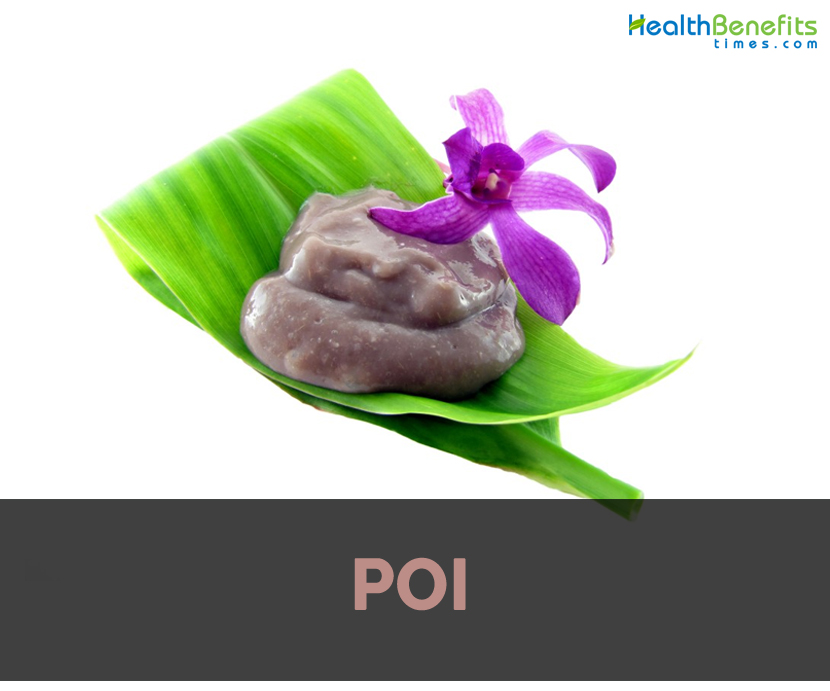
    Generally, poi is the traditional staple food in native cuisine of Hawaii which is made from underground plant stem and corm of taro plant. Traditional poi is made by mashing cooked corm on wooden pounding board, papa ku‘i ‘ai with a carved basalt pestle. These days, industrial food processor is used to produce extensive quantities for retail distribution. Crushed taro without adding water is highly starchy and resembles dough. Add the water during mashing and before eating to get desired consistency which ranges from highly viscous to liquid.

    Poi is also called one finger, two finger or three finger that depends on the consistency of poi implying how many fingers are required to scoop it in order to consume it. Poi has a mild and slightly sweet taste which pairs well with fresh island fish and often used as a dipping sauce.

    Poi could be consumed fresh or left longer to ferment. Poi prepared from taro should not be confused with samoan poi, a creamy dessert formed by mashing ripe bananas with coconut cream and Tahitian po’e, a sweet pudding like dish which is made with papaya, bananas and mangoes cooked with coconut cream and manioc.

    In Samoa and other Pacific islands, poi is a thick paste of crushed pineapples or bananas combined with coconut cream. The term stands for the action of crushed food to a pulp. People who cannot tolerate many foods could go for poi as the better option. In Hawaii, babies are fed poi as the first solid food. Poi is a starch with low fat, protein and contains several vitamins such as phosphorous, Vitamin B and calcium. Poi is hypoallergenic, gluten free and encloses heat and acid tolerant.

    History and culture

    Taro is a primitive ingredient highly rewarded by Hawaiians with a belief that taro plant was an original ancestor of Hawaiian people. It is a sacred aspect of Hawaiian life which is believed that spirit of Haloa (a legendary ancestor of Hawaiian people) persist when bowl of poi was kept uncovered for consumption.

    Though many people in the world consume taro but only Hawaiians prepare poi. Traditionally, Hawaiians cook starchy taro root for hours in underground oven known as imu, also used to cook other types of food such as carrots, pork and sweet potatoes.

    Recently, the shortage in production of taro led to increase in price for poi in Hawaii. Innovations in production of poi results in making poi fresh longer and also taste sweeter. Withal, such products sell at premium price and require refrigeration.


    Culinary uses

    • Mix the poi with milk and sugar.
    • Serve poi with lomi salmon or salted fish.
    • Sour poi is used as an ingredient in rolls and breads.
    • Consume it for breakfast by adding it on rolls and bread or pair with fish.

    References:

    https://en.wikipedia.org/wiki/Poi_(food)

    https://www.britannica.com/topic/poi-food

    https://www.cntraveler.com/galleries/2015-01-04/10-hawaiian-food-staples-you-must-try-poi-spam-shave-ice-lau-lau

    https://www.wonderopolis.org/wonder/what-is-poi

    https://mauinow.com/2011/02/03/poi-a-brief-history-of-the-polynesian-staple-food/

    74%
    74%
    Awesome

    Comments

    comments

    Foods P
    Share. Facebook Twitter Pinterest LinkedIn Tumblr Email
    Previous ArticleWelsh onion Benefits and nutrition
    Next Article Facts about Taiwan Cherry

    Related Posts

    Health benefits of Patchouli

    December 22, 2023

    Health benefits of Prickly Caterpillar Plant

    November 22, 2023

    Health benefits of Prayer Plant

    November 6, 2023

    Comments are closed.


    Poi Quick Facts
    Name: Poi
    Colors Pale purple
    Shapes Paste
    Taste Sweet
    Calories 269 Kcal./cup
    Major nutrients Vitamin B6 (50.38%)
    Carbohydrate (50.27%)
    Copper (44.22%)
    Manganese (38.61%)
    Vitamin E (36.80%)
    Name Poi
    Texture Paste
    Flavor Delicate
    Color Pale purple
    Taste Sweet
    Major Nutritions Vitamin B6 (Pyridoxine) 0.655 mg (50.38%)
    Carbohydrate 65.35 g (50.27%)
    Copper, Cu 0.398 mg (44.22%)
    Manganese, Mn 0.888 mg (38.61%)
    Vitamin E (alpha-tocopherol) 5.52 mg (36.80%)
    Iron, Fe 2.11 mg (26.38%)
    Vitamin B1 (Thiamin) 0.312 mg (26.00%)
    Vitamin B3 (Niacin) 2.64 mg (16.50%)
    Vitamin B5 (Pantothenic acid) 0.703 mg (14.06%)
    Magnesium, Mg 58 mg (13.81%)
    Calories in 1 cup (240 g) 269 Kcal.
    Nutritional value of Poi
    Serving Size:1 cup, 240 g

    Calories 269 Kcal. Calories from Fat 3.06 Kcal.


    Proximity Amount % DV
    Water 171.94 g N/D
    Energy 269 Kcal N/D
    Energy 1126 kJ N/D
    Protein 0.91 g 1.82%
    Total Fat (lipid) 0.34 g 0.97%
    Ash 1.46 g N/D
    Carbohydrate 65.35 g 50.27%
    Total dietary Fiber 1 g 2.63%
    Total Sugars 0.94 g N/D

     
    Minerals Amount % DV
    Calcium, Ca 38 mg 3.80%
    Iron, Fe 2.11 mg 26.38%
    Magnesium, Mg 58 mg 13.81%
    Phosphorus, P 94 mg 13.43%
    Potassium, K 439 mg 9.34%
    Sodium, Na 29 mg 1.93%
    Zinc, Zn 0.53 mg 4.82%
    Copper, Cu 0.398 mg 44.22%
    Manganese, Mn 0.888 mg 38.61%
    Selenium, Se 1.7 µg 3.09%


    Vitamins Amount % DV
    Water soluble Vitamins
    Vitamin B1 (Thiamin) 0.312 mg 26.00%
    Vitamin B2 (Riboflavin) 0.096 mg 7.38%
    Vitamin B3 (Niacin) 2.64 mg 16.50%
    Vitamin B5 (Pantothenic acid) 0.703 mg 14.06%
    Vitamin B6 (Pyridoxine) 0.655 mg 50.38%
    Vitamin B9 (Folate) 50 µg 12.50%
    Folate, food 50 µg N/D
    Folate, DEF 50 µg N/D
    Choline 40.1 mg 7.29%
    Vitamin C (Ascorbic acid) 9.6 mg 10.67%
    Fat soluble Vitamins
    Vitamin A, RAE 7 µg 1.00%
    Vitamin A, IU 158 IU N/D
    Beta Carotene 74 µg N/D
    Beta Cryptoxanthin 41 µg N/D
    Vitamin E (alpha-tocopherol) 5.52 mg 36.80%
    Vitamin K (phylloquinone) 2.4 µg 2.00%

     
    Lipids Amount % DV
    Fatty acids, total saturated 0.07 g N/D
    Palmitic acid 16:00 (Hexadecanoic acid) 0.06 g N/D
    Stearic acid 18:00 (Octadecanoic acid) 0.01 g N/D
    Fatty acids, total monounsaturated 0.026 g N/D
    Oleic acid 18:1 (octadecenoic acid) 0.026 g N/D
    Fatty acids, total polyunsaturated 0.139 g N/D
    Linoleic acid 18:2 (octadecadienoic acid) 0.096 g N/D
    Linolenic acid 18:3 (Octadecatrienoic acid) 0.043 g N/D

    *Above mentioned Percent Daily Values (%DVs) are based on 2,000 calorie diet intake. Daily values (DVs) may be different depending upon your daily calorie needs. Mentioned values are recommended by a U.S. Department of Agriculture. They are not healthbenefitstimes.com recommendations. Calculations are based on average age of 19 to 50 years and weighs 194 lbs.
     

    Source:
    https://ndb.nal.usda.gov/

    Categories
    • Beverages (78)
    • Dairy (28)
    • Dental Health (15)
    • Equipment (5)
    • Essential OIls (196)
    • Facts (2,937)
    • Foods (255)
    • Fruits (516)
    • Giveaway (1)
    • Grains and Cereals (36)
    • Health & Beauty (761)
    • Herbs and Spices (1,249)
    • Medicines (9)
    • Mental Health (19)
    • Nutritional value (27)
    • Nuts and seeds (73)
    • Oils (81)
    • Pets (4)
    • Poultry & Seafoods (67)
    • Pulses and Beans (16)
    • Reviews (25)
    • supplement (2)
    • Vegetables (304)
    • Weight Loss (22)

    What is Lupin Bean Flour?

    Science Backed Health Benefits of Durian (Durio zibethinus)

    Science Backed Health Benefits of Feijoa (Pineapple Guava) (Acca sellowiana)

    Science Backed Health Benefits of Gac Fruit (Momordica cochinchinensis)

    Science Backed Health Benefits of Amaranth Leaves (Amaranthus spp)

    Science Backed Health Benefits of Arrowhead (Sagittaria sagittifolia)

    ABOUT
    Home
    About us
    Contact us
    Privacy Policy
    Terms & conditions
    Disclaimer
    Direct Communication
    e-mail: [email protected]
    Gmail: [email protected]
    Whatsapp: +977-9841146511
    Viber: +977-9841146511
    Useful
    Health Wiki
    Nutrition
    Facebook Twitter Pinterest
    © 2025 www.healthbenefitstimes.com All rights reserved.

    Type above and press Enter to search. Press Esc to cancel.

    ×

    Log In

    Forgot Password?

    Not registered yet? Create an Account