namely India, Sri Lanka, Nepal, Bhutan, Bangladesh, Myanmar, Thailand, Laos, Cambodia, Vietnam, southern China, Malaysia, Indonesia, Papua New Guinea, northern Australia, and the Philippines
Colors
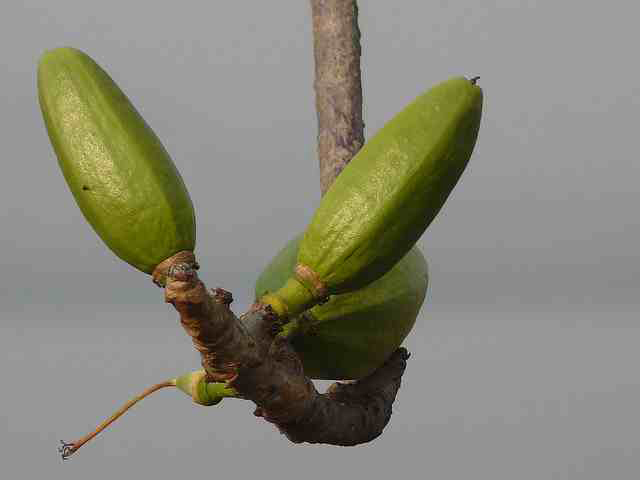
Green when young turning to brown as they matures
Shapes
Capsule up to 15 mm long, filled with numerous black seeds
Taste
Acrid, bitter
Health benefits
Beneficial for like cholera, fractures, toothache, coughs, urinary problems, influenza, tubercular fistula, abdominal pain due to dysentery, impotency and snake bites
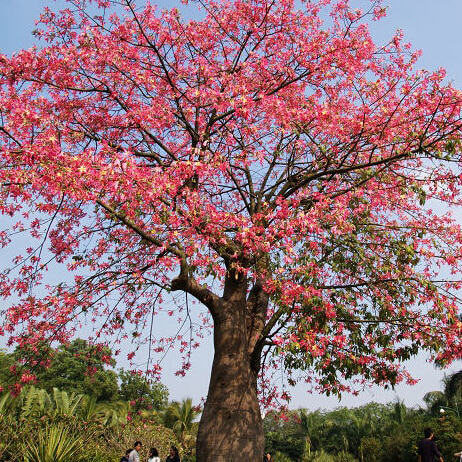
Bombax ceiba of the Bombacaceae (Kapok-tree family) commonly known as Indian cottonwood, Indian kapok or Kapok tree is an important medicinal plant of tropical and subtropical India. It is actually a tall deciduous tree, with straight buttressed trunk and broad spreading branches. The plant is native to tropical South and Southeast Asia, namely India, Sri Lanka, Nepal, Bhutan, Bangladesh, Myanmar, Thailand, Laos, Cambodia, Vietnam, southern China, Malaysia, Indonesia, Papua New Guinea, northern Australia, and the Philippines. Few of the popular common names of the plant are Indian cottonwood, Indian kapok, Kapok tree, Red cotton tree, Red-flowered silk-cotton tree, Red silk-cotton, Red silk-cotton tree, Shaving brush, Silk cotton tree, Simal tree, Northern-cottonwood, Red silk cotton tree, Silk cotton tree and Simal. Almost every part of this plant is used as medicine, and its roots and flowers are used for curing the maximum number of ailments.
The genus name Bombax is likely derived from the Greek bombyx, referring to things of silk or cotton, and refers to the abundant, silk-like or cottony fibers in the fruits. The specific epithet or species name ceiba is a Spanish derivative of a Taino or other Arawakan (South American indigenous languages) name used for a group of large, tropical trees linked to Bombax, many of which produce kapok or silk-cotton in their fruits. It is often referred to as the ‘silent doctor’ for the host of medicinal benefits that it offers. Each part of the tree, including the bark, flowers and leaves have therapeutic uses. Herbal composition made from the bark of the tree, for example, is administered for the treatment of sexual and gastrointestinal disorders.
Plant Description
Red silk cotton tree is a medium to large, long-lived, briefly deciduous, fast-growing, tropical tree that grows up to 20-25 m tall and spreads 8-15 m wide. The plant is found growing in hot, humid, seasonally dry, mostly lowland, tropical moist, deciduous monsoon forests in river valleys, hillsides, road sides, forest and along open streams. The plant does best on deep sandy, well drained loams on alluvium near rivers and streams. It occasionally occurs on heavier but well drained soils on slopes. The plant has erect stem that develops buttresses when mature and an umbrella shaped crown.
Trunk
The plant has impressive, straight, often stout trunk, 1-5 feet in diameter, often short and thick on cultivated specimens in open sites but a straight, symmetrical bole 50-125 feet to the first branch on forest specimens growing under favorable conditions; invariably buttressed at the base on large specimens, the buttresses extending up the trunk for 15-25 feet.
Bark
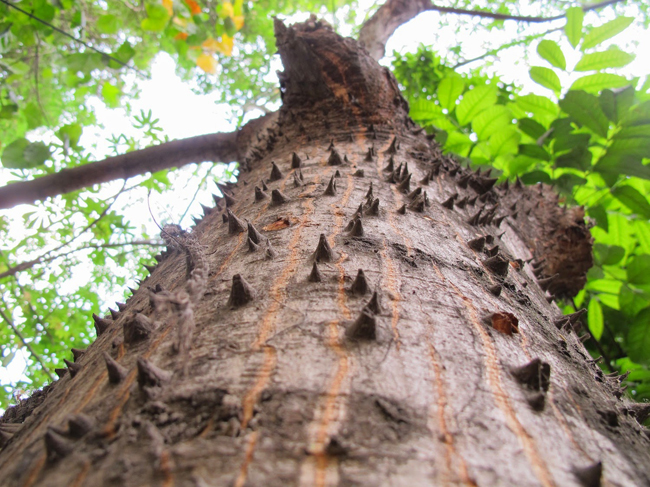
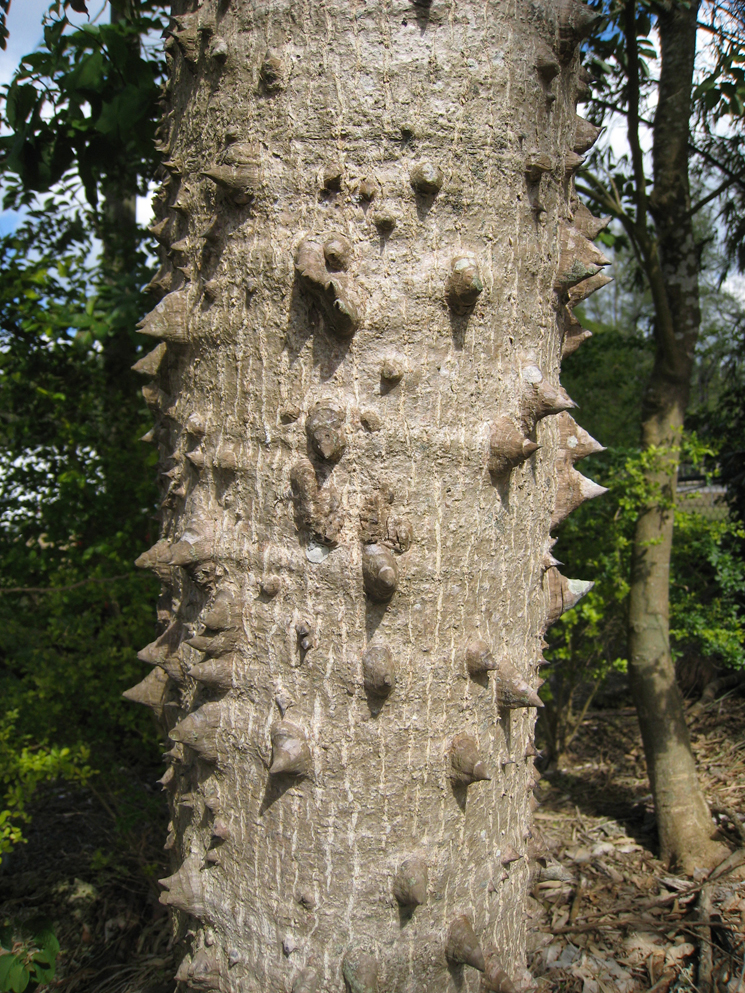
Bark is smooth and greenish gray on young trees, becoming rough, checked, with irregular vertical fissures and gray-white to silver-gray, greenish gray, or brown, typically with sharp, straight, stout, tan to brown, conical prickles to 0.5 inch long, these occasionally enclosed by expanding bark.
Leaves
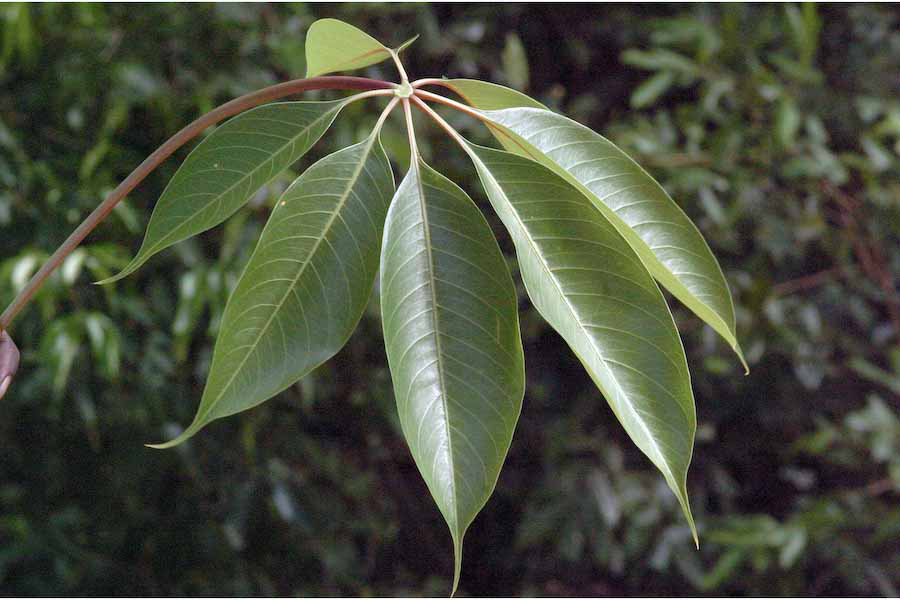
Leaves are palmately compound, about 24 inches long. Petiole is 4-8 inches long. Leaflets are about 3-7, digitately arranged, 3-10 × 0.6-3 inches, oblong to oblong lanceolate. Leaflet stalks are about 0.6-1.6 inches long, tip pointed, glabrous (without hairs or other coverings).
Flowers
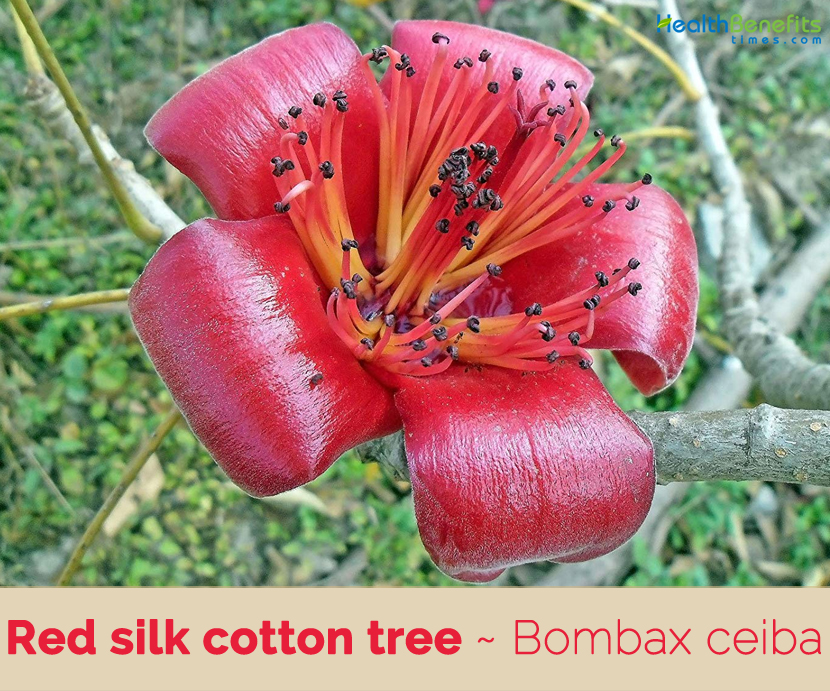
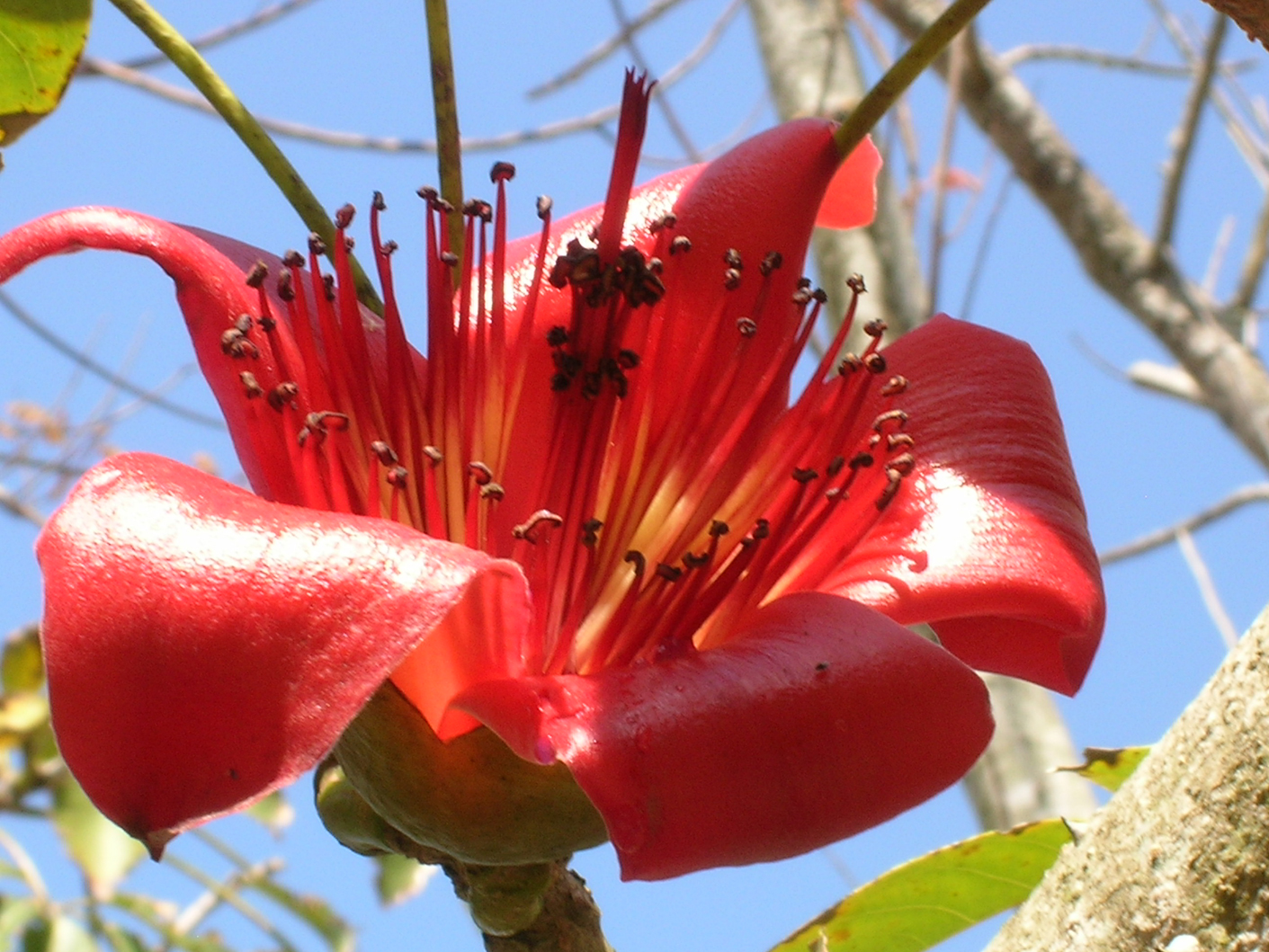
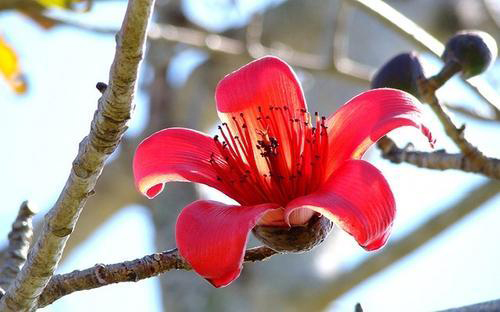
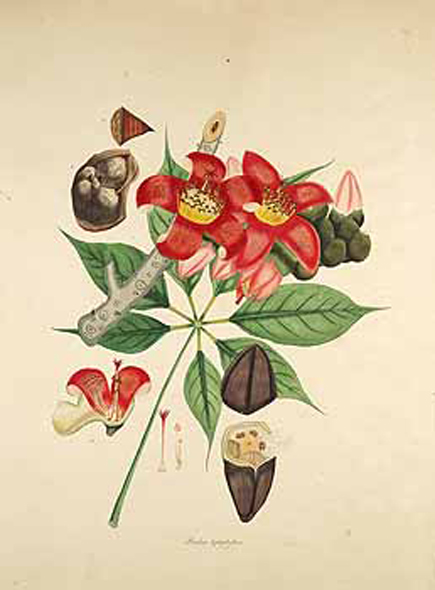
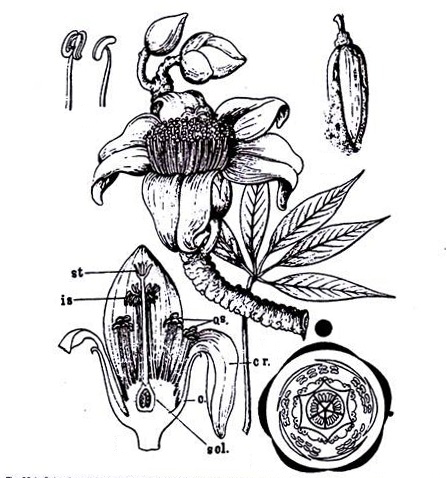
A Flower occurs solitary but densely placed near branch tips, conspicuous and very showy, 4-7 × 4-7 inches. Calyx is cup-shaped, 3-5-lobed, 0.8-1 inch long, outer or lower surface glabrous, inner or upper surface densely covered with yellowish silky hairs. Petals are 3.1-4 × 1.4-2.2 inches, recurved, dull to bright red, less frequently orange-red, orange, or rarely white, thick, fleshy, waxy, satiny, densely covered with short, soft hairs. Stamens are yellowish but red tinged toward the tips. Anthers is black, in 2 whorls, outer whorl divided into 5 bundles of 9-20 each, inner whorl of 10-15 surrounding the style, less than half as long but reaching rim of recurved petals, about three-quarters as long as style. Flowering normally takes place from January to March.
Fruits
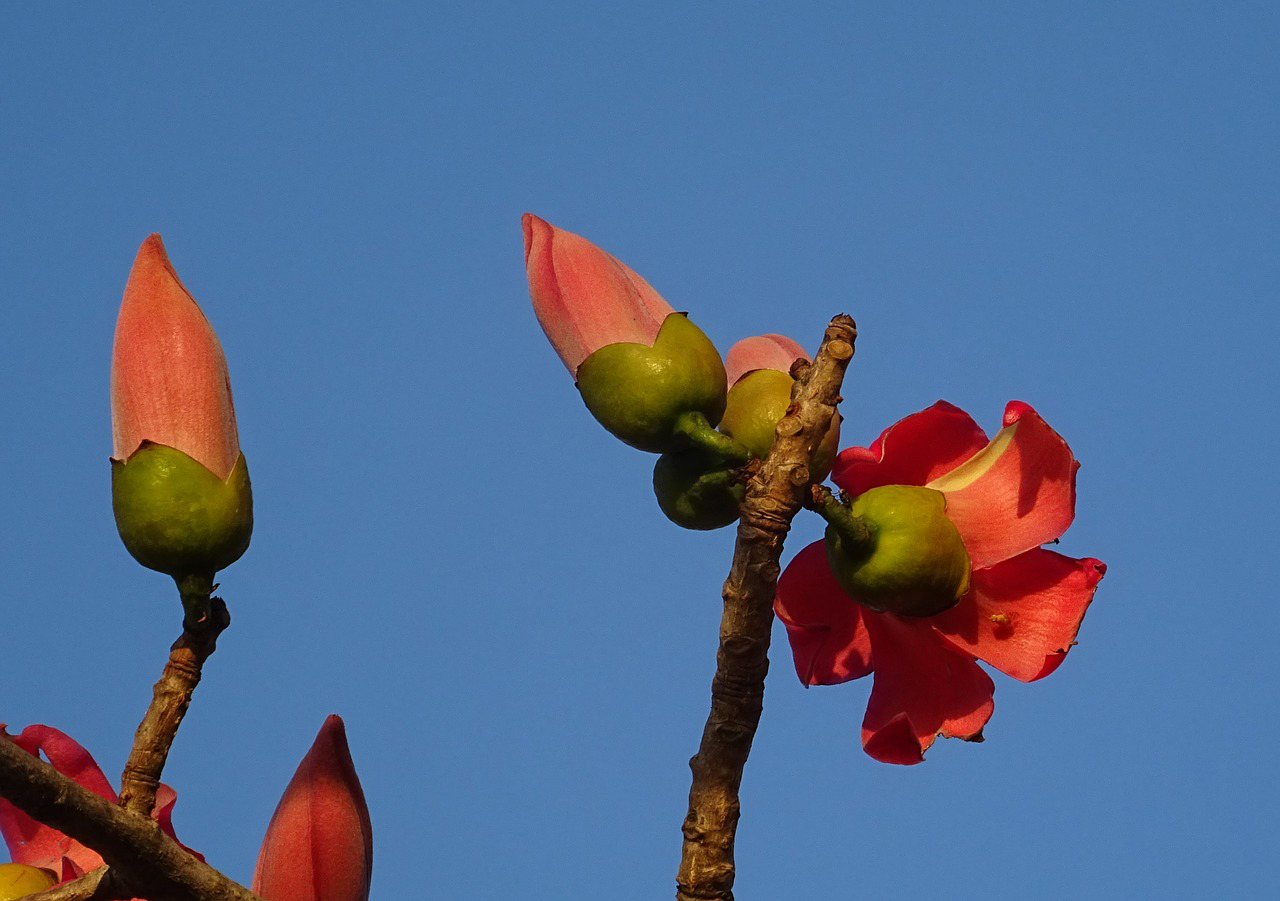
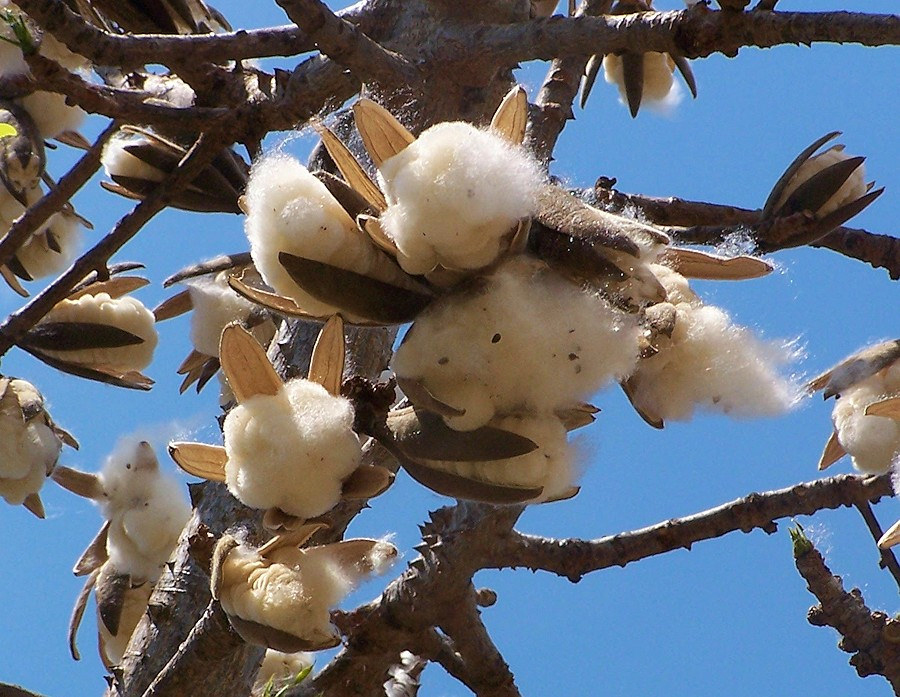
Fertile flowers are followed by capsule, 4-6 × 1.8-2 inches, ovoid, pointed, longitudinally ribbed, densely covered with grayish white hairs, splitting open along 5 seams to reveal white, cottony, silky material. They are initially green when young turning to brown as they matures. Seeds are smooth, black or grey surrounded in long white wool, which are irregular obovoid in shape, smooth and oily with dense silky hair.
Fruits are full of cotton-like fibrous stuff. It is for the fiber that villagers gather the semul fruit and extract the cotton substance called “kopak”. This substance is used for filling economically priced pillows, quilts, sofas etc. The fruit is cooked and eaten and also pickled. Its wood, when sawn fresh, is white in color. However, with exposure and passage of time it grows darkish gray. It is as light as 10 to 12 kg, per cubic foot. It is easy to work but not durable anywhere other than under water. So it is popular for construction work, but is very good and prized for manufacture of plywood, match boxes and sticks, scabbards, patterns, mould, etc. Also for making canoes and light duty boats and or other structures required under water. Bombax species are used as food plants by the larvae of some Lepidoptera species including the leaf-miner Bucculatrix crateracma which feeds exclusively on Bombax ceiba.
Traditional uses and benefits of Red silk cotton tree
Different plant parts are used as treatment for various conditions and diseases like cholera, fractures, toothache, coughs, urinary problems, influenza, and snake bites among others.
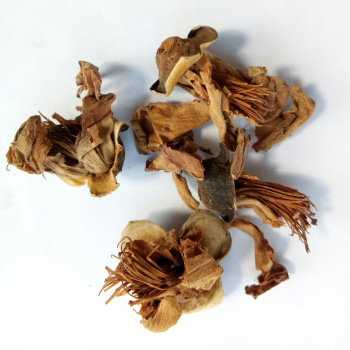
Flowers are astringent and refrigerant.
They are used to treat cutaneous troubles.
They are used in the treatment of cholera, tubercular fistula, coughs, urinary complaints, nocturnal pollution, abdominal pain due to dysentery, and impotency.
Gum is astringent, demulcent and tonic.
It is used in the treatment of dysentery, hemoptysis in pulmonary tuberculosis, influenza and menorrhagia.
Leaves are hypotensive and hypoglycemic.
Decoction of the shoots has reputedly been used to treat ulcers of the palate, syphilis, leprosy and spider or snake bites.
Combined with the roots of Moghania macrophylla, the fruit of Terminalia chebula and borax, they are used to treat enlarged spleen.
They are combined with Capparis zeylanica and Carissa carandas to treat edema; and with fenugreek to treat corns on the foot.
Seedlings have reputed anti-pyretic activity (when ground with a few leaves of fistula and Semecarpus anacardium).
They are combined with Vitis spp. to treat carbuncle; and with Terminalia alata to treat hematuria.
Knots or the stem are used on bleeding gums (cooked in mustard oil with the bark of Zyzyphus rugosa and Ichnocarpus frutescens and then eaten).
Bark is reputedly used against cholera (usually combined with many other plants), pleurisy, stings and as a diuretic.
It is used in bandages for lasting fractures or given in infusion for toothache before visiting the dentist.
Roots are used in excess bleeding in menstruation.
Dried tender fruits of are given in calculus affections and chronic inflammation and ulceration of the bladder and kidneys including strangury and other forms of dysuria.
Fresh rubbed bark of B. ceiba was applied topically on pimples, acne, boils, and wounds and to improve breast milk.
An infusion of the bark is used as a tonic.
Seeds and roots are used in the treatment of serious skin diseases like Leprosy.
Flower and fruit are used in snakebite and leucorrhoea.
Phyto-chemicals present in plant help in providing protection against cataract, ageing, dementia, cancer.
Leaves are used for blood purification.
Cotton extracted from its fruit is used as insulator for refrigerator, soundproof covers and in formation of padded surgical dressings.
It is also recommended for increasing sperm in semen and to act as an aphrodisiac.
Fresh stem bark with some other herbs taken orally to cure gonorrhea, impotency, spermatorrhoea, sterility, nocturnal emission and leucorrhoea.
B. ceiba mixed with cow dung was applied over back muscle of leg at night to treat hotness and inflammation.
Roots are cooling, sweet, stimulant, tonic and demulcent and are used in dysentery.
Leaves are used for skin eruptions.
Gum of this plant is used to reduce burning sensation and also effective for treating dysentery, hemoptysis, influenza, pulmonary tuberculosis and enteritis.
Paste of thorns of the stem bark is applied externally as paste to cure pimples and acne.
Seeds are used for treating chronic cystitis and gonorrhea.
Mature fruits of the plant are used in the treatment of ulceration of kidney and bladder.
It is also used to reduce chronic inflammation and calculi related disorders.
This herb is very beneficial for the male reproductive system.
It is used to improve both quantity and quality of semen.
Ayurvedic Health Benefits of Red silk cotton tree
Leucorrhoea: Consume fruit of Bombax Ceiba in cooked form with Clarified Butter and Salt. Include it in your daily diet.
Wounds: Crush bark of Bombax Ceiba. Add some water to make paste. Apply it over Wounds.
LooseMotion: Prepare a leaf decoction of Bombax Ceiba. Consume 45 ml of it twice a day.
Burns: Burn the cotton of Bombax Ceiba tree. Apply the ash obtained over burned areas.
Impotence: Take 100 g each of powder of dried Bombax Ceiba fruit and Sugar. Add this to a cup of lukewarm water. Drink it once a day.
Tumors: Apply leaf paste of Bombax Ceiba over Tumor.
AcidReflux: Take 10 g Gmelina leaves, 4 g Bombax Ceiba bark and 8 g Achyranthes Aspera root. Crush them using Milk to make paste. Take quarter tsp of the paste twice a day.
Urinarydisorder: Take orally the decoction (10 ml) of the bark of semal and flowers of palash. Mixed in 2:1 ratio
Seminaldisorders: Take tender roots of semal, clean and dry in shade. Grind to make powder. Take this powder to cure seminal disorders.
Bloodpurification: Take leaves of semal and grind with water. Filter and drink.
Leucorrhoea: Take semal root powder twice a day with water.
Over bleeding in menstruation: Mix semal root powder (100 gm.), Mulethi powder (50 gm.) and swarn geru (25 gm.) and take this powder twice a day with water or milk.
Acne, skin blemish and pigmentation: Take thorny part from stem of semal tree. Make paste of root of thorn with water. Apply on the affected area. This also lightens scar marks due to boils, freckles, acne vulgarize and burns.
Wounds: Apply paste of its bark on wound.
Weakness: From the semal flower take green base part, clean and dry in shade. Grind to make powder. Mix one spoon powder, honey (2 tbsp) desi ghee (1 tbsp) in milk and drink.
Improve breast milk: Take bark of semal root, clean and dry and grind to make powder. Take twice to improve breast milk.
Cold and cough: Mix semal root powder with black pepper and dry ginger powder. Take in small amount to cure cold and cough.
Culinary Uses
Flowers are edible when cooked and are highly valued as a curry vegetable.
Young leaves are edible as well and cooked and eaten as vegetable.
Ripe seeds and young roots are roasted.
They are highly valued as a curry vegetable.
Flower buds and the calyx of not fully opened flowers are eaten cooked as a vegetable.
Flowers are dried and pounded and used for bread also used in five flower tea.
Young leaves are cooked and eaten as a vegetable.
Edible fatty oil is obtained from the seed.
Seeds contain 22-25% oil.
Taproot is peeled and eaten raw or roasted.
Buds, young pods and roots of seedling can be eaten cooked.
Young bark is used as a famine food.
Other facts
Seed oil is also used in soap making.
It can be used as a pioneer when restoring native woodland.
It can also be used as a pioneer when establishing a large woodland garden, being able to remain as a canopy tree as the garden matures.
Seed floss is used as a stuffing material for pillows, cushions etc.
It is considered to be vermin-proof.
Waterproof and buoyant, it can be used as the filling in life jackets.
It is occasionally also as an insulating material in refrigerators etc.; can be used as a packing material; and has sound-proofing properties.
It is of lower quality than the floss obtained from Ceiba pentandra.
Fiber is obtained from the inner bark.
It is suitable for cordage.
Transparent gum exudes from the bark and sapling root.
Gum can be mixed with ashes and castor oil, and is then used as cement for caulking iron saucepans.
An oil obtained from the seed is used to make soap and for illumination etc.