


When you peel back the foil lid of a container of probiotic yogurt, you are looking at more than just a creamy snack; you are engaging with a functional food designed to support your internal ecosystem. As you consume it, billions of live active cultures most commonly strains like Lactobacillus and Bifidobacterium travel through your digestive tract to bolster your gut microbiome. These “friendly” bacteria work on your behalf to crowd out harmful pathogens, enhance your nutrient absorption, and potentially strengthen your immune response. By choosing varieties with minimal added sugars, you ensure that you are providing your body with a potent synergy of protein, calcium, and microbial support that helps maintain your digestive regularity and overall well-being.
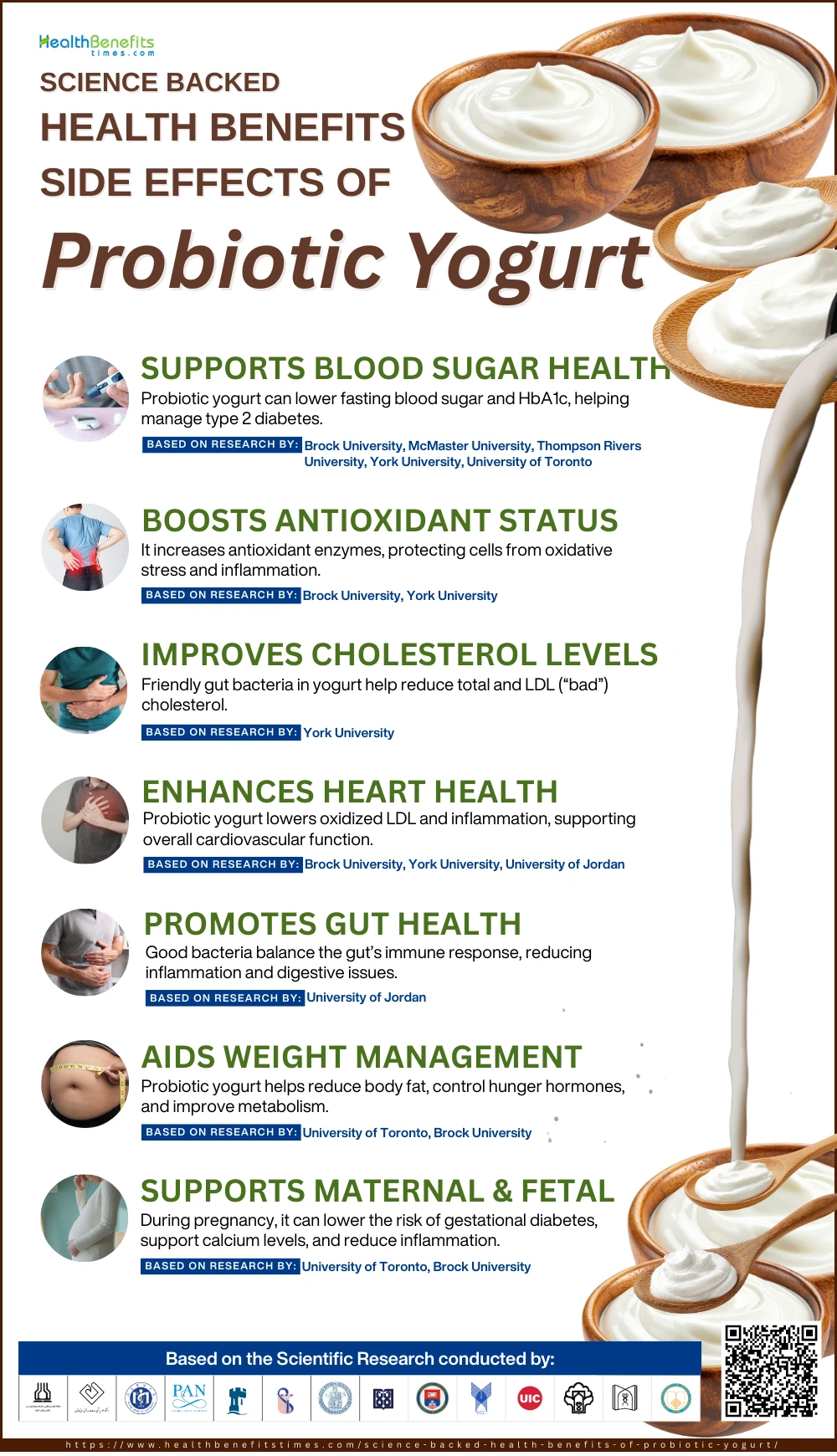
1. Beneficial for Blood Sugar Health
People with type 2 diabetes may benefit from adding probiotic yogurt to their diet. That’s in part because probiotic yogurt is a source of probiotics, beneficial bacteria that help improve the body’s inflammatory response. This improvement is important for managing insulin resistance and blood sugar control. 1 Studies show that by promoting a healthier balance of gut bacteria, these probiotics can lead to meaningful reductions in fasting blood sugar and long-term glucose markers like hemoglobin A1c. 2 For someone managing diabetes, choosing probiotic-rich yogurt over regular options could support their body’s ability to regulate glucose more effectively. This might help lower the risk of diabetes-related complications. 3 4 Speak with a doctor for more information about the possible benefits for people with type 2 diabetes or for protecting against the condition.
What Research Says:
- A 12-week study showed that people with type 2 diabetes who ate probiotic yogurt had lower HbA1c levels compared to those who didn’t, meaning their long-term blood sugar control improved. 4
- A study from Ahvaz Jundishapur University found that eating probiotic yogurt every day for 8 weeks lowered HbA1c and the inflammation marker TNF-α in diabetic patients, showing it helps manage inflammation related to high blood sugar. 1
- Research by Tehran University found that combining probiotic yogurt with pumpkin reduced fasting blood sugar and HbA1c in patients, suggesting the two together help control blood sugar better. 2
- A review of studies didn’t find a big overall effect, but it showed a trend where probiotic yogurt helped lower HbA1c in people with type 2 diabetes, so more research is needed. 5
- In a trial with patients who had metabolic syndrome, eating probiotic yogurt daily helped lower fasting blood sugar and improved blood vessel function, which is often damaged by poor blood sugar control. 3
2. Enhances Antioxidant Status
Probiotic yogurt is rich in live bacteria, such as Lactobacillus and Bifidobacterium. These probiotics help your body produce antioxidant enzymes, including superoxide dismutase and glutathione peroxidase. These enzymes fight oxidative stress a harmful process linked to chronic diseases like diabetes and cancer. Eating probiotic yogurt regularly increases these enzymes in your blood, helping to neutralize free radicals that damage cells and cause aging and disease. This is important for managing type 2 diabetes because oxidative stress plays a big role in its development and complications. 6 The antioxidants in fortified probiotic yogurts work throughout your body when eaten, protecting cells from oxidative damage and reducing inflammation. 7 {% %} By adding probiotic yogurt to your daily diet, you may lower your risk for conditions worsened by oxidative stress, including heart disease, metabolic issues, and some digestive problems. 6 7 8
What Research Says:
- A clinical trial by Ejtahed and his team showed that diabetic patients who ate probiotic yogurt with Lactobacillus acidophilus La5 and Bifidobacterium lactis Bb12 for six weeks had better antioxidant activity. They had more erythrocyte superoxide dismutase and glutathione peroxidase activities compared to those who ate regular yogurt. 6
- Research by Rahmani and colleagues found that yogurt with green tea extract had a lot more phenolic compounds up to 1,123 mg of gallic acid per kg and had stronger antioxidant activity, reaching 7,337 mg BHT equivalent per kg. The probiotics in the yogurt also stayed alive during storage. 7
- A study from Serbia showed that probiotic yogurt mixed with apple pomace flour had 8 times more radical scavenging activity and 2.3 times more phenolic compounds. The yogurt also showed some ability to kill colon cancer cells, with up to 19% inhibition in some tests. 8
3. Effective for Cholesterol Health
Eating probiotic yogurt every day may help keep your cholesterol in check. The live bacteria in this yogurt, especially Lactobacillus acidophilus and Bifidobacterium lactis, get to work in your gut to help lower your total cholesterol and your “bad” LDL cholesterol. 9 Here’s how it works: these friendly bacteria can grab onto cholesterol in your digestive system and stop it from being absorbed into your blood. Your liver then has to pull more cholesterol from your blood to make new bile acids, which lowers the amount circulating in your body. In one study, people with mildly high cholesterol who switched from regular yogurt to probiotic yogurt saw meaningful improvements in their cholesterol levels, all without making any other big changes to their diet. 10 Other research shows that keeping these lipid markers under control can help prevent plaque buildup in your arteries and reduce your risk of heart disease. These benefits may also be important for managing conditions linked to high cholesterol, such as type 2 diabetes and nonalcoholic fatty liver disease. 11
What Research Says:
- A study by Pourrajab and others found that eating probiotic yogurt can lower total cholesterol and bad cholesterol (LDL) in people with mild to moderate high cholesterol, but it doesn’t really affect good cholesterol (HDL) or triglycerides. 12
- Research by Mohamadshahi and his team showed that people with type 2 diabetes who ate probiotic yogurt had higher levels of good cholesterol (HDL) and better balance between good (HDL) and bad cholesterol (LDL), which could help protect the heart. 13
- A study by Nabavi and others found that people with fatty liver disease who ate probiotic yogurt saw lower total cholesterol and LDL levels, along with better liver enzyme levels, showing both heart and liver health improvements. 11
- Older studies, like one by Ejtached and his team, also found that probiotic yogurt helps lower unhealthy cholesterol levels, supporting its use for managing cholesterol. 9
4. Effective for Cardiovascular Health
Probiotic yogurt is known for its heart health benefits. So, it’s no surprise that adding probiotic yogurt to your daily diet may support your heart, especially if you have chronic heart failure. That’s because probiotic yogurt may help reduce harmful substances in your blood. For example, it helps lower oxidized LDL cholesterol, a type of bad cholesterol that can clog arteries and increase oxidative stress, which worsens heart disease. 14 Probiotic yogurt also boosts your body’s anti-inflammatory defenses by increasing soluble TWEAK levels. Soluble TWEAK is a protein that helps control immune responses and protects blood vessels from damage. 15 While these benefits are most relevant for those with existing heart conditions, regularly eating probiotic yogurt may improve overall heart function by reducing inflammation and oxidative stress key factors in preventing complications from heart failure and atherosclerosis.
What Research Says:
- Research by Pourrajab and his team at Iran University of Medical Sciences showed that after a 10-week trial, patients with chronic heart failure who ate probiotic yogurt had lower levels of harmful oxLDL in their blood compared to those who ate regular yogurt. This suggests that probiotic yogurt may help improve heart health 14
- The same team also found that probiotic yogurt increased levels of a protective marker called sTWEAK, which helps reduce inflammation. This was a significant improvement even after adjusting for other factors. 15
- Clinical observations showed that both groups (probiotic yogurt and regular yogurt) had some improvements. However, the probiotic yogurt group showed better results for oxidative and inflammation markers, even though there was no significant change in certain markers like NT-proBNP and ApoB100 after adjustments. 14 15
- These results support the idea that fermented foods, like probiotic yogurt, can be beneficial for heart health and align with traditional views about their therapeutic benefits.
5. Good for Gut Health
The probiotics in yogurt may also improve digestive health. When you eat probiotic yogurt regularly, the good bacteria travel to your intestines. There, they interact with your immune cells and help balance your body’s immune response. These bacteria work to lower harmful inflammation that can cause digestive discomfort. This is especially important for people with inflammatory bowel diseases, where the immune system overreacts and damages the gut lining. By keeping a healthy balance between inflammation-causing and inflammation-fighting signals, probiotics help maintain gut stability and may stop flare-ups of chronic digestive conditions. 16 Adding probiotic yogurt to your daily diet is a natural way to support gut health without invasive treatments.
What Research Says:
- A clinical study with patients who have inflammatory bowel disease showed that eating probiotic yogurt every day for eight weeks helped lower harmful inflammation markers in the blood like TNF-α, IL-1β, and C-reactive protein. 16
- The study also found that probiotic yogurt raised levels of a helpful anti-inflammatory protein called IL-10, proving it can both reduce inflammation and help protect the body. 16
- Researchers found that keeping the balance between harmful and helpful immune activity in the gut is important, and probiotic yogurt helps maintain that balance. 16
- This research backs up old traditions of eating fermented milk and shows that probiotic yogurt can help support the immune system. 16
6. Beneficial for Weight Management
Probiotic yogurt may help with weight management in several ways. It can change how the body stores fat and help control inflammation. Eating probiotic yogurt regularly, as part of a healthy diet, may help lower body fat and reduce levels of leptin, a hormone that controls hunger and fat storage. 17 This could lower the risk of health problems linked to obesity, such as heart disease and insulin resistance. Certain strains of probiotics in yogurt have been shown to improve cholesterol by lowering total cholesterol and LDL (bad) cholesterol. 18 These yogurts may also help the body use insulin better, which is important for preventing metabolic issues. Additionally, probiotic yogurt can help reduce visceral fat the unhealthy fat around your organs that increases disease risk. 19 By helping to control inflammation and improve metabolism, probiotic yogurt can be a helpful food for people trying to manage their weight.
What Research Says:
- A study by Tehran University of Medical Sciences found that overweight people who ate probiotic yogurt with Lactobacillus acidophilus La5, Bifidobacterium BB12, and Lactobacillus casei DN001 along with a low-calorie diet had lower body mass index (BMI), reduced fat percentage, and lower leptin levels. They also had improved immune-related gene expression. 17
- A trial by the Digestive Diseases Research Institute in Tehran showed that while probiotic yogurt didn’t lead to more weight loss than regular yogurt, it helped lower total cholesterol, LDL cholesterol, and improved insulin sensitivity in obese women on a calorie-restricted diet. 18
- A study at the University of Life Sciences in Lublin found that obese people who ate yogurt with Lactobacillus acidophilus LA-5 and Bifidobacterium lactis BB-12 lost an average of 4.80 kg over 12 weeks. However, this result was similar to the effects of dieting alone. 19
- While probiotic yogurt didn’t always result in more weight loss, it still improved heart health and metabolism, suggesting there are benefits beyond just weight reduction. 18 19
7. Support Maternal & Fetal Health
Eating probiotic yogurt during pregnancy, which contains helpful bacteria like Lactobacillus acidophilus and Bifidobacterium, can lower the chance of developing gestational diabetes (702). 20 These good bacteria help your body in several ways. They assist in keeping your blood calcium at a healthy level, which is important because your growing baby needs a lot of it, especially in the last three months. This can help prevent problems like preeclampsia and bone issues in the newborn (703). 21 The yogurt also works to lower inflammation in your body and can help with common pregnancy issues like bacterial vaginosis, which is linked to early labor. Additionally, eating probiotic yogurt may lower the risk of your baby developing eczema and might even protect against the absorption of harmful heavy metals from the environment. 21
What Research Says:
- A review by He et al. found that eating probiotic yogurt during pregnancy can help with metabolism, inflammation, and infections. Studies showed that women who ate more yogurt, especially those who weren’t overweight, had fewer preterm deliveries. 21
- Research by Asemi and Esmaillzadeh showed that pregnant women who ate probiotic yogurt kept their calcium levels stable for nine weeks. Women who ate regular yogurt saw their calcium levels drop, which is important for the baby’s bone development. 21
- A study by Chen et al. showed that Chinese women who ate probiotic yogurt during pregnancy had a much lower risk of getting gestational diabetes. However, this didn’t apply to women who ate yogurt before pregnancy. 20
- Clinical trials reviewed by He et al. showed that probiotic yogurt increased antioxidants in the blood and helped treat bacterial vaginosis, which might lower the chances of infection-related preterm labor (701). 21
 Health Risks and Precautions of Probiotic yogurt
Side Effects
1. The consumption of probiotic yogurt containing Lactobacillus acidophilusand Bifidobacterium bifidumand enriched with green tea extract was associated with some sensory and physiochemical changes. The addition of the green tea extract was found to impair the taste, texture, and appearance of the yogurt compared to plain yogurt, although the overall acceptability remained above an acceptable level. Furthermore, the incorporation of the extract increased syneresis (whey separation) in the yogurt, and an increase in syneresis was observed in all studied groups during storage. 7
2. In a randomized controlled trial involving patients with type 2 diabetes mellitus, no adverse effects were reported during the study period related to the consumption of either probiotic or conventional yogurt. Both types of yogurt were reported to be well-tolerated by the participants. 13
3. In a controlled clinical trial involving obese individuals on an energy-restricted diet, no adverse effects related to the consumption of probiotic yogurt were reported during the experiment. 19
Probiotic yogurt is generally considered safe, with no adverse effects reported in some specific pediatric studies. 22 However, some potential side effects and disadvantages associated with probiotic microorganisms in functional yogurts exist. These include the risk of developing antibiotic resistance mechanisms by probiotic strains and the possibility of producing toxic compounds by certain bacteria, such as some Bacillus species (e.g., emetic toxins or enterotoxins). 23
Food Incompatibilities
N/A
Timing & Conditions
One clinical trial specified administering 200g of probiotic yogurt to subjects on an empty stomach for five days to evaluate its effectiveness in preventing antibiotic-associated diarrhea. 24 However, this is a protocol for an intervention, not a general precaution about when to avoid it.
Contraindications
Clinical trials have excluded individuals with certain conditions to maintain study validity. These exclusion criteria included severe and mild pre-eclampsia, hypertension, gestational diabetes mellitus (GDM), intrauterine fetal death, as well as a history of rheumatoid arthritis, thyroid, parathyroid or adrenal diseases, hepatic or renal failure. 19 Other studies excluded individuals with metabolic and autoimmune disorders, lactose intolerance, and allergy to cow’s milk. 21
Probiotic yogurt should be avoided by individuals with specific medical conditions. Exclusion criteria in clinical trials indicate that consumption is unsafe for children with lactose intolerance, chronic diarrhea, and chronic gastrointestinal (GI) disease. 24 There are also broader concerns regarding the safety of certain probiotic species, highlighting the need for studies in humans with autoimmune diseases, allergies, and neurological disorders. Furthermore, the potential for some probiotic strains to develop antibiotic resistance mechanisms is a risk that requires further investigation, particularly for individuals with compromised immune systems or underlying health conditions. 22
Drug Interactions
While no direct interactions with specific medicines were detailed, the documents highlight that a primary function of probiotics is to prevent and treat antibiotic-associated diarrhea (AAD). 24 22 One review notes that the yeast Saccharomyces boulardiiis a unique probiotic known to survive gastric acidity and is not adversely affected or inhibited by antibiotics. 22 This suggests that while probiotics are often taken alongside antibiotics to mitigate side effects, the nature of this interaction is therapeutic rather than a contraindication.
External Pesticides and Mold
However, one review discusses the technical challenges in maintaining the viability and microbiological quality of yogurt, which includes protecting against deteriorating and pathogenic microorganisms from sources like raw materials and the processing environment. 22 It emphasizes the importance of selecting probiotic strains with safety in mind and following strict hygiene protocols during production. This indirectly supports the precaution of choosing products from reputable manufacturers that adhere to quality and safety standards.
Comments
This article is based on Scientific Research Conducted by following Research Organization:
- Effects of probiotic yogurt consumption on inflammatory biomarkers in patients with type 2 diabetes–Ahvaz Jundishapur University of Medical Sciences, Iran
- Effect of Cucurbita ficifolia and Probiotic Yogurt Consumption on Blood Glucose, Lipid Profile, and Inflammatory Marker in Type 2 Diabetes–Isfahan University of Medical Sciences, Iran
- Effects of probiotic yogurt on glycemic indexes and endothelial dysfunction markers in patients with metabolic syndrome–Tabriz University of Medical Sciences, Iran
- Effect of probiotic yogurt consumption on glycemic control and lipid profile in patients with type 2 diabetes mellitus: A randomized controlled trial–Shahid Sadoughi University of Medical Sciences, Iran
- The Effect of Probiotic Yogurt on Glycemic Control in Type 2 Diabetes or Obesity: A Meta-Analysis of Nine Randomized Controlled Trials–University of Illinois at Chicago, United States
- Probiotic yogurt improves antioxidant status in type 2 diabetic patients–Tabriz University of Medical Sciences, Iran
- Microbial, physiochemical and functional properties of probiotic yogurt containing Lactobacillus acidophilus and Bifidobacterium bifidum enriched by green tea aqueous extract–Islamic Azad University, Iran
- Bioactivity and Sensory Properties of Probiotic Yogurt Fortified with Apple Pomace Flour–University of Belgrade, Serbia
- Effect of probiotic yogurt containing Lactobacillus acidophilus and Bifidobacterium lactis on lipid profile in individuals with type 2 diabetes mellitus–Tabriz University of Medical Sciences, Iran
- Cholesterol-lowering effect of probiotic yogurt in comparison with ordinary yogurt in mildly to moderately hypercholesterolemic subjects–Tehran University of Medical Sciences, Iran
- Effects of probiotic yogurt consumption on metabolic factors in individuals with nonalcoholic fatty liver disease–Tabriz University of Medical Sciences, Iran
- The impact of probiotic yogurt consumption on lipid profiles in subjects with mild to moderate hypercholesterolemia: A systematic review and meta-analysis of randomized controlled trials–University of Naples Federico II, Italy
- Effects of probiotic yogurt consumption on lipid profile in type 2 diabetic patients: A randomized controlled clinical trial–Ahvaz Jundishapur University of Medical Sciences, Iran
- Comparison of probiotic yogurt and ordinary yogurt consumption on serum Pentraxin3, NT-proBNP, oxLDL, and ApoB100 in patients with chronic heart failure: a randomized, triple-blind, controlled trial
- The impact of probiotic yogurt versus ordinary yogurt on serum sTWEAK, sCD163, ADMA, LCAT and BUN in patients with chronic heart failure: a randomized, triple-blind, controlled trial–Iran University of Medical Sciences, Iran
- Probiotic yogurt Affects Pro- and Anti-inflammatory Factors in Patients with Inflammatory Bowel Disease–Ahvaz Jundishapur University of Medical Sciences, Iran
- Effects of probiotic yogurt on fat distribution and gene expression of proinflammatory factors in peripheral blood mononuclear cells in overweight and obese people with or without weight-loss diet–Shahid Beheshti University of Medical Sciences, Iran
- Comparison of the effect of daily consumption of probiotic compared with low-fat conventional yogurt on weight loss in healthy obese women following an energy-restricted diet: a randomized controlled trial–University of Nottingha, United Kingdom, Tehran University of Medical Sciences, Iran
- The Effect of Probiotic Yogurt Containing Lactobacillus Acidophilus LA-5 and Bifidobacterium Lactis BB-12 on Selected Anthropometric Parameters in Obese Individuals on an Energy-Restricted Diet: A Randomized, Controlled Trial–Polish Academy of Sciences, Poland
- Association between Probiotic Yogurt Intake and Gestational Diabetes Mellitus: A Case-Control Study–Fujian Medical University, China
- Effect of Daily Consumption of Probiotic Yoghurt on Serum Levels of Calcium, Iron and Liver Enzymes in Pregnant Women–Kashan University of Medical Sciences, Iran
- Probiotic Functional Yogurt: Challenges and Opportunities–Federal Technological University of Paraná, Brazil, Brazil
- Effects of probiotic yogurt on relative respiratory tract infections, urine, saliva biomarkers, and fecal bacterial load in Ugandan children: a randomized controlled trial–Yoba for Life Foundation, Uganda
- Effect of probiotic yogurt on antibiotic-associated diarrhea among pediatric patients; randomized controlled trial–SPHE College of Nursing & Healthcare Multispecialty Hospital Mohali, India