

Health Benefits
    Facebook Twitter Instagram
    Friday, December 5
    Facebook Twitter Pinterest
    Health Benefits
    • Home
    • Dental Health
    • Mental Health
    • Weight Loss
    • Health Wiki
    • Nutrition
    • Healthy Recipe
    • BMI Calculator
    Health Benefits
    Home»Facts»Mangosteen Facts
    Facts

    Mangosteen Facts

    By SylviaMay 4, 2016Updated:August 4, 2017No Comments6 Mins Read
    Facebook Twitter Pinterest LinkedIn Tumblr Email

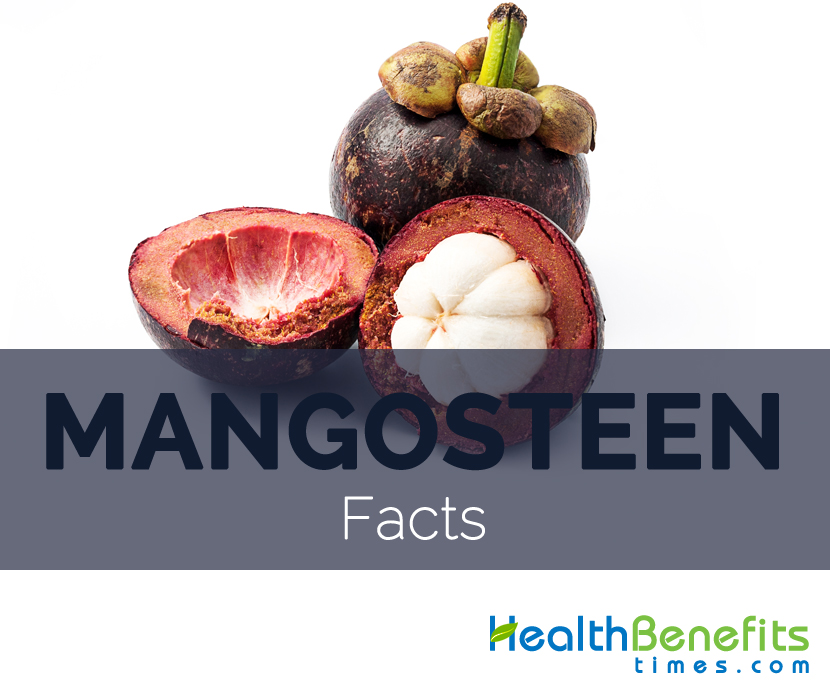
    Mangosteen FactsMangosteen is often revered as “the queen” of tropical fruits,because of its distinctive appearance and flavor. Mangosteen is a good source of nutrients, minerals, vitamins.

    Name Mangosteen
    Scientific Name Garcinia mangostana
    Common/English Name Purple Mangosteen , Mangosteen, King’s-fruit
    Name in Other Languages Japanese : Mangosuchin,Mangoosutin
    Brazil : Mangostão (Portuguese)
    Laotian : Kok Mak Mang Kout
    Slovašcina : Mangostan
    Indonesia : Manggoita (Aceh), Bagustang, Manggastan
    Vietnamese : Cây Măng Cụt, Măng Cụt, Trái Măng Cụt
    Czech : Garcínie Mangostan
    Thailand : Mang Khút, Mangkhut, Mangkut
    India : Mangosteen Hannu ( Kannada ), Shulampuli
    Philippines : Manggis ( Sulu ), Mangostan ( Tagalog)
    French : Mangostan, Mangostanier, Mangoustan
    Portuguese : Mangostão
    Italian : Garcinia, Mangostana (Fruit)
    Malaysia : Masta, Mesta, Ple Semeta ( Semang )
    Chinese : Dao Nian Zi, Mang Ji Shi
    Russian : Maнгуcтaн Mangustan
    Dutch : Manggis, Manggistan
    German : Mangostane (Tree), Mangostin,Mangostanbaum
    Sri Lanka : Mangoos, Maengus ( Sinhala )
    Danish : Mangostan
    Korean : Mang Ko Seu T’in
    Spanish : Mangostán (Tree), Mangustán (Fruit)
    Description Mangosteen is actually an exotic, small round shaped fruits which is Sweet, tangy and juicy. Because of its exceptional appearance and taste, mangosteen is often admired as “the queen” of tropical fruits.
    History and origin Exact location is uncertain, but Mangosteen is native to the Malay archipelago in the old world tropics. It was found growing wild in south Trengganu and Ulu Kemaman in Malaya and in the Sunda Islands and Moluccas (Maluku) in Indonesia. Tree was first domesticated in Thailand, or Burma. It is now grown extensively in southeast Asia but during the last three centuries it was introduced to India, Sri Lanka, the New World tropics, to Northern Australia and to the Pacific islands.
    Plant Growth Habit Medium sized, erect, slow-growing, evergreen, lactiferous tree
    Growing Climate Thrives in a warm to hot, wet and humid tropics along with a uniform temperature and a short dry season.
    Soil Deep, fertile, friable soil, rich in organic matter.
    Plant Size Reaching about 30-60 feet (9-18 m) tall
    Bark New bark is bright green and smooth, becoming dark brown and rough with age
    Branch Nearly horizontal
    Leaf Leaves are elliptical, opposite, slightly glossy above, yellowish-green and dull beneath, 3 1/2 to 10 in (9-25 cm) long, 1 3/4 to 4 in (4.5-10 cm) wide
    Flower Dioecious, unisexual, solitary or in pairs at the branch apex, 1-2 inches (2.5-5 cm) in diameter, with 4 pinkish white petals and 4 persistent sepals.
    Fruit shape & size Deep purple, round shaped fruits capped with light green calyx at the stem end, 4–7 cm diameter
    Fruit color Pale green when young turns to pink to maroon to dark purple-black when ripe
    Flesh color snow-white
    Fruit peel Smooth, somewhat leathery skin
    Flavor/aroma Slightly sweet and sour flavor
    Fruit Taste Juicy, tangy and Sweet somewhat fibrous, along with fluid-filled vesicles
    Seed 1 to 5 completely developed seeds, ovoid-oblong, slightly flattened, 1 in (2.5 cm) long and 5/8 in (1.6 cm) wide, inedible and bitter in taste
    Rind Unpalatable, dark reddish-purple colored tough rind is about 1/4 to 3/8 in (6-10 mm) thick
    Varieties/Types Cherapu or Button mangosteen (Garcinia prainiana), African mangosteen or Imbe (Garcinia livingstonei), Lemon drop mangosteens (Garcinia madruno)
    Season At low altitudes from May to July
    At higher elevations, July and August or August and September
    Major Nutrition Carbohydrate 17.91 g (13.78%)
    Vitamin B9 31 µg (7.75%)
    Copper 0.069 mg (7.67%)
    Dietary Fiber 1.8 g (4.74%)
    Vitamin B1 0.054 mg (4.50%)
    Manganese 0.102 mg (4.43%)
    Vitamin B2 0.054 mg (4.15%)
    Iron 0.3 mg (3.75%)
    Vitamin C 2.9 mg (3.22%
    Magnesium 13 mg (3.10%)
    Health Benefits
    • Alleviating PMS syndrome
    • Proper Cardiac Function
    • Promotes a healthier bowel function
    • Healthy skin
    • Cancer
    • Proper Growth
    • Anti-inflammatory properties
    Calories in 1cup (100 gm.) 73
    Traditional Medicinal Use
    • Fruit hulls of G. mangostana are used for curing skin infections and wounds and for the relief of diarrhea in Thai folk medicine.
    • Mangosteen fruit hull is used as a traditional medicine for the treatment of dysentery, abdominal pain, suppuration, wound infections, diarrhea, and chronic ulcer by people in Southeast Asia.
    • Dried and sliced rind has been used medicinally as an astringent, or in a decoction administered for dysentery in Malaysia.
    • Infusion of the leaves with unripe bananas and a dash of benzoin are used in wounds after circumcision and to other wounds.
    • For irregular menstruation a decoction of the root is drunk.
    • To allay thirst in fever ripe fruits are suggested.
    • For diarrhea and dysentery, rind is used as an astringent medicine.
    • An ointment is made from rind and is applied on eczema and other skin disorders.
    • A bark extract called “amibiasine”, has been used for the treatment of amoebic dysentery.
    Precautions
    • People with irritable bowel syndrome can experience diarrhea as soon as consuming mangosteen juice.
    • People hypersensitive to particular kinds of fruit can experience various kinds of allergy symptoms after eating and enjoying mangosteen juice.
    • Pregnant women, infants as well as patients who are suffering from cancer as well as particular other serious kinds of health conditions must not ingest Mangosteen juice.
    How to Eat
    • Dessert: Mangosteen arils are consumed fresh as table fruit or dessert.
    • Halwa manggis: By boiling the arils of unripe fruits with sugar, Malays make a conserve called halwa manggis.
    • Preserve: Preserve is made by boiling the segments in brown sugar, and the seeds may be included to enrich the flavor in Philippines.
    • Kolak: The aril is also used to make delicacies like kolak , jenang or dodol, and lempog.
    • Purplish jelly: Since rind is rich in pectin so it is treated with 6% sodium chloride to remove astringency, after that rind is made into a purplish jelly.
    • Seeds are occasionally eaten alone after boiling or roasting.
    • In Indonesia, the fruit is eaten ripe and unripe.
    Other Facts
    • Bark is used for tanning leather in China.
    • For blackening teeth a wood tar prepared from the stem is used.
    • The wood is dark-brown, heavy, almost sinks in water, and is temperately durable.
    • It has been used in making handles for spears handles, also rice pounders, and is employed in construction and cabinetwork.
    • Twigs are used as chew sticks in Ghana.


    Comments

    comments

    Facts
    Share. Facebook Twitter Pinterest LinkedIn Tumblr Email
    Previous ArticleMangosteen Nutritional Value
    Next Article Camu Camu facts and health benefits

    Related Posts

    5 Things You Need to Know About Psoriasis

    January 21, 2023

    Toxic Metal: 5 Ways to Protect yourself from Aluminum Toxicity at Home and Eating Out

    October 24, 2019

    Chewing Gum benefits and Risks

    September 10, 2018

    Comments are closed.


    Categories
    • Beverages (78)
    • Dairy (28)
    • Dental Health (15)
    • Equipment (5)
    • Essential OIls (196)
    • Facts (2,939)
    • Foods (255)
    • Fruits (516)
    • Giveaway (1)
    • Grains and Cereals (36)
    • Health & Beauty (763)
    • Herbs and Spices (1,249)
    • Medicines (9)
    • Mental Health (19)
    • Nutritional value (27)
    • Nuts and seeds (73)
    • Oils (81)
    • Pets (4)
    • Poultry & Seafoods (67)
    • Pulses and Beans (16)
    • Reviews (25)
    • supplement (2)
    • Vegetables (304)
    • Weight Loss (22)

    What is Lupin Bean Flour?

    Science Backed Health Benefits of Durian (Durio zibethinus)

    Science Backed Health Benefits of Feijoa (Pineapple Guava) (Acca sellowiana)

    Science Backed Health Benefits of Gac Fruit (Momordica cochinchinensis)

    Science Backed Health Benefits of Amaranth Leaves (Amaranthus spp)

    Science Backed Health Benefits of Arrowhead (Sagittaria sagittifolia)

    ABOUT
    Home
    About us
    Contact us
    Privacy Policy
    Terms & conditions
    Disclaimer
    Direct Communication
    e-mail: [email protected]
    Gmail: [email protected]
    Whatsapp: +977-9841146511
    Viber: +977-9841146511
    Useful
    Health Wiki
    Nutrition
    Facebook Twitter Pinterest
    © 2025 www.healthbenefitstimes.com All rights reserved.

    Type above and press Enter to search. Press Esc to cancel.

    ×

    Log In

    Forgot Password?

    Not registered yet? Create an Account