Health Benefits
    Facebook Twitter Instagram
    Friday, December 5
    Facebook Twitter Pinterest
    Health Benefits
    • Home
    • Dental Health
    • Mental Health
    • Weight Loss
    • Health Wiki
    • Nutrition
    • Healthy Recipe
    • BMI Calculator
    Health Benefits
    Home»Herbs and Spices»Facts about Bird cherry
    Herbs and Spices

    Facts about Bird cherry

    By SylviaMay 5, 2019Updated:May 5, 2019No Comments6 Mins Read
    Facebook Twitter Pinterest LinkedIn Tumblr Email

    Facts-about-Bird-cherry

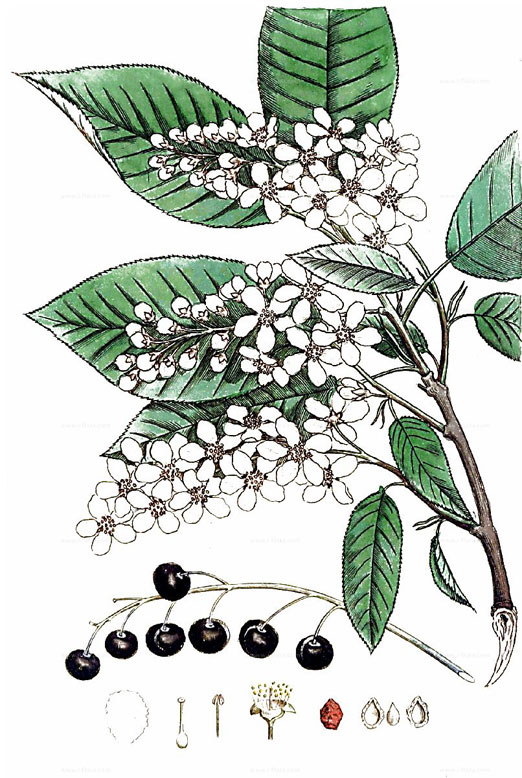
    Prunus padus, commonly called Bird cherry, is a deciduous ornamental cherry tree belongs to Prunus-genus of Rosaceae-family. The plant is native to Europe and northern Asia, and has also been stated from Morocco in North Africa. Its range in Europe extends from northern Scandinavia, where it reaches the shore of the Arctic Ocean, to the northwest of Italy and the mountains of Spain and Portugal, although it is absent from the Mediterranean coastal region and the west of France. It occurs from Ireland and the UK eastwards to Croatia and Bulgaria, and then through northern Russia, the Caucasus region and the Himalayas to western Siberia. It has been introduced to North America, where it occurs in Alaska and parts of the northeastern USA and eastern Canada, but it is not considered to be a problematic or invasive species there. Few of the popular common names of the plant are European bird-cherry, Bird-cherry, Hackberry, Hog berry, Cerezo aliso, hag berry and Mayday tree. Genus name comes from Latin word which means plum or cherry tree. Specific epithet is the Greek name of a wild cherry.

    Plant Description

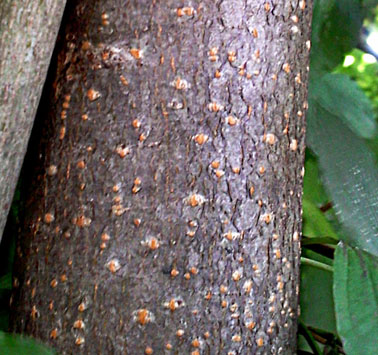
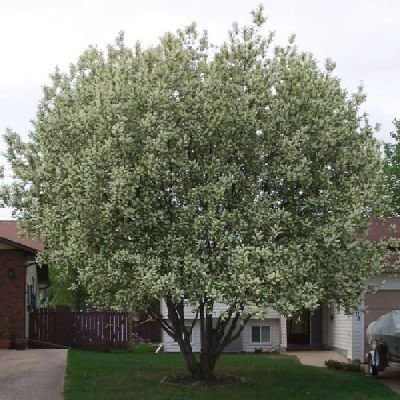
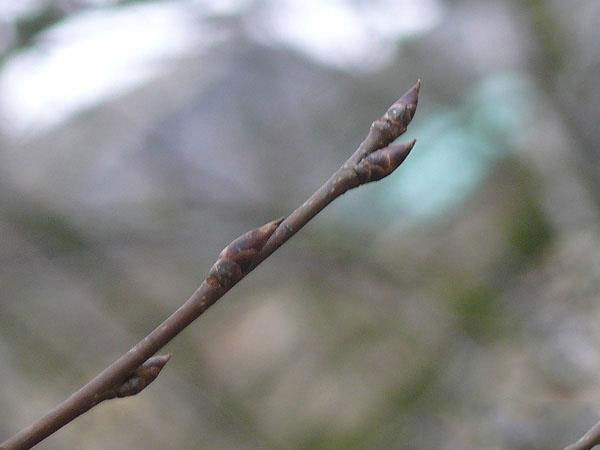
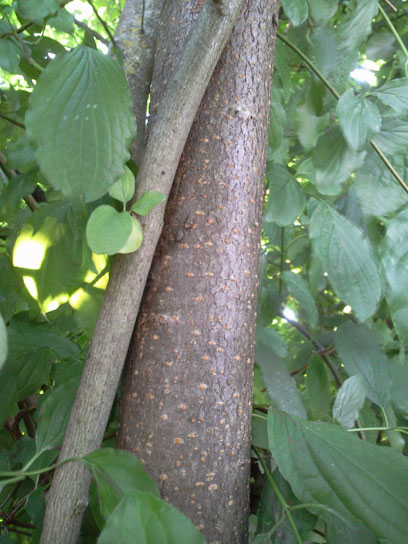
    Bird cherry is a deciduous small tree or large shrub that grows about 8- 16 m tall. The plant is found growing in streams and in moist open woods, usually on alkaline soils but also found on acid soils in upland areas, wet woodland, hedgerows, stream,  river banks, broad leaf woods, waterside thickets, forest margins. The plant can succeed in any soil, favoring a well-drained moisture-retentive loamy soil. It also prefers some lime in the soil but is likely to become chlorotic if too much lime is present. Bark is grey to brown in color and feels smooth but peels with age and turns the surface rough. It also produces a funny smell, which is unpleasantly bitter. Twigs are dark brown in color but have light markings on them. Shoots have small hairs on them but fall off with age.

    Leaves

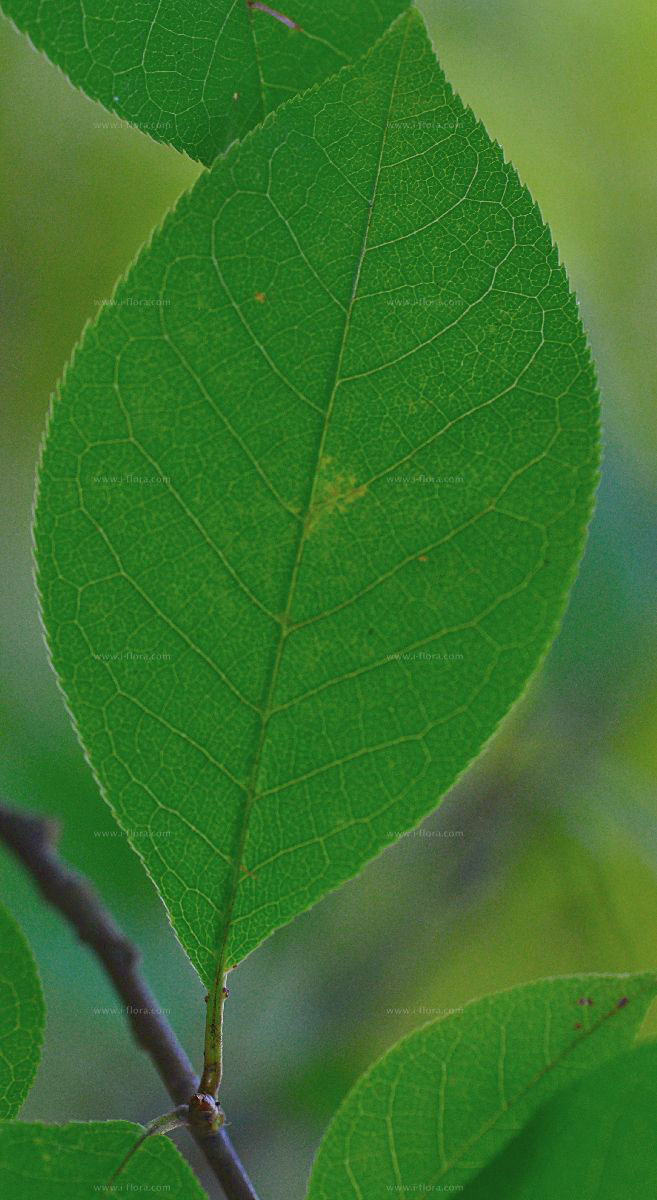
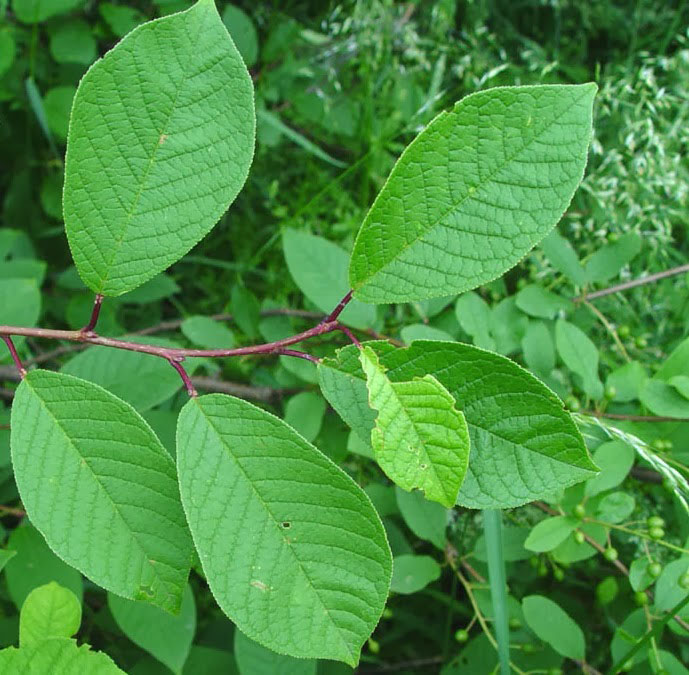
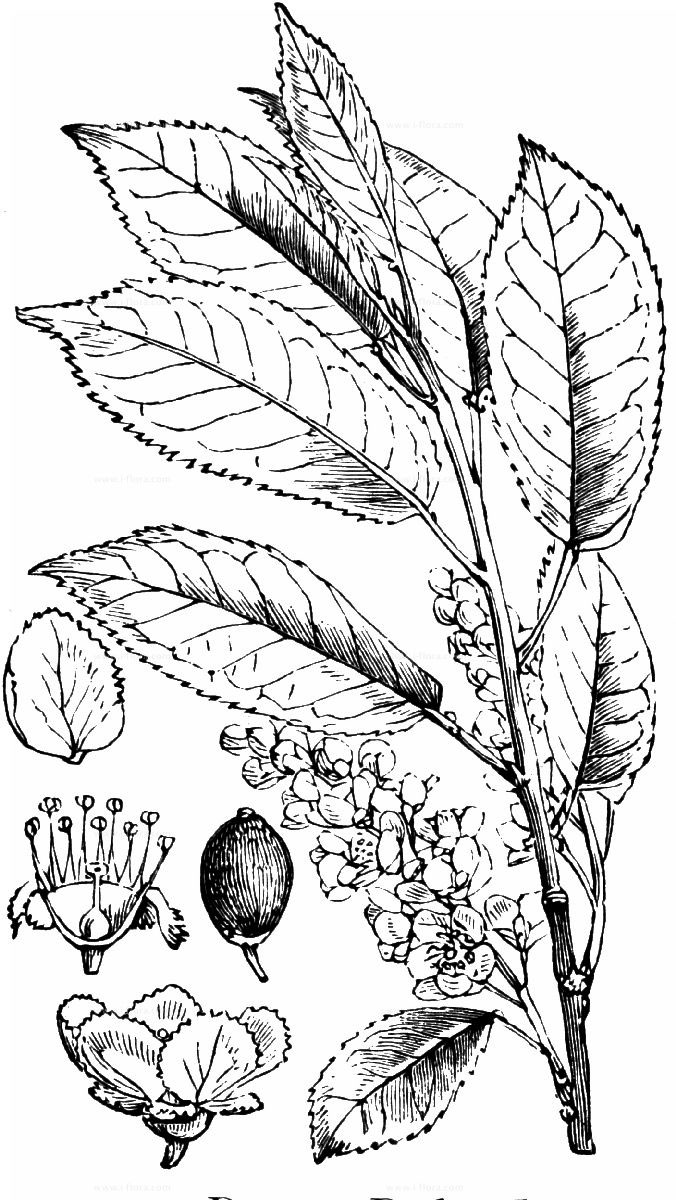
    Leaves are ovate to obovate, 50-100 mm long, 30-60 mm wide, acuminate, rounded or cordate at base, finely serrulate, dark green above, glabrous or with white hairs along lower side midrib, firm and leathery with sunken veins. Petioles are stout 0.8-2 mm in diameter, 10-20 mm long, grooved, red with two prominent dark red/brown extra floral nectaries, one on each side of the distal end. The leaves turn a beautiful red, then yellow before falling in the autumn.

    Flowers

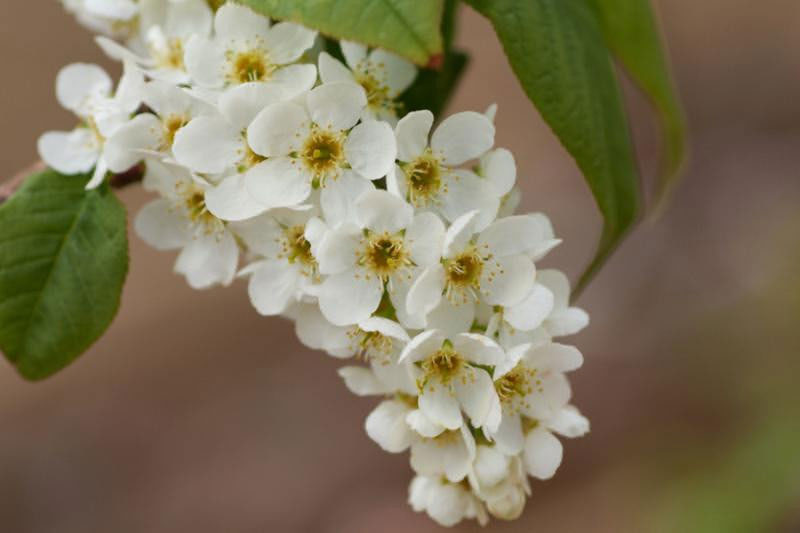
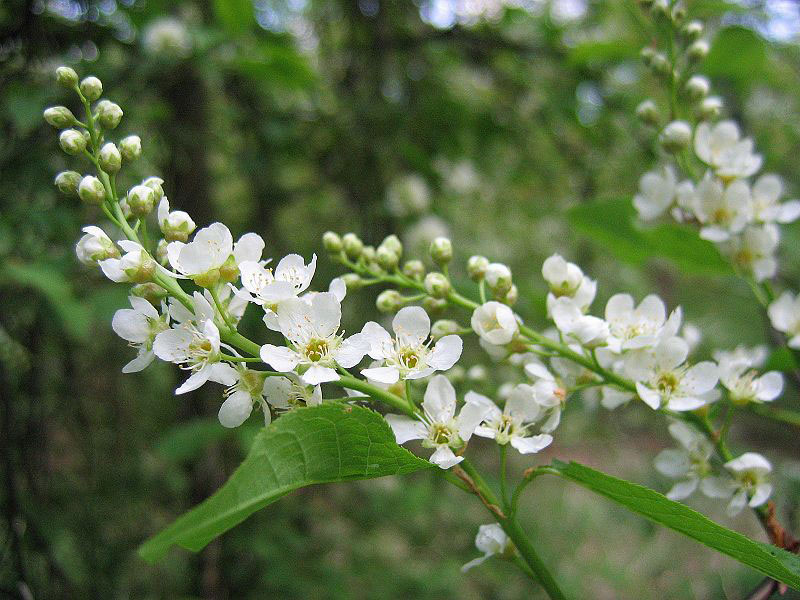
    Flowers appear in large clusters of up to forty flowers on each pendulous raceme making a stunning spring display.  The white flowers each have five petals, contain both male and female reproductive parts and have a strong almond scent. Flowering normally takes place from May and June. Pollination is carried out by bees and flies.

    Fruit

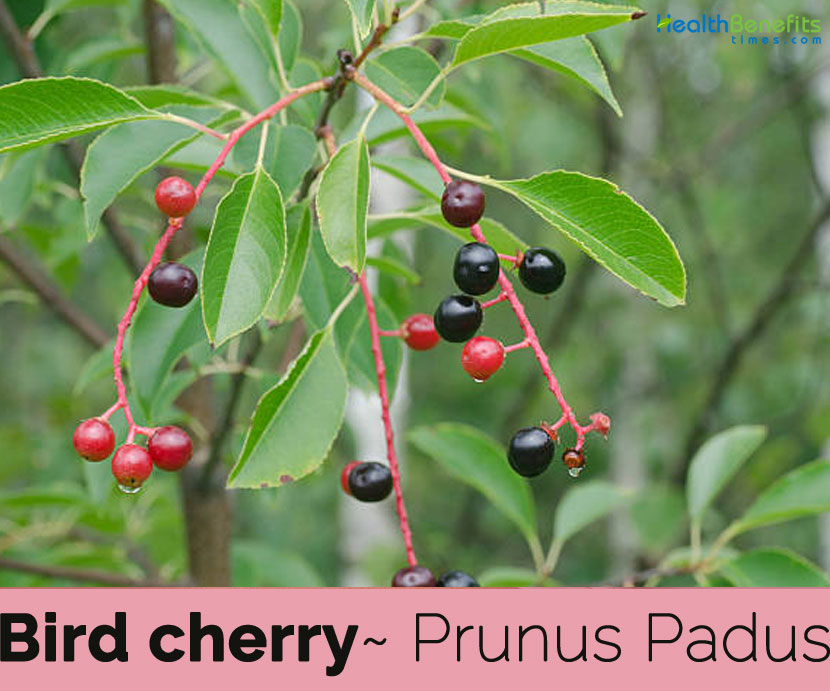
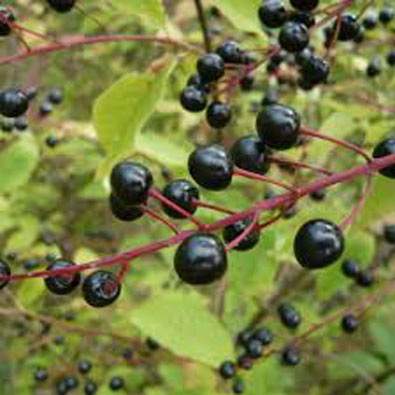
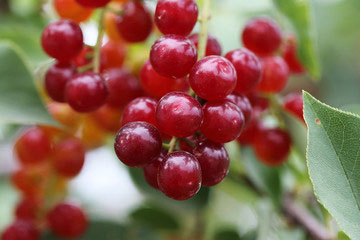
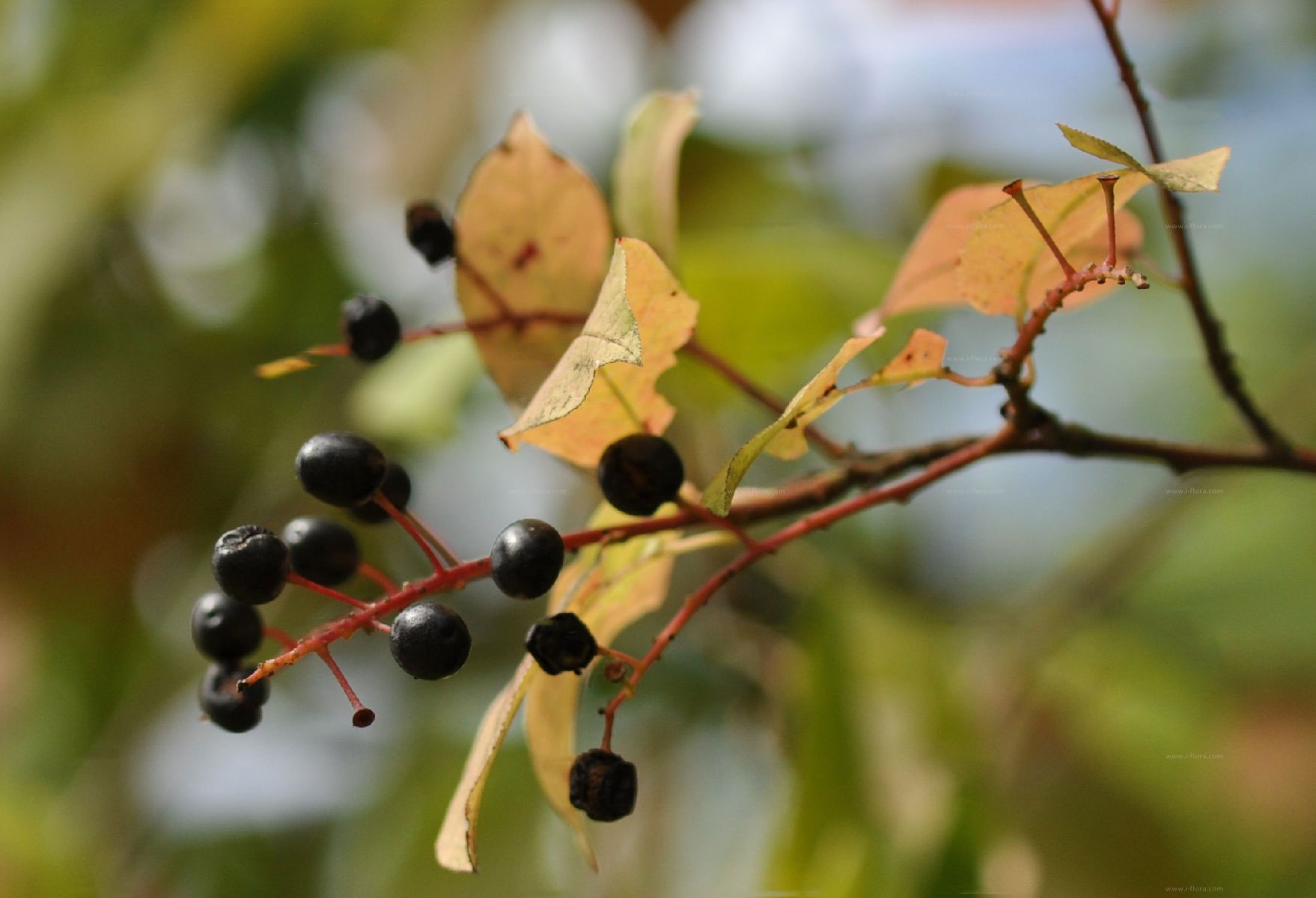
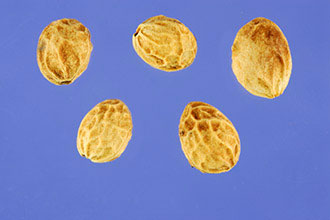
    Once the flowers have been pollinated by various insects they develop into a sub-globose or globose-ovoid, 6-8 mm long and about 5 mm wide drupe. This red fruit ripens through the summer and eventually turns into a dark purple-black due to the presence of anthocyanins. A fresh drupe weighs 130-210 mg. The texture of skin (exocarp) is shiny and glabrous. The edible outer layer (mesocarp) of fruits surrounds a stone (endocarp). The hard and globose stone contains one seed. The stony endocarp protects the seed physically.

    Fruit although edible has a very bitter taste and contains a poisonous stone but birds such as the Robin, Redwing, Blackbird and Fieldfare, as the trees name suggests, love them, providing them with a valuable source of vitamin C and other minerals.  The seed is not digested by the birds and is therefore distributed far and wide through their droppings.  Apart from being an important food source for birds, many small mammals benefit from any of the fallen fruit.

    Varieties

    There are two varieties:

    • European bird cherry Prunus padus var. padus, Europe and western Asia
    • Asian bird cherry Prunus padus var. commutata, eastern Asia

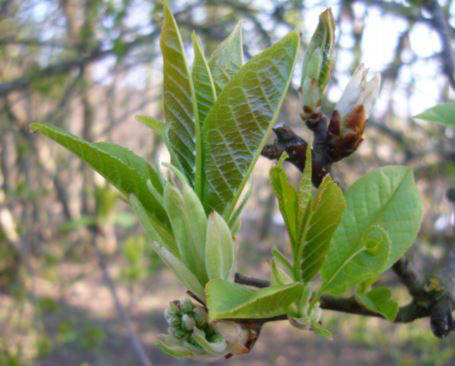
    Bark-of-Bird-cherry-plant Bird-cherry Bird-cherry-tree Buds-of-Bird-cherry Closer-view-of-flowers-of-Bird-cherry Closer-view-of-Leaf-of-Bird-cherry Clusters-of-young-leaves-of-Bird-cherry Flowers-of-Bird-cherry Immature-fruits-of-Bird-cherry Leaves-of-Bird-cherry Mature-Bird-cherry-on-the-plant Plant-Illustration-of-Bird-cherry Seeds-of-Bird-cherry Sketch-of-Bird-cherry Trunk-of-Bird-cherry
    [Show thumbnails]
    Traditional uses and benefits of Bird Cherry

    • In small quantities, hydrogen cyanide has been shown to stimulate respiration and improve digestion, it is also claimed to be of benefit in the treatment of cancer.
    • Bark is mildly anodyne, diuretic, febrifuge and sedative.
    • An infusion is used in the treatment of colds, feverish conditions etc.
    • Bark is harvested when the tree is in flower and can be dried for later use.
    • In the past the bird cherry has been used to treat both kidney and gall stones and when dissolved with wine, for the treatment of coughs.
    • Bird cherry has also been used as eyewash for conjunctivitis, and to treat angina, bronchitis, anemia and various inflammatory diseases.

    Culinary Uses

    • Fruit can be consumed raw or cooked.
    • Fruit usually has a bitter taste and is used mainly for making jam and preserves. Flowers can be chewed.
    • Young leaves can be consumed after being cooked.
    • Young leaves can be used as a boiled vegetable in Korea. Seed can be consumed raw or cooked.
    • Tea is made from the bark.
    • At one time berries were used for flavoring some alcoholic drinks.

    Other Facts

    • Green dye can be obtained from the leaves.
    • Dark grey to green dye can be obtained from the fruit.
    • Wood is hard, heavy, durable, easy to work, polishes well.
    • Wood is much valued by cabinet makers, wooden boxes, tool handles, and cask hoops and for carving.
    • Bark of the tree, placed at the door, was supposed to ward off plague.
    • Bark produces a reddish brown dye and is used for dyeing fishing nets.
    • At one time the people of Scotland thought it was a witch’s tree and there were warnings not to use the tree for any purpose.
    • Foliage is toxic to all livestock but in particular to goats.
    • Due to the barks very unpleasant odor, it is said that the placing of bird cherry twigs in barns and other outbuildings can keep rodents at bay.
    • The sickly almond scented flowers attract many insects, particularly bees and flies.

    Precautions

    • Seed and leaves consist of hydrogen cyanide, a poison that gives almonds their characteristic flavor.
    • This toxin is readily detected by its bitter taste. Usually bitter seed or fruit should not be eaten.
    • In excess, however, it can cause respiratory failure and even death.
    • The glycosides prulaurasin and amygdalin, which can be poisonous to some mammals, are present in some parts of P. padus, including the leaves, stems and fruits.


    References:

    https://www.itis.gov/servlet/SingleRpt/SingleRpt?search_topic=TSN&search_value=24798#null

    https://davesgarden.com/guides/pf/go/31446/

    https://npgsweb.ars-grin.gov/gringlobal/taxonomydetail.aspx?id=30057

    https://pfaf.org/user/Plant.aspx?LatinName=Prunus+padus

    http://www.missouribotanicalgarden.org/PlantFinder/PlantFinderDetails.aspx?kempercode=g980\

    https://plants.usda.gov/core/profile?symbol=prpa5

    https://www.iucnredlist.org/species/172090/61616618

    http://www.theplantlist.org/tpl1.1/record/rjp-45

    https://en.wikipedia.org/wiki/Prunus_padus

    https://gd.eppo.int/taxon/PRNPA

    78%
    78%
    Awesome

    Comments

    comments

    B Herbs and Spices
    Share. Facebook Twitter Pinterest LinkedIn Tumblr Email
    Previous Article5 Tips To Prevent Hot Flashes
    Next Article Cowpeas leafy tips nutrition and benefits

    Related Posts

    Uses of Monkey Pitcher plant

    April 16, 2024

    Traditional uses and benefits of Wild Marigold

    March 21, 2024

    Traditional uses and benefits of Drooping fig

    March 12, 2024

    Comments are closed.


    Bird Cherry Facts

    Bird cherry Quick Facts
    Name: Bird cherry
    Scientific Name: Prunus Padus
    Origin Europe and northern Asia, and has also been reported from Morocco in North Africa
    Colors Red fruit which ripens eventually into a dark purple-black
    Shapes small drupe cherries roughly the size of a pea, with a large seed
    Taste Very bitter
    Health benefits Beneficial for colds, feverish conditions, kidney and gall stones, conjunctivitis, angina, bronchitis, anemia and various inflammatory diseases
    Name Bird cherry
    Scientific Name Prunus Padus
    Native Europe and northern Asia, and has also been reported from Morocco in North Africa
    Common Names European bird-cherry, Bird-cherry, Hackberry, Hog berry, Cerezo aliso, hagberry, Mayday tree
    Name in Other Languages Armenian: T’kheni (Թխենի)
    Azerbaijani: Adi meşəgilası
    Bashkir: Муйыл
    Basque: Otsagereziondo, txerri-gerezitzea
    Belarusian: Čaromcha zvyčajnaja (Чаромха звычайная)
    Bulgarian: pesŭkinya (песъкиня), grozdovidna pesŭkinya (гроздовидна песъкиня)
    Catalan: Gatzerí, cirer bort, cirerer bord
    Chechen: Черемшина
    Chinese: Chou li
    Chuvash: Çĕмĕрт
    Croatian: Sremza
    Czech: Střemcha obecná
    Danish: Haeg, Majtrae, Almindelig hæg
    Dutch: Vogelkers, Gewone vogelkers, vogelkerseboom
    English: European bird-cherry, Bird-cherry, Hackberry, Hog berry, Cerezo aliso, hagberry
    Estonian: Harilik toomingas
    Finnish: Tuomi
    French: Cerisier à grappes, Merisier à grappes, Cerisier à grappes d’Europe, bois puant, cerisier putiet, faux bois de Sainte Lucie, putier
    Galician: Cerdeira
    Georgian: Shotkhvi (შოთხვი)
    German: Ahlkirsche, Else, Echte Traubenkirsche, Faulbeerbaum, Gemeine Traubenkirsche, Stinkbeere, Sumpfkirsche, Traubenkirsche, Gewöhnliche Traubenkirsche, Auentraubenkirschbaum, Auentraubenkirsche, Elsen, Faulbaum, gewöhnlicher Traubenkirschbaum, Kirschbaum, Traubenkirschbaum
    Hindi: Jaamanaa
    Hungarian: Zelnicemeggy, májusfa
    Icelandic: Heggur
    Italian: Ciliegio a grappoli, Visciolo a grappoli, Ciliegio pado, Ciliegiola grappoli, Pado
    Irish: Donnroisc
    Japanese:  Eso no uwa mizu zakura,  Ezo no uwa mizu zakura (エゾノウワミズザクラ)
    Kazakh: Şomırt (Шомырт)
    Komi: Льӧм
    Korean: Gui rung na mu, gwirungnamu
    Latvian: Parastā ieva
    Lithuanian: Paprastoji ieva
    Manx: Billey shillish figgagh
    Northern Sami: Ávža
    Norwegian: Hegg
    Ossetian: Тæфхъæд
    Persian: گیلاس پرنده
    Polish: Czeremcha pospolita, czeremcha zwyczajna
    Portuguese: Azereiro-dos-danados, Pado, cerejeira-de-mahoma,
    Romanian: Mălin
    Russian:  Cheremukha, Cheremukha obyknovennaia, Cheromukha obyknovennaya (Черёмуха обыкновенная)
    Serbian: Сремза
    Slovak: Cremcha obyčajná
    Slovenian: Chremsa, Čremza
    Spanish: Cerezo aliso, cerezo de racimo, cerezo de San Gregorio, cerezo silvestre             , ciruelo de Bahama, palo de la rabia, palo de San Gregorio, árbol de la rabia
    Swedish: Hagg, Tuomi, häggträd
    Tatar: Шомырт
    Turkish: Açık köklü, kuş kirazı
    Ukrainian: Cheremkha zvychayna (Черемха звичайна)
    Uzbek: Cheremuxa
    Welsh: Coeden Geirios yr Adar
    Plant Growth Habit Deciduous small tree or large shrub
    Growing Climates Streams and in moist open woods, usually on alkaline soils but also found on acid soils in upland areas, wet woodland, hedgerows, stream,  river banks, Broadleaf woods, waterside thickets, forest margins
    Soil Succeeds in any soil, preferring a well-drained moisture-retentive loamy soil. Prefers some lime in the soil but is likely to become chlorotic if too much lime is present
    Plant Size About 8- 16 m tall
    Bark Grey to brown in color and feels smooth but peels with age and turns the surface rough; it also produces a funny smell, which is unpleasantly bitter
    Twigs Dark brown in color but have light markings on them; shoots have small hairs on them but fall off with age
    Leaf Ovate to obovate, 50-100 mm long, 30-60 mm wide, acuminate, rounded or cordate at base, finely serrulate, dark green above, glabrous or with white hairs along lower side midrib, firm and leathery with sunken veins
    Flowering season May and June
    Pollination By bees and flies
    Flower Flowers appear in large clusters of up to forty flowers on each pendulous raceme making a stunning spring display.  The white flowers each have five petals, contain both male and female reproductive parts and have a strong almond scent
    Fruit Shape & Size Small drupe Cherries roughly the size of a pea, with a large seed
    Fruit Color Red fruit which ripens eventually into a dark purple-black
    Propagation By seeds, grafting or budding
    Taste Very bitter taste
    Plant Parts Used Bark
    Season July to August

    Bird cherry Scientific Classification

    Scientific Name: Prunus Padus

    Rank Scientific Name & (Common Name)
    Kingdom Plantae (Plants)
    Subkingdom Tracheobionta (Vascular plants)
    Infrakingdom Streptophyta  (land plants)
    Superdivision Spermatophyta (Seed plants)
    Division Magnoliophyta (Flowering plants)
    Subdivision Spermatophytina  (spermatophytes, seed plants, phanérogames)
    Class Magnoliopsida (Dicotyledons)
    Subclass Rosidae
    Superorder Rosanae
    Order Rosales
    Family Rosaceae (Rose family)
    Genus Prunus L. (plum)
    Species Prunus padus L. (European bird cherry)
    Synonyms
    • Cerasus padus (L.) Delarbre
    • Cerasus padus (L.) DC
    • Druparia padus (L.) Clairv
    • Padus asiatica Kom
    • Padus avium Mill
    • Padus borealis (Schübeler ) N.I.Orlova
    • Padus racemosa (Lam.) Gilib
    • Padus racemosa subsp. typica (C.K.Schneid.) Dost l
    • Padus vulgaris Borkh
    • Padus vulgaris Host
    • Prunus fauriei H.L‚v
    • Prunus germanica Borkh
    • Prunus padus subsp. padus
    • Prunus racemosa Lam.
    Categories
    • Beverages (78)
    • Dairy (28)
    • Dental Health (15)
    • Equipment (5)
    • Essential OIls (196)
    • Facts (2,939)
    • Foods (255)
    • Fruits (516)
    • Giveaway (1)
    • Grains and Cereals (36)
    • Health & Beauty (763)
    • Herbs and Spices (1,249)
    • Medicines (9)
    • Mental Health (19)
    • Nutritional value (27)
    • Nuts and seeds (73)
    • Oils (81)
    • Pets (4)
    • Poultry & Seafoods (67)
    • Pulses and Beans (16)
    • Reviews (25)
    • supplement (2)
    • Vegetables (304)
    • Weight Loss (22)

    What is Lupin Bean Flour?

    Science Backed Health Benefits of Durian (Durio zibethinus)

    Science Backed Health Benefits of Feijoa (Pineapple Guava) (Acca sellowiana)

    Science Backed Health Benefits of Gac Fruit (Momordica cochinchinensis)

    Science Backed Health Benefits of Amaranth Leaves (Amaranthus spp)

    Science Backed Health Benefits of Arrowhead (Sagittaria sagittifolia)

    ABOUT
    Home
    About us
    Contact us
    Privacy Policy
    Terms & conditions
    Disclaimer
    Direct Communication
    e-mail: [email protected]
    Gmail: [email protected]
    Whatsapp: +977-9841146511
    Viber: +977-9841146511
    Useful
    Health Wiki
    Nutrition
    Facebook Twitter Pinterest
    © 2025 www.healthbenefitstimes.com All rights reserved.

    Type above and press Enter to search. Press Esc to cancel.

    ×

    Log In

    Forgot Password?

    Not registered yet? Create an Account