

Cerebral palsy (CP) is the most common childhood motor disability, acting as an umbrella term for permanent disorders that affect a person’s ability to move, maintain balance, and keep a steady posture. It is caused by abnormal development or physical damage to the developing brain, which usually occurs before, during, or shortly after birth 1. While the underlying brain injury is non-progressive—meaning the damage itself does not continue to worsen—the resulting physical symptoms and mobility challenges can change as an individual ages 2. The severity varies widely; some individuals may only experience mild awkwardness in their daily movements, whereas others might require the lifelong use of a wheelchair and total physical assistance. Because the affected areas of the brain often control multiple systems, these core movement difficulties are frequently accompanied by secondary health issues, including seizures, cognitive delays, and sensory or communication impairments.
Causes of Cerebral Palsy
1. Premature Birth and Low Birth Weight
Babies born before 37 weeks of pregnancy or weighing less than 5.5 pounds face a significantly higher risk of developing the condition due to incomplete brain development 3.
2. Infections During Pregnancy
Maternal infections, such as rubella, cytomegalovirus, and Zika virus, can trigger inflammation that permanently damages the unborn baby’s developing brain 4.
3. Severe Untreated Jaundice
If a newborn experiences severe yellowing of the skin and eyes (jaundice) that is not treated, a chemical called bilirubin can build up and cross into the brain, causing a type of brain damage known as kernicterus.
4. Bleeding in the Brain
Primarily affecting premature infants, ruptured blood vessels in the brain can destroy essential tissues needed for proper motor control and movement.
5. Genetic Mutations
Spontaneous errors or changes in the genes that direct how the brain grows can result in abnormal brain formation and structure.
6. Lack of Oxygen During Birth
Although historically blamed for the majority of cases, a severe loss of oxygen during labor and delivery (asphyxia) is now known to be responsible for only a small fraction of cases.
7. Early Childhood Head Injuries
Severe physical trauma to the head caused by motor vehicle accidents, accidental falls, or physical abuse during infancy can permanently damage the brain after birth.
8. Infant Brain Infections
Illnesses such as meningitis or encephalitis during the first few years of life can cause dangerous swelling in and around the brain, disrupting normal motor function.
Symptoms of Cerebral Palsy
1. Abnormal Muscle Tone
A person’s muscles may appear overly stiff and rigid, or unusually floppy and relaxed, making standard posture difficult to maintain 5.
2. Delayed Motor Milestones
Infants and toddlers may be noticeably slow to reach standard physical developmental stages, such as rolling over, sitting up without support, or crawling.
3. Stiff Muscles and Exaggerated Reflexes (Spasticity)
This is the most common physical symptom, where muscles contract tightly on their own, making movements stiff, jerky, and difficult to control.
4. Involuntary Movements
Individuals may experience slow, writhing, twisting, or uncontrollable shaking movements, particularly in their hands, arms, feet, or legs.
5. Poor Balance and Coordination (Ataxia)
Challenges in maintaining balance while walking or performing tasks that require steady physical control, often resulting in an unsteady or wide-based walking style.
6. Unusual Walking Patterns
Mobility issues often manifest as walking exclusively on the toes, dragging one leg while stepping, or walking with a crouched, “scissor-like” gait where the knees cross inward.
7. Difficulty with Fine Motor Skills
An inability to coordinate precise, small movements, creating challenges with everyday tasks such as holding a pencil, picking up small objects, or buttoning clothing.
8. Oral Motor Difficulties
Weakness or poor control of the muscles in the face and throat can lead to excessive drooling, difficulty chewing and swallowing food, and severe challenges with speaking clearly.
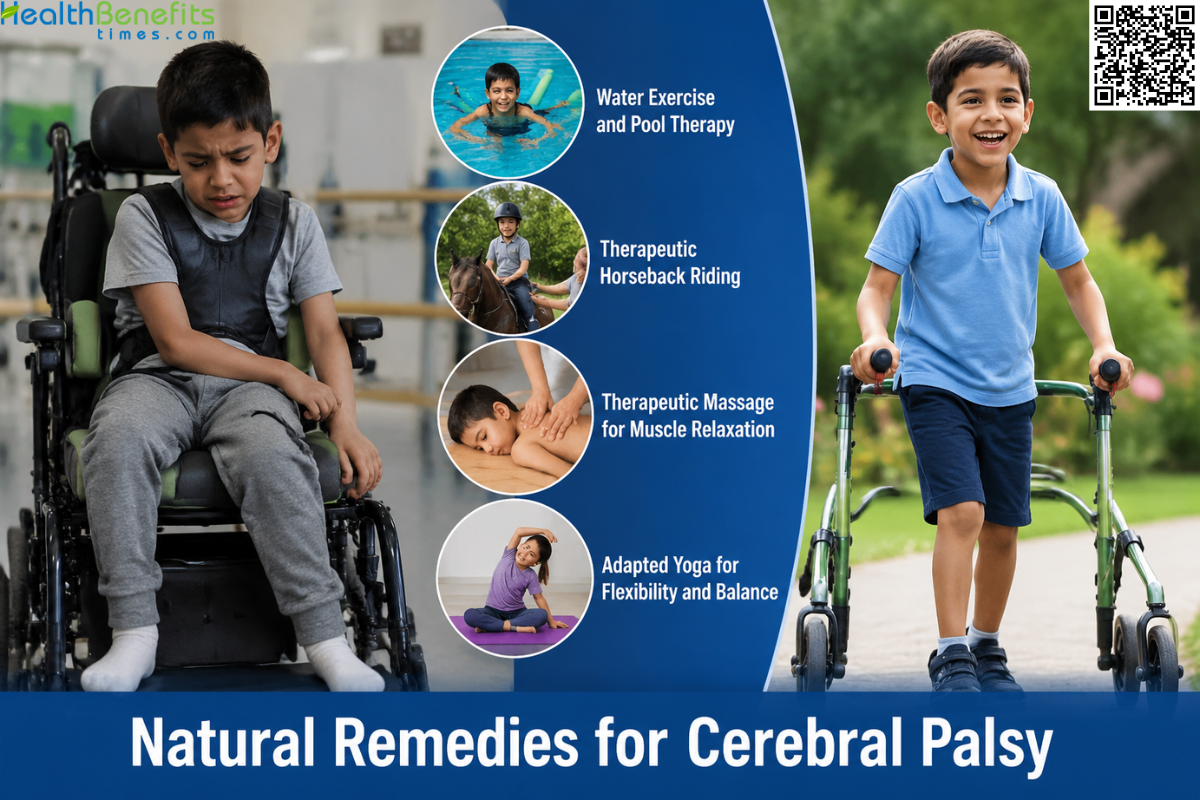
 Natural Remedies for Cerebral Palsy
1. Water Exercise and Pool Therapy
How It May Help
Water therapy utilizes buoyancy to reduce body weight, making movement easier and relieving joint stress. The warmth of the water helps relax stiff muscles, while the water’s natural resistance aids in building muscle strength and cardiovascular fitness without the high impact of land-based exercises 6.
What Research Says
Clinical studies conclude that aquatic therapy significantly improves gross motor function, walking speed, and balance in individuals with cerebral palsy. Additionally, regular pool therapy interventions have been proven to effectively reduce muscle spasticity and enhance overall quality of life and social participation.
How to Use It Safely
You should first consult a physical therapist to design a customized program. Ensure the pool is adequately heated to prevent muscle cramping. Always work with a certified aquatic therapist, use appropriate physical flotation supports, and never attempt water exercises alone 7.
Potential Precautions or Side Effects
Risks include accidental water swallowing, slipping, and severe fatigue. Individuals with uncontrolled seizures, open wounds, active infections, or severe chlorine allergies must avoid pool therapy.
2. Therapeutic Horseback Riding
How It May Help
The rhythmic, three-dimensional movement of a walking horse closely mimics natural human walking. This motion gently stretches tight muscles, improves core body stability, and encourages an upright posture, providing sensory feedback that helps develop better physical awareness and motor control 8.
What Research Says
Studies show that therapeutic horseback riding significantly improves balance, muscle symmetry, and overall physical movement in children with cerebral palsy 9. Clinical trials confirm that regular sessions reduce muscle stiffness and enhance posture control more effectively than standard physical therapy alone.
How to Use It Safely
You must only participate in programs led by certified therapeutic riding instructors or licensed physical therapists. Ensure you wear a properly fitted safety helmet at all times. Always use adaptive saddles and have trained side-walkers present to prevent falls 10.
Potential Precautions or Side Effects
Risks include accidental falls, temporary muscle soreness, and animal allergies. Individuals with severe spinal instability, unmanaged seizures, or extreme muscle stiffness must avoid this therapy.
3. Therapeutic Massage for Muscle Relaxation
How It May Help
Therapeutic massage improves blood circulation and gently stretches tight muscles, helping to reduce severe stiffness and involuntary spasms. By stimulating the nervous system to release tension, it promotes deep physical relaxation, increases joint flexibility, and relieves the chronic discomfort frequently experienced by individuals with cerebral palsy 11.
What Research Says
Clinical studies conclude that regular massage therapy significantly reduces muscle spasticity and improves both gross and fine motor skills in individuals with cerebral palsy. Furthermore, research indicates that routine massage lowers stress hormone levels, leading to better sleep quality and decreased physical pain 12.
How to Use It Safely
You should always consult a medical provider before beginning any new physical regimen. Ensure you work exclusively with a licensed massage therapist trained in neurological conditions. Always communicate openly about pressure levels to prevent pain or tissue damage during the treatment session 13.
Potential Precautions or Side Effects
Possible side effects include temporary muscle soreness and mild skin irritation. Individuals with extreme bone fragility, open wounds, bleeding disorders, or active infections must avoid deep pressure massage.
4. Adapted Yoga for Flexibility and Balance
How It May Help
Adapted yoga modifies traditional poses using physical props and supports to accommodate mobility limitations. It helps gently stretch tight muscles, improve joint mobility, and enhance core body strength. Additionally, coordinated deep breathing techniques promote nervous system relaxation, which can significantly reduce severe muscle tension and involuntary spasms 14.
What Research Says
Clinical research demonstrates that adapted yoga interventions significantly improve gross motor function, muscle flexibility, and balance in individuals with cerebral palsy 15. Furthermore, studies confirm that regular practice decreases chronic muscle stiffness and improves overall psychological well-being by effectively lowering anxiety levels.
How to Use It Safely
You must consult a healthcare provider before starting a practice. Ensure you work with a certified yoga instructor trained in adaptive techniques for neurological conditions. Always use physical props, such as blocks, straps, or chairs, to properly support your body and prevent overstretching 16.
Potential Precautions or Side Effects
Risks include muscle strains, joint hyperextension, and accidental falls. Individuals with severe spinal instability, recent orthopedic surgeries, or extreme joint hypermobility must avoid unassisted physical stretching exercises.
5. Music Therapy for Movement and Coordination
How It May Help
Music therapy uses rhythmic sounds to stimulate the brain’s motor pathways, helping synchronize muscle movements with a steady beat. Actively playing adapted instruments encourages purposeful movement, which builds fine motor skills, improves hand-eye coordination, and motivates individuals during physical rehabilitation 17.
What Research Says
Clinical studies confirm that music therapy, particularly rhythmic auditory stimulation, significantly improves walking speed, stride length, and overall balance in individuals with cerebral palsy. Additionally, research demonstrates that actively playing instruments effectively enhances upper limb function and hand coordination 18.
How to Use It Safely
You must collaborate with a board-certified music therapist to develop a customized treatment plan. Ensure all musical instruments are properly adapted to fit your physical abilities, preventing joint strain. Always maintain moderate volume levels to protect long-term hearing health 19.
Potential Precautions or Side Effects
Risks include sensory overload, mental fatigue, and potential hearing damage. Individuals with extreme sound sensitivity or reflex epilepsy triggered by sudden noises must avoid certain auditory interventions.
6. Acupuncture for Managing Muscle Stiffness
How It May Help
Acupuncture involves inserting highly thin needles into specific points on the body to stimulate the central nervous system. This process triggers the release of natural pain-relieving chemicals and improves blood flow to affected areas. This targeted nerve stimulation helps relax severe muscle stiffness and reduce involuntary physical spasms 20.
What Research Says
Clinical trials indicate that combining acupuncture with standard physical rehabilitation significantly decreases muscle spasticity and improves gross motor function in individuals with cerebral palsy 21. Furthermore, systematic reviews conclude that this combined approach enhances daily living skills and walking ability more effectively than standard therapy alone.
How to Use It Safely
You should always consult your primary neurologist before starting treatments. Ensure you only receive care from a licensed, board-certified acupuncturist with experience treating neurological disorders. You must verify that the practitioner strictly uses sterile, single-use, disposable needles to prevent serious infections.
Potential Precautions or Side Effects
Common side effects include minor bleeding, bruising, and temporary soreness at the needle insertion sites. Individuals with bleeding disorders or those taking blood-thinning medications must avoid this procedure.
7. Vitamin D and Calcium Supplements for Bone Health
How It May Help
Individuals with cerebral palsy often lack regular weight-bearing exercise, which naturally weakens their skeletal structure. Calcium provides the essential building blocks for strong bones, while vitamin D ensures the body can effectively absorb that calcium, significantly reducing the risk of frequent bone fractures 22.
What Research Says
Clinical studies reveal that individuals with severe cerebral palsy frequently suffer from dangerously low bone mineral density. Research confirms that routine calcium and vitamin D supplementation significantly increases overall bone strength and drastically reduces the high rate of spontaneous bone fractures in non-walking patients 23.
How to Use It Safely
You must ask a doctor to perform a blood test to check your current vitamin levels before starting supplements. Ensure you follow exact prescribed dosages, as individual needs vary greatly. Always take calcium supplements with food to maximize absorption and minimize stomach upset 24.
Potential Precautions or Side Effects
Excessive intake can cause kidney stones, severe constipation, and dangerous calcium buildup in blood vessels. Individuals with a history of kidney disease must strictly avoid unsupervised supplementation.
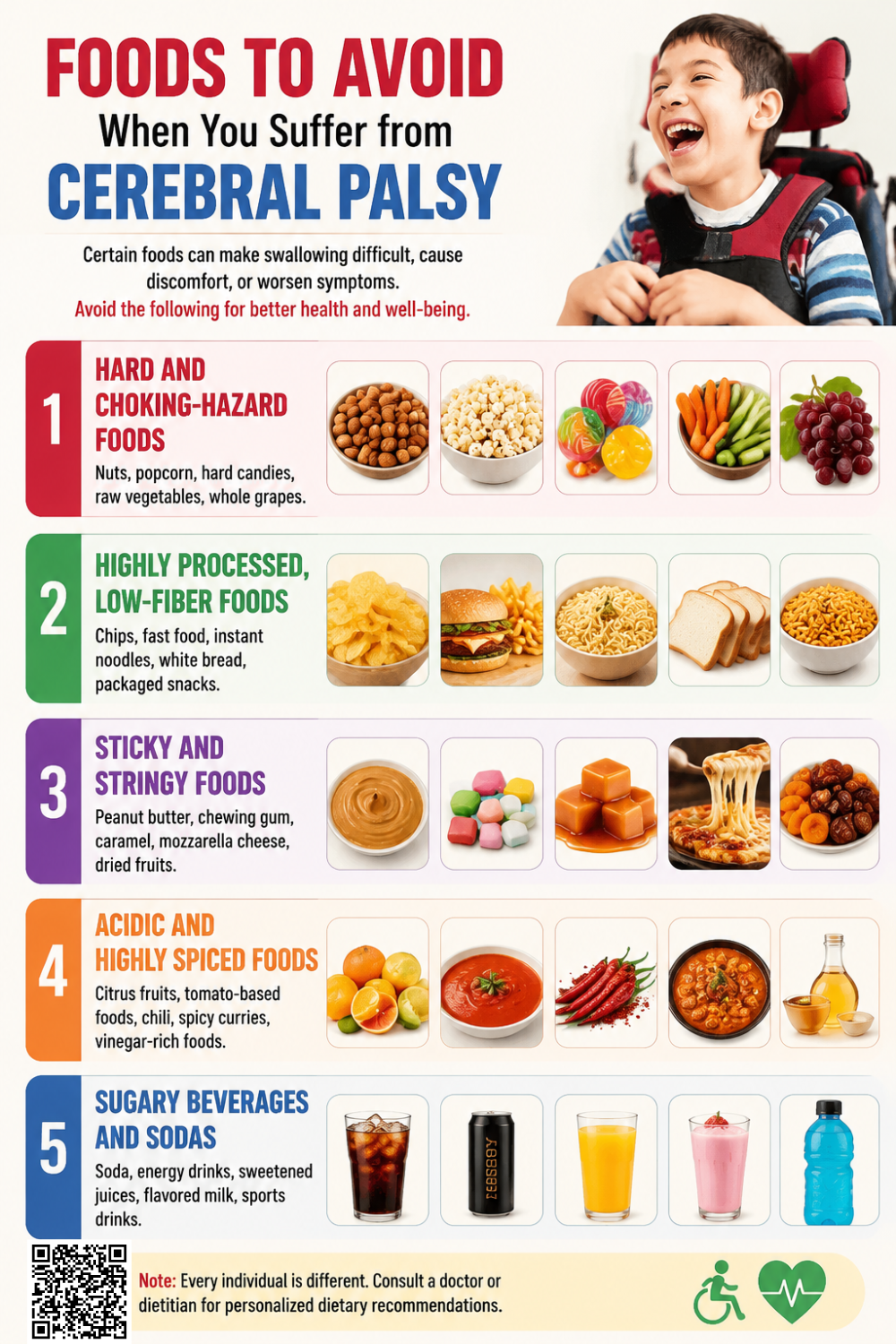 Foods to Avoid When You suffer from Cerebral Palsy
1. Hard and Choking-Hazard Foods
Nuts, hard candies, and whole grapes significantly increase the risk of choking and aspiration due to widespread swallowing difficulties (dysphagia) in affected individuals 25.
2. Highly Processed, Low-Fiber Foods
Fast food and refined grains severely worsen chronic constipation, which is a frequent complication caused by abnormal bowel muscle tone and limited physical mobility 26.
3. Sticky and Stringy Foods
Thick peanut butter and stringy meats require complex chewing coordination, directly increasing the danger of airway blockage in individuals with impaired oral motor control.
4. Acidic and Highly Spiced Foods
Citrus fruits and spicy dishes severely exacerbate gastroesophageal reflux disease (GERD), a painful condition highly prevalent due to weakened stomach valve muscles.
5. Sugary Beverages and Sodas
High sugar consumption accelerates tooth decay in a population already facing high dental risks, while carbonation physically worsens painful acid reflux symptoms 27.
When To See a Doctor When You Suffer From Cerebral Palsy
1. Sudden Loss of Motor Skills
If you experience new muscle weakness, seek immediate care. Because cerebral palsy is non-progressive, sudden physical declines require emergency neurological evaluation.
2. New or Worsening Seizures
You must consult a doctor if seizures become more frequent or change in severity, as this indicates a need for immediate medication adjustments.
3. Severe Pain or Joint Deformity
Seek medical attention for sudden joint pain. Individuals face high risks of painful hip displacement that requires prompt orthopedic intervention to prevent permanent joint damage.
4. Swallowing or Breathing Difficulties
You should contact a doctor immediately if you develop new choking episodes or breathing issues during meals, indicating a life-threatening risk of lung aspiration.
5. Severe Abdominal Complications
Seek urgent care for severe abdominal pain or vomiting. These symptoms can signal a dangerous bowel obstruction caused by abnormal bowel muscle tone, requiring immediate treatment.