

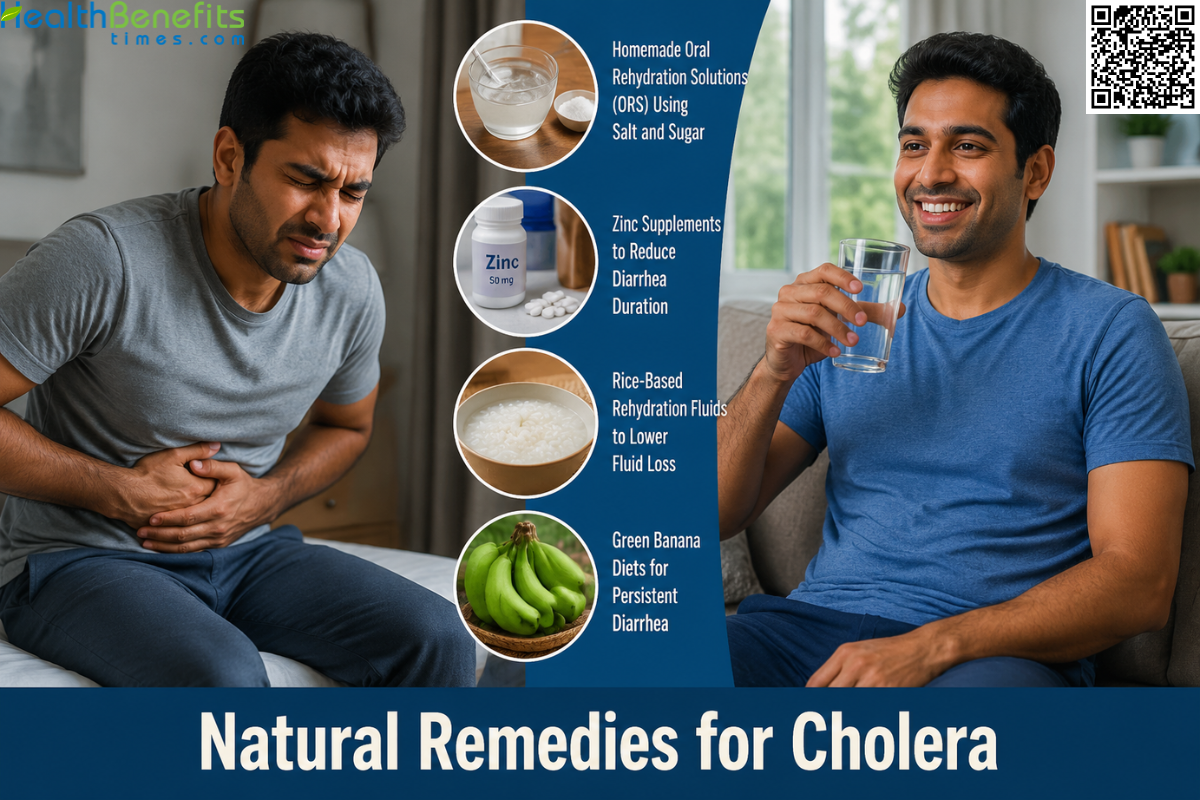
Cholera is an acute and potentially life-threatening illness of the digestive system. The infection develops when a person consumes food or water contaminated with Vibrio cholerae bacteria, which release a toxin that severely disrupts fluid absorption in the intestines 1. Although many individuals remain asymptomatic, severe manifestations are characterized by sudden, profuse watery diarrhea, vomiting, and painful muscle cramps 2. Because the illness aggressively depletes water and essential electrolytes, untreated cases can rapidly progress to severe dehydration, shock, and death within just a few hours. Despite its rapid onset, the condition is highly treatable with prompt medical intervention. Standard clinical guidelines rely on immediate fluid replacement using oral rehydration solutions (ORS), while critical cases necessitate rapid intravenous fluids and targeted antibiotics to clear the infection and ensure survival.
Causes of Cholera
1. Contaminated Drinking Water
The primary method of transmission is the consumption of water tainted with feces from an infected person. In regions with inadequate water treatment or sewage management, public wells, municipal water systems, and even ice can harbor the Vibrio cholerae bacteria 3.
2. Raw or Undercooked Seafood
Eating shellfish, such as crabs and oysters, harvested from coastal waters polluted with sewage is a well-documented source of infection. The bacteria naturally survive in brackish rivers and coastal environments, readily accumulating in the tissues of these marine animals 4.
3. Contaminated Fruits and Vegetables
Raw agricultural produce can transmit the bacteria if it is irrigated with water containing raw sewage. Furthermore, crops that are washed, peeled, or prepared using untreated water just prior to consumption pose a significant risk of infection.
4. Poor Sanitation Infrastructure
The disease spreads rapidly in environments lacking proper human waste disposal systems. Overcrowded living conditions, such as refugee camps, or areas where infrastructure has been destroyed by natural disasters create ideal circumstances for the bacteria to infiltrate local food and water supplies.
Symptoms of Cholera
1. Sudden Watery Diarrhea
The most prominent symptom is the abrupt onset of severe, large-volume diarrhea. The fluid loss is intense, and the stool often appears pale and cloudy, resembling water in which rice has been rinsed 5.
2. Nausea and Vomiting
Infected individuals frequently experience vomiting, particularly during the early hours of the illness, which significantly accelerates the rate of fluid loss from the body.
3. Painful Muscle Cramps
As the body rapidly flushes out critical water and essential salts (electrolytes) such as sodium and potassium, patients often develop severe, painful cramping, most commonly in the legs.
4. Severe Dehydration
The massive expulsion of bodily fluids quickly leads to dangerous levels of dehydration. Noticeable physical signs include extreme thirst, a dry mouth, sunken eyes, cold and clammy skin, and a significant decrease in urination.
5. Lethargy and Irritability
The severe physical toll of dehydration and electrolyte imbalance often causes profound fatigue, sluggishness, and restlessness, symptoms that are especially pronounced in young children.
6. Hypovolemic Shock
In critical, untreated cases, extreme fluid loss causes a dangerous drop in blood volume and blood pressure. This deprives vital organs of oxygen, leading to medical shock and potentially death within hours of the first symptoms.
 Natural Remedies for Cholera
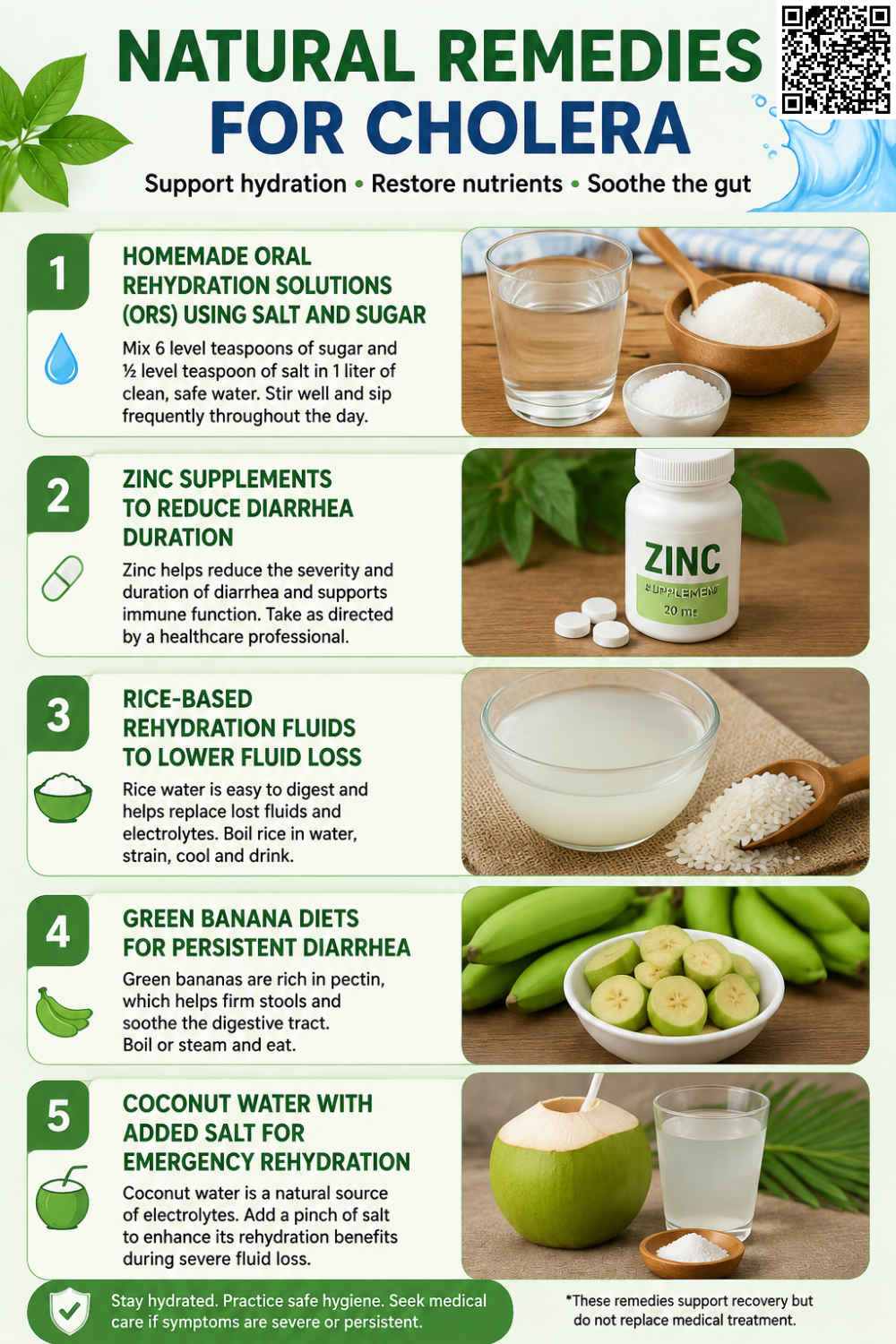
1. Homemade Oral Rehydration Solutions (ORS) Using Salt and Sugar
How it may help
The primary danger of cholera is rapid fluid loss. A homemade oral rehydration solution (ORS) helps by replacing water and essential salts flushed out by diarrhea. The addition of sugar is critical, as it actively pulls sodium and water across the intestinal wall, allowing the body to absorb fluids effectively even during severe illness.
What research says
Global health authorities establish ORS as the primary treatment for cholera. Clinical data demonstrates that immediate administration of sugar-salt solutions successfully treats up to 80 percent of cholera patients without requiring intravenous therapy, effectively reducing disease mortality rates to less than one percent when administered promptly 6.
How to use it safely
To prepare a safe homemade solution, mix six level teaspoons of sugar and half a level teaspoon of salt into one liter of clean, boiled, or treated water. Stir until completely dissolved. Drink the fluid continuously in small sips to replace what is lost through diarrhea.
Potential precautions or side effects
Exact measurements are crucial; excess salt worsens dehydration. You must always use purified water to prevent new infections. Seek immediate emergency medical care for severe symptoms.
2. Zinc Supplements to Reduce Diarrhea Duration
How it may help
Zinc is a vital mineral that helps the body transport water across the intestines and maintain immune function 7. During a cholera infection, zinc restores the protective barrier of the gut lining and promotes fluid absorption, effectively reducing the volume and duration of severe watery diarrhea 8.
What research says
Global health authorities endorse zinc supplementation alongside rehydration therapy. Clinical trials demonstrate that zinc reduces the duration of severe diarrhea and the total volume of stool produced. Furthermore, providing this supplement during infection significantly lowers a child’s risk of subsequent gastrointestinal infections for several months.
How to use it safely
Health protocols recommend immediate zinc therapy for children. Infants under six months should receive 10 milligrams daily, while older children require 20 milligrams. You should dissolve the tablets in clean water and continue administering this daily dose for 10 to 14 days to maximize protection.
Potential precautions or side effects
Zinc is generally safe, but some children may experience minor vomiting shortly after dosing 9. You must never exceed the recommended dosage, as excessive intake can cause stomach damage.
3. Rice-Based Rehydration Fluids to Lower Fluid Loss
How it may help
Rice-based fluids provide a slow-releasing carbohydrate source that helps the body absorb water and sodium highly efficiently 10. Unlike simple sugars, rice starch does not draw excess water into the intestines, preventing further fluid loss and reducing the severity of diarrhea during a cholera infection.
What research says
Clinical trials establish that rice-based oral rehydration solutions are highly effective for treating cholera. Evidence demonstrates that this formulation significantly reduces both total fluid loss and the duration of diarrhea when compared to standard sugar-based solutions, particularly in patients with severe cholera infections 11.
How to use it safely
To prepare the fluid, you should boil 50 grams of fine rice powder in one liter of clean, purified water until it forms a thin gruel. After cooling, mix in half a teaspoon of salt. You must drink this mixture continuously to replace fluids lost to diarrhea 12.
Potential precautions or side effects
Rice-based fluids spoil quickly in warm environments, so you must discard any unused mixture after a few hours. Always use properly treated water to avoid further bacterial contamination.
4. Green Banana Diets for Persistent Diarrhea
How it may help
Green bananas contain high amounts of resistant starch, a carbohydrate that resists digestion in the small intestine. When it reaches the colon, beneficial bacteria break it down into short-chain fatty acids. These acids stimulate the colon to absorb salt and water, which reduces the severe fluid loss associated with cholera 13.
What research says
Clinical studies demonstrate that adding cooked green bananas to standard treatments significantly improves outcomes for patients with severe diarrhea. Research concludes that this dietary intervention effectively reduces the volume of watery stool, shortens the overall duration of the illness, and decreases the total amount of oral rehydration fluids needed.
How to use it safely
To safely use this remedy, you should boil unpeeled green bananas until soft, then peel and mash them into a smooth paste. Feed this directly or mix it with rice, always administering it alongside standard oral rehydration solutions to maintain essential hydration.
Potential precautions or side effects
Green bananas must never replace oral rehydration solutions, as they cannot treat severe dehydration alone. You should always ensure the bananas are fully cooked to prevent stomach discomfort.
5. Coconut Water with Added Salt for Emergency Rehydration
How it may help
Fresh coconut water naturally contains adequate potassium and glucose needed for human hydration, making it a helpful emergency fluid. Because it lacks sufficient sodium and chloride for severe cholera cases, adding a small amount of table salt improves its ability to effectively restore lost fluids and essential electrolytes 14.
What research says
Research confirms that while fresh coconut water is naturally sterile and contains vital nutrients, it is deficient in sodium compared to standard rehydration solutions. Studies conclude that adding table salt compensates for this deficit, making it a feasible, effective alternative for oral rehydration when conventional medical fluids remain unavailable.
How to use it safely
To safely use this remedy, you should extract water from a fresh, uncracked coconut to guarantee sterility. Mix half a teaspoon of table salt into one liter of the fluid. You must drink this continuously to replace lost fluids until standard rehydration salts or medical care arrives.
Potential precautions or side effects
You must strictly use coconut water as a temporary emergency measure. Because its exact mineral concentrations vary, it cannot reliably replace scientifically formulated rehydration solutions for severe dehydration.
 Foods to Avoid When You Suffer from Cholera
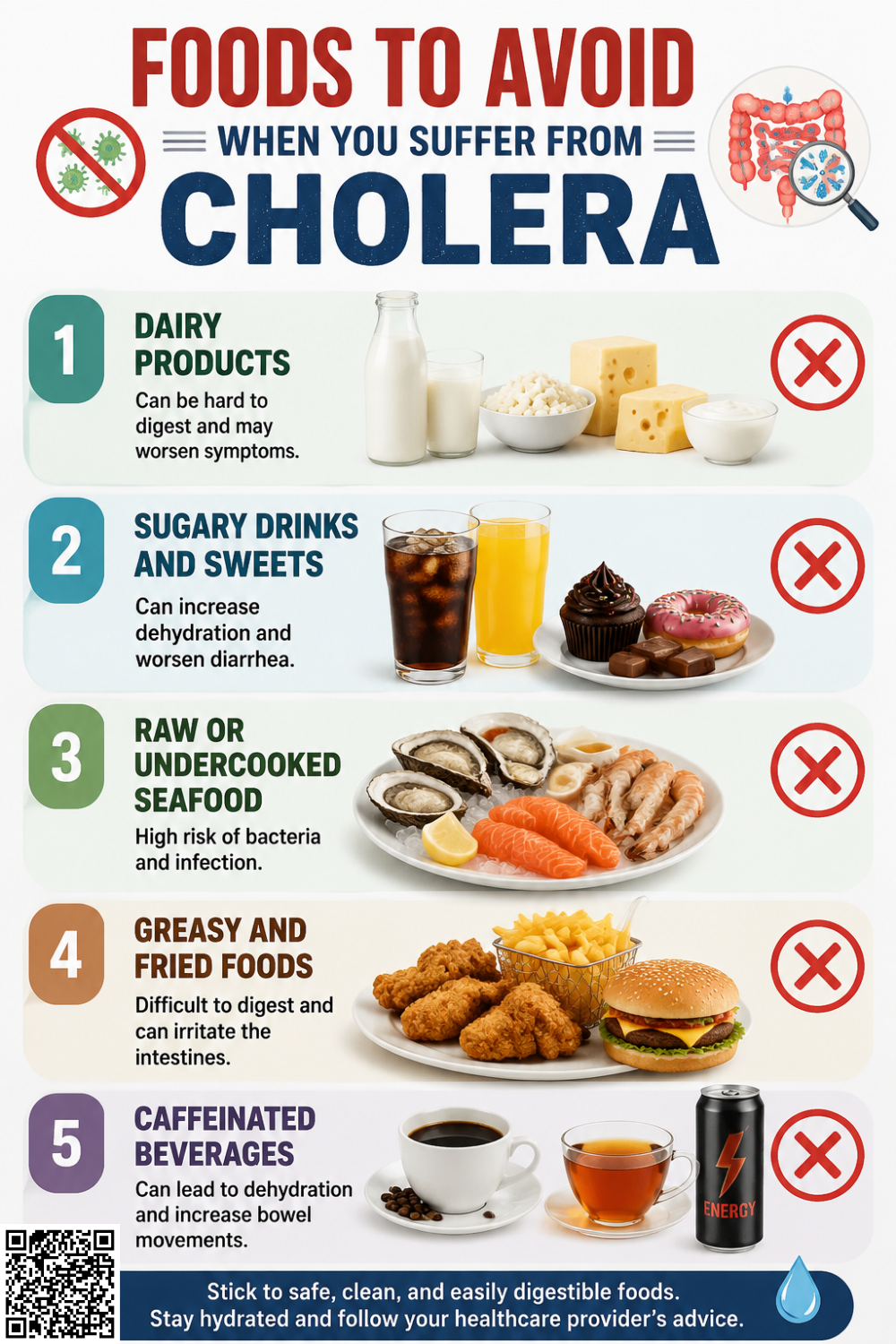
1. Dairy Products
The infection damages the intestinal lining, causing temporary lactose intolerance. Consuming milk or cheese during recovery worsens watery diarrhea and gas 15.
2. Sugary Drinks and Sweets
High-sugar beverages, like soda or commercial fruit juices, draw excess water into the intestines, which significantly exacerbates severe diarrhea.
3. Raw or Undercooked Seafood
You must strictly avoid raw shellfish. These foods frequently harbor bacteria and can introduce additional dangerous pathogens to an already compromised digestive system.
4. Greasy and Fried Foods
High-fat meals are extremely difficult for an infected gut to digest. They accelerate intestinal contractions, worsening abdominal cramping and fluid loss.
5. Caffeinated Beverages
Drinks containing caffeine, such as coffee and energy drinks, act as diuretics. They increase fluid expulsion through urine, dangerously complicating dehydration management.
When To See a Doctor When You Suffer from Cholera
1. Sudden, Severe Diarrhea
If you experience an abrupt onset of profuse, pale, watery diarrhea, seek immediate medical care. Rapid fluid loss requires urgent clinical intervention to prevent life-threatening complications.
2. Signs of Extreme Dehydration
You must visit a clinic if physical signs like sunken eyes, profound thirst, cold skin, or dry mouth appear. These indicate a critical drop in bodily fluids.
3. Decreased or Absent Urination
Seek emergency help if you stop producing urine or notice a drastic reduction. This signals dangerous dehydration and potential kidney distress requiring immediate intravenous fluids.
4. Inability to Retain Fluids
If persistent vomiting prevents you from keeping oral rehydration solutions down, go to a hospital immediately. Intravenous fluid replacement is essential to ensure survival.
5. Lethargy or Confusion
You should seek urgent care if the patient, especially a child, becomes unusually drowsy, restless, or unresponsive. This indicates dangerous electrolyte imbalances affecting the brain.