


Chronic fatigue syndrome, also known as myalgic encephalomyelitis (ME/CFS), is a complex and highly debilitating medical disorder characterized by intense, long-lasting exhaustion. This profound fatigue persists for at least six months, significantly impairs a person’s ability to perform routine daily activities, and does not improve with normal rest 1. A primary hallmark of the disease is post-exertional malaise, meaning patients experience a severe worsening of their overall symptoms following even minor physical or mental effort 2. Alongside extreme tiredness, individuals often suffer from cognitive difficulties like brain fog, unrefreshing sleep, widespread muscle and joint pain, and sensitivities to light or noise. Because there is no known underlying cause or specific medical test to confirm the illness, doctors diagnose it by assessing this unique cluster of symptoms and ruling out other health conditions 3. Since no cure currently exists, treatment focuses on carefully managing symptoms to maximize patient comfort and function 4.
Causes of Chronic Fatigue Syndrome
1. Severe Infections
Contracting certain viral or bacterial illnesses, such as the Epstein-Barr virus, Q fever, or viral meningitis, can act as a primary trigger for the condition 5.
2. Immune System Dysfunction
Individuals with the syndrome often display abnormal immune responses, leading to chronic, body-wide inflammation.
3. Genetic Susceptibility
A family history of the illness suggests that inherited genetic traits may make some people more vulnerable to developing the disease 6.
4. Cellular Energy and Gut Issues
Abnormalities in how cells produce and use energy, along with imbalances in naturally occurring gut bacteria, are thought to play a major role in the persistent exhaustion.
5. Physical and Emotional Trauma
Exposure to environmental toxins, severe bodily injuries, or intense psychological stress can trigger the onset of the illness in predisposed individuals.
Symptoms of Chronic Fatigue Syndrome
1. Profound Exhaustion
A severe, persistent fatigue lasting six months or longer that is not relieved by sleep and significantly reduces a person’s ability to engage in their pre-illness daily activities 7.
2. Post-Exertional Malaise (PEM)
A dramatic worsening of health and energy levels following even minor physical or mental effort, often resulting in a severe “crash” that can last for days or weeks.
3. Unrefreshing Sleep
Waking up feeling entirely un-rested, drained, or exhausted, regardless of how many hours were spent sleeping.
4. Cognitive Impairment
Often described by patients as “brain fog,” this includes significant difficulties with short-term memory, holding focus, and processing information quickly.
5. Orthostatic Intolerance
Experiencing extreme dizziness, weakness, rapid heart rate, or fainting when moving from lying down to a standing position, which typically improves after lying back down.
6. Widespread Pain
Frequent and unexplained muscle aches, severe joint pain without visible swelling or redness, and new or unusually intense headaches.
7. Immune-Related Signs
Recurring sore throats and tender, swollen lymph nodes, most commonly located in the neck or the armpits.
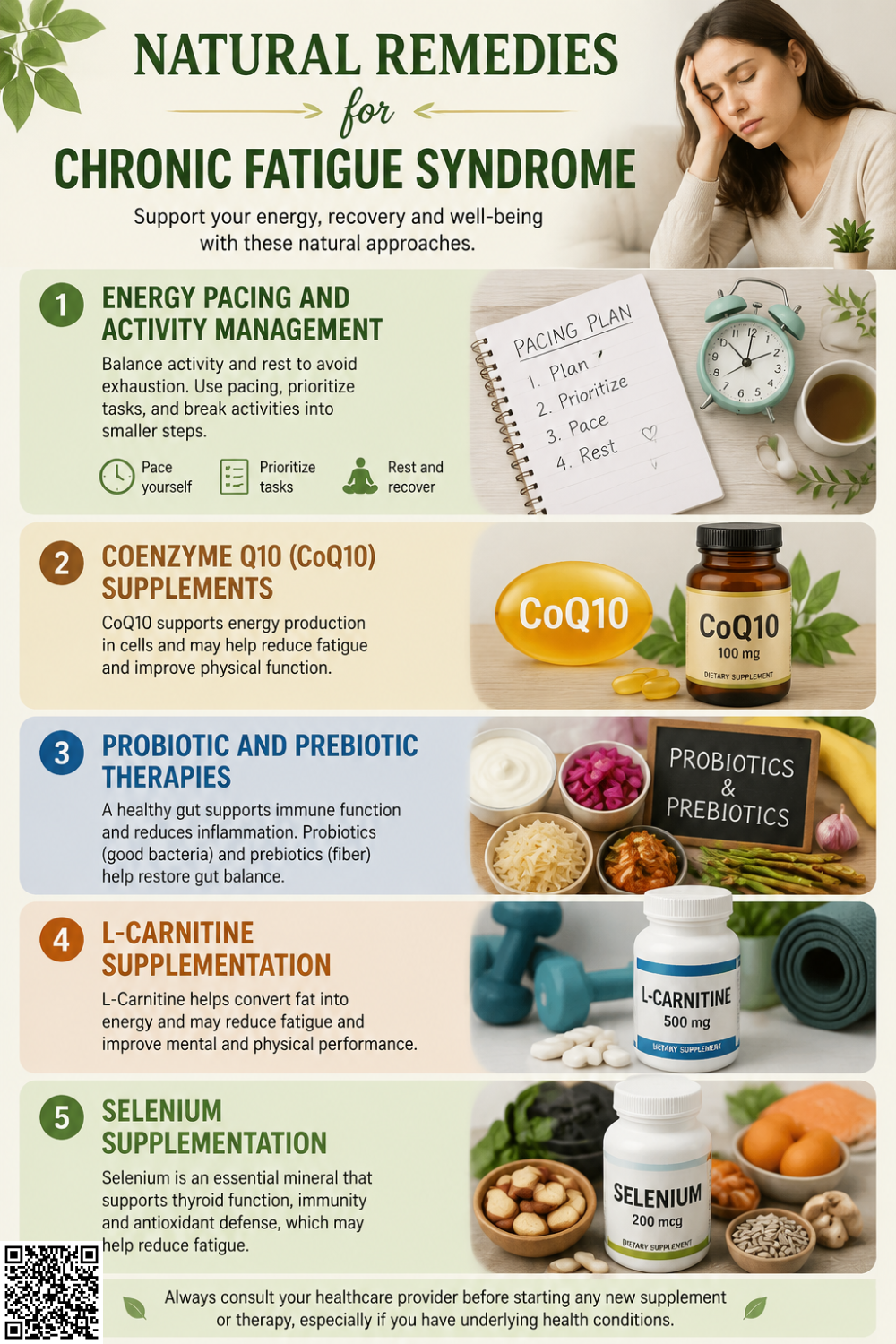 Natural Remedies for Chronic Fatigue Syndrome
1. Energy Pacing and Activity Management
How it may help
Energy pacing helps patients balance rest with physical or mental tasks to stay within their personal energy limits, often called the “energy envelope” 8. By carefully managing exertion, individuals can prevent post-exertional malaise, a severe worsening of symptoms following minor effort, thereby stabilizing daily function 9.
What research says
Clinical evidence indicates that pacing is an effective strategy for stabilizing the condition and avoiding severe symptom flares 10. Researchers conclude that minimizing overexertion leads to noticeable improvements in pain, sleep quality, and cognitive function, ultimately increasing the patient’s overall quality of life.
How to use it safely
You should keep a daily diary tracking your tasks and symptoms to identify your specific energy limits. Break larger chores into smaller steps, and always rest before exhaustion sets in. Never attempt to push past your limits on days you feel better.
Potential precautions or side effects
Pacing is a management tool, not a cure. Overestimating your limits or attempting vigorous exercise can trigger a severe “push-and-crash” cycle, which may significantly worsen your illness.
2. Coenzyme Q10 (CoQ10) Supplements
How it may help
Coenzyme Q10 (CoQ10) is a vital antioxidant that helps your cells produce the energy required for normal bodily function 11. Supplementing with it may address underlying cellular energy shortages and reduce widespread bodily stress, both of which are prominent issues in individuals battling severe exhaustion 12.
What research says
Clinical trials show that patients taking CoQ10 experience significant reductions in mental fatigue and improvements in overall quality of life 13. Researchers also find that combining CoQ10 with other compounds, such as selenium, creates a combined effect that further improves energy metabolism and reduces inflammation 14.
How to use it safely
You can take CoQ10 as a daily oral supplement. Clinical studies evaluating its benefits for chronic exhaustion typically use doses ranging from 200 to 400 milligrams per day. You should always take the supplement exactly as directed by your healthcare provider to ensure safe use 15.
Potential precautions or side effects
You may experience mild side effects like an upset stomach or insomnia. You must consult a doctor first, because it interacts with blood thinners and insulin.
3. Probiotic and Prebiotic Therapies
How it may help
Probiotics are live beneficial microorganisms, and prebiotics are non-digestible dietary fibers that nourish them. Together, they help correct severe imbalances in gut bacteria frequently found in patients with the illness 16. Restoring a healthy gut microbiome can repair the intestinal barrier, lower systemic inflammation, and positively influence the gut-brain axis 17.
What research says
Pilot trials show that multi-strain probiotic supplements can significantly lower blood markers of inflammation and correct metabolic pathways connecting the gut to the brain 18. Researchers note that patients often experience measurable reductions in physical exhaustion and cognitive difficulties, though larger-scale clinical studies remain necessary to confirm widespread efficacy.
How to use it safely
You can take probiotic and prebiotic formulations as daily oral capsules or powders 19. Because commercial supplements vary widely, you should consult a doctor to select scientifically tested bacterial strains, such as specific Bifidobacterium species, that match your unique digestive symptoms.
Potential precautions or side effects
You may experience temporary digestive disturbances, including gas, bloating, or abdominal discomfort 20. Rarely, unusual immune system stimulation from specific strains could provoke a short-term flare-up of your fatigue 21.
4. L-Carnitine Supplementation
How it may help
L-carnitine is a naturally occurring compound that helps your cells produce energy. Patients with the illness often show significant carnitine deficiencies in their blood and muscle tissues, which directly impairs cellular metabolism and severely worsens physical exhaustion 22.
What research says
Clinical trials demonstrate that taking specific forms of the supplement, such as acetyl-L-carnitine or propionyl-L-carnitine, significantly improves both general and mental fatigue in affected patients 23. Researchers note that patients experience measurable enhancements in attention and concentration, which directly correlates with the rise of carnitine levels in their blood.
How to use it safely
You should take this supplement strictly under medical supervision. Clinical studies showing benefits for severe fatigue typically use daily oral doses of two grams, often divided into two separate doses. Always consult your doctor to determine the appropriate dosage for your specific symptoms.
Potential precautions or side effects
You may experience nausea, diarrhea, stomach cramps, or a distinct fishy body odor 24. Consult your doctor first, because it interacts negatively with seizure medications and certain antibiotics.
5. Selenium Supplementation
How it may help
Selenium is an essential trace element that supports vital antioxidant enzymes. Supplementing may correct specific cellular transport impairments frequently observed in patients 25. By boosting these protective enzymes, it helps neutralize systemic oxidative stress and correct redox imbalances that directly contribute to severe, long-lasting exhaustion 26.
What research says
Clinical trials demonstrate that combining selenium with coenzyme Q10 significantly reduces overall fatigue severity and improves global quality of life in affected individuals. Researchers report that this synergistic supplementation successfully lowers circulating inflammatory markers and decreases cellular oxidative damage without causing severe adverse reactions.
How to use it safely
You can take it as a daily oral capsule. Clinical studies evaluating its benefits for chronic exhaustion typically utilize doses of 200 micrograms per day. You must ensure your total daily intake from all sources never exceeds the established adult upper limit of 400 micrograms 27.
Potential precautions or side effects
Taking excessive amounts over time can cause nausea, diarrhea, brittle nails, hair loss, and nervous system damage. Extremely high doses can lead to severe breathing or heart problems.
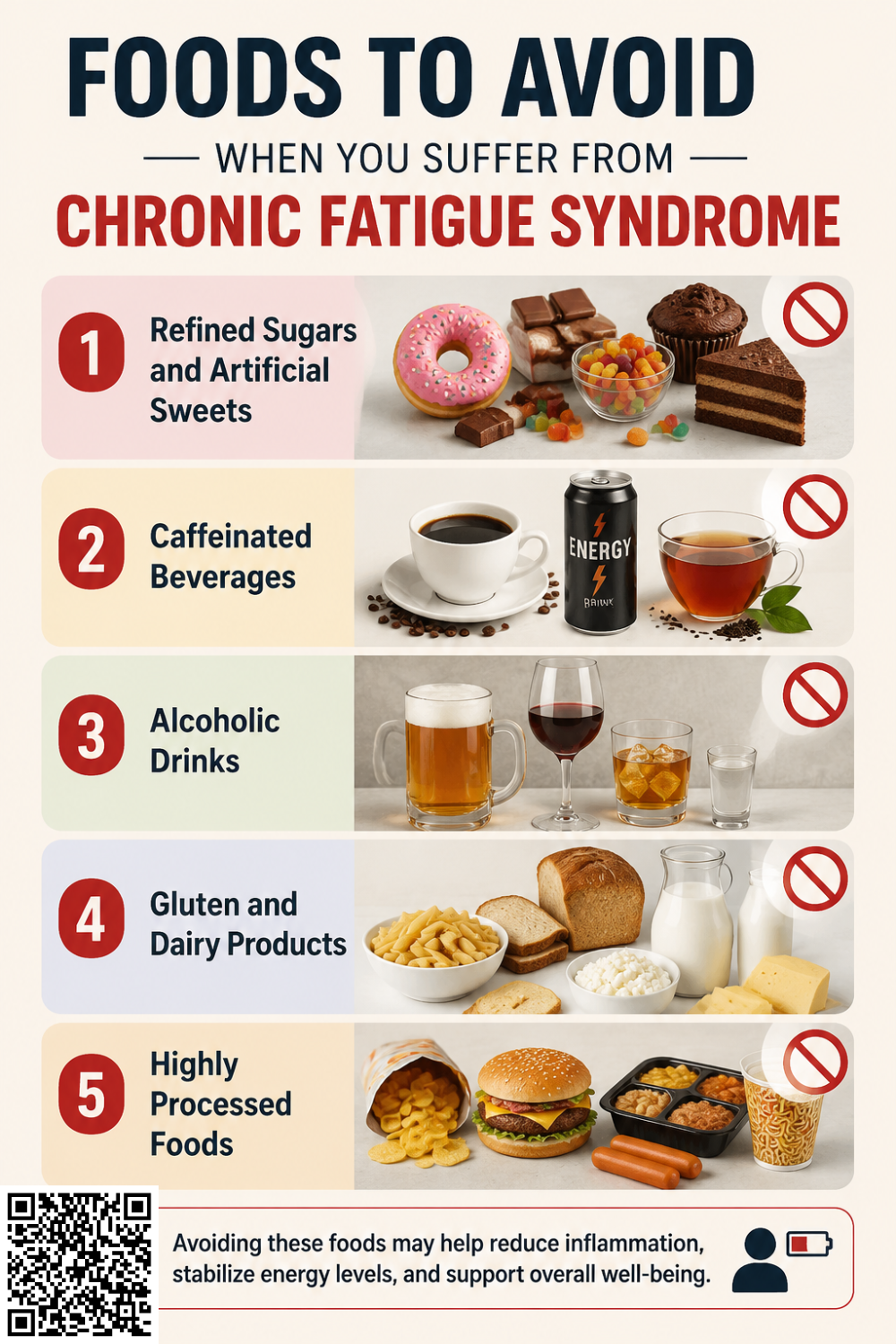 Foods to Avoid When You suffer from Chronic Fatigue Syndrome
1. Refined Sugars and Artificial Sweets
Consuming high amounts of sugar causes sudden blood glucose fluctuations, which can severely worsen daily energy crashes and trigger systemic inflammation 28.
2. Caffeinated Beverages
Caffeine provides artificial energy that masks true exhaustion, often leading patients to overexert themselves and subsequently trigger extreme physical crashes 29.
3. Alcoholic Drinks
Patients frequently experience heightened sensitivity to alcohol, as it significantly worsens physical exhaustion, cognitive dysfunction, and sleep quality while acting as a central nervous system depressant 30.
4. Gluten and Dairy Products
Because many patients experience comorbid irritable bowel syndrome, common dietary triggers like wheat and dairy can worsen severe gastrointestinal distress and increase bodily inflammation 31.
5. Highly Processed Foods
Foods packed with artificial additives and trans fats disrupt normal gut bacteria and promote widespread inflammation, which further impairs cellular energy production.
When To see Doctor when you suffer from Chronic Fatigue Syndrome
1. Six Months of Persistent Exhaustion
You must seek medical evaluation if your profound exhaustion lasts continuously for six months or longer, as this is the primary benchmark for official diagnosis.
2. Sudden Onset of New Symptoms
If you develop new, unexplained physical pain, sudden weakness, or cardiovascular distress, consult a physician immediately to rule out other severe underlying diseases.
3. Severe Orthostatic Intolerance
You should request a clinical assessment if moving to a standing position consistently causes fainting, extreme dizziness, or dangerous drops in blood pressure.
4. Unmanageable Mental Health Decline
Because chronic illness severely impacts mental well-being, you must contact a doctor immediately if you experience profound depression, severe anxiety, or suicidal thoughts 32.
5. Complete Loss of Daily Function
See a specialist if your symptom flares, or “crashes,” become so severe that you are completely bedbound and unable to perform basic personal hygiene.