


Foot odor, medically known as bromodosis, is a common condition characterized by an unpleasant smell emanating from the feet. While human sweat is naturally odorless, the enclosed, warm, and damp environment created by shoes and socks provides an ideal breeding ground for naturally occurring skin bacteria. Research concludes that bromodosis is primarily driven by the overgrowth of specific microorganisms, most notably Brevibacterium species 1. These bacteria rapidly metabolize sweat and dead skin cells, releasing strong-smelling organic acids as a byproduct of this breakdown process 2. Clinical evidence indicates that the condition is rarely a sign of serious underlying disease and is instead directly related to localized moisture and excessive bacterial load. Consequently, effectively managing foot odor relies on controlling foot moisture through consistent hygiene practices, breathable footwear, and the use of targeted antimicrobial or antiperspirant treatments.
Causes of Foot Odor
1. Bacterial Metabolism on the Skin
The human foot has naturally occurring bacteria, such as Brevibacterium and Staphylococcus epidermidis, which feed on sweat and dead skin cells. As these bacteria break down these substances, they produce strong-smelling byproducts like isovaleric acid and methanethiol, which are the primary sources of foot odor.
2. Excessive Sweating (Plantar Hyperhidrosis)
The feet contain approximately 250,000 sweat glands. Individuals with plantar hyperhidrosis produce sweat in amounts that far exceed what is needed for body temperature regulation, creating a highly saturated environment that rapidly accelerates the growth of odor-causing bacteria 3.
3. Fungal Infections (Athlete’s Foot)
A fungal infection of the skin on the feet, clinically known as tinea pedis, frequently causes a distinct, unpleasant smell in addition to localized itching, redness, and peeling 4.
4. Non-Breathable Footwear and Synthetic Socks
Wearing shoes made of plastic or non-porous materials, along with synthetic socks, traps body heat and moisture against the skin. This prevents sweat evaporation and artificially creates the warm, damp microclimate required for bacterial and fungal overgrowth 5.
5. Inadequate Foot Hygiene and Moisture Retention
Failing to wash the feet thoroughly with soap, or neglecting to dry completely between the toes after washing, leaves behind dead skin cells and trapped moisture. This lingering moisture acts as a constant food and water source for odor-producing microorganisms.
Symptoms of Foot Odor
1. Strong, Unpleasant Smell
The primary defining symptom is a highly noticeable, pungent odor—often described as resembling vinegar, sulfur, or spoiled cheese—that becomes immediately apparent upon removing shoes or socks. This smell is the direct result of skin bacteria digesting sweat and producing organic acids.
2. Constant Dampness or Sweating
The feet may frequently feel wet, clammy, or slippery inside footwear. This persistent moisture, often linked to excessive sweating (plantar hyperhidrosis), provides the continuous hydration required for odor-producing bacteria to multiply rapidly.
3. Soft, Wrinkled, and Whitish Skin
Continuous exposure to trapped sweat can cause the skin on the bottom of the feet and between the toes to become severely over-hydrated. The skin turns pale white, overly soft, and wrinkled, a state known as skin maceration, which weakens the skin’s protective barrier 6.
4. Small Pits or Craters on the Soles
Severe foot odor is frequently accompanied by a superficial bacterial infection called pitted keratolysis. This condition visually presents as clusters of shallow, visible pits or small craters on the weight-bearing areas of the feet, particularly the heels and the fleshy pads behind the toes 7.
5. Itching, Peeling, or Redness
When foot odor is complicated by an underlying fungal infection, such as athlete’s foot (tinea pedis), the feet will typically show a red rash, scaling, peeling skin, and an intense itching or burning sensation, particularly in the tight spaces between the toes.
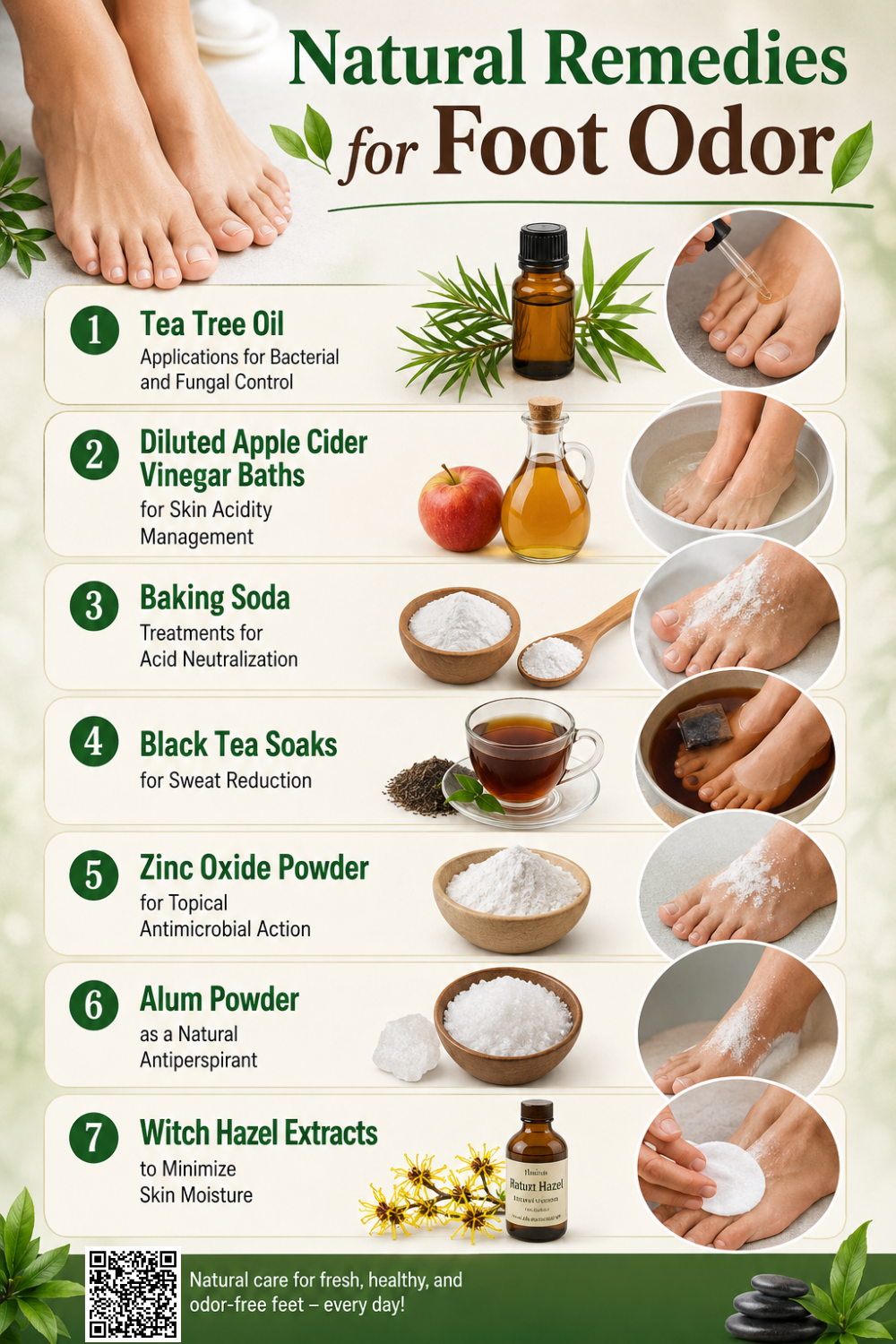 Natural Remedies for Foot Odor
1. Tea Tree Oil Applications for Bacterial and Fungal Control
How it may help
Tea tree oil contains active compounds, primarily terpinen-4-ol, which directly disrupt the cell membranes of odor-causing bacteria and fungi 8. By breaking down these cellular barriers, the oil neutralizes the microorganisms on the skin, preventing them from multiplying and releasing the strong-smelling organic acids responsible for foot odor.
What research says
Clinical reviews confirm that tea tree oil exhibits broad-spectrum antimicrobial activity against the specific bacterial and fungal strains that colonize the feet. Research concludes that topical applications effectively reduce microbial overgrowth and resolve localized skin infections, such as athlete’s foot, which are frequent underlying causes of persistent foot odor 9.
How to use it safely
Never apply pure essential oils directly to the skin. To use tea tree oil safely, mix three to five drops into a tablespoon of a carrier oil, such as olive or coconut oil. Rub this diluted blend onto clean, dry feet daily, focusing on the spaces between your toes.
Potential precautions or side effects
Stop use immediately if you develop redness, itching, or a rash. Improperly diluted tea tree oil frequently causes allergic contact dermatitis and localized skin irritation in sensitive individuals 10.
2. Diluted Apple Cider Vinegar Baths for Skin Acidity Management
How it may help
Apple cider vinegar contains acetic acid, which naturally lowers the skin’s pH level. Odor-causing bacteria thrive in neutral environments but struggle to multiply in highly acidic conditions. By creating a mildly acidic surface on the feet, vinegar baths inhibit bacterial overgrowth and neutralize the alkaline compounds responsible for unpleasant smells.
What research says
Research concludes that the acetic acid found in apple cider vinegar possesses strong antimicrobial properties. Clinical studies demonstrate that this organic acid effectively damages bacterial cell structures and restricts the growth of common skin pathogens, confirming its ability to directly reduce odor-producing bacterial loads on the skin 11.
How to use it safely
To create a safe foot soak, mix one part apple cider vinegar with two parts warm water in a large basin. Soak your feet for 15 to 20 minutes daily. Afterward, dry your feet completely, ensuring no moisture remains trapped between your toes.
Potential precautions or side effects
Never use undiluted vinegar, as concentrated acetic acid can cause chemical burns and irritation 12. Avoid soaking if you have open cuts, sores, or bleeding skin.
3. Baking Soda Treatments for Acid Neutralization
How it may help
Baking soda, medically known as sodium bicarbonate, acts as a natural moisture absorbent and pH neutralizer. It draws excess sweat from the skin, eliminating the damp environment that bacteria require to thrive. Additionally, it directly neutralizes the highly acidic, foul-smelling byproducts that microorganisms release when digesting sweat.
What research says
Research concludes that sodium bicarbonate functions as a mild antimicrobial agent that effectively inhibits the growth of odor-forming microbiomes on the skin. Clinical reviews confirm its ability to reduce localized moisture and neutralize volatile acidic compounds, making it a proven topical ingredient for suppressing human body odor 13.
How to use it safely
To use baking soda as a foot treatment, dissolve a quarter cup into a basin of warm water and soak your feet for 15 minutes daily. Alternatively, lightly dust a small amount of dry powder directly into clean shoes to absorb moisture throughout the day.
Potential precautions or side effects
Discontinue use if your skin becomes excessively dry or irritated. Overusing baking soda can disrupt the skin’s natural moisture barrier, leading to cracking or peeling in sensitive individuals.
4. Black Tea Soaks for Sweat Reduction
How it may help
Black tea is naturally rich in tannic acid, a powerful astringent compound. When applied directly to the skin, tannic acid temporarily constricts the sweat glands and shrinks the pores. This mechanism reduces excessive perspiration, effectively eliminating the warm, damp microclimate that odor-producing bacteria require to multiply.
What research says
Research confirms that tannic acid acts as an effective natural antiperspirant and mild antimicrobial agent. Clinical reviews indicate that topically applied tannins significantly reduce localized sweating in conditions like plantar hyperhidrosis. By decreasing foot moisture and directly disrupting the bacterial cell envelope, tannic acid suppresses the microbiomes responsible for foul-smelling organic acids 14.
How to use it safely
To prepare a soak, steep three to four black tea bags in a quart of boiling water for ten minutes. Allow the tea to cool completely, then soak your feet for 20 minutes daily. Ensure you thoroughly dry your feet, especially between the toes, after each treatment.
Potential precautions or side effects
Black tea soaks are generally safe but may temporarily stain the skin or toenails a light brown color. Discontinue use if you experience unexpected dryness, redness, or localized irritation.
5. Zinc Oxide Powder for Topical Antimicrobial Action
How it may help
Zinc oxide acts as a natural moisture absorbent and a broad-spectrum antimicrobial agent. It draws excess sweat from the skin’s surface and directly inhibits the growth of odor-causing bacteria. By maintaining a dry environment and neutralizing microbes, it prevents the continuous breakdown of sweat into foul-smelling organic acids.
What research says
Research concludes that topically applied zinc oxide effectively reduces the colonization of odor-producing bacteria on the human skin. Clinical studies confirm that zinc oxide significantly decreases body malodor by damaging bacterial cell walls and limiting microbial multiplication in sweaty, enclosed areas of the body 15.
How to use it safely
To use this remedy, purchase a commercially available, plain zinc oxide powder or a foot-specific zinc cream. After washing and completely drying your feet, massage a thin, even layer of the powder or cream directly onto the soles and between the toes before putting on your socks.
Potential precautions or side effects
Zinc oxide is generally safe for daily, long-term use. However, you should avoid applying it to open cuts or bleeding cracks. Stop use if you experience unexpected skin dryness or redness.
6. Alum Powder as a Natural Antiperspirant
How it may help
Alum, specifically potassium aluminum sulfate, functions as a powerful natural astringent and antimicrobial agent. When applied to the skin, it temporarily constricts sweat glands to reduce excessive moisture. Simultaneously, it alters the skin’s surface environment, making it too acidic and hostile for odor-causing bacteria to survive and multiply.
What research says
Research indicates that potassium aluminum sulfate effectively controls body malodor through a dual mechanism. Clinical reports confirm that aluminum-based salts physically block sweat secretion at the pore level while simultaneously exhibiting broad-spectrum antimicrobial properties, directly reducing the bacterial populations responsible for producing foul-smelling organic acids 16.
How to use it safely
Lightly moisten a solid crystal alum block and rub it directly onto clean, freshly washed feet, ensuring coverage between the toes. Alternatively, you can lightly dust a small amount of powdered alum directly into your daily footwear to absorb excess moisture.
Potential precautions or side effects
While generally safe, repeated use of alum can cause localized skin dryness or irritation. Stop using it immediately if you develop redness, itching, or a burning sensation.
7. Witch Hazel Extracts to Minimize Skin Moisture
How it may help
Witch hazel contains high concentrations of tannins, which act as powerful natural astringents. When applied to the skin, these compounds temporarily shrink pores and constrict sweat glands, effectively reducing excess moisture. By keeping the feet dry, witch hazel eliminates the damp environment required for odor-causing bacteria to survive and multiply.
What research says
Research confirms that the tannins and polyphenols found in witch hazel extract possess strong astringent, anti-inflammatory, and antimicrobial properties. Clinical evidence indicates that topically applying these botanical extracts significantly reduces localized skin moisture and limits the bacterial overgrowth responsible for producing foul-smelling organic acids on the body 17.
How to use it safely
To use witch hazel safely, apply an alcohol-free liquid extract directly to freshly washed and dried feet using a sterile cotton pad. Wipe the solution over the soles and thoroughly between the toes. Allow your feet to air dry completely before putting on socks or shoes.
Potential precautions or side effects
While generally safe, witch hazel can occasionally cause mild skin dryness or irritation. Discontinue use immediately if you experience redness, itching, or a burning sensation.
 Foods to Avoid When You Suffer from Foot Odor
1. Garlic and Onions
These foods contain volatile sulfur compounds that enter the bloodstream during digestion and are expelled through sweat glands, worsening localized body and foot odor 18.
2. Asparagus
The digestion of asparagus produces potent sulfurous byproducts. These strong-smelling metabolites are subsequently excreted through sweat and urine, directly contributing to unpleasant body and foot odors.
3. Red Meat
Heavy meat consumption alters sweat composition. Research concludes that the metabolic breakdown of its complex amino acids produces sweat that is objectively more pungent and less pleasant.
4. Seafood, Eggs, and Legumes
These foods produce trimethylamine during digestion. When the body excretes this potent, odorous metabolite through the sweat glands, it causes a distinct, fishy-smelling foot and body odor.
5. Alcohol
As the body processes alcohol, it produces strong-smelling metabolic byproducts. These volatile compounds are partially eliminated through the skin’s pores, directly increasing localized sweating and altering body scent 19.
When To See a Doctor When You Suffer from Foot Odor
1. Persistent Odor Despite Home Care
If severe odor continues despite consistent hygiene and natural treatments, it indicates a resistant bacterial or fungal overgrowth requiring prescription-strength antimicrobial interventions.
2. Pits or Craters on the Soles
Visible shallow pits on the weight-bearing areas of the feet indicate pitted keratolysis, a specific bacterial infection requiring prescription topical antibiotics to completely resolve.
3. Severe Itching, Redness, or Peeling
When odor is accompanied by scaling, redness, and intense itching between the toes, it strongly suggests a fungal infection like athlete’s foot requiring medical antifungal treatment.
4. Uncontrollable, Excessive Sweating
If the feet constantly drip sweat regardless of temperature, it points to plantar hyperhidrosis, a treatable medical condition that exacerbates odor and requires specialized clinical management.
5. Open Sores or Diabetic Complications
Individuals with diabetes must seek immediate medical evaluation if foot odor is accompanied by open sores, ulcers, or pain, as this indicates a dangerous tissue infection 20.