


Trench foot, medically known as a non-freezing cold injury, is a serious condition that develops when feet are exposed to damp, cold environments for extended periods. Unlike frostbite, it does not require freezing temperatures and can occur in weather as warm as 60 degrees Fahrenheit if the feet remain continuously wet 1. The combination of prolonged moisture and cold prompts the body to restrict circulation to the extremities, which causes severe damage to local capillaries, nerves, and soft tissue 2. Affected individuals initially experience numbness, tingling, swelling, and bluish or blotchy skin 3. As the injury advances, it causes painful blisters, infections, and open ulcers. If left untreated, the persistent lack of oxygenated blood leads to cellular death, or gangrene, which may ultimately require surgical amputation 4.
Causes of Trench Foot
1. Prolonged Moisture
The primary trigger is keeping the feet in a continuously wet or damp environment, usually for 10 to 14 hours or more. Because water drains heat away from the body significantly faster than air, prolonged wetness accelerates the loss of warmth in the lower extremities 5.
2. Cold, Non-Freezing Temperatures
The condition typically develops in cool temperatures ranging from 32 to 60 degrees Fahrenheit. In response to this cold exposure, the body automatically narrows the blood vessels in the feet to conserve core body heat, which deprives the local tissues of oxygen 6.
3. Constrictive Footwear
Wearing boots that are too tight or packing the feet into multiple thick layers of socks physically squeezes the blood vessels. This external pressure further restricts the already limited blood flow necessary to keep the foot tissues healthy.
4. Physical Inactivity
Standing still, sitting, or remaining immobile for long periods limits muscle contractions in the legs. This lack of movement significantly slows down the natural pumping of blood to the feet, worsening the effects of cold and dampness.
5. Trapped Sweat
External water sources like rain or puddles are not always necessary. Heavy sweating (hyperhidrosis) inside thick, unventilated, or waterproof boots can trap enough continuous moisture against the skin to cause the same cellular damage.
Symptoms of Trench Foot
1. Skin Color Changes
As blood circulation to the extremities decreases, the skin on the affected foot typically turns pale, gray, dark red, or blotchy and blue.
2. Numbness and Tingling
A noticeable loss of sensation is common. The foot often feels uncomfortably heavy or “wooden,” accompanied by intense itching or a prickling, “pins and needles” sensation.
3. Swelling and Cramping
Fluid accumulation caused by vascular damage leads to severe swelling (edema) in the feet and lower legs, which is frequently paired with painful leg cramps.
4. Intense Pain Upon Rewarming
When the foot is removed from the cold environment and begins to warm up, returning blood flow often triggers extreme throbbing, shooting pain, and heightened sensitivity to touch and heat.
5. Blisters and Open Sores
As the injury progresses and skin integrity fails, the affected areas develop fluid-filled blisters, deep ulcers, or bleeding underneath the skin.
6. Tissue Death (Gangrene)
In the most severe and untreated cases, the prolonged lack of oxygenated blood causes the skin and underlying soft tissues to die. This dead tissue turns dark purple or black, indicating the onset of gangrene.
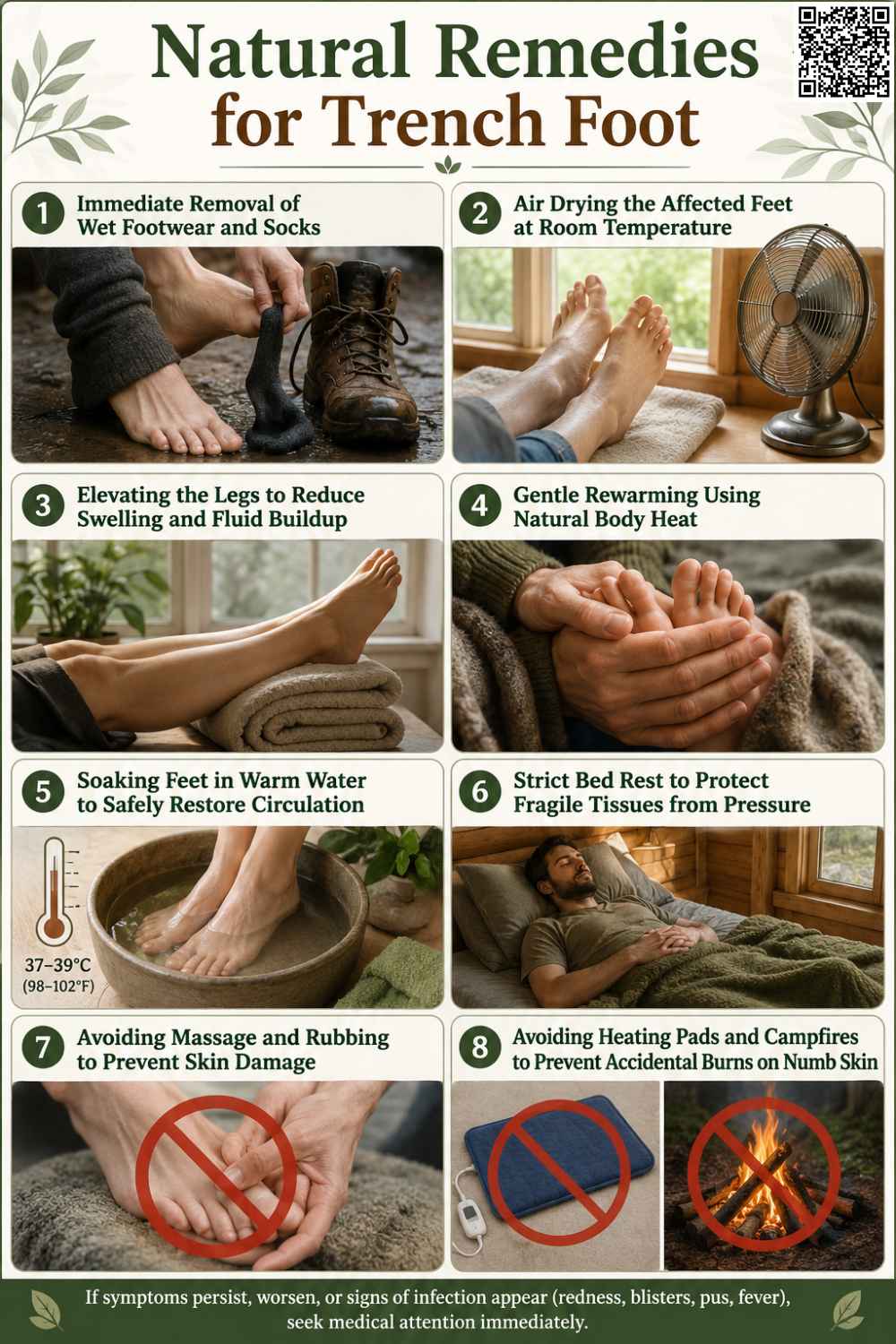 Natural Remedies and Home Care for Trench Foot
1. Immediate Removal of Wet Footwear and Socks
How it may help
Taking off wet boots and socks immediately stops the rapid loss of body heat from the feet. Since water conducts heat away from the skin significantly faster than air, removing the source of moisture prevents further constriction of blood vessels and halts ongoing tissue damage.
What research says
Clinical guidelines establish that removing damp footwear is the most critical first step in treating non-freezing cold injuries. Medical authorities confirm that eliminating moisture exposure halts the progression of cellular injury and creates the necessary conditions to safely restore local circulation.
How to use it safely
Carefully unlace and slide off wet boots and socks without pulling forcefully. Handle the feet very gently, as the skin may be highly fragile. Once the wet items are removed, thoroughly air-dry your feet and elevate them to encourage blood flow.
Potential precautions or side effects
Do not rub or massage the skin while taking off your socks. This friction can easily tear damaged tissues and increase the risk of severe infections.
2. Air Drying the Affected Feet at Room Temperature
How it may help
Air drying eliminates the moisture responsible for tissue damage while allowing the skin to gradually return to a normal temperature. This slow, natural warming process safely restores blood circulation without shocking the blood vessels, reducing the severity of pain and swelling as oxygen returns to the affected tissues.
What research says
Clinical guidelines dictate that gradually rewarming the feet at room temperature is the standard treatment for non-freezing cold injuries. Medical authorities confirm that thoroughly drying the skin and leaving it exposed to air prevents further cellular decay and safely reestablishes proper blood flow.
How to use it safely
After removing wet footwear, gently pat the skin dry with a clean towel instead of rubbing. Leave your feet completely uncovered and exposed to normal room-temperature air. Rest in a dry environment while keeping your legs elevated to assist with healthy circulation.
Potential precautions or side effects
Never use external heat sources like radiators, heating pads, or fires to speed up drying. Numbness makes it easy to suffer severe burns without feeling them.
3. Elevating the Legs to Reduce Swelling and Fluid Buildup
How it may help
Elevating the legs uses gravity to draw accumulated fluids away from the lower extremities. This action reduces severe swelling, known as edema, and relieves painful pressure on damaged nerves and blood vessels, allowing oxygen-rich blood to circulate more effectively through the recovering tissues.
What research says
Medical guidelines recommend limb elevation as a standard treatment for non-freezing cold injuries. Clinical evidence confirms that raising the affected feet decreases fluid buildup, improves venous return, and helps prevent further tissue damage and painful blisters associated with severe swelling.
How to use it safely
Lie down comfortably on your back and place soft pillows under your lower legs. Prop your feet up so they are resting slightly above the level of your heart. Ensure the pillows support your calves rather than putting direct pressure on your fragile heels.
Potential precautions or side effects
Avoid placing any weight or tight bandages on the feet while they are elevated. Direct pressure can easily tear the fragile skin and worsen existing open sores or blisters.
4. Gentle Rewarming Using Natural Body Heat
How it may help
Using natural body heat provides a safe, gradual temperature increase. This slow warming process carefully dilates constricted blood vessels, allowing oxygen-rich blood to return to the starved tissues without shocking the already damaged nerves and fragile capillaries.
What research says
Clinical protocols emphasize that passive rewarming is the safest initial treatment for non-freezing cold injuries. Medical experts confirm that relying on natural body temperatures safely restores circulation while minimizing the extreme pain and tissue destruction often caused by rapid, artificial heating methods.
How to use it safely
After thoroughly drying your feet, place them against a warm, dry area of a partner’s bare stomach or chest. Cover yourselves with a dry blanket to trap the heat and wait patiently for normal skin color to return.
Potential precautions or side effects
As circulation returns, expect intense, throbbing pain. Never use artificial heat sources like hot water bottles, which can easily cause severe burns on numb skin.
5. Soaking Feet in Warm Water to Safely Restore Circulation
How it may help
Soaking the affected feet in warm water gently encourages local blood vessels to dilate. This controlled rewarming process safely draws oxygenated blood back into the starved tissues, flushing out accumulated fluids and helping to restore normal sensory function.
What research says
Public health guidelines from the Centers for Disease Control and Prevention (CDC) advise soaking the affected extremities in warm water for five minutes. Clinical protocols indicate that this brief, controlled soak effectively aids in rewarming the tissue and safely stimulating circulation during recovery 7.
How to use it safely
Fill a basin with warm water, ensuring it is between 102 and 110 degrees Fahrenheit. Submerge the feet for five minutes. Afterward, carefully pat the skin completely dry with a clean towel and elevate the legs to reduce swelling.
Potential precautions or side effects
Never use hot water, as numb skin cannot sense extreme temperatures. Scalding water easily causes severe burns to fragile tissues. Always test water temperature with a healthy hand.
6. Strict Bed Rest to Protect Fragile Tissues from Pressure
How it may help
Staying off the feet entirely prevents body weight from crushing weakened blood vessels and nerves. Because trench foot makes the skin highly fragile, walking or standing can easily tear the tissues, rupture blisters, and create deep, painful wounds that are difficult to heal.
What research says
Clinical management protocols strictly forbid walking on feet affected by non-freezing cold injuries. Medical authorities state that eliminating weight-bearing stress is essential to prevent permanent tissue damage, stop the progression of ulcers, and ensure that recovering capillaries can safely restore blood flow without mechanical disruption.
How to use it safely
Remain in bed and avoid placing any weight on your feet until the skin fully heals. If you must move, use a wheelchair or crutches. Keep blankets and bedsheets loose over your lower body to prevent light pressure from irritating the skin.
Potential precautions or side effects
Extended bed rest increases the risk of blood clots and muscle stiffness. Gently flex your knees and hips periodically to maintain general circulation without putting stress on the feet.
7. Avoiding Massage and Rubbing to Prevent Skin Damage
How it may help
Refraining from massaging the affected feet protects highly vulnerable skin and underlying blood vessels from physical destruction. Because trench foot weakens cellular structures, even gentle rubbing can easily tear the skin, rupture blisters, and introduce severe infections into the resulting open wounds.
What research says
Health authorities explicitly warn against rubbing or massaging feet suffering from non-freezing cold injuries. Clinical guidelines from the Centers for Disease Control and Prevention confirm that friction causes direct mechanical damage to fragile, oxygen-starved tissues and increases the risk of severe tissue death.
How to use it safely
Keep your hands off the affected areas during the rewarming and drying process. When washing or drying your feet, gently pat the moisture away with a clean, soft towel rather than wiping. Ensure anyone assisting you knows not to massage the extremities.
Potential precautions or side effects
The urge to rub numb feet is natural but must be strictly ignored. Touching open sores or blisters without sterile equipment easily causes dangerous secondary bacterial infections.
8. Avoiding Heating Pads and Campfires to Prevent Accidental Burns on Numb Skin
How it may help
Keeping feet away from intense heat sources prevents severe thermal burns. Because trench foot causes localized numbness, the nerves cannot accurately signal that the skin is overheating. Avoiding direct heat ensures that fragile, recovering tissues are not destroyed by contact with surfaces that the feet cannot feel.
What research says
Clinical literature on non-freezing cold injuries strictly prohibits the use of dry, direct heat sources for rewarming. Medical authorities explain that these methods frequently cause secondary injuries, such as deep-thickness burns, because the patient lacks the necessary sensory feedback to detect that the heat is damaging the skin.
How to use it safely
Ensure your feet are kept in a temperature-controlled environment, such as a heated room, rather than near a heater or fire. Rely exclusively on passive warming techniques like blankets, natural body heat, or carefully monitored warm-water soaks to restore blood flow safely.
Potential precautions or side effects
Using heating pads or campfires can lead to painless, deep-tissue burns that significantly worsen the original injury, delay healing, and increase the likelihood of permanent tissue death.
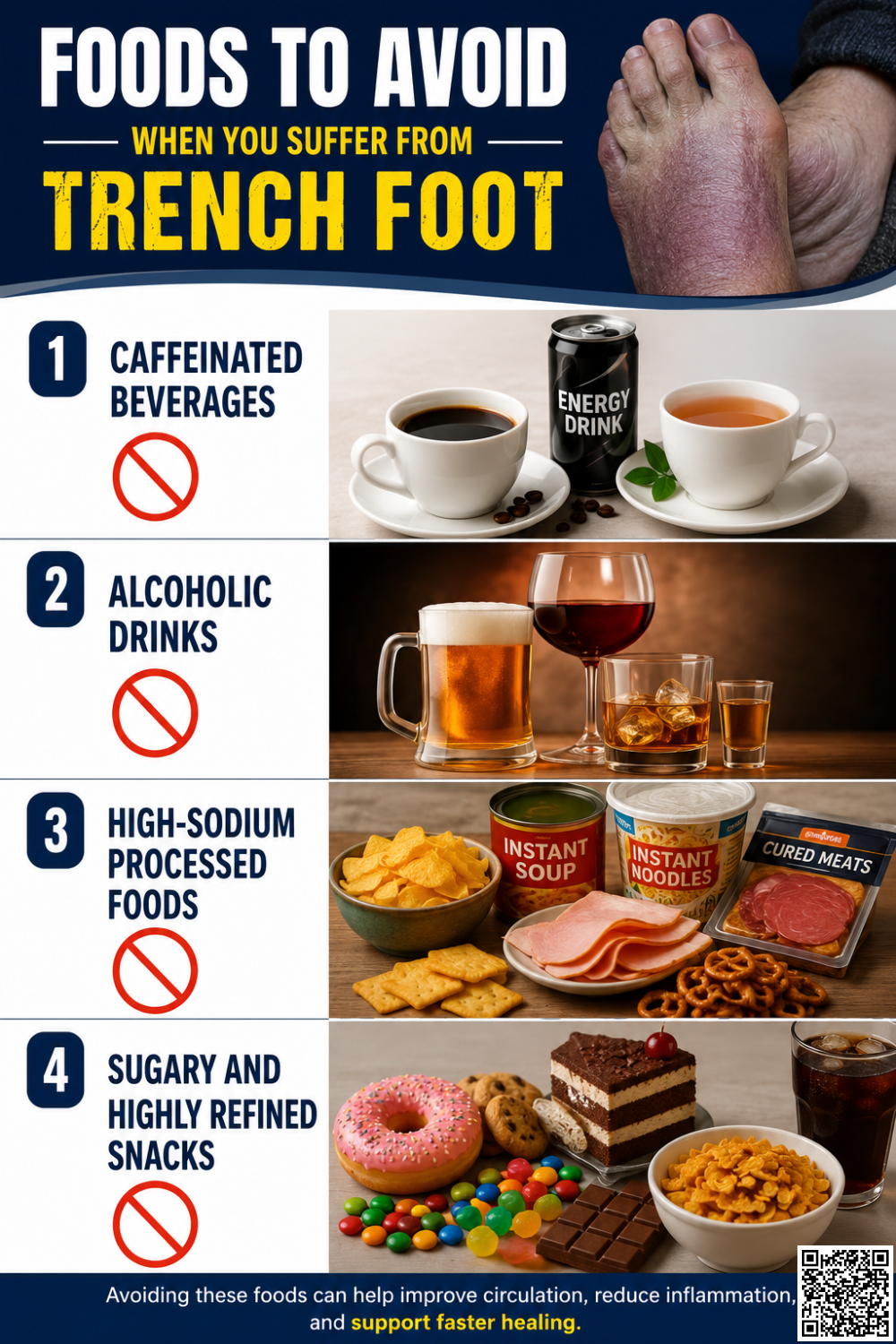 Foods to Avoid When You Suffer from Trench Foot
1. Caffeinated Beverages
Coffee and tea contain stimulants that can narrow blood vessels, potentially reducing blood flow to already compromised foot tissues and hindering the natural healing process 8.
2. Alcoholic Drinks
Alcohol impairs the body’s ability to regulate core temperature and can mask pain signals. This may lead to dangerous delays in recognizing worsening symptoms or injuries 9.
3. High-Sodium Processed Foods
Excessive salt intake can contribute to fluid retention and swelling, which may increase pressure in the feet and exacerbate discomfort in tissues damaged by cold exposure 10.
4. Sugary and Highly Refined Snacks
These foods often promote systemic inflammation. In individuals with circulation issues, high inflammation can interfere with the body’s ability to repair damaged skin and blood vessels effectively 11.
When To See a Doctor When You Suffer from Trench Foot
1. Presence of Open Sores or Blisters
Any breakdown of the skin, including deep ulcers or fluid-filled blisters, requires immediate medical evaluation to prevent the development of serious bacterial infections.
2. Dark or Black Skin Discoloration
If skin turns dark purple or black, it indicates tissue death, or gangrene. Seek emergency medical care immediately, as this condition may require surgical intervention.
3. Signs of Infection
Consult a physician if you observe pus, red streaks spreading from the injury, increased swelling, or a fever, which indicate the injury has become infected.
4. Persistent Numbness or Loss of Sensation
If the feet remain numb, cold, or unresponsive after rewarming, this suggests nerve damage that necessitates a professional clinical assessment to determine the extent of the injury.
5. Severe Pain
Seek medical advice if you experience extreme or unmanageable pain that does not improve after removing damp footwear and resting, as this may signal complications.