

| Sainfoin Quick Facts | |
|---|---|
| Name: | Sainfoin |
| Scientific Name: | Onobrychis viciifolia |
| Origin | Turkey, Iran and Europe |
| Shapes | Egg-shaped pods that are leathery and non-splitting. They are 6-8 mm long, hairy, net-ridged, pimply or short-prickly on the sides |
| Health benefits | Support diabetes, neurotic disorders, hypochondriacal conditions, sleep disorders, impotence, constipation, colitis and menopause |
| Name | Sainfoin |
|---|---|
| Scientific Name | Onobrychis viciifolia |
| Native | Turkey, Iran and Europe. It was first cultivated in northern France (Delgado Munoz, 2008) and in the United Kingdom (Koivisto et al., 2001). It is now widespread in warm-temperate Europe (as far as Sweden), Asia, Mediterranean countries and western North America |
| Common Names | Sainfoin, Common Sainfoin, Sainfoin legume, Esparcet, Holy-clover, Vicia-leaved holy-clover |
| Name in Other Languages | Afrikaans: Esparset, sainfoin Albanian: Sainfoin, esparceta me gjethe grashine, esparcetë Amharic: Sainfoin-ˈsānˌfoin Arabic: Sainfoin-ˈsānˌfoin, عنبريس بيقي الأوراق Aragonese: Esparceta, pimpirigallo, pipirigallo Armenian: Sainfoin (sānˌfoin) Azerbaijani: Sainfoin Basque: Astorki, astorkia Belarusian: Esparciet pasiaŭny (Эспарцэт пасяўны) Bengali: Sainfoin (sānˌfoin) Bulgarian: Esparzeta (еспарзета), fiyeva yesparzeta (фиева еспарзета) Burmese: She (သီဟ) Catalan: Esparcet, esparceta, pipirigall, trepadella, trepadella cultivada Chinese: Zàogān (皂苷), Hong dou cao (红豆草), Lü shi cao (驴食草), Lü shi dou Cornish: Gweg benigys Croatian: Slatka djetelina, sjetvena grahorka Czech: Sainfoin, Vi, vičenec ligrus Danish: Esparsette, Foder-esparsette Dutch: Sainfoin, Esparcette, Hanekamklaver English: Sainfoin, Common Sainfoin, Sainfoin legume, Esparcet, Holy-clover, Vicia-leaved holy-clover Esperanto: Sainfoin Estonian: Sainfoin, Harilik Esparsett, Onobrychis sativa Filipino: Sainfoin Finnish: Esparsetti French: Sainfoin, Esparcette, Esparcette Cultivee, Esparcette à feuilles de Vesce, Sainfoin cultivé, Sainfoin à feuilles de Vesce, Esparcette cultivée, Bourgogne, crête de coq, deux coupes, Georgian: Sainfoin (sānˌfoin) German: Sainfoin, Esparcette, Esparsette, Futter-Esparcette, Futter-Esparsette, Futteresparsette, Gewöhnliche Esparsette, Saat-Esparsette, Hahnenkamm Greek: Sainfoin (sānˌfoin), Onobrichis Gujarati: Sainaphō īna (સૈનફોઈન) Hausa: Sainfoin Hebrew: קדוש Hindi: Sainfoin (sānˌfoin) Hungarian: Baltacím, Takarmánybaltacim Icelandic: Dýrling Indonesian: Sainfoin Irish: Sainfoin Italian: Fieno santo, Crocetta, Fieno-santo, Lupinella, Lupinella commune, sanofieno Japanese: Sainfoin (sānˌfoin), Onoburikisu Javanese: Sainfoin Kannada: Sainphoyin (ಸೈನ್ಫೊಯಿನ್) Kazakh: Zäytün (зәйтүн) Korean: Sapo tin (사포 틴) Kurdish: Sainfoin Lao: Sainfoin (sānˌfoin) Latin: Sainfoin Latvian: Sainfoin, Vīķlapu esparsete Lithuanian: Sainfoin, Sejamasis Bandvikis, Sejamasis Esparcetas Macedonian: Sainfoin (sānˌfoin), esparzeta (еспарзета) Malagasy: Sainfoin Malay: Sainfoin Malayalam: Sainfoin (sānˌfoin) Maltese: Sainfoin Marathi: Sainfoin (sānˌfoin) Mongolian: Gegeenten (гэгээнтэн) Nepali: Sainfoin (sānˌfoin) Norwegian: Esparsett Occitan: Esparceta, farouche, garrossin, sanfoèn Oriya: Sainfoin Pashto: ساين فون Persian: Sainfoin, اسپرس ویکیفولیا Polish: Sainfoin, Sparceta siewna, Esparceta siewna Portuguese: Sanfeno, Esparceta, Sanfeno-de-espanha, Sanfeno, esparzeta Punjabi: Sā īnaphā īna (ਸਾਈਨਫਾਈਨ) Romanian: Sparcetă, Sparchete Mezerefolie Russian: Espartsyet (эспарцет), Espartzet Posevnoi, Espartzet Vikolistnyi (Эспарцет виколистный), espartset posevnoy (эспарцет посевной) Serbian: Sainfoin (саинфоин) Sindhi: سائنفوين Sinhala: Sayinfoyin (සයින්ෆොයින්) Slovak: Vičenec vikolistý, ľadniček obyčajný Slovenian: Sainfoin, Navadna turshka detelja, Esparzeta Spanish: Pipirigallo, Arveja de asno, Esparceta, Esparcetilla, Pipirigallo, Esparceta común, Esparcetilla , Esparcilla, Pimpirigallo , Pipirigallo común , Trepadella, Navadna turška detelja, arbeja de asno, cresta de abubilla, esparceta loca Sundanese: Sainfoin Swedish: Esparsett, Esparsetti, Helghö Tajik: Sainfoin (sānˌfoin) Tamil: Sainfoin (sānˌfoin) Telugu: Sainfoin (sānˌfoin) Thai: Sainfoin (sānˌfoin) Turkish: Korunga, Fiğ yapraklı korunga Ukrainian: Sainfoin (sānˌfoin), Esparset Vikolystnyi, espartset vikolistnıy (еспарцет виколистий), espartset dniprovsʹkyy (еспарцет дніпровський) Upper Sorbian: Sywny turkowski dźećel Urdu: Sainfoin Uzbek: Sainfoin Vietnamese: Sainfoin Welsh: Sainfoin, Blodau’r Preseb, Codog, Gwyran Fendigaid, Pen y Ceiliog, y godog Zulu: Sainfoin |
| Plant Growth Habit | Erect, deep-rooted, perennial herbaceous legume plant |
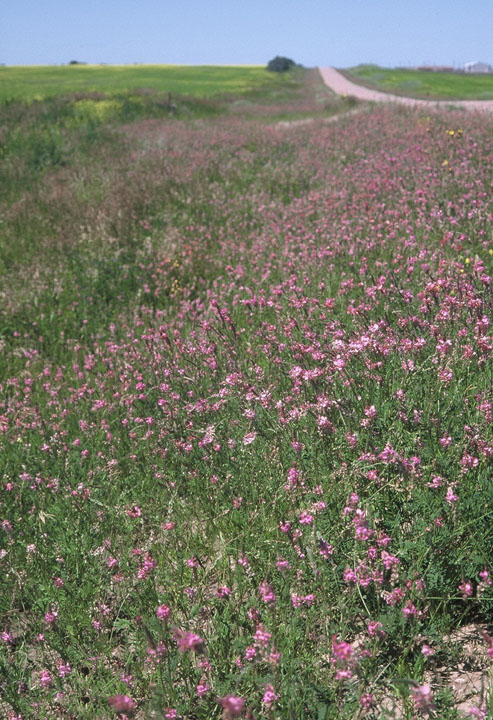
| Growing Climates | Grassland on chalk and limestone, dry, sunny meadows, pastureland, roadsides, fields, waste lots, mesic to dry fields, clearings, and other disturbed areas |
| Soil | Prefers a well-drained neutral to alkaline sandy loam in full sun. Succeeds in poor soils and in shallow soils over chalk and dislikes shade. It does not succeed in wet soils |
| Plant Size | 40 to 100 cm in height |
| Root | Roots are deep tap-roots |
| Stem | Several, ascending to erect, 20-60 cm tall, tufted, sparsely stiff-hairy |
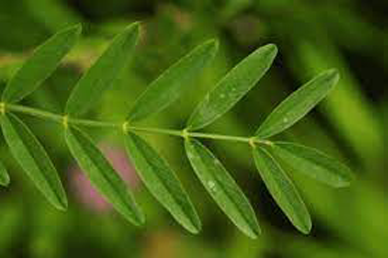
| Leaf | Leaves are pinnate, compound, formed from 15–25 small leaflets. The shape of the leaves is elliptical, oblong-elliptical or (mainly in the upper leaves) lanceolate, oblong-lanceolate |
| Flowering season | June to August |
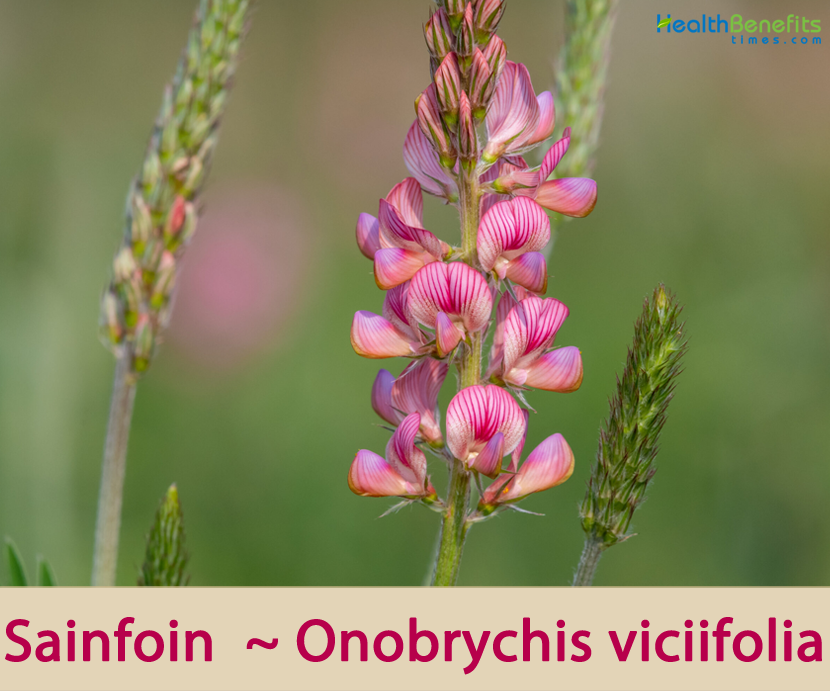
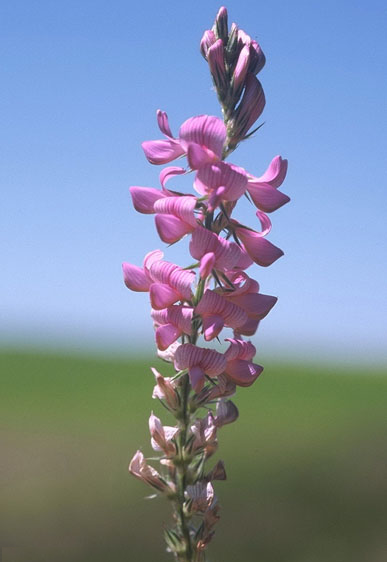
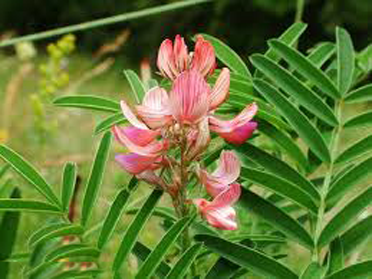
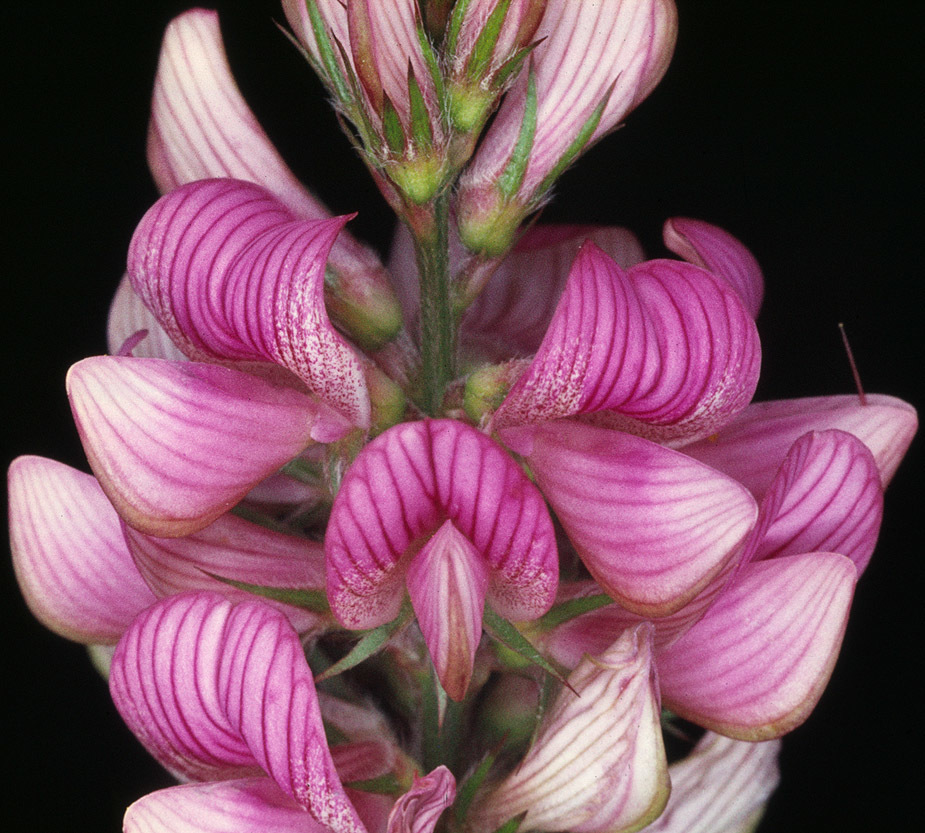
| Flower | Calyx is bell-shaped, the 5 teeth linear-lanceolate, equal, twice as long as the tube. Corollas are pea-like, 10-13 mm. long, pink to lavender, prominently lined with reddish-purple |
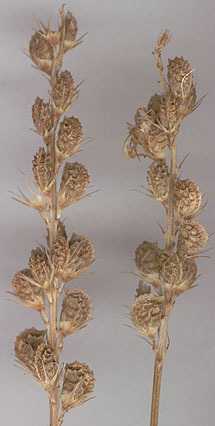
| Fruit Shape & Size | Egg-shaped pods that are leathery and non-splitting. They are 6-8 mm long, hairy, net-ridged, pimply or short-prickly on the sides |
| Fruit Color | Brown |
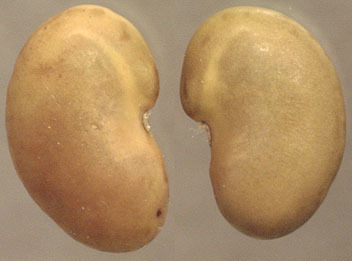
| Seed | True seeds is variable from 2.5 to4.5 mm long, 2 to 3.5 mm broad and 1.5 to 2 mm thick(Fig. 2). Unmilled seed and milled seed weigh approximately 24 and 15 g/1000 numbers, respectively |
Plant Description
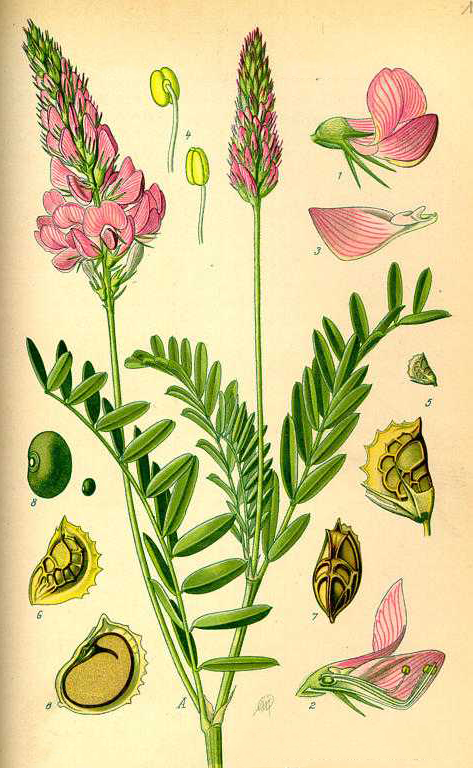
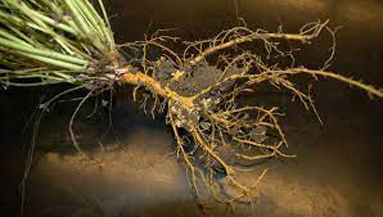
Sainfoin is an erect, deep-rooted, perennial herbaceous legume plant that normally grows about 40 to 100 cm in height. The plant is found growing in grassland on chalk and limestone, dry, sunny meadows, pastureland, roadsides, fields, waste lots, mesic to dry fields, clearings, and other disturbed areas. The plant prefers a well-drained neutral to alkaline sandy loam in full sun. It succeeds in poor soils and in shallow soils over chalk and dislikes shade. It does not succeed in wet soils. The plant has erect or sub-erect hollow stems growing up to a height of 100. It has a deep tap root system with few main branches and numerous fine lateral roots, which provide sites for root nodule development.
Leaves
The leaves are pinnate, compound, formed from 15–25 small leaflets. The shape of the leaves is elliptical, oblong-elliptical or (mainly in the upper leaves) lanceolate, oblong-lanceolate. Leaflets are narrowly elliptic to oblanceolate, 1-2 cm. long, with a small, sharp point at the tip. Stipules are lanceolate, 5-12 mm. long, papery, reddish-brown.
Flowers
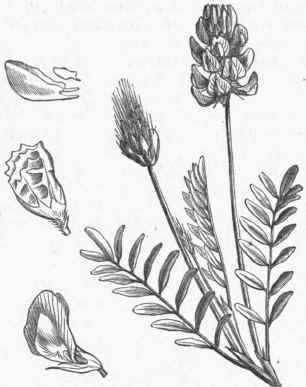
Inflorescence of spike-like racemes on long peduncles arising in the leaf axils, 10-50 pea-like flowers, the stout raceme-stalks longer than the leaves. Calyx is bell-shaped, the 5 teeth linear-lanceolate, equal, twice as long as the tube. Corollas are pea-like, 10-13 mm. long, pink to lavender, prominently lined with reddish-purple; the wings are much shorter than the banner or keel. Stamens are 10, monodelphous, but the upper filament free at the base and the upper 1/3 of its length. Flowering normally takes place in between June to August.
Fruits & Seeds
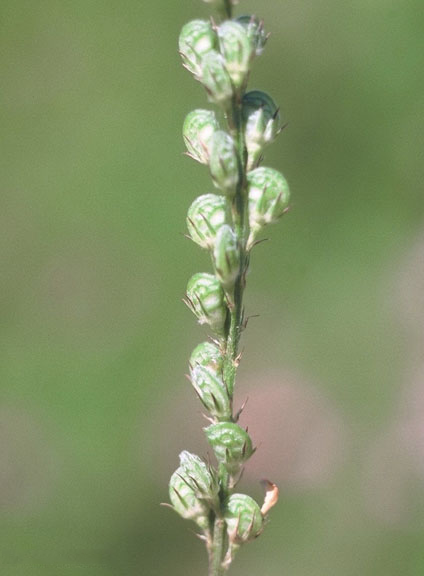
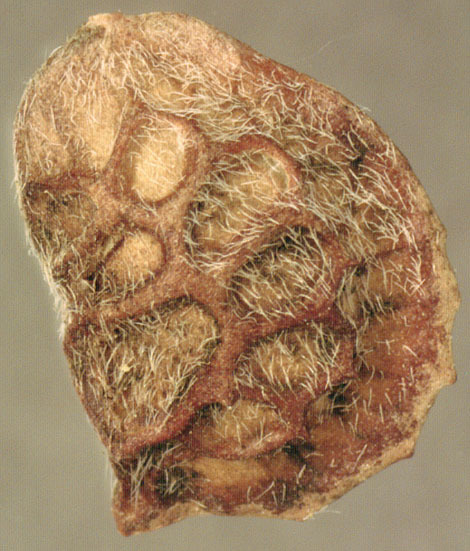
Fertile flowers are followed by egg-shaped pods that are leathery and non-splitting. They are 6-8 mm long, hairy, net-ridged, pimply or short-prickly on the sides. The fruit color is mainly determined by the ripeness at harvesting time. The fruit is either spiny or spine-less. The degree of spininess is characteristic for different lines and is genetically determined. The size of the seeds is variable from 2.5 to 4.5 mm long, 2 to 3.5 mm broad and 1.5 to 2 mm thick. Unmilled seed and milled seed weigh approximately 24 and 15 g/1000 numbers, respectively. Seeds are large with only 18,500 (pre-husked) seeds per pound
Traditional uses and benefits of Sainfoin & Sainfoin honey
- In folk medicine, sainfoin is used as a means of increasing the body’s resistance to various infectious diseases.
- It is also taken by people suffering from diabetes.
- Infusions and decoctions of sainfoin help lower blood cholesterol levels and increase hemoglobin levels.
- Sometimes folk healers include sandy sainfoin in sedative collections for the treatment of neurotic disorders, hypochondriacal conditions and sleep disorders.
- In traditional medicine, a decoction of the herb and sainfoin roots (sometimes in combination with field talabani) or tincture with sainfoin is used to treat impotence and other male sexual dysfunctions, as well as for diseases of the prostate gland.
- It also increases concentration and improves vision.
- It has the property of balancing the nervous system due to its mild sedative function.
- It cleans the blood from toxins and promotes the resorption of blood clots.
- It normalizes bowel function and helps fight constipation and enter colitis.
- It Increases androgen levels (improving erectile function in men).
- Lotions mixed from a bee product and aloe juice relieve pain in burns and psoriasis, heal the affected skin.
- In gynecology honey collection is used for douching and baths.
- It is useful for women during menopause
Other Facts
- It is a good soil conditioner for poor light soils.
- The plants can be grown on the land for a number of years, the deep tap roots breaking up the sub-soil and bringing up minerals from below.
- Plants can be cut during the growing season but care must be taken not to cut too low because the tap root tends to rise above ground level and the plant can be killed if this is cut off.
- The plant has an extensive root system and is useful for stabilizing soils.
- Sainfoin is used both as green manure and cover crop.
- In abandoned areas and hill slopes, where erosion may be a problem, sainfoin seedlings may prevent desertification and erosion, and maintain soil fertility.
- Its melliferous flowers attract bees and birds and enhance biodiversity.
- The high tannin concentration of sainfoin prevents bloating in ruminants, and reduces methane and ammonia production.
- In the UK is traditionally used as a hay crop, although it can be cut for silage.
- It has been observed that animals receiving sainfoin for food do not suffer from some diseases, in particular, tympanitis.
- Sainfoin blooms from the second year of the plant’s life.
- The flowering period is from early summer to July.
- Each blooming flower does not live long, only 10-12 hours.
References:
https://www.itis.gov/servlet/SingleRpt/SingleRpt?search_topic=TSN&search_value=26810#null
https://npgsweb.ars-grin.gov/gringlobal/taxon/taxonomydetail?id=25737
https://pfaf.org/user/Plant.aspx?LatinName=Onobrychis+viciifolia
https://gd.eppo.int/taxon/ONBVI
http://www.theplantlist.org/tpl1.1/record/ild-5130
https://www.feedipedia.org/node/703
https://en.wikipedia.org/wiki/Onobrychis_viciifolia
https://plants.usda.gov/home/plantProfile?symbol=ONVI