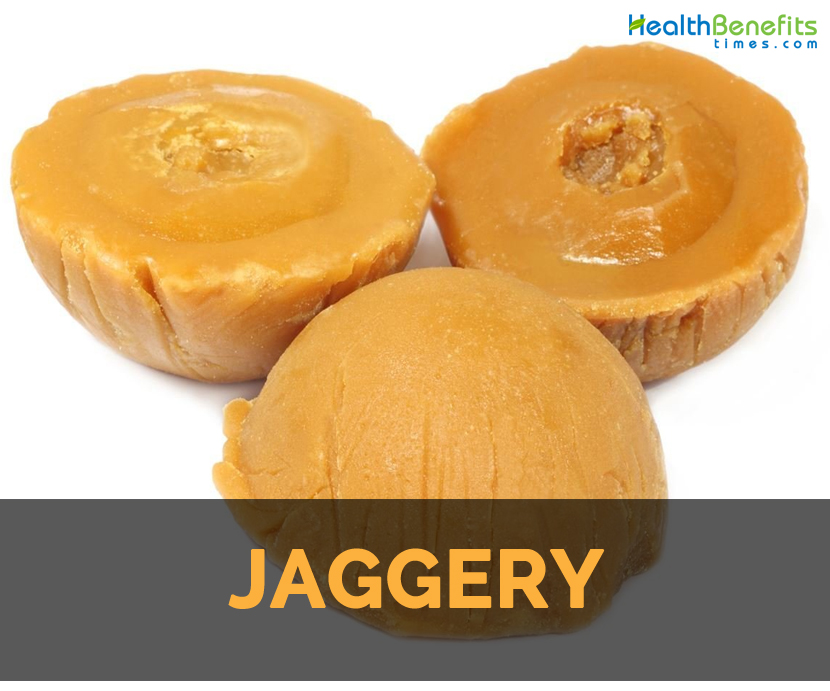
Jaggery is the unrefined sugar or sweetener which is widely consumed in America, Africa and Asian countries. It is produced with the use of cane juice, date or palm sap. The color of Jaggery ranges from golden brown to dark brown. It possesses 20% of invert sugars, 50% of sucrose and 20% of moisture. It is also blended with peanuts, coconut, condensed milk, and white sugar. The various types of Jaggery are: Sugarcane Jaggery, Date Palm Jaggery, Palmyra Jaggery, Toddy Palm Jaggery and Other Palm Jaggery. It is a perfect substitute for sugar which is loaded with various nutrients and is free from chemicals. It acts as a blood purifier and helps to eradicate the health problems such as pimples, acne, indigestion, hair loss and joint pain. Besides the food use, it is also used as a dying fabric. Though the nutrient in Jaggery differs from sugar, it should not be consumed high amounts because the excessive intake of sugar would cause chronic ailments.
History
Some say that jaggery originated in Eastern India, some say that Portuguese brought it here. So though the exact point of location is debatable, one can say that jaggery was produced in places with high sugarcane growth, viz the Indian subcontinent, Latin America and the Caribbean.
How to make
It includes three processes to make Jaggery:
Extraction
The palms or canes are pressed in order to extract the sap or sweet juice.
Clarification
The juice is put in a large container so that the sediment remains in bottom. It is strained to get a clear liquid.
Concentration
Then the juice is kept in a large and flat bottom pan and is boiled. Jaggery is stirred during this process and the top part is removed till a yellow and dough paste is remained.
In 10 grams of Jaggery, we could found 38.3 calories, 0.4 grams of moisture, 9.8 grams of carbohydrate and 9.7 grams of sugars. It also contains 7.54% of carbohydrate, 3.81% of magnesium, 3.75% of iron, 0.80% of calcium, 0.57% of phosphorus, 0.43% of manganese, 0.31% of Vitamin B6, 0.28% of potassium, 0.22% of selenium, 0.20% of sodium, 0.20% of Vitamin B5, 0.07% of niacin, 0.04% of choline and 0.03% of protein.
Health Benefits of Jaggery
Besides the sweet taste, it is loaded with therapeutic properties. The juice extracted from sugarcane is heated for forming the thick crystals. The sugar is contained in it in the form of sucrose and used as a sweetening agent in the food products. It is regarded as the natural sweetener. The dosage for the people differs according to the age. It is an excellent source of minerals and iron. It acts as a blood purifier and helps to eliminate toxins from the body. It helps to boost energy and is an aid for various health ailments.
Provides energy
Food contains carbohydrates that provide energy on oxidation. The simple carbohydrate releases the energy soon. The athletes and fatigue patients requires energy. The glucose and sugar is a simple carbohydrate which is easily absorbed in blood stream and provides energy. The studies show that the unusual rise in the level of sugar or energy could affect the internal organs. It might fluctuate the level of sugar in pancreas and it may not be able to release the insulin for counteracting the rise in blood sugar level. This could result in the ailments of eyes, kidneys and rise blood sugar. Jaggery is a complex carbohydrate so it is gradually absorbed and digested. It also releases energy for a long period of time. It provides energy and warmth without affecting the internal organs.
Assist digestion
In India, Jaggery is consumed after eating meat or heavy meal so that it stimulates digestion. It activates digestive enzymes which convert into the acetic acid in stomach by enhancing digestion and smoothening the process. It lowers the strain on the digestive tract and intestines.
Lowers constipation
Jaggery has the ability to clean the body such as lungs, respiratory tracts, stomach, food pipe and intestines. It eliminates the unwanted particles and dust from the body. It provides relief from constipation as it possess fiber. It promotes the bowel movements along with the cleansing of toxins.
Mineral source
Jaggery is a great source of minerals such as iron and minerals salts. Jaggery contains iron which comes in the processing of iron vessels. The other minerals come from the juice of sugar cane. Thus, jaggery is an excellent source of minerals.
Sweeten foods
The sugars are the plain sweeteners which could be replaced with Jaggery. It is colorful sweetener which is available in various types such as Palmyra Jaggery, Date Palm Jaggery etc.
Prevent constipation
Jaggery provides relief from constipation by promoting the bowel movements. It mobilizes the digestive enzymes in the body and assists digestion.
Treat flu
Migraine, bloating, water retention, coughs and cold has become the common health problems. The intake of Jaggery helps to overcome these symptoms. It should be mixed with warm water or added to the tea.
Enhance immunity
It counteracts the infections by enhancing the immunity power. It is packed with antioxidants as well as minerals such as selenium and zinc by preventing the free radial damage and promoting the resistance for the infections.
Types of Jaggery
Sugarcane Jaggery
The color of this sugarcane jaggery ranges from golden brown to dark brown. It is made by boiling the juice of sugarcane. It has the physical state from amorphous solid to viscous granular liquid. It could be found in India, Bangladesh, Pakistan, Sri Lanka, Philippines, Myanmar, Cuba, Malaysia and Mexico. India is considered as the biggest producer as well as consumer of this variety. It has sweet taste with salt.
2. Date Palm Jaggery
This jaggery has golden brown or dark brown color. The sap of date palm is boiled to make this Date palm jaggery. It is an amorphous solid or viscous granular to a clear red liquid. It could be found in Bangladesh and West Bengal of India. It has sweet taste and typical aroma of Date palm or is like a dark chocolate.
3. Palmyra Jaggery
It is off white or pale yellowish white. The sap of Palmyra palm is boiled to prepare the Jaggery. It is an amorphous solid. It is found in Bangladesh and India (West Bengal). It has very sweet taste with a typical aroma of Palmyra or like white chocolate.
4. Toddy Palm Jaggery
This jaggery is golden brown in color. It is made by boiling the sap of toddy palm. It is also an amorphous solid. It is available in Myanmar. It has sweet taste along with typical aroma of the sap of Toddy palm.
5. Other Palm Jaggery
Jaggery could be made from the Coconut palm or Sago palm. The preparation process is same. The sap is boiled in a concentrated form until the solid or amorphous form is obtained. It is golden yellow, golden brown or brown. This is made in Myanmar, Malaysia and Philippines.
Jaggery is used in Indian Ayurvedic medicine to treat lung and throat infections.
It prevents the rheumatic illness, prevent bile disorders, relief fatigue, relax muscles, blood vessels and nerves, lowers water retention and maintain blood pressure.
It helps to ease the bowel movements and helpful for the people with constipation.
It is also used as cardiac tonic or diuretic.
It maintains the level of blood pressure.
It assists digestion and eliminates free radicals.
The intake of Jaggery with ghee helps to provide relief from ear pain.
It also prevents the gas if consumed after dinner or lunch.
The jaundice patients could take 10 grams of Jaggery and 5 grams of Saunth.
The halva of Jaggery increases the memory.
The respiratory ailments could be treated with the intake of 5 grams of Jaggery and mustard oil.
The vision could be enhanced by mixing Jaggery in millet porridge.
Precautions
The long use of Jaggery results in intestinal worm problem, weight gain, etc.
The ulcerative colitis and diabetic patients should avoid it.
It should be avoided with radish and fish.
It changes the level of blood sugar.
This change in blood sugar affects the functions of kidney, heart, eyes, etc.
How to Eat
It is blended with peanuts, coconut, condensed milk and white sugar.
It is used as an ingredient in savory and sweet dishes.
It added to lentil soups to add the sweetness in spicy, sour and salty mostly in Gujarati cuisine.
It is used to make tilgul in Makar Sankranti.
It is added to the Punjabi or Rajasthani.
It is used to sweeten payasam, fruit salads and kalhi.
It is used in Oriya cuisine for the pithas and cakes.
It is also used as a chocolate of Burmese.
Jaggery is also combined with sesame, jujube puree and coconut shreds.
It is used to make jaggery cake and toffees along with cashew nuts, pumpkin preserve, spices and peanuts.
It is also used to make palm wines.
In Maharashtra, the people who work in the hot sun are given a piece of Jaggery.