| Bogbean Quick Facts |
| Name: |
Bogbean |
| Scientific Name: |
Menyanthes trifoliata |
| Origin |
Europe and North America |
| Shapes |
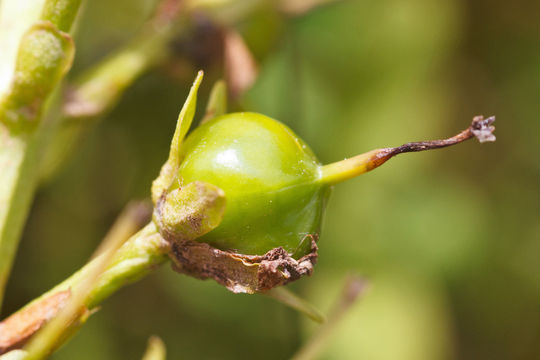
Spherical, 1-parted, many-seeded capsule |
| Taste |
Bitter |
Bogbean scientifically known as Menyanthes trifoliate belongs to the plant family Menyanthaceae. Other common names of Bogbean are Moon flower, buckbean, marsh trefoil, Water Trefoil, Marsh Clover, bean trefoil, bitterworm, bog nut, scarfano, vattenklover, bukkeblad, Horblaoka, treefold, bitterklee, bog Hop, Boonan, Raate, Sumpfflee, bitter trefoil, brook bean and water Shamrock. This rhizomatous emergent aquatic perennial plant is native to shallow water in pond/lake margins and in bogs of Europe and North America where it is found growing from Labrador to Alaska in the north and southwards to West Virginia and extending to Wyoming. In some states of the US, this species has become rare or turned into an endangered species. The generic name Menyanthes probably comes from the Greek menyein, meaning disclosing, and anthos, meaning flower.
Plant Description
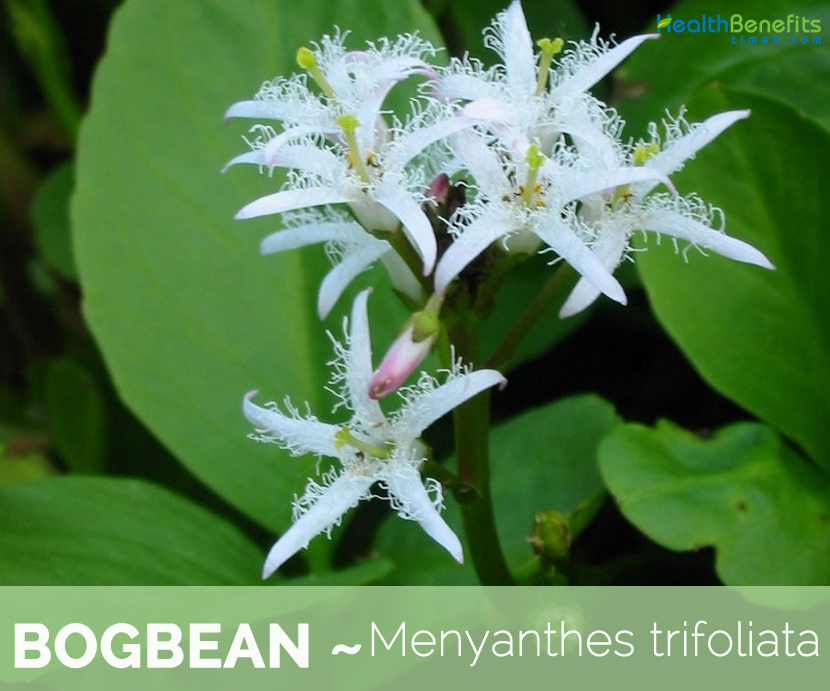
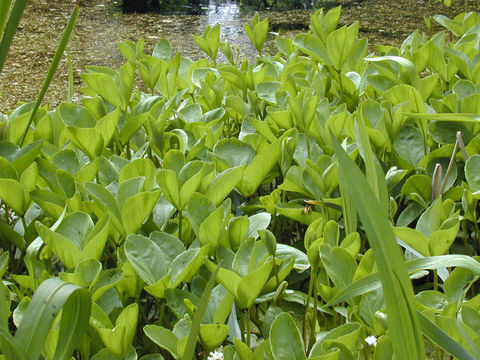
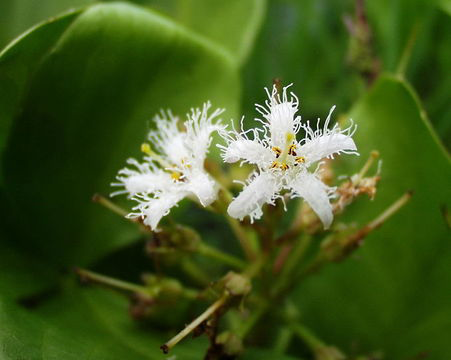
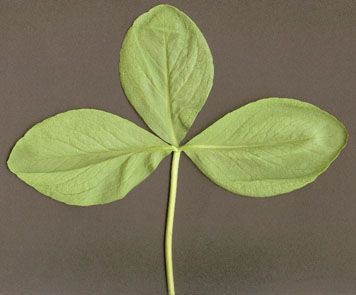
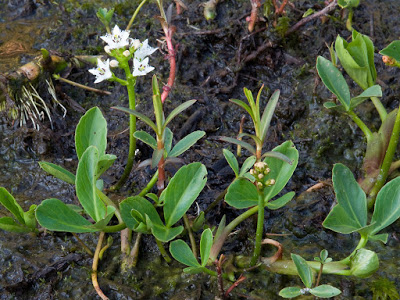
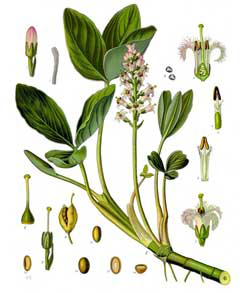
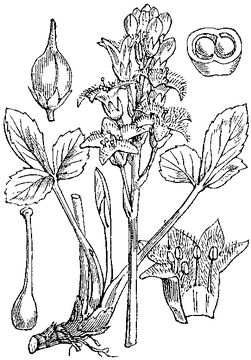
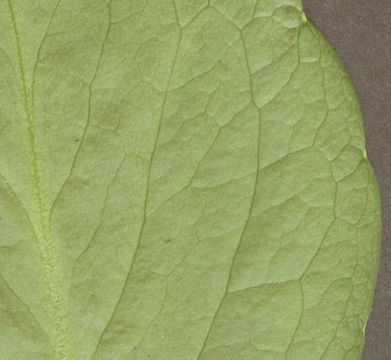
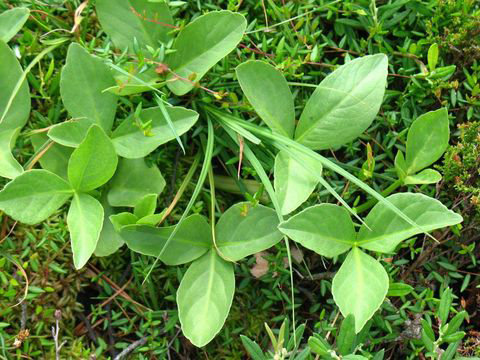
Bogbean is a rhizomatous emergent aquatic perennial plant that grows up to 15 to 30 cm in height (above water). The plant is found growing in various wetland habitats such as fens, pools, marshes, older woods, ditches, bogs, lake shores, swampy prairies, particularly in acid or oligotrophic conditions. Roots are thick, creeping and can both be attached to the ground or may be free-floating in water. Flower stalks and leaves rise well above the water surface from thick creeping rhizomes that spread indefinitely. Trifoliate leaves are alternate, long-stalked and have three elliptic leaflets. Leaflets are stalk less, elliptic–obovate, with entire margins, glabrous. Leaflets are 1½ to 2½ inches long and to 1 inch wide, becoming larger later in the season. Flowers are star shaped, five-petaled and fringed with extravagant white, cottony hairs which have a pinkish flush on the outside of the petals. Flowering normally takes place from May to July. Fruit is spherical, 1-parted, many-seeded capsule which contains numerous 2-3 mm long, lens shaped, yellow seeds.
Traditional uses and benefits of Bogbean
- Finely powdered Buckbean leaves have been used as a remedy for ague, being said to affect a cure when other means fail.
- Juice of the fresh leaves has proved effective in dropsical cases, and mixed with whey has been known to cure gout.
- Buckbean tea, taken alone or mixed with wormwood, centaury or sage, is said to cure dyspepsia and a torpid liver.
- An infusion is given in the treatment of muscular weakness in M.E., chronic infections with debility and exhaustion, indigestion, anorexia and rheumatism.
- Given in small doses of about 10 grains it imparts vigor to the stomach and aids digestion.
- Using the plant helps a person to gain weight.
- It is believed to be an effective remedy for rheumatoid arthritis, especially when this condition is associated with weakness, weight loss and lack of vitality.
- Leaves were used for tea to strengthen weak stomachs.
- Plant was also used against tuberculosis, heart problems and asthma.
- Bogbean was also used to treat arthritis.
- It is still used today in herbal medicine to treat various rheumatoid conditions.
- An herbal tea made from the leaves has been used traditionally for irregular menstruation, to strengthen appetite, increase the secretion of digestive fluids, indigestion, and enhance nutrient absorption.
- Ailments like dry cough, fever, migraine, gout, arthritis (rheumatoid arthritis), rheumatism, heartburn and muscle weakness associated with chronic fatigue syndrome have also been treated with the herb.
- It has been used as an external remedy for wounds, for skin rashes, inflammation, itch, eczema and edema.
- Tea made from the leaves, mixed with yarrow and peppermint is wonderful for common cold, flu, nausea and stomach flu.
- Combine with celery seed and black cohosh to treat rheumatism. It has also been combined with bugbane (Cimicifuga racemosa) or celery for joint and muscle pain.
Ayurvedic Health benefits of Bogbean
- Rheumatoid Arthritis: Take combined mixture of Black cohosh, Bogbean, white poplar and celery to treat Rheumatoid Arthritis. It can be taken internally as an infusion. Prepare an infusion of the dried leaves. Let leaves steep for 10-15 minutes. Drink before taking meals. Take thrice a day.
- Arthritis: Prepare a decoction of devil’s claw, celery seed and Bogbean leaves. Drink twice a day.
Dosage
Dosages for oral administration (adults) for traditional uses recommended in older and contemporary standard herbal reference texts are given below.
- Dried leaf 1–2 g or by infusion three times daily.
- Liquid extract 1–2mL (1: 1 in 25% alcohols) three times daily.
- Tincture 1–3mL (1: 5 in 45% alcohols) three times daily.
Culinary Benefits
- The leaves were used to flavor beer instead of hops in northern England and parts of Europe.
- The powder can be used for making ‘missen bread’ (famine bread).
- The root is an emergency food that is used when all else fails.
- Bogbean is used as a flavoring in food manufacturing.
- This herb can be eaten in sandwiches and salads.
Other Facts
- The plant also contains a chemical compound which attracts cats.
Precautions
- Large doses may cause abdominal pains, nausea, diarrhea and vomiting.
- The fresh plant causes vomiting.
- People suffering from diarrhea, dysentery, colitis or ulcers of the digestive system should avoid using the herb.
- It is not recommended in case of acute intestinal inflammation.
- The herb is not suitable for children.
- Bogbean could increase the risk of bleeding during and after surgery. Stop using Bogbean at least two weeks before a scheduled surgery.
References:
https://www.itis.gov/servlet/SingleRpt/SingleRpt?search_topic=TSN&search_value=30102#null
http://davesgarden.com/guides/pf/go/1496/
http://www.missouribotanicalgarden.org/PlantFinder/PlantFinderDetails.aspx?taxonid=282717&isprofile=0&
http://www.floracatalana.net/menyanthes-trifoliata-l
http://www.botanical.com/botanical/mgmh/b/bogbea63.html
http://www.pfaf.org/user/Plant.aspx?LatinName=Menyanthes+trifoliata
https://plants.usda.gov/core/profile?symbol=metr3
http://www.medmelon.gr/buckbean-leaves/
https://en.wikipedia.org/wiki/Menyanthes
http://calscape.org/Menyanthes-trifoliata-(Buckbean)?srchcr=sc5773c68070d3e
Comments
comments