Health Benefits
    Facebook Twitter Instagram
    Friday, December 5
    Facebook Twitter Pinterest
    Health Benefits
    • Home
    • Dental Health
    • Mental Health
    • Weight Loss
    • Health Wiki
    • Nutrition
    • Healthy Recipe
    • BMI Calculator
    Health Benefits
    Home»Foods»Doughnuts health benefits and risk
    Foods

    Doughnuts health benefits and risk

    By s mApril 23, 2019Updated:April 23, 2019No Comments2 Mins Read
    Facebook Twitter Pinterest LinkedIn Tumblr Email

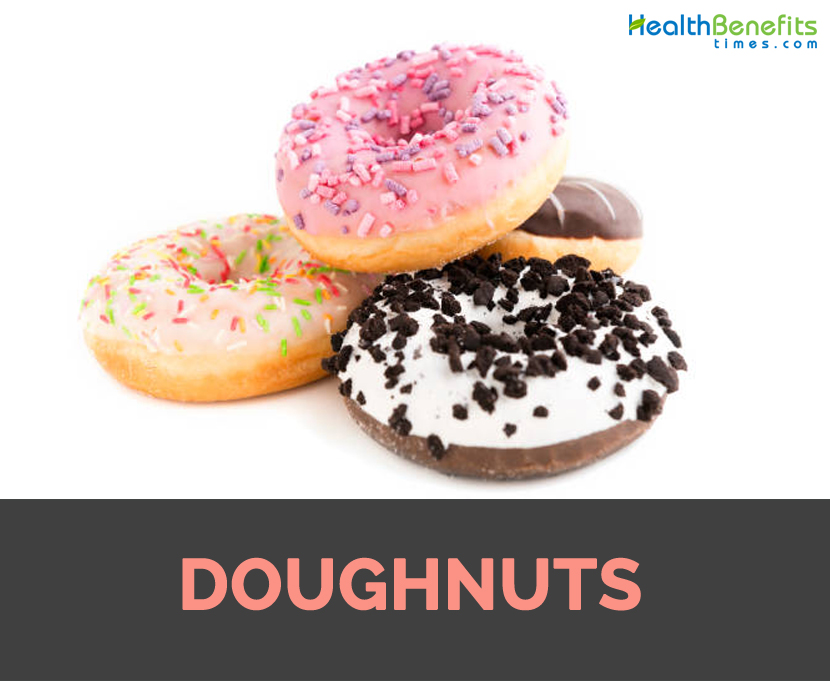
    Doughnut also known as donut is a fried dough confection and dessert food. Doughnut is well known in the world in various forms as sweet snack. It could be prepared at home or is available at supermarkets, bakeries, food stalls and franchised specialty vendors. It is deep fried from flour dough and is usually ring shaped or without hole or ball shaped. Toppings and flavorings are used for various types such as chocolate, sugar or maple glazing. Doughnuts also include water, eggs, leavening, sugar, oil, milk, natural and artificial flavors.

    Ring doughnut and filled doughnut are the common types of doughnut. Doughnuts are added cream, preserves, custard and other sweet fillings. After fried, doughnuts could be glazed with sugar icing, chocolate on top or topped with powdered sugar and fruit. Doughnuts can be shaped into other forms such as balls, rings, twists and flattened spheres.

    Culinary uses

    • Doughnut is served with mince, honey, syrup or jam in South Africa.
    • Doughnuts are deep fried and covered in honey syrup in Tunisia. Sesame seeds are used for enhancing flavor and decorating with vanilla and orange juice.
    • In Nepal, sel roti is a homemade and ring shaped rice doughnut which is usually prepared during Tihar.
    • A jam filled doughnut is known as krofi in Slovenia.

    Effects of doughnuts

    1. Dental problems

    Doughnuts make the teeth prone to cavities and bleeding of gums. For better oral health, one should avoid intake of doughnuts.

    1. Weight gain

    With an intake of doughnuts, one will gain weight and gets tired easily. Intake of single doughnut regularly could lead to gaining weight.

    1. Mental health

    Chemicals found in doughnuts impairs mind and people will take hasty decision that might be wrong.

    1. Prone to diabetes

    People with diabetes experience discolor fingernails and toenails and also to crack. Toes and fingers become numb, infected and prone to gangrene.


    References:

    https://en.wikipedia.org/wiki/Doughnut

    https://fitnea.com/5-reasons-you-should-stop-eating-donuts/

    72%
    72%
    Awesome

    Comments

    comments

    D Foods
    Share. Facebook Twitter Pinterest LinkedIn Tumblr Email
    Previous ArticleCornmeal facts and nutritional value
    Next Article 5 Affordable Ways to Fix Your Teeth

    Related Posts

    Traditional uses and benefits of Drooping fig

    March 12, 2024

    Health benefits of Dwarf Pawpaw

    January 21, 2024

    Health benefits of Dittany of Crete

    November 23, 2023

    Comments are closed.


    Doughnut Quick Facts
    Name: Doughnut
    Colors Variety of colors
    Shapes Rings, balls, flattened spheres, twists
    Taste Sweet, delicious
    Calories 174 Kcal./cup
    Major nutrients Total Fat (28.49%)
    Phosphorus (14.86%)
    Carbohydrate (14.48%)
    Vitamin B1 (13.00%)
    Sodium (12.73%)
    Name Doughnut
    Shape Rings, balls, flattened spheres, twists
    Taste Sweet, delicious
    Major Nutritions Total Fat (lipid) 9.97 g (28.49%)
    Phosphorus, P 104 mg (14.86%)
    Carbohydrate 18.82 g (14.48%)
    Vitamin B1 (Thiamin) 0.156 mg (13.00%)
    Sodium, Na 191 mg (12.73%)
    Iron, Fe 1.01 mg (12.63%)
    Vitamin B9 (Folate) 37 µg (9.25%)
    Vitamin B2 (Riboflavin) 0.12 mg (9.23%)
    Vitamin B3 (Niacin) 1.164 mg (7.28%)
    Selenium, Se 4 µg (7.27%)
    Calories in 1 donut (40 g) 174 Kcal.
    Nutritional value of Doughnuts, cake-type, plain (includes unsugared, old-fashioned)
    Serving Size:1 donut, 40 g

    Calories 174 Kcal. Calories from Fat 89.73 Kcal.


    Proximity Amount % DV
    Water 8.33 g N/D
    Energy 174 Kcal N/D
    Energy 726 kJ N/D
    Protein 2.12 g 4.24%
    Total Fat (lipid) 9.97 g 28.49%
    Ash 0.75 g N/D
    Carbohydrate 18.82 g 14.48%
    Total dietary Fiber 0.7 g 1.84%
    Total Sugars 7.26 g N/D
    Sucrose 6.41 g N/D
    Glucose (dextrose) 0.27 g N/D
    Lactose 0.37 g N/D
    Maltose 0.22 g N/D
    Starch 10.36 g N/D

     
    Minerals Amount % DV
    Calcium, Ca 16 mg 1.60%
    Iron, Fe 1.01 mg 12.63%
    Magnesium, Mg 7 mg 1.67%
    Phosphorus, P 104 mg 14.86%
    Potassium, K 54 mg 1.15%
    Sodium, Na 191 mg 12.73%
    Zinc, Zn 0.2 mg 1.82%
    Copper, Cu 0.036 mg 4.00%
    Manganese, Mn 0.133 mg 5.78%
    Selenium, Se 4 µg 7.27%


    Vitamins Amount % DV
    Water soluble Vitamins
    Vitamin B1 (Thiamin) 0.156 mg 13.00%
    Vitamin B2 (Riboflavin) 0.12 mg 9.23%
    Vitamin B3 (Niacin) 1.164 mg 7.28%
    Vitamin B5 (Pantothenic acid) 0.151 mg 3.02%
    Vitamin B6 (Pyridoxine) 0.02 mg 1.54%
    Vitamin B9 (Folate) 37 µg 9.25%
    Folic Acid 30 µg N/D
    Folate, food 6 µg N/D
    Folate, DEF 58 µg N/D
    Choline 14.9 mg 2.71%
    Vitamin B-12 (Cobalamine) 0.02 µg 0.83%
    Fat soluble Vitamins
    Vitamin A, RAE 2 µg 0.29%
    Vitamin A, IU 6 IU N/D
    Retinol 1 µg N/D
    Betaine 25.4 mg N/D
    Lutein + zeaxanthin 8 µg N/D
    Vitamin E (alpha-tocopherol) 0.8 mg 5.33%
    Tocopherol, beta 0.06 mg N/D
    Tocopherol, gamma 0.98 mg N/D
    Tocopherol, delta 0.31 mg N/D
    Tocotrienol, alpha 0.49 mg N/D
    Tocotrienol, beta 0.25 mg N/D
    Tocotrienol, gamma 0.6 mg N/D
    Tocotrienol, delta 0.08 mg N/D
    Vitamin K (phylloquinone) 3.9 µg 3.25%

     
    Lipids Amount % DV
    Fatty acids, total saturated 4.442 g N/D
    Caprylic acid 8:00 (octanoic acid)  0.006 g N/D
    capric acid 10:00 (decanoic acid) 0.01 g N/D
    Lauric acid (dodecanoic acid) 12:00 0.048 g N/D
    Myristic acid  14:00(Tetradecanoic acid) 0.098 g N/D
    pentadecanoic acid (15:00) 0.005 g N/D
    Palmitic acid 16:00 (Hexadecanoic acid) 3.777 g N/D
    Margaric acid (heptadecanoic acid) 17:00 0.01 g N/D
    Stearic acid 18:00 (Octadecanoic acid) 0.437 g N/D
    Arachidic acid 20:00 (Eicosanoic acid) 0.033 g N/D
    Behenic acid (docosanoic acid) 22:00 0.01 g N/D
    Lignoceric acid (tetracosanoic acid) 24:00 0.008 g N/D
    Fatty acids, total monounsaturated 3.418 g N/D
    Palmitoleic acid 16:1 (hexadecenoic acid) 0.018 g N/D
    16:1 c 0.018 g N/D
    17:01 0.003 g N/D
    18:1 undifferentiated 3.378 g N/D
    18:1 c 3.355 g N/D
    18:1 t 0.022 g N/D
    20:01 0.019 g N/D
    Fatty acids, total polyunsaturated 1.566 g N/D
    Linoleic acid 18:2 (octadecadienoic acid) 1.455 g N/D
    18:2 n-6 c,c 1.429 g N/D
    18:2 CLAs 0.004 g N/D
    18:2 t not further defined 0.021 g N/D
    18:3 undifferentiated 0.102 g N/D
    18:3 n-3 c,c,c (ALA) 0.096 g N/D
    18:3 n-6 c,c,c 0.007 g N/D
    20:2 n-6 c,c 0.002 g N/D
    20:4 undifferentiated 0.006 g N/D
    Fatty acids, total trans-monoenoic 0.022 g N/D
    Cholesterol 4 mg N/D

     
    Isoflavones Amount % DV
    Daidzein 1.03 mg N/D
    Genistein 0.98 mg N/D
    Glycitein 0.12 mg N/D
    Total isoflavones 2.12 mg N/D

    *Above mentioned Percent Daily Values (%DVs) are based on 2,000 calorie diet intake. Daily values (DVs) may be different depending upon your daily calorie needs. Mentioned values are recommended by a U.S. Department of Agriculture. They are not healthbenefitstimes.com recommendations. Calculations are based on average age of 19 to 50 years and weighs 194 lbs.
     

    Source:
    https://ndb.nal.usda.gov/

    Categories
    • Beverages (78)
    • Dairy (28)
    • Dental Health (15)
    • Equipment (5)
    • Essential OIls (196)
    • Facts (2,939)
    • Foods (255)
    • Fruits (516)
    • Giveaway (1)
    • Grains and Cereals (36)
    • Health & Beauty (763)
    • Herbs and Spices (1,249)
    • Medicines (9)
    • Mental Health (19)
    • Nutritional value (27)
    • Nuts and seeds (73)
    • Oils (81)
    • Pets (4)
    • Poultry & Seafoods (67)
    • Pulses and Beans (16)
    • Reviews (25)
    • supplement (2)
    • Vegetables (304)
    • Weight Loss (22)

    What is Lupin Bean Flour?

    Science Backed Health Benefits of Durian (Durio zibethinus)

    Science Backed Health Benefits of Feijoa (Pineapple Guava) (Acca sellowiana)

    Science Backed Health Benefits of Gac Fruit (Momordica cochinchinensis)

    Science Backed Health Benefits of Amaranth Leaves (Amaranthus spp)

    Science Backed Health Benefits of Arrowhead (Sagittaria sagittifolia)

    ABOUT
    Home
    About us
    Contact us
    Privacy Policy
    Terms & conditions
    Disclaimer
    Direct Communication
    e-mail: [email protected]
    Gmail: [email protected]
    Whatsapp: +977-9841146511
    Viber: +977-9841146511
    Useful
    Health Wiki
    Nutrition
    Facebook Twitter Pinterest
    © 2025 www.healthbenefitstimes.com All rights reserved.

    Type above and press Enter to search. Press Esc to cancel.

    ×

    Log In

    Forgot Password?

    Not registered yet? Create an Account