| Field penny-cress Quick Facts |
| Name: |
Field penny-cress |
| Scientific Name: |
Thlaspi arvense |
| Origin |
Eurasia, near the Mediterranean, but has spread around much of the world |
| Colors |
Bright green to yellowish to coppery brown as they mature |
| Shapes |
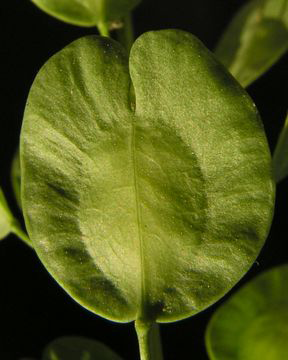
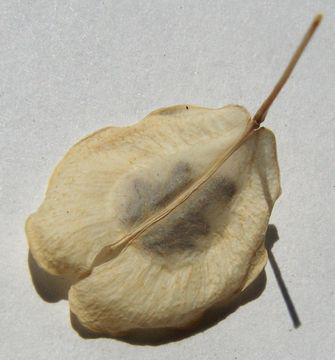
Round, flat, winged pods with a deep apical notch, measuring 1–1 cm (0.39–0.39 in)across |
| Taste |
Bitter, Sweet, Acrid |
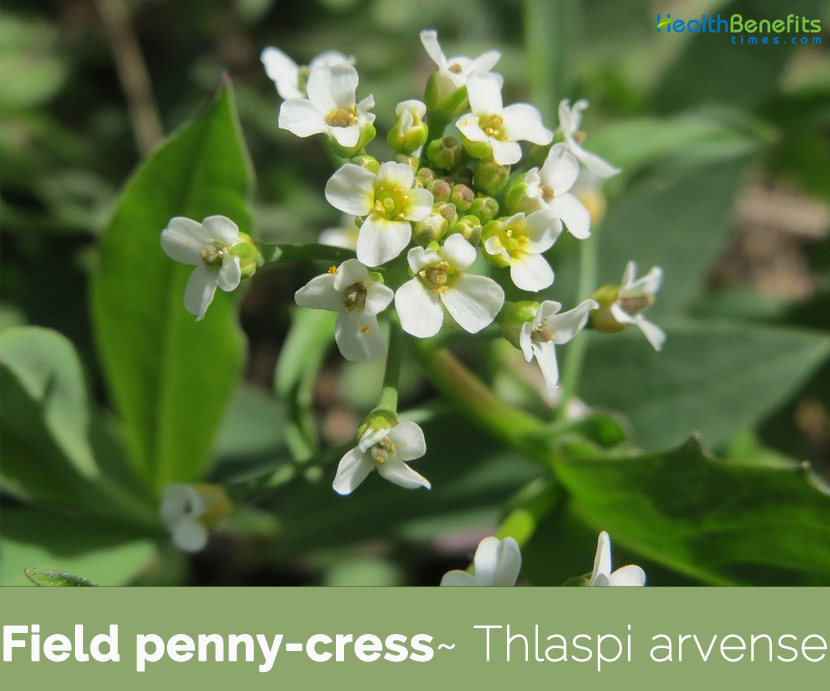
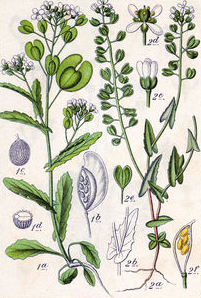
Thlaspi arvense commonly known as field penny-cress is a foetid Eurasian plant having round flat pods. The plant belongs to mustard family (Brassicaeae), so it is related to common garden crops such as cabbage, cauliflower, broccoli, and kale, as well as other wild mustard family plants such as Shepherd’s Purse –Capsella bursa-pastoris – Weekly Weeder and Winter Cress. The plant is native to Eurasia, near the Mediterranean, but has spread around much of the world. Few of the popular common names of the plant are Frenchweed, Mithridate mustard, Bastard cress, Fanweed, Field pennycress, Pennycress, Stinkweed, Wild garlic and Fan-weed. The common name ‘penny cress’ is derived from the shape of the seeds looking like an old English penny. Field pennycress is a weed of cultivated land and wasteland.
This is one of the most easily recognized members of the Brassicaceae (mustard) family because of its large and plentiful fruits which have the characteristic cabbage-like flavor when chewed. Like most of the other introduced members of this family, it grows in abundance. Researchers have started studying the genetics of pennycress in order to improve its potential use as a biofuel crop.
Plant Description
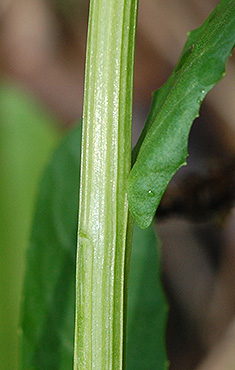
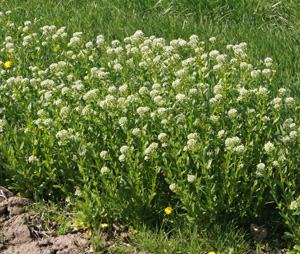
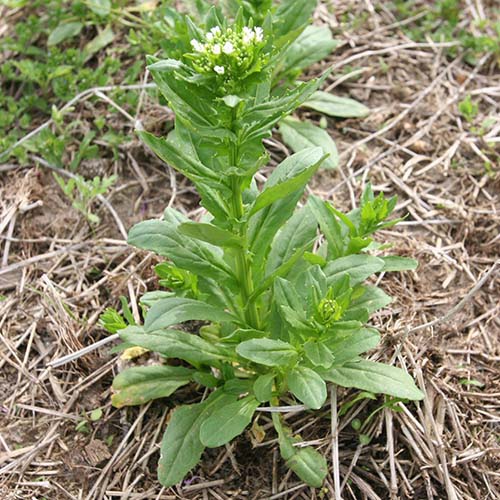
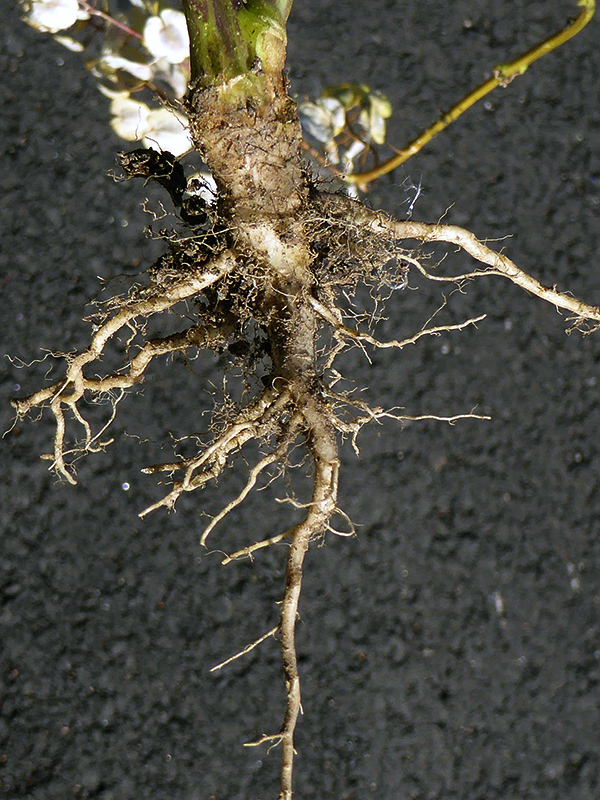
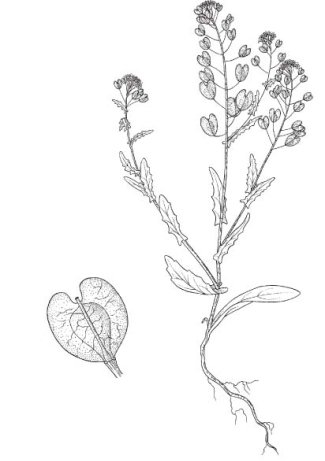
Field penny-cress is a foetid, hairless, annual flowering plant that grows almost 1 meter in height but typically are about 50-60cm. The plant is found growing in disturbed sites, cropland, fallow fields, areas along roadsides and railroads, pastures, gardens and nursery plots, weedy meadows, and waste areas. The plant prefers wet or dry ground and a range of soil types, but prefers fertile sites. Stem is unbranched–sparsely branched, erect, bristly, glabrous 18 to 80 cm tall and have mustard-like fragrance.
Leaves
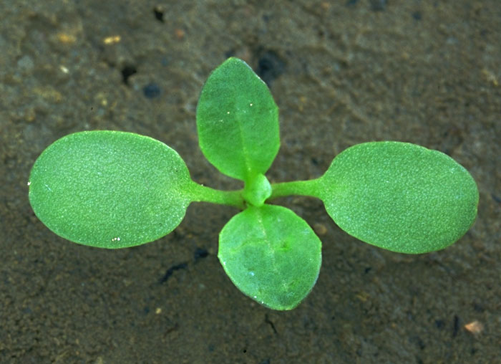
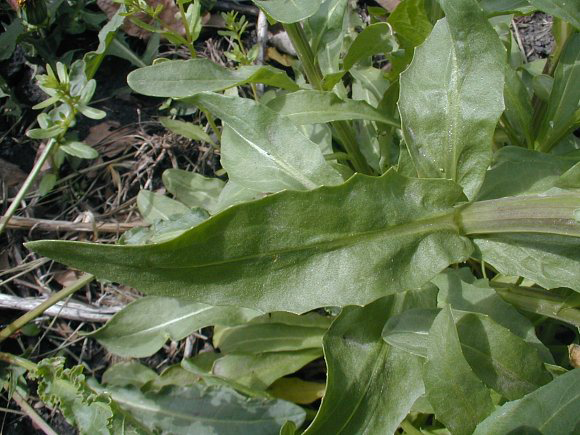
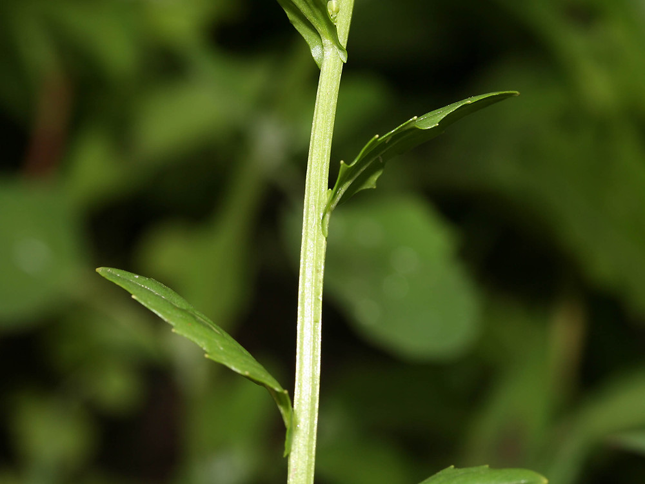
There is a rosette of spatula shaped basal leaves that wilt away early. Stem leaves are 1 to 4 inches long and up to 1 inch wide, hairless, with irregular blunt teeth and a rounded or blunt point at the tip. The edges are often a little wavy. Leaves near the base of the plant may have short stems. Those nearer the top are more clasping. Attachment is alternate.
Flowers
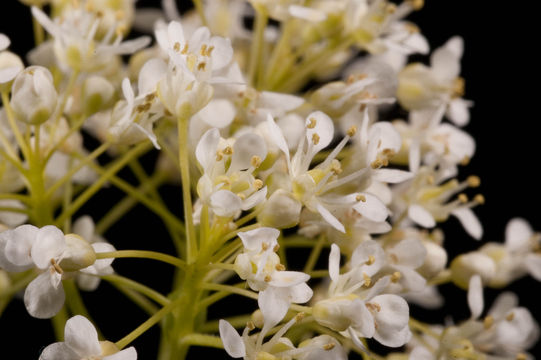
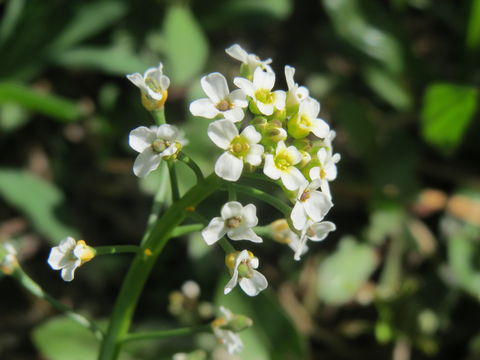
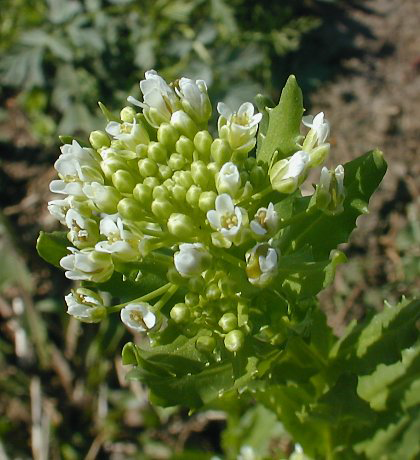
Elongating clusters of stalked flowers are found at the top of the plant and at the tips of branching stems arising from the upper leaf axils, with a densely packed, rounded cluster of open flowers at the tip and fruit forming below. Upper branches are often initially horizontal, becoming ascending. Individual flowers are white, about ¼ inches across. The 4 green sepals behind the flower have whitish edges. Corolla is regular, white, approx. 0.5 cm (0.2 in.) wide. Petals are four, 3–4 mm (0.12–0.16 in.) in.) Long. The flower has four sepals and six stamens, of which 4 long and 2 short, anthers yellow. Flowering normally takes place from May to July.
Fruits
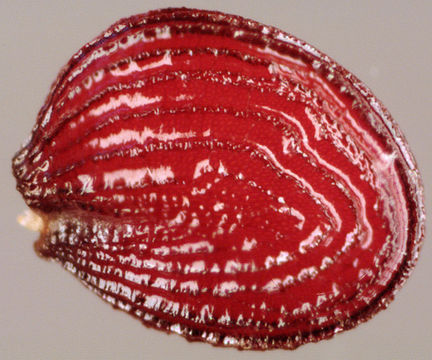
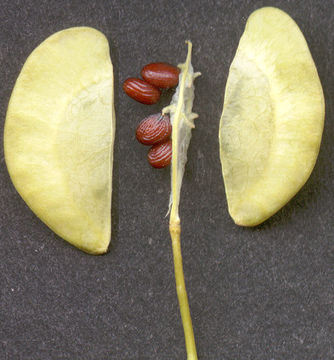
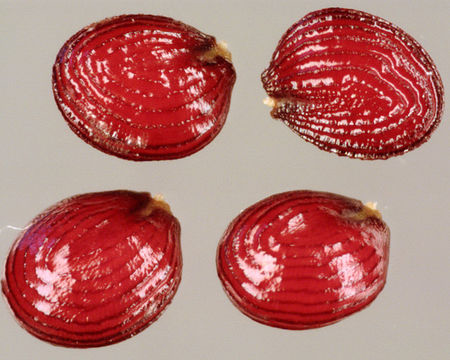
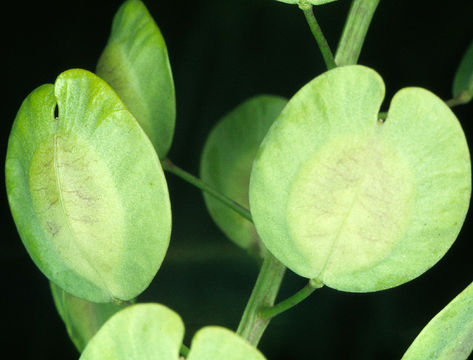
Flowers are followed by round, flat, winged pods with a deep apical notch, measuring 0.39–0.39 in across borne on slender, upward curving stalks. Fruits are initially bright green turning to yellowish to coppery brown as they mature. Each side of the pod holds up to 8 seeds. As the seeds ripen they are easily seen in crop fields. The seeds are ovoid, 1.2 to 2.3 mm long and 1 to 1.5 mm wide, reddish or purplish-brown to black, unsymmetrically oval in outline, somewhat flattened with several concentric ridges resembling a finger print, each face with a narrow groove extending from the hilum to the center of the seed.
Traditional uses and benefits of Field penny-cress
- Both the seed and the young shoots are said to be good for the eyes.
- Seeds are used in Tibetan medicine and are considered to have an acrid taste and a cooling potency.
- They are anti-inflammatory and febrifuge, being used in the treatment of pus in the lungs, renal inflammation, and appendicitis, seminal and vaginal discharges.
- Entire plant is antidote, anti-inflammatory, blood tonic, depurative, diaphoretic, expectorant, febrifuge and hepatic.
- It is used in the treatment of carbuncles, acute appendicitis, intestinal abscess, post-partum pain, dysmenorrhea and endometriosis.
- Plant has a broad antibacterial activity, effective against the growth of Staphylococci and streptococci.
- Plant is used in the treatment of Carbuncles, Acute Appendicitis, Intestinal Abscess, Post-Partum Pain, Dysmenorrhea and Endometriosis.
- It is effective against growth of Staphylococci and Streptococci.
- It is used in the treatment of pus in the Lungs, Renal Inflammation, Appendicitis, Seminal and Vaginal discharges.
- Seeds of field Penny cress are used as a blood cleanser and as an agent in rheumatic diseases such as osteoarthritis and arthritis.
- Penny cress seeds can be used similarly to mustard seeds in an herbal plaster to
soothe muscle pain and ease damp and stagnant lung congestion.
- Penny cress seeds are used in a plaster, a poultice, or paste created with powdered seeds that can be applied over the skin to warm muscle tissues and relieve aches and pains.
- Penny cress plasters also increase circulation and ease tissue congestion.
Ayurvedic Health benefits of Field penny-cress
- Sore Throat: Prepare an infusion of Thlaspi Arvense plant. Drink 30 ml of it once a day.
- Herpes: Take 20 g Dandelion root, 25 g Skullcap root, 30 g dried plant of Purslane, 15 g Pinellia roots, 20 g dried Indigo plant, 30 g American Ginseng root, 20 g Cinnamon twig, 30 g Bupleurum root, 20 g dried plant of Thlaspi Arvense and 40 g Liquorice root. Grind them to make powder. Add water in the required amount of the powder to make paste. Apply it over external Herpes.
Culinary Uses
- Field penny cress has a bitter taste; it is usually parboiled to remove the bitter taste.
- This is mostly used in salads, sometimes in sandwich spreads.
- Young leaves are consumed raw or cooked.
- Young leaves can be added in small quantities to salads and other foods.
- They can also be cooked in soups or used as a potherb; they taste somewhat like mustard but with a hint of onion.
- Seed is ground into a powder and used as a mustard substitute.
- Seed can be sprouted and added to salads.
Other Facts
- Even the young leaves have a somewhat bitter flavor and aroma, and are not to everyone’s taste.
- Seed consists of 20 – 30% of semi-drying oil, it is used for lighting.
- Seeds of T. arvense may provide a suitable food source for ruminants and mono-gastric animals.
- Leaves produce a garlic smell when crushed.
Precautions
- Use with caution since large doses can cause a decrease in white blood cells, nausea and dizziness.
- Avoid use during pregnancy and breastfeeding.
- Do not apply the penny cress seed plaster directly to the skin, it can cause severe irritation.
Herbal Preparations
Pennycress seed plaster
Ingredients
- 4 tablespoons seeds, ground
- 8 tablespoons wheat flour
- 1 pinch ground cayenne
- 1 pinch ginger
- Grind the seeds using a mortar and pestle.
- Combine the seed powder and wheat flour.
Methods
Add hot water to thicken the mixture to a paste. Add a pinch of ground cayenne and ginger to increase the stimulating effects (don’t get this in your eyes).
To apply the plaster, place a warm, damp cloth over the skin and apply the warm paste in a thin layer on the cloth—applying the paste directly to the skin can cause severe irritation.
References:
https://www.itis.gov/servlet/SingleRpt/SingleRpt?search_topic=TSN&search_value=23422#null
https://davesgarden.com/guides/pf/go/128198/
http://www.hear.org/pier/species/thlaspi_arvense.htm
https://npgsweb.ars-grin.gov/gringlobal/taxonomydetail.aspx?id=105522
https://pfaf.org/user/Plant.aspx?LatinName=Thlaspi+arvense
https://www.cabi.org/ISC/datasheet/27595
http://www.floracatalana.net/thlaspi-arvense-l-subsp-arvense
https://plants.usda.gov/core/profile?symbol=THAR5
http://www.theplantlist.org/tpl/record/kew-2437621
https://www.plantwise.org/KnowledgeBank/Datasheet.aspx?dsid=27595
https://en.wikipedia.org/wiki/Thlaspi_arvense
Comments
comments