

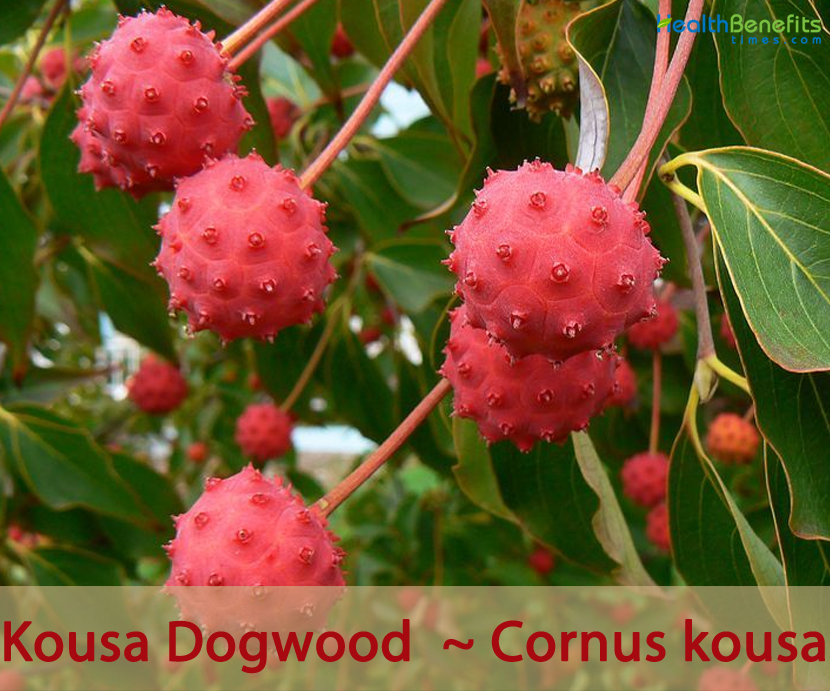
| Kousa Dogwood Quick Facts | |
|---|---|
| Name: | Kousa Dogwood |
| Scientific Name: | Cornus kousa |
| Origin | East Asia, including forests of China, Japan, and Korea |
| Colors | Ripening from green, orange-red, to dark red when ripe |
| Shapes | Small drupes that are fused into a raspberry-like fruit up to 2–3 cm in diameter |
| Flesh colors | Bright orange-yellow |
| Taste | Sweet and creamy flavor |
| Health benefits | Support for dizziness, body pain, impotence, urogenital health, inflammatory bowel syndrome, Alzheimer’s, arthritis, sweating, diarrhea and urinary incontinence |
| Name | Kousa Dogwood |
|---|---|
| Scientific Name | Cornus kousa |
| Native | Multiple regions in east Asia, including forests of China, Japan, and Korea |
| Common Names | Kousa, kousa dogwood, Chinese dogwood, Korean dogwood, Japanese dogwood, Japanese flowering dogwood |
| Name in Other Languages | Afrikaans: Blinkblaar Albanian: Dogwood Amharic: Wisha inich’eti (ውሻ እንጨት) Arabic: Qarania (قرانيا) Armenian: Shan p’ayt (շան փայտ) Azerbaijani: Köpək ağacı Bengali: Dogwood (dôgˌwo͝od) Bulgarian: Kucheshki dryan (кучешки дрян) Burmese: Hkwayruu (ခွေးရူး) Chinese: Sì zhào huā (四照花), Yú (萸) Croatian: Japanski drijen, sviba Czech: Svída japonská, dřín Danish: Korea-Kornel, kornel Dutch: Kornoelje English: Dogwood, Japanese dogwood, Japanese flowering dogwood, Kousa dogwood, kousa, Japanese Flowering Dogwood, Esperanto: Hundo Estonian: Dogwood Filipino: Dogwood Finnish: Dogwood French: Cornouiller kousa, Cornouiller du Japon, cornouiller Georgian: Nadzvis khe (ნაძვის ხე) German: Japanischer Blumen-Hartriegel, Japanischer Blütenhartriegel, Kousahartriegel, Asiatischer Blüten-Hartriegel, Hartriegel Greek: Dogwood (dôɡˌwo͝od) Gujarati: Ḍōgavuḍa (ડોગવુડ) Hausa: Kare Hebrew: דוגווד Hindi: Dogwood (dôgˌwo͝od) Hungarian: Somfa Icelandic: Hundaviður Indonesian: Dogwood Irish: Dogwood Italy: Corniolo kousa, corniolo Japanese: Yama boushi (ヤマボウシ ), Yama boushi (やまぼうし), Yama houshi (山法師 ), Yama guwa (ヤマグワ ), Hanamizuki (ハナミズキ) Javanese: Dogwood Kannada: Ḍāgvuḍ (ಡಾಗ್ವುಡ್) Kazakh: Itžek (итжек) Korean: Santtalnamu (산딸나무), cheungcheung (층층) Kurdish: Darika kûçik Lao: Dogwood (dôgˌwo͝od) Latin: Cornus Latvian: Kizils Lithuanian: Sedula Macedonian: Drveno drvo (дрвено дрво) Malagasy: Dogwood Malay: Dogwood Malayalam: Dēāgvuḍ (ഡോഗ്വുഡ്) Maltese: Dogwood Marathi: Ḍŏgavuḍa (डॉगवुड) Mongolian: Dogwood (dôgˌwo͝od) Nepali: Ḍagavuḍa (डगवुड) Norwegian: Koreakornell, Dogwood Oriya: କୁକୁର Pashto: سپي Persian: چوب سگ Polish: Dereń kousa, dereń Portuguese: Dogwood Punjabi: Ḍaugavuḍa (ਡੌਗਵੁੱਡ) Romanian: Dogwood Russian: Kizil (кизил) Serbian: Dogvood (догвоод) Sindhi: ڊاگوَر Sinhala: Dogvuḍ (ඩොග්වුඩ්) Slovenian: Pasji les Spanish: Cornejo del Japón, Cornejo japonés, madera del perro Sundanese: Dogwood Swedish: Koreansk blomsterkornell, dogwood Tajik: Dogvud (Догвуд) Tamil: Ṭākvuṭ (டாக்வுட்) Telugu: Dogwood (dôɡˌwo͝od) Thai: T̂n dxk wūd (ต้นดอกวูด) Turkish: Kızılcık sopası Ukrainian: Deren kousa (Дерен коуса), kizil (кизил) Urdu: ڈاگ ووڈ Uzbek: Dogwood Vietnamese: Cây dương Welsh: Dogwood |
| Plant Growth Habit | Handsome small to medium‐sized deciduous flowering tree or multi-stemmed shrub |
| Growing Climates | Mixed woods, scrub, valleys, shaded slopes, by streams, roadsides, in mixed, sparse, and dense woods, forest margins, abandoned lands, and in urban gardens |
| Soil | Prefers a rich well-drained loamy soil and a position that is at least partially sunny. However, it will succeed in any soil of good or moderate fertility, ranging from acid to slightly alkaline though it dislikes shallow chalky soils. It grows well in heavy clay soils. However, the flowering shrub dislikes waterlogging and calciferous soils |
| Plant Size | Up to 10 meters tall and 6 meters wide depending on the site and climate conditions. |
| Root | Shallow root system |
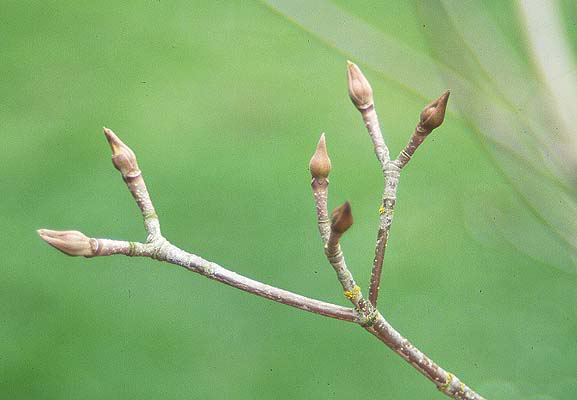
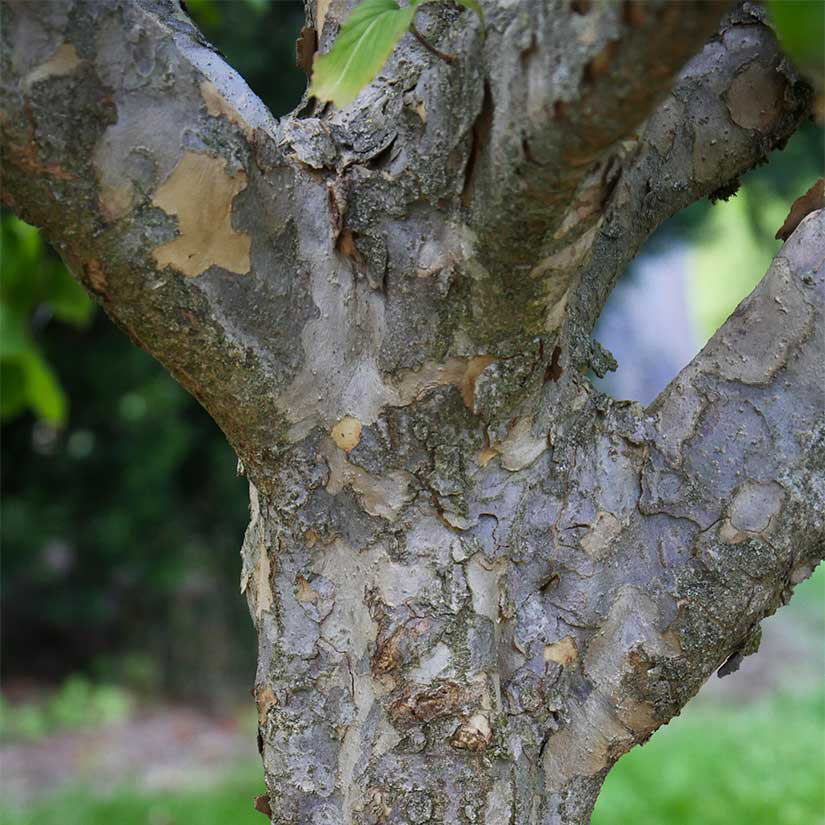
| Bark | Grayish brown, smooth; current year’s branches pubescent with soft white trichomes; second year branches reddish brown, glabrescent or subglabrous, with rounded lenticels. Winter buds mixed, globose, completely covered by 2 pairs of scales. |
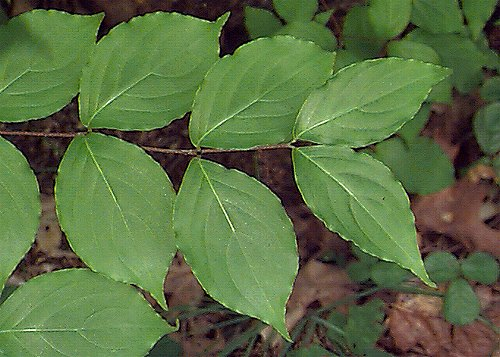
| Leaf | Opposite, simple, narrow, oval to elliptic, around 2-4 inches (5-10 cm) long, up to 1 inch (2.5 cm) wide, with tapering tips. |
| Flowering season | May–July |
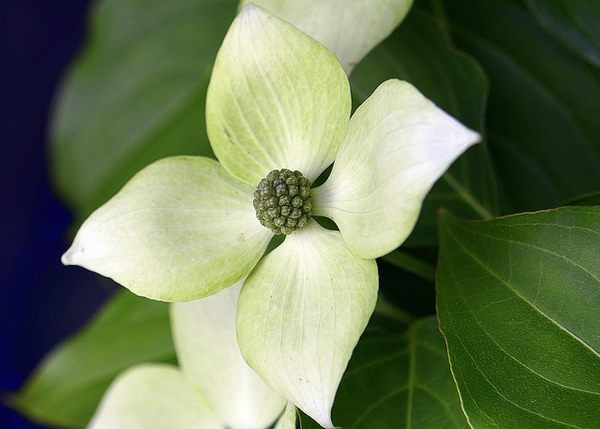
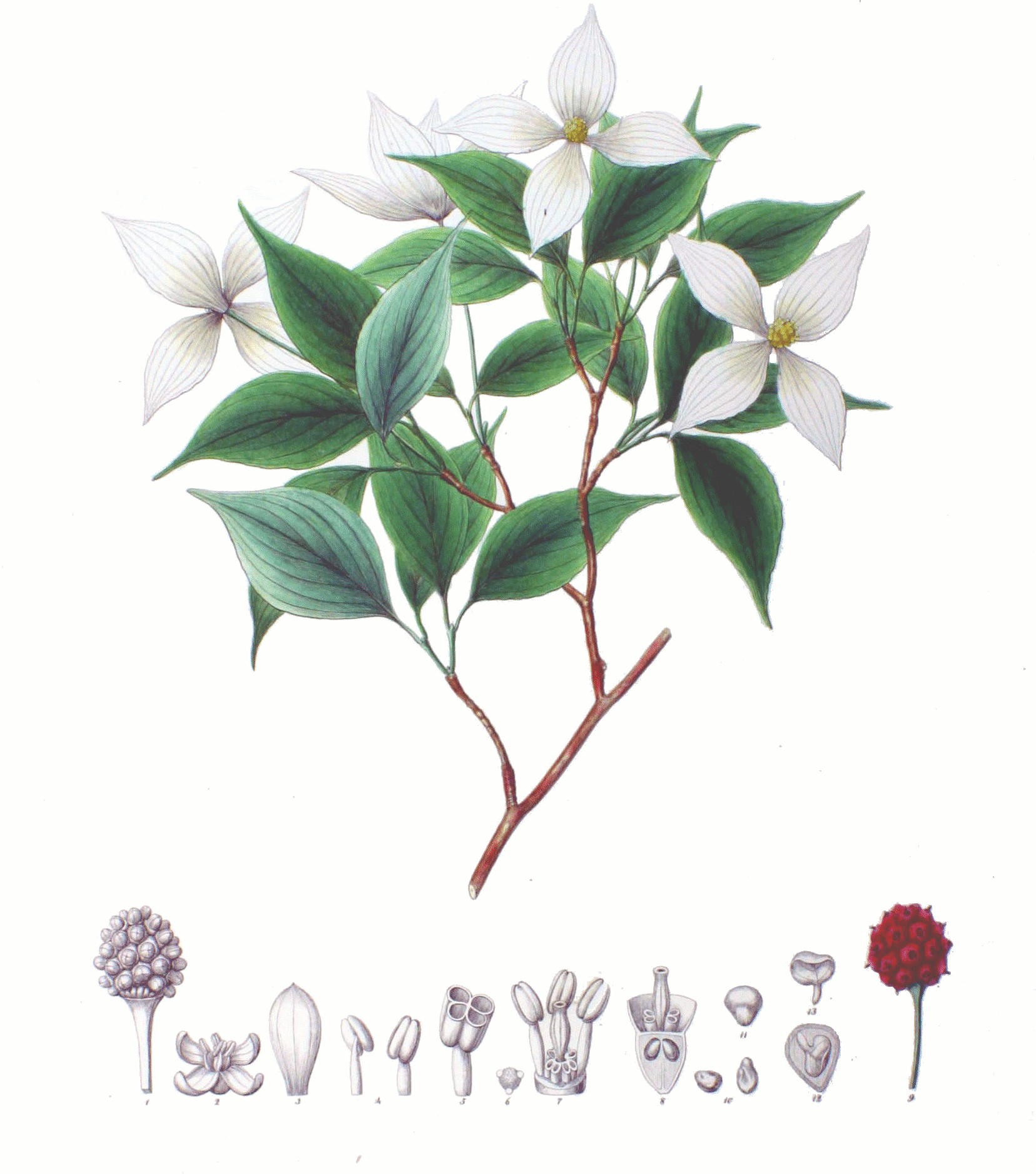
| Flower | The small, button-like flowers are surrounded by four showy bracts. The flower bracts are bright to creamy-white, or occasionally pink and taper to a point. Bracts range from 1 to 3 inches long, some quite narrow and others broad and overlapping |
| Fruit Shape & Size | Small drupes that are fused into a raspberry-like fruit up to 2–3 cm in diameter |
| Fruit Color | Ripening from green, orange-red, to dark red when ripe |
| Fruit Skin | Rather tough and unpleasant |
| Flesh | Slippery, custard-like consistency and a bright orange-yellow hue |
| Taste | Sweet and creamy flavor |
| Plant Parts Used | Bark, Flowers, Fruits, Leaves |
| Propagation | By seeds, semi-hardwood or hardwood cuttings or grafting |
| Varieties |
|
| Season | September to October |
| Lifespan | 40 years or more |
| Health Benefits |
|
| Other Facts |
|
Plant Description
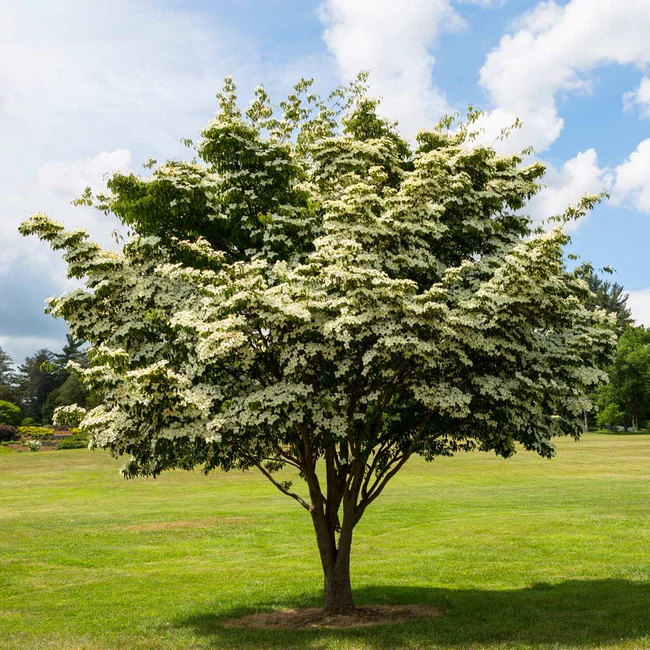
Cornus kousa, commonly called Kousa dogwood, is a handsome small to medium‐sized deciduous flowering tree or multi-stemmed shrub that normally grows up to 10 meters tall and 6 meters wide depending on the site and climate conditions. The plant has a vase-shaped habit in the early years but eventually maturing to a more rounded form. Twigs are slender, with initially some purple or green but later turning light brown. Leaf buds resemble a cat claw and flower buds are considerably larger and heart-shaped. Bark is initially grayish brown and smooth; current year’s branches are pubescent with soft white trichomes. Second year branches are reddish brown, glabrescent or sub glabrous, with rounded lenticels. Winter buds are mixed, globose, completely covered by 2 pairs of scales.
The plant is found growing in mixed woods, scrub, valleys, shaded slopes, by streams, roadsides, in mixed, sparse, and dense woods, forest margins, abandoned lands, and in urban gardens. The plant prefers a rich well-drained loamy soil and a position that is at least partially sunny. However, it will succeed in any soil of good or moderate fertility, ranging from acid to slightly alkaline though it dislikes shallow chalky soils. It grows well in heavy clay soils. However, the flowering shrub dislikes waterlogging and calciferous soils.
Leaves
Leaves are opposite, simple, narrow, oval to elliptic, around 2-4 inches (5-10 cm) long, up to 1 inch (2.5 cm) wide, with tapering tips. Leaves are untoothed with shiny dark green above, paler below with some tufts of golden-brown hair present particularly at base of petiole. Fall foliage color varies from little or no color to brilliant reds, oranges, and purple.
| Leaf arrangement | Opposite/sub opposite |
| Leaf type | Simple |
| Leaf margin | Entire |
| Leaf shape | Ovate |
| Leaf venation | Bowed, pinnate |
| Leaf type and persistence | Deciduous |
| Leaf blade length | 2 to 4 inches |
| Leaf color | Green |
| Fall color | Purple, red |
| Fall characteristic | Showy |
Flowers
The small, button-like flowers are surrounded by four showy bracts. The flower bracts are bright to creamy-white, or occasionally pink and taper to a point. Bracts range from 1 to 3 inches long, some quite narrow and others broad and overlapping. The flowers emerge after the leaves, between May and June depending on its location, and are pollinated by insects. The flowers are reported to have been used to ward-off bad or evil spirits.
| Flower color | White/cream/gray |
| Flower characteristics | Very showy |
Fruits
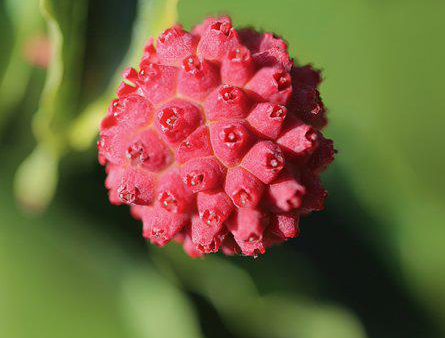
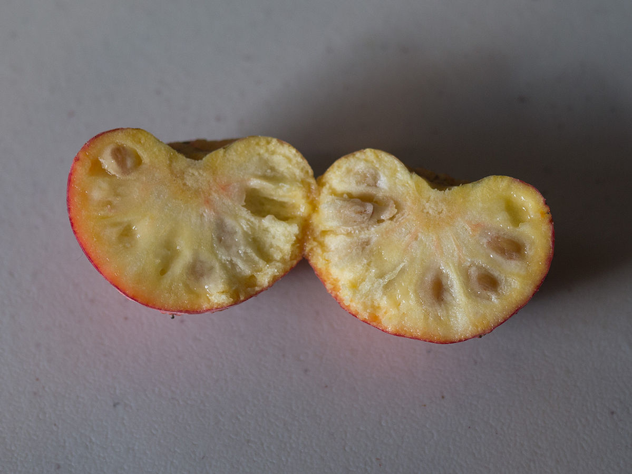
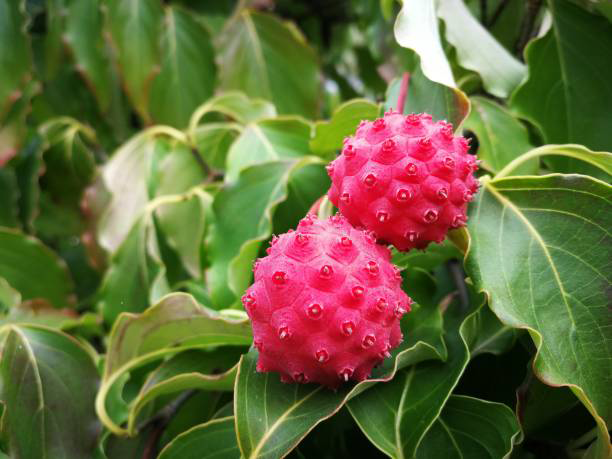
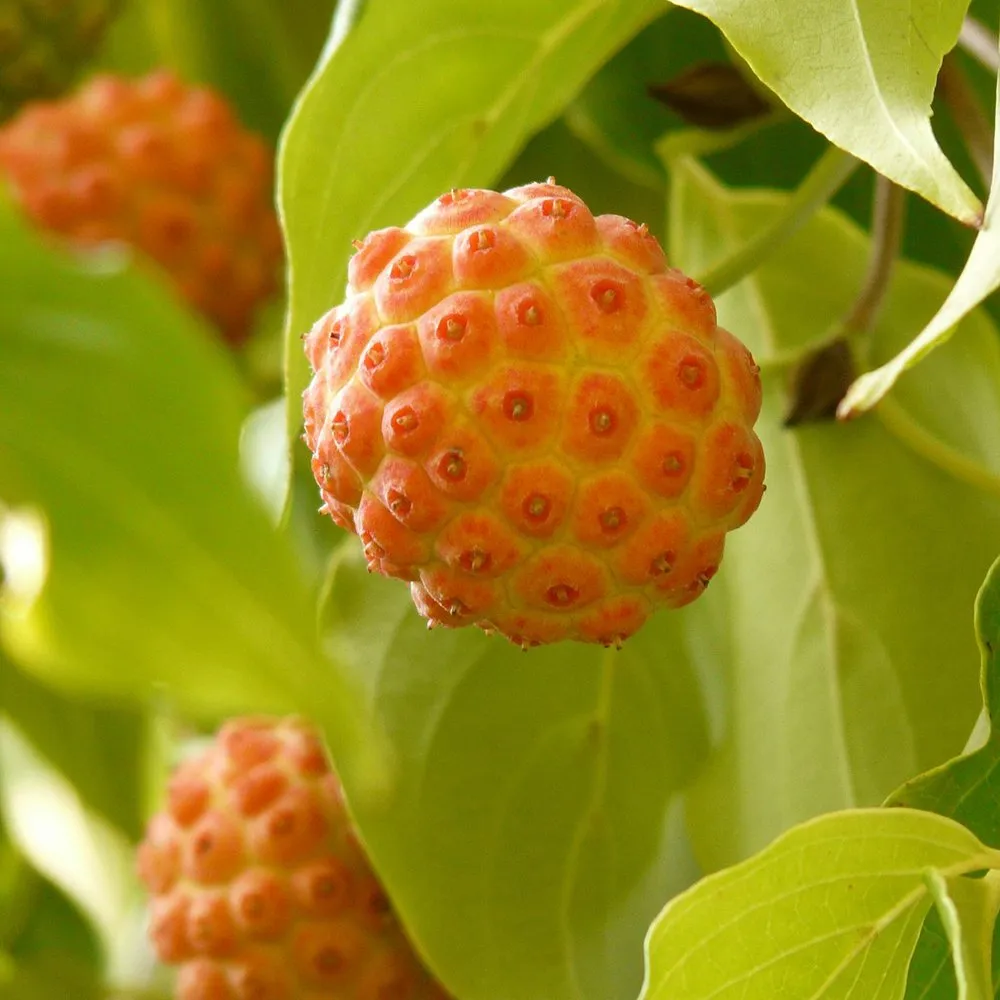
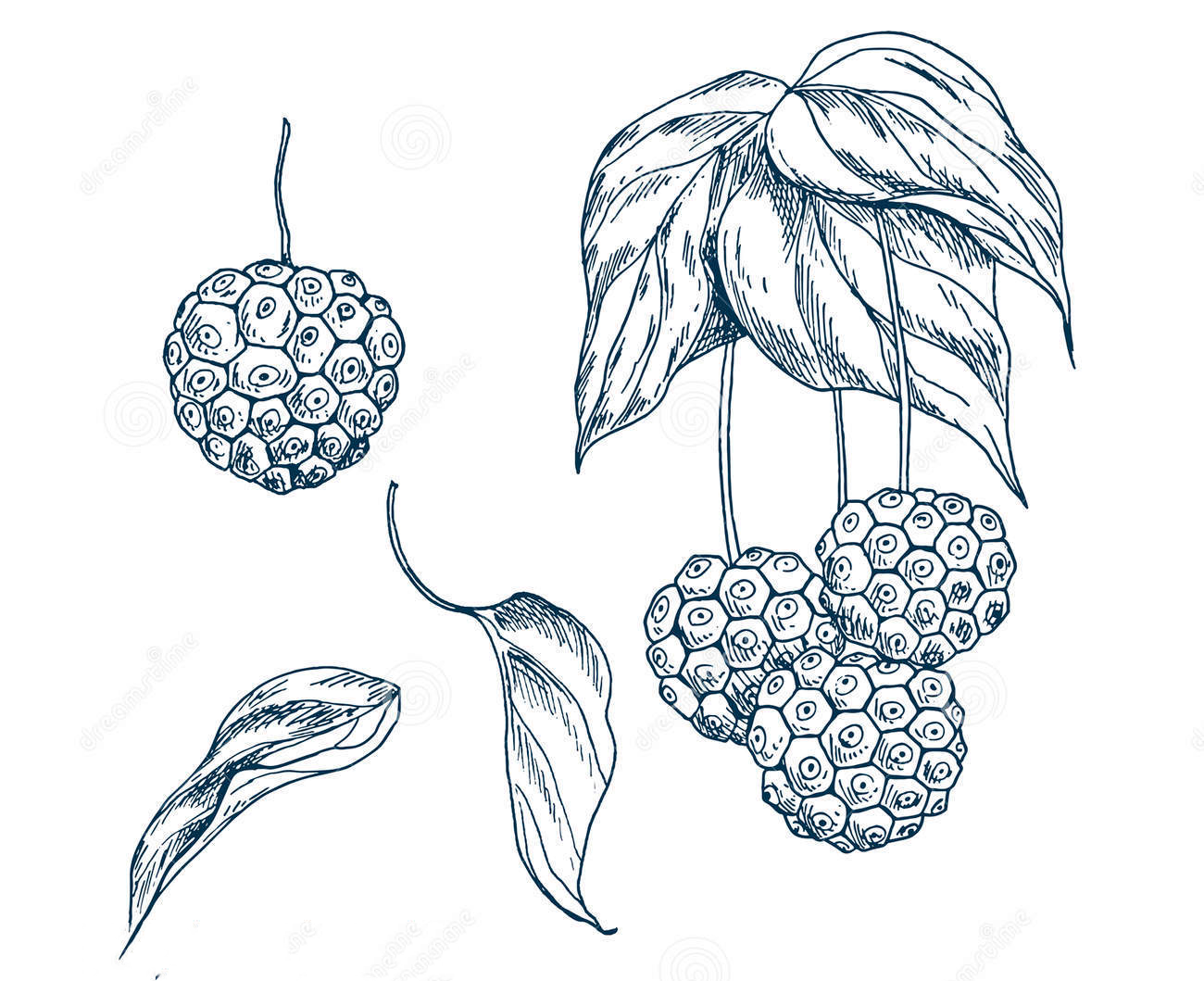
Fertile flowers are followed by small drupes that are fused into a raspberry-like fruit up to 2–3 cm in diameter, though these berries tend to grow larger towards the end of the season and some berry clusters that do not fall from the tree exceed 4 cm. They are made up of 20 to 40 individual carpels that join together to make a somewhat uniform, spherical shape. Fruits are yellowish orange inside and consist of stony pits. The fruit of kousa dogwood ripen between August and October and are showy.
The fruits are connected to slender and elongated, fibrous stems averaging 7 to 10 centimeters in length, and have an unusual, ridged appearance. The skin is rough, covered in small bumps, and has a gritty, mealy, and unpleasant texture if consumed. The skin also transitions from green, orange-red, to dark red when ripe and at maturity; the fruit will have a soft, giving consistency when lightly pressed. Underneath the delicate, thin skin, the flesh has a slippery, custard-like consistency and a bright orange-yellow hue, encasing a few to many small seeds. When consumed, the skin of Kousa Dogwood berries is discarded due to its astringent nature, and the flesh has a unique, sweet flavor reminiscent of stone fruit, mango, and persimmon. In Japan they are eaten raw and pickled or used to make a sort of fruit liquor and sometimes used for making wine.
| Fruit shape | Oval, round |
| Fruit length | 0.5 to 1 inch |
| Fruit covering | Fleshy |
| Fruit color | Red |
| Fruit characteristics | Attracts birds; showy; fruit/leaves not a litter problem |
15 Cornus Kousa Varieties
Whether you’re looking for vibrant fall color, abundant blooms, or interesting variegation, there’s likely to be a kousa dogwood cultivar that will suit your garden perfectly. Some need more sun or shade than others, but all need good, fertile soil to thrive.
Autumn Rose
Autumn Rose has pink-tinged white flowers, yellow spring foliage, and pink to light red fall foliage, making this a unique, colorful tree from spring through fall.
Beni Fuji
Beni Fuji is a stunning, unique variety of kousa dogwood, with deep red-pink flowers and a naturally-shrubby form. You can either train it into a tree or let it remain more shrub-like in appearance.
Blue Shadow
Blue Shadow has bluish-green foliage, white flowers, and strong red fall foliage making this a stunner all year long.
Bon Fire
Bon Fire has creamy white flowers that eventually take on a pink tinge. It also has yellow variegated summer foliage which turns reddish-orange in fall.
China Girl
China Girl is an early bloomer that produces abundant large white flowers and also has excellent fall color.
Gold Star
Gold Star produces plenty of pretty white flower bracts, but this cultivar is even more beloved for its unique foliage. A broad gold band runs along the center of each dark green leaf, making this a showstopper even when it’s not in bloom.
Elizabeth Lustgarten
Elizabeth Lustgarten is one of the few weeping cultivars of kousa dogwoods. This low-growing tree produces long, graceful weeping branches loaded with plenty of white flowers.
Little Poncho
If you’re looking for a dwarf kousa dogwood to grow in beds or even in large containers, ‘Little Poncho’ might be a good option. It grows to a maximum height of eight to 10 feet tall and has large white flowers.
Madame Butterfly
Madame Butterfly produces abundant white flowers. The unique thing about this cultivar is the shape and habit of the flowers, which turn vertical, looking like butterfly wings.
Milky Way
When kousa Milky Way blooms, it really blooms when in full bloom; the white flowers are so abundant that they can conceal the tree’s foliage, making the tree look like a solid mass of white flowers. This is also a bit harder than most kousa, hardy to zone four.
Moonbeam
Moonbeam produces large (seven to eight inch) flowers that are creamy white with delicate pink at the tip of each bract.
National
National has large white flowers in spring, and its foliage turns a deep burgundy color in fall.
Snow boy
Snow boy has green-gray leaves edged in white and white blooms. The foliage color for ‘Snowboy’ is showier in the shade; if you plant in a sunnier spot, the variegation will fade.
Summer Stars
Summer Stars produces abundant small white flowers and has gorgeous reddish-purple fall foliage.
Wolf Eyes
Wolf Eyes is a variegated kousa, with mint-green leaves that have bright white variegation and wavy edges. It blooms in white, and has pink to red fall color.
Health benefits of Kousa Dogwood
Listed below are some of the common health benefits of using kousa Dogwood
1. For dysentery and diarrhea
Kousa Dogwood has traditionally been used to treat dysentery and diarrhea due to its strong astringent action which is the result of high tannin content. The dry mouth sensation one feels when eating quinces, persimmon, sapodilla or dogwood berries is caused by the astringent tannins shrinking or contracting tissues. This limits the discharge of fluids and represents a first step towards recovery from diarrhea or dysentery.
2. Excellent tonic
Kousa Dogwood berries boast excellent restorative properties due to their high mineral content. Being rich in calcium, potassium, copper, iron, manganese, zinc and a good source of sodium, dogwood promotes recovery following illness (for example, drinking dogwood berry juice can speed recuperation after a more severe diarrhea episode).
3. Natural hepato-protective
Research on the properties and health benefits of Kousa Dogwood has found that regular consumption of the berries improves liver function by exercising a strong hepato-protective action.
4. Supports kidney function
According to traditional Chinese medicine, Kousa Dogwood is an efficient diuretic. This means it encourages urine production, a process which supports normal kidney function, helps reduce high blood pressure (hypertension) and promotes detoxification.
5. Impressive antibacterial and antiviral properties
Dogwood is thought to be ideal for cold and flu prevention due to the fact that it consists of high amounts of vitamin C, a potent natural anti-inflammatory, antiviral and antibacterial agent. In order for one to enjoy such health benefits, Kousa Dogwood berries must be consumed raw (cooking heat destroys vitamin C).
6. Rich antioxidant content
Last but not least, like most berries, Kousa Dogwood fruit were found to contain generous amounts of antioxidants which offer protection against free radical damage from free radical molecules and protect against chronic disease.
Traditional uses and benefits of Kousa Dogwood
- Fruits are also used in traditional Chinese medicine as an anti-inflammatory.
- It is an aid to cleanse the liver, and an ingredient to help improve energy levels.
- The Kousa fruit treats symptoms of weak kidney such as dizziness, body pain, and impotence.
- It nourishes the kidney of its deficiencies and restores the organ to revitalize its essence.
- The Kousa Dogwood fruit maintains general urogenital health.
- Kousa Dogwood is a natural anti-inflammatory useful against diseases like inflammatory bowel syndrome, Alzheimer’s, arthritis, etc.
- The Kousa fruit is effective in treating excessive sweating, diarrhea, and urinary incontinence.
- It also treats extreme shock.
- In instances of excessive bleeding, dogwood fruit is also effective.
- Herbalists recommend the fruit to women with excessive uterine bleeding and extended menses.
- The Kousa fruit regulates the flow of blood and controls the bleeding.
- For the treatment of blood disorders it can be used in conjunction with other herbs like safflower, Raw Astragalus, dodder seed, radix Rehmannia, Poria, Epimedium, earthworm, Angelica, zedoary white turmeric, and Schisandra.
- Kousa dogwood fruits could help to reduce inflammation in the digestive tract and also benefit cardiovascular health.
Culinary Uses
- Kousa Dogwood has edible berries.
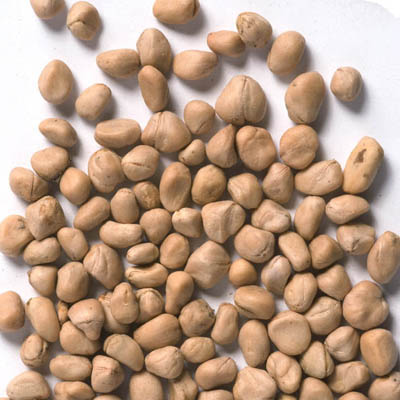
- Soft pulp is sweet with a similar flavor to a ripe persimmon but the presence of hard seeds that are well attached to the pulp can be inconvenient when eaten directly.
- Rind of the berries is usually discarded because it has a bitter taste, although it is edible.
- Seeds are usually not eaten, but could be ground into jam and sauces.
- While less popular than the berries, young leaves can also be consumed.
- The edible, sweet fruit is occasionally used for making wine.
- Dogwood was traditionally used to make various types of alcoholic beverages such as liquors and a fruit brandy called raki as well as jams or sweet berry sauces.
- When young, Kousa dogwood leaves are edible, and may be feasted on, or brewed in a tea.
Recipes
Chai kousa (dogwood) jam

Ingredients
- 950 g kousa, quartered
- 950 g white sugar
- 1 stick cinnamon
- 5 – 1 cm fresh ginger, coarsely chopped
- 5 cloves
- 3 cardamom pods, bruised
Directions
- Place fruit and sugar in a saucepan over medium heat, stirring constantly until all sugar is melted and fruit softens. Add spices and ginger and continue stirring until liquid begins to boil.
- Turn heat down to low, and simmer. Mash fruit with a masher to extract more juice, and continue to simmer, stirring occasionally.
- To test when the jam is ready, place a teaspoon of liquid on a cold plate. If it’s ready, it should be pretty viscous and not spread far on the plate.
- Next, separate the liquid from the solids (seeds, spices, skin) by pouring through a strainer, or loosely woven muslin. I only had a tiny strainer, so did this in batches.
- Reheat the liquid, and pour into sterilized jars.
Kousa Dogwood Fro Yo
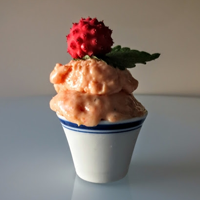
Ingredients
- 1 cup Kousa dogwood fruit (about two quart-sized baggies full of fresh fruit)
- 1/2 cup plain, whole milk yogurt
- 4 teaspoons powdered sugar
- lemon zest (about 1/2 a lemon)
- fresh mint leaves (about 4-6 leaves), finely chopped
Directions
- Prep the fruit. Remove stems and gently cut in half. Remove seeds and use a small spoon to scoop the fruit out. After, mash the pulp with a fork to check for hidden seeds.
- Combine fruit mash with remaining ingredients in a medium-sized bowl. The fruit should be fully mashed by now, so a food processor is not required – but feel free to use one if it’s easier for you.
- Cover the bowl and place in freezer for 1-2 hours, checking occasionally for the correct consistency. Note: if the mixture remains too long in the freezer (for example, overnight), it will get pretty solid. It can be defrosted by setting back in the refrigerator or lightly microwaving and remixing.
- Serve and enjoy!
Kousa Dogwood Berry Muffins
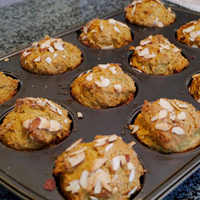
Ingredients
- 2 cups of all-purpose flour
- 2 tsp. baking powder
- 1 tsp. baking soda, sieved
- 1 teaspoon salt
- 1 1/2 cups Kousa Dogwood berry puree
- 2/3 cup light brown sugar
- 2/3 cup (5 1/3 tbsp.) unsalted butter, melted
- 1 large egg
- 1 teaspoon vanilla extract
- Sliced almonds and raw cane sugar to sprinkle on top of the muffins.
Directions
- In a large bowl, combine the flour, baking powder, baking soda and salt.
- In a separate bowl, whisk together the puree, sugar, butter, egg and extract.
- Add to the flour mixture and fold in until just combined. Do not over mix.
- Divide the mixture between the muffin cups and sprinkle with sliced almonds and the raw sugar.
- Bake until the tops are brown and a toothpick inserted into the middle comes out clean. 20-25 minutes.
- Cool before removing from the pan.
- These muffins are unbelievably good. Try them warm with butter and a little fresh puree spread on top.
Kousa dogwood pudding cake
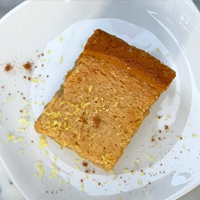
Ingredients
- 1 cup organic whole wheat pastry flour
- 1/2 tsp baking soda
- 1 tsp baking powder
- 1/2 tsp ground cinnamon
- pinch pink Himalayan sea salt
- 1/4 tsp cream of tartar
- 2 chicken eggs, separated into whites and yolks
- 2 tbsp. butter room temp
- 1 cup honey
- 1 cup kousa dogwood fruit pulp
- 1/2 tsp vanilla extract
- 1 1/4 cup whole milk (preferably organic grass-fed)
Directions
- Preheat oven to 325F. Butter a 10″ long x 7.5″ wide x 2″ deep baking dish.
- Stir the following dry ingredients together in bowl with a spoon: flour, baking soda, baking powder, cinnamon, salt. Set aside.
- Separate egg whites from egg yellows. Put egg whites + cream of tartar into mixing bowl under electric mixer. Mix for 1 minute on medium speed until cream of tartar fully incorporated and the mixture has a frothy appearance. Then turn speed up to high and whip until smooth, creamy, and peaks form when you pull the beaters back, about 2-3 minutes. Using spatula, remove whipped egg whites to separate bowl or large measuring glass.
- Add honey and room temperature butter to mixer, and mix on medium until butter fully incorporated into honey, about 1 minute. Add kousa pulp, egg yellows, and vanilla, and mix on medium for 1 minute. Add milk, mix on medium for one minute. Slowly add dry ingredients to mixer, about 1/4 cup at a time, while mixer on medium speed and continue mixing until fully incorporated.
- Pour your whipped egg white mix into the kousa-flour mix, then mix in with a spatula (not with mixer). This is to help the final pudding be lighter and fluffier.
- Pour ingredients into buttered baking dish. Bake on 325°F (163°C) for 60 minutes or until center of pudding cake is raised and barely jiggles when lightly shaken. Let cool to room temp (or lightly warm) before serving. Even better refrigerated and served the next day!
References:
https://www.itis.gov/servlet/SingleRpt/SingleRpt?search_topic=TSN&search_value=507498#null
https://npgsweb.ars-grin.gov/gringlobal/taxon/taxonomydetail?id=11560
https://pfaf.org/user/cmspage.aspx?pageid=58
https://www.cabi.org/isc/datasheet/16300
https://gd.eppo.int/taxon/CRWKO
https://inaturalist.nz/taxa/128614-Cornus-kousa
http://www.theplantlist.org/tpl1.1/record/kew-47417
https://en.wikipedia.org/wiki/Cornus_kousa
https://plants.usda.gov/home/plantProfile?symbol=COKO2
https://edis.ifas.ufl.edu/publication/ST191
http://www.missouribotanicalgarden.org/PlantFinder/PlantFinderDetails.aspx?taxonid=243980