| Mexican poppy Quick Facts |
| Name: |
Mexican poppy |
| Scientific Name: |
Argemone mexicana |
| Origin |
Native to Mexico and West Indies |
| Shapes |
Oblong, egg-shaped, ovoid, spiny; Length: 2.5-5 cm; Width: 2 cm (Fruit) |
| Health benefits |
Treat skin problems, Heal wounds, Mosquito repellant, Impotency, Ringworm |
| More facts about Mexican poppy |
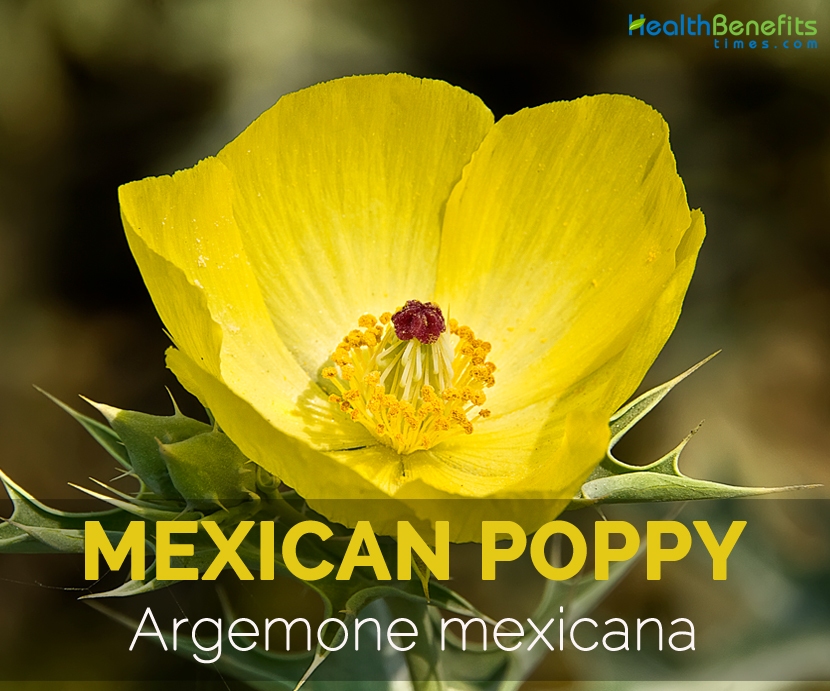
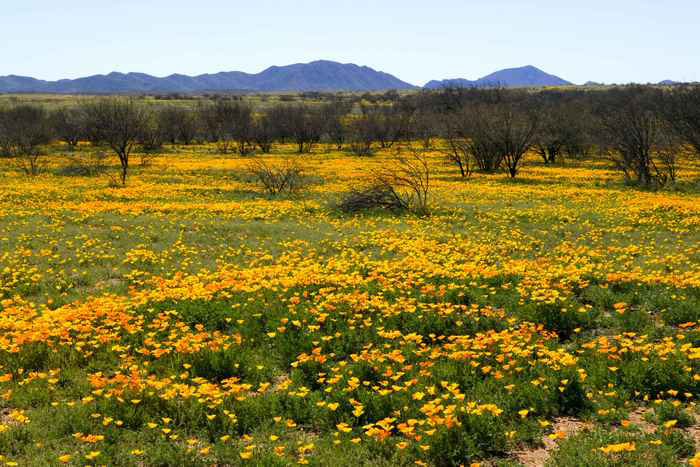
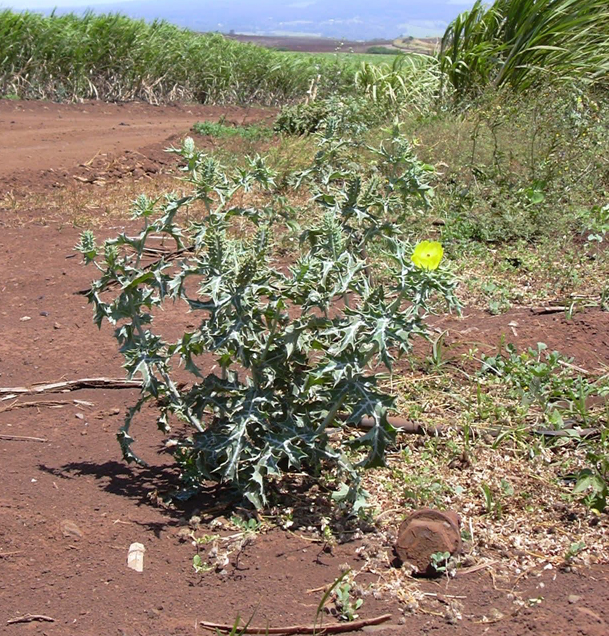
Argemone Mexicana, the Mexican poppy, also known as Mexican poppy, Yellow thistle, Mexican pricklepoppy, Prickly poppy, Amapolas del Campo, Bermuda Thistle, Brahmadanti, Caruancho, Gamboge Thistle and Flowering Thistle, is a robust and erect herb with decorative yellow flower. The plant has sharp prickles on its stem. It grows in a tropical climate.
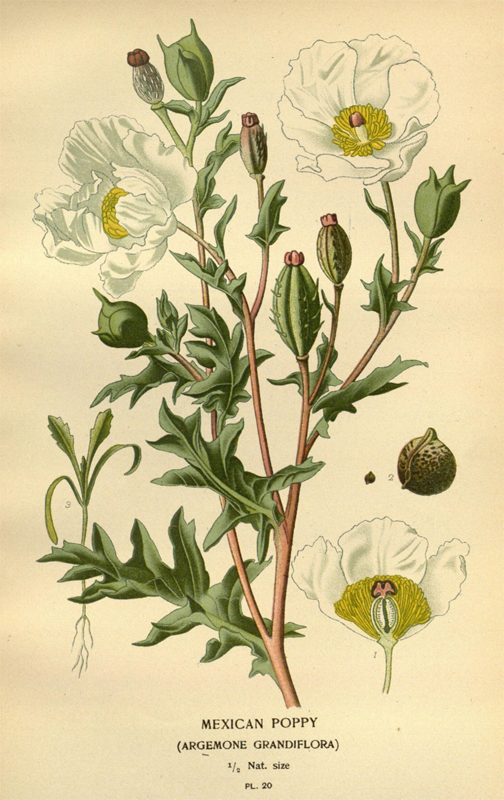
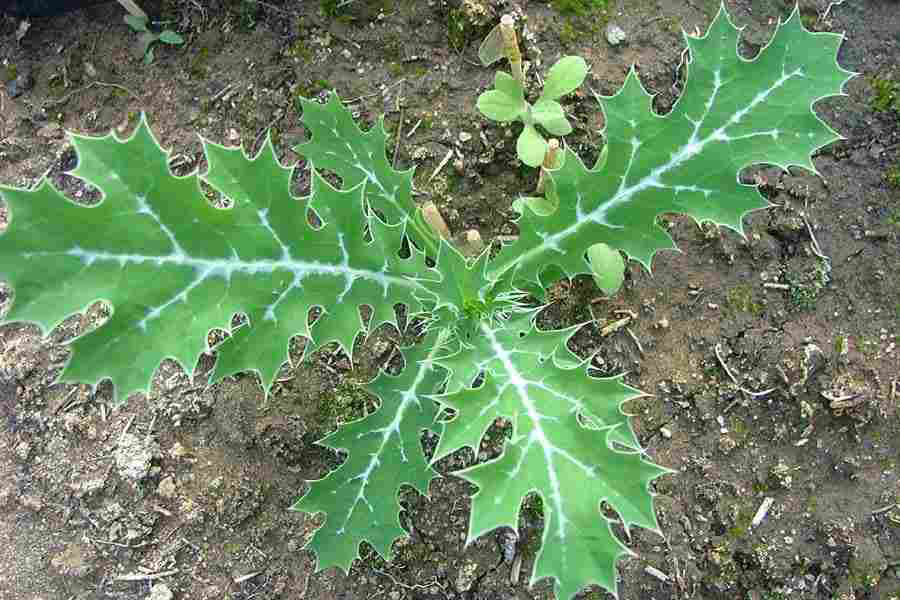
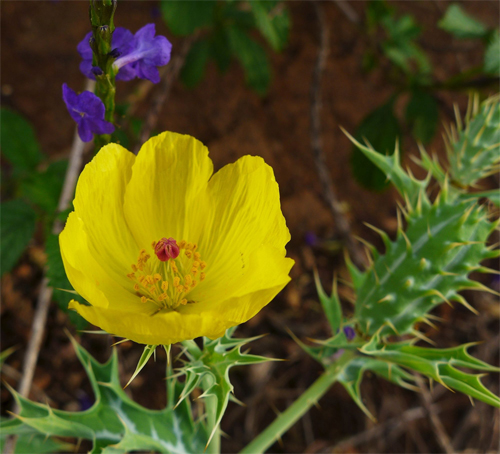
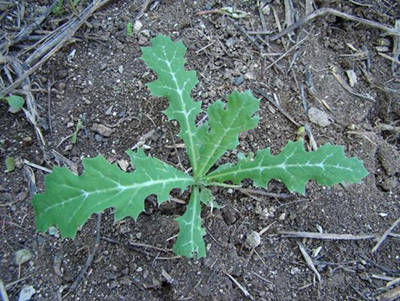
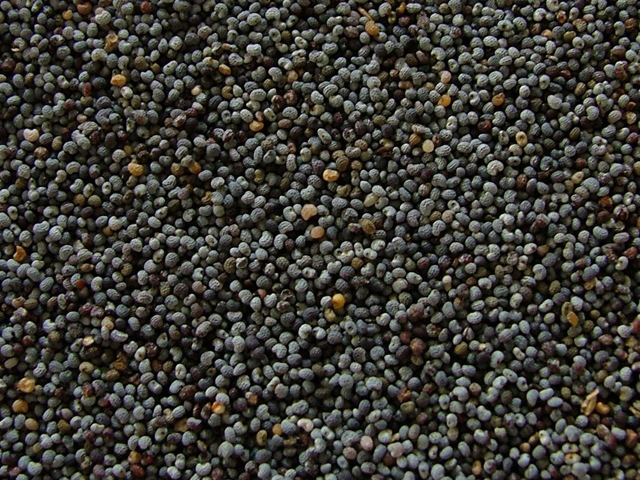
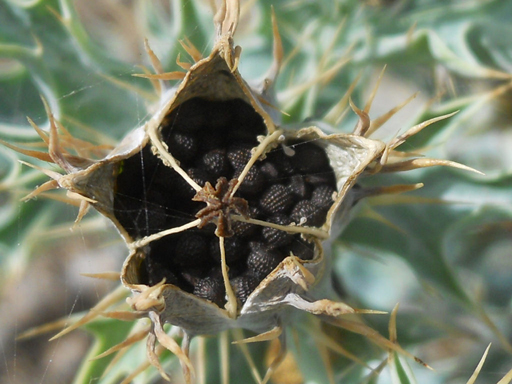
This plant bears flowers on its erect, branched, prickly and pale bluish to green stems. The thistle like leaves are alternately arranged, mottled white and dark green, toothed and 15 cm long. The yellow to pale orange blooms are solitary, glabrous and 2.5-5 cm in diameter. The fruits are oblong, ovoid, egg-shaped capsules which are spiny, 2.5-5 cm long and 2 cm wide. Each capsule contains 400 seeds which are spherical, brownish-black and 1 mm in diameter.
History
Mexican poppy is native to Mexico and West Indies. It became pantropical after it got introduced as an ornamental. It is naturalized in African countries. In 1845, it was first recorded in Australia. It has become problematic in New South Wales, Queensland and Western Australia.
Health Benefits of Mexican Poppy
Mexican poppy possess analgesic, antispasmodic, hallucinogenic, sedative, ant- bacterial, anti-cancer, anti-diabetic and anti-inflammatory properties. It is used to treat various health problems.
- Treat skin problems
The yellow latex possesses anti-bacterial properties. If any part of the plant breaks then yellow latex flows. With the helps to cotton bud, the yellow latex should be applied to the affected area. As the plant possesses the thorns one should be cautious while extracting milk. The latex could be used to treat the skin infections such as eczema, itching, boils and skin ulcers.
- Heal wounds
The leaf extract of Mexican poppy helps to treat a wound which takes much time to heal. The juice should be applied to the affected area. The leaves could be applied as a paste or poultice. The poultice made from leaves could be used in the insect bites as well.
- Mosquito repellant
The seed extract of Mexican poppy possess larvicidal properties which acts as a mosquito repellant. The leaf extract could also be used as a mosquito repellant. It also possess nematicidal properties.
- Impotency
The root of Mexican poppy could be used to treat impotency.
- Ringworm
The fresh leaves should be boiled and used to wash the affected area.
Traditional uses
- In Guianas, the plant infusion is used to treat asthma.
- The root is used in cognac and rum to cure stomach pain.
- The sap is applied to cavities as an aid for toothache.
- The infusion made from petals is helpful for those having problem with urination.
- In India, it is used as homeopathic drug.
- In West Africa, it is used as washing milk.
- In East Africa, the seeds added to beer or tea in order to increase potency as well as cause drunkenness.
- In India, seeds are added with mustard oil in small amount to add its pungency.
- The plant is used to cure skin diseases, leprosy, bilious fevers and inflammation.
- Roots are used to treat guineaworm, skin diseases, leprosy, infestation, inflammations, pruritus, poisoning, blennorrhagia, flatulence, constipation, malarial fever, colic vestibular calculus.
- The leaves are used to treat cough, ulcers, wounds and skin diseases.
- Juice is used to treat opacity and opthalmia of cornea.
- Seeds are used to cure the health ailments such as cough, pertussis, asthma, skin diseases, wounds, leprosy, odontalgia, constipation, dentalcaries, colic, rheumatalgia and flatulence.
- Latex is used for dropsy, skin diseases, jaundice, leprosy, conjunctivitis, blisters, burning sensation inflammation and malarial fever.
- The oil is used for wounds, indolent ulcers, leprosy, skin diseases, flatulences, constipation, rheumatalgia and colic.
- The root is used as alterative, diuretic, hypnotic and anodyne.
- The seeds are considered laxative, expectorant, emetic and demulcent.
- The juice extracted from plant is used to cure cutaneous affections and jaundice.
- The tincture made from this plant provides hypnotic, soothing and antispasmodic effects in the whooping cough.
- The juice is used by Mexican Indians to treat incipient cataracts, corneal opacities and pterygion.
- The infusion helps to relieve kidney pain, expel torn placenta and cleans the body.
- The decoction made from this plant is used as an analgesic and sedative tea, which help to ease migraine headaches.
- In Mali, it is used by the traditional healers to treat malaria.
- The decoctions made from leaves are used in India to treat bacterial infections.
- It is used to treat eye ailments such as itching, pain and inflammation.
- The root is used to provide relief from relieve lung pain.
- It is useful to treat toothache, bile, colic, ulcers, wounds, kidney pain, skin infections, diabetes, pimples, rashes, spots, malaria, convulsions, bleeding, inflammation, spasms and infection.
- In Mexico, seeds are used as antidote for poison of snakes.
- In India, the smoke of seeds helps to provide relief from toothache.
- The extract of fresh seeds is helpful for herpes sores, warts, skin infections, itching, skin diseases, jaundice and dropsy.
- In India, the plant is used in Unani and Ayurvedic medicine to treat diseases such as malaria.
- The infusion provides relief from kidney pain, expels a torn placenta and cleanse after parturition.
- In Caribbean islands, the plant is used to treat sleep disorders and eliminate warts.
Precautions
- Seeds possess toxic alkaloids such as dihydrosanguinarine and sanguinarine so it is not advised to eat them.
- The intake of seeds might show the symptoms such as nausea, diarrhoea, vomiting, limb swelling, breathlessness, and glaucoma. Death can be caused due to cardiac arrest.
- The pregnant or lactating women and children should avoid its use.
- The excessive use could lead to dehydration and over purgation.
- It should not be used by the people with diarrhea, colitis, IBS with loose motion and dysentery.
References:
http://www.cabi.org/isc/datasheet/6878
https://www.vetmeduni.ac.at/fileadmin/v/antimalarial-plants-bf/Monograph_Argemone_mexicana.pdf
http://ccrhindia.org/ijrh/2(1)/3.pdf
http://www.jgtps.com/admin/uploads/aOhw1q.pdf
http://www.iosrphr.org/papers/v2i6/Part_4/B02640813.pdf
https://arxiv.org/ftp/arxiv/papers/1507/1507.05042.pdf
https://en.wikipedia.org/wiki/Argemone_mexicana
http://entheology.com/plants/argemone-mexicana-prickly-poppy/
http://easyayurveda.com/2015/03/13/argemone-mexicana-uses-side-effects-research/
http://www.wildturmeric.net/2016/05/argemone-mexicana-medicinal-uses-side-effects.html
http://www.bimbima.com/health/post/2013/09/19/medicinal-use-of-satyanashi-or-argemone-mexicana-prickly-poppy.aspx
Comments
comments