

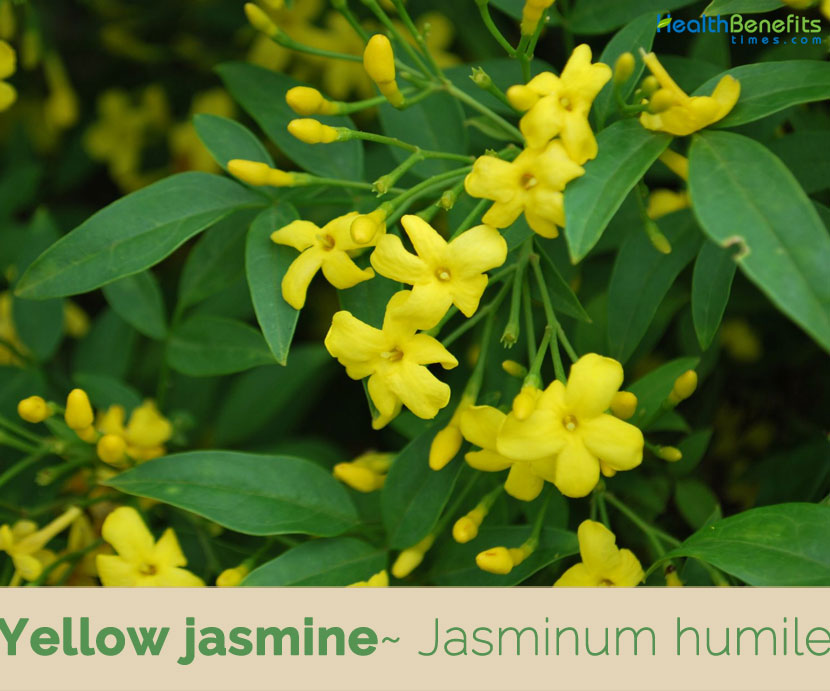
| Yellow jasmine Quick Facts | |
|---|---|
| Name: | Yellow jasmine |
| Scientific Name: | Jasminum humile |
| Origin | Afghanistan, Assam, China North-Central, China South-Central, East Himalaya, Greece, Iran, Italy, Myanmar, Nepal |
| Colors | Green when young turning to black as they mature |
| Shapes | Berry simple or didymous, globular-ellipsoid, 4-6 mm long, full of crimson juice |
| Taste | Bitter |
| Health benefits | Beneficial for bowels and heart health, ringworm, intestinal problems, chronic sinuses and fistulas |
| Name | Yellow jasmine |
|---|---|
| Scientific Name | Jasminum humile |
| Native | Afghanistan, Assam, China North-Central, China South-Central, East Himalaya, Greece, Iran, Italy, Myanmar, Nepal, Pakistan, Sicilia, Tadzhikistan, Tibet, West Himalaya, Yugoslavia |
| Common Names | Italian jasmine, Italian yellow jasmine, yellow Jasmine, Nepal jasmine |
| Name in Other Languages | Arabic: Geelbosjasmyn, yasimin ‘asfar (ياسمين أصفر) Azerbaijani: Аlçаqboy jаsmin Bengali: Svarnajui , Sbarṇacāmēlī (স্বর্ণচামেলী) Chinese: Ai tan chun (矮探春) English: Italian jasmine, Italian yellow jasmine, yellow Jasmine, Nepal jasmine French: Jasmin jaune German: Niedriger Jasmin Hindi: Peeli Chameli (पीली चमेली), Son Chameli, Nepal jasmine, Peela jui , Malto Hungarian: Alacsony jázmin Kannada: Hasarumallige Kumaon: Sonajahi Malayalam: Ponmallika, jāsmīnaṁ humail (ജാസ്മീനം ഹുമൈൽ) Nepali: Masino Jaai (मसिनो जाईफूल), Jaaee (जाई) Persian: یاسمن پاکوتاه Portuguese: Jasmim Sanskrit: Svarnajuthica, Hemapushpika Spanish: Jazmín de Italia Tamil: Semmallingai Telugu: Pachche adavimalle |
| Plant Growth Habit | Small erect much-branched, evergreen to semi-evergreen shrub |
| Growing Climates | Scrub, dry valleys, in the Himalayas, open forest and margins, coastline, shrub lands, limestone hills, and barren sites |
| Plant Size | About 2.5–4 m (8–13 ft.) tall by 3 m (10 ft.) wide |
| Leaf | Alternate, very variable in size, 2-10 cm long, sometimes revolute; leaflets 3-5(-7), coriaceous, dark green above, paler beneath, variable in shape, elliptic, ovate, or lanceolate, acute or obtuse, terminal sometimes larger than lateral |
| Flowering season | March, April, May, June, July |
| Flower | Terminal corymbose cymes; pedicels 5-15 mm long. Bracts linear, minute. Calyx tube c. 3 mm long, teeth very short. Corolla yellow, tube 1-2.5 cm long, lobes 5, broadly ovate-obtuse or round, reflexed when the flower is open. |
| Fruit Shape & Size | Berry simple or didymous, globular-ellipsoid, 4-6 mm long, black when ripe, full of crimson juice |
| Fruit Color | Green when young turning to black as they mature |
| Propagation | Semi-ripe cuttings |
| Plant parts used | Flower, Leaf, Oil, Root |
| Taste | Bitter |
| Season | September-December |
| Culinary uses |
|
Flower & Fruit
Inflorescences are lax clusters of yellow tubular flowers at the end of branches. Flowers have a slender tube, 1-2 cm long, with 5 rounded spreading petals, about 6 mm. Sepal tube is cup shaped, only 3 mm in size, with tiny triangular sepals. Flowering normally takes place from March to July. Fertile flowers are followed by black colored berries about 8 mm in size, with crimson juice.
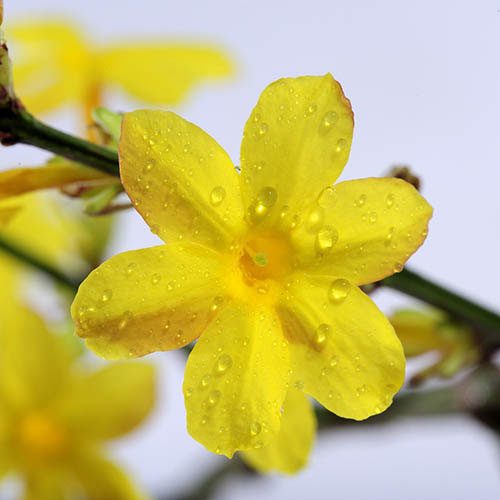 Closer-view-of-flower-of-Yellow-jasmine
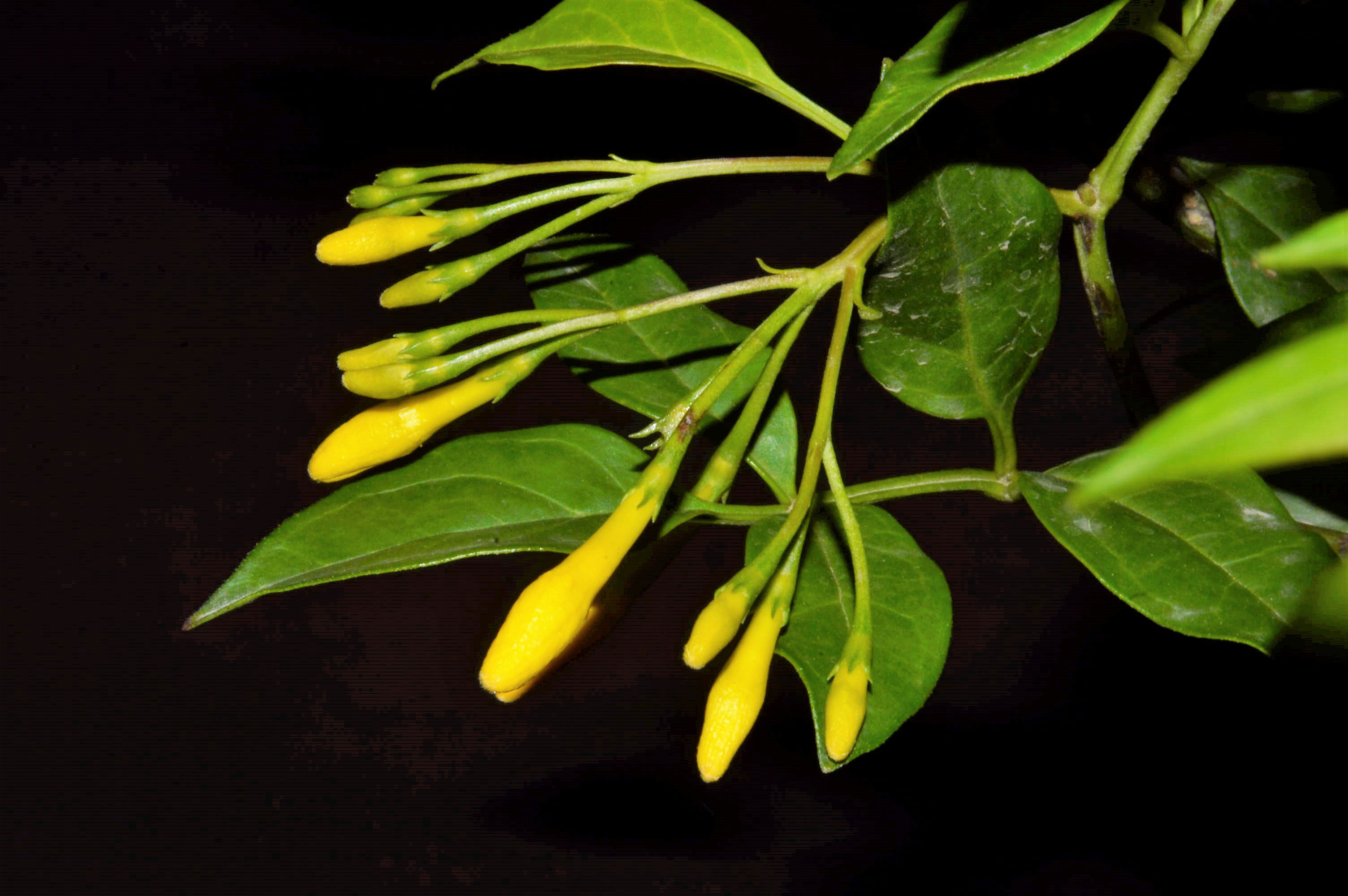 Flowering-buds-of-Yellow-jasmine
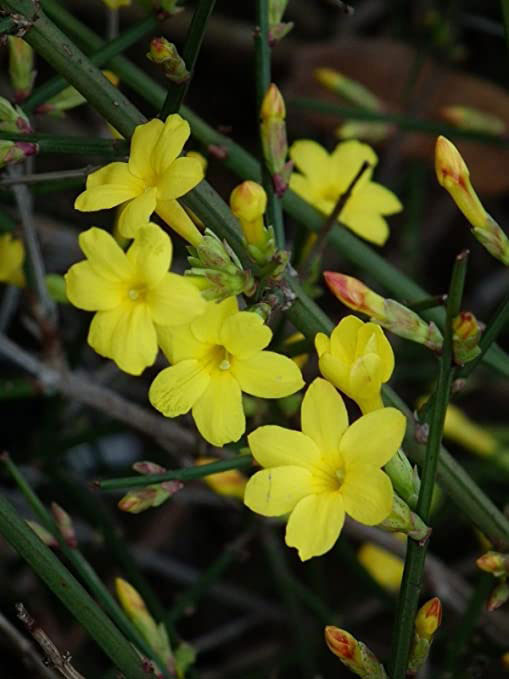 Flowers-of-Yellow-jasmine
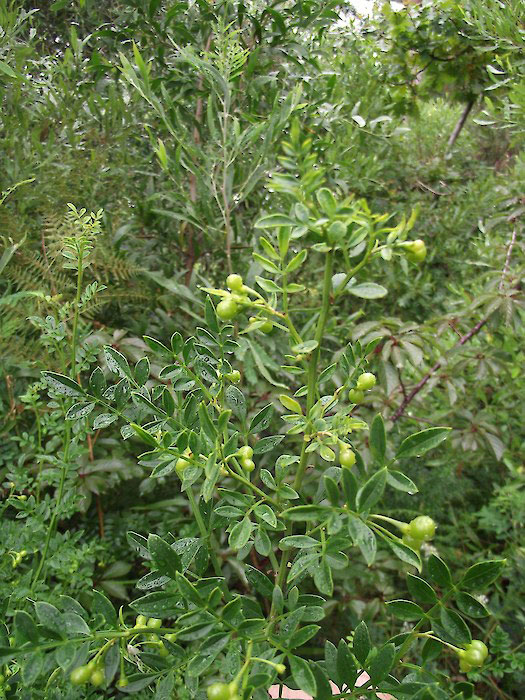 Immature-fruits-of-Yellow-jasmine
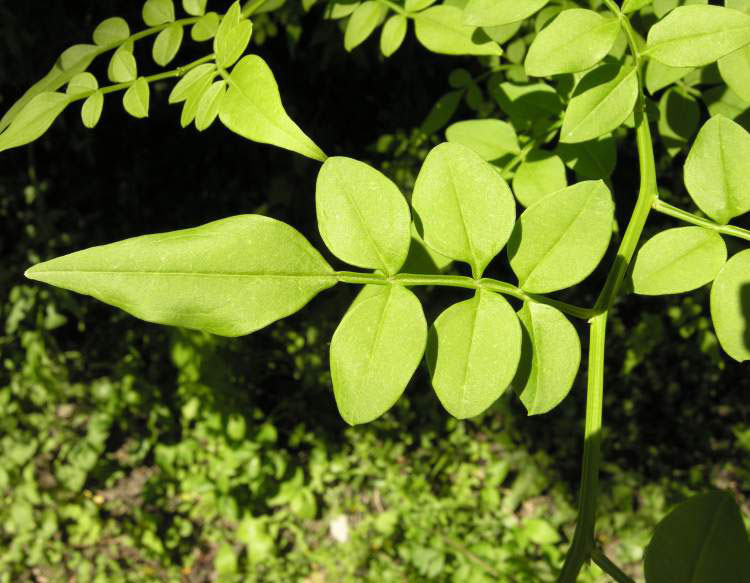 Leaves-of-Yellow-jasmine
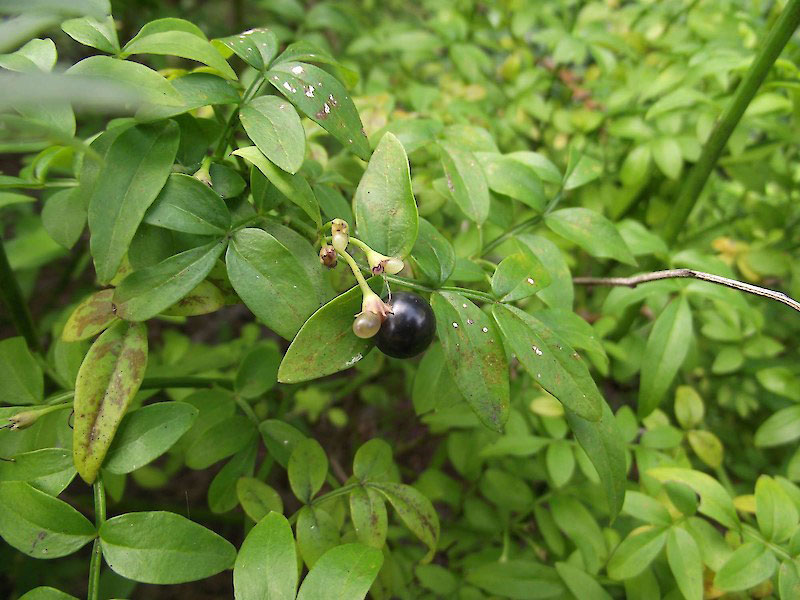 Mature-fruits-of-Yellow-jasmine
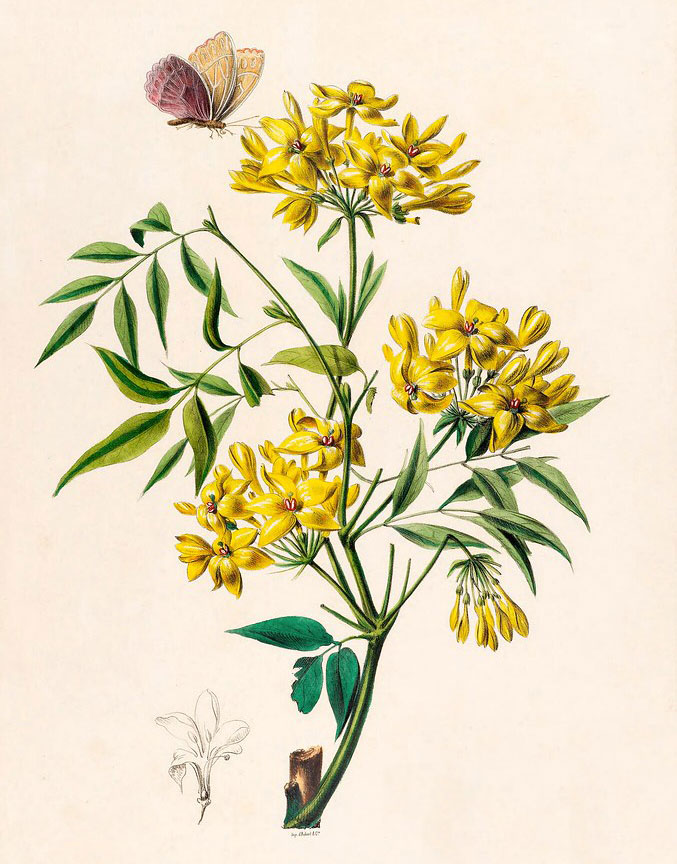 Plant-Illustration-of-Yellow-jasmine
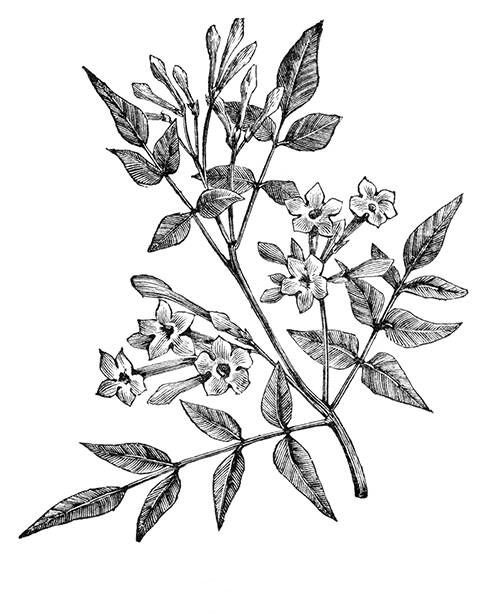 Sketch-of-Yellow-jasmine
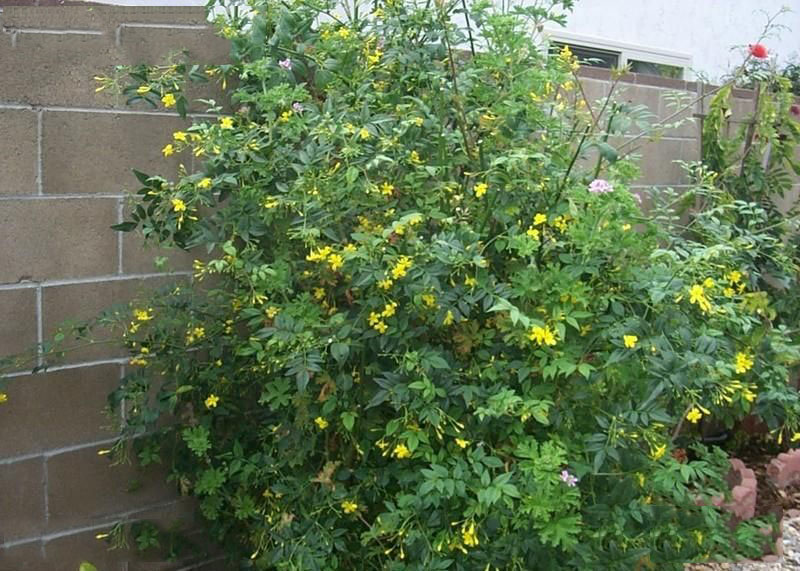 Yellow-jasmine-plant
Traditional uses and benefits of Yellow Jasmine
- The juice of the root is used to treat skin diseases such as ringworm.
- Milky juice from the whole plant is given to destroy the unhealthy lining-walls of chronic fistulas and sinuses in India.
- Flower is used as an astringent and tonic for bowels and heart.
- Paste made from the flowers is considered effective in the treatment of intestinal problems.
- Yellow dye from roots used for ring worms.
Other facts
- Flowers yield essential oil used in perfumery.
- It is harvested from the wild for local use as a food, medicine and source of materials.
Precautions
- The plant is considered highly toxic.
- Touching the flowers may produce allergic reaction.
- Excessive doses may cause respiratory depression, giddiness, double vision, death.
References:
https://pfaf.org/user/Plant.aspx?LatinName=Jasminum+humile
https://npgsweb.ars-grin.gov/gringlobal/taxonomydetail.aspx?id=20658
http://www.efloras.org/florataxon.aspx?flora_id=5&taxon_id=200017782
https://gd.eppo.int/taxon/IASHU
http://www.theplantlist.org/tpl1.1/record/kew-351902
http://www.flowersofindia.net/catalog/slides/Yellow%20Jasmine.html
http://en.hortipedia.com/Jasminum_humile
https://en.wikipedia.org/wiki/Jasminum_humile
https://davesgarden.com/guides/pf/go/63671/#b