Health Benefits
    Facebook Twitter Instagram
    Sunday, December 7
    Facebook Twitter Pinterest
    Health Benefits
    • Home
    • Dental Health
    • Mental Health
    • Weight Loss
    • Health Wiki
    • Nutrition
    • Healthy Recipe
    • BMI Calculator
    Health Benefits
    Home»Foods»French Toast benefits and nutrition
    Foods

    French Toast benefits and nutrition

    By s mApril 28, 2019Updated:April 28, 2019No Comments4 Mins Read
    Facebook Twitter Pinterest LinkedIn Tumblr Email

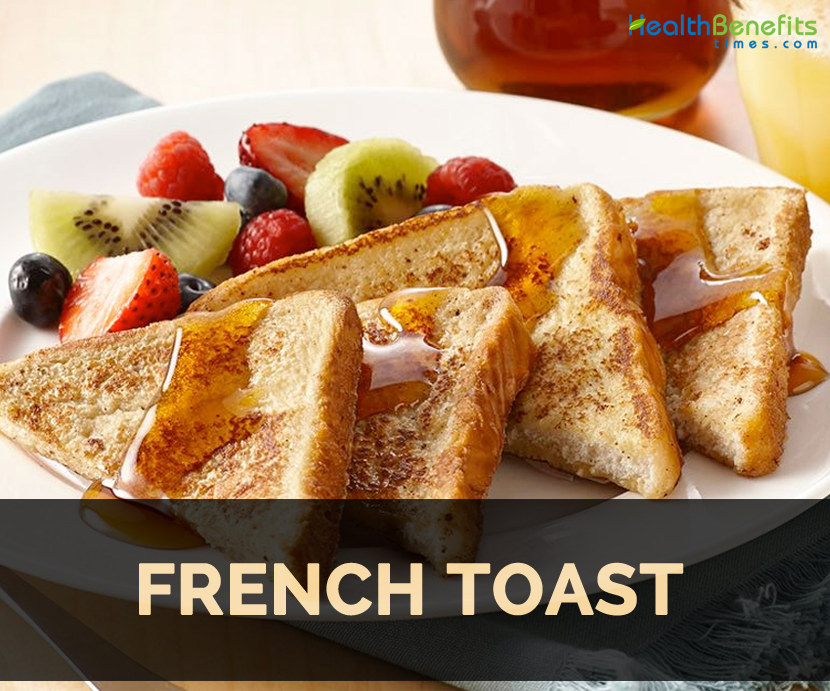
    French toast is a bread dish soaked in eggs and milk and then fried. It is alternatively known as eggy bread, German toast, Bombay toast, poor knights, gypsy toast, Torrija and Eggs-oh-Lay. Sugar, milk and cinnamon are also added. The dish is topped with powdered sugar, fruit, butter, syrup and other items. In United Kingdom, it is known as Eggy Bread. In Portugal, it is a Christmas time dessert and called rabanada in Brazil. In Spain, it is an Easter dessert known as torrijas.

    History

     The collection of Latin recipes dates back to 4th or 5th century is simply described aliter dulcia. Recipe shows to slice fine white bread, discard crust and break it into large pieces. Soak these pieces in milk and beaten egg, fry in oil and cover it with honey before serving. Its usual French name is pain perdu, ‘lost bread’ which reflect costs. In Canada, it is called plain dore which means golden bread. Bavarian and Austrian term is pofese or pafese from zuppa pavese which refers Pavia, Italy. The term soup name refers to the soaked bread in liquid. It is commonly known as bundaskenyer in Hungary.

    Health Benefits of French Toast

    1. Loaded with calories

    Probably two slices of French toast offers 300 to 500 calories. Calories are renowned term in many diets, fitness plans and weight loss products. French toast offers many calories. Calories are turned into energy by the body. The energy serves as a fuel enabling to exercise and attend daily task. A regular slice of plain French toast provides 450 calories.

    1. Source of Carbohydrates

    French toast is made with bread and eggs which is regarded as the great source of carbohydrates. Similar to calories, carbs also have bad reputation among dieters as well as weight watchers but is crucial to provide energy to the body. It boost strength with plenty amounts. Fiber is beneficial for smoothening bowel movements.

    1. Fiber

    French toast offers 1.4 grams of fiber i.e. 6 percent of daily recommended value. It promotes digestive health by adding bulk to the foods which satisfies hunger and also contributes to elimination of removing harmful byproducts of metabolism from the body. It is a healthy choice in comparison to whole grain breads. It has a crucial role in blood cholesterol and blood.

    1. Protein

    A slice of French toast contains 3.8 grams of protein. With addition of more eggs to the French toast, it offers more protein to the French toast.

    1. Vitamins and Minerals

    French bread provides 6 percent of daily value of iron. One percent of calcium is found in a slice of fresh bread and large eggs contain 0.7 mg of vitamins. It has large amount of sodium offering 9 percent of daily recommended value in one slice.

    How to make French Toast?

    Ingredients:

    • 1 teaspoon of ground cinnamon
    • 2 tablespoons of sugar
    • 1/4 teaspoon of ground nutmeg
    • 4 eggs
    • 4 tablespoons  of butter
    • 1/4 cup milk
    • 8 slices white bread
    • 1/2 teaspoon of vanilla extract
    • 1/2 cup of maple syrup (warmed)

    Directions

    1. Mix nutmeg, cinnamon and sugar in a small bowl and set aside.
    2. In a skillet, melt butter over medium heat. Whisk together cinnamon mixture, eggs, milk, and vanilla and pour into a shallow container such as a pie plate. Dip bread in egg mixture. Fry slices until golden brown, then flip to cook the other side. Serve with syrup.

    How to Make French Toast

    1. Whisk eggs, sweetener, milk, vanilla and cinnamon into shallow dish.
    2. Put a slice of bread and then quickly flip it to other side.
    3. Cook both sides of bread coated with liquid and put it to skilled with melted butter over medium heat.
    4. It takes only few minutes to cook (about 2 to 3 minutes) each side.
    5. Serve it immediately with your syrup.

    Culinary uses

    Add whipped cream, sprinkled coconut, or a drizzle of nutella.

    Other facts

    • French toast is a bread food prepared with eggs and technique of frying.
    • French toast is also called eggy bread, German toast, gypsy toast, French fried bread, Spanish toast, Poor knights of Windsor, pain perdu, nun’s toast which refers lost bread in French.
    • Topping typically includes French toast that could be jam, honey, maple syrup, butter, cheese or bacon and fruit.
    • French toast is consumed for breakfast or as a dessert, snack and typically served hot.

    • French toast is rich in fat, protein, selenium, sodium and riboflavin and it has various vitamins or minerals.

    References:

    https://www.foodnetwork.com/recipes/robert-irvine/french-toast-recipe-1951408

    https://en.wikipedia.org/wiki/French_toast

    http://tenrandomfacts.com/french-toast/

    https://kids.kiddle.co/French_toast

    78%
    78%
    Awesome

    Comments

    comments

    F Foods
    Share. Facebook Twitter Pinterest LinkedIn Tumblr Email
    Previous ArticleHealth benefits and nutrition of rye bread
    Next Article Bitter Melon leaves nutrition and benefits

    Related Posts

    Health benefits of False Patchouli

    December 29, 2023

    Health benefits of Fragrant Premna

    December 28, 2023

    Health benefits of Four Leafed Pigweed

    June 8, 2023

    Comments are closed.


    French Toast Quick Facts
    Name: French Toast
    Calories 126 Kcal./cup
    Major nutrients Vitamin B-12 (41.25%)
    Vitamin B6 (22.54%)
    Sodium (19.47%)
    Selenium (18.00%)
    Vitamin B2 (17.31%)
    Name French Toast
    Serving temperature Hot, with toppings
    Main ingredients Bread, eggs, milk or cream
    Major Nutritions Vitamin B-12 (Cobalamine) 0.99 µg (41.25%)
    Vitamin B6 (Pyridoxine) 0.293 mg (22.54%)
    Sodium, Na 292 mg (19.47%)
    Selenium, Se 9.9 µg (18.00%)
    Vitamin B2 (Riboflavin) 0.225 mg (17.31%)
    Iron, Fe 1.3 mg (16.25%)
    Carbohydrate 18.94 g (14.57%)
    Vitamin B1 (Thiamin) 0.163 mg (13.58%)
    Tryptophan 0.055 g (12.50%)
    Isoleucine 0.2 g (11.96%)
    Calories in  1 piece (59 g) 126 Kcal.
    Nutritional value of French toast, frozen, ready-to-heat
    Serving Size:1 piece, 59 g

    Calories 126 Kcal. Calories from Fat 32.4 Kcal.


    Proximity Amount % DV
    Water 31.03 g N/D
    Energy 126 Kcal N/D
    Energy 526 kJ N/D
    Protein 4.37 g 8.74%
    Total Fat (lipid) 3.6 g 10.29%
    Ash 1.06 g N/D
    Carbohydrate 18.94 g 14.57%
    Total dietary Fiber 0.6 g 1.58%

     
    Minerals Amount % DV
    Calcium, Ca 63 mg 6.30%
    Iron, Fe 1.3 mg 16.25%
    Magnesium, Mg 10 mg 2.38%
    Phosphorus, P 82 mg 11.71%
    Potassium, K 79 mg 1.68%
    Sodium, Na 292 mg 19.47%
    Zinc, Zn 0.45 mg 4.09%
    Copper, Cu 0.05 mg 5.56%
    Manganese, Mn 0.145 mg 6.30%
    Selenium, Se 9.9 µg 18.00%


    Vitamins Amount % DV
    Water soluble Vitamins
    Vitamin B1 (Thiamin) 0.163 mg 13.58%
    Vitamin B2 (Riboflavin) 0.225 mg 17.31%
    Vitamin B3 (Niacin) 1.606 mg 10.04%
    Vitamin B5 (Pantothenic acid) 0.555 mg 11.10%
    Vitamin B6 (Pyridoxine) 0.293 mg 22.54%
    Vitamin B9 (Folate) 31 µg 7.75%
    Folic Acid 17 µg N/D
    Folate, food 14 µg N/D
    Folate, DEF 42 µg N/D
    Vitamin B-12 (Cobalamine) 0.99 µg 41.25%
    Vitamin C (Ascorbic acid) 0.2 mg 0.22%
    Fat soluble Vitamins
    Vitamin A, RAE 32 µg 4.57%
    Vitamin A, IU 110 IU N/D
    Retinol 31 µg N/D

     
    Lipids Amount % DV
    Fatty acids, total saturated 0.904 g N/D
    4:00 0.013 g N/D
    Caproic acid 6:00 (hexanoic acid) 0.008 g N/D
    Caprylic acid 8:00 (octanoic acid)  0.005 g N/D
    capric acid 10:00 (decanoic acid) 0.01 g N/D
    Lauric acid (dodecanoic acid) 12:00 0.011 g N/D
    Myristic acid  14:00(Tetradecanoic acid) 0.045 g N/D
    Palmitic acid 16:00 (Hexadecanoic acid) 0.573 g N/D
    Stearic acid 18:00 (Octadecanoic acid) 0.224 g N/D
    Fatty acids, total monounsaturated 1.204 g N/D
    Palmitoleic acid 16:1 (hexadecenoic acid) 0.06 g N/D
    Oleic acid 18:1 (octadecenoic acid) 1.131 g N/D
    Gadoleic acid 20:1 (eicosenoic acid) 0.004 g N/D
    Erucic acid 22:1 (docosenoic acid) 0.001 g N/D
    Fatty acids, total polyunsaturated 0.724 g N/D
    Linoleic acid 18:2 (octadecadienoic acid) 0.651 g N/D
    Linolenic acid 18:3 (Octadecatrienoic acid) 0.045 g N/D
    Arachidonic acid 20:4 (Eicosatetraenoic acid) 0.021 g N/D
    20:5 n-3 (EPA) 0.001 g N/D
    22:6 n-3 (DHA) 0.005 g N/D
    Cholesterol 48 mg N/D

     
    Amino acids Amount % DV
    Tryptophan 0.055 g 12.50%
    Threonine 0.166 g 9.43%
    Isoleucine 0.2 g 11.96%
    Leucine 0.345 g 9.33%
    Lysine 0.218 g 6.52%
    Methionine 0.099 g N/D
    Cystine 0.084 g N/D
    Phenylalanine 0.216 g N/D
    Tyrosine 0.158 g N/D
    Valine 0.224 g 10.61%
    Arginine 0.198 g N/D
    Histidine 0.101 g 8.20%
    Alanine 0.175 g N/D
    Aspartic acid 0.3 g N/D
    Glutamic acid 1.053 g N/D
    Glycine 0.142 g N/D
    Proline 0.375 g N/D
    Serine 0.248 g N/D

    *Above mentioned Percent Daily Values (%DVs) are based on 2,000 calorie diet intake. Daily values (DVs) may be different depending upon your daily calorie needs. Mentioned values are recommended by a U.S. Department of Agriculture. They are not healthbenefitstimes.com recommendations. Calculations are based on average age of 19 to 50 years and weighs 194 lbs.
     

    Source:
    https://ndb.nal.usda.gov/

    Categories
    • Beverages (78)
    • Dairy (28)
    • Dental Health (15)
    • Equipment (5)
    • Essential OIls (196)
    • Facts (2,939)
    • Foods (255)
    • Fruits (516)
    • Giveaway (1)
    • Grains and Cereals (36)
    • Health & Beauty (763)
    • Herbs and Spices (1,249)
    • Medicines (9)
    • Mental Health (19)
    • Nutritional value (27)
    • Nuts and seeds (73)
    • Oils (81)
    • Pets (4)
    • Poultry & Seafoods (67)
    • Pulses and Beans (16)
    • Reviews (25)
    • supplement (2)
    • Vegetables (304)
    • Weight Loss (22)

    What is Lupin Bean Flour?

    Science Backed Health Benefits of Durian (Durio zibethinus)

    Science Backed Health Benefits of Feijoa (Pineapple Guava) (Acca sellowiana)

    Science Backed Health Benefits of Gac Fruit (Momordica cochinchinensis)

    Science Backed Health Benefits of Amaranth Leaves (Amaranthus spp)

    Science Backed Health Benefits of Arrowhead (Sagittaria sagittifolia)

    ABOUT
    Home
    About us
    Contact us
    Privacy Policy
    Terms & conditions
    Disclaimer
    Direct Communication
    e-mail: [email protected]
    Gmail: [email protected]
    Whatsapp: +977-9841146511
    Viber: +977-9841146511
    Useful
    Health Wiki
    Nutrition
    Facebook Twitter Pinterest
    © 2025 www.healthbenefitstimes.com All rights reserved.

    Type above and press Enter to search. Press Esc to cancel.

    ×

    Log In

    Forgot Password?

    Not registered yet? Create an Account