Health Benefits
    Facebook Twitter Instagram
    Friday, December 5
    Facebook Twitter Pinterest
    Health Benefits
    • Home
    • Dental Health
    • Mental Health
    • Weight Loss
    • Health Wiki
    • Nutrition
    • Healthy Recipe
    • BMI Calculator
    Health Benefits
    Home»Vegetables»Baby carrots health benefits and nutrition
    Vegetables

    Baby carrots health benefits and nutrition

    By s mJune 2, 2019Updated:June 2, 2019No Comments4 Mins Read
    Facebook Twitter Pinterest LinkedIn Tumblr Email

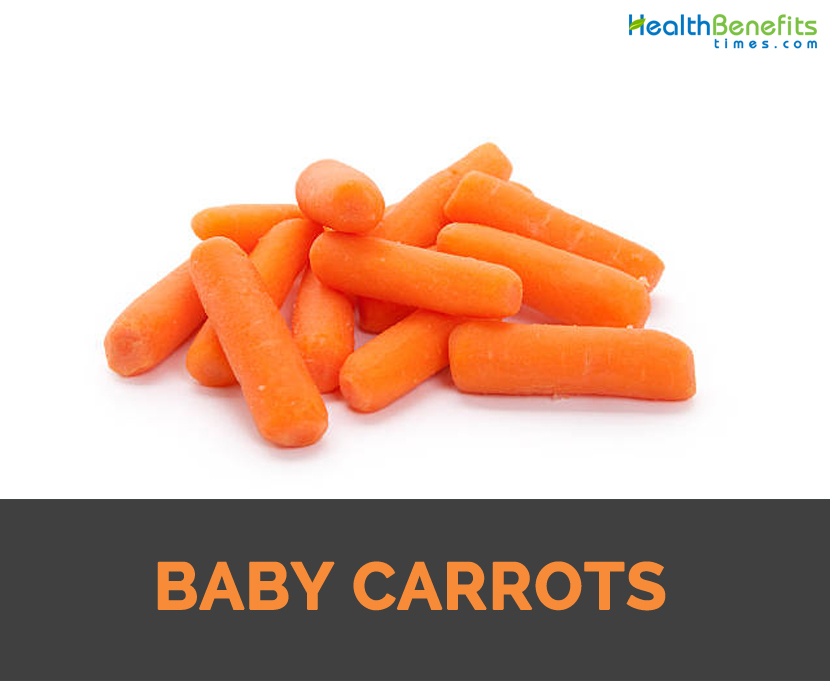
    Carrot also known as Daucus carota, is a root vegetable considered to be the health food. Baby carrot is a carrot usually small in size and has not reached maturity. It is tasty, crunchy and highly nutritious. Notably, it is a valuable source of fiber, beta carotene, potassium, vitamin K1 and antioxidants. It provides various health benefits. It is a weight loss friendly food which is associated to lowering the levels of cholesterol and promotes eye health. Carrots are available in various colors such as yellow, orange, white, and purple and red. It derives its bright color from beta carotene which is an antioxidant that body converts into vitamin A. Manufacturers use machinery to cut and peel long carrots to approximately 2 inches long. It has high content of nutrients and is low in calories which make it optimal for consuming raw or added to vegetable medley.

    Health Benefits of Baby carrots

    Some health benefits of baby carrots are presented below:

    1. Source of vitamin A

    Carrots of all sizes contain Vitamin A. The serving size of a cup encompasses 21384 IU of Vitamin A which is nearly 10 times recommended daily allowance for women. Vitamin A ensures vision health, healthy skin and stronger immunity. Further it is required for reproduction of cells and also involves in bone formation. Vitamin A is available in form of beta-carotene which is converted to Vitamin A at the time of digestion.

    1. Fiber content

    A cup of baby carrots offers 3.6 grams of dietary fiber i.e. more than 10 percent of the amount required for a day. Fiber supports digestion and adds bulk to the stool. Diet rich in fiber are associated to lowering the levels of cholesterol, chances of colon cancer and diabetes. Foods rich in fiber manage weight, slowing digestion that promotes satiety.

    1. Vitamin K

    Vitamin K is regarded as a crucial vitamin required for production of bone proteins and blood clotting. A cup of baby carrots offers 17 mcg of Vitamin K. Adult women must get 90 mcg of vitamin K per day. The sources of vitamin K include dark and leafy greens such as spinach, kale and turnip greens, soybean oil and broccoli.

    1. Vitamin C

    A cup of baby carrots offers 7.6 milligrams of vitamin C i.e. 10 percent of daily requirement for women. The body requires Vitamin C for bodily functions such as cell repair, immune support and wound healing. This nutrient helps to absorb iron from foods that is crucial for menstruating women. It’s a myth that intake of Vitamin C helps to prevent colds. Though intake of vitamin C supplements daily lowers the duration of colds, it do not prevent its occurrence and shows no effect on the existing one.

    1. Prevention of heart problems

    Study shows that diet rich in carotenoids are related with reducing the chances of heart ailments. Besides beta carotene, it contains lutein and alpha-carotene. The daily intake of carrots lowers the cholesterol levels as soluble fibers bind with bile acids.

    1. Cleanses body

    Vitamin A supports liver in eliminating toxins from the body. It lowers bile and fat in the liver. Fiber found in carrots cleanses colon and speeds up the movement of waste.

    1. Healthy teeth and gums

    Carrots clean the mouth as well as teeth. Like toothbrushes and toothpaste, it scrapes off food particles and plaque. It stimulates gums and triggers saliva as being alkaline balances acid forming or cavity forming bacteria. Also the minerals help to prevent tooth damage.

    1. Stroke prevention

    People consuming five carrots a week have fewer chances to suffer from a stroke than those consuming fewer carrots.

    Culinary uses

    • It could be blanched, sautéed, steamed, roasted and consumed raw.
    • Add it to soups, sauces and stews.

    Precautions

    Some might experience allergic reactions such as vomiting and diarrhea then discontinue using.

    How to select and store carrots?

    Select:

    • Look for the fresh carrots.
    • Avoid carrots with excessive hair like roots, scaly surface growth and puncture marks.

    Storage:

    Soak carrots in water for about 5 minutes in order to eliminate soil particles. Then wash it thoroughly. Dry it with a kitchen towel and put it in an airtight ziplock bag for refrigeration. Also, it could be chopped and placed in a bowl and cover it with cling film before it is stored in a refrigerator.


    References:

    https://en.wikipedia.org/wiki/Baby_carrot

    https://parenting.firstcry.com/articles/carrot-for-babies-when-to-introduce-benefits-and-recipes/

    https://www.recipetips.com/glossary-term/t–37457/baby-carrots.asp

    https://www.thespruceeats.com/questions-and-answers-about-carrots-996179

    https://healthyeating.sfgate.com/baby-carrots-same-nutrients-large-carrots-8175.html

    73%
    73%
    Awesome

    Comments

    comments

    B Vegetables
    Share. Facebook Twitter Pinterest LinkedIn Tumblr Email
    Previous ArticleFacts about Switch Grass
    Next Article Grape Leaves health benefits and nutrition

    Related Posts

    Health benefits of Bicolor Skullcap

    March 1, 2024

    Facts about Buckthorn bully

    February 13, 2024

    Health benefits of African dream bean

    January 23, 2024

    Comments are closed.


    Baby carrots Quick Facts
    Name: Baby carrots
    Colors Bright orange
    Taste Sweet
    Calories 4 Kcal./cup
    Major nutrients Vitamin A (9.86%)
    Iron (1.13%)
    Copper (1.11%)
    Vitamin B6 (0.85%)
    Vitamin B5 (0.80%)
    Name Baby carrots
    Shape & size 2 inches long
    Root color Bright orange
    Major Nutritions Vitamin A, RAE 69 µg (9.86%)
    Iron, Fe 0.09 mg (1.13%)
    Copper, Cu 0.01 mg (1.11%)
    Vitamin B6 (Pyridoxine) 0.011 mg (0.85%)
    Vitamin B5 (Pantothenic acid) 0.04 mg (0.80%)
    Total dietary Fiber 0.3 g (0.79%)
    Vitamin K (phylloquinone) 0.9 µg (0.75%)
    Vitamin B9 (Folate) 3 µg (0.75%)
    Manganese, Mn 0.015 mg (0.65%)
    Carbohydrate 0.82 g (0.63%)
    Calories in  1 medium (10 g) 4 Kcal.
    Nutritional value of Carrots, baby, raw
    Serving Size:1 medium, 10 g

    Calories 4 Kcal. Calories from Fat 0.09 Kcal.


    Proximity Amount % DV
    Water 9.04 g N/D
    Energy 4 Kcal N/D
    Energy 14 kJ N/D
    Protein 0.06 g 0.12%
    Total Fat (lipid) 0.01 g 0.03%
    Ash 0.06 g N/D
    Carbohydrate 0.82 g 0.63%
    Total dietary Fiber 0.3 g 0.79%
    Total Sugars 0.48 g N/D
    Sucrose 0.27 g N/D
    Glucose (dextrose) 0.1 g N/D
    Fructose 0.1 g N/D

     
    Minerals Amount % DV
    Calcium, Ca 3 mg 0.30%
    Iron, Fe 0.09 mg 1.13%
    Magnesium, Mg 1 mg 0.24%
    Phosphorus, P 3 mg 0.43%
    Potassium, K 24 mg 0.51%
    Sodium, Na 8 mg 0.53%
    Zinc, Zn 0.02 mg 0.18%
    Copper, Cu 0.01 mg 1.11%
    Manganese, Mn 0.015 mg 0.65%
    Selenium, Se 0.1 µg 0.18%


    Vitamins Amount % DV
    Water soluble Vitamins
    Vitamin B1 (Thiamin) 0.003 mg 0.25%
    Vitamin B2 (Riboflavin) 0.004 mg 0.31%
    Vitamin B3 (Niacin) 0.056 mg 0.35%
    Vitamin B5 (Pantothenic acid) 0.04 mg 0.80%
    Vitamin B6 (Pyridoxine) 0.011 mg 0.85%
    Vitamin B9 (Folate) 3 µg 0.75%
    Folate, food 3 µg N/D
    Folate, DEF 3 µg N/D
    Choline 0.8 mg 0.15%
    Vitamin C (Ascorbic acid) 0.3 mg 0.33%
    Fat soluble Vitamins
    Vitamin A, RAE 69 µg 9.86%
    Vitamin A, IU 1379 IU N/D
    Beta Carotene 639 µg N/D
    Alpha Carotene 377 µg N/D
    Lutein + zeaxanthin 36 µg N/D
    Vitamin K (phylloquinone) 0.9 µg 0.75%

     
    Lipids Amount % DV
    Fatty acids, total saturated 0.002 g N/D
    Palmitic acid 16:00 (Hexadecanoic acid) 0.002 g N/D
    Fatty acids, total monounsaturated 0.001 g N/D
    Fatty acids, total polyunsaturated 0.007 g N/D
    Linoleic acid 18:2 (octadecadienoic acid) 0.006 g N/D
    Linolenic acid 18:3 (Octadecatrienoic acid) 0.001 g N/D

     
    Amino acids Amount % DV
    Tryptophan 0.001 g 0.23%
    Threonine 0.003 g 0.17%
    Isoleucine 0.003 g 0.18%
    Leucine 0.004 g 0.11%
    Lysine 0.003 g 0.09%
    Methionine 0.001 g N/D
    Cystine 0.001 g N/D
    Phenylalanine 0.003 g N/D
    Tyrosine 0.002 g N/D
    Valine 0.004 g 0.19%
    Arginine 0.004 g N/D
    Histidine 0.001 g 0.08%
    Alanine 0.005 g N/D
    Aspartic acid 0.011 g N/D
    Glutamic acid 0.017 g N/D
    Glycine 0.002 g N/D
    Proline 0.002 g N/D
    Serine 0.003 g N/D

    *Above mentioned Percent Daily Values (%DVs) are based on 2,000 calorie diet intake. Daily values (DVs) may be different depending upon your daily calorie needs. Mentioned values are recommended by a U.S. Department of Agriculture. They are not healthbenefitstimes.com recommendations. Calculations are based on average age of 19 to 50 years and weighs 194 lbs.
     

    Source:
    https://ndb.nal.usda.gov/

    Categories
    • Beverages (78)
    • Dairy (28)
    • Dental Health (15)
    • Equipment (5)
    • Essential OIls (196)
    • Facts (2,939)
    • Foods (255)
    • Fruits (516)
    • Giveaway (1)
    • Grains and Cereals (36)
    • Health & Beauty (763)
    • Herbs and Spices (1,249)
    • Medicines (9)
    • Mental Health (19)
    • Nutritional value (27)
    • Nuts and seeds (73)
    • Oils (81)
    • Pets (4)
    • Poultry & Seafoods (67)
    • Pulses and Beans (16)
    • Reviews (25)
    • supplement (2)
    • Vegetables (304)
    • Weight Loss (22)

    What is Lupin Bean Flour?

    Science Backed Health Benefits of Durian (Durio zibethinus)

    Science Backed Health Benefits of Feijoa (Pineapple Guava) (Acca sellowiana)

    Science Backed Health Benefits of Gac Fruit (Momordica cochinchinensis)

    Science Backed Health Benefits of Amaranth Leaves (Amaranthus spp)

    Science Backed Health Benefits of Arrowhead (Sagittaria sagittifolia)

    ABOUT
    Home
    About us
    Contact us
    Privacy Policy
    Terms & conditions
    Disclaimer
    Direct Communication
    e-mail: [email protected]
    Gmail: [email protected]
    Whatsapp: +977-9841146511
    Viber: +977-9841146511
    Useful
    Health Wiki
    Nutrition
    Facebook Twitter Pinterest
    © 2025 www.healthbenefitstimes.com All rights reserved.

    Type above and press Enter to search. Press Esc to cancel.

    ×

    Log In

    Forgot Password?

    Not registered yet? Create an Account