
Vaccenic acid also called (11E)-octadec-11-enoic acid, is a trans-fatty acid occurring naturally found in the fat of ruminants and in dairy products such as butter, milk and yogurt. It is a monounsaturated fatty acid and a member of sub group called long chain fatty acids. It is a predominant fatty acid which comprises of trans fat in human milk. Its lipid shorthand name is 18:1 trans-11. The name was derived from the Latin word vacca which means cow. In 1928, vaccenic acid was discovered in butter and animal fats. It is a main trans fatty acid isomer found in milk fat. This omega-7 fatty acid is present in Sea Buckthorn oil.
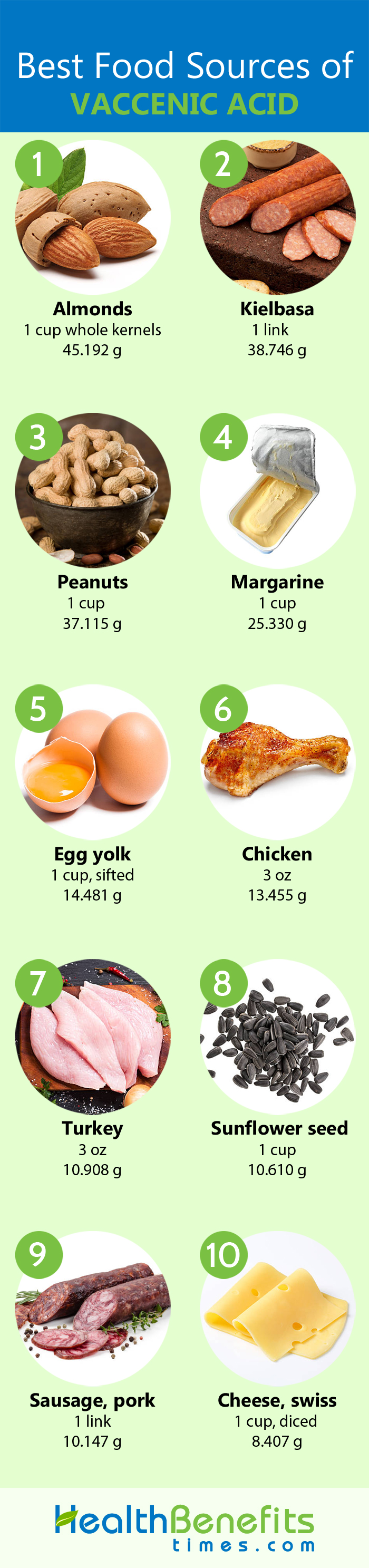
Dietary Sources
| Food name | Weight (g) | Vaccenic acid (g) |
| Almonds | 138 | 45.192 |
| Kielbasa | 370 | 38.746 |
| Peanuts | 146 | 37.115 |
| Margarine | 232 | 25.330 |
| Egg | 67 | 14.481 |
| Chicken | 85 | 13.455 |
| Nachos | 80 | 10.895 |
| Sunflower seeds | 135 | 10.610 |
| Cheddar cheese | 132 | 8.695 |
| Canola oil | 14 | 8.640 |
| Mozzarella cheese | 228 | 8.495 |
| Swiss cheese | 132 | 8.407 |
| Ground pork | 85 | 7.901 |
| French fries | 184 | 5.919 |
| Parmesan cheese | 100 | 5.815 |
| Queso fresco | 122 | 5.730 |
| Pizza | 207 | 5.014 |
| Turkey | 863 | 4.850 |
| Sausage pizza | 125 | 4.756 |
| Green plantains | 118 | 4.679 |
Health Benefits of Vaccenic acid
- Cardiovascular problems
Limited evidence is obtained from human trials and animal models that vaccenic acid does not have adverse impact on cardiovascular biomarkers which includes C-reactive protein.
- Prevention of cancer
Some conducted studies have shown direct association between reduction in risk of cancer (such as prostate cancer and breast cancer) and vaccenic acid. Most of the studies conducted in animal models and cancer cell lines have shown reduction in growth of cells or tumor metabolism.
- Inflammation and immune function
Animal study on short term shows that vaccenic acid has positive influence on immune response. Thus benefits could be experienced with the long term intake of vaccenic acid. A 16-week trial which involved rodent models with diet enriched with vaccenic acid significantly promoted immune function.
References:
https://en.wikipedia.org/wiki/Vaccenic_acid
http://www.tuscany-diet.net/lipids/list-of-fatty-acids/vaccenic/
https://www.dairynutrition.ca/nutrients-in-milk-products/fat/health-benefits-of-vaccenic-acid